Photos: author

A sudden water scare in Fes reminds an expat of his inherent vulnerability.

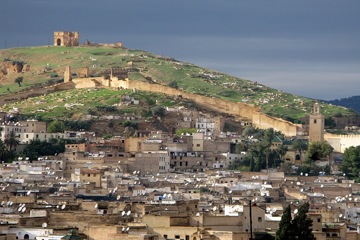
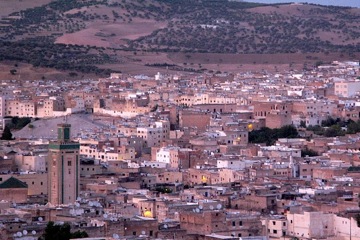
Saturday was the first day all week I didn’t need to wear my rain jacket to walk out the door. It was also the day the whispers began all throughout the medina, and grew to a frenzy.

After almost a whole week of driving rains, culminating in an all-day deluge on Friday, a friend and I spent the morning exploring the Old City and returned to the local salon de thé for lunch in the garden. I was up to my elbows in chicken tajine, baba ghanoush, and cinnamon-spiced potatoes when Denny showed up.
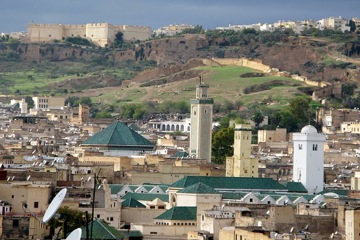
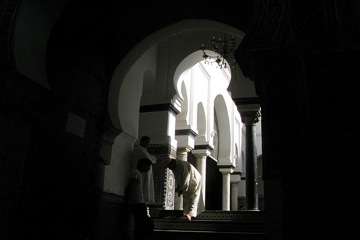
A middle-aged American photographer living in the Fes medina, Denny is a big talker – the kind of ultra-friendly guy who might finish his drink, say goodbye and then tell you three long, intricate stories before he actually leaves. Something about the quantity of Denny’s stories has always made me suspect their quality, and the information he delivered on this afternoon only confirmed my doubts.

He strode into the garden, glowing, like an Oscar winner on his way to the podium. Unable to contain himself, he immediately announced, to no one in particular, “Have you all heard the news? They found three dead cows in the water supply today, so now they’re going to cut off the whole city’s water for three days.”

Photos: author

Stunned silence, and some obvious disbelief, hung in the air. As if it proved anything, Denny reassured us, “It’s true. Just heard it.”

An hour later I was in a taxi and I explained to the driver what I had heard, as taxi drivers are known in Fes as reliable sources of popular gossip and rumor. “Waash kul haad saheeh?” Was all this true? Yes, sadly. Starting tomorrow, they will cut off the medina’s water supply, and maybe all of Fes’s.

When I returned to the salon de thé, the French owner, Cecile, told me I had just missed the city government representative who had passed by to officially inform all restaurants and cafés: at midnight that night, three days sans eau would begin. Cecile, now quite flustered, ran through the implications: How will we flush the toilets? How will we wash the dishes? Will there be bread? How much water do we need to buy if we stay open?

By dinner time, the standard 5-liter jugs of water that usually sell for 10 dirhams were up to thirteen and climbing.

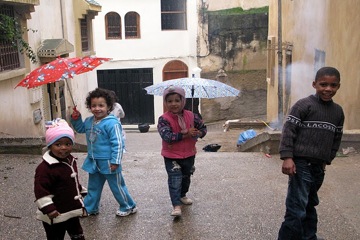
The kids on the stoop outside our apartment were enjoying this, in the way that kids back in the US enjoy approaching blizzards, hurricanes, and other catastrophes which worry their parents and hold the promise of school cancellations. They laughed when I told them I was going upstairs to take three showers. (Whether they laughed at the joke, my Arabic, or the concept of a daily shower I just don’t know).

Photos: author

A few members of the Fulbright group gathered at our apartment that evening. All had heard some story about the water being contaminated, either with dead animals or from muddy runoff from the rains.

We did the natural thing when faced with an impending crisis – drank beer and played cards. In between each hand, I scurried to the bathroom to switch out the bucket under the running faucet and replace it with the next empty one. Like everyone else in the Old City, we were stockpiling.

As the evening progressed, it occurred to us how bizarre was the government’s decision to continue dispensing water to the city when they knew it contained dead cow particles. Why didn’t they just shut the supply off immediately? And what was the point of everyone’s hoarding contaminated water? Perhaps the local water department had concocted the story itself, someone surmised.

* * *

Photos: author

The first sound I heard when I woke Sunday morning was Ryan running the faucet in our bathroom. The water was still flowing.

After all their frenzied panicking of the day before, the Fassis suddenly acted as if nothing had happened. Only when I brought it up would the water situation get a mention: “Oh, yes, that water situation. Well, they shut off the water in the Sidi Bou Jida neighborhood, but not all of Fes, so it’s fine.”

A few, still alarmed, said that the city was using the last of its clean water supplies now but would soon run out, and could cut the flow at any moment. Even they soon forgot it all, and the frenzied panic of the previous day dissipated as quickly as it had arisen. By the time we got to class Monday morning, neither of our professors could be convinced that they knew anything of any such water crisis.

The speed with which a whole city reached full panic mode and then returned to normal only made the incident seem more surreal. I’m still a bit dazed.

But then, I expected surprises here, as I wrote soon after arriving. The popular advice “so long as you are in Morocco, let nothing surprise you” captures the great irony of successfully living abroad, precisely because it is impossible to obey.

No visitor to Morocco can avoid being utterly baffled sometimes by daily occurrences here, and those who try to know what’s around every corner merely frustrate themselves.

Photos: author

Being completely bowled over by Morocco is like being the brunt of a friend’s practical joke. It makes you feel vulnerable, and the natural reaction is to lash out, to erase the vulnerability. But at that moment, embracing one’s vulnerability, accepting that you were fooled, and laughing along with your friend can bring you to a new level of familiarity and trust.

And so the saga of this weekend, which all began with three allegedly dead cows allegedly in a reservoir and ended the same as any other weekend, was simply another reminder that I live in a medieval city, and that sometimes it will act like a medieval city, and that maybe I just need to learn to sit back and enjoy it. It might just be the start of a solid friendship.

Expat Life
 

About The Author

Andrew Farrand

Andrew Farrand hails from the great city of Baltimore, Maryland, USA, but spends as much time as possible living, working, and traveling in Africa and the Middle East. After living in Morocco from mid-2008 through 2009, he is currently on the road once again. Follow Andrew's travels on his blog, Ibn Ibn Battuta.

  • http://www.solofemaletraveler.com Sabina

    Seriously, absolutely tremendous writing. You put me right in Fez with you in this story. I got a sense not just of the panic but of the “Oh, what? That?” attitude the following day. I loved this piece! And your photos are really great oo.

  • http://www.candicedoestheworld.com Candice

    Like Sabina said, you captured the panic really well here! Love that you all stockpiled water while knowing there were dead cow particles in it.

  • http://www.expatheather.com Heather Carreiro

    Terrific piece. This made me want to pack up and move back to Morocco. I spent a year in Ifrane, but Fez was my favorite place. Love the name of your blog – will definitely be reading more.

  • http://matadortravel.com/travel-community/anne137 Anne

    “Whether they laughed at the joke, my Arabic, or the concept of a daily shower I just don’t know”

    Love it. Great story!

  • http://www.ibnibnbattuta.com Andrew Farrand

    Thank you, everyone, for your very kind comments! So glad you enjoyed this story.

    Safe travels,
    Andrew

  • Nabiha Ettayebi

    I came across your blog through Jacqueline Power’s blog. I was trying to contact Villanora in Moulay Bousselham and when I googled “Villanora” Jacqueline’s blog came up. I enjoyed very much the pictures she posted on Picassa, then I checked your blog. This is the first article I read. I like your style and your conclusion made me smile. Your willingness to open up your mind and try to understand another culture has probably allowed you to learn a lot about Morocco. Being from Morocco, I would love to hear more about your stay and would be happy to invite you and Jacqueline to a home cooked Moroccan diner. I live in Silver Spring, Maryland, with my husband, who is a former Fulbright scholar, and my 14 years old son. Please, let me know if you and Jacqueline would be interested in getting together with us.

    Cordially,

    Nabiha Ettayebi

Expat Life →

Relocating to Saudi Arabia was not a choice that my husband and I had entered into...

Expat Life →

An expat in South Korea feels the threat of North Korean aggression.

Expat Life →

Everywhere I went, I saw uniformed, stone faced men holding large guns, and during the...

Expat Life →

Although I’ve driven less than a mile, it’s as if I’ve driven into a different...

Expat Life →

A breakdown of the positives and negatives of expat life in the 10 least expensive...

Expat Life →

My identity was wrapped up in my otherness, in being different.

Expat Life →

My decision to leave Los Angeles for Paris came from a desire to try on a different...

Expat Life →

As those determined or loca enough to try and live here know, it becomes all too clear,...

Expat Life →

There's the sense of creative abandon abroad, the liberation from whatever aesthetic,...

Expat Life →

A day in the life of an English teacher in Thailand.

Expat Life →

A day in the life of an English teacher in Osaka, Japan.

Expat Life →

For the real exile, foreignness is not an adventure but a test of endurance.

Expat Life →

A day in the life of a writer, translator, teacher, editor, blogger, photographer and...