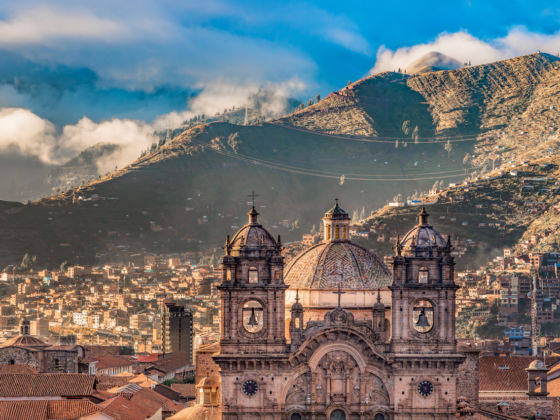
Photo: Matito

Mixed culture couples may face some negative assumptions in Peru.

I wasn’t going to cry. Instead I took a long sip of too-sweet Pisco and lemonade and leant back against the cold kitchen counter-top. He appeared not to notice the jagged edges of my smile as I nodded and thanked him for telling me.

Bueno, ¿vamos?

He led the way out of the kitchen and back in to the party next door. I topped up my drink, and followed.

It hit close to the bone, I suppose, because it was something I’d thought might be true, once or twice. The jokes about bricheros had started way back in my Spanish classes, sitting about in the patio laughing and warning the new students about charming Peruvian men and women sweeping them off their feet while emptying their wallets.

In a more serious moment my teacher had described the procession of female students that had fallen head over heels, passing through her classroom detailing passionate love affairs in halting Spanish, only to be left bereft when the local heartbreaker tired of them and moved on to the next gringa.

My boyfriend Gabriel and I always joked that he was Cusco’s least successful brichero as I stretched the last of my vacation budget with S/.25 (US$9) a night shifts at a bar. Yet, at least at the beginning, a small part of me that wondered. And even when I was sure, when the trusting side of me won, I felt just as sure I knew what people were thinking.

Brichero and gringa, hand in hand in the Plaza de Armas, her smiling from ear to ear, blissfully adrift in Latino love, him cheerfully enjoying the small luxuries of a life paid for in crisp dollars.

But with our friends, our familia cusqueña, with its almost-brothers, extended cousins, drop-by unannounced, perpetually forgiving closeness, I always felt at home and unjudged in that group. So when Jose led me, riding high on a wave of Pisco and cheer during Gabriel’s birthday, into the kitchen to talk in private, what he told me left me cold.

Photo: zieak

“Everybody thinks that. I mean obviously not us,” us being the core of the group, “we’re your friends, but everybody else, they all talk about it. That you’re the silly gringa, that the boys are taking advantage of you with the hostel.”

I was silent, the counter-top a cold line across my back. He went on to tell me just who thought that my male business partners and my boyfriend were systematically draining me of the endless fund of money I presumably, as a Westerner, had.

Many of them were in my living room, drinking my vodka and dropping ashes on my floor.

I’ve been utterly disarmed at times by the generosity and openness of the people in South America. But as in Thailand, in Morocco, in Guatemala, I’m also keenly aware of my status as an outsider, a tourist from a rich country, somebody who gleefully spends in a day what could sustain a local family for many. Guilty myself of fighting to wait on tables of Americans (good tippers!) with other waitresses back home in Australia, I find it difficult to blame them. But that night in the kitchen, I felt jolted out of my own skin.

Earlier that week, I was in the office working while our security guard Javier distracted me with idle chatter. My passport was sitting on the desk and caught his eye. He asked if he could flick through it; I nodded, distracted by a stack of invoices to be recorded and filed. He paused at my stamp for Colombia, horrified.

I’d been to Colombia? More to the point, my father and brother had allowed me to go to Colombia?

I searched for diplomatic Spanish, reminding myself that he means well, is concerned for my safety. I found myself letting out a disgustingly girlish giggle, protesting ineffectually that really it’s quite safe these days and the people were lovely. I attempted to explain that my parents had in fact said very little, that as far as they were concerned I was more capable more capable than my brother. His expression didn’t change; my protests faded into silence.

He exclaimed again as he reached the visa for Cambodia, and once again I was no longer myself, I was White Western Woman in Peru.

Gabriel’s birthday, before the kitchen, when I still wore an unforced smile.

Maria arrives with friends, quite early in the night (by Peruvian standards at least). Introductions are made, and another round of the endless cheek-kissing that characterises any South American social encounter. She sits across the table, looks over at me and Jenny, two gringas sitting in a circle of Peruvian boys.

“So, whose girlfriends are you?”

And in the kitchen, with Jose, that’s who I was. Token gringa girlfriend, perhaps slightly stupid, certainly incapable of looking after herself, and her money. Swept off her feet by the irresistible Latino man, to be pitied, perhaps, not to be known.

Expat Life
 

About The Author

Camden Luxford

Camden lives for long, uncomfortable journeys and dreams of the Trans-Siberian Railway. From hitch-hiking in Europe, through Asia by bus and boat, she has found herself in the Peruvian Andes, where she relishes the colors of the festivals, the warmth of the people and the hearty flavors of the soups. When she's not exploring her new home, she's studying politics by distance and writing for her blog, The Brink of Something Else, or as a regular contributor to Matador Abroad.

  • http://onceatraveler.com Turner

    It swings both ways in some countries. In many parts of Asia, when I was getting a grasp of the language and felt lonely, I stopped from putting myself out into the dating scene purely based on what the public might think: “Another white face ‘stealing’ our women”

  • http://www.ephemeraanddetritus.com MaryAnne

    Right on, Camden- this piece turned out really well. Beautifully written.

  • http://myscrapbookmisapuntes.wordpress.com/ Ana O’Reilly

    Camden, this piece is poignant and heart-breaking. You peeled a layer of society, that of prejudice, that occasional travellers / tourists never get to see.

    In Argentina, the women that take advantage of ‘gringos” with money (usually in exchange for a few services here and there) are called “gatos” (nothing to do with the furry pets, it actually means high-class prostitutes).

  • http://annemerritt.blogspot.com Anne M

    This is a fascinating situation, and very well narrated.

    I lived in Thailand and witnessed the opposite situation; western men dating local women, while onlookers snigger and speculate how much money the man is giving to his partner. It was tough on the couples I knew, to always feel as though they had to explain themselves. Your situation must be a tough one, but at least you and your partner are enduring it together.

  • http://www.sophiesworld.net Sophie

    Bit sad, this. Left me feeling melancholic. Well-written piece, Camden.

  • http://www.alasmontanasylosrios.blogspot.com Sarah

    Camden, I just returned from the States from living in Arequipa, Peru, for two years. Your observations are correct, unfortunately. I never dated a Peruvian, but anytime I would hang out with a Peruvian guy friend in public, I received the looks and the heard the commentary, knowing the assumptions that were being whispered about (“That stupid Gringa, she doesn’t know what is happening…”). For all the wonderful things Peru has to offer, it’s “Brichero” culture is something that a lot of people have to learn about the hard way. For those of us who do know, we still can’t really avoid certain things. Thanks for writing about your experiences.

  • youreher

    Be sure to post a follow up in a year or so time. Go get that plata Willie…

  • http://brinkofsomethingelse.com Camden Luxford

    Hi all – thanks for reading and sorry to take so long to respond! Internet connection problems and a very very busy life at the moment!

    @Turner – I can definitely imagine your situation. It’s a part of expat life in the developing world that I don’t think occurs to many people before they arrive.

    @MaryAnne – thanks a million. Always appreciate you reading :) hope you’re well.

    @Anna – ditto the above! Didn’t know that about Argentina, it’s an oddly appropriate nickname, I think. There is something feline and luxurious about the whole brichera thing!

    @Anne M – saw the same thing in Thailand, although as a traveller just passing through I was probably guilty of assuming the worst (at times) and never did get to know any of the couples. Not sure if read the article linked to in the subheader but its a great look at being a mixed race (what a hideous term!) couple travelling through Asia. Wonderful read.

    @Sophie – I know. I guess I was feeling a little miserable when I wrote it and it shows.

    @Sarah – cheers for reading. It’s one of the few negative aspects of life in Peru, and something every prospective expat should know before arriving, I think. Horrible to be all suspicious in romance, but sadly necessary.

    @youreher – check. Follow up will come….

  • http://www.peruvacationtours.com paul

    I took a trip to Peru 2 years ago, you should def have a Spanish translator (my iphone had an application for that) ;) something like that is totally necessary. Water purifier tablets if you plan on trekking at all..you know the inca trail, lares or something through the jungle..umm everything else was taken care of by the peru vacation and tours provider; the info, tour advice, useful phrases even info on how much I should spend in and around machu picchu lol..Well totally agreed that machu picchu is a great place to visit and aone of the “must see” destinations in the world (being a world wonder and all) the scenery up top is beautiful and if you climb mount machu picchu you get an eagles eye view of the inca city.

  • Pingback: A Day in the Life of an Expat in Cusco, Peru

  • Brian

    What are you talking about here? “…you’re the silly gringa, that the boys are taking advantage of you with the hostel.”

    Did you buy a hostel and then they kicked you out or are they are taking “advantage” of you IN the hostel? That makes more sense unless you think you’re taking advantage of them.

    • Heather Carreiro

      Brian,

      Camden is in a business partnership that involves owning and running a hostel in Peru, and this is what she was referring to.

      Heather

  • http://www.substancefluff.blogspot.com Kaitlin

    Great article.
    I’m a female Amerinan expat in Lima, Peru, and often I get involved a conversation that goes like this:
    “Soltera o casada?”
    “Tengo un novio.”
    “Peruano o norteamericano?”
    “es de los estados unidos.”
    “ah, que chevere!” they exclaim, which I thought at first was a strange reaction, seeing as long-distance relationships are incredibly difficult. But I’ve realized that this reaction most likely an expression of relief that I’m not just another gringa out to steal a Peruvian man.

  • http://brinkofsomethingelse.com Camden Luxford

    Cheers Heather – that’s pretty much it. Brian, some people who don’t know the details of our business arrangement are inclined to think that they boys have been incredibly successful bricheros in getting me to give them lots of money for this project – little do they know who really calls the shots around here! :-)

    Hi Kaitlin – we’ll have to go for a drink next time I’m in Lima or you’re in Cusco and swap stories! The long-distance is hard, but so is navigating the murky waters of Peruvian-gringa relationships. I hope your boyfriend has plans to get down for a visit soon!

  • Brian

    Camden,

    I didn’t know you had an ownership in a hostel. Thanks for clearing that up Heather. Good luck with your enterprise!

  • http://brinkofsomethingelse.com Camden Luxford

    Thanks Brian,

    It’s going well so far, but lots of work! Keeps us all out of trouble, at least…

  • http://www.bamboobutterfly.com Rhonda

    I really like your writing style!

    People tend to think like this in other countries too. I’m currently living in Taiwan and I know that some locals here think I’m loaded because I’m American, which is ridiculously far from the truth. I know that a lot of women here are after western men for money, etc but I’ve also been told that local men are after western women for nefarious reasons as well. I kinda refuse to date but when I’m out with male Taiwanese friends I do sometimes wonder what the locals are thinking.

  • julie

    This is a great article. However, the title baffles me. Isn’t Peru in the West? I am from the States and living in Argentina – with my husband, so no boy issues for me – but I see myself and other expats from the states and England as “Northerners.” Being from Australia complicates the distinction. But going for aliteration should not take priority over finding a way to say that you are a White Gringa from a wealthy country. I am a bit sensitive to this issue because I am aware that people here do not appreciate estadounidenses refering to themselves as “Americans” when everyone in the whole hemisphere is actually American.

    • Heather Carreiro

      Hi Julie,

      We actually weren’t focused on alliteration with the title, but just using “Western” in way that it’s typically used in academic writing. Unfortunately in that sense it doesn’t really refer to ‘direction’ in the compass sort of way, and yes as you point out, the term is problematic. I’m not sure if “White Gringa” would have been a better choice, since not all English speakers know what “gringa” means – always a conundrum!

      I’m curious, if you’re from the US and don’t refer to yourself as American, what do you use to describe your nationality?

  • http://brinkofsomethingelse.com Camden Luxford

    @Rhonda – thanks! I have to laugh at it sometimes, because those poor bricheros would be completely wasting their time with me. All my money’s in the hostel, and we’re paying ourselves the bare minimum at this point! I do try not to become to cynical though, because they’re not all the same. A lot of my male Peruvian friends are into gringas, but more because foreign girls have, to them, a more interesting way of looking at the world, are generally well-travelled, and, of course, are exotic looking! It’s not always about the money, sometimes its about sexy accents :)

    @Julie – it is hugely complicated, this issue of labelling countries and regions. I personally hate the term “Third World” – its a Cold War based concept that is totally inappropriate in the current political context. But it sticks. Certainly “Northerner” may have been a more accurate choice, especially as the term “Global South” is beginning, gradually, to replace the idea of the Third World. But, rightly or wrongly, “Westerner”, as a concept, is widely understood to signify somebody from Northern, richer regions of the world.

    You do, though, make a good point. It’s hugely difficult to incorporate such complex concepts into a snappy title, but certainly something its important to think carefully about.

    Interestingly, people I’ve met here in Peru are fairly blase about the “americano/estadounidense” thing here – I wonder why the difference?

  • http://mylifeinperu.com Kelly

    So many things to say… :D

    I’m an American woman married to a Peruvian man. I’ve lived in Peru for nearly 7 years now – we met 9 years ago, in the Bahamas and moved back to Peru together. The only people who have (to my face anyway) accused my husband of being a brichero are my family in the US, before they got to know him.

    I think the problem with bricheros is talked about a lot and assumed to be a much bigger problem than it is. Not to say that it doesn’t happen – I know it does. But I think people believe it happens a lot more than it actually happens. Of course, my opinion on this may be that I’m in the over-35 crowd, and don’t hang out in nightclubs and party spots where bricher@s would be looking for a mark.

    I know that culture shock can make cross-cultural relationships very difficult, and that the first couple of years are ‘make it or break it’ – and when they don’t make it, it’s a bit of an excuse to say “He/She was just a money grubbing bricher@!!” Instead of looking at all the cultural issues that may have led to the break up.

    American – when asked, I say I’m a ‘norte americana’ from the US. (I dislike saying ‘estadounidense’) – and I swear nine times of ten, the other person will say “Oh, Americana!” lol… I give up with that one. :D

  • http://brinkofsomethingelse.com Camden Luxford

    Hi Kelly,

    thanks so much for sharing your experience – I think you’re right to highlight other factors at play in the difficulty of an inter-cultural relationships. As it happened, it didn’t work out with Gab and I, for reasons totally unrelated to the brichero/gringa perception, but that perception of me was something I felt very strongly during our relationship and found hard to deal with.

    Funnily enough I was dancing with a Peruvian guy a few nights ago in a bar, and as we were heading to sit down again I head a comment from one local to another, “brichero”, accompanied by a head nod in our direction. He’s here on holidays from his home in Spain, and was actually buying most of the drinks that evening! The perception, you’re right, probably occurs for more often than the reality!

  • Uhgvuv

    how did it end?

  • Ojnj

    i mean, i kept looking for page 2

Human Rights →

Their smiles are stained with betelnut, and the path spattered blood-red with spittle.

Expat Life →

On a much-needed break from Egypt, I had managed to run into probably the only Egyptian...

Expat Life →

While the cook prepares my order, an elderly man stares at me transfixedly from across...

Activism + Politics →

Faceless individuals at computer keyboards come together to fight for the issues they...

Expat Life →

Megan Wood's newly formed expat identity is challenged when her family comes from the US...

Expat Life →

I’ve heard the place is where expats of a certain age go to meet local girls of...

Expat Life →

I’ve learned that when new memories aren’t actively created, the only common bond is...

Expat Life →

The Plaza de Armas opens up in front of me, and every time is like the first time.

Expat Life →

Expat Camden Luxford looks back and evaluates her first experience living abroad.

Expat Life →

For most Surabayans the day begins at 4:30 a.m., with the call to prayer beckoning them...

Expat Life →

Everywhere I went, I saw uniformed, stone faced men holding large guns, and during the...


I'm looking for stories about expats exploring the complicated terrain of cultural...