Previous Next

Feature Photo: sara~’s Photo: marmouzet

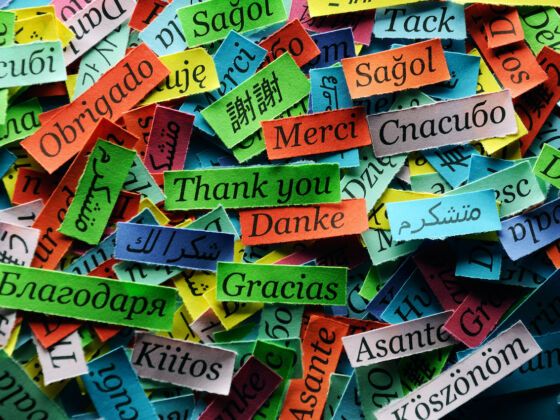
From Spanish to Swahili, the world’s easiest and most difficult languages.

According to an overview of the 14 most popular language course offerings in the U.S, the U.S state department groups languages into three categories:

Category 1: The Latin and Germanic languages, the former requiring approximately 600 hours of study, the latter 750. Grammar and structures are similar to English.

Category 2: Slavic, Turkic, Indo-European languages such as Persian, and a handful of others including Hebrew and some African languages. Around 1,100 hours of coursework.

Category 3:
Arabic, Japanese, Korean, and the Chinese languages. 2,200 hours of coursework.

The difficulty of a language here is established according to several factors: linguistic complexity and similarity to English, accessibility (meaning, do you have to go to a tiny town in the middle of Tanzania to practice it, or can you find somebody on the next block to have a conversation with you?) and cultural factors (for example, in Japanese and Korean honorific language can be confusing and strange to learners coming from cultures that do not have separate terms to distinguish social, economic and/or cultural hierarchies).

I learned Spanish with only three weeks of formal study; the rest of the time I was piecing it all together on the road, on buses with Argentinians, in apartments with Colombian roommates, hiking mountains with Ecuadorian friends. I already spoke French and the grammar between the two languages was so similar that Spanish seemed to come naturally. I attributed learning Spanish so quickly to already being familiar with how to learn a language – sure, once you learn one, you’ve got the skills, right?

Ha! Try picking up Chinese on the road. It’s virtually impossible. A year in China and it was still a minor miracle when a waitress understood my order for cold beer. Granted, I could’ve studied a lot more, but the enormous learning curve for tonal languages can be disheartening, and for as much as I studied and practiced, studied and practiced, I still seemed to be staring dumbly at the summit of a distant peak. I found Japanese much, much easier, with characters that correspond to pronunciation and many words adapted from French, Spanish and English.

And you, Matadorians? What languages have you studied, and which do you find most difficult, easiest, most rewarding? Please share your thoughts and tips below.

Community Connection

If you need to get out of the grammar box, check out five metaphors for language learning and find out why you should get motivated. If you’re willing to take on the major challenge, get some tips from Matador on how to learn a tonal language.


About The Author

Sarah Menkedick

Matador Contributing Editor Sarah Menkedick has traveled, lived, and taught on five continents, and is constantly in pursuit of spicy food, dark beer, and new places to run. She is an MFA student at the University of Pittsburgh.

Archived Responses to Thinking of Learning A Language? An Overview Of The World’s Easiest and Most Difficult Languages

  1. Jeronimo says:

    I’m a native Spanish speaker and my second language is English. I took French in high school and found it easy to learn, I guess because I wanted to learn it and having the Spanish background made it a little easier.

    Funny thing was that when I went to France all my confidence went to the floor! Every time I tried to say something in French, I would say it in Spanish or in English and when I went to Italy, only the French would come out!

    I’m not fluent in French but I will be one day when I move to France and learn it where it’s spoken!

  2. Jah says:

    I’m a native English speaker.

    I minored in Japanese in college. LOVED it.

    I studied Mandarin Chinese briefly AFTER studying Japanese and found it very difficult. My “laoshi” (instructor) informed me that Japanese usually seems easier to learn after studying Chinese, but NOT the other way around.

    I learned Spanish in Peru (where Spanish is spoken beautifully). I had VERY LITTLE Spanish background and initially struggled but I still found it easy to learn because the alphabet is almost exact to my first language’s alphabet. This makes a big difference.

    Now that I’m fluent in Spanish, I can converse with native Portuguese and Italian speakers…not fluently, but we manage. I can read Portuguese and Italian pretty well as well, all thanks to Spanish. The similarities are absolutely helpful.

    I liken French to Spanish/Portuguese/Italian in the same way I relate Mandarin Chinese to Japanese…I feel that Spanish/Portuguese/Italian are easier to grasp once French is learned, just like Japanese (written) comes easier after Mandarin Chinese (written) is learned.

  3. Learning a new language is much more fun when I can practice speaking with native speakers.

    Thai language probably falls into the 3rd category because it’s also a tonal language like Chinese. Many of my foreign friends told me that learning Thai is so difficult, mostly because they can’t get the tone right.

    One tip to get the right tone is to practice saying a word with 5 different tones. For example: “ma” (as you pronounce ma in “mama mia”).
    “Ma” with different tones have 3 different meanings: come, a horse, a dog.

    Keep practicing!

  4. Megan says:

    I’ve studied Spanish, Japanese (just couldn’t do it) and Mandarin Chinese (my dream language…it really gets a bad rap).

    Spanish is easy at first, and while I could survive in a Spanish speaking country and have almost complete a college level certificate in it, the grammar still frustrates me to no end. Mandarin on the other hand, is very simple and logical. I’m far from fluent, but I have no problems with tones and have traveled to China with no problems communicating. They key to Mandarin is managing expectations. Don’t expect anything for a year…don’t expect to feel good or make progress or have conversations. Just listen, absorb and practice. Once you get past that first year (or two), it’s much easier. Oh…and drop pinyin ASAP.

  5. Milana says:

    Haha, so far, catalan has been my downfall. I thought it would be easy since I am fluent in Spanish, and the grammar and vocab was pretty easy. But each time I tried to speak it, the moment I let my guard down, I spiraled into Spanish by mid-sentence. They are too similar! I’d like to go back and learn some more though when I have the time. Catalan is a wonderful, quirky mix of Spanish and French.

  6. RAJ says:

    Hi,
    I am from Kerala,southernmost part of India,where we speak ‘Malayalam’, one of the most difficult of all the 16 odd national languages of India.Its tonal nature,difficult grimmer makes it impossible to master unless you are born here.In school we must learn Hindi ,national language ,and then English is compulsory,as most schooling is in English.Then I studied Tamil, language of adjacent state, though another Dravidian language,much simpler to learn.I did my college in Gujarat state of western India,where language is a variant of Hindi,Gujarati,though mutually not intelligible.I learnt Gujarati. Then I proceeded to Sweden for further education,where i became a fan of Swedish.I always adored Hispanic literature and was my dream to learn Spanish to read it in original.I began studying Spanish and reasonably comfortable on it now,In between I studied Portuguese while in Brazil.. Now my aim is to learn Arabic,an I am studying it now.Comparing to my mother tongue all the other languages are much simpler to learn.Cheers.
    Raj

  7. Hafidz says:

    Hey!

    I am a Malayali too. But unfortunately, the national language in my country is English and my mother’s native language is Malay. So I am fluent in both languages without any knowledge of Malayalam.

    I think that Malay is the easiest language in the world, which kind of makes it unchallenging. I was more interested in the Latin languages, so I decided to pick up French during my high school and college years. Now I could read and write French well, but have no confidence of speaking the language. I have a close friend who is French and she had to resort to speaking ‘Frenglish’ to me, 50% English and 50% French.

    Being raised an orthodox Muslim, I can read and write Arabic and Jawi (similar to Arabic) scriptures pretty well. However, my vocabulary is pretty much limited since I had flunked Arabic consistently during my elementary years in school. I had a year of education in Bangkok, Thailand so I could speak Thai adequately. Even though Thai is a tonal language and is different from all the other languages which I have picked up (or attempted to) previously, I fount it really easy. On the other hand, my written Thai is a disaster, mainly because I really hate to practise written Thai while learning it.

    I have a deep love of languages, and in future I hope to speak French, Thai and Arabic eloquently. I hope to pick up my father’s tongue, Malayalam too. It is really nice to see that everyone who has contributed to this blog post either has a flair or a keen interest for languages.

    Cheers,
    Hafidz

  8. I’m currently learning Mandarin. It’s difficult but I’m enjoying it

  9. Audrey says:

    I’m attempting to learn French right now in college and I am having SOOO much trouble with it- But I love the language, I want to get better at it, but I get so timid trying to speak it in class, how in the world could I survive on the streets of Paris?

  10. Elizabeth Angel Lopez-Hayward says:

    for people wondering about which language ıs the hardest….

Speaking a local language is much more than studying grammar and vocab.
Once you get to a certain point in language learning, you hit the inevitable plateau. ...
Portuguese is a logical next step after learning Spanish. It is different enough from...
The single most important skill any language learner can have is the ability to induce...
Matador presents photographic evidence for why Buenos Aires is such an attractive place...
Nearly half of the world's languages are predicted to disappear by 2050 - what can you do...
Just two hours of Mandarin instruction per week is ineffective.
Begin at the beginning, and put one foot in front of the other.
I want you to experience a side of Thailand, through its language, that most expats never...
It can take time, effort and some experimentation to figure out the best way to progress...
Learners tackle writing systems, tonality, and different grammatical systems.