There’s a map on UNESCO’s website that lets you see all the endangered languages. The “Interactive Atlas of the World’s Languages in Danger” shows languages at five levels of threat, each associated with a color, from Vulnerable (white) to Definitely Endangered (yellow), Severely Endangered (orange), Critically Endangered (red), all the way to Extinct (black).

Photo: Kertu/Shutterstock
5 Languages on the Brink of Extinction That You Can Learn Online
The UNESCO’s five-level of threat to languages is explained on their website as follows:
- Vulnerable: Most children speak the language, but it may be restricted to certain domains (e.g. home)
- Definitely endangered: Children no longer learn the language as a mother tongue in the home
- Severely endangered: language is spoken by grandparents and older generations; while the parent generation may understand it, they do not speak it to children or among themselves
- Critically endangered: The youngest speakers are grandparents and older, and they speak the language partially and infrequently
- Extinct: There are no speakers left
When selecting to see all the Critically Endangered languages in the world, the map floods with red pins. That single category includes 577 languages, which makes up roughly 10 percent of all the world’s languages. (Linguists estimate that there are over 5,000 languages in the world).
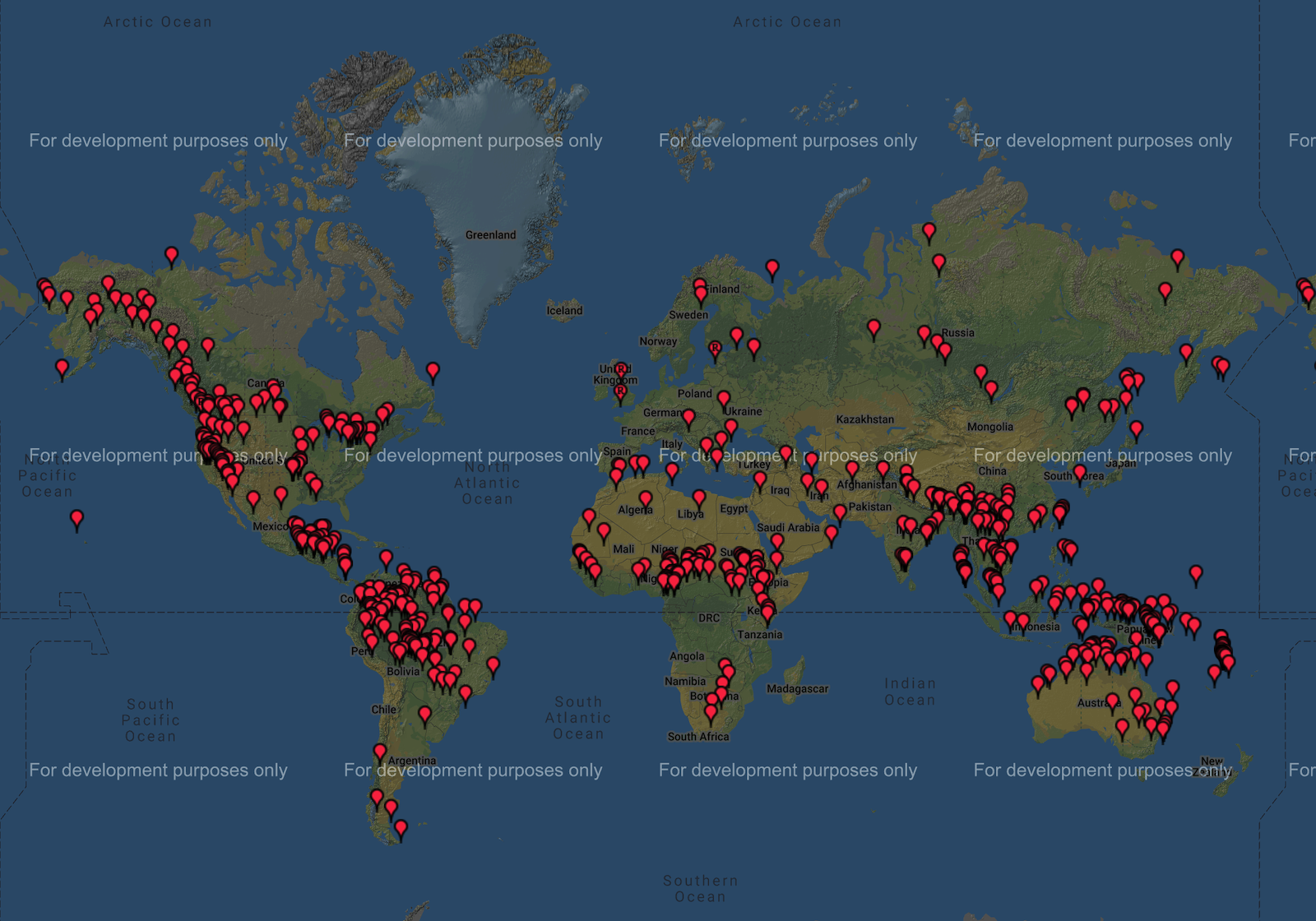
Photo: UNESCO
This alarming number about the loss of the world’s languages is supported by experts. The Linguistic Society of America, explains in grim but simple terms that language diversity is on its way out.
“Some linguists believe the number [of languages in the world] may decrease by half; some say the total could fall to mere hundreds as the majority of the world’s languages — most spoken by a few thousand people or less — give way to languages like English, Spanish, Portuguese, Mandarin Chinese, Russian, Indonesian, Arabic, Swahili, and Hindi. By some estimates, 80% of the world’s languages may vanish within the next century.”
But all hope is not lost for endangered languages. Some apps have given them a much-needed boost. By creating courses that allow anyone to learn some of those endangered languages from their laptop or phones, they are drumming up interest and slowly revitalizing them before they are lost forever.
Here are five endangered languages available for you to learn online before it’s too late.
1. Where can I learn the Hawaiian language?
Listed as Critically endangered by UNESCO, the Hawaiian language suffered terribly after the US took over the archipelago of Hawaii in 1896 and banned its use in schools. However, ‘Ōlelo Hawai‘i has been experiencing a revival in the past few decades. In 2019, NPR reported that there were 2,000 students learning in 21 Hawaiian language immersion schools on the archipelago, and a 2016 government report estimates that over 18,000 people speak Hawaiian at home in the state of Hawaii.
Those who want to learn the endangered Hawaiian language have been able to do so for free on the Duolingo app since October 2018. As of March 2022, it is the language of choice for 586,000 Duolingo users. Hawaiian classes are also available on Memrise.
Read what it’s like for a Hawaiian to learn the language of her people on Matador Network.
2. Where can I learn Yiddish?
UNESCO lists two forms of Yiddish as Definitely Endangered: European Yiddish and Israeli Yiddish. The Endangered Languages Project, however, classifies two different dialects of Yiddish, Eastern and Western Yiddish as At Risk and Threatened, respectively.
There are several Yiddish dialects that differ according to geographical locations, and while all of them may not be endangered, all of them have had fewer and fewer speakers over the past 85 years. The Yivo Institute for Jewish Research estimates that there were nearly 11 million Yiddish speakers before WWII broke, while today there are only between 500,000 and one million.
“In the 21st century, most people who speak Yiddish in their daily lives are Hasidim and other Haredim (strictly Orthodox Jews) [….] mainly in the United States, Canada, Europe, and Israel,” explains the Yivo Institute for Jewish Research in a 2014 report.
Despite the varied forms of the language spoken throughout the world, there is a standardized form of Yiddish that works as a basis to teach the language which has been available for free to all keen learners on Duolingo since April 2021. (There are currently 481,000 Yiddish learners on the app). The website Yiddishpop is another good learning platform recommended by Yiddish experts, but there is no app available. There are also courses available on the Memrise app.
For a taste of Yiddish, check out Matador Network’s “10 Yiddish Proverbs that will Make You Smile”.
3. Where can I learn Cornish?
According to The Guardian in 2013, Cornish is one of 10 Indigenous languages spoken in the British Isles, namely:
- Angloromani (a mix of English and Romani spoken by some Traveler people in England and Wales)
- British Sign Language
- English
- Gaelic (AKA Scottish Gaelic spoken in Scotland)
- Irish (AKA Irish Gaelic, spoken throughout Ireland, the official language of the Republic of Ireland alongside English)
- Manx (AKA Gaelic Manx, revived on the Isle of Man)
- Scots (a term encompassing a variety of Scottish dialects, including Doric and Shetlandic)
- Shelta (language used by Traveler people in Ireland and Britain)
- Welsh (spoken in Wales)
Cornish is a pre-Roman Celtic language from the Cornwall region of England that is closely related to Welsh (spoken in Wales) and Breton (spoken in Brittany, a region of France). While UNESCO lists Cornish as Critically Endangered, The Endangered Languages Project is a little more optimistic by classifying it as Awakening, adding the following information:
“Cornish is a ‘revived’ language; it once had no surviving native speakers, with the last known fluent speaker having passed away by the year 1800, but has been learned by many in more recent times.”
Language aficionados who want to be part of the Cornish revival can take one of the many courses available on the Memrise app or get a good introduction to the language via the website Say Something in Cornish. Alternatively, you can check out BBC Cornwall’s Cornish language course or take Cornish classes via the University of Exeter online.
To learn more about Celtic nations and languages, check out Matador Network’s “The 6 Celtic Nations Around the World and what Differentiates Them”
4. Where can I learn Greenlandic?
Greenlandic, also known as Kalaallisut, is the dialect of West Greenland and the official language of the country. There exist three main dialects in Greenlandic: West Greenlandic, East Greenlandic, and Inughuit Greenlandic (also sometimes referred to as North Greenlandic or Polar Eskimo).
All the Greenlandic dialects belong to the Inuit family of languages which encompasses 20 languages or dialects spoken by around 65,000 people throughout Alaska, Canada, and Greenland.
UNESCO lists Kalaallisut as vulnerable but classifies the other two dialects as Definitely Endangered. The Endangered Languages Project also classifies Kalaallisut as Vulnerable.
You can learn Greenlandic/Kalaallisut online on Memrise and Utalk.
Familiarize yourself with the different dialects by checking out the Visit Greenland video below:
Learn more about Greenland’s culture by reading “Greenland’s National Costume is a Work of Art” on Matador Network.
5. Where can I learn Navajo?
Listed as Vulnerable by UNESCO and At Risk by the Endangered Languages Project, Navajo, also known as Diné Bizaad, is an Indigenous language spoken in Arizona, New Mexico, Utah, and Colorado.
According to the language expert at Rosetta Stone, Navajo is still spoken by 100,000 people (the Endangered Languages Project estimates there are 120,000 speakers) but its usage is declining fast. That’s why Rosetta Stone has developed the Navajo Rosetta Stone app available for purchase here.
You can also learn Navajo on Duolingo for free. The language-learning app made the course available in October 2018, at the same time as its Hawaiian course. Today, there are 293,000 Navajo learners on the app.
Cudoo and Memrise also offer Navajo language courses online.
Read “Visiting Indigenous Communities is a Delicate Balance of Respect and Education” on Matador Network if you want to visit the Navajo Nation. 