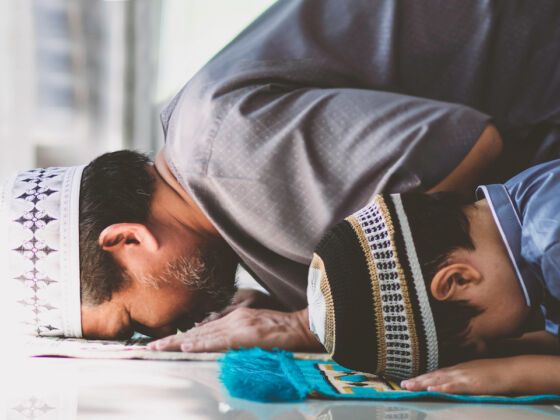
Women Praying Jamaah / Photo: dmahendra

Ramadan, a holy month of spiritual fasting, is an opportunity for travelers to experience Islam in a personal way. Here’s how to participate.

When the flight attendant turned down my request for wine with dinner shortly after the Royal Air Maroc jet bound for Casablanca took off last September, I realized my yoga retreat in Morocco would bring some travel surprises.

There was no booze on board—and every Muslim on the flight was observing Ramadan.

If you’re a practicing Muslim traveling in the Islamic world, you already know what to expect during the holy month of Ramadan. But if you have little knowledge of the holiday, like me, you may want to brush up on what this period of devotion and self-sacrifice means.

The appreciation of the holiday will open up some meaningful conversations with your local hosts and create some great travel memories. Follow these five tips, and you’ll enjoy a more spiritually engaged Ramadan travel experience.

1. Know the facts.

Ramadan, which takes place during the ninth month of the Islamic calendar, is a month-long period of patience, modesty and spirituality. In 2009, the holiday starts on August 21 and continues until September 19.

The Koran forbids food, drink, smoking and sex from sunrise to sunset during those 30 days. I learned this from my taxi driver in Agadir, and we spent my entire cab ride talking about how cleansing self-denial can be.

People who follow Ramadan, also called “submitters,” may eat and drink “until the white thread of light becomes distinguishable from the dark thread of night at dawn,” the Koran says. Then, submitters fast until sunset.

2. Practice self-restraint.

Henna hands, last day of Ramadan. / Photo: dfyoung

It’s easy to view travel time as free to be more self-indulgent than you would allow yourself at home. You’re on holiday and no one knows you in this foreign place, so why not?

But gorging can blind you to the significance of the event. And isn’t the whole point of travel to keep your senses open and awake to the world?

Fasting in Arabic is called “siyam” or “sawm,” which means, “to be at rest.” Suppressing your appetite is a form of prayer. Your quiet state allows you to come closer to God.

In Morocco, restaurants are open during Ramadan and some of them serve alcohol, so you won’t have any trouble finding food or drink. But be extra kind to your servers, who haven’t taken so much as a sip of water since waking up and are probably waiting to go home before they break their fast.

3. Seek community.

While in Agadir I visited the Kasbah d’Argan oil shop and, once again, found myself immersed in a conversation about the meaning of Ramadan. (Argan oil, pressed from the kernels of the indigenous argan trees that grow only in southwestern Morocco, is prized for its nutritive and medicinal properties.)

I told the shop’s owner about my yoga retreat and our daily sun salutations, and he responded by showing me a Salaah prostration with his forehead, knees, nose and palms touching the ground. The position looked strikingly similar to the Chaturanga Dandasana position of the sun salutation sequence I practiced every morning.

Now, I’m not saying that you have to prostrate yourself on the ground to make friends from foreign countries, but I do recommend seeking a sense of commonality through shared faith.

4. Share your water.
Nothing reflects the spirit of Ramadan better than performing an act of charity.

At the end of a long day of surfing on a beautiful beach with my yoga mates, we noticed a group of local teenage surfers collecting half-drunk water bottles from people as they headed home.

These guys had been observing Ramadan and surfing all day in saltwater—and they were parched. Once we spotted their need, we handed over as many bottles of water as we could gather together.

Nothing reflects the spirit of Ramadan better than performing an act of charity.

5. Breathe.

Because I was on a yoga retreat during Ramadan, I was constantly reminded of the blessing of breath. The yogic breath is even and deep, and paying attention to it reminded me that I was here, now, alive.

Similarly, Muslims perform Salaah, the fixed ritual of Islamic prayer, five times a day. During the prayer, worshipers focus on their breathing with each verse they recite.

In a Muslim country during Ramadan, life moves at a slower pace. Use the time to meditate and follow your own breath.

Community Connection

Don’t miss Tim Witting’s thoughtful essay on Spiritual Fasting: How To Appreciate Life Through Temporary Deprivation, and the powerful story from Sarah Shroud Escape From Iraq: A Muslim Family Finds Solace In Ramadan.

Have you experienced Ramadan before? Share your advice in the comments!

ReligionIslam
 

About The Author

Joyce Hanson

Joyce Hanson is a Brooklyn, NYC-based writer and editor with a love of travel, green living and wicked women in history. You can learn more about her at www.joycehanson.com or by checking out her blog.

  • Nick

    Nice tips to make the most of Ramadan. I think it’s worth noting a couple of other things. One is that you don’t have to fast yourself, of course, but it’s considerate to avoid obviously eating, drinking or even smoking in the street during daylight hours. Secondly (in Egypt at any rate) don’t expect to get a great deal done during the day: everyone lives for the night, when there are fantastic, communal celebrations going on all over the place. Many people break their fast (iftar, or breakfast) together on the street once the sun has gone down. Whether you’ve been fasting or not, everyone is more than welcome. Finally, why not try fasting for just one day (as long as you can arrange a relaxed schedule). Not the full fast, but perhaps abstain from food and fags, something like that. Ramadan karim!

    • http://www.poweredbytofu.com Powered by Tofu

      Good tips! I was in Turkey during Ramadan last year, and I met quite a few Egyptians and Moroccans that said Ramadan was much stricter and not really viewed as “optional” in their countries (which is why they like to travel during Ramadan to more liberal countries), which I found quite interesting… It was really fun to see everyone everyone celebrating in the evenings, definitely a cool experience.

  • Joey

    Do you want to have real freedom of religion? Well than quit trying to pander to a religion that you are not a follower of. Would you not eat around Jews on Yom Kippur? Of course you would so act the same way toward Muslims. They will respect youmore for your honest approach.

    • Nick

      Hey Joey, I hear where you’re coming from, though I disagree. I’ve never lived in a country that is nearly 90 % Jewish, though, so I really don’t know what I would do during Yom Kippur. What I do know is that – unlike Yom Kippur – Ramadan goes on for a whole month, and people try (as much as possible) to carry on with their normal day to day lives. They find it very difficult: they fade, and become cranky. Even though I don’t subscribe to the tenets of Islam (or any religion), I believe it’s respectful not to walk down the street slugging from a bottle of coke and eating a sandwich. This is nothing to do with religion, it’s to do with being hungry and thirsty. Many people say that non-fasters should behave as they normally would, since the fast is not meant to interfere with the practitioners’ lives. I understand the point; I just don’t agree with it. You don’t see the Coptic Christians here wandering the streets eating and drinking during Ramadan, either. It’s about consideration, not pandering to religion.

  • Timothy Ache

    Ex-pats, tourist and non-Islamic westerners need to expect a much different daily routine. Life switches from day to night. Stores open late in the day and some people sleep through to sunset if possible. Try to keep your skin covered in public places i.e. Long pants and long sleeves as a show of respect. 5 star hotels will serve you meals during the day but don’t expect much. Early in the morning a man will walk the street pounding drum to awake you to eat before the dawn. Some places enforce Ramadan with rule of law. Expect imprisonment and heavy fines if caught breaking the rules in places. Do not drive when sunset approaches! No one has eaten/drank all day and in hurry to celebrate with friends and family. Traffic is “deadly,” so be careful. The fast is broken at sunset an in some places a volley cannons sound to signify it. Iftar celebrations are amazing affairs that shouldn’t be missed if traveling during the holy time of Ramadan.

  • http://0ksijen.spaces.live.com/ Ozhan

    We, Turks have a tendency to not eat delicious food open in the street, wheather it is Ramazan or not. Because the person who sees you, may be richer than you but perhaps at that moment s/he doesnt have oppurtinity go and buy that smelling kebap. So Turkish mothers are used to say “if you are not going to offer it to everyone you saw, go and eat your chocolate at a quiet corner”.

    But sadly this tradition slowly dies as we are becoming more western.

    ***Come to Istanbul during Ramazan and have a public dinner with hundreds of people.***

  • Paul

    It is also important to remember not to chew gum during daylight hours.

    Essentially, during Ramadan daylight hours anything that enters the body is not allowed. This also includes, showering and putting on deodrant and aftershave / perfume. Of course, travellers to Morocco don’t have to abstain from Showering etc during daylight hours. But as the article states, do be careful and courteous by not visibly eating or drinking during the day. If you find a Cafe or restaurant open then eat inside, not outside.

    During the late afternoons, people can become very very grouchy and this can sometimes lead to violence and outbursts (very serious cases in some locations) as the denial of cafeiene, water and nicotine takes it’s toll, so be even more aware of yourself during these late afternoon hours.

    For those travellers who will not be in the typical tourist resorts, but perhaps will be in other towns across Morocco, don’t be surprised if you hear the Air raid siren blasting out at around 7pm…..it’s not an air raid, it is a signal to inform everyone that the fast of the day is over!

    With regards to Joey who commented above….don’t worry about him, he probably never will visit a Muslim country, which is the best option for him with his so obvious anti courtesy comments, demonstrating a lack of understand for the diversity of peoples in this world.

  • http://evaholland.com Eva

    Great topic!

    I think it’s important to note, as we’re all chiming in, which area exactly we’re talking about. The traveler above who mentioned possible imprisonment, only 5-stars serving food during the day, etc. makes some good points, I’m sure, about wherever he’s describing (where?), but it doesn’t reflect my experience in Istanbul at all – where many Turks I spoke to during Ramadan weren’t even keeping the fast themselves, let alone worrying about foreigners. We dressed slightly conservatively, ate discreetly, and certainly weren’t worried about any law enforcement. The Muslim world is pretty vast, after all, so the bottom line is to inform yourself about expectations/norms at your destination, and do your best to respect them.

    • Timothy Ache

      I’m describing the Kingdom of Bahrain with Ramadan being enforced with the rule of Law in public places. The typical fine is 500 BD (apx $1350) and the judicial system has the ability to keep you imprisoned till the end of Ramadan. That is the the maximum (I think). Its not a bad time to visit the Muslim world. Contrary its a great time for spiritual reflection and celebration (at night).

      • http://matadorabroad.com Tim Patterson

        Thanks for the clarification – v. interesting info.

  • http://www.getchinatickets.com Sheheryar Khan

    Nice tips for Ramadan. Month of Ramadan is Blessing month.

  • http://matadortravel.com/travel-community/green-goddess Green Goddess

    I’ve really enjoyed reading everybody’s comments. I wrote this article based on my travels in Taghazout and Agadir, which are on Morocco’s southern coast on the Atlantic Ocean. Taghazout is a surfing village and Agadir is a desert town that has seen quite a bit of growth recently as foreigners buy holiday homes there.

    I was told by the southern Moroccans that I met that they’re more chilled out and laid-back than the Arabs one might meet in a place like Saudi Arabia–or even northern Morocco. And I did indeed find that even though they were fasting all day, the people I met were quite jolly. One afternoon in town, I sat in an outdoor cafe with a girlfriend, and a couple of Moroccan guys hung out with us and told us about Ramadan as we ladies drank our cups of mint tea.

    During the daytime in Agadir, a few of the women on my yoga retreat went to the “hammam,” or public baths. On the women-only side, of course. The Berber women who worked there were surrounded by water and steam, and though they scrubbed and soaped and massaged our naked bodies, they couldn’t even sip a few drops of liquid refreshment. Amazing. They were surprisingly good-humored except for one scowly lady who wouldn’t crack a smile even though I kept stupidly grinning at her.

  • http://travellerwithin.blogspot.com Mo-ha-med

    I enjoyed that! Rather than a ‘how-to’ for minimising the annoyance caused by Ramadan to travellers, a how-to enjoy it and take part in the spirituality of the month. Thank you, Joyce!

    A muslim myself, I’ll be in Egypt this ramadan — and I’ll surely be using a few of those tips myself!

    Allow me to add, as a practical note, that many restaurants and food joints in Muslim countries will be shut during the day, but supermarkets will be of course open. And most people will likely be quite indulgent if you drink or eat (though be kind enough not to shove your yummy-smelling sandwich under their noses! :-) )

    And for Joey: actually, no, I don’t eat around Jews on Yom Kippur, nor do i speak on the phone when walking past a religious neighbourhood in Jerusalem – where I lived for several months – on saturdays. It’s not about ‘pandering’ to anything. It’s both a matter of respect, as well as a desire to connect with the community you are a guest of, and to embrace the spirituality of a religious way of life. You can only come out of the experience a better person.

    • http://matadortravel.com/travel-community/green-goddess Green Goddess

      Nice to hear from you, Mo-ha-med. Your comments about enjoying Ramadan remind me of something my yoga teacher once told my class when we were all twisted into an uncomfortable shape: “Find something to enjoy in the position.” Cheers, Joyce

  • su mei

    hey joyce! that was so lovely ive just read it to my friend who is a muslim from malaysia and we have been talking about how islam nowadays has become so much about the law, political and focussing on what not to do rather than what’s beautiful. your article was so beautiful ! i miss morroco !

  • Artemis

    Another tip – if you’re invited by a local to join in on the evening meal or even for just a cup of tea, accept the offer. If you are not familiar with the culture and have never experienced a nation in Ramadan, embrace it because this is the chance of a lifetime.

    But a word of warning – if you are ever travelling through a country in Ramadan, I would advise against being on the road between 3pm and sundown…this is when every person everywhere is in their car, truck, bike, cart, on foot, etc., scrambling to get home in time for sundown. Hungry + tired + hot + heavy traffic = road rage like you have never seen!! Very entertaining, but I would suggest parking oneself until ‘rush hour’ is over.

  • Artemis

    Ah, cheers Timothy Ache, I just realized you already touched on the traffic situation…perhaps this will doubly reinforce the word of caution to future travellers during Ramadan!

  • http://www.ibnibnbattuta.com Andrew Farrand

Islam →

A look at some of the effects of the holiday.

Religion →

The only thing at stake was the soul of an infidel, my soul, and Sheikh Mohammed -- an...

Religion →

Hannah Barth gives a glimpse into what happens when a non-believer decides to participate...

Islam →

Muslim leader Irshad Manji blasts the negative responses to a now infamous South Park...

Islam →

What does inter-faith cooperation look like? Troy Nahumko finds a shining example in an...

Islam →

Baxter Jackson hits the streets of Cairo to unravel the religious, cultural and...

Islam →

A converted U.S. Muslim journeys to Mecca to participate in the Hajj.

Religion →

Preventing injustice seems to be an important aspect of spirituality. But where do we...

Religion →

Students in Florida as young as 10-years-old are showing up to school in anti-Islam...

Religion →

French President Nicolas Sarkozy's speech about a possible burqa ban in France reignites...

Religion →

Governments aren't the only ones using secret agents these days. An explosive exposé by...

Islam →

A holy mark or normal callus? Baxter Jackson uncovers the mystery of the third eye of...