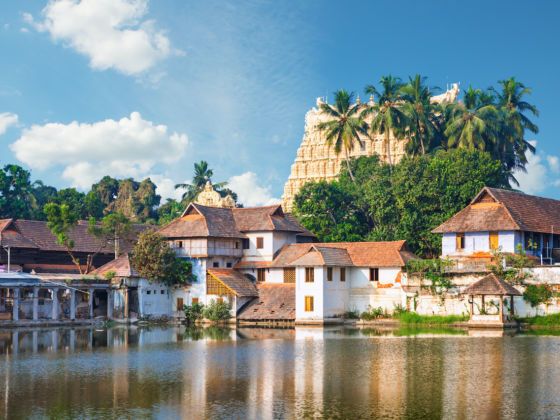
The idea is to increase increase tourism dollars by catering to the upper class. But how will this affect the culture of India?

Photo: wili_hybrid

Marketing. These days, everyone is finding their niche, their place in the big-bad capitalist market, their branding, if you will.

And apparently, this includes a new and improved “upscale” India.

Amitabh Kant, former joint secretary in the ministry of tourism, just released a new book called, Branding India — An Incredible Story.

In it, he details how the “Incredible India” campaign, created in 2002, has approached increasing tourism.

Check out the campaign video:

More importantly (to some people), is that since the campaign began, tourism has increased more in value than in volume – leaping from $2.8 billion to $11.5 billion spent, while the number of visitors only grew from about 2.3 million to about 5.6 million.

In the Business Standard article, Position India as an upmarket destination, Kant says:

Based on a well-researched strategy, we worked out a marketing plan…we were clear about the positioning of the destination, in that we were not looking at a mass destination — we were looking at India which was going to appeal to the upper end of the market.

Ah yes, the all important “upper end of the market.”

The Positives And Negatives Of Increased Tourism

It’s a given that more tourists means more employment, as Kant notes in the article. Tourism floods money into a country, often helps with improving health conditions and infrastructure, and makes technology more accessible.

At the same time, increased tourism, especially of the upscale variety, means the development of a consumerist monoculture (snow globes of the Taj Mahal, anyone?), environmental degradation and upheaval, and makes technology more accessible (yes, this can be a bad thing).

Don’t get me wrong. I think all the people of India deserve good clean, running water and basic needs taken care of, and maybe this type of branding will help with that.

But to me, India is about the sacred and divine, over-crowded streets, and dysentery. It’s not always pretty or comfortable, but isn’t that part of the point?

Buddhism At Its Finest

Religion is also being used to stimulate this influx in tourism. As India Reports notes, a spotlight has been turned on Buddhism and it’s power to bring tourists to the country.

Photo: wili_hybrid

Pilgrimages to the Bodhi tree “might provide [India] with more tourist revenue (estimated at one billion dollars) than the Taj Mahal” if their plans for constructing hotels of “international standard” and more direct international flights from places like Japan and China (note the US is not mentioned) goes through.

Alright, so then we could be just as comfortable as if we were visiting the Taj Mahal in Vegas. Fantastic.

But I’m still not convinced that catering to upscale clientele (tourists), who often fall on the high end of resource consumption, is going to be the best thing for the people, or land, of India.

What do you think of the “branding” of India as an upscale destination? Share your thoughts below.


About The Author

Christine Garvin

Christine Garvin is a certified Nutrition Educator and holds a MA in Holistic Health Education. She is the founder/editor of Living Holistically...with a sense of humor and co-founder of Confronting Love. When she is not out traveling the world, she is busy writing, doing yoga, and performing hip-hop and bhangra. She also likes to pretend living in her hippie town of Fairfax, CA is like being on vacation.

  • http://collazoprojects.com Julie

    Christine-

    Excellent article. You’ve raised issues that aren’t just pertinent to India but in the “developing” world in general.
    When I went to the Brazilian Consulate to apply for a visa, I was given a glossy brochure full of beautiful people– all white/light skinned and–especially curious–all foreign! “Doesn’t look like Brazil to me!” I thought, and I wondered what kind of false expectations it set for visitors and how it misrepresented “true” Brazilian culture.

  • Ryannah

    The sad thing about this kind of tourism is there seems to be very little trickle down effect. Often the fancy hotels are run by foreigners and the bulk of the profits leave the country. When the resorts and hotels are run by locals that is a step up but still I think that countries need to take steps to ensure that the extra money goes back into their country to start to benefit everyone. After all, not only rich tourists deserve clean water.

  • http://weightofsilence.wordpress.com Shelley Seale

    Excellent article, with some very good points. Sometimes I wonder if people who travel too much in this manner are ever seeing the “real India” – or anyplace else they visit. And by real India, I don’t mean that of poverty at all. There is much more to India – and it IS incredible! But there is far more to it than 5-star hotels and luxury tour operators that shield a visitor from much of what makes the country, and any travel experience, truly meaningful.

    I actually write about this very thing quite a bit in my book, The Weight of Silence: Invisible Children of India. I visited Dharavi once, the largest slum in India (located in Mumbai), and what I found there really surprised me. I think that people should get off the beaten path and discover what makes India truly special.

    thank you for this article!

  • Gabriela

    When I’ve traveled in India, as well as most other third world countries, I think I’m most taken aback by the incredible wealth gaps between people. There is a very large percentage of India that is extremely wealthy, incredibly modernized, and (sadly in my opinion) Westernized. There is a sharp dilemma…So many Western organizations and projects that seek development and “modernization” in third world countries but then travelers who mourn the changes when these societies suddenly start to reflect the West. How do you solve this dilemma brought about by the best of intentions?

    I also thought immediately upon seeing the “Incredible India” video about the overcommercialization of yoga. It seems so many people want to chase the “authentic yoga” experience to its source, but how authentic is it when it’s all set up as a luxury package?

  • mark

    I think that strong cases could be made both for and against the encouragement of upscale tourism to developing countries.

    The author has certainly pointed out some of the more significant positives and negatives. The case against upscale tourism, however, would be stronger if some of the more self-serving justifications were left out.

    Perhaps I have misinterpreted some of the author’s thoughts, but while reading the article I found myself wondering what the reaction of the average Indian living in less than ideal conditions would be to some of the points put forward. I am guessing he/she might be a bit incredulous. Access to technology as a negative? India being about the sacred and divine, over-crowding, and dysentery? Harsh conditions as part of the point?

    What point is that? To experience the “real” India, the “authentic” India? Is the “authentic” India in danger of disappearing if revenue generated by upscale tourism helps ease some of the harsh living conditions experienced by Indians every day?

    This sort of talk seems a bit colonialist and seems to emerge out of what is called “the salvage paradigm”, in which a culture is represented by outsiders as going through fatal changes, and therefore must be saved, or salvaged.

    Again, I may have misinterpreted or read a bit too much into the article, but this was my initial reaction.

    • http://www.truequanimity.com/ Christine Garvin

      Mark, my perspective comes from having danced and been close friends with several Indian women who grew up in India and the Fiji Islands, who came to America between ages 14-late 20s.

      What I meant by access to technology, and why I put it in both the positive AND negative columns, is the fact that the western world is exporting our high rates of heart disease, previously unheard of in “developing” (I use quotes there because I always take this word with a grain of salt) countries. I fully believe everyone should have access to technology and information, but do I believe everyone, including Americans, should be putting their lives on the line because they can never turn off? No, I believe a lot of Indians have led a much smarter, and healthier lifestyle, and I’m not interested into strapping them into ours.

      “Harsh” conditions are absolutely a part of the point. I was referring specifically here to a tourist having to experience these conditions because these conditions are not necessarily “harsh” to the people that live in India. It’s a bit colonialist to believe that what you see is negative or harsh because it’s not YOUR idea of a good life. First of all, they don’t have the stomach issues that tourists do because their immune systems are set to deal with the types of bugs that are found in their foods, homes, etc. Given, they probably would (and often do upon moving to Britain) get sick being in a sterilized environment in the West, but we’re the ones for whom the overabundance of antibiotic use has made for weak-as-hell immune systems.

      Second, being close and over-crowded is a huge part of being Indian, along with inviting strangers into your house for chai and chat, and no, I don’t want that to change for anything.

      And as Ryannah mentioned, there is often little trickle-down effect in terms of the money coming in. As I stated in the article, I fully believe that every Indian (but I’ll change that here to every person in the world) deserves access to clean water. And good food. And good medicine. And health and happiness. I’m just not sure that bringing in rich tourists are the way to attain these basic human rights.

  • http://blog.robertpayne.net Robert Payne

    I appreciate what this blog post is trying to convey in that no one wants to see the unique aspects of a culture, or the myriad of people and their corresponding demographic and psychographic attributes, negatively affected by a narrow focus on tourism dollars. There are indeed far reaching ramifications if it is not done right. The issue of resources is complex because India has large import/export capabilities, and I think it is more a matter of class, education, and social policies.

    Nevertheless, India’s new branding and marketing campaign makes a lot of sense to me. Focusing on the people who have the most disposable income, and yet, are sensitive to health issues, poverty, violence, and general discomfort when they travel is a good way to allocate their marketing spend. The fact is the country of India, fair or unfair, does have to contend with negative perceptions that impact travel. It might not impact you, the lower end of the market, in the same way as a higher end travel that can carefully choose where and how they travel, but it does have an impact on tourism nonetheless.

    And it does play a significant role in the country’s economy when this marketing strategy succeeds. Everything from more flexible airline flights, jobs based on infrastructure improvements and new construction, tourism-specific employment, taxes, and so on. Of course, any changes are going to be felt and seen, but I think India is wise enough to preserve its unique culture. Furthermore, it is up to the people of India to do so.

    For someone who readily accepts advertising on their website, which incidentally I see now has an ad from Montana that says, “nothing but grizzlies and wolves and bison and trout,” what do you propose they do? How would the advertising be different? And how would it play a role in resource consumption?

  • sandra

    hey christine…i wonder if you have seen this year’s commercial for “incredible india”…we are saying we are a country for all kinds of travelers/tourists and i mean all budgets as well…let me assure you that along with the mystic and the crowds and the dysentery which we still do have ;we continue to have the best minds in the it business and i believe india may be the only so called “third world”country with a negative growth of inflation…so it is touching your concern of the upscale traveller’s affecting us negatively…but i doubt if that is really the case…we are an extremely resilient country and i would like to believe pretty much in charge of our destiny…and for over 5000 years, we have had travellers and invaders alike visit us…and am proud to say we are still here steeped in our culture but happy to integrate what suits us from the western world..i myself sometimes worry about how the youth leans so much to the west but knowing the history of my country i guess we will do fine…. and so like we say in india…swagatam.. to all you lovely travellers visiting incredible india…

  • Dave

    Middle class Indians will exploit India until there nothing left but a smoldering Tata Nano amongst a billion empty pan packets….

  • Melanie

    Hi Christine,
    I read your article, and while I don’t disagree with most of it, there’s one part that I find particularly chaffing, being an Indian.

    “But to me, India is about the sacred and divine, over-crowded streets, and dysentery. It’s not always pretty or comfortable, but isn’t that part of the point?”

    You see, India has moved on, way ahead from that description, but the problem is that writers like you refuse to see it that way. The Incredible India campaign sought to change that. Given the exchange rate between most Western countries and India, the middle class from most Western nations can afford an upscale holiday— a fact that I’m certain Mr Kant is aware of. I think it’s high time that writers, take note and wake up to the fact that India is NOT ONLY hardly about elephants, sages and dysentery and poverty. Perhaps, it might change your experience of the nation in one felt swoop. That’s what Amitabh Kant was trying to do.

Recipes →

Find out what a phuchka is, where to find them, how to eat them like a local and how you...

Volunteer + Work →

Shreya Sanghani gives you plenty of resources to plan your own volunteer experience in...

Photo Essay →

From samosas to healing waters, India bridges the divide between food, spirit, and modern...

Religion →

Renowned spiritual leader Swami Ramdev is ready to take on Indian politics through the...


Reeti Roy recounts the life of the man who advocated dalits' (or "untouchables'") rights.

Food →

Dig into the frenetic world of Indian street food to the sounds of a didgeridoo.

Trip Planning →

5 slightly odd activities to occupy your time in Jaipur.

Photo Essay →

Stunning portraits taken during the Kumbh Mela festival, March 2010.


The Diamond Maruti Car Circus in Delhi ~ motorcycles and cars circle the Wall of Death.

Culture + Religion →

The caste system has become as much a part of India's social networking as everyday life....


Whether you go and actually see the poverty of India up close, it will be there...


No ticket on an Indian train? Boxers and wrestlers have been hired to rectify that...