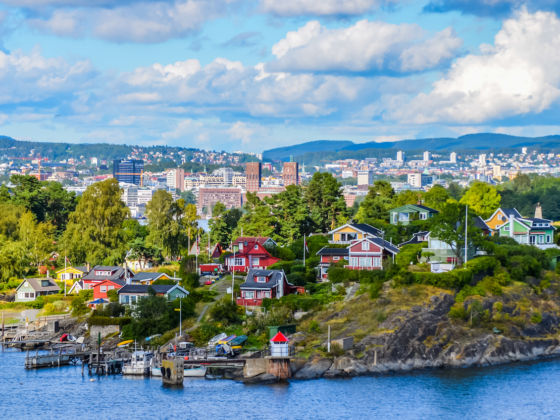
Photo: Cebete

In many ways, Norway is a green pioneer.

The world’s first Secretary of the Environment was appointed here in 1972. Marketing any car (including Prius) as environmentally friendly, green, or clean is considered misleading and therefore illegal. In 1994, Lillehammer presented the first green games in Olympic history. Plates and cutlery were so eco-friendly, you could eat them. In rankings, Norway is in the top five among the world’s greenest, cleanest countries.

The government aims to be carbon neutral by 2030. Trouble is, the easy changes (like closing coal-fired plants) were implemented decades ago. The country is already powered by nature; electricity comes from rivers cascading down mountainsides. Ironically, the remaining pollutants are also the source of Norway’s wealth. It’s difficult for one of the world’s largest oil exporters to further reduce emissions at home.

Instead, Norway invests heavily in emerging technologies, including carbon capture and storage. Additionally, the government buys carbon credits by financing environmental projects in developing nations as allowed through the Kyoto Protocol’s flexible mechanisms. Not everyone is happy with that. According to local environmentalist Frederic Hauge, “[W]e’re a nice little selfish country of petroholics…”

“The easy changes (like closing coal-fired plants) were implemented decades ago.”

That aside, it’s easy being an eco-responsible traveler in Oslo, whose vision is “…to pass on the city to the next generation in a better environmental condition than we ourselves inherited it.“

Green Transport

You could take a taxi from the airport to the city center. But that would be silly. And expensive. Flytoget (the Airport Express Train) gets you to the city center in just 19 minutes. Flytoget is also a very eco-conscious company, causing no airborne pollution, using recyclable materials, and continually working to increase longevity of the trains and reduce noise levels and energy use.

Getting around Oslo by car is difficult. City streets are often one-way or closed for through-traffic. Parking is prohibitively expensive and often limited to one or two hours, discouraging locals from driving to work. And it works; many don’t even own cars.

Public transport is quick and efficient. For short-term visitors, the Oslo Pass includes unlimited use of buses, metros, trams and ferries. City bikes can be picked up and parked at more than 100 locations. The smart card necessary to detach the bike from the stand is available at the Tourist Office for 80 NOK per 24 hours (cheaper with a seasonal pass).

Photo: MGSpiller

But best of all, Oslo is very walkable.

Green Eating

Eating locally produced food is easy. Most top-notch restaurants emphasize using local produce. Vegetarians will enjoy Spisestedet, Veggis Café, Fragrance of the Heart, and numerous Indian and Pakistani restaurants around town. My veggie-favorite is Krishna’s Cuisine, offering an excellent daily buffet at a reasonable price. An Oslo-branch of vegan chain Loving Hut opened in July 2010. Check out Happy Cow’s list for more options.

Green Shopping

Numerous retailers sell clothes that are produced ecologically and under good working conditions, including DiN (Designed in Norway) and Alphaville, who also upcycle old rags into colorful new items. Friends Fair Trade offers a large selection of fair trade goods, including clothes, jewelery, musical instruments, and toys.

Many local chains actively oppose the fur trade and are otherwise eco-conscious, including BikBok, Carlings, Helly-Hansen, Stormberg and many more. Fair trade roses are available from Mester Grønn. At the creative hairdresser Hope Hair, all furnishings are recycled and products are organic.

Green (and blue) Spaces

Surrounded by mountains, forests, and fjords, nature is never more than 15 minutes away from Oslo. Locals take advantage of this at every opportunity. Thirty years ago, arriving in Oslo on a Sunday, you could easily be forgiven for thinking you had come to a ghost town – clean, but deserted. That’s because everyone was out skiing, hiking, biking, canoeing, or just walking.

Not so any more. Increased immigration and globalization have made Oslo a very cosmopolitan city. Today, cafes and restaurants are open Sundays. (Not stores, though – Sunday is essentially a shopping-free day.)

“Many believe cabin life should be physically challenging. The ideal cabin should have no electricity or indoor plumbing and be a long walk (preferably uphill) from the road.”

But in their hearts, many Norwegians feel they belong outdoors. Having a hytte (cabin) is still a cherished custom. And although cabins have become increasingly comfortable, many believe cabin life should be physically challenging. The ideal cabin should have no electricity or indoor plumbing and be a long walk (preferably uphill) from the road. When local billionaires build cabin palaces, most people cringe. It’s just wrong. Even the Royal Family embraces a relatively simple lifestyle. During the international oil crisis of 1973, the king picked up his skis and got on the tram with everyone else.

DNT (The Norwegian Trekking Association) offers route suggestions and has 460 cabins around the country, most with lodgings. If you’d rather not trek on your own, the association leads 4,000 group hikes annually. I know many who have met like-minded people on DNT-hikes. (Some are still married after 25 years :)

Less strenuous is a hop-on, hop-off mini cruise in Oslo harbour, a good way to get your bearings. Beginning at City Hall, the old wooden sailing boat stops at Oslo Opera House, where you can ramble around on the cool, sloping marble roof with locals.

Next is Bygdøy, home of Viking Ships, the Kon-Tiki raft, the Polar Ship Fram, the Maritime Museum, the world’s oldest outdoor museum, Huk Beach (clothing optional), and lovely nature walks.

Returning to City Hall, the renovated ship yard Aker Brygge is just a few meters away, as are the medieval Akershus Fortress and the Nobel Peace Center.

Photo: uitdragerij

Another local open-air favorite is Frogner Park, showcasing the work of sculptor Gustav Vigeland. Finally, the Oslo fjord islands are definitely worth visiting. At Hovedøya, you can sunbathe, swim, play, and walk among protected plants, birds, goats, and the labyrinthine ruins of a 12th century monastery.

Green Sleeping

The hotel chains Thon, Rica, Scandic and Choice all hold eco-certifications. Vandrerhjem (meaning wanderer’s homes) are located around the country, including Oslo, and can be booked through Hostelling International. Several ecological farms offer accommodations, including Berger Gård in nearby Asker.

During summer, you can stay in a mountain cabin or camp. Allemannsretten ensures everyone the right to pitch a tent on uncultivated land, regardless of ownership.

Community Connection:

Matador’s Oslo Destination Expert, Anne-Sophie tells you What NOT to Do in Oslo.

And if you can’t get enough of Norway, check out Wyndham Wallace’s photo essay on Matador Nights.

Green Guides
 

About The Author

Anne-Sophie Redisch

Anne-Sophie Redisch is a bilingual writer who loves hopping off a train in a new city. Her two daughters often come along, enlivening the travel experience. She has lived in the USA, New Zealand, and Norway, and her work appears regularly in in-flight magazines and various Scandinavian and English media. She blogs at Sophie's World and tweets as SophieR.

  • http://www.rebeccakinsella.wordpress.com rebecca

    not sure about cabin life or no-shopping Sundays but it sounds like a beautiful place to be! I’ll definitely check out the vegetarian restaurants when I visit :)

  • http://www.mikesryukyugallery.com Mike

    Great writing. I’m all for going green and wish more countries would follow Norway’s lead.

  • http://letsdosomethingdifferent.wordpress.com/ Natalia

    Great article highlighting how to go green in Oslo. One thing you left out – the green, non-flying alternatives to get there! Or maybe you saved that for another post?

  • http://nancythegnomette.com Nancy Harder

    I’ve been fascinated by Norway since I was a child. Haven’t made it up there yet, but will definitely be consulting this when I do go. I’m impressed by all their green initiatives, though I’m not surprised! Glad to hear about all the veg options too. Finding veg food in Helsinki wasn’t so easy.

  • http://www.toddswanderings.com Todd

    Great article Anne-Sophie. I am always a fan of taking the extra step to make our travels green. It’s great when it is fun too.

  • http://unexpectedtraveller.wordpress.com Unexpected Traveller

    Everything might be green, but the sanity levels are low too in Oslo: http://wp.me/ppqxP-qD

    • http://www.sophiesworld.net Sophie

      @Unexpected traveller: That video is too funny. (That wasn’t a household appliance conference, was it? :)

      • http://unexpectedtraveller.wordpress.com Unexpected Traveller

        Nope – not a household appliance conference but, believe it or not, an IT conference ….

  • http://holeinthedonut.com Barbara Weibel

    What a fascinating, wonderful post. Made me want to visit Oslo immediately. I’e been traveling in Mexico for the past 4 months and was appalled at the amount of trash that washes up on the beaches in the Yucatan – and it is NOT from Mexico, since all the plastic bottles are printed in English. We truly are destroying our environment, so I was really heartened to read about the success in Oslo.

  • http://www.sophiesworld.net Sophie

    You’re right: busses, trains or ferries from Sweden, Denmark or Germany. Although sadly, budget airlines tends to be the cheapest option.

  • http://www.sophiesworld.net Sophie

    Thanks for kind words, everyone.

    Oh, and comment above was meant for Natalia.

  • http://www.crazyplanet.info/ Crazy Planet
  • Louise

    I love the idea of shopping-free Sundays, to have one stress-free day every week.

  • Pingback: 10 Reasons to Travel Europe in Winter

  • Pingback: Best Travel Writing of 2010: Favorite Blog Posts from the Past Year

  • http://www.norwaytv.com Oslo

    I found this informative and interesting blog I think itt really understand it though, but thanks for trying to explain it. Appreciate you shedding light into this matter. Keep it up

Green Guides →

Expat Brittany Shoot shares a green city's greenest attractions.

Green Guides →

Katie Oakes gives you the lowdown on the greenest of Edinburgh, one of the world's up and...

Green Guides →

As the birthplace of the "slow food movement," Italy knows all about making conscious,...

Green Guides →

The smallest island in the Greater Antilles is also the most environmentally challenged:...

Green Guides →

Las Vegas beyond the Strip: inquisitive travelers can get a sense of natural connection...

Green Guides →

In a city known for its chaotic veneer, follow this guide to the green and serene.

Green Guides →

Your quick and inspired guide to the greenest spots in Barcelona.

Green Guides →

As Lola Akinmade explains, there is a surprising green side to DC. Check it out.

Green Guides →

Making greener choices in your travels will lead to a deeper and richer experience.

Trip Planning →

Halifax, Haligonia, Halifornia, HFX, or simply Hali - fiercely beloved by its residents,...

Green Guides →

Learn more about the environmentally friendly lodging, restaurants, transport, and...

Green Guides →

The green traveler will find plenty to do – and eat and drink – in and around Boston.

Green Guides →

Sweden’s capital city was recently named the world’s most livable city by Reader’s...