The Favela Tour: Changing Perspectives on the Slums of Rio
Lead photo courtesy of www.faveladodarocinha.com. Other photos courtesy of the author.
It was my first night in Rio de Janeiro. From the balcony of a friend’s apartment, I could see the brightly lit Christ the Redeemer on Corcovado Mountain. But then I noticed some sparsely shining lights on a nearby hill.
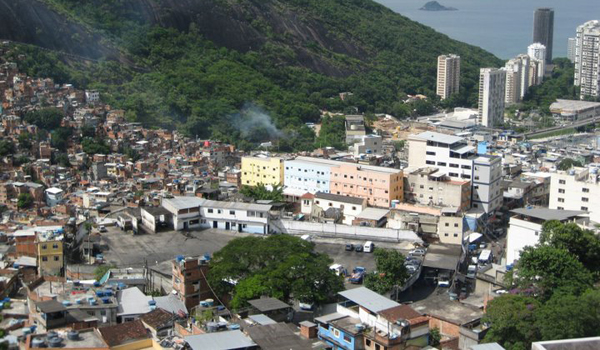
“What’s that?” I asked my Brazilian friend. “That is one of the many favelas of Rio. It’s a very dangerous place; make sure to stay away from there.”

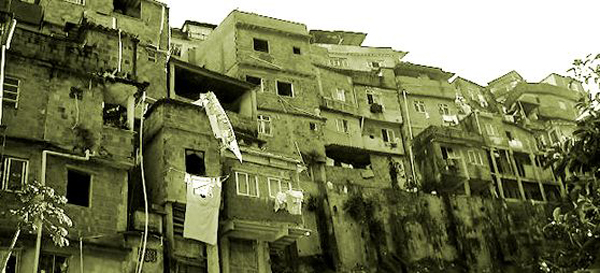
Many of these “illegal” barrios in Rio sit atop the city’s best real estate, enjoying views from their high locations alongside the mountains. The favelas are surrounded by a beautiful peak on one side and an upper class neighborhood on the other. Favelas exhibit a typical scene in Brazil, one of extremes: the rich living next to the poor, yet largely unaware of them.
The warnings from locals were fairly alarming. Some advised me never to enter a favela, while others said to visit only with a trusted tour or friend. My Brazilian host said he would never enter a favela.
Would favela life be like the movie “City of God”? Who lived there? Were wars constantly being fought between police and drug lords? Would I be in danger of being robbed? How does one see a favela without exploiting a group of people living in a poorer environment? The questions continued.

I found the aptly named Favela Tour, run by Marcelo Armstrong for the past 17 years. He assured me we’d be safe visiting the two favelas on the itinerary (Rocinha, the largest favela in the country, and Vila Canoas).
And just as importantly, he explained that the tour does not exploit the favelas, but helps them through:
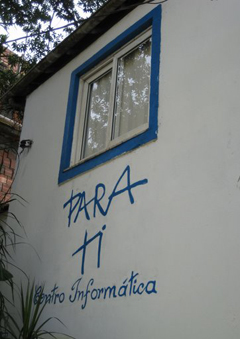
- 1. Funding a community school for children in Vila Canoas, Para Ti, with a percentage of the tour’s revenue.
- 2. Bringing in tourist dollars to buy local arts and crafts.
- 3. Promoting awareness of life within favelas.
Para Ti was founded by an Italian family who had migrated to Rio de Janeiro. When the family members saw the slums around their affluent neighborhood of Sao Conrado, they decided to help. The Favela Tour donations (roughly 25% of the tour’s price) now help keep the school in operation, as well as promoting local artisans.
Overall, the Favela Tour’s mission is to help Brazilian society (along with the world) understand these communities. As Armstrong noted, “It [Favela Tours] changes the general idea that favelas are simply no-go areas dominated by criminals only, and opens a new perspective [about] Rio society.”
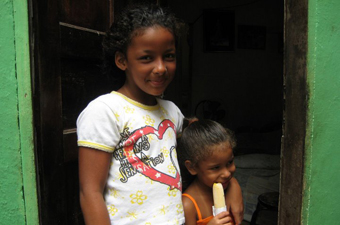
Our guide, Isabell, was quick to explain that the residents of the favelas are the waiters, the maids, and other honest working people of Rio. According to Isabell, only 0.5% of the population is involved in the drug trade and wars. Yet entire communities have received a bad name, a condition they don’t deserve.
But the tour did not gloss over real dangers. Shootings do occur sporadically. Most times, the shots are fired by police trying to find drug lords with a shoot-first-ask-questions-later mentality. These drug lords run the majority of favelas.
However, they do so with laws keeping the societies in tight order. For example, if you steal from someone, your arm will be broken or your hand will be shot. These are very effective measures; hence, robbery and theft are not prominent in the favelas.

Armstrong feels that the favelas have become more integrated into Brazilian society over the past 17 years, though more work needs to be done.
Regarding attitudes about favela dwellers, Armstrong said, “People in Rio [should] start to see that ignoring favelas is not the solution. The answer is to promote more citizenship through actions of…integration made through music, culture, sports and social initiatives.”
Roughly 20% of Rio’s population calls one of the city’s 750 favelas home. This is no small part of the society; as such, it is important to include favelas and their residents in the city’s social agenda. Marcelo Armstrong’s Favela Tour seems to be on the right track to bring about this change for a better Brazilian future.
COMMUNITY CONNECTION
Favela tours, slum tours, and disaster tours are controversial forms of so-called “dark tourism” and have raised passionate conversation here on Matador. Do you agree with the conclusions Dominic reached after his visit to a Rio favela? Contribute to the conversation below.
Dominic DeGrazier
Dominic is an incurable world roamer. He is a published writer and photographer looking to explore more of the world -whether in his own backyard or beyond. Follow along with him on his blog.
More By This Author
- What NOT to do in Uruguay (10 comments)
- First Person Dispatch: Casa de Paz Orphanage, Ensenada, Mexico (7 comments)
- First Person Dispatch: Caring for Orphaned Kids in Mexico (8 comments)


I have become fascinated with Brazil and its favelas. I live in the projects of Brooklyn, and I wish we had the “laws” the way the favelas do.
Just amazing.
Hey,
For anyone interested in a favela volunteer project, Casa Carioka offers accommodation for volunteers and will link them with an organisation in Parque Jardin Beira Mar favela. Please go to http://www.casacarioka.com/favela_project.php if you want more information. It will give a completely different perspective of the favela, and one that will hopefully enrich the favela at the same time.
This projet is a good one. I know a foreign girl who is staying at the Casa CarioKa and helping this favela..It is nice to see people give their time to helping these comunities becae they need help.Great to see people helping us!
Because I am teacher of jiu jitsu and tour guide in Rocinha, I now receive much interest from people who want come stay in Rocinha. In about 3 months I will open a guest house here in Rocinha for people to stay and absorb the culture of my favela.
Zezinho
rocinhajj@yahoo.com.br
I’m really glad that you wrote about whats going on in the Favelas. It is especially interesting these days with how the government plans on dealing with all the drug and gang related violence with the approaching Olympic Games.
Here is a link with more information about what is going on in Rio:
http://www.southamericanexperts.com
[...] There are plenty of places you can climb, or raft, or even fish for piranhas. Capoeira at sunset? Favela funk parties? Joining a parade in the Sambadrome — that’s Brazil. I recently discovered Rio [...]
I live in the favela but not all is misery and war zone like place. Please do not assume it is horrible place. It is far from perfect but many honest hardworking people live here. Even if I had lots of money, I would NEVER move from my home here in ROCINHA!
Zezinho da Rocinha
[...] Favela Tavares Basto is like no other in Rio — peaceful with constant police protection. There are no drugs and violence is very rare. It attracts artists and creative types wanting to enjoy the city’s vibrancy while staying away from the tourist enclaves and the edgy atmosphere of many of the other favelas. [...]