

How to Develop a Personal Brand as a Writer
Photo by Kim Grant for Hawaii: An Explorer’s Guide.
I come at this issue from two different sides of two different coins: as a 25-year veteran travel writer and as an Acquisitions Editor for a national print publisher and iPhone travel app company. Every day, in many ways, I massage my brand and am pitched by other writers who have (or have not) polished their image with varying degrees of efficacy.
1. Be clear, simple and consistent in your message.
Whether you are posting on Facebook, engaging with other bloggers, spreading snippets via Twitter (which I confess to not pursuing much), writing a guidebook or speaking informally to colleagues at a professional gathering, decide who you are and stick to the message. Are you a fun-loving raconteur with a lively nightlife? Are you a resort reviewer who knows the value of a $650 a night room at Amangiri? Both are fine, but it’s tough to convince the world that you do both well. I’ll probably hire both writers at some point, but these two hypothetical people are not right for the same job.
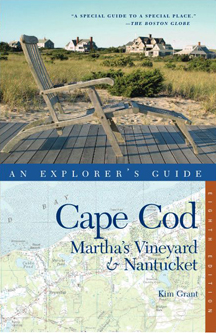
Now in its 8th Edition. Buy it here.
2. Narrow your scope of expertise.
Skimming the surface of many topics, while perhaps personally exciting, might brand you a dilettante in all those topics – which is fine if “dilettante” is your brand. I became an expert on Boston, New England and Cape Cod, and then I moved outward into regions I frequented and was passionate about: the Southwest, Hawaii and Florida. By spreading myself too thinly, though, I stopped having time to exploit my expertise in all those areas. By cutting back to a few areas, I created the space to pitch myself again.
3. Write a book and then parlay it.
Think of yourself as an entrepreneur rather than simply as a travel writer. It probably won’t pay well, but the book will brand you as an expert and provide a launching pad for better paying and (potentially) more prestigious work. You probably won’t be an expert before you write it (even though you will have to pitch yourself as one), but you will be afterwards. For about six months, you will be the expert on that topic. Exploit the heck out of that window of opportunity while it is open. It will open other doors and windows; keep leaping from one to another before they close.
4. Not every gig is a perfect fit.
The Universe abhors a vacuum, but don’t seize everything that falls into your lap. If you don’t leave time and space for the right project, it won’t appear. (I know, that’s a very “Northern California” concept, and you know what I mean because Northern California has a very strong brand.) Be like Northern California; be instantly known. There isn’t time for anything but an instant, strong impression.
5. Question yourself unrelentingly.
Who and what, professionally, are you? (Skip the metaphysical answers for this exercise.) Make and continually scrutinize a 12-month plan. Be patient and persistent. Assess which jobs are furthering your path and which are not.
Craft your brand icon.
6. Image matters.
Once you build it, guard your reputation. Of course I would say this: I’m also a photographer. But presentation matters: from design and font selection to paperweight and PDF headings; from associations with colleagues and organizations to your revolving weekly update on LinkedIn. It all matters; build it with care and attention. On Facebook, I belong to the Change This fan page but not The Soup. There’s nothing wrong with The Soup, but the signal it sends doesn’t fit my brand as a travel writer who works in new and social media.
Read the full article at MatadorU →
Community Connection
For more notes on how to make it as a travel writer, check 6 Tips for Making the Most of a Writers’ Group, Video Portrait of a Travel Writer, Do Freebies Undermine Honesty in Travel Writing?, How are Writing Conferences Relevant to Travel Writers?, and The Importance of Connecting with Travel Writing though History.
Other branding ideas? Comments? Give us a shout below.
Want to learn the craft of travel writing?
Sign up for Matador’s new Travel Writing School and get the skills you need.
Related Posts
Kim Grant
Kim [www.kimgrant.com] has written over 47 guidebooks for Countryman Press, Lonely Planet, Chronicle Books, Frommers, Fodors, Berlitz and Insight/Discovery. She is the Hawaii and Cape Cod authority for HomeAndAbroad.com, and writes about luxury, romantic and beachside resorts for Away.com. She has acquired, developed and shepherded over 140 titles for Countryman Press, and in the first two months of working with Sutro Media has signed 89 iPhone travel apps. (Another 317 titles and prospective authors await confirmation on a spread sheet.) Kim is also the Publisher at Good Karma Publishing and teaches T'ai Chi Chih, a moving meditation.
-
http://milesofabbie.com Abbie
-
Katie
-
Kathleen
-
Teresa
-
http://www.connergorry.com Conner
-
http://exploringmichigan.blogspot.com Jeff Counts
-
http://matadortravel.com/travel-community/candicew86 Candice
-
TimR
-
http://www.businesspundit.com Drea
-
Catherine
-
http://www.mikesryukyugallery.com Ryukyu Mike
-
Adam
-
http://nancythegnomette.com Nancy
-
http://www.writinghorseback.com Nancy D. Brown
-
http://www.kimgrant.com Kim Grant