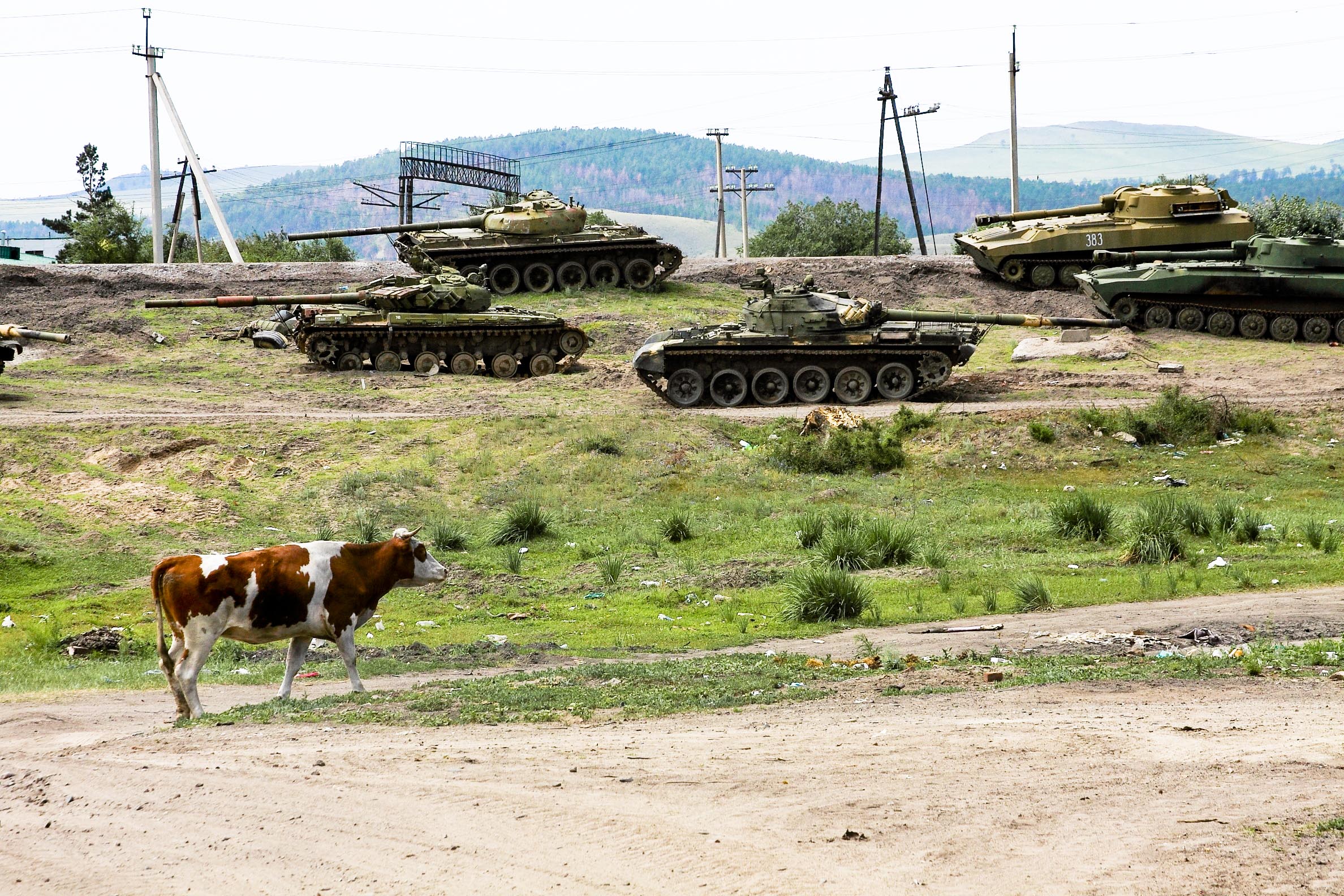
“This was the end of my thirty days in Russia: cows and tanks.” — MFB

Photojournalist Marcus Benigno (mfb) rides the Trans-Siberian Railroad 6000 km across Russia, documenting people’s stories and images, and the juxtapositions of local culture along the world’s longest railway.

km 0 – MOSCOW // ON BOARD MOSCOW TO GORKY

SIDESTEPPING through generations of Russians who stood with shopping bags of picnicware and bedclothes, we scrambled to the first platform at Yaroslavsky where the midnight train stood minutes before departure.
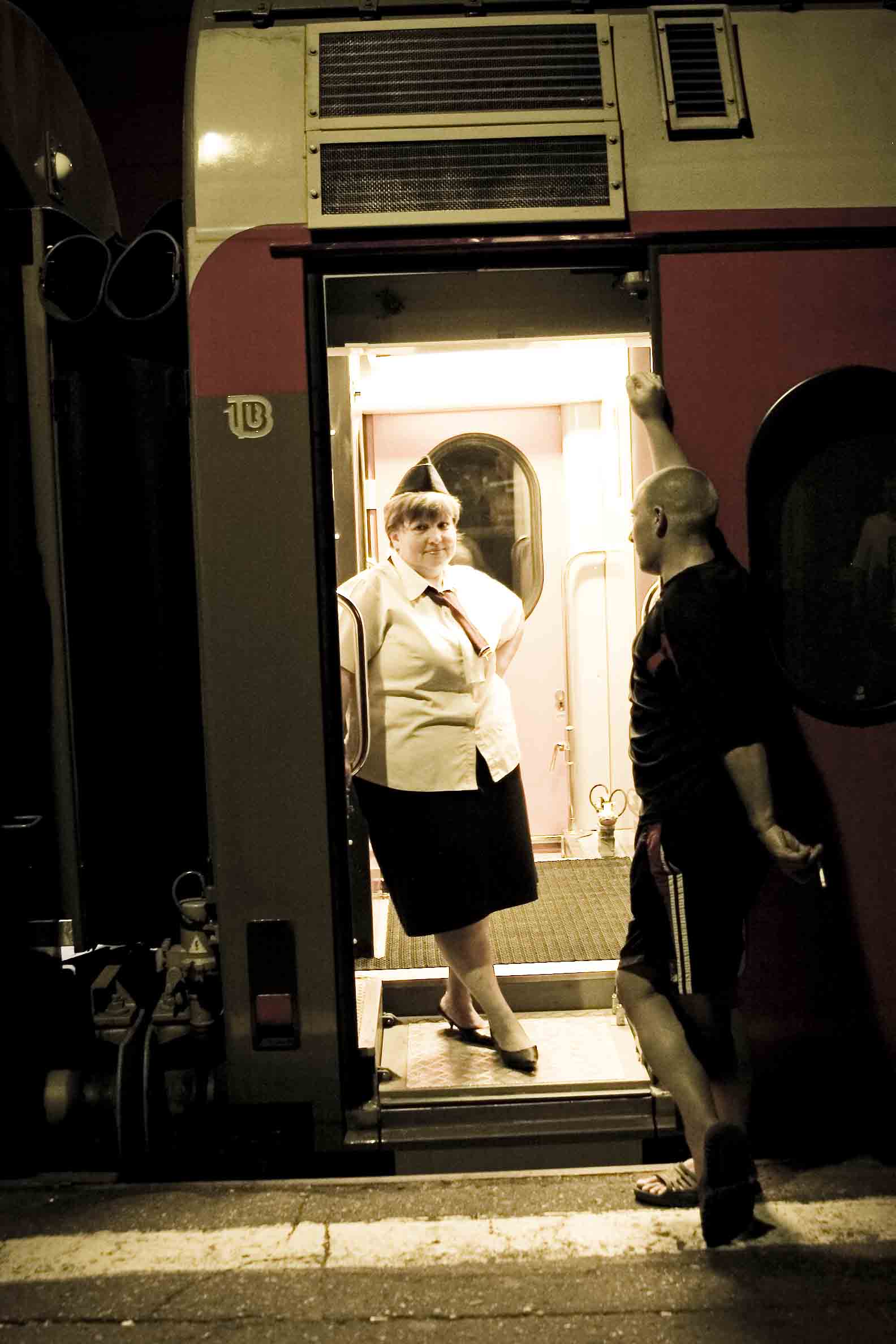
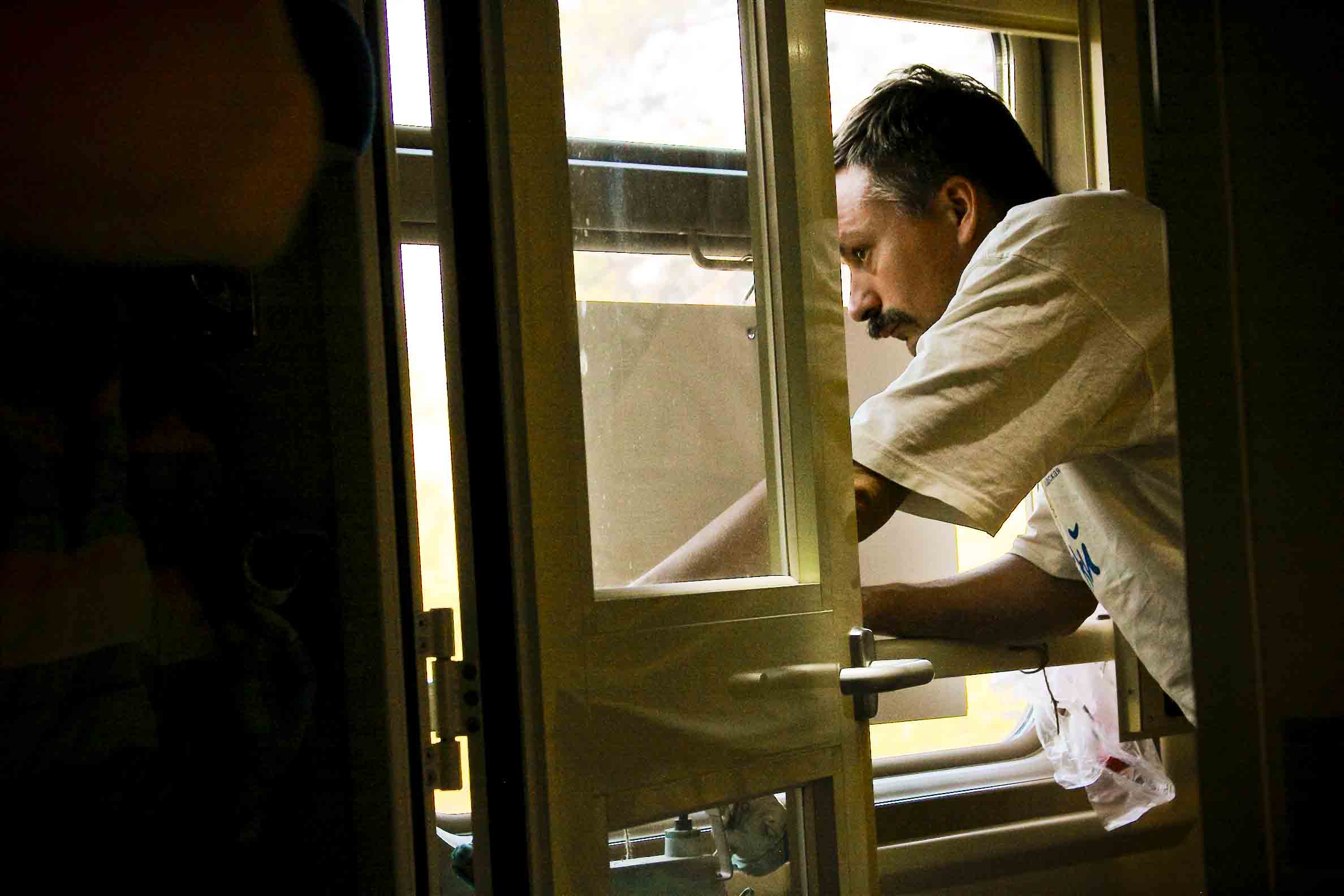
We rushed down to the third berth of the third car in the third platskartny class.

Outside the car, a final snapshot reveals my host’s fatigue from having carried my sack from his flat at Taganskaya to the railway terminal. A manly embrace and a hasty goodbye sealed our weeklong friendship.

km 0, provodnitsa. All photos: MFB

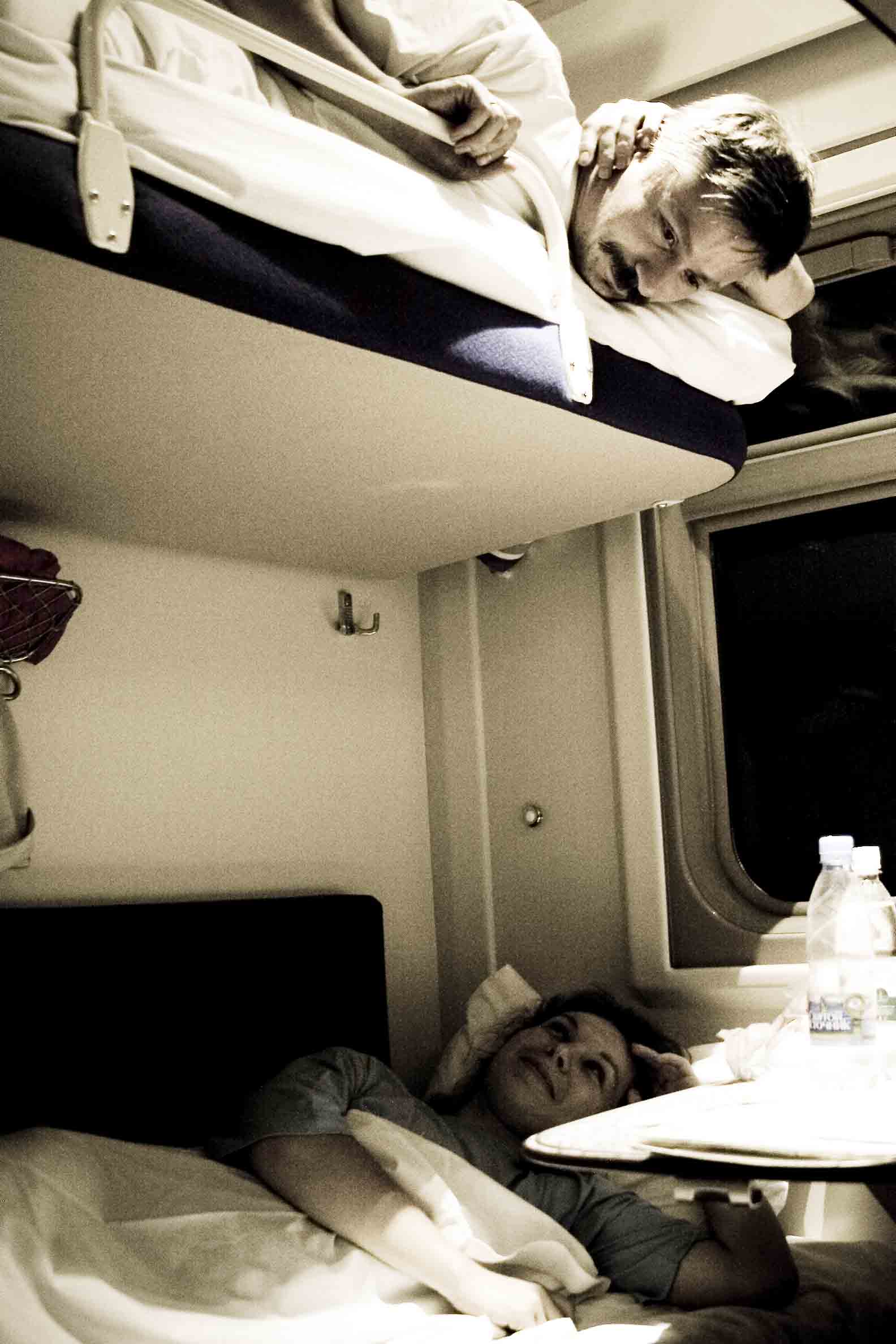
The provodnitsa, a stout old woman who shied away from my lens, hailed me aboard. The last passenger to arrive at the compartment, I awkwardly positioned my belongings, sat, and waited with my three estranged companions—all settled, all Russian.

I said almost involuntarily but perhaps intentionally to break the silence, “Ochen jarka!” (“It’s very hot!”)

The two men and the woman laughed at my sad attempt at Russian. Success.

“Where are you from?” the woman asked in English, hers being the better English, as the others eared in. I gave them my spiel, a two-minute performance basically outlining the contents of an online profile.

At the sound of my hometown of Los Angeles, the woman’s eyes widened and thought it kismet that we had met. It turns out that Julia had just returned to the Russian capital after working in PR at an addiction clinic in Baja California. A Russian doctor founded the project that catered to communities in Ensanada and Tijuana, but eventually closed up shop when funds had depleted.

After I mapped my eastward journey on the Trans-Mongolian, Dmitry, the older of the two men, who had been vague about his profession (something to do with chemical engineering), warned me in Russian to be careful not to take pictures of “secret places,” as Julia translated.

I asked her what he meant.

“He means that it would be very hard to explain to the police what you were doing here taking pictures.”

I felt uneasy by the suggestion. I didn’t know how to respond. The train rolled out and the air conditioning finally came on. We sat face to face in silence with Dmitry looking away whenever our glances met.

Dmitry

I pulled out my ration and was eager to share: chocolate wafers, dried herring, potato flakes, and a bottle of vodka. The guidebooks and other Trans-Siberian travelers I had met encouraged the onboard potluck. But was I wrongly advised.

When I proudly offered my ice-cold bottle of the distilled, clear liquor, they laughed and declined the invitation. Julia explained that the vodka-toting Russian is a false stereotype. I shrugged it off, realizing my mistake. I am a tourist, a real American tourist.

km 426 – DZERZHINSK // ON BOARD MOSCOW TO GORKY

“Syem, syem, syem, syem…” the provodnitsa’s repeated whispers woke me up as she separated and stuffed soiled linen into canvass sacks.

Dmitry and Julia All photos: MFB

6AM. The wagon car, nearly empty, was fast approaching Dzerzhinsk. My three berthmates were still asleep when the provodnitsa shook Dmitry’s arm informing him of our short arrival.

He and Julia were descending at the suburb 25 km outside of Nizhny Novgorod, while Sergei and I had one more stop.

When the train came to a halt, Julia handed me her contact information and wished me luck on my journey. Dmitry shook my hand, but as he stepped out of the car, he looked back and said inexplicably, “Dzerzhinsk is the chemical capital of Russia!”

I nodded and waved goodbye.

km 441 – NIZHNY NOVGOROD (GORKY)

Eastward from the Russian capital, former fishing villages, trading posts, and industrial small towns dominate the landscape. Towered by Soviet high-rises, dilapidated wooden houses are ubiquitous and suggestive of the region’s frontier history.

During the summer, Gorky families converge by the river Oka with fishing poles, beach towels, and trunks full of the customary Okskoe pivo (the local brew). But despite stereotypes of the parochial hamlet, my experience in the laidback river town of Nizhny Novgorod has been far from reactionary.

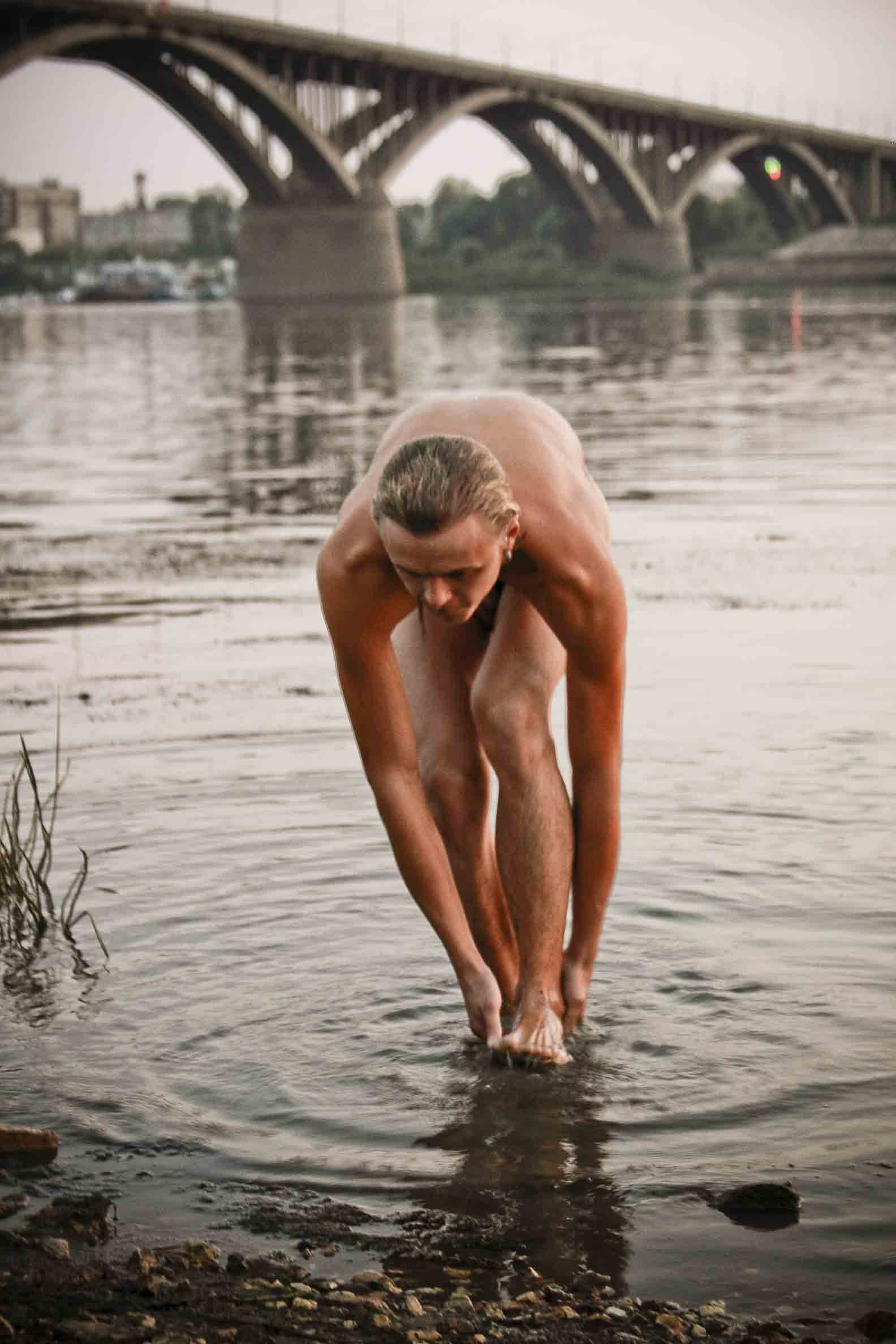
Skinnydipping in Gorky

Sasha, my bright-eyed host, and his gang of twenty-something co-workers and friends invited me to a soirée beneath the Kanavinsky Bridge.

The kickback was typical of Berlin or Venice Beach where pockets of brownfield are festooned with neon dream catchers, tie-dyed textiles, and feathers.

After guests imbibed glasses of a mystery cocktail that turned out to be equal parts of vermouth, vodka and cheap champagne, the evening naturally devolved into impromptu fire dancing and skinny-dipping.

km 820 – KAZAN

“Step slowly,” Eduard warned me from below. The next step could prove fatal.

My host in Kazan works as an ad man and spends his free time watching episodes of House and exploring the city’s wasted spaces. Today’s exploration: the former Hotel Kazan.

The abandoned structure stands four stories over Bauman Street, the main foot road in the city center. For the last twenty years, the edifice has been left in ruins. It is one of hundreds of abandoned buildings that stand as a testament to Kazan’s thousand-year history and the poor infrastructure of many post-Soviet republics.

Eduard

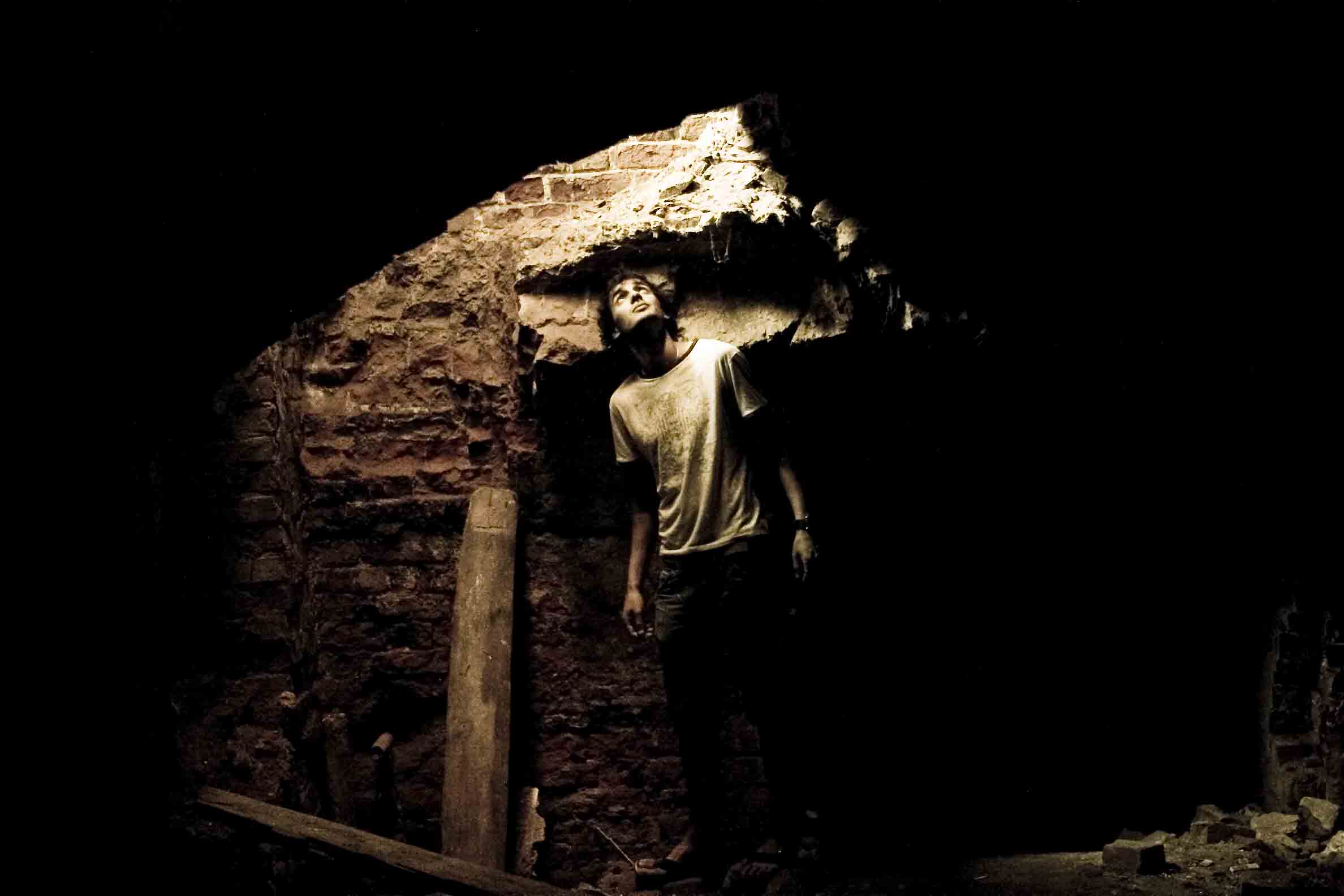
Today, metals sheets block the ghostly fortress shrouded with green, netted tarp. To enter, we crawled down to the sewer line from an indiscreet and unguarded opening opposite the hotel.

A calculated leap over the stagnant stream and a leg over a crumbling wall, I followed Edward into the damp cellars of the hotel. A light emanating through the rough cracks from above served as our guide.

Pulling ourselves upwards to the first floor, we reached a gutted hall that opens out onto a large courtyard. The scene reveals a site ravaged by an unnatural disaster: roofs split open for city birds to build nest, structural support spilled out onto the earth, fallen bricks and sodden planks strewn in piles across the overgrowth.

“What happened?” I asked Edward.

“Time,” he answered.

Finding the only stairwell left intact, we ascended. Each level contains vast salons gilded with patterned molding. But the once decadent interior now resembles a porous sponge with chips of paint peeling away, breathing with every gust of wind. Egg shells, glass shards, and empty bottles lie about, evidence of recent loitering.

Eduard paused. I halted in my tracks.

Cautious, he cupped his hand over his ear. We listened in for unexpected guests like ourselves. A rustling and a quick swipe against the dust echoed in the hall and repelled us from forging onwards.

“We’ll come back later,” Eduard motioned backward and we crept away back onto the main road.

km 1107 – ARGYZ // ON BOARD KAZAN TO YEKATERINBURG

The novelty of train hopping has faded.

In my third of ten trains towards Ulan Bator, I’ve become accustomed to the monkey gymnastics necessary to mount the top berths without grunting. I’ve memorized the toilet schedules, the release buttons and the physics behind the foldable berths and tables. I’ve perfected the etiquette of billeting, sheet distribution, seat sharing with your berthmates, the routine and the Russian for requesting cups and spoons from the provodnitsa.

But after all this, I am still too incompetent to engage with my fellow passengers. Language remains a barrier.

The scrutinizing eyes outweigh the accommodating smiles that acknowledge your presence. But perhaps I fail to consider the point of view of the lady visiting her daughter in Irkutsk; the salesman porting his briefcases of samples; the college student on his or her way home for summer vacation. Russian passengers expect comfort, amenities, and an expedient journey with no anticipation of encountering an uncommon, travel-worn face. The commodification of the Trans-Siberian railway is limited to the tourist’s perception of an exotic, “historical journey.” For Russians, it’s a normal part of life.

And so, sadly, a simple offering loses its welcome and becomes an obliging gesture. My berthmates continuously shun my wafer cookies and Lady Grey tea bags. Kein deutsch, aucun français, no “universal” English work. Where was my Russian education?

Thus, on my first daytime journey with no Russian willing to play, I left my berth and explored the train. I ventured out of third class and discovered the second-class kupe. The compartment doors were shut.

In the next car, a door opened to a man reading a paper and three kids playing with Legos on the carpeted corridor. The climate was much cooler. It had to be first class.

After five cars I reached an empty dining car. Three attendants sat around one of the tables. The void of customers precluded longer cigarette breaks. I sat in one of the booths. A waitress handed me a menu. With my index finger, I ordered the cheapest brew and a couple meat pies.

I munched on my six-dollar snack while watching the rolling countryside. “This is what people do on trains,” I thought.

Back at my berth, I read in my guidebook that a few kilometers earlier we had officially entered Asia.

1 2Next Page >>

Narrative
 

About The Author

mfb

Cited as a "culture vulture" by an anonymous reader, Marcus Benigno (mfb) is a professional traveler and expert sciolist who specializes in everything but nothing including print design, social and cultural commentary, urban nomadism, and photography. Born in Chicago, reared in Los Angeles, and educated in Montréal, he scours glocal urbania feasting on cultural carrion and documenting their untimely and ultimate decay.

More By This Author

view all →
  • http://vagabonderz.com Carlo Alcos

    Wow, you did the whole journey in platzkart? Impressive. I did one overnight leg, then a 3-day stint in platzkart between Moscow and Krasnoyarsk. That was enough for me. I totally know what you mean about the sharing food thing…that was what we were expecting too…I pictured days and nights of vodka shots and laughing, but it never materialized. It’s too bad you didn’t go to Olkhon Island on Lake Baikal, that was the highlight of the trip for me.

    I think Russian couchsurfers may be the most graceful hosts in the world. We used it twice there (Petrozavodsk and Krasnoyarsk) and both times they picked us up and dropped us off from the train station…and showed us around the towns.

    You had some fantastic experiences, especially with Abdullah. Great stories!

  • http://www.lolaakinmade.com Lola

    ““Hey, California! Come smoke a cig with us!” a Belgian from the other end of the train whom I hadn’t met formally already knew what he had to know about me. I passed on the invitation. ”

    Solid!

    I could pick out line after line after phrase that were spot on. From monkey gymnastics getting up on the berth to admitting not connecting with the Russians on earlier segments of the trip.

    Loved this piece, Marcus! Wonderful experiences and can’t wait to travel the Trans too.

  • http://www.teachingexpat.com Eric

    What an amazing journey that must be to take. Its posts like this that keep me coming back. Of course, it only gets my itch to travel going but that’s why I love it.

  • Katya

    Hi, Marcus! How are you doing? It’s Katya from Tomsk. Do you remember me? We met in the train on your way to Krasnoyarsk. I read the article. It’s great to read about our life as you see it! Regards from Sasha and Ilie!

  • Eugene Santos

    Hi Mark,
    I enjoyed reading your travel journal. Normally, i don’t read much, but this one is nicely written. Good job!
    we missed you in many of our family get-togethers, you know, ‘yung mga surprise b-day parties! (kuno?)
    take care,… ‘hope to see you back in LA…
    Tito Gene

  • http://www.backpackerfiction.com Matt Loney

    I went the opposite way, starting in Vladivostok and ending in Moscow. While the journey’s are similar, there was something psychologically thrilling about having Moscow waiting for me at the finish line. I would love to try it West to East like you did.

    Your post brought back a ton of great memories. Well done!

  • http://www.anywhere-but-home.com Naomi

    Your experience with Abdullah sounds just like the reason so many people travel – having a connection or shared experience with a perfect strange regardless of language barriers. Good stuff :)

Narrative →

You can't go anywhere and just get a fresh meal. You have to go to a chain restaurant.

Narrative →

Wasps and bees poured from the walls as the machinery did its job.

Narrative →

If encyclopedias could talk, they'd sound like a retirement home.

Writing →

"You approach from the south and drive across flat desert toward what seems to be an...

Narrative →

Before I left, I thought it would be a journey into darkness. I recall mostly laughter.

Narrative →

In these notes--part memoir, part travel narrative--Mary Sojourner traces friendships,...

Narrative →

Mary Sojourner stops on a South Dakota highway, remembering that there are all kinds of...

Narrative →

Three vignettes taken from Daniel C. Britt's experience during the U.S. withdrawal from...

Narrative →

Reeti Roy arrives in Edinburgh in the middle of the Fringe Festival, but alone,...

Narrative →

I was filled with foreigner's dread, knowing I was a curiosity first, an individual...

Narrative →

They want me to sign paper that say Tibet part of China. I tell them, ‘no, if you want...

Trip Planning →

Some folks take the Trans-Siberian without making any stops. Don't be that person.