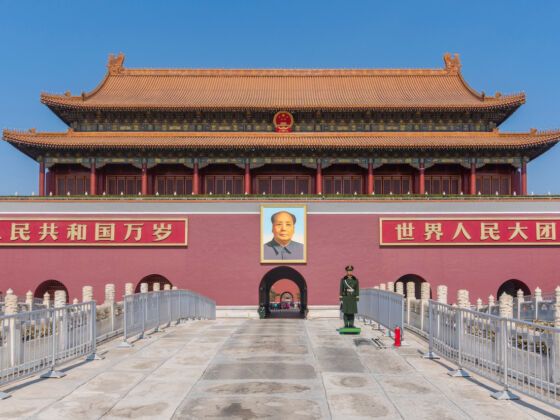
Tomorrow, the world remembers the Tiananmen Square Massacre in spite of the fact that the Chinese government seems determined to forget.

Photos: Ed-meister

Thursday, June 4 is the 20th anniversary of the Tiananmen Square Massacre.

During the early summer of 1989, university students gathered in Tiananmen Square to protest and voice their demands for a more democratic government. After seven weeks of protesting, the government had enough, sending in the military. Troops manning tanks arrived in force, killing hundreds of students and wounding thousands more.

In the years since, China has made numerous efforts to insist to the rest of the world that its human rights record has improved. Perhaps the most obvious example was its hosting of last year’s Olympic Games.

But 20 years later, how much has really changed?

Protest and democracy movements are happening not on the street, but online, conveyed and mediated through technology.

And the government is responding just as strongly as it did in 1989. It’s not with tanks this time, but with error messages. In the past few days, Chinese users of popular social media sites like Twitter, Flickr, YouTube, and various e-mail services, including Hotmail, have found that all of these sites have been blocked.

Though the government has blocked these forms of communication, it will not effectively be able to silence Chinese bloggers and activists, who aren’t likely to forget about Tiananmen or the conversation about democracy when the rest of the world moves on after commemorating Tiananmen tomorrow. They’ll wait until the tech blackout is over.

And then they’ll get back to work.

About The Author

Julie Schwietert

Julie Schwietert Collazo is a writer, editor, researcher, and translator currently in New York, formerly of Mexico City and San Juan. She is Matador's managing editor and is the lead faculty member of MatadorU's travel writing program.

  • http://www.keepingpaceinjapan.com Turner Wright

    I don’t know… as J. Maarten Troost noted in his book, it seems as though most younger Chinese look upon those events as rebels who got what was coming to them rather than intelligent protesters trying to shed light on freedom of expression.

  • http://www.mikesryukyugallery.com Michael Lynch

    Sad state of affairs and the whole truth will probably never be known.

  • joshywashington

    I am so glad I have the liberty to type and speak what I think, my prayer is that I use that right with the gravity it deserves.

    • http://wayworded.blogspot.com/ Hal

      Cheers to that.

Culture + Religion →

An interview with New York filmmaker Brook Silva-Braga on the complex relations between...

World Events →

Our Cairo expert, Nick Rowlands, opens up his Twitter lists to tell us who we can follow...

World Events →

Chinese authorities are struggling to contain the environmental and economic damage of a...

Photo Essay →

Travel photographer Scott Sporleder strikes again.

World Events →

On Tuesday, Google threatened to cease cooperating with China's internet censorship...

World Events →

First hand video of Tibetan exiles protesting passionately outside the Chinese embassy in...

Narrative →

"I went from only having seen him zipped inside a polka-dotted coverall to beholding his...

World Events →

When a multimillionaire Olympian burns through half your stash in one bong-load, maybe...

Transportation Guides →

Carlo Alcos says you CAN travel the Trans-Siberian on your own. Here's how.

Human Rights →

They stood up for peace and human rights, inspiring countless others to do the same.