Plenty, it seems.

Photo: manuel l mc

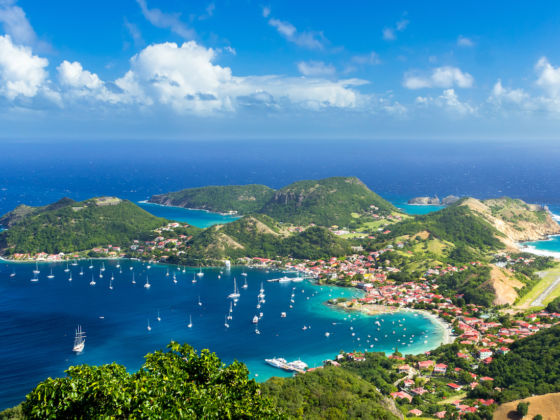
A five-island archipelago, Guadeloupe is home to just under half a million people. It’s also one of the Caribbean’s few remaining pseudo-colonies, considered an “overseas department” of France.

Guadeloupe is one of those countries that hardly ever registers a blip on the radar of international media. Yet, as the economic crisis continues to spread around the world, leaving no country untouched, Guadeloupe, like many of its Caribbean neighbors, is struggling to prop up its economy, which is largely dependent upon the disposable dollars of tourists.

Photo: jarrycafe

As tourism has begun to decline, so too has Guadeloupe’s economy. On January 20, an alliance of 47 workers’ unions and local organizations initiated a general strike to protest the rising cost of living and to ask the government to intervene by raising the minimum salary, freezing rents, and slashing food and gas prices, as well as taxes.

To date, the local government has refused to concede to the list of more than 100 demands made by the strikers. The French government has sent in a representative to intervene, as the strike has progressed to such a point that the economic crisis is likely to be exacerbated.

Already, the travel and hospitality industry on the island seems to be going into shock. North Star Travel Media reported yesterday that Guadeloupe’s Club Med will close tomorrow, and other reports have speculated that flights and cruises will be affected negatively as well.

What You Can Do:

1. Learn more about the strike and background events. If you read French, a good place to start is the local newspaper, Carib Creole One, which can be found online.

2. If you support the strikers in their calls for economic intervention, sign this electronic message of support, which is being sent to Guadeloupeans today.


About The Author

Julie Schwietert

Julie Schwietert Collazo is a writer, editor, researcher, and translator currently in New York, formerly of Mexico City and San Juan. She is Matador's managing editor and is the lead faculty member of MatadorU's travel writing program.

  • Anna

    Having lived in Guadeloupe (oh wait, I'm the Matador Expert!) this is a really big deal. Although the island — along with the other Caribbean French overseas department, Martinique — has one of the higher standards of living in the Caribbean, the unemployment rate has been at around 30% for the last few years. In an economy that is highly dependent on the tourism industry, fewer tourists means severe changes in everyday lifestyles. It will be interesting to see how the French government decides to move forward…

  • Julie

    Anna- Thanks for your comment. Like many of the Caribbean islands, it seems that Guadeloupe has become almost entirely dependent upon tourism. Do you know whether the unemployment rate you cited–which is definitely high–was as high prior to the transition from traditional sources of income and employment (sugar cane, etc.) to tourism? I'd definitely appreciate any other insights you can provide into Guadeloupe's current situation, especially as it relates to historical developments and the relationship to France as an overseas department. Thanks!

What NOT to do →

Matador’s destination expert on Guadeloupe lays out the Caribbean archipelago’s...


Two brothers cross the United States to document stories from the recession and find more...

Narrative →

These days--since swine flu hit--on a good day, twelve people show up. On a bad day, the...

World Events →

Uruguayans move to quash a law that supports absolving a dictatorship of its crimes.


Caribbean expert Tony Gatti gives you the skinny on Virgin Gorda.

World Events →

Up 70 cents to $6.55, the two percent of Americans who earn minimum wage will find that...