Delicate Arch at Sunset Alan Vernon

I’VE ALWAYS BEEN drawn to deserts. They’re not at all like the bone-strewn wastelands of cowboy movies. Deserts are full of interesting plants and animals, and their big, dramatic vistas always put me in “sit awhile and think” mode.

It is true that the desert can be a harsh environment to camp in. Visitors from other climates may be put off at first by the extreme temperatures and unusual fauna, and may need some time to get used to the surroundings.

For me, it’s all about falling into “desert rhythm”: I’ve learned that I have to leave behind the routines that I follow at home and start thinking like a desert-dweller instead.

1. Bring more water than you think you need

Cooling Off Adam Baker

If you heed only one tip from this list, make it this one: dehydration is probably the biggest danger in the desert. You’ll drink far more water in the dry heat of the desert than you would in a more humid climate. You can expect to polish off at least two liters on a half-day hike, so your Nalgene alone won’t cut it.

Know where local water sources are, and bring iodine tablets or chlorine if necessary. Always carry water when hiking, and drink it frequently. Don’t wait until you’re thirsty: by then, you’re already dehydrated.

2. Respect the wildlife

Deserts are home to some incredible creatures, including foxes, lizards, and many species of snakes. Most of them are harmless, but a few, like scorpions and rattlesnakes, can be hazardous if provoked.

The good news is that none of them have any interest in hurting you, assuming you leave them alone. Rattlers and other snakes often sun themselves on dirt paths and the shoulders of paved roads, so watch your step. Don’t go poking around in holes in rocks, and make a habit of shaking out your boots before you put them on.

In the unlikely event that you’re bitten by a rattlesnake, stay calm and call 911. If you’ll be far from civilization, it isn’t a bad idea to carry a compression bandage – if bitten, you can slow the spread of the venom by firmly wrapping the bitten area, but make sure the bandage doesn’t cut off circulation to the limb.

3. Prepare for cold weather

Because of their low humidity, deserts are often hot during the day and chilly at night. In some instances, the temperature can even dip below freezing. Warm clothing and an extra blanket or two will go a long way towards helping you feel comfortable after dark.

I’ve found that in many places, temperatures hit a low point in the early morning, shortly before dawn. If I’m planning to get up before sunrise, I’ll usually put on a sweatshirt and take it off once it begins to heat up.

Hiking Superstition Wilderness Arizona Gregor Y

4. Live like the locals

Many desert animals are crepuscular, becoming most active around dawn and dusk to avoid the midday heat. It’s a strategy that works for humans as well.
You’ll be much more comfortable if you try to keep most of your physical activity to the early and late hours of the day. During the hottest midday hours, be absolutely lazy: read, sleep, just hang out.

5. Pay attention to your tent

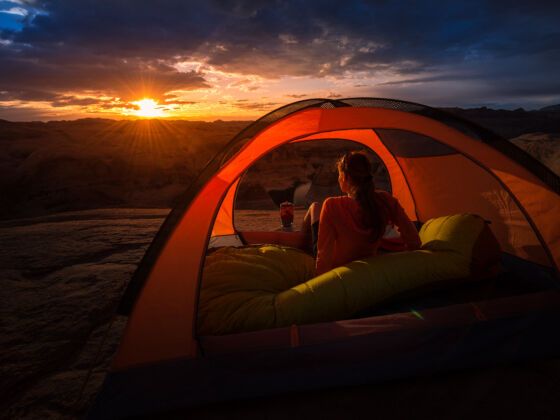
Many tents are built with a canopy made of light-colored, somewhat translucent fabric and a floor made of dark-colored tarp. In the desert, this common design can cause problems: light filters through the roof and heats up the floor, essentially turning the tent into a solar oven.

I learned this the hard way while camping in the desert near Bishop, California. One afternoon, I returned to my tent and found that my deodorant stick had become liquid, the plastic cover on my portable phone charger had warped, and the glue holding together my boots had melted.

Try to pitch your tent in the shade, or cover it with an opaque tarp. If that isn’t possible, unzip your tent’s vents and move heat-sensitive items outside.

A word on conservation

Deserts may seem barren, but they’re actually very delicate ecosystems. Avoid disturbing plant life or cryptobiotic (“crusty”) soil. Plants and crust keep soil from eroding; once they’re destroyed, an area can become sandy wasteland in just a few years. Both are very sensitive to trampling, so keep your explorations to established trails.

Community Connection

See America’s most famous desert festival in One Week in The Desert: a Burning Man Documentary.

Camping
 

About The Author

Adam Roy

Chicago native Adam Roy is the former-Editor of Matador Sports and an aspiring renaissance man to boot. For more of Adam's writing, check out his blog at Ill-Advised Adventures.

  • http://meganahill.wordpress.com Megan Hill

    Wow, lots of stuff I hadn’t considered. Good advice!

  • http://matadortrips.com/ Hal Amen

    Great piece, Adam. Bonus for introducing me to the word “crepuscular.” Never knew “crepusculo” had an English equivalent. :)

    • Adam Roy

      Yeah, I know, right? It’s a little more of a technical term in English, I think.

  • http://www.kidsoutbackclub.com Elle

    Great post on desert camping “know how”. We’ve got a trip planned to the desert later this summer and your tips helped a lot. Looking forward to seeing some of the cool rock formations, like in your picture above. Awesome!

  • Pingback: Brainrotting: Ep. 6 – North Mexico

  • http://www.farawayeyes.org darmabum

    As a resident of Escalante, Utah I might also add being aware of weather, specifically rain. In this area and in much of the southwest a lot of activity occurs in ‘slot canyons’ – narrow, often very narrow, sandstone ravines that are a natural conduit for water; and when it comes, it comes hard and fast. Even drainages that seem far away from any ‘weather’ may be in the watershed of where the rain is falling. There is a monsoon season in this area, and I advise people here to inquire at any local government agency regarding weather for the area.

    Also, read Craig Child’s “The Secret Knowledge of Water;” (Excellent book) with the subtitle/heading: there are two ways to die in the desert – thirst and drowning. True.

  • Pingback: The Contingency Plan « Wayfaring Westward

Photo Essay →

The top of the world, the Arctic is both beautiful and deadly.

Camping →

My first experience cramping up mountain biking was met with a slimy ziplock bag of...

Camping Gear →

A cheap, simple alternative to fancy gas-powered stoves that you can make yourself.

Climbing →

Majka Burhardt and a small team of climbers set their sights on some unclimbed granite in...

Road Trip Guides →

Graham Styles begins his journey with a jaunt between California and Colorado, hitting...

Camping →

Here are five quick and not-so-dirty tips to reduce your footprint on the trails.

Camping →

Stepping onto a trail with everything you need provides a unique kind of freedom.

Camping →

I've learned more about camping from surf-trips than anything else. The reason is simple:...

Camping →

Park up, pour a glass, and enjoy the colorful end to another day.

Camping →

Here are some of the coolest campers you've never heard of.


Put yourself in the shoes of prehistoric man and you will have a blast with your dog.