Feature Photo: Seattle Municipal Archives / Photo above: “I love the smell of burning petrochemicals in the morning.” gee


Oil? Who said something about oil? Not the oil industry.

This article started as a project for myself. Depressed and aggravated about BP’s oil spill and mismanaged clean-up, I started researching ways to cut back on my own oil consumption.

It was a two-level action plan; I could atone for my petroleum indiscretions and Norman Bates some oil industry profits.

Although the negatives of the oil industry are outstanding–degredation of the ecosystem, global warming, oil spills and oil wars–there’s not a good guy, bad guy battle going on here.

Or is there?

There’s serious money grab happening in the oil industry. Sector profits continually increase and cyclical earning keeps oil companies and their lobbyists engaged in maintaining petroleum as a big part of everyone’s lives.

Consider this:

According to the U.S. Energy Information Administration, “the petroleum refining industry is the largest industrial consumer of energy”. Basically, we need more oil so we can refine more oil.

Basically, we need more oil so we can refine more oil.

Oil companies, and the politicians that are supported by them, aren’t necessarily looking to promote green energy with such interest in keeping oil lubricating the return of the other “green”.

Petroleum products don’t just include gasoline and crude oil. When petroleum is refined and its various chemical parts separated, petrochemicals make plastic, rubber, and a whole slew of materials that we ingest, wear, and use throughout the day.

Below, I’ve included obvious and not-so-obvious ways to cut back on oil and give less money to the oil industry.

(Statistics provided by the EIA.)

1.) Cut back on/regulate air conditioning and heat.

41% of household energy is consumed by space heating. 8% is from air conditioning use. Programmable thermostats are a great tool for regulating energy use.

2.) Weatherize your home.

Do a home energy audit to see where you’re losing energy. Insulation and natural shade will be key factors.

3.) Eat and buy local.

Support local farmers markets, restaurants that use local produce, and shops that sell locally made items.

4.) Calculate your carbon footprint.
5.) Try going vegetarian. Even for just Meatless Mondays.

In 2006, the United Nations summarized the meat industry as “one of the top two or three most significant contributors to the most serious environmental problems, at every scale from local to global.” Loads of sites offer vegetarian/vegan recipes and communities. My favorite, a print magazine and website, is Veg News.

6.) Don’t buy bottled water.

Try a Brita filter. Campaign like Jean Hill for no bottled water in your town.

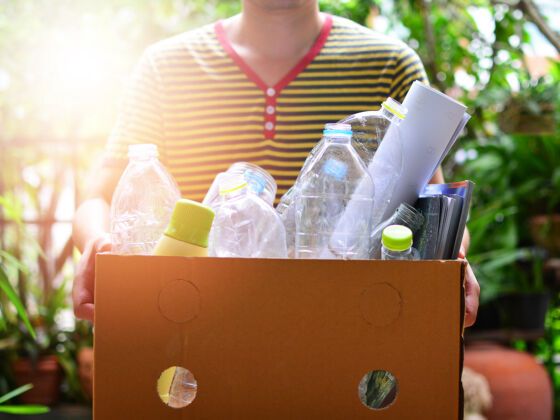
7.) Cut back on plastic products.

Plastic bags and bottles obviously included. Plastic is made from petrochemicals, the main ingredient of which is oil.

Photo by: woodleywonderworks

8.) Recycle.

If you don’t have a recycling box, call your city’s public works department and they’ll bring you one.

9.) Buy mp3s and used CDs and LPs.
10.) Carpool.
11.) Roll down the car windows.

Turn off the a/c in your car and you’ll save on gas.

12.) Save your car radio and CD player for songs you really want to listen to.

Pull the plug on mediocre songs and unnecessary electronics.

13.) Keep your car in good condition and repair.

Get tire pressure checked, maintain regular oil changes, and replace parts as necessary.

14.) Take yourself off junk mail lists.
15.) Buy clothes at consignment shops instead of purchasing new clothes.
16.) Eat seasonally.

Food will travel less.

17.) Eat less package-heavy food.
18.) Combine trips in town.

Hit up the grocery store, bank, and gym all in one trip.

19.) Eat organic if you can’t eat local.

Pesticides are petrochemical poison.

20.) Avoid synthetic fibers like polyester, nylon, and acrylic in clothes, curtains, carpets.

They’re full of petrochemicals and feel like crap anyways.

21.) Do soap research.

There are two types of detergents: soapy and soapless. Soapless detergents are made from oil products.

Photo by: iLoveButter

22.) Cut back on processed and canned food.

Food additives are another petrochemical.

23.) Avoid standard candles.

Wax is a raw petroleum product that also makes milk cartons and polishes. Buy natural soy or beeswax candles.

24.) If you have a garden, watch out that your fertilizer doesn’t contain petroleum chemicals.
25.) Switch to non-ethylene garbage bags.
26.) Research non-synthetic (i.e. non-petroleum product) natural rubber or natural fiber shoes.
27.) Consider adopting a non-refrigerator lifestyle.

5% of household energy is used by the refrigerator.

28.) Cut off lights.
29.) Put all appliances on a power strip.

Flip the switch when you leave the room. Plugged in appliances are a major energy drain. Lighting and other appliances account for 26% of household energy use.

30.) Limit hot water use.

Take fast showers and wash clothes and dishes in cold water. Water heating accounts for 20% of household energy use.

31.) Make sure your water heater is in good repair.
32.) Switch to compact florescent lightbulbs from incandescent bulbs.
33.) Take the bus.
34.) Take the train.

On my recent trip to NYC for TBEX, I took the train from Virginia instead of flying. It was cheaper and less stressful than dealing with long security lines.

Photo by: jurvetson

35.) Make sure your house in well-ventilated.
36.) Switch to nonpetroleum cosmetics.
37.) Consider holistic medicine.

For yet another reason to switch to holistic medicine: most modern drugs contain petroleum based products.

38.) Avoid ammonia based products.
39.) Don’t chew gum.

Most bubble gum contains petroleum. I tell my voice students not to chew gum anyways since it causes jaw tension.

40.) Watch what you put on your body.

Read the ingredient lists in perfumes and lotions. Many contain petrochemicals.

41.) Tell cashiers you don’t want paper receipts.
42.) Watch your water footprint.

Did you know a cup of coffee requires 37 gallons of virtual water? I didn’t until I read Julie Schwietert’s water footprint article.

43.) Recycle your electronics.

Best Buy recycles your e-waste for you.

Photo by: Flavio

44.) Monitor you energy online.

Google’s PowerMeter lets you view your home’s energy consumption from anywhere online.

45.) Recycle without recycling.

Re-purpose items around the house without even putting them in the recycling bin. Real Simple and Ready Made magazines usually give great tips.

46.) Ride your bike.
47.) Walk everywhere you can.
48.) Buy in bulk.
49.) Don’t buy disposable anything.

Use washable cups, even at picnics. Try mesh coffee filters, cloth diapers, cloth napkins, and cloth towels instead of paper towels. Experiment with reusable feminine products like the Diva Cup.

50.) Watch out for brands that don’t deserve to call themselves “green”.

Community Connection

Know of more ways to use less oil? Have experience with above tips? Share below.

Sustainability


About The Author

Nancy Harder

Nancy Harder is a freelance writer, pianist, singer, and photographer with an affinity for holistic health and observing different cultures. When not capturing paradigms and reflections through different mediums, she is exploring her practice of yoga and meditation. Check out Nancy's blog, Nancy the Gnomette.

  • http://abbiemood.com Abbie

    Great list, Nancy – and just what people want to hear right now :)

  • http://www.nehasweb.com neha

    Super resource this, Nancy.The don’t chew gum tip took me by surprise. But consider gum spat out.

  • http://wonderandwander.com Ameya

    WOO for the cloth diapers suggestion! Saves money as well of the earth, and they are much cuter/leakproof! (coughinfoonmyblogcough) The DivaCup/Mama (or Moon) cloth is my next switch! Our family is trying to remove as many disposable things as possible. It’s just so unnecessary and wasteful/irresponsible.

  • http://deleted G.B.S.N.P. Varma

    Nancy,

    great list.

    The way we use energy determines the fate of the society and of the world.

  • http://MaxTheITpro.com Max – The IT Pro

    We’ve got to get Cannabis/Hemp to become the world’s #1 crop! It has over 25,000 applications. Oh the mass ignorance!

    Industrial hemp making a comeback
    http://www.jackherer.com/archives/industrial-hemp-making-a-comeback/

    Read the late Jack Herer’s free book online: The Emperor Wears No Clothes
    http://www.jackherer.com/thebook/

    Chapter 1 – OVERVIEW OF THE HISTORY OF CANNABIS HEMP

    Chapter 2 – BRIEF SUMMARY OF THE USES OF HEMP

    Chapter 3 – NEW BILLION DOLLAR CROP

    Chapter 4 – THE LAST DAYS OF LEGAL CANNABIS

    Chapter 5 – MARIJUANA PROHIBITION

    Chapter 6 – MEDICAL LITERATURE ON CANNABIS MEDICINE

    Chapter 7 – THERAPEUTIC USE OF CANNABIS

    Chapter 8 – HEMPSEED AS THE BASIC WORLD FOOD

    Chapter 9 – ECONOMICS ENERGY & ENVIRONMENT

    Chapter 10 – MYTH, MAGIC & MEDICINE

    Chapter 11 – THE (HEMP) WAR OF 1812, NAPOLEON & RUSSIA

    Chapter 12 – CANNABIS DRUG USE IN 19TH CENTURY AMERICA

    Chapter 13 – PREJUDICE: MARIJUANA AND JIM CROW LAWS

    Chapter 14 – MORE THAN SIXTY YEARS OF SUPPRESSION

    Chapter 15 – THE OFFICIAL STORY: DEBUNKING “GUTTER SCIENCE”

  • Bobby

    The 11 – Roll down your windows is false. It is a headline story on Yahoo today, gas myths. Rolling down your windows creates drag and causes worse gas milage. Today’s car’s A/C units use virtually no gas.

  • http://www.worldcurioustraveler.wordpress.com Mary R

    A list close to my heart. I’d add another suggestion. Eat less meat…

    • admin

      Good one, Mary!

Sustainability →

Demands on UK and European fisheries are making them less productive and putting both the...

Sustainability →

Anna Brones interviews National Geographic Young Explorer Trevor Frost about how he will...

Home + Garden →

Stop putting it off. Susanna Donato offers eco-friendly tips for those irritating clogged...

Sustainability →

The New York Times reports that plunging real estate prices represent a "green lining" in...

Activism + Politics →

Turns out, the regions with the largest carbon footprints in the UK are in the rural...

Music Festivals →

While your roaming summer music enjoyment can still be a shock to the wallet, it...

World Events →

Five months after its biofuel demo flight, Continental reports the results to the public.

Sustainability →

The New Scientist says the answer to that question might just be "Yes." If that's the...

Activism + Politics →

Six things you've been putting off and can start doing... NOW.

Sustainability →

Tonight, take an hour out for the Earth. A billion other people will be doing it!

Sustainability →

Think Global Climate Change and the Economic Crisis will solve themselves? Here's how you...