Book Review – Madre: Perilous Journeys with a Spanish Noun
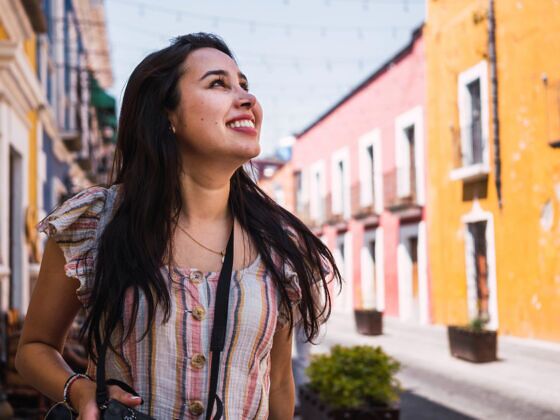
Photo by Libertinas
It doesn’t seem to make sense, as an insult; my mother is a gentle and retiring person. Sometimes, to further annoy him, I shoot back “nephew of your aunt,” which does seem to make sense, as his aunt is a bit of a bitch, but to him, “sobrino de tu tia” is just silliness.
To further complicate things, when he’s particularly pleased with me, he calls me “mi madre“–my mother. “Madre” figures into his worst insult and his highest accolade.
He has an uncommonly wonderful relationship to his mother; this contradiction is not anything pathological. He’s just Mexican–and in Mexican Spanish, the word madre is powerful and complicated, dangerous and fascinating.
Expressions with madre can mean everything from “I don’t give a damn” (me vale madre) to “absolutely perfect” (a toda madre) to “go to hell” squared (chinga tu madre).
In her book Madre: Perilous Journeys with a Spanish Noun, linguistic anthropologist Liza Bakewell explores madre‘s meanings, origins, and role in Mexican life.
Bakewell’s journey begins during her first stay in Mexico as a graduate student, when she observes that, in Mexican slang, “madre is worthless and padre is marvelous.”
Her Mexican friends tell her that, yes, that’s the case–”mas o menos.” Bakewell takes that yes-more-or-less and runs with it in her book, going far beyond the usual mother-or-father and virgin-or-whore binaries, ultimately arriving at a more nuanced, shades-of-gray understanding of gender, language and culture in Mexico.
Yet this is not a stuffy academic work. The tone is conversational rather than professorial. Bakewell isn’t lecturing from on high, but asking questions and taking the reader with her on the journey towards the answers. That journey includes riding the wrong way up the one-way streets of Mexico City, provoking a disenchanted journalist into spurts of eloquent profanity, making sounds like a baby (“mmmmmmaammmmmaaaa”), crashing classy weddings, and joining a group of college students in comparing fruits and vegetables to assorted body parts. “Research” seems like too clinical a word to describe Bakewell’s travels in pursuit of madre.
Part of the delight of Madre is watching Bakewell navigate her bilingual landscape. Her translations of Mexican slang into English are riffs that close in on poetry at times. Occasionally she stumbles–relating in English a long Spanish conversation involving the nonexistent-in-English verb “alburear” (‘to play an exclusively Mexican game of one-upping double entendres‘) she conjugates the verb in Spanish.
It feels awkward (and she forgets to conjugate the past participle), but it’s an admirable attempt to solve a tricky translation problem, and to make this a truly bilingual book, rather than merely a book in English about Spanish.
Some of Bakewell’s observations are a bit dated. Early in the book, she wonders “why, if one has any manners at all in Spanish-speaking Mexico, can’t one say the word madre…without raising eyebrows or sometimes dodging punches?”
In 2011, this is no longer the case: madre is used more openly now, particularly by the young and trendy, both male and female. And the problem of the masculine default in Spanish (ninety-nine niñas plus one niño equals one hundred niños) has been solved in some online forums, at least, with the unpronouncable but egalitarian “nin@s” (though it’s debatable whether that’s progress or a development on par with the use of emoticons).
Still, Madre is a book to read at least three times: once for the story, once for the language, once for the facts. It’s a woman-meets-Mexico love story, a book-length poem, and a crash course in Mexican gender relations–plus I picked up some choice new Spanish slang. It makes my husband laugh to hear me curse like a Mexican construction worker (or a Mexican teeny bopper). He laughs, and calls me “mi madre.” ![]()
Community Connection
Do you know Matador Network has a Spanish Language channel? Check out Matador en Español.
Teresa Ponikvar
Teresa Ponikvar is a former Matador editor, a current reluctant English teacher, and a future mini-farmer. She lives in rural Oaxaca, Mexico, with her husband, young son, and assorted animals and arthropods. She blogs here.
More By This Author
- Five tips for beginning organic farmers (2 comments)
- There's a reality to living off the land in Mexico (8 comments)
- Narrative: Notes from Mexico (5 comments)


Super review, Teresa. I’ve heard so much about this book…must buy.
Hi Teresa, Many thanks for the great review. I dropped a note to you in this box when it came out but did not seem to post. I love –and laughed a lot– the “sobrino de tu tia” line. Was only going to say, beyond “many thanks,” was that if you happen to be dining with any upper-middle or upper-class Señoras in Mexico City or Guadalajara or Puebla, you might not want to assume that the negative use of “madre” by women, as I describe it in the book, is “a bit dated.” Not that they will throw you out of their house, but they will not invite you back. So, yes, the young have changed what’s appropriate to say outside the house, but their parents or grandparents are in charge inside. That’s been my experience, anyway. Of course, all my artist friends break all the rules! I’ll meet you for an helado in Mexico when we come. Shall give you warning in advance.
Liza,
So glad you enjoyed! And yes, definitely won’t go dropping any “madre” bombs around my boss, or in polite company–fortunately I’m not often in polite company! All the women in my husband’s family are ‘bien malhabladas’, from his grandmother on down, so I’m safe there. Looking foward to meeting you!
The expression “hija de su madre” is in fact an euphemism for a insult that would translate in English as “son of a b…”. This is very typical in mexican-spanish where bad words are replaced by other words. For example “no mames” is usually said “no manches” depending on the social context. In Mexico bad words are felt a lot stronger than in other countries like Spain where everyone throws words like “joder” even in formal business meetings. I’m a Spanish living in Mexico and for the first years here I had to bite my tongue very frequently…