With more than 400,000 square feet of exhibit space, the Kenneth C. Griffin Museum of Science and Industry (MSI), formerly called the Chicago Museum of Science and Industry, is the largest science museum in the Western Hemisphere. Housed in the city’s iconic Palace of Fine Arts building from 1893, the museum is filled with enough wonders to impress even the most knowledgeable science buffs. You can browse 35,000 artifacts, catch a show at Chicago’s only five-story domed theater, climb through the hatch of a WWII submarine, and literally stand in the eye of a hurricane. Good luck fitting it all into one day.
What to Know Before Going to Chicago's Griffin Museum of Science and Industry
With such an overwhelming range of experiences, I turned to MSI Head Curator Dr. Voula Saridakis for advice on how travelers can make the most out of a one-day visit to the Griffin MSI.
- Top advice for visiting MSI
- Hours of operation of MSI and the best times to visit
- How to get to MSI
- Five must-see exhibits at MSI
- Lesser-known exhibits worth seeing
- What to see on the museum grounds
Need-to-know advice for visiting the museum
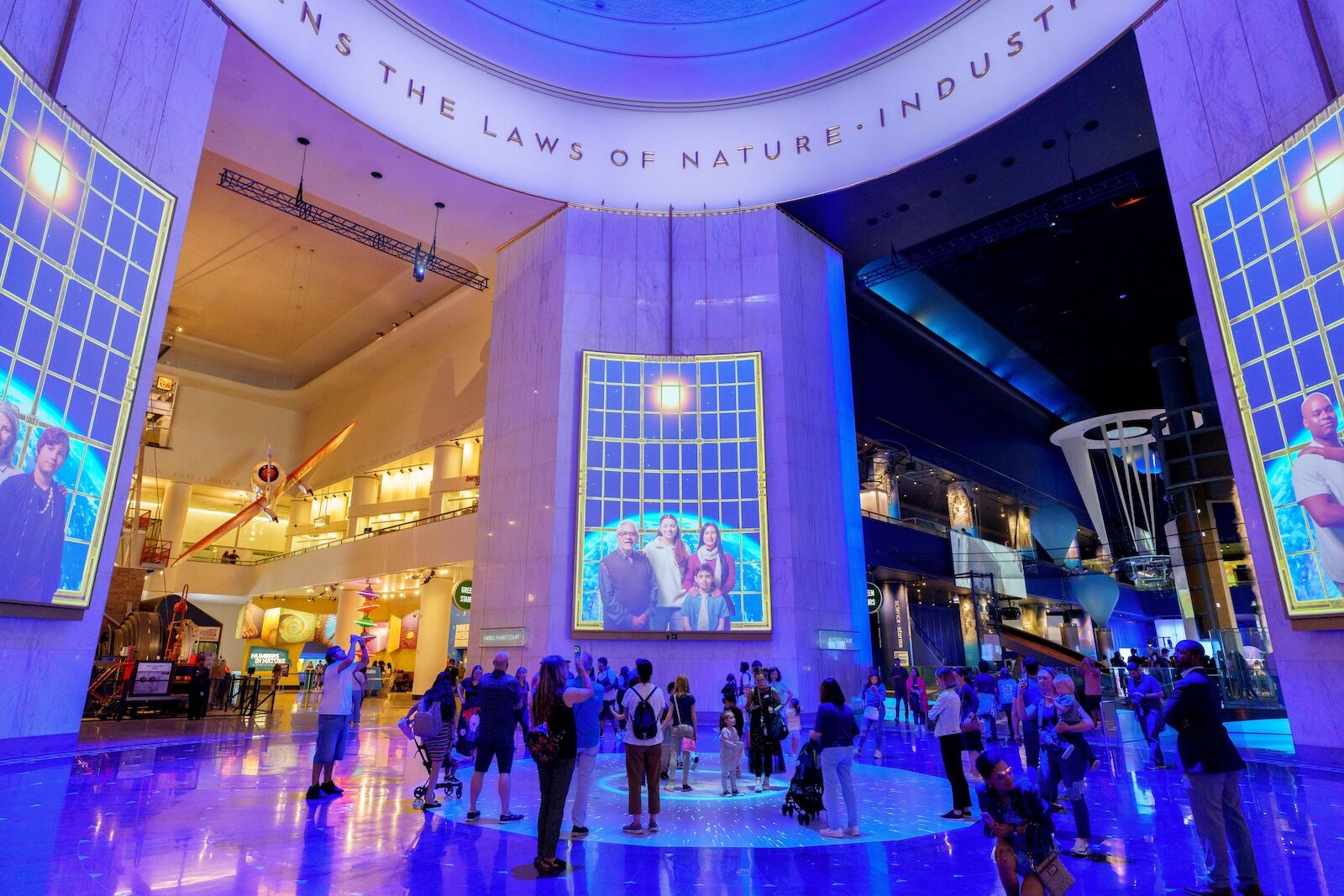
Since the museum is so large, Dr. Saridakis recommends checking out the museum’s website before your visit to come up with a plan. “We have a half million square feet of space and it takes a minimum of two days just to casually stroll through the exhibits without really immersing yourself,” she says. “I encourage visitors to explore the website; look at the experiences, permanent exhibits, and tours; and think about what you want to see. Consider age groups and the types of science that interests you and plan the day that way.”
With such a diversity of exhibits, it’s easy to wander around the museum aimlessly and get sidetracked. Studying the website and targeting the experiences that most interest you is the best way to maximize your time. There’s even a visit planning tool that allows you to create a personalized itinerary with the time you have to spend at Griffin MSI.
It’s also worth noting that some of the museum’s most popular experiences, like the U-505 Submarine tour and showings at the Henry Crown Space Center’s dome theater, require separate tickets on top of general admission. Booking those in advance online can save you from a disappointment at the door, especially on busy weekends and school holidays.
Museum hours
The museum is open daily from 9:30 AM to 4:00 PM, though it’s often open to 5:30 PM in the summer and during holiday weekends. Summer months tend to be busy, as the museum is a popular spot for family vacations and school field trips, so visiting in the fall or winter can offer a quieter experience. Morning arrivals are still recommended, as groups tend to arrive later in the day.
The hours can sometime change for apply for local events, so check before you go. For example, it doesn’t open until 11 AM on days when Bike the Drive or the Chicago Half Marathon affect the surrounding area. Science and Industry Museum. It’s always worth checking the museum’s hours page at griffinmsi.org before your visit, as the schedule is updated regularly. There are also often evening events for both families and adults, listed on the museum’s event website.
How to get to the Griffin Museum of Science and Industry
The easiest way to reach Griffin MSI by public transit is the CTA #6 Jackson Park Express bus. It stops at 56th Street and Hyde Park Boulevard, one block north of the museum. It runs every 15 minutes and the ride from downtown takes roughly 15–20 minutes. The #2 Hyde Park Express bus is another option, stopping one block west of the museum at 57th Street and Stony Island, though it runs only during morning and evening rush hour. If you prefer the train, the Metra Electric Line stops at the 55th/56th/57th Street station, about two blocks from the north entrance of the museum — just turn left when you leave the station.
Five must-see exhibits at the Griffin MSI
Even if you know which exhibits you want to see, Dr. Saridakis suggests a handy strategy for beginning your visit. “Go up the escalator to the rotunda level, stand beneath the copper dome, and look around. You can see 360 degrees, and we have so many nooks and crannies tucked away. Spend a few minutes at the center of it all,” she advises, before grabbing a map and starting your plan from there.
Science Storms
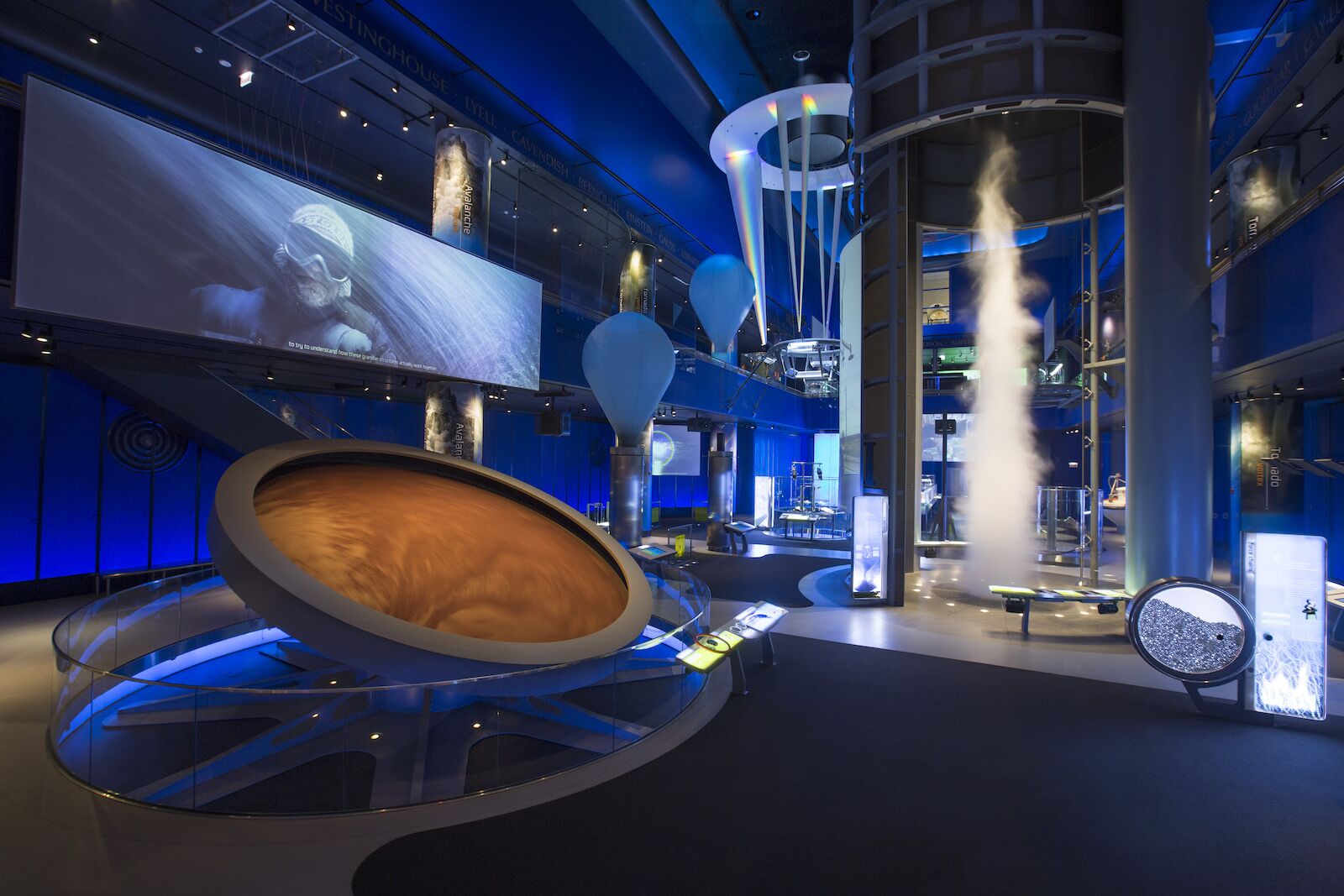
Photo: Museum of Science and Industry Chicago
MSI is the only place where stepping into a tornado is a good idea. One of the museum’s most popular exhibits, Science Storms replicates the forces of nature so that visitors can interact with and observe the natural phenomena. You can stand in the middle of a 40-foot vortex of vapor and air and manipulate its force thanks to a control panel. You can also join storm chasers virtually as they follow severe weather patterns or walk into a wind tunnel with the wind blowing at 80 miles per hour. This immersive exhibit also allows guests to learn more about avalanches, lightning, tsunamis, fire, atoms, and sunlight.
A U-505 Submarine
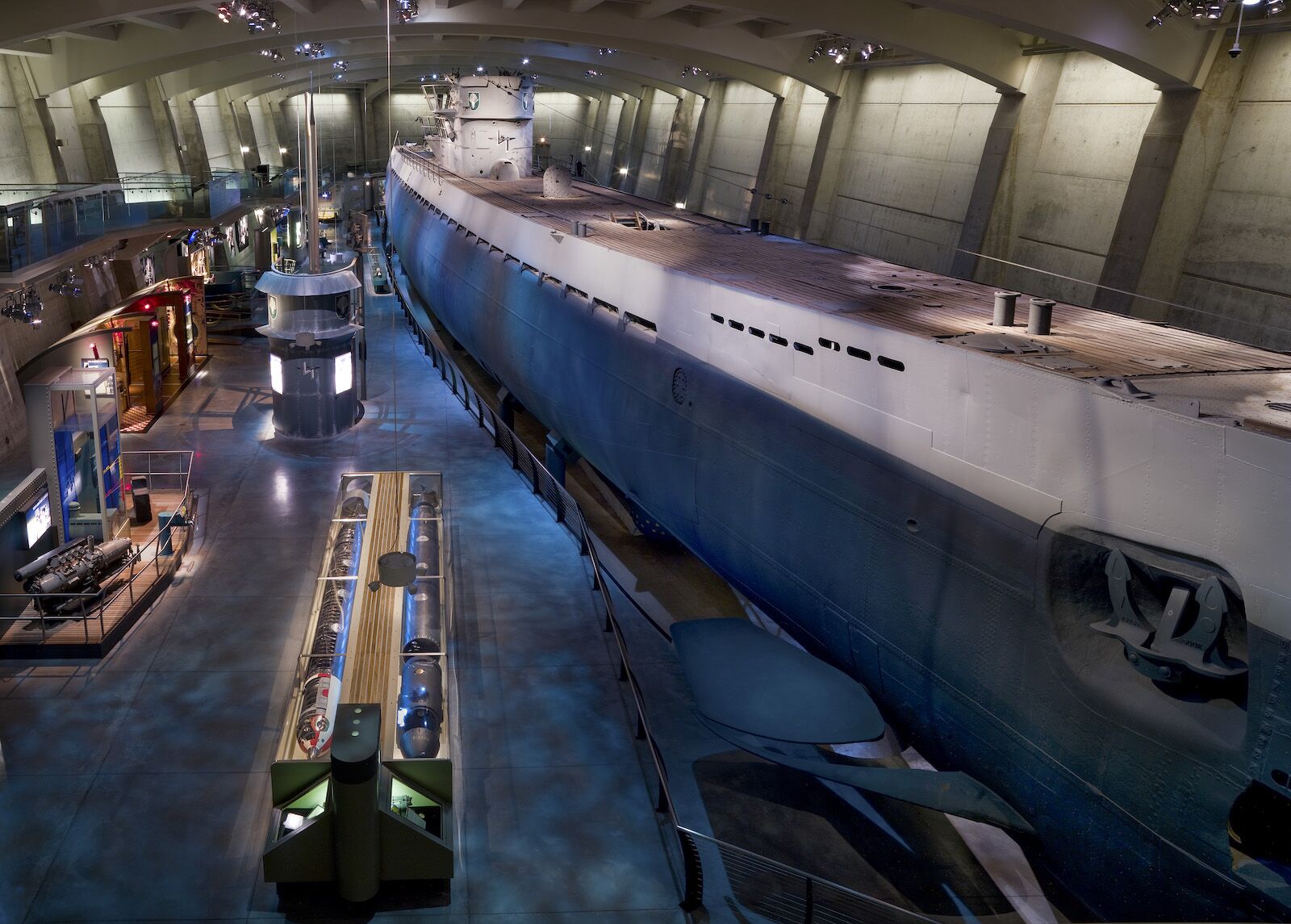
Photo: Museum of Science and Industry Chicago
Walk through the interior of the only German submarine in the US — it spans the length of a city block! The U-505 submarine sailed through the Atlantic Ocean during WWII, hunting for American and allied ships. The riveting story of how a US Navy task force captured the German sub and tricked German forces into believing that the vessel had sunk, is just part of this exhibit’s appeal. You can also hop aboard and squeeze into the tiny galley, try out a bunk bed, and learn what life was like for the crew. Take control of the periscope, locate enemy ships, and launch torpedoes or discover the 200 artifacts on board that help make the submarine a National Historic Landmark.
Transportation Gallery
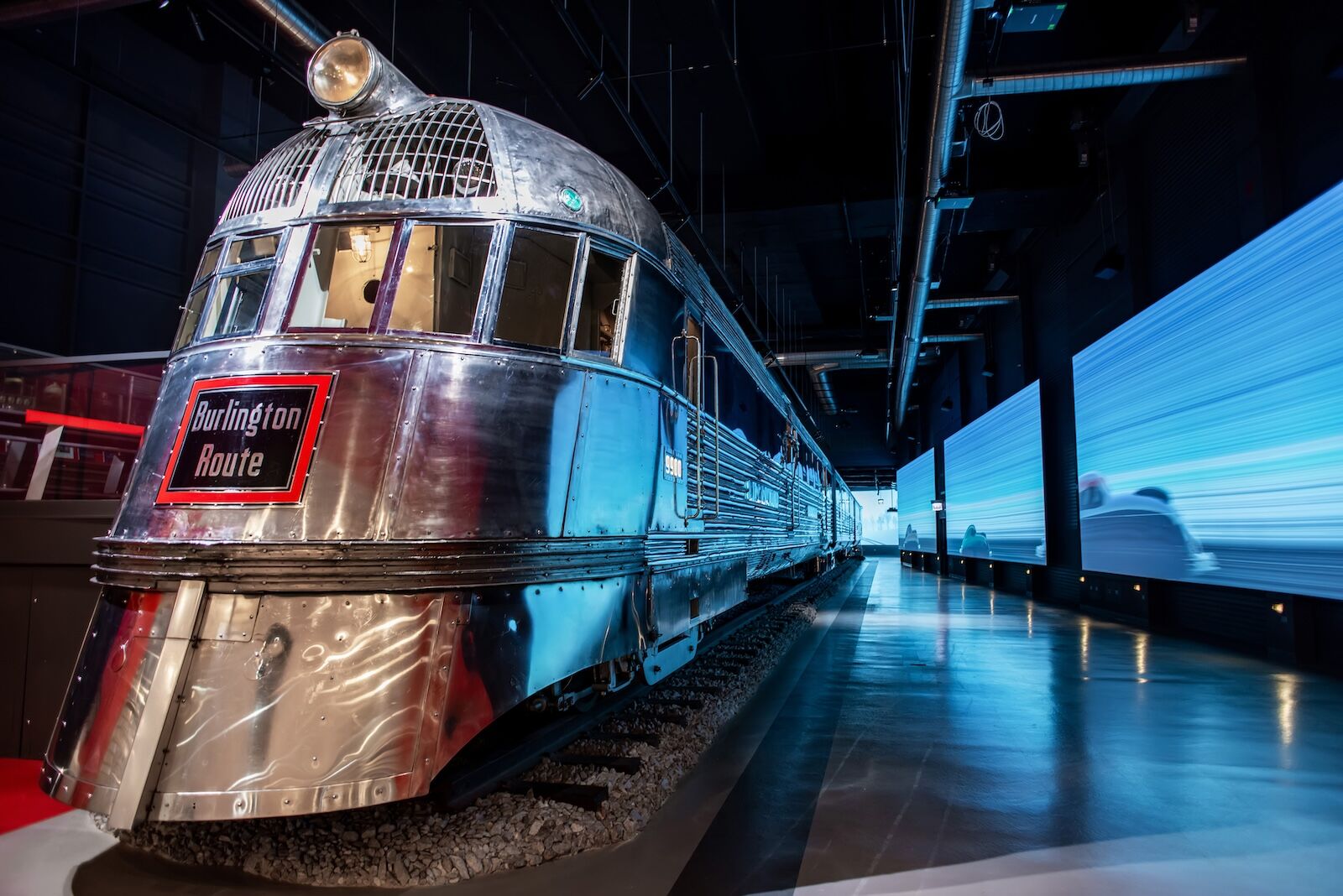
In this exhibit, you can climb into an assortment of historic vehicles, from trains to planes. “[The exhibit] explains how airplanes take people around the world, aviation history, and how the body experiences flight,” says Dr. Sariaikis. Visitors can sit in the original seats of a 1960s Boeing 727 and even talk to former pilots who sometimes volunteer in the exhibit. You can also climb into a 999 Steam Locomotive (the first vehicle in the world to crack 100 miles per hour) or take the wheel of a life-sized ship replica.
Henry Crown Space Center
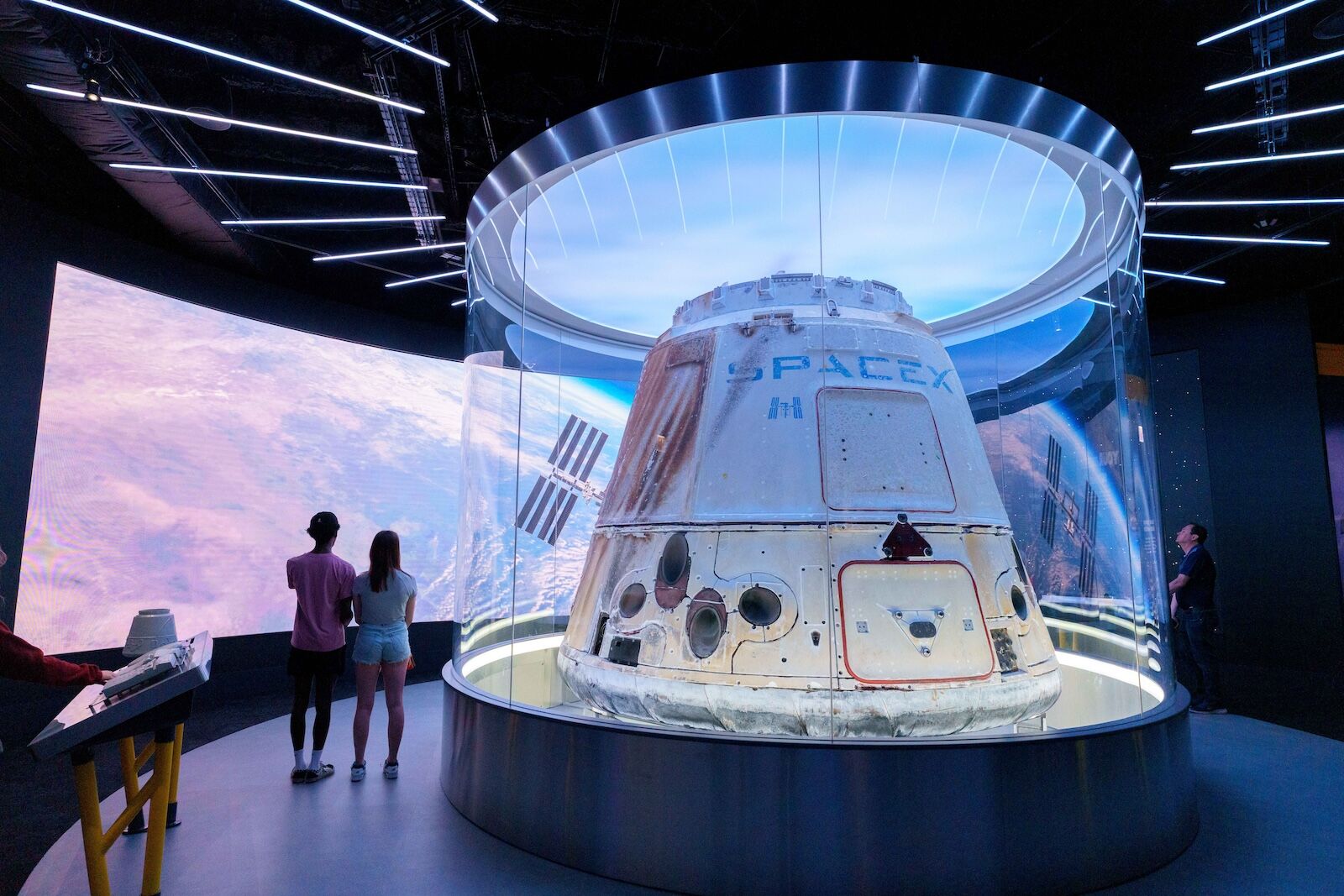
From the Space Race to SpaceX, the Henry Crown Space Center tells the story of human space exploration through a collection of amazing artifacts. Highlights include the Apollo 8 Command Module, the Mercury Aurora 7 Capsule, and a prototype biofeedback belt worn by Mae Jemison, the first Black American in space (and a Chicago native).
A newer addition to the exhibit is the SpaceX Dragon spacecraft, which carried cargo and scientific supplies to the International Space Station in 2017 and 2019.
Giant Dome Theater
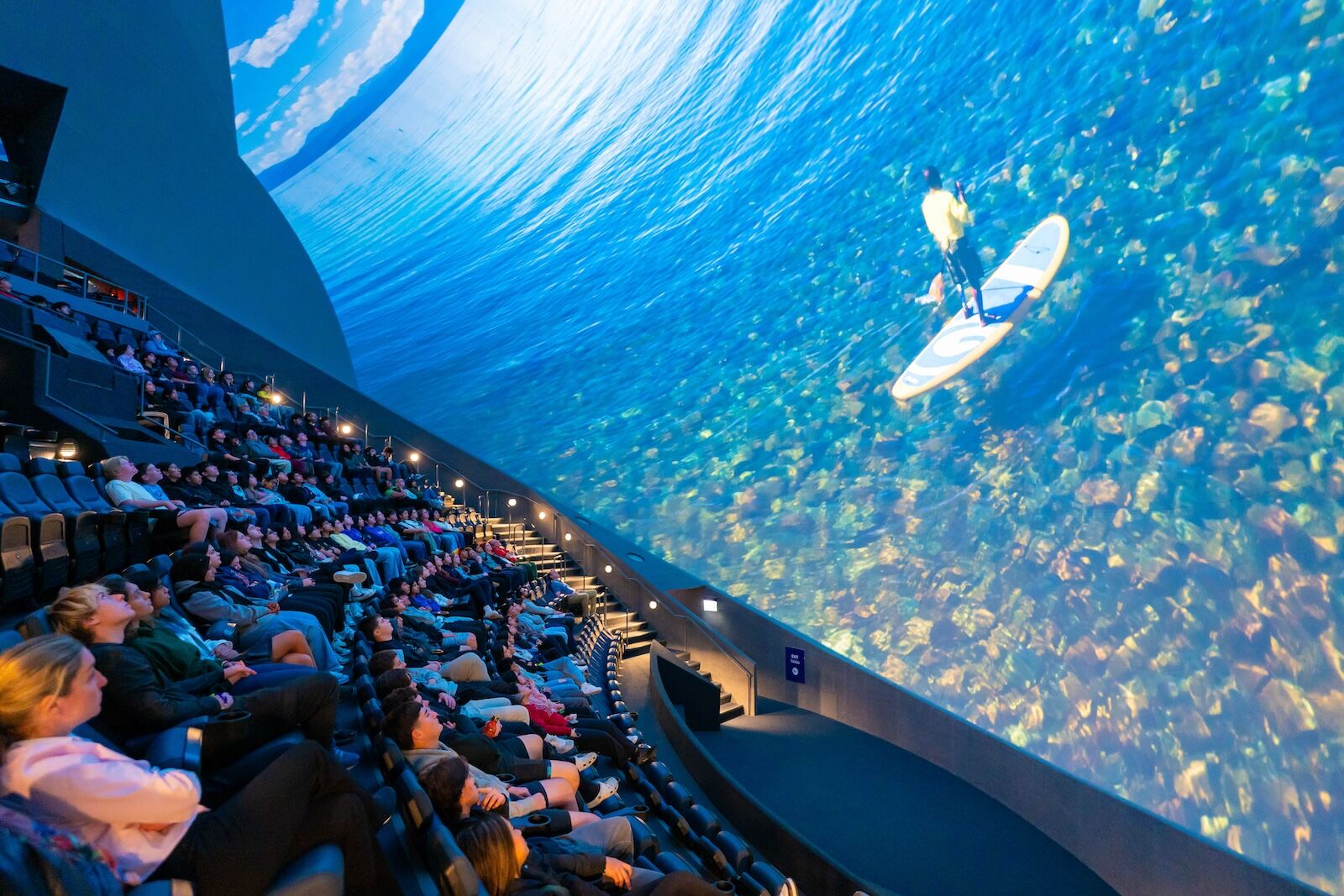
Griffin MSI’s Giant Dome Theater puts visitors inside a five-story wraparound screen with state-of-the-art projection. The current films are Encounters in the Milky Way, which takes audiences through spectacular moments in our solar system’s past and future, and Serengeti, which showcases Africa’s iconic wildlife and the annual wildebeest migration. Note that Giant Dome Theater tickets are not included with general admission and require an additional purchase.
Lesser-known exhibits worth seeing
With so many displays and so many individual items, it’s easy to overlook the lesser-known exhibits. But many are just as fun and interesting.
Head to the lower level for the quirky Swiss Jollyball. The massive pinball machine is more than seven feet high and 15 feet wide, making it the largest “flipper machine” in the world (declared in 1988). It’s loosely Switzerland-themed, and the ball rolls through hotels, boats, and ski lifts, and even includes a giant Toblerone bar. It’s the kind of exhibit that stops adults in their tracks just as much as kids.
Also worth seeking out is the Art of the Bicycle exhibit, with rare and historic bicycles as well as modern, cutting-edge designs and prototypes. It’s interesting just to look at, but the information is also fascinating, covering how bikes went from a risky pursuit for daredevils only to a beloved mode of transportation.
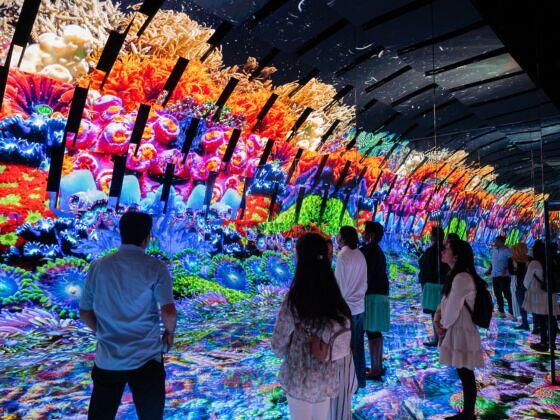
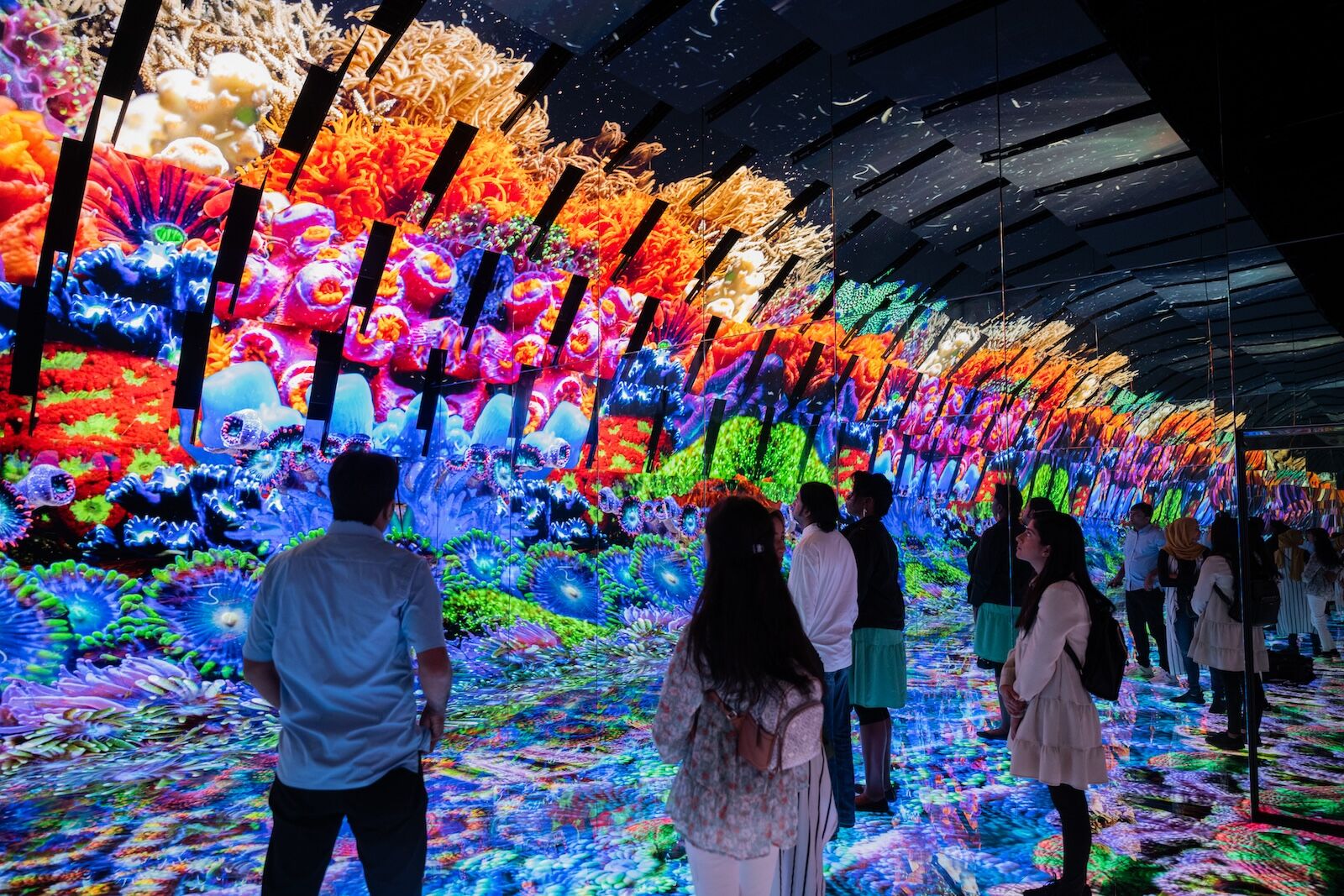
Finally, inside, seek out an exhibit called “The Blue Paradox.” It’s inspired by a journey into the ocean to teach visitors about the scale of plastic pollution. It’s designed with floor-to-ceiling LED screens showing the beauty of everything from vivid coral reefs to swarms of jellyfish, but it’s hard to miss the 1,278 plastic fish hanging overhead. Nearby kiosks let you calculate your personal plastic footprint, with a conveyor belt display that forces visitors to consider their reliance on plastic (and how poor current recycling systems are).
Outside the building

MSI’s treasures aren’t just inside of the museum. On your way out or in, check out the building’s grand classical architecture. The south entrance faces a waterway known as the Columbia Basin, originally created for the 1893 World’s Columbian Exposition (or World’s Fair), and the museum garden has large bur oak trees older than the fair itself.
Behind the museum just west of the entrance is the Garden of the Phoenix. Originally part of Japan’s pavilion during the 1893 World’s Columbian Exposition, the Japanese garden includes more than 120 cherry blossom trees, a moon bridge, and the Skylanding permanent installation by Yoko Ono. As part of the Chicago Park District’s Jackson Park, the garden is free and open to the public. 