Traveling by train has an aspirational pull that flying or driving just can’t touch. Whether it’s a daily commute or a break from routine, Americans want to ride the rails. We’re booking more train trips than ever, and a study published by the High Speed Rail Alliance found that 78 percent of Americans say a strong rail network matters. And yet, no matter the purpose, rail travel in the U.S. still lags far behind what much of the world already takes for granted.
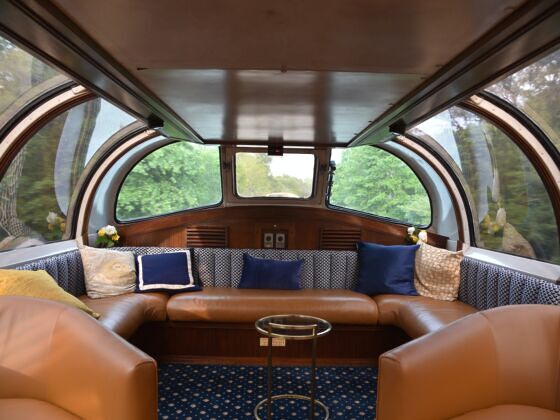
Vista Dome in the Warren R. Henry car. Photo: Halloway
Private Luxury Railcars Are Reimagining Train Travel in the American West
This isn’t mere sentiment. Amtrak posted a 5.1 percent jump in ridership last year, closing at a record 34.5 million passengers, according to its own data. Brightline, the higher-speed rail line linking South Florida to Orlando, saw similar momentum, carrying roughly 3.1 million riders. The problem is that much of the middle of the country hasn’t had much reason to buy in.
I live in Palisade, Colorado, two blocks from the tracks where Amtrak’s California Zephyr rolls through twice a day. I hear it in my sleep. I even got married in the Amtrak station in nearby Glenwood Springs. As a committed urbanist—albeit a small-town one these days—my favorite spot in Denver is the revived Union Station, where I often arrive via Colorado’s intercity bus service, Bustang.
Passenger rail is one of the most energy-efficient ways to move people, producing roughly 75 percent fewer greenhouse-gas emissions per passenger mile than driving (some studies show up to 80 percent) and significantly less than flying. Economically, investments in rail infrastructure have been shown in countries like Japan and Germany to generate strong returns, supporting tens of thousands of jobs while boosting regional connectivity, tourism, and long-term productivity.
And yet I’ve never ridden an Amtrak train. It’s simply less reliable, less convenient, and more expensive than crossing the state by bus or car. Many people I know haven’t either, whether for those practical reasons or because of what they expect Amtrak to be like. The trains rolling through Colorado aren’t exactly sleek or new, and anyone who’s experienced the bliss of rail travel in Europe or Japan isn’t wrong to assume it’s different here. Like public transit more broadly, Amtrak, despite its effectiveness, suffers from a stubborn image problem in large swaths of the country.
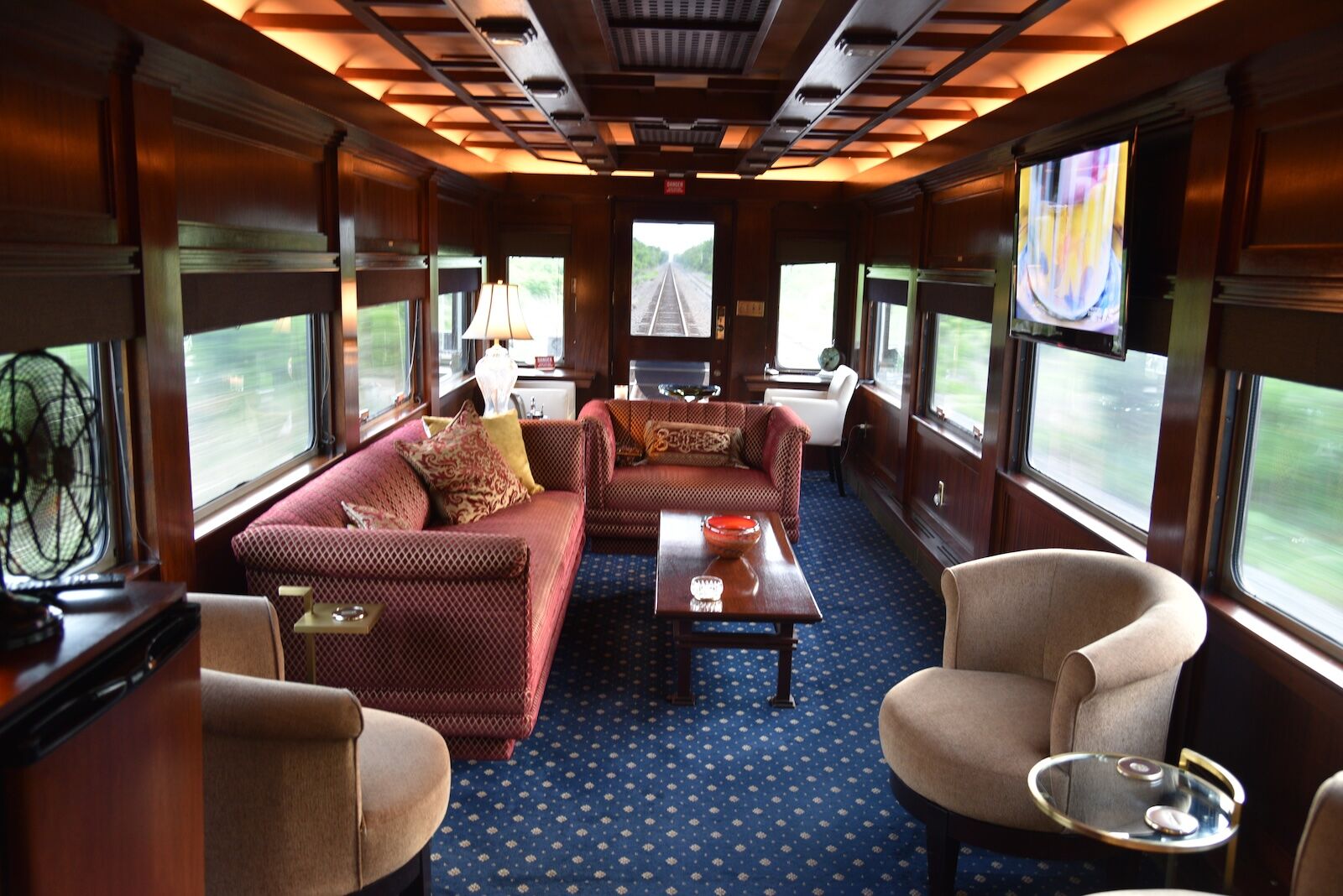
The interior of the Warren R. Henry car. Photo: Halloway
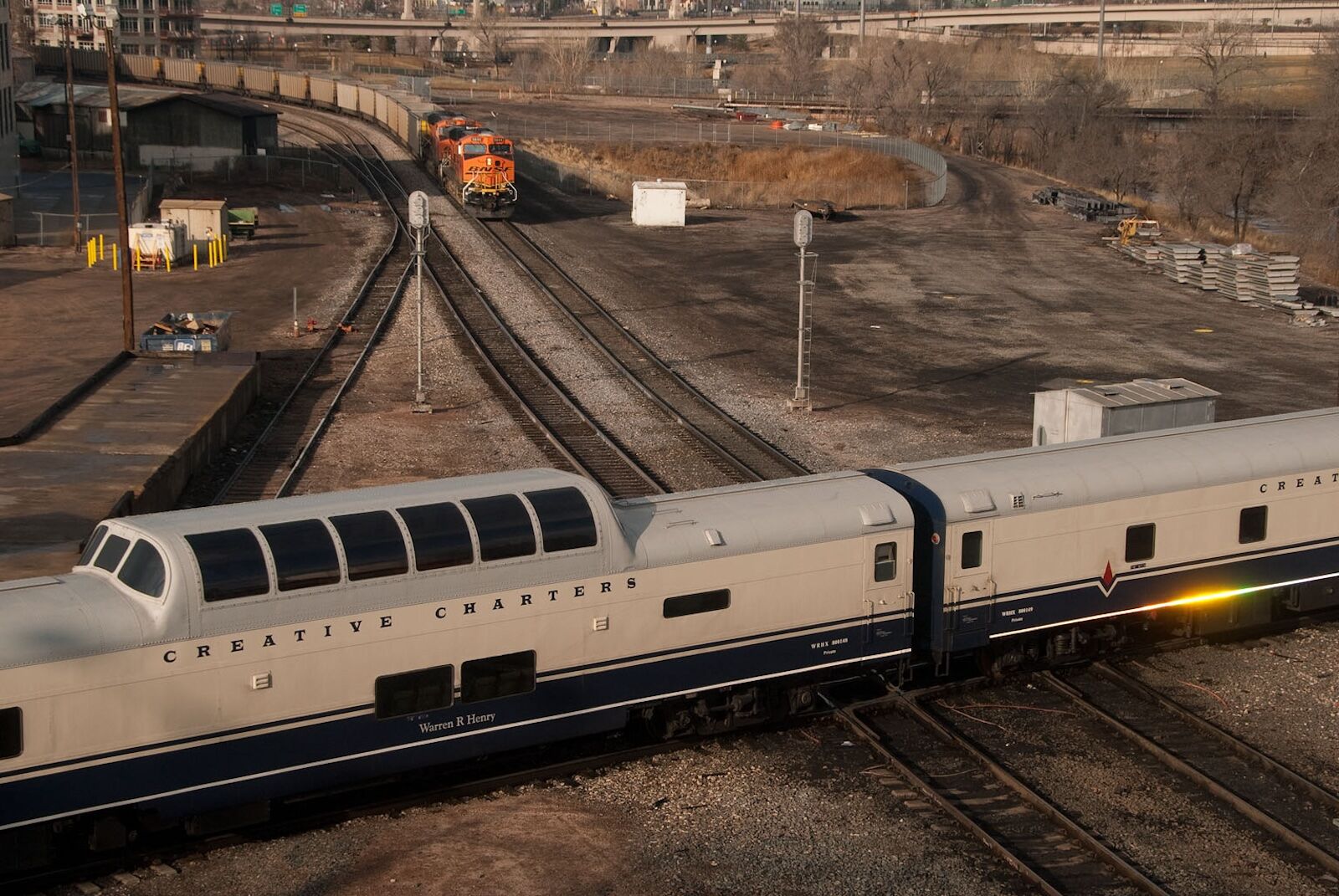
The exterior of the Warren R. Henry car. Photo: Halloway
I’ve just returned from a trip to Japan where I rode the Shinkansen, the country’s famous bullet train network, for the first time. I’ve also trained across much of Europe and Southeast Asia. Some experiences, like those in Japan, have been full-on revelations about what the US is missing and what could be if our country had infrastructure policy to match. Others have been less impressive. But one thing has stuck out every time I’ve ridden a train abroad – we need this in the US, and more people need to experience train travel to boost buy-in. Perhaps what they need is a fresh take on what we already have in order to hop on board with investing in more.
Enter Halloway, an arm of Delaware-based Lunatrain with big visions about revitalizing rail travel in the United States – at least, how it’s perceived. This month, the company debuted exclusive-use private railcar journeys on two of the most scenic Amtrak routes in the American West. Halloway attaches a pair of restored midcentury Union Pacific cars to regularly scheduled Amtrak services, upgrading the trail experience to be fully private and catered for a single group up to six. There are glass dome views of the countryside and tailored service that includes gourmet meals, alongside 5-star hotel amenities like turndown service and lounge-like social areas are included as well. It’s not affordable for daily commutes or even for the vast majority of travelers, but for the purpose of changing the image of rail travel in the US, it’s brilliant.
The first Halloway itineraries run on the Coast Starlight between Los Angeles Union Station and Oakland’s Jack London Square Station and on the California Zephyr between Oakland and Denver’s Union Station. While not routes that see the traffic of Amtrak’s Acela or other lines on the eastern seaboard, each addition could be exactly what those of us in the Rockies and high-deserts of the West need to finally hop the train. The 36-hour California Zephyr ride is widely regarded as one of the United States’ most scenic rail routes as it climbs through the Sierra Nevada, crosses the red rock landscapes of Nevada and Utah, and ascends the Rockies (including a stop at my wedding location) on its way to or from Denver.
Both itineraries use the same two-car, self-contained luxury setup. The Evelyn Henry, a refurbished sleeper car, includes four double bedrooms and a queen-bed master suite, all with en suite bathrooms and wardrobe space, functioning as a compact boutique hotel on rails. It’s paired with a 1955 dome car, dubbed the Warren R. Henry, which offers elevated panoramic windows and dedicated space for dining, lounging, and socializing.
Rates start at $10,000 for exclusive use on the Coast Starlight route and $18,500 for the longer California Zephyr journey, inclusive of all meals prepared by a private chef, laundry, and nightly turndown service. That’s not cheap, but it’s split between a large group. Taking into consideration the cost of hotels and meals in addition to a flight between Oakland and Denver, the cost begins to feel slightly more justified.
While guests travel in the private Halloway accommodations, the cars remain physically coupled to standard Amtrak trains and operate on Amtrak’s timetable and station stops under a long-standing private railcar program. The earliest departures sold out promptly, and Halloway plans to release additional dates and can arrange custom charters in either direction on both the Coast Starlight and California Zephyr, bookable through its website. While the trains remain far slower than the Shinkansen, at least the journey will be exceptionally comfortable. 