As a travel editor, I stay in a fair amount of hotels. One aspect that to me differentiates a property is a hotel that is rife with great books. I’d come to Niseko Village to snowboard the acclaimed terrain of its resort and the surrounding Niseko Renpo range. While that certainly took the spotlight, flipping through pages in Michael Blann’s guide to Europe’s epic cycling routes or the vividly choreographed biography of Italian artist Antonella Da Messina in the lobby of Hinode Hills Niseko Village while I sat over coffee after a day on the slopes was a welcome bonus. It was one of many I experienced over four January days at this beautiful hotel. If you’re visiting Niseko Village, and particularly if you’re a Hilton Honors member, there’s no better place to base yourself for a ski trip, whether with your powder crew or – as was my experience – with the family.
This New Ski-In Hotel in Niseko Village Is Perfect for Powder Days and Storytime
We hope you love Hinode Hills Niseko Village! Just so you know, Matador may collect a small commission from the links on this page if you decide to book a stay.
What stands out about Hinode Hills Niseko Village
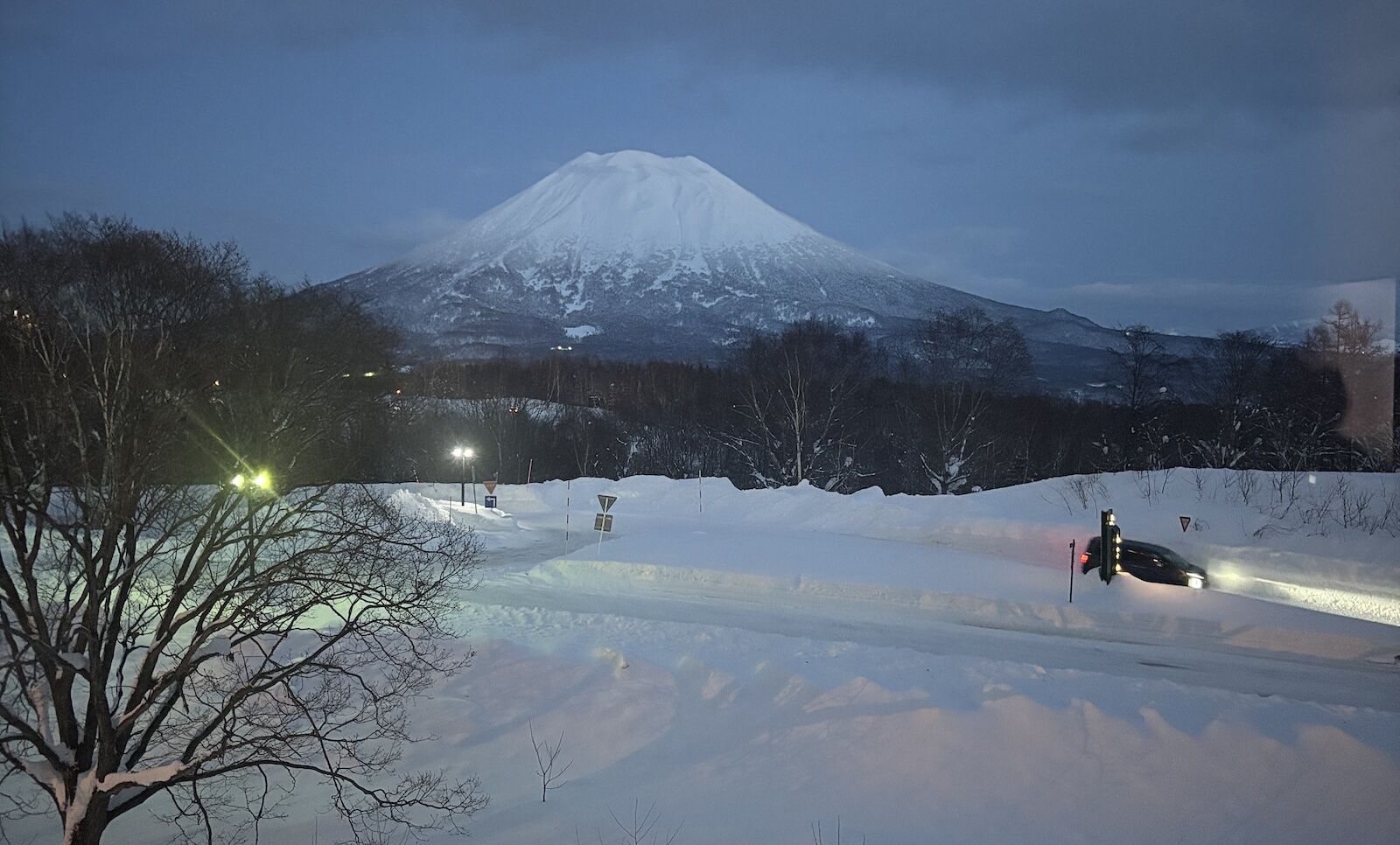
The view of Mt. Yotei from our room at Hinode Hills Niseko Village. Photo: Tim Wenger
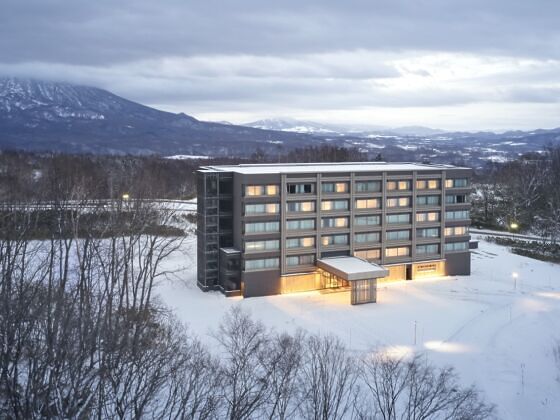
Hinode Hills Niseko Village began operating under the direction of Hilton from late 2025, as part of a partnership expansion with YTL Hotels. The concept is a fresh take on a property that has operated under the Hinode Hills banner since 2019. The hotel, with rooms from $173 per night, offers ski-in access to Niseko Village via a magic carpet that connects to a village gondola, making it an exceptional place to stay with my four-year-old daughter who is learning to ski.
“We got it together just in time for ski season,” says Kevin Girard, the Cluster General Manager for Hilton’s trio of properties at the base of Niseko Village, as we sit over breakfast in the hotel’s restaurant, Zento. Girard, who moved to Niseko from Bali where he’d spent a tenure helming the Conrad Bali, is no stranger to opening hotels in Asia. A career with Hilton positioned him well to ensure Hinode Hills operated a smooth initial welcoming of guests, and from what I gleaned his staff is top-notch.
For having only been open two months there were impressively few kinks to iron out. Considering this was an international ski trip with a small child, I had just one minor point of confusion during the stay, that being whether or not Zento serves apres-ski guests – I stopped in for a beer and had to track down a bartender.
The staff was consistently the best I’ve experienced at any hotel. They assisted in helping me switch my family’s bus transfer to the Sapporo airport as I’d initially booked a pickup at the nearby Hilton Niseko Village instead of Hinode Hills. The front desk staff is quick to offer directions or clarifications on anything lost in translation, and the “QR concierge” can assist with reservations, transportations, and logistics. Ski rentals were handled through an on-side rental shop and ski storage facility, which meant no lugging gear across town or even off-property except to ski.
Rooms at Hinode Hills Niseko Village
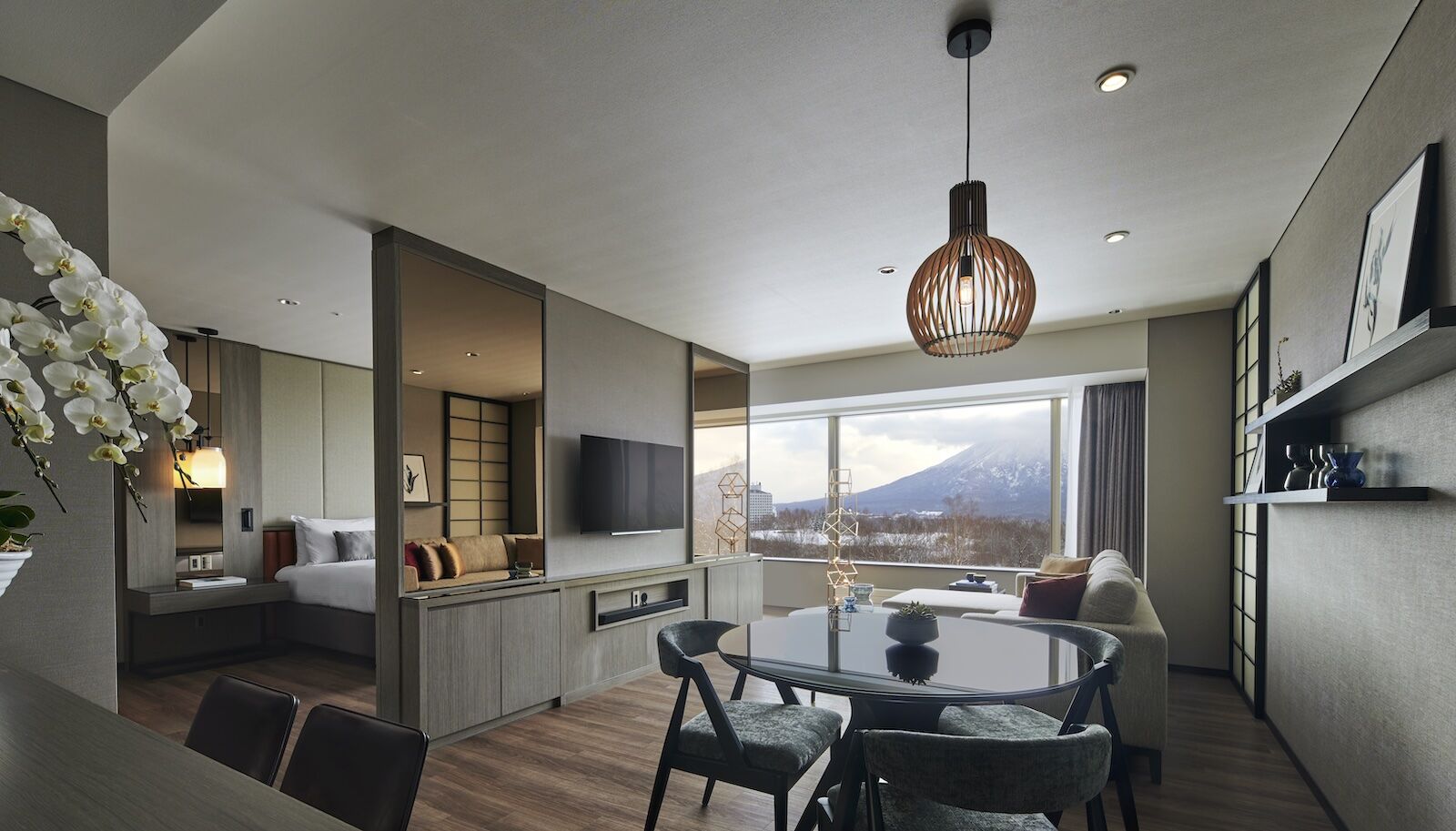
One-bedroom suite. Photo: Hinode Hills Niseko Village
Even beyond the service itself, Hinode Hills Niseko Village stubbornly retains the Japanese value of Omotenashi, a practice of thoroughly looking after guests to ensure they are comfortable and satiated. Wabi-sabi defines the hotel’s aesthetic through clean and angular design built from natural materials set to relax and inspire. Yet, the appearance never goes overboard. Effectively, it’s functional minimalism.
We stayed in a King One Bedroom Suite, Mt. Yotei a powerful presence through the windows each time the clouds parted. The kids’ bed was perfect for Olivia, who also took ample advantage of the large couch in front of the TV. The bathroom was opulent, with a flexible showerhead and double vanity that fit our entire family.
The suite featured a full kitchen with a Nespresso maker, the easy kind that allows even a clumsy American to fumble his way to a passable cup of coffee. There’s a full fridge – plenty of room for a case of Sapporo beers and some leftovers. All guests have access to the onsen area, with male and female pools available. Clothing is restricted, but tattoos are ok.
On-site and nearby dining at Hinode Hills Niseko Village
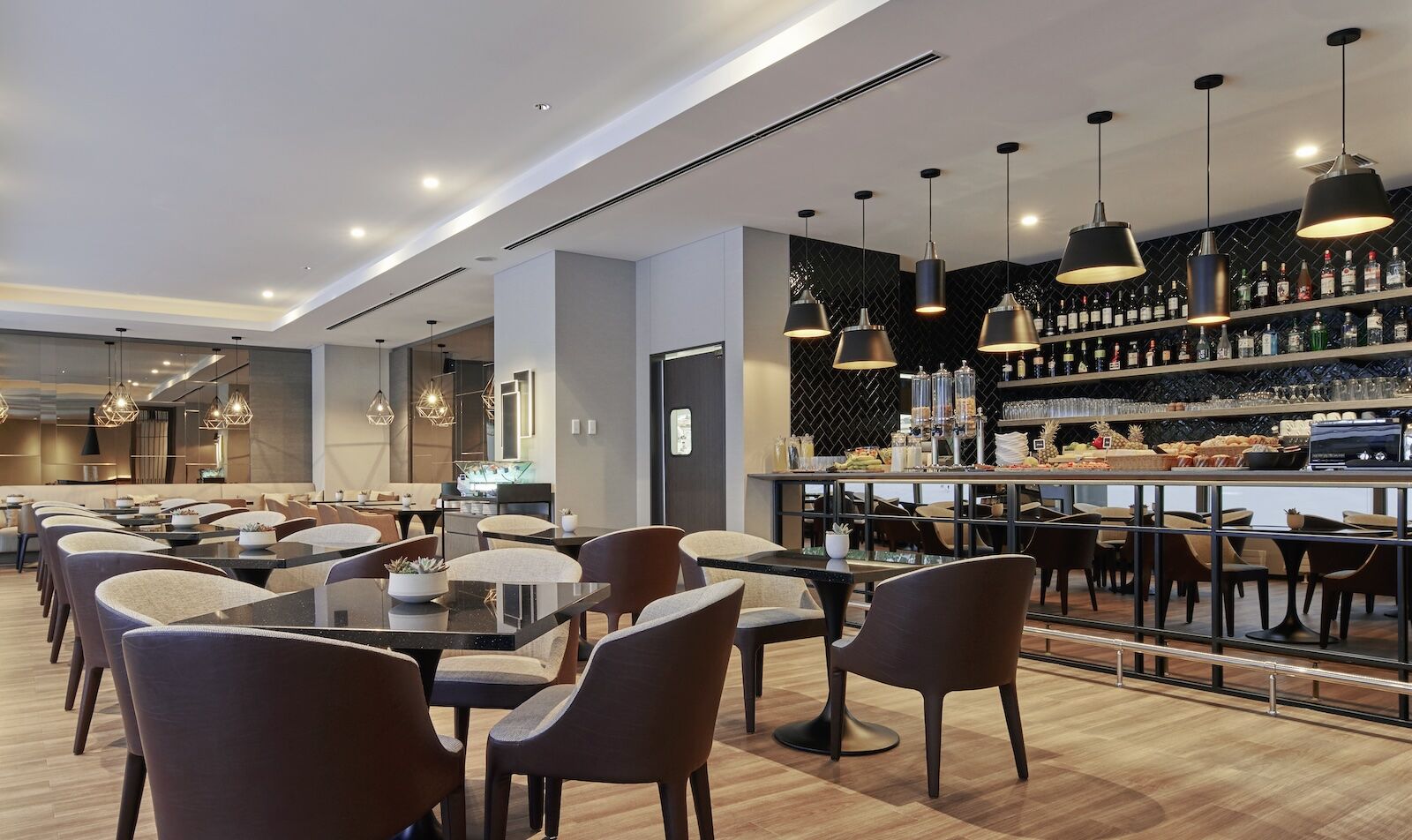
Zento. Photo: Hinode Hills Niseko Village
Food is a major draw when visiting Japan. Nowhere in Niseko were we disappointed. On our first night my family dined at Zento after a long travel day. The menu is contemporary Japanese fusion, an easy approach for western palates. I ordered the salmon and it was so delicious I ordered it again through room service the following night. The Hokkaido influence on the recipe was palpable – Hokkaido produces some 80 percent of Japan’s potatoes, and the Mezame served under the salmon perfectly complemented the fresh, crisped and seasoned fish. Perhaps as the result of what her dad does for a living (I’ll take the credit, at least), my daughter is quite adventurous for a preschooler and ate both steak and tuna from Zento. Breakfast at Zento is buffet-style with egg entrees available for a la carte order, a common practice in Japanese hotels.
Nearby Niseko-Yo, the small base village adjacent to the ski resort’s primary gondola, offers a collection of restaurants ranging from ramen to burgers to pizza. My family had a ski-day lunch at MM Smash Burger, which impressively serves both french fries AND onion rings with its burgers and sandwiches. Access to Niseko-Yo is doable by walking up the magic carpet and hopping on the short Village Express gondola (free access with your room key) or by hopping the shuttle bus from in front of the hotel (also free with your room key).
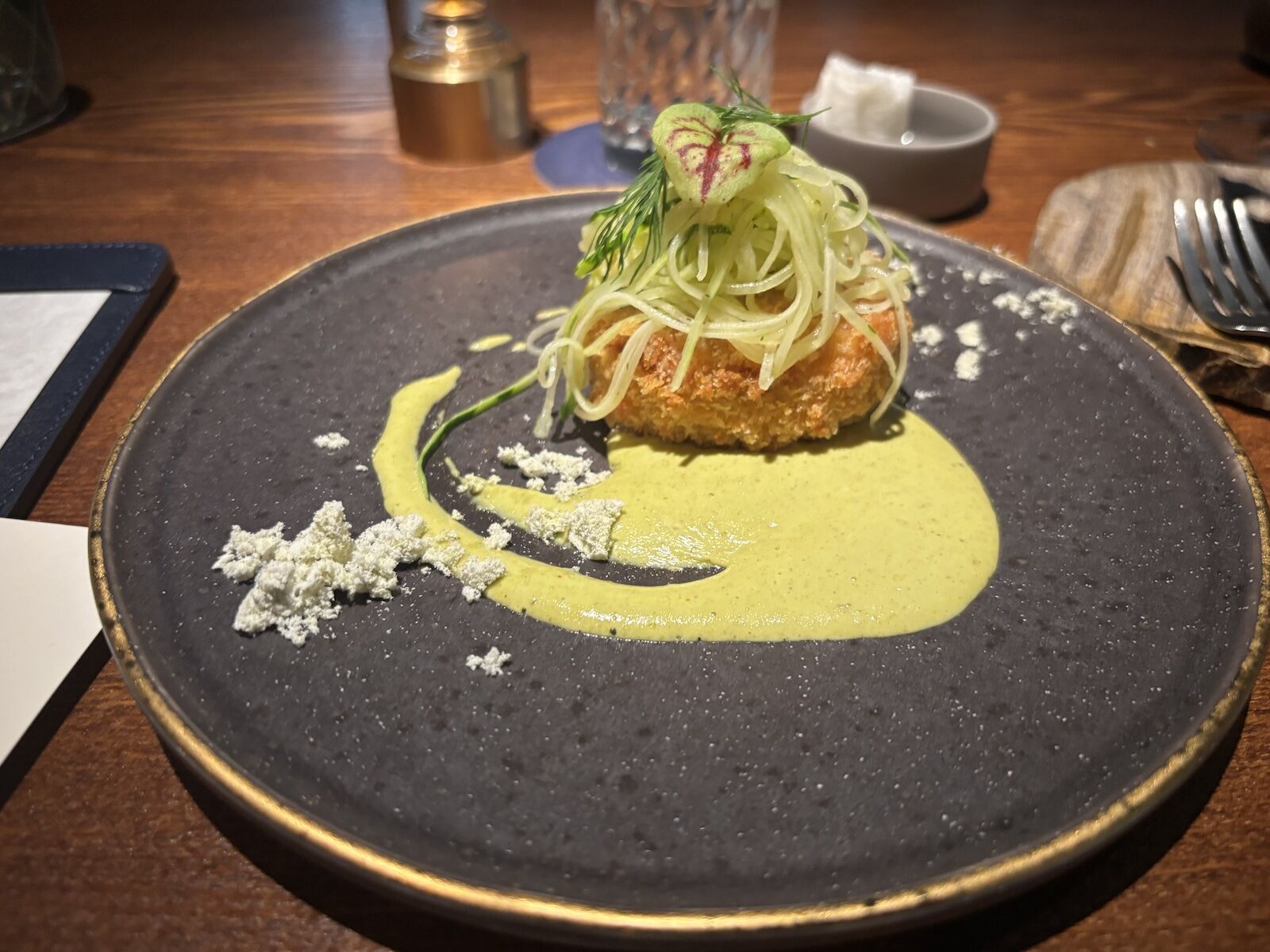
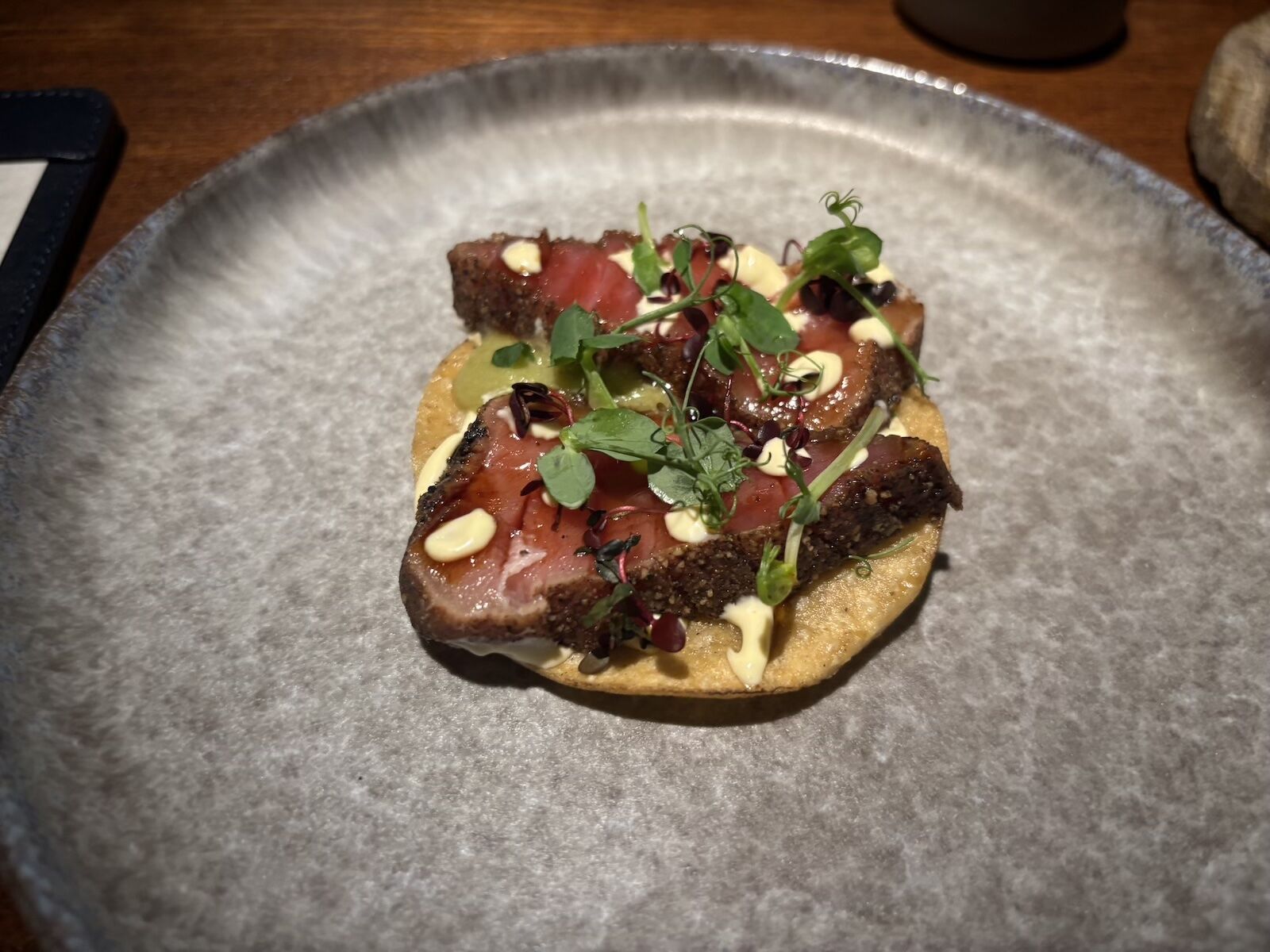
Much of the dining, apres, and nightlife in Niseko happens in Hirafu, the next village over, accessible via a shuttle bus that picks up at Hinode Hills every 20 minutes or so. I dined at the newly-opened AoRA in Hirafu on our final night in town, splurging on a five-course set menu of Japanese fare presented in as formal a setting as possible in a ski town. The restaurant is about a 10-minute walk from the Hirafu Welcome Center, where the bus drops off and picks up in the village. Located inside the Chatrium hotel, the small dining room is romantically lit with windowside tables overlooking the beanie-clad bustle of Sasayaki-Zaka Street below. The meal was incredible – all seafood was locally sourced from the frigid waters surrounding Hokkaido. The seared tuna tostada was impeccable, a crunchy first taste followed by its soft center, topped with chipotle teriyaki and served atop a white corn tortilla. The star of the show, the Wagyu Sirloin, was crisped to mid-rare perfection, the best steak I’ve ever eaten, and also raised on the island.
As was the case everywhereI visited in Niseko, the service was top notch. Following the Wagyu, Guest Relations Manager George Amoah brought a beverage cart by the table with digestifs, promising a bonus pour of Calvados if I correctly guessed how the full-grown apple had become entrapped inside the bottle. I surmised incorrectly, but it’s a trick question – the apple was grown inside the bottle, a tradition that Amoah informed me is known as the pomme prisonnière, or “trapped apple.” Perhaps because I chatted him up about his two decades in Tokyo he gave me the extra tipple anyhow.
The ski experience at Niseko Village
Hokkaido’s famous snowfall – Niseko gets some 40 to 50 feet of fluffy Japow each winter – is the big draw to Annapuri mountain, where the four resorts of Niseko United are located. The ski resort of Niseko Village, where we stayed, is easily accessible from Hinode Hills as well as other properties in the area including The Green Leaf and the Hilton Niseko Village, the two sister properties of Hinode Hills. I experienced this snow firsthand bright and early each morning. The Niseko Gondola departs from just outside the Hilton and heads nearly to the top of the resort and accesses the vast majority of its terrain. It’s possible, on non-windy days, to take the single-person Wonderland Chair above the treeline to the top of the mountain.
I appreciated that Niseko Village offers steep and challenging terrain the entire way down, where face shots of fluffy powder are all but guaranteed. I embarked on a backcountry day prior to riding at the resort and found the resort’s terrain to be steeper and, if you’re willing to dip into the trees, there’s plenty of untouched powder to be had. The runs up top weren’t crowded and there was plenty of space to carve my own line. Ski schools are a-plenty down lower, with classes available in specific languages by request.
My daughter, wife, and I all skied together on the beginner terrain accessible via the Village Express gondola. There are two magic carpets and a great bunny slope where we practiced making turns and pizza-ing (Olivia has the french fry part down pat, I had to sprint after her once when she took off down the hill). Lift tickets are available for just Niseko Village (8,800 yen, about $57) and for Niseko United with access to all four resorts (10,500 yen, about $73).
Niseko draws travelers from across the world, and it’s common to hear multiple languages spoken in lift lines. Getting by on English is easy, though learning a few basics – “Arigato gozaimasu” (thank you) and “Oishii” (delicious) – goes a long way. Note that Japanese trail maps swap blue for red to mark intermediate trails. Green and black are the same as on US and Canadian trail maps. Beyond that difference, it’s easy to maneuver and route yourself through the terrain, and the experience of skiing in Japan is incredible – snow like this is absolutely worth the long-haul flight. 