A large-scale deployment of immigration officers to airport terminals across the US is currently taking place as a partial government shutdown leaves airport security teams understaffed and congressional representatives continue to disagree on a solution. Here’s what to know if you’re planning to fly during the next few weeks.
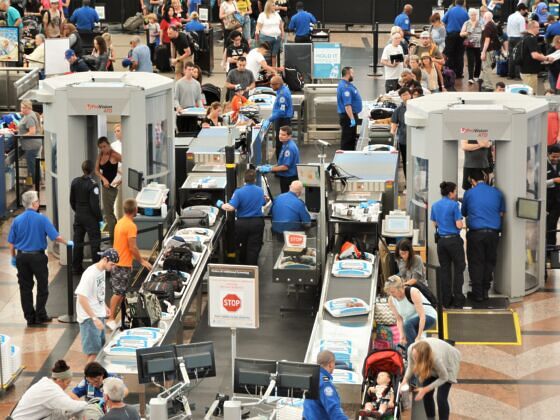
Photo: Jim Lambert/Shutterstock
What Travelers Need to Know as ICE Appears in Airport Terminals
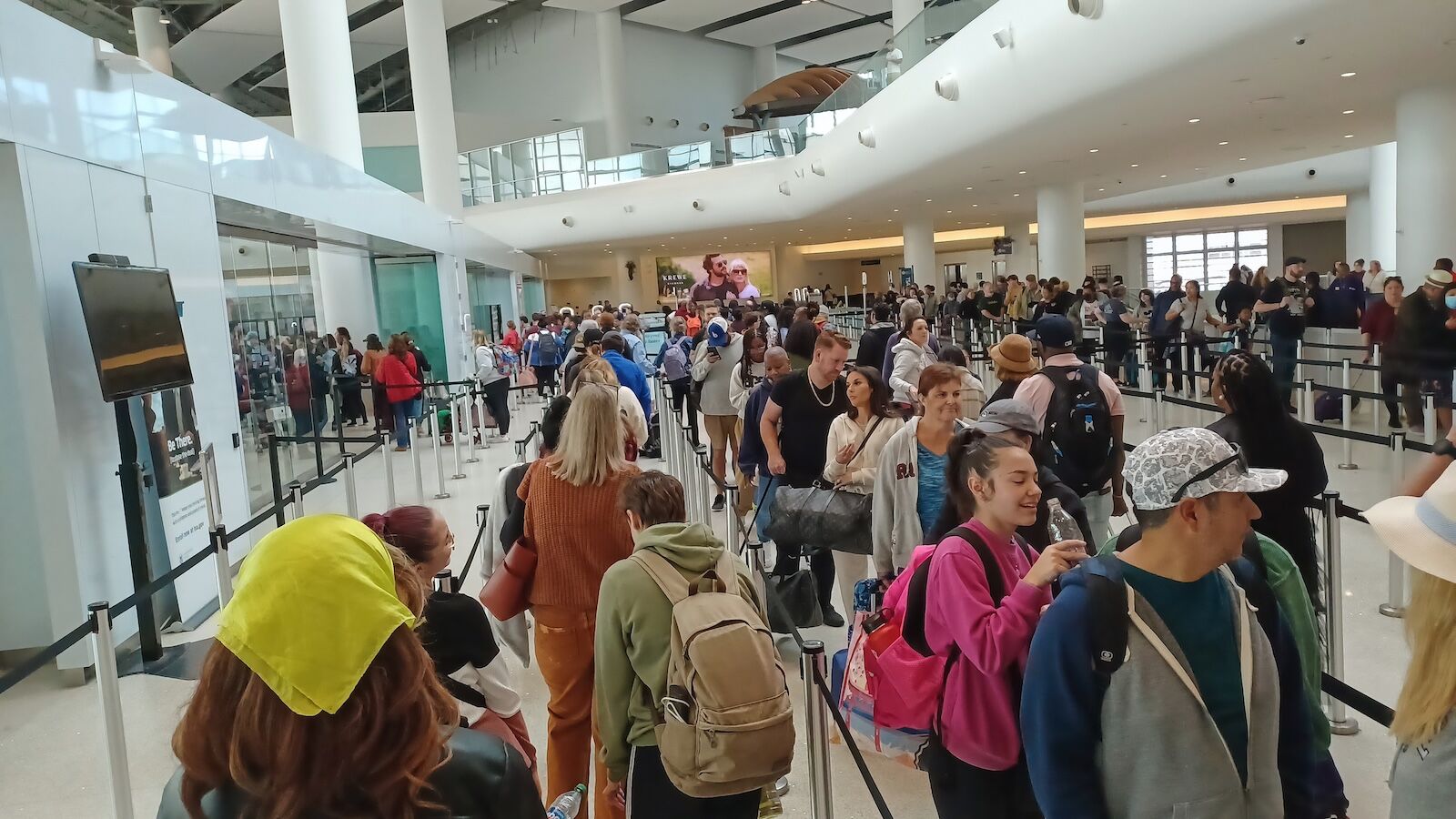
A airport security line in New Orleans. Photo: Elliott Cowand Jr/Shutterstock
For travelers, the deployment will likely not eliminate delays, as Immigration and Customs Enforcement (ICE) agents are not trained to replace TSA officers in most key duties. Instead, they’ll assist with tasks like checking IDs, directing passengers, and monitoring access. They’re not conducting airport security screenings or operating X-ray machines, as those roles can only be done by trained TSA officers. Airports are still advising passengers to arrive several hours before departure, though supporters of the action are hoping the presence of ICE officers may help with crowd control and flow. As of March 23, the airports reporting semi-normal wait times are still primarily those using private contractors to supplement TSA agents, such as SFO in San Francisco, rather than those where ICE agents are present.
If the deployment speeds up airport lines, it could still impact how safe air travel feels, especially for non-white travelers. Early reports have noted that some travelers already approach airports with an increased fear of questioning or detention, and that isn’t limited to non-US citizens or immigrants. It can extend to anyone who may be perceived as “foreign,” including any non-white traveler or those who don’t speak fluent English. Advocacy groups say a visible ICE presence could intensify that anxiety, making routine travel feel riskier for many millions of travelers. Some experts worry that could increase tension at already crowded and high-stress airport environments, possibly increasing the likelihood of confrontations or conflicts.
Where are ICE agents being sent?
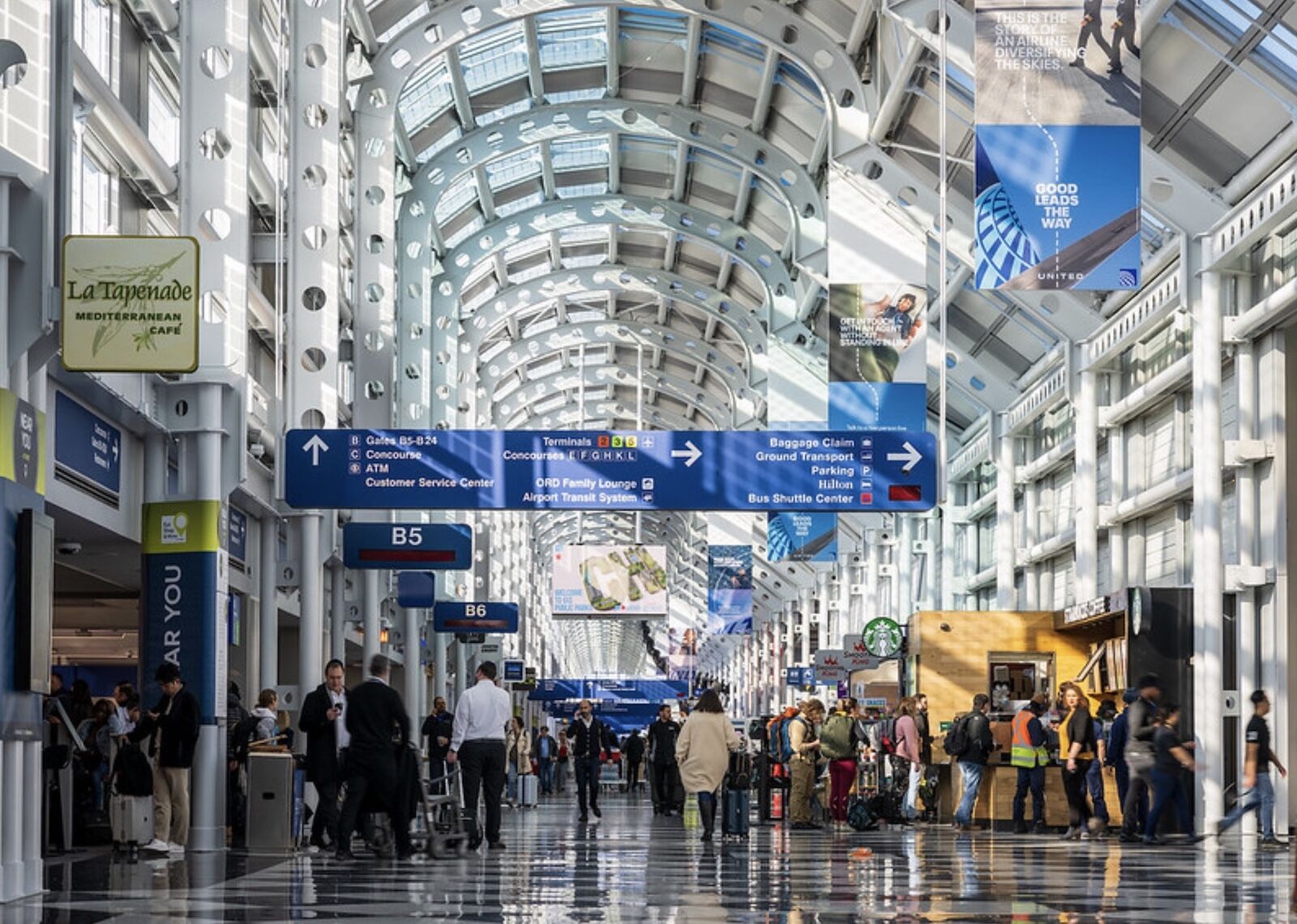
Chicago O’Hare is one of more than a dozen airports where ICE agents have already been deployed. Photo: Chicago Department of Aviation
As of March 23, a White House representative confirmed ICE agents have been deployed to the following airports, though ICE’s presence could shift as days go on based on where they’re perceived to be needed most.
-
- Chicago O’Hare (ORD), Chicago, Illinois
- Cleveland Hopkins International Airport (CLE), Cleveland, Ohio
- Hartsfield-Jackson Atlanta International Airport (ATL), Atlanta, Georgia
- Houston’s William P. Hobby Airport (HOU), Houston, Texas
- John F. Kennedy International Airport (JFK), New York, New York
- New York’s LaGuardia Airport (LGA), New York, New York
- New Orleans International Airport (MSY), New Orleans, Louisiana
- Luis Muñoz Marin International Airport, (SJU), San Juan, Puerto Rico
- Newark Liberty Airport (EWR), Newark, New Jersey
- Philadelphia International Airport (PHL), Philadelphia, Pennsylvania
- Phoenix Sky Harbor Airport (PHX), Phoenix, Arizona
- Pittsburgh International Airport (PIT), Pittsburgh, Pennsylvania
- Southwest Florida International Airport (RSW), Lee County, Florida
As of now, ICE agents will be in airports on an ongoing basis, and could stay even after the shutdown ends. Lawmakers are currently in session through March 27, 2026, at which point both the House of Representatives and the Senate are expected to go on a planned two-week break. While some lawmakers could stay in DC during that time to work toward a solution, it’s unlikely an official vote to end the shutdown could be held during that period.
Aren’t immigration staff already in airports?
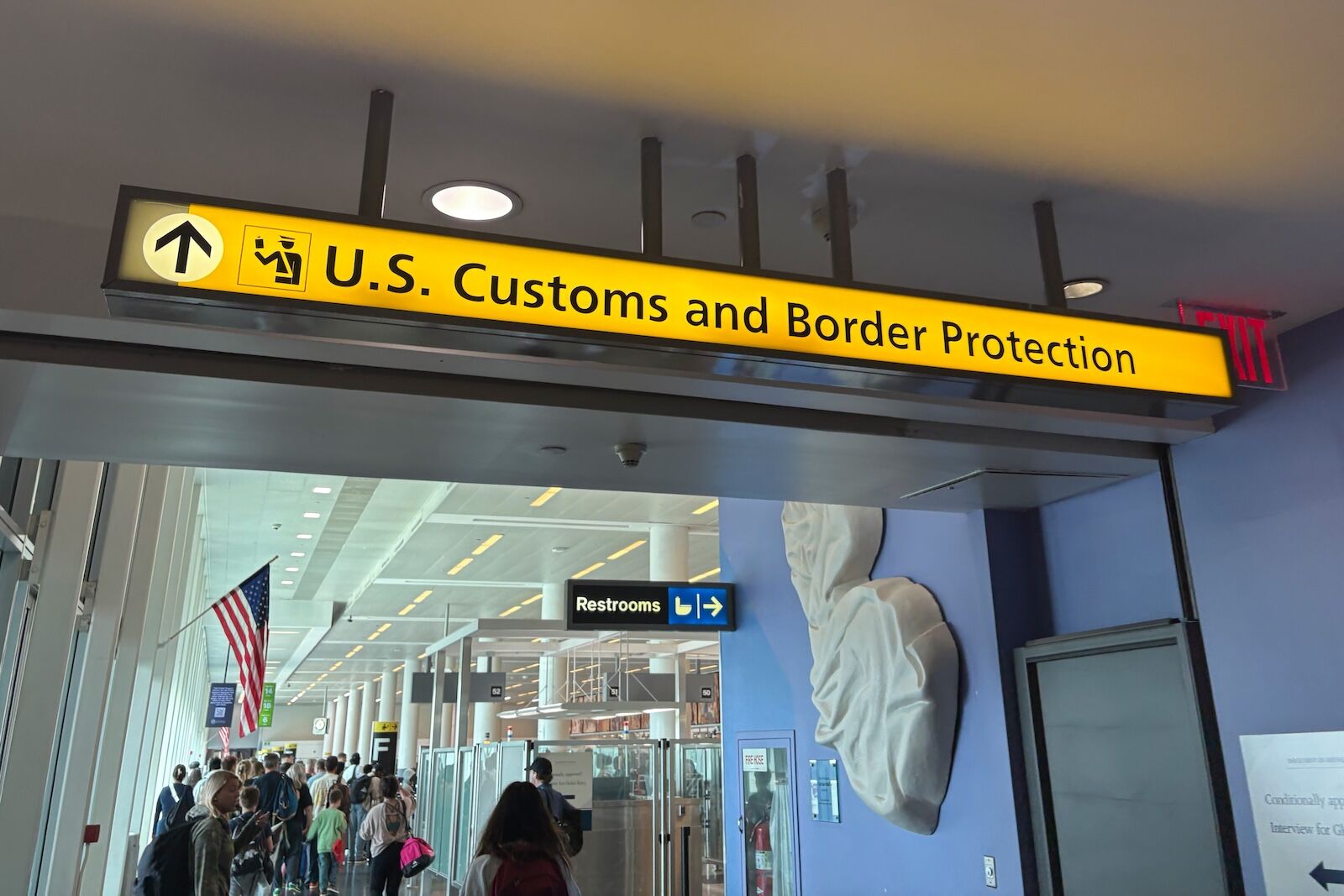
Multiple agencies that fall under the purview of DHS already operate in most airports around the US. Photo: Adam McCullough/Shutterstock
ICE agents have long been present in US airports, so having the agencies overlap isn’t new. However, they’ve usually worked in limited, specialized capacities, rather than part of passenger-facing operations. Before this, their tasks skewed toward more immigration-focused duties, such as detaining flyers with deportation orders, working with the Department of Homeland Security (DHS) to investigate safety and criminal issues, cross-checking suspicious passengers, and aiding with efforts to reduce crimes like human trafficking and smuggling.
With this new order, ICE employees’ roles becomes more generalized and wider-reaching. Now, the majority of air passengers may encounter an ICE agent at some point during their air travels.
Will this make airports safer or less stressful?
Experts and officials are divided on whether deploying ICE agents is advisable. Some experts have said that bringing in additional federal personnel during a staffing crisis could help reduce long lines, and that sending in ICE is better than having no relief staff for TSA agents. However, some critics, including equal rights organizations, unions, aviation experts, and some lawmakers, warn that sending armed immigration officers untrained in airport security duties could increase risks and create a heightened sense of alarm among travelers. There are also broader concerns about sending ICE specifically, given the widespread criticism of the agency and current controversies surrounding the Department of Homeland Security’s unprecedented use of violence against citizens and non-citizens alike, including the recent murders of US citizens Alex Pretti (shot by Customs and Border Patrol agents) and Renee Nicole Good, shot by masked ICE agents.
Federal law allows the Department of Homeland Security, which oversees both TSA and ICE, to reassign personnel across agencies in emergencies, so the deployment itself falls within existing legal frameworks.
Why are ICE agents going to airports?

Congressional Democrats are requesting a change that would mandate ICE agents to show identification when they make arrests and bar them from obscuring their identities. Photo: Peter Serocki/Shutterstock
The US is currently in week five of a partial government shutdown, a situation that occurs when Congress fails to pass funding legislation for federal agencies by a certain deadline. When that happens, many government operations pause, but “essential” workers for those agencies, including Transportation Security Administration (TSA) agents, must continue working, even though they aren’t paid until the shutdown ends. However, legislation passed in 2019 does guarantee back pay.
The current shutdown is a result of an impasse between Congressional Democrats and Republicans. Democrats, citing the public outrage over the killings of Pretti and Good, want to place new limits on ICE agents’ authority, including restrictions on enforcement methods and a ban on allowing them to hide their identities. Republicans have not agreed to any of these points and are holding firm to President Trump’s “America-first” demands that some critics and international observers have claimed is racist and nationalistic.
In response to the continued shutdown, President Trump said he would deploy ICE officers to airports with the stated goal of helping stabilize operations and ease ongoing delays. DHS has since reassigned hundreds of ICE personnel to at least a dozen major airports in the US, including Atlanta’s Hartsfield-Jackson, Houston’s George Bush Intercontinental, and New York–area airports.
Because of the shutdown, some TSA agents have called out sick or left their positions, citing the financial strain from working without pay and the need to find alternate employment. According to the Republican-majority House Appropriations Committee, more than 1,300 TSA workers have resigned due to government shutdowns in the last six months. Some airports have started asking passengers to donate food and gift certificates to TSA agents, while many have reported sleeping in their cars to save money on gas. 