It was summer in Lesotho, and a breeze rolled across the plateau. I sat in the shade outside Hokahanya Inn in Maseru, the nation’s capital, watching far-off clouds coalesce with the promise of afternoon showers. For now, though, the soccer pitch before me sprawled beneath a clear sky. It was here that non-profit Rise International, an organization that develops and supports social enterprises throughout Africa, built the Stadium of Life. It was completed in May 2026 and is the first soccer stadium on the continent built entirely from sustainable timber.
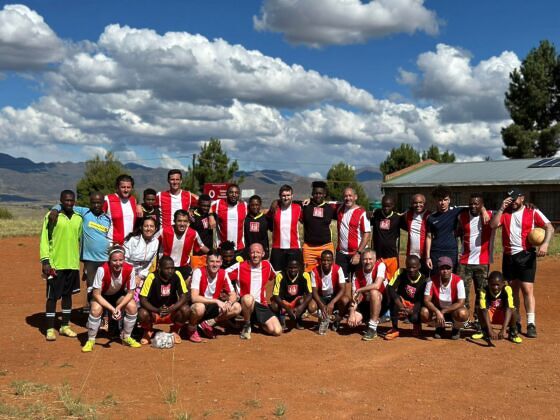
All-Star Tour guests and Kick4Life players pose after a good-natured match up. Photo: Kick4Life
This African Soccer Academy Invites Travelers to Join the Team
Though it was new, it was already getting plenty of use. A group of boys had taken the field, their blue jerseys saturated in sunlight. As the coaches chirped their whistles, the boys moved in fluid formations, dribbling balls between tightly placed cones.
A hotel may seem like an odd place for soccer practice. But Hokahanya, which means “to connect” in Sesotho, is also home to the Kick4Life charity and soccer academy. All profits from the hotel are reinvested into academy programs, which help children succeed both on and off the pitch.
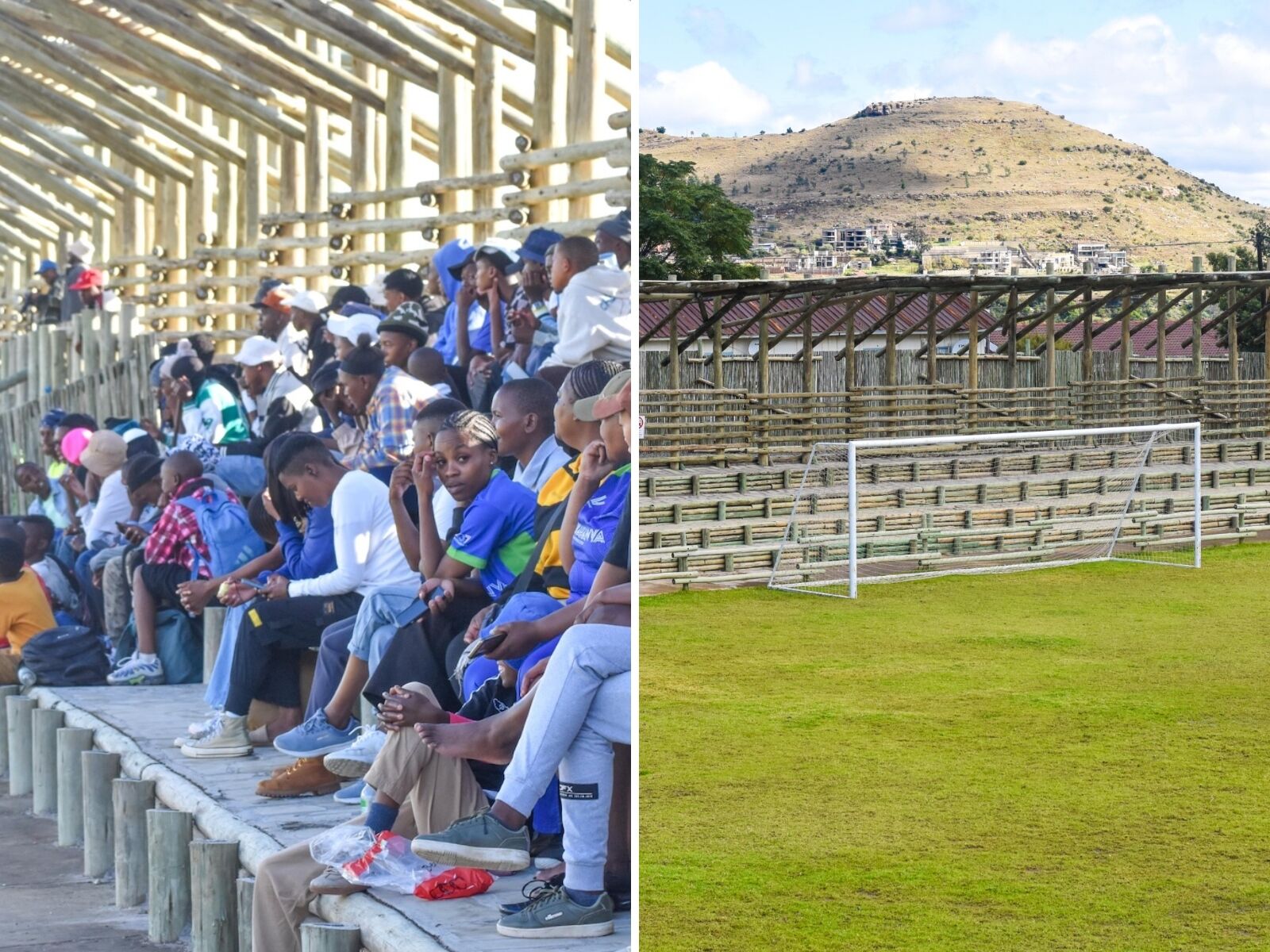
Fans at the Stadium of Life. Photo: Kick4Life
Even before the Stadium of Life was built, Kick4Life had long been regarded as home to one of the country’s top training facilities. 20-year-old Thuso Khoarane knows the campus well, as he’s been playing soccer here since he was 12. “It’s a dream destination for any child who wants to play the best football,” Khoarane tells me.
The academy has earned that reputation. Khoarane now plays for Juventude, the academy’s senior men’s team. The squad formed in 2024 from the academy’s first generation of graduates. After only two seasons, Juventude was promoted to the Lesotho Premier League, the country’s highest division (though it declined to continue into 2026, as FIFA’s rules prevent Premier League players from being able to accept scholarships).
The facilities have been a dream for young players like Khoarane, but they aren’t reserved only for local talent. Using Hokahanya Inn as a home base, Kick4Life hosts university clubs, corporate groups, and even intramural teams from around the world. While many African itineraries center on wildlife safaris, these visitors come to Lesotho for a different kind of experience — to get out of the stands and onto the pitch, playing soccer in small villages with local players in a country few travelers ever visit. Here, against the backdrop of the Maloti Mountains, visitors connect with Basotho communities through a shared passion for the world’s most popular sport.
Individuals wanting to combine soccer with social impact can sign up for the academy’s signature All-Star Tour. Offered every two years, the 10-day trip is currently priced at $5,000 per person and brings two dozen travelers from around the world to Hokahanya Inn. The hotel itself sets the tone, with soccer memorabilia lining the halls and friendly staff in matching jerseys. It’s also an integral source of revenue for the organization, with 100 percent of tour profits reinvested into the academy. During the tour, guests get to know Lesotho while scrimmaging five-a-side soccer, watching a professional Juventude match, and playing in three games against local teams.
Playing soccer in a new venue can be intimidating, especially if you’re from another country. But the All-Star tours are designed to help visitors build local connections rather than pass through as observers. For Kick4Life Country Director Motlatsi Nkhahle, the matches offer a window into everyday life. “Playing football helps to understand the context we work in,” he said. Interacting with players and fans, guests form relationships that go beyond the game itself, helping them to gain a clearer understanding of the environment that shapes Kick4Life’s work.
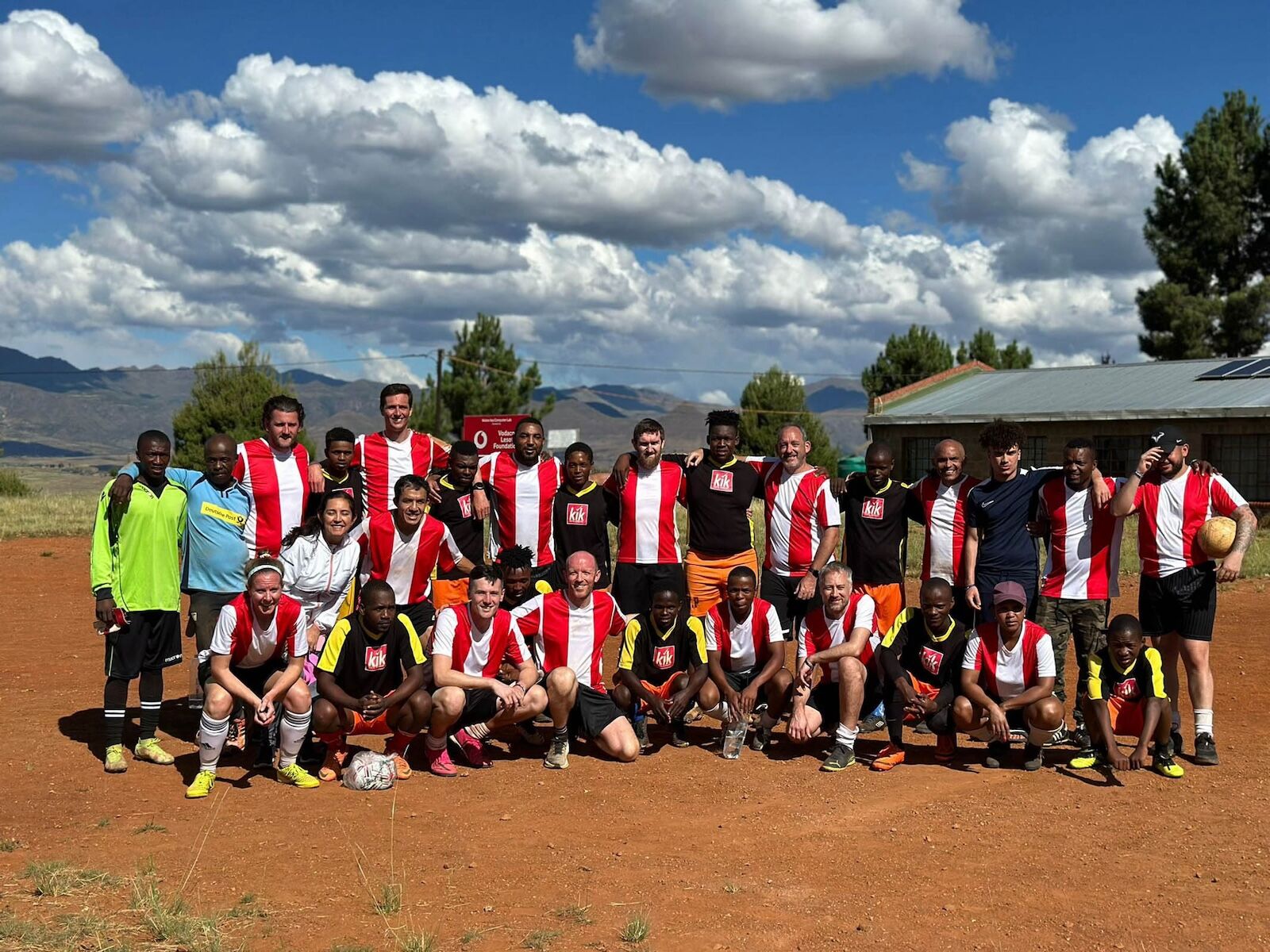
All-Star Tour guests and Kick4Life players pose after a good-natured match up. Photo: Kick4Life
Despite the “All-Star” moniker, the tour is about friendly competition rather than elite prowess. To learn more about the trip, I spoke with British guest Russ Hewitt, who signed up after hearing about Kick4Life through his local run club. “You definitely don’t have to play football,” he assured me, to enjoy the tour. Some visitors played as much as they could, but others preferred to cheer with the crowd, he reported. Either way, everyone became part of the team.
Whether as a player or spectator, soccer is only the starting point for getting to know Lesotho’s history and culture. Activities off the pitch are just as important as soccer matches, according to Nkhahle. “We want you to get out a bit and see the country,” he says. “That will make you understand us better.”
This understanding begins shortly after arriving in Maseru. The All-Star Tour begins with a guided hike up Thaba Bosiu, a rocky plateau known as the birthplace of the nation. King Moshoeshoe I sheltered his people atop this natural fortress during the Lifaqane – the wars and upheavals that convulsed southern Africa in the 1820s. Here, he united refugees and clans into one Basotho nation, which became the modern Kingdom of Lesotho.
That shared history continues to shape national identity, and tour guests get a sense of Lesotho’s heritage through a showcase at Thetsane High School, a partner in Kick4Life’s youth programs. Students spend months rehearsing traditional dances like the mokhibo to share their culture with All-Star travelers. During the performance, guided by a choir’s rising harmonies, young women kneel and wave their arms and shoulders in unison as if swept by the wind over the plain. Their mesmerizing swaying celebrates sisterhood and the traditions that bring the Basotho together.
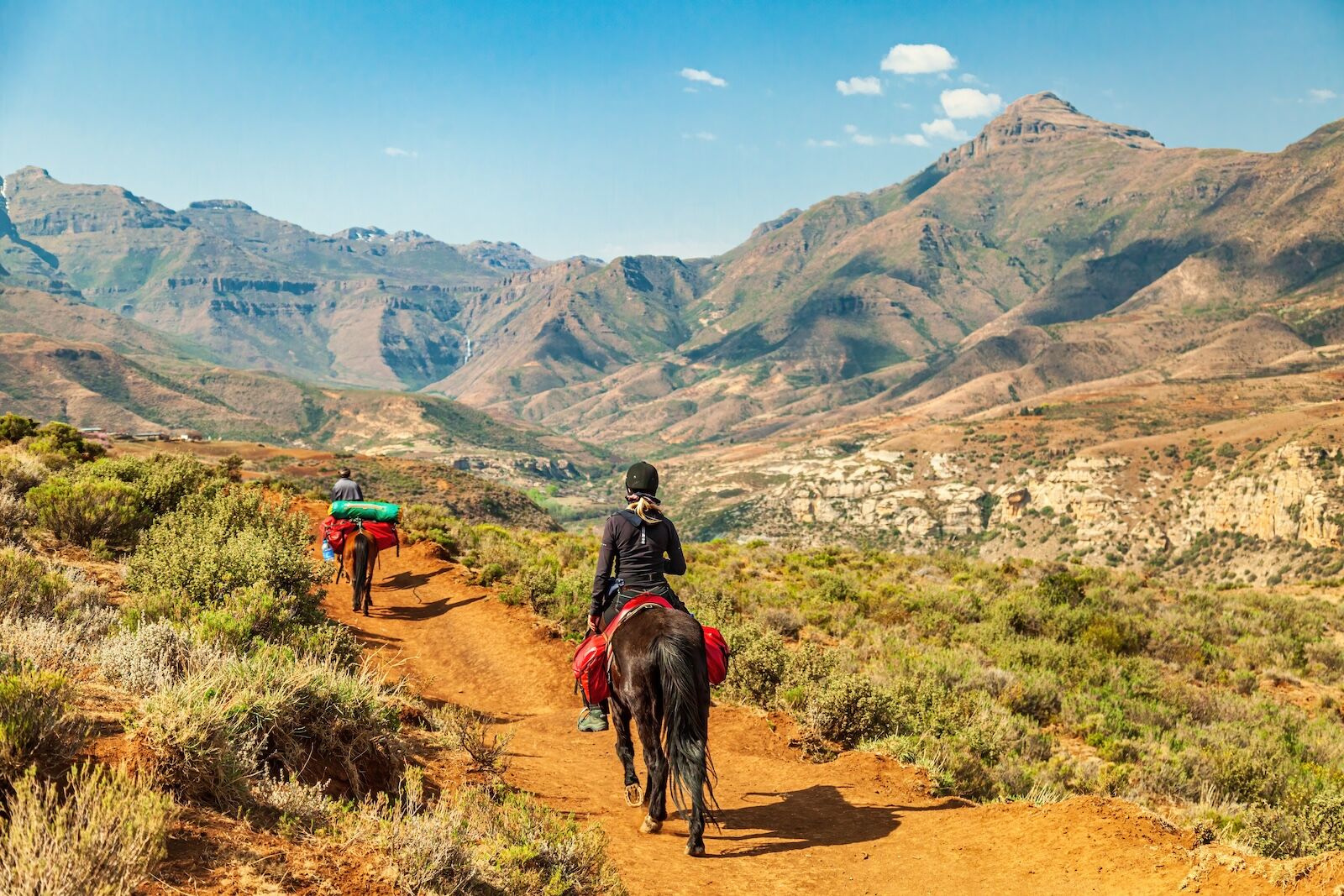
Activities focus not just on soccer, but on exploring Lesotho. Photo: Framalicious/Shutterstock
Another highlight for guests is horseback riding among the sheer cliffs of rural Lesotho. The landscapes make road-building difficult, so most people still get around on Basotho ponies that can nimbly navigate the rocky paths. On the trail, guests are likely to encounter riders wrapped in colorful blankets decorated with traditional Basotho symbols, such as corn (for a fruitful harvest) or crowns (to celebrate strong leadership). Everyone, even strangers, greets each other by saying “Dumela” as they pass.
Hewitt told me he was struck by how friendly and welcoming everyone was throughout the trip. “You couldn’t get anywhere without having a conversation with someone, because people were genuinely pleased to see you,” he laughed. Shared activities, from horseback riding to soccer, became a gateway to meaningful interactions. Hewitt remembered big crowds showing up when they played a local match, cheering for both teams. “They made you feel like you’re part of the community,” Hewitt said.
Being part of the Kick4Life community goes beyond good-natured games. It also means playing a role in improving the lives of youth in the country. During the tour, guests can volunteer with programs under the guidance of local coaches. During field games, the group leads open conversations around issues facing Basotho youth, like HIV and gender-based violence. The themes are serious, but the activities are fun, engaging, and designed to make kids feel comfortable talking about these issues in a safe space. These programs let guests become temporary teammates in the Kick4Life mission, playing a part not just in Lesotho’s present, but its potentially even brighter future.
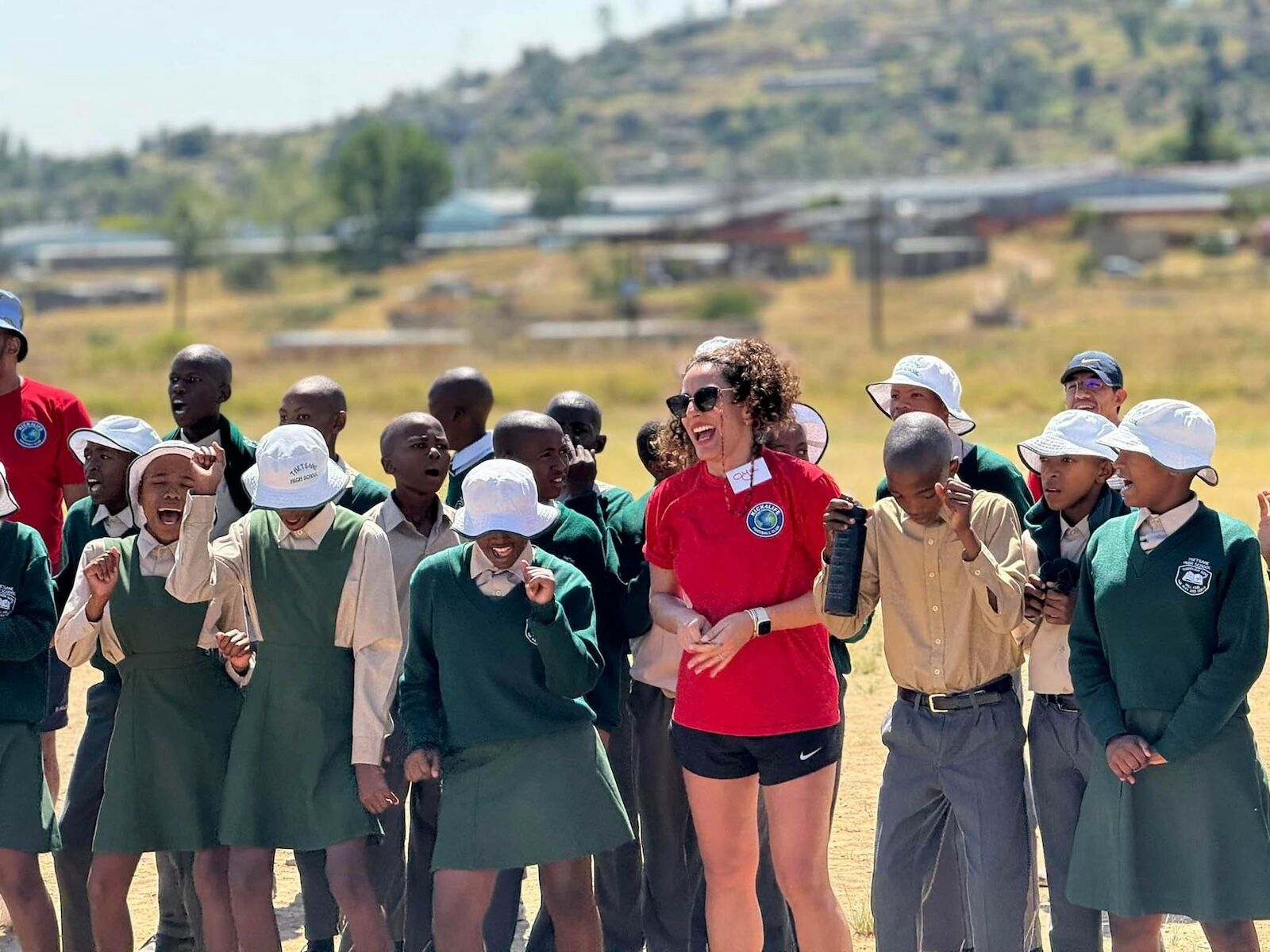
All-Star Tour travelers get to meet the academies budding soccer stars and help them feel comfortable talking about big issues in life. Photo: Kick4Life
For Hewitt, that meaningful participation is what stuck with him the most about the trip — the lessons taken from sports and play became bigger than the games themselves. “The messages that you’re getting across via football transfer into everyday life,” he said. “Everyone puts the effort in, and you’re encouraged to lean on teammates and let them help you as well.” It’s a message that speaks to everyone, not just youth in the program.
For Khoarane, being a good teammate is its own accomplishment, treating it as a point of pride when other players excel, especially in getting scholarships to play soccer and study overseas. “As a teammate and friend and part of the community, this means I have played an important role in changing someone’s life,” he says.
Khoarane hopes to follow a similar path as many of his peers. He’s finished high school and is training for a career in IT while applying to universities in the US and continuing to play professional soccer in Lesotho. He dreams of one day making digital tools, such as remote healthcare services and data management systems, more accessible across Lesotho. He credits the academy with encouraging his big dreams, and soccer itself with strengthening his discipline and determination. “Football has this great ability to make me believe in myself and forget the limitations imposed on me by society and my own self,” he said.
At Hokahanya, while I sat watching a match, night eventually set in as the sun dipped behind distant mountains. The rain had come and gone, leaving the scent of fresh earth rising off the pitch. A group of visitors had joined several Kick4Life coaches in an impromptu game of five-a-side soccer, and players moved down the field in symbiosis, building momentum with each pass. Finally, one player took a shot, but it ended with a harsh ‘thud’ as the ball was intercepted by a defender. I quickly looked side to side to see what team was pulling ahead, but I had no idea who was winning. It was hard to tell, because everyone was smiling. 