“I’m going to count to three, and everyone is going to jump off the boat at the same time,” announced our guide. “Ready?” I was in a small panga on a snorkeling tour in Cabo Pulmo National Park. “One.” We had already done two snorkeling stops, and I was starting to understand why so many people who love snorkeling and diving become obsessed with this place. “Two.” But what I was about to experience went beyond seeing thousands of fish in every color and size. “Three.”
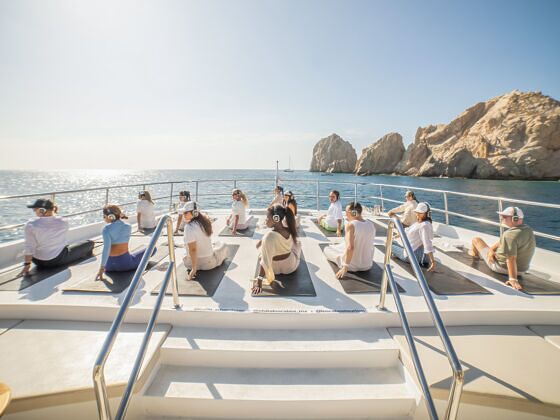
Photo: Visit Los Cabos
In Los Cabos, Some of the Best Wellness Experiences Begin Outside the Spa
I jumped. The water closed around me and the bubbles began to scatter. I got my breathing under control and started swimming when I realized the school of bigeye jacks in front of me that seemed to have no beginning and no end. The living mass barely reacted to the group of humans clumsily swimming above it. Suddenly, everything came together: the silence, my breath amplified by the snorkel, the sunlight filtering between the fish, the deep blue of the ocean, and the school’s indifference. It didn’t fit neatly into the usual categories of wellness, but that’s what I was here for.
I visited Cabo Pulmo on the last day of a wellness retreat in Los Cabos. Much of the trip had been built around luxury hotels, spas, yachts, exclusive treatments, yoga sessions, and high-end food experiences. But my most memorable moment — and the one that best explains the local wellness scene — happened in the water, in front of a living presence that needed no design, branding, or relaxing music to have a deep effect.
From amenity to reason for travel
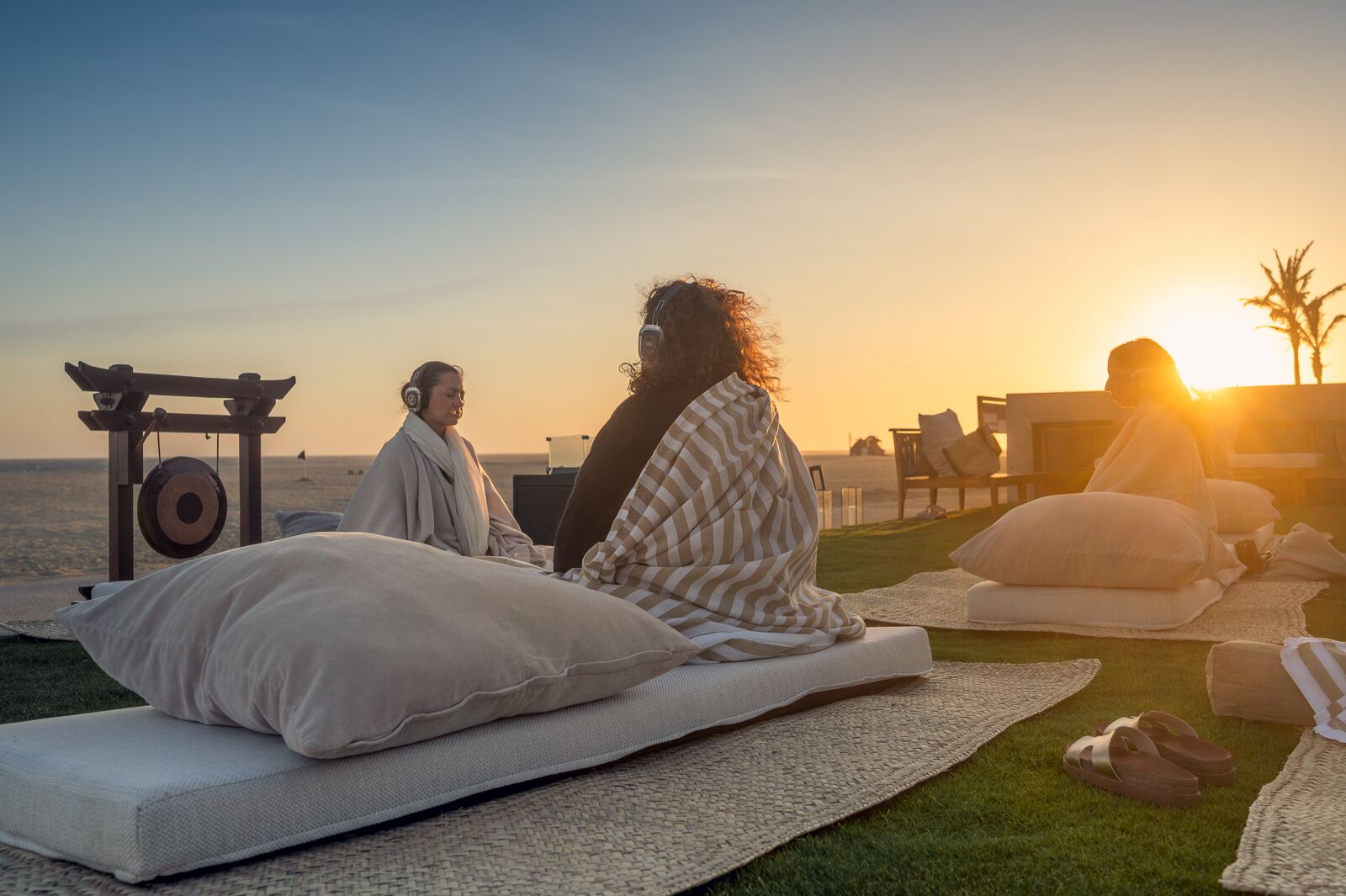
Wellness experiences like this oceanfront meditation are now central to how many people plan their trips.
Photo: Rulo Luna
The wellness industry has changed significantly over the last few decades. Spas carried a certain sense of mystery during my teenage years and early adulthood growing up in Mexico. I mostly associated them with all-inclusive resorts and where people went for beauty treatments. I also remember my first temazcal in the middle of the jungle in Los Tuxtlas, Veracruz, but I recall it more as a cultural curiosity than for its real purpose (a sweat lodge for purification and renewal). But it’s clear the travel scene in the country has changed since my early travels, with more boutique hotels, food experiences, and signature spa treatments. Today, when my wife and I choose a hotel, we usually start with the restaurants and then look at the spa.
“Today, people go on vacation to come back better than when they left,” Lighuen Desanto, co-founder of SUDA, a company that designs wellness experiences around the world, told me. Massages and oceanfront yoga sessions are central to how many people plan their trips, rather than just being activities to fill a free afternoon. In Los Cabos, the number of visitors who participate in a wellness experience grew from 12 percent in 2019 to nearly 19 percent in 2025 — about 800,000 visitors in the last year, says Rodrigo Esponda, managing director of the Los Cabos Tourism Board. Wellness now extends beyond luxury hotels and restaurants to outdoor activities, the surrounding landscape, and opportunities to build community that offer a break from the routines and burnout of modern life.
Los Cabos has strong foundations for a tourism industry centered on wellness. The region has one of Mexico’s largest concentrations of luxury resorts, and that segment has adapted quickly to travelers’ expectations. Four Seasons Resort Cabo del Sol represents one side of this shift: an ultra-luxury resort built for travelers who want a familiar approach to wellness travel. It has a high-end spa, signature treatments, oceanfront activities, a strong dining progran, and large villas. It’s service-built, so guests don’t have to handle anything on their own.
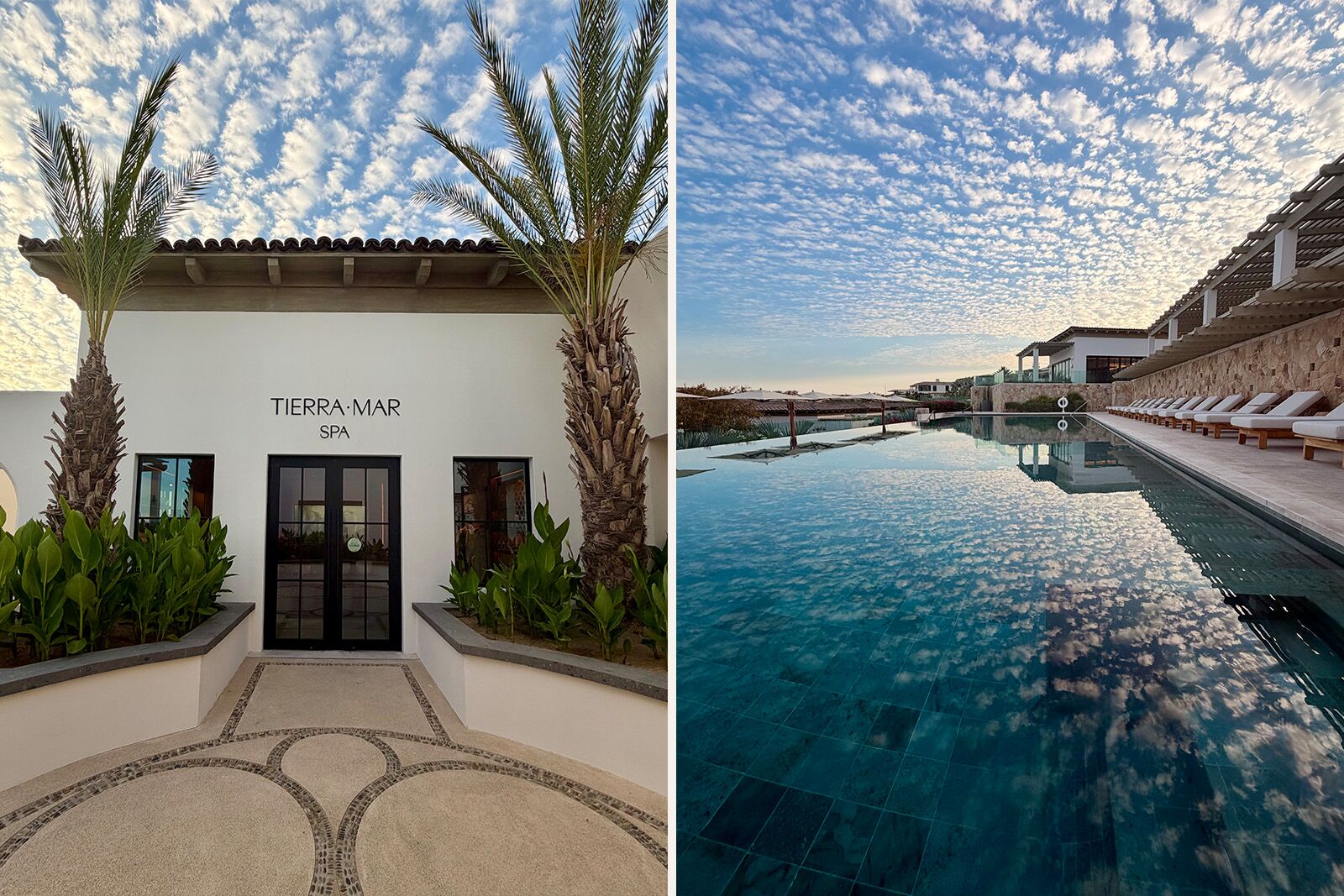
Four Seasons Resort Cabo del Sol represents the more luxurious and traditional side of the local wellness scene, but the offer’s quickly diversifying. Photos: Rulo Luna
Sensei, the wellness center associated with Zadún Los Cabos, points in a very different direction. Sensei builds its offer around health programs that connect movement, rest, nutrition, and routine changes that guests can continue after their trip, Lina Morales, Sensei’s director of wellness, explained. Each program is personalized and supported by health professionals. This may sound intense, but the experience tries to move away from a rigid or restrictive model.
“People can come here for their well-being program, but that doesn’t mean they can’t have a round of margaritas or go eat their tacos,” she explained. That distinction matters because it challenges some classic ideas about wellness tourism. A personal reset works better when it helps people see those changes as part of normal life, tacos included.
“People can come here for their well-being program, but that doesn’t mean they can’t have a round of margaritas or go eat their tacos.”
— Lina Morales, Wellness Director at Sensei
The range of options goes beyond sophisticated spas and custom programs for high-end travelers. Ofelia Bojórquez, a therapist and co-founder of Baja Wellness, told me about well-being on a more everyday scale: community sessions, low-cost or free meditation practices, and spaces where people can approach wellness without depending on a hotel or a high rate. Your Cabo People, a mostly expat social group, gathers every full moon at Playa El Tule for meditation and sound healing, while groups like FloreSer Los Cabos offer similar alternatives for locals, with events ranging from temazcal to cacao ceremonies and sound baths. Bojórquez herself participates in an intercultural women’s circle that meets regularly for wellness practices. From her perspective, even the more generic experiences have a place in Los Cabos because most people need an entry point before they can build a deeper relationship with these disciplines.
The Los Cabos Tourism Board is also trying to push back against the stigma that wellness travelers are simply people willing to spend without limits by expanding the definition of what a wellness experience can look like. Wellness can exist in a specialized center like Sensei, in an ultra-luxury spa, in a community meditation session, in an outdoor activity, or in the simple act of spending time in nature. What begins to set Los Cabos apart is the sophistication of what it offers, but also the territory where those experiences unfold.
Architecture and disconnection
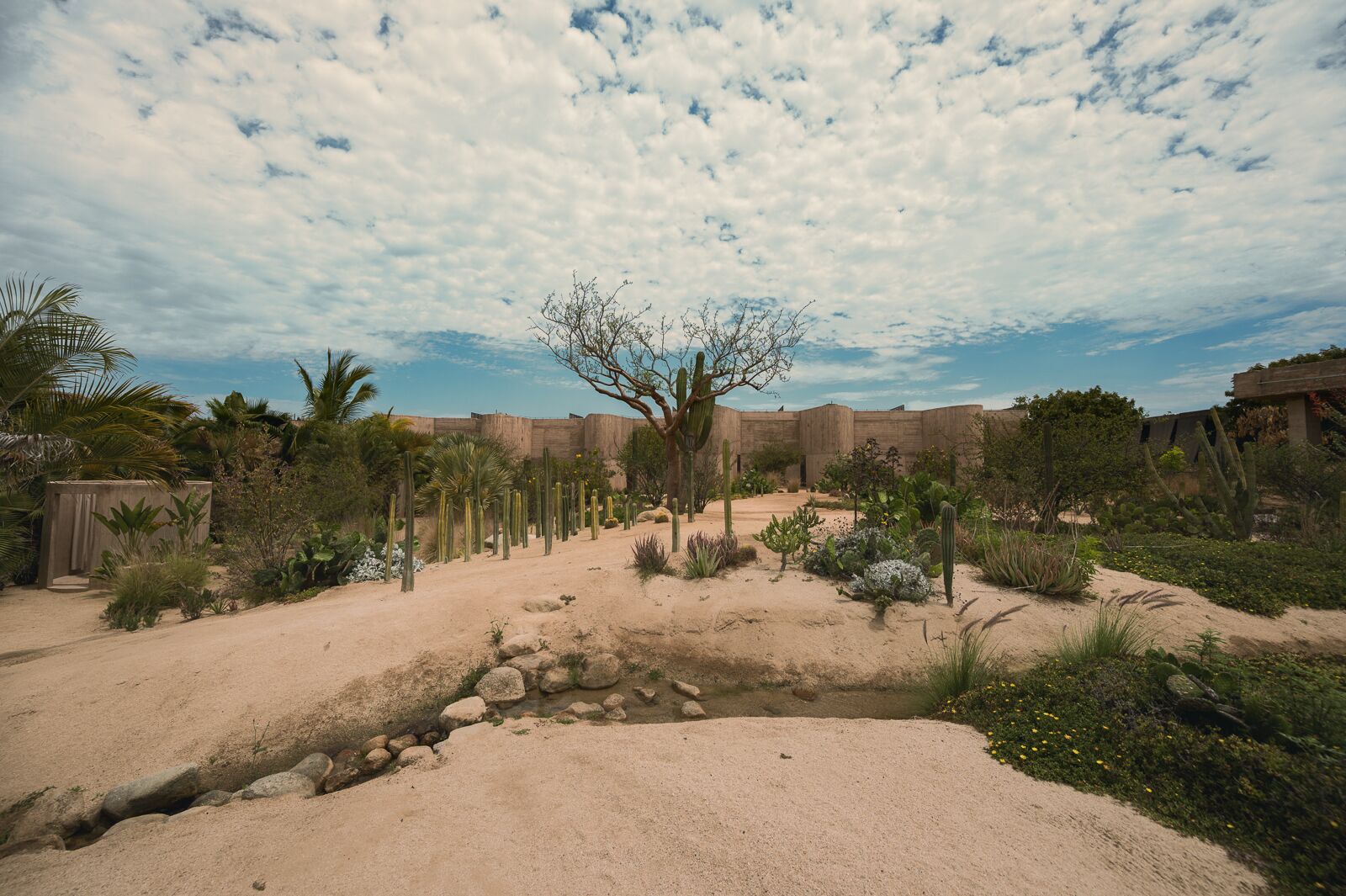
A panoramic view of Paradero shows the desert landscape taking center stage against the rooms in the background. Photo: Rulo Luna
“Luxury is not marble, or gold, or glassware,” Frederic Capello, general manager of the boutique luxury hotel Paradero, told me. “True luxury is feeling renewed.” Paradero is in the agricultural community of La Mesa, near Todos Santos. For Capello, the property stands out because it removes stimuli, places guests inside the desert environment, and leaves them with the sensation that the world has stopped during their stay.
A quick look at Paradero’s setting makes Capello’s words make sense. At first glance, the rooms, restaurant, and other resort services almost blend into the landscape. The architectural intention was for the buildings to look as if they had come out of the earth, so the property uses concrete in tones close to the colors of the desert and connects everything through gardens filled with cacti and other native plants. That decision goes beyond aesthetics. At Paradero, architecture works as a wellness tool by lowering visual noise and pushing guests to experience the environment around them.
Many properties focused on luxury travel and wellness experiences are adopting similar strategies. Four Seasons Costa Palmas also leans on a minimalist infrastructure tied to the environment to create a natural-feeling setting — to the point that sand dunes with native vegetation sit between the pathways that connect different areas of the resort. Restaurants such as Monte Cardón follow a similar logic, with minimal human development so guests can feel connected to the surroundings (and the cuisine) distinct to Baja.
This trend also explains why Mexico’s most luxurious resorts are moving into the least-developed areas of Los Cabos. It is not a coincidence that Aman plans to open its first resort in Latin America in Cabo del Este. Luxury in this part of Los Cabos is starting to look more like Capello’s definition: free of unnecessary stimuli, far from the routines we associate with everyday life, surrounded by natural features that invite exploration, while maintaining strict service standards and the amenities expected from a super-luxury resort.
Baja California Sur as wellness infrastructure
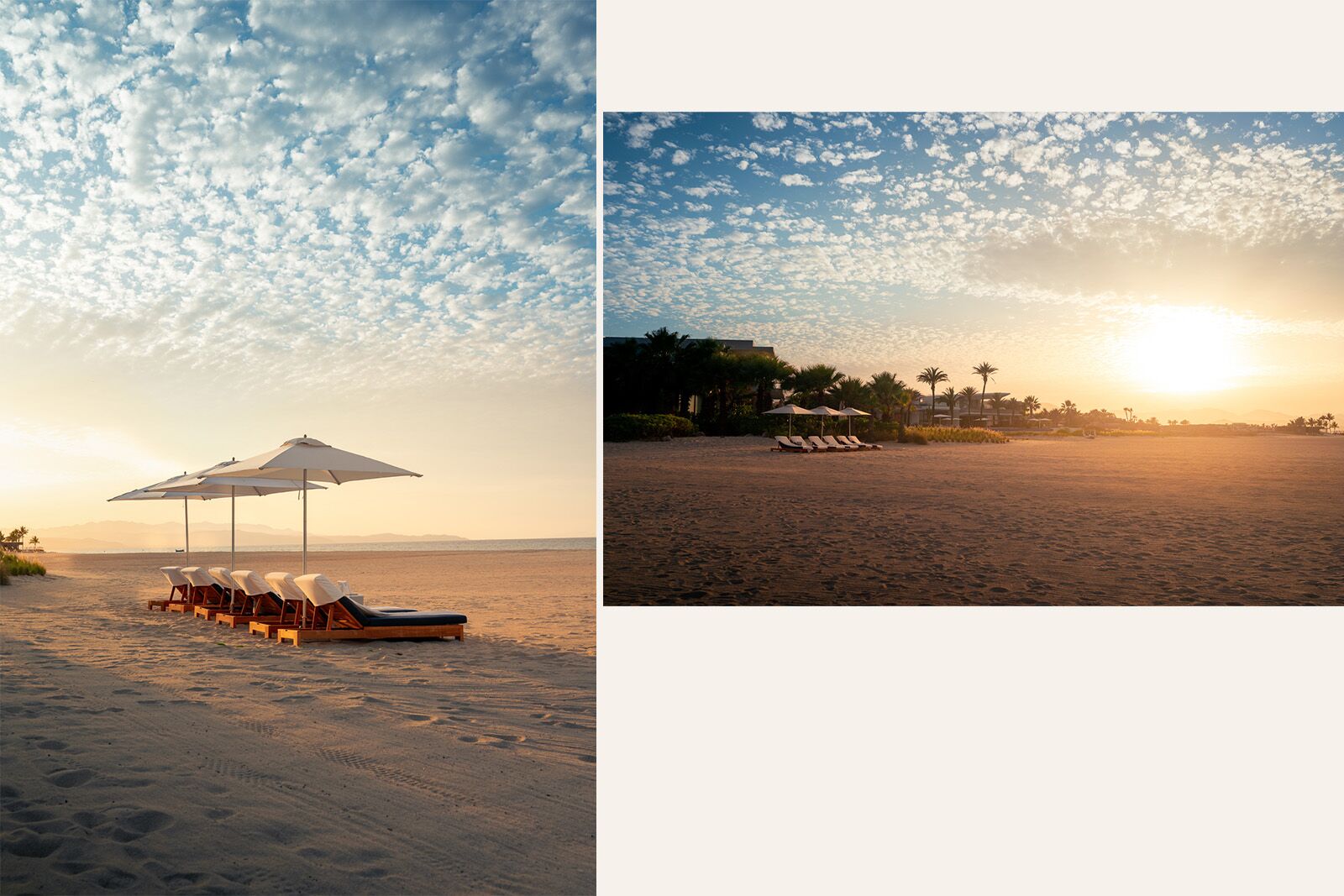
Cabo del Este is quickly becoming the center of Baja Sur’s ultra-luxury hotel scene.
Photos: Rulo Luna
I visited Four Seasons Resort Los Cabos at Costa Palmas as part of the wellness retreat. The property sits in Cabo del Este, one of the most remote and lesser-known areas of Los Cabos. There are no large urban settlements here and no large-scale tourism infrastructure. There is only the sea, the desert, and the mountains. Little by little, though, this area is becoming the center of Baja California Sur’s ultra-luxury hotel scene. After my first day, I found it easy to understand why.
My first activity at Costa Palmas was a sunset meditation by the sea. Flor Daneu of SUDA led the experience with care and emotional intelligence, but the natural setting was the biggest factor in making the moment memorable.
Soon, the sunset took over, as it often does in this part of Baja. Small clouds scattered across the sky reflected the intense tones of the golden hour. The sun was setting behind the mountains in the distance. The moon hung above us in a sky that was still light blue, while a group of pelicans fished in front of the beach. In many meditations, closing your eyes helps you focus and move into the practice. This time, Daneu asked us to do the opposite: “Open your eyes. Look at where you are.”
That instruction changed everything. I suddenly understood that wellness practices thrive here because the place supports them. The hotels provide the structure, but Los Cabos itself does the deeper work. In the best moments, it defines the wellness experience. José Manuel Orellano, director of Oasis Spa at Four Seasons Costa Palmas, put it another way, as I talked to him after he led a sound-healing session on floating mats in the pool. “We could do a meditation or a yoga class inside a closed, luxurious room, but here the true luxury is in going outside and letting the place become part of the practice,” he shared.
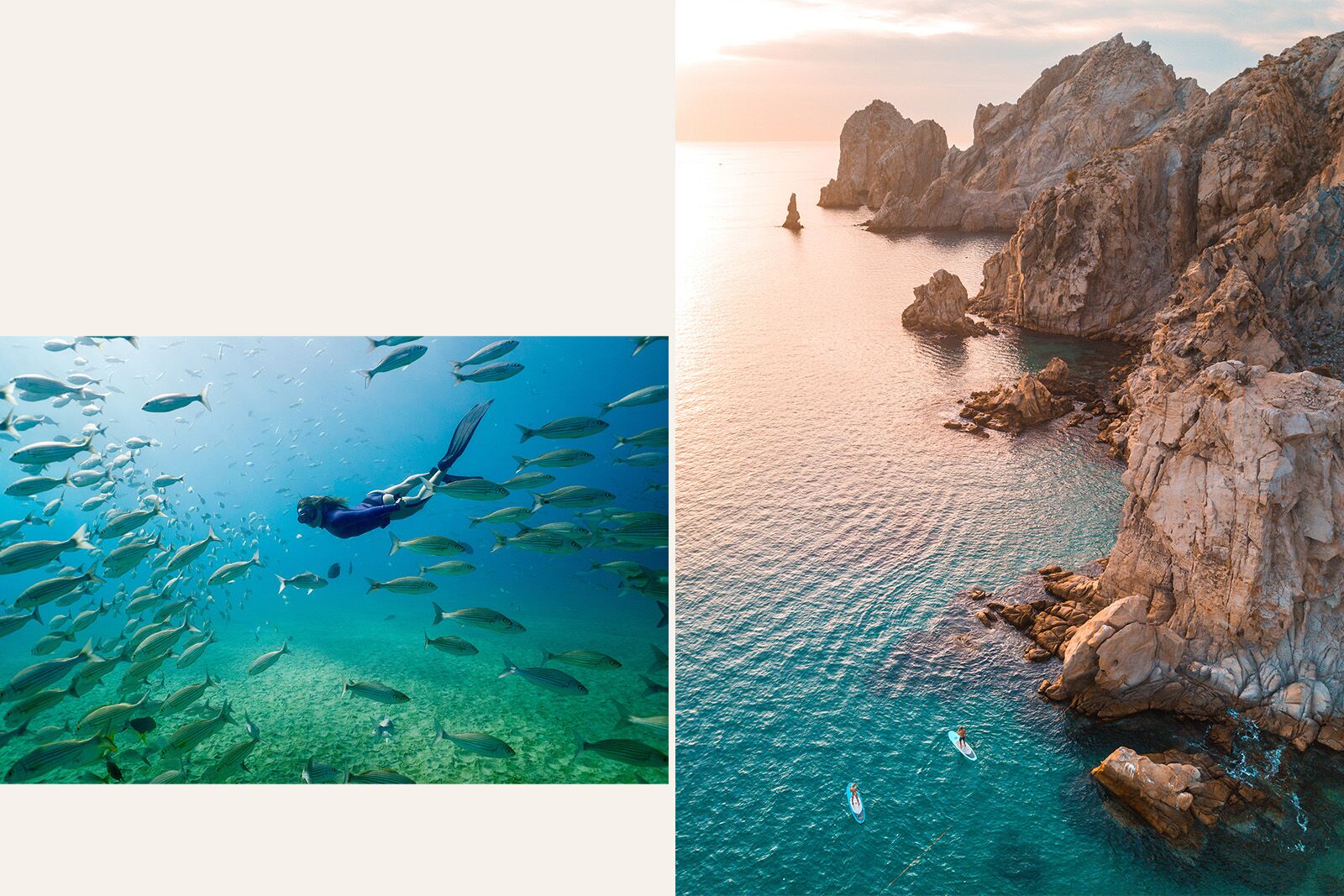
Baja California Sur’s natural landscape supports and defines the local wellness industry. Photos: Visit Los Cabos
That idea repeated itself throughout my experience at the retreat. A yoga session in front of the Arch of Cabo San Lucas, the meditation at Costa Palmas, and the snorkeling tour in Cabo Pulmo would have been much less effective without the setting taking a central role. None of these activities used Baja California Sur as a backdrop. The contrast between sea and desert, the mountains, the silence, the animals, and the scale of the place were fully part of the experience.
Visitors who interact with nature during their trip report higher satisfaction levels, according to data the Los Cabos Tourism Board shared with me. In a destination where wellness can take so many forms, the experiences that depend directly on the territory best explain the local appeal. A sunset meditation means something different when the dominant sound is the sea and not a playlist. In moments like that, wellness stops feeling like an imported practice and becomes a direct response to the place.
Agriculture, food, and community

Places like Flora Farms now sell a relationship with the land and with the ingredients that will appear in your next dinner. Photo: Visit Los Cabos
“You have to eat from the land around you,” Ubaldo Martínez, chef and co-founder of Monte Cardón, told me when we spoke about the relationship between food and well-being. His restaurant sits on a hilltop overlooking the desert, where acres of productive farmland are almost invisible within the terrain. Monte Cardón works with local producers to create seasonal menus that feel connected to the surroundings. For Martínez, wellness tourism means looking for a less ostentatious form of luxury that’s closely tied to community, food traceability, and the stories behind each ingredient.
In Los Cabos, and across Baja Sur, where I now live, the relationship with food is shaped by very specific conditions. Producing food here means negotiating with heat, water scarcity, seasonality, fishing, closed seasons, and transportation issues. Cooking with local ingredients forces chefs to acknowledge the limits of where they work, but also to learn and incorporate the defining traits of the region.
That’s one reason farm-to-table dining has taken hold in and around Los Cabos. Several local projects have expanded the idea beyond the restaurant itself. At Flora Farms, for example, food production supports agritourism, community programs, luxury travel, and wellness experiences. The food is central, but so are the farmers, workers, and local relationships behind it.
The farm-to-table movement has become one way luxury travel companies try to justify their presence in the territory. Many tourism projects in the region — including Flora Farms, Acre, and Paradero in Todos Santos — no longer promote just their rooms, pools, or restaurants. They sell a relationship with the land and with the ingredients that will appear in your next dinner. The physical infrastructure that put the literal boundaries around past wellness experiences fade into the background when the land and what comes from it is put front and center.
The future of wellness travel in Los Cabos
For Rodrigo Esponda of the Los Cabos Tourism Board, the goal is not simply to attract more visitors. It is to grow tourism without damaging the nature and communities that make the region appealing. Los Cabos cannot market peaceful outdoor escapes if overcrowding and development overwhelm the landscape. Nor can it promote community-focused travel if tourism projects displace local residents.
The wellness industry faces a double challenge: it must grow sustainably while keeping a clear identity. As luxury wellness becomes more standardized across destinations, Los Cabos needs to distinguish between offerings that genuinely come from the territory and those that simply use it as packaging.
Wellness in Baja does not rest only on spas and luxury resorts, but on the territory’s ability to change a traveler’s relationship with their body, their mind, and the place they are visiting. Cabo Pulmo does not need to present itself as a wellness experience to produce well-being. A walk on the beach, a meal made with local catch, a meditation by the sea, a night listening to the sounds of the desert, or a conversation with someone who grew up in this environment can carry more weight than any treatment designed to fit a global trend. 