Photo: United Newsroom

United’s New International Cabins Are Great — Unless You Fly Economy

News Luxe Travel Airports + Flying
by Suzie Dundas Mar 31, 2026

On March 24, United Airlines unveiled plans for the brand new planes entering its fleet, with some taking to the skies as early as April 2026. And the swanky new seats make one thing clear: the airline is betting heavily on premium passengers, and economy is becoming an afterthought.

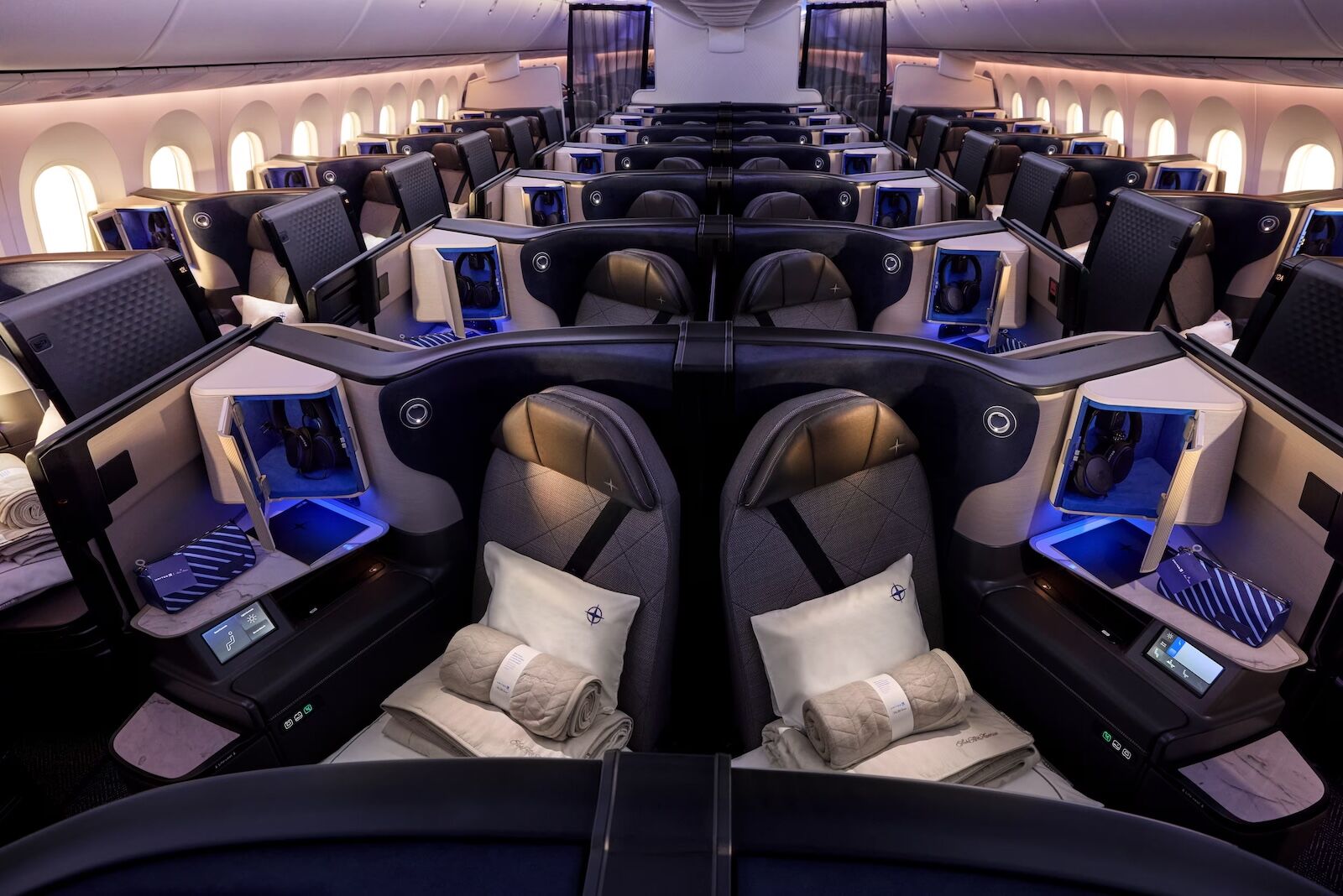
The airline’s new Boeing 787-9 Dreamliner, set to enter service on April 22, 2026, will carry 64 Polaris (business class) seats and 35 Premium Plus seats, compared to just 123 standard economy seats. It’s down from roughly 188 economy seats on earlier versions of the aircraft, meaning nearly half the cabin is dedicated to higher paying passengers.
It’s clear economy class is shrinking both physically and in terms of airline importance, and more space is being given to a smaller amount of higher-paying passengers. It’s a continuation of a trend that’s become obvious over the last decade: inequality in air travel is getting more pronounced, with airlines putting more time and resources toward attracting a fewer number of wealthier customers.

Tied to that is the idea of “calculated misery,” first applied to flying in The New Yorker in an article aptly entitled “Why Airlines Want to Make You Suffer.” Essentially, the worse economy class becomes, the more likely the average passenger is to pay more for upgrades. “Basic service, without fees, must be sufficiently degraded in order to make people want to pay to escape it,” author Tim Wu wrote. “And that’s where the suffering begins.”

a passenger in a united studio suite

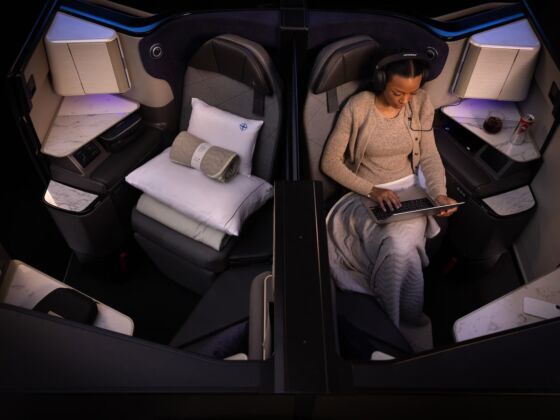
New Polaris suites, with an optional divider that can be raised and lowered between seats. Photo: United Newsroom

Now, 10 years later, it’s clear airlines are continuing to do all they can to push passengers toward upgrades. In the 1970s and 1980s, long-haul economy seats commonly offered about 34 to 36 inches of pitch, with fewer seats per row and more generous layouts, before airlines began making seating denser to increase capacity (and profits). By the early 2000s, typical long-haul economy pitch had fallen to roughly 31 to 32 inches. In 2026, some airlines now have a seat pitch as small as 28 inches, such as Frontier, Spirit, and Wizz Air. United’s new planes have a seat width of just 16 to 17.3 inches per seat, a decline from 19 inches in the 1980s and 18.5-18 inches in the 2010s. So if your hips are wider than that, expect to be pressed up against the strangers next to you for the entire flight. Also more common these days in economy seating are denser configurations, often nine abreast in economy. It’s favored by airlines as it maximizes capacity (while also reducing seat width).

The overall effect has been a steady reduction in personal space per economy passenger over the last 30 years, even as overall passenger volumes have increased.

Many of the changes can be explained by industry deregulation. Until the late 1970s, the US airline industry was heavily regulated by the federal government, with agencies such as the Civil Aeronautics Board controlling elements like fares and routes as part of a public service. The Airline Deregulation Act in 1978 began phasing out government control, allowing airlines to start making more profit-driven business decisions. At the same time, consolidation has reduced competition in the US, and today, four airlines (American, Delta, United, and Southwest) control roughly 80 percent of the US domestic market.

Premium cabins are getting even better

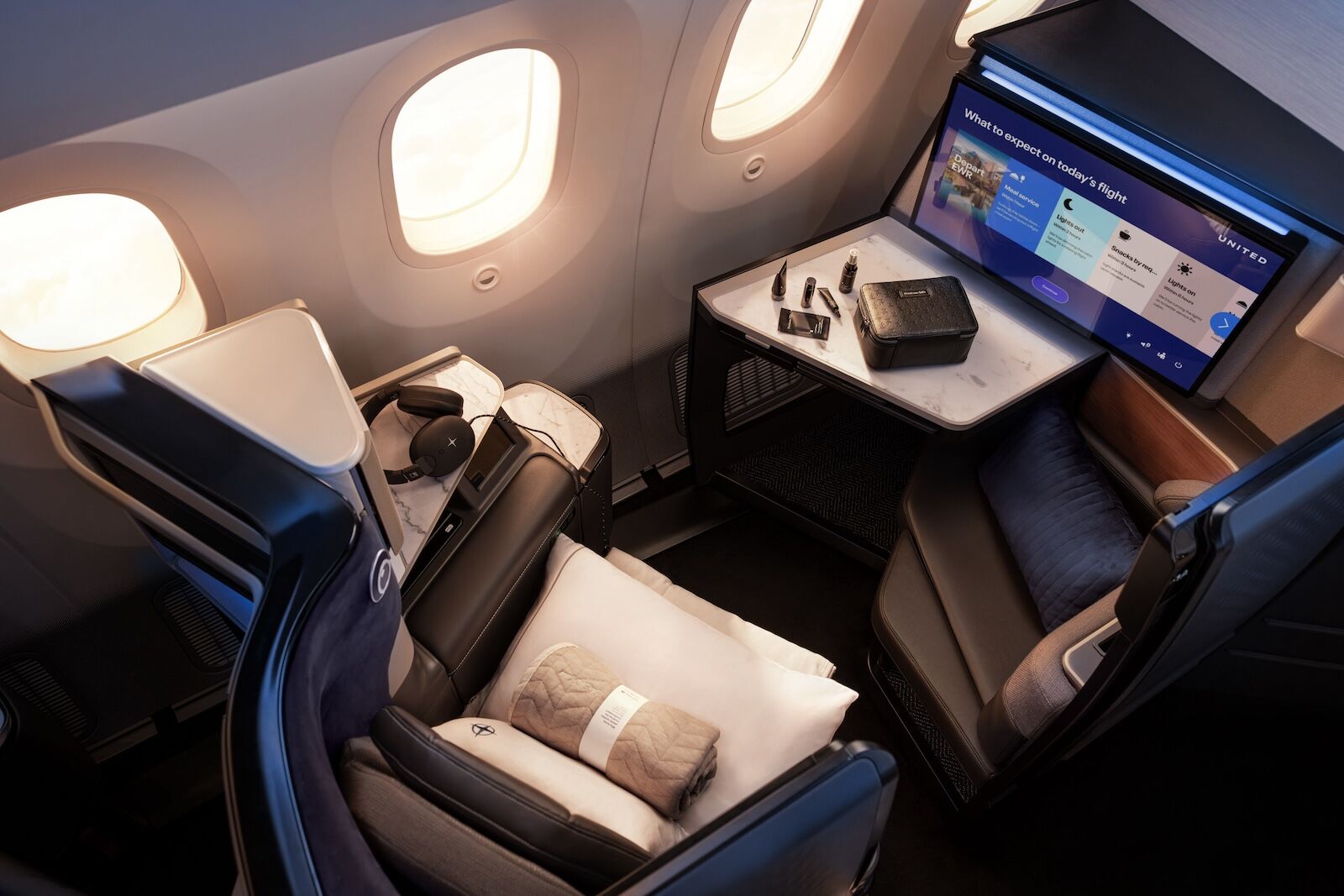
From a profits-first perspective, it’s logical. Premium seats generate more revenue per square foot and allow airlines to make more money while dealing with fewer people. According to the announcement from United, new offerings for “Polaris Studio” passengers include aisle-access lay-flat seats, privacy doors, luggage closets, amenity kits with full-size products, meals with wine and caviar, and in-suite seating for guests. Polaris studio seats will now be 25 percent larger than standard Polaris. Premium Plus, the airline’s premium economy cabin, is also getting an upgrade, with wider seats, more legroom, and improved food and beverage service compared to standard economy.

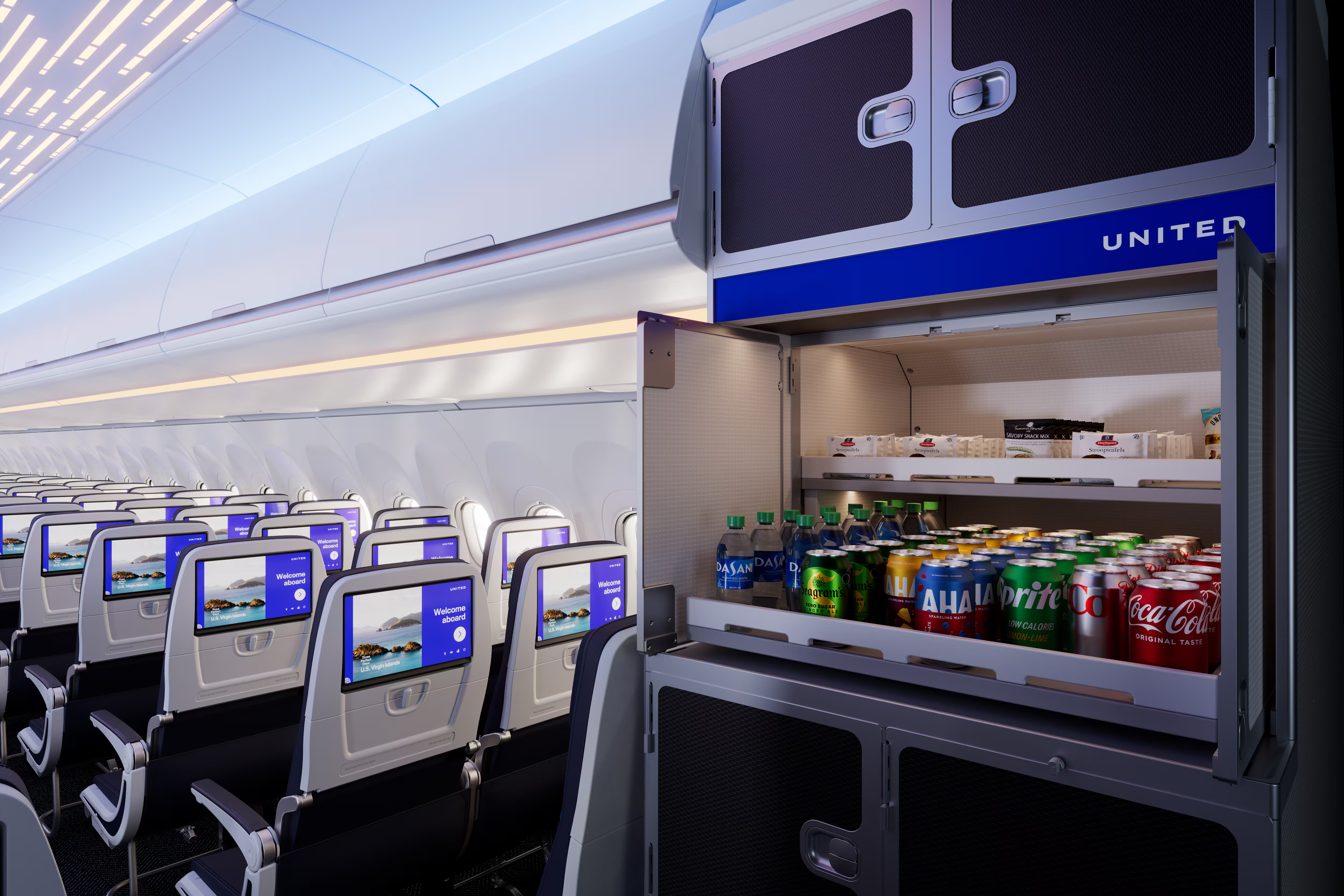
Economy flyers are also getting what United says are significant upgrades, including “a softer blanket” (only available on some routes) and a grab-and-go snack bar in the back of the plane. These economy seats offer roughly 3.5 to 4 feet of personal space per passenger. United doesn’t list measurements for the size of its Polaris Studio suites. But with lie-flat beds, extra seating for guests, and table space, a conservative estimate would give each Polaris Studio flyer at least 10 to 15 times as much personal space as those in basic economy. On Reddit, one poster described United’s new planes as having “a focus is on premium customers to a concerning level.”

Is discomfort becoming a feature of economy flying?

The direction this points to raises a more blunt question: how bad can economy get before it stops functioning as a real product? Airlines aren’t eliminating economy, and United claims it’s “making investments for all its customers.” But by raising the bar on the most premium products, it increases the inequality of service between the lowest- and highest-tier products.

It’s easy to make the argument that the changes are being made in response to consumer demand. Data show customer demand for premium seats is rising faster than the demand for economy seats. But what the data can’t explain is why. As economy seats have become more cramped, with thinner cushions and a growing list of restrictions, the growing demand for higher-tier seats may not reflect a preference for higher service so much as a preference to avoid what flying economy has become. The worse an economy product is, the higher the percentage of people who will pay to avoid it.

Which brings us to flying in 2026 in the US. Economy isn’t disappearing, but it’s eroding, with minor upgrades designed more to distract flyers (Free Wi-Fi, the return of seatback TV screens) rather than measurably improve their physical comfort. Economy seating will remain tight, with personal space viewed as an upgrade. (See: United’s new “Relax Row.“) In that context, discomfort is not an accident — it’s a business strategy designed to push a greater number of people toward more expensive tickets.

Discover Matador

Save Bookmark

We use cookies for analytics tracking and advertising from our partners.

For more information read our privacy policy.