
Paella and a pitcher of sangria. A restaurant overlooking the sea. This is the kind of scene you might conjure when imagining dining in Spain. You could come to Valencia, sit down to that exact meal, and leave the table feeling happy and satisfied. But that’s just one dish in a country whose cuisine spans seaside to summit.
Spain has approximately 5,000 miles of coast, mountain ranges where peaks push past 10,000 feet, wide fields that inspired poets like Antonio Machado, and islands where narrow roads will take you from the most remote calas (coves) to the rim of a volcanic crater. Each of these landscapes has shaped the local way of life through what the people there grow, source, and cook, building a gastronomy too varied to be stuck in the shadow of any single dish.
These are the lesser-traveled, lesser-tasted sides of Spain.
From the mountains: Spain’s highest kitchens
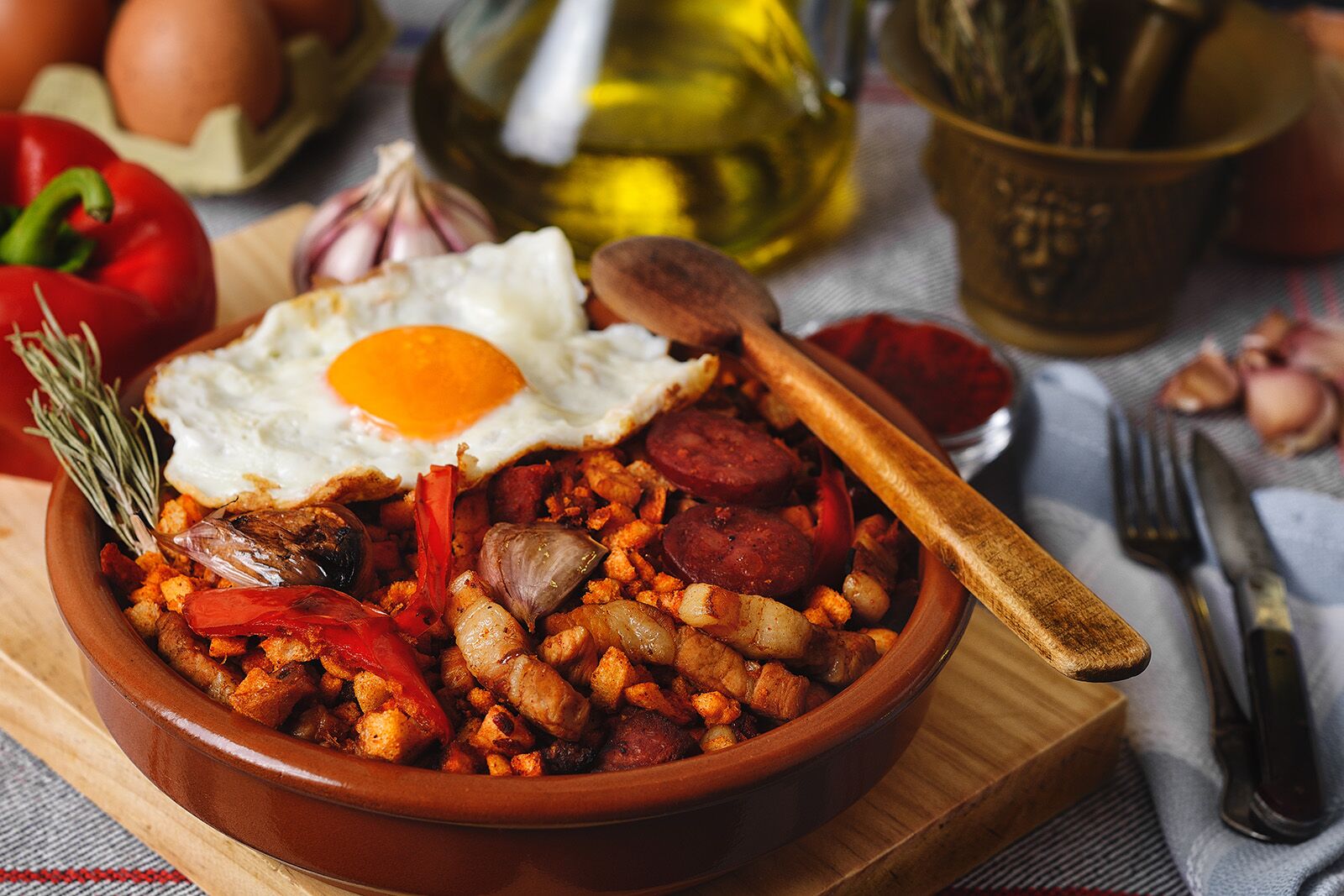
Migas de pastor. Photo: Limon Fotografía/Shutterstock
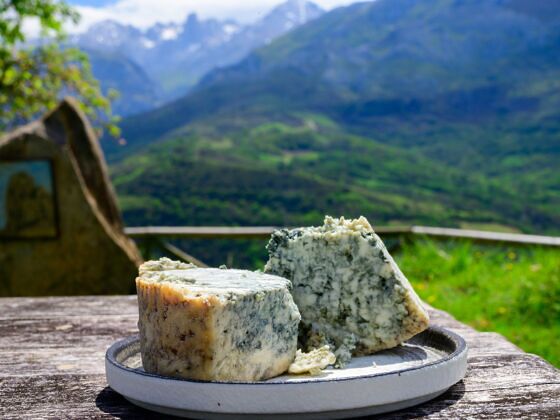
The altitude and seasons shape Spain’s mountain cuisine, which is molded as much by shepherds and monks as it is by chefs. In Picos de Europa, a range in the country’s north, you’ll learn what a sea of clouds looks like and, on clear days, spot the Cantabrian Sea from the summit. In Asturias, you can visit World Heritage caves at Covaciella, or taste them instead of touring them by way of cabrales, a strong blue cheese that’s aged underground by local shepherds.
East of the Picos, in Cantabria, the landscape turns green and undulates in the Valles Pasiegos region. Three valleys (Pas, Miera, and Pisueña) sprinkled with historic villages harbor one of the area’s delicacies: sobaos pasiegos. These spongy cakes are the product of a rugged landscape that left rural communities to cook with what they had: bread dough (now flour), butter, sugar, and eggs.
Farther east, La Rioja is known for its wines, but it also has a robust culinary heritage. In the Sierra de la Demanda, you can visit the Suso and Yuso monasteries (World Heritage sites where Spanish and Basque languages were first written down) and try chuletillas al sarmiento, vine-shoot-roasted lamb cutlets served as a tapa in nearly every bar in the area.
The Baztan Valley, in the Navarrese Pyrenees, owes as much to centuries of agriculture as to its rivers and mountains. One of its most popular crops is pochas, white beans first grown by monks in the 18th century and still cooked today with garlic, tomato, pepper, and sometimes meat like chorizo. Farther into the Pyrenees, in Aragón’s Ansó Valley, you can hike past medieval, UNESCO-recognized villages and taste migas de pastor: breadcrumbs cooked with lamb fat and usones (wild mushrooms).
For something sweet, the El Bierzo region on the border between Galicia and León produces honey that’s harvested from high-altitude heather, broom, and chestnut blossoms. The honey makes appearances in local pastries, and the darker chestnut variety can be drizzled over local mountain cheeses, its depth cutting their sharp, savory bite.
From the coast: Spain’s saltwater pantry
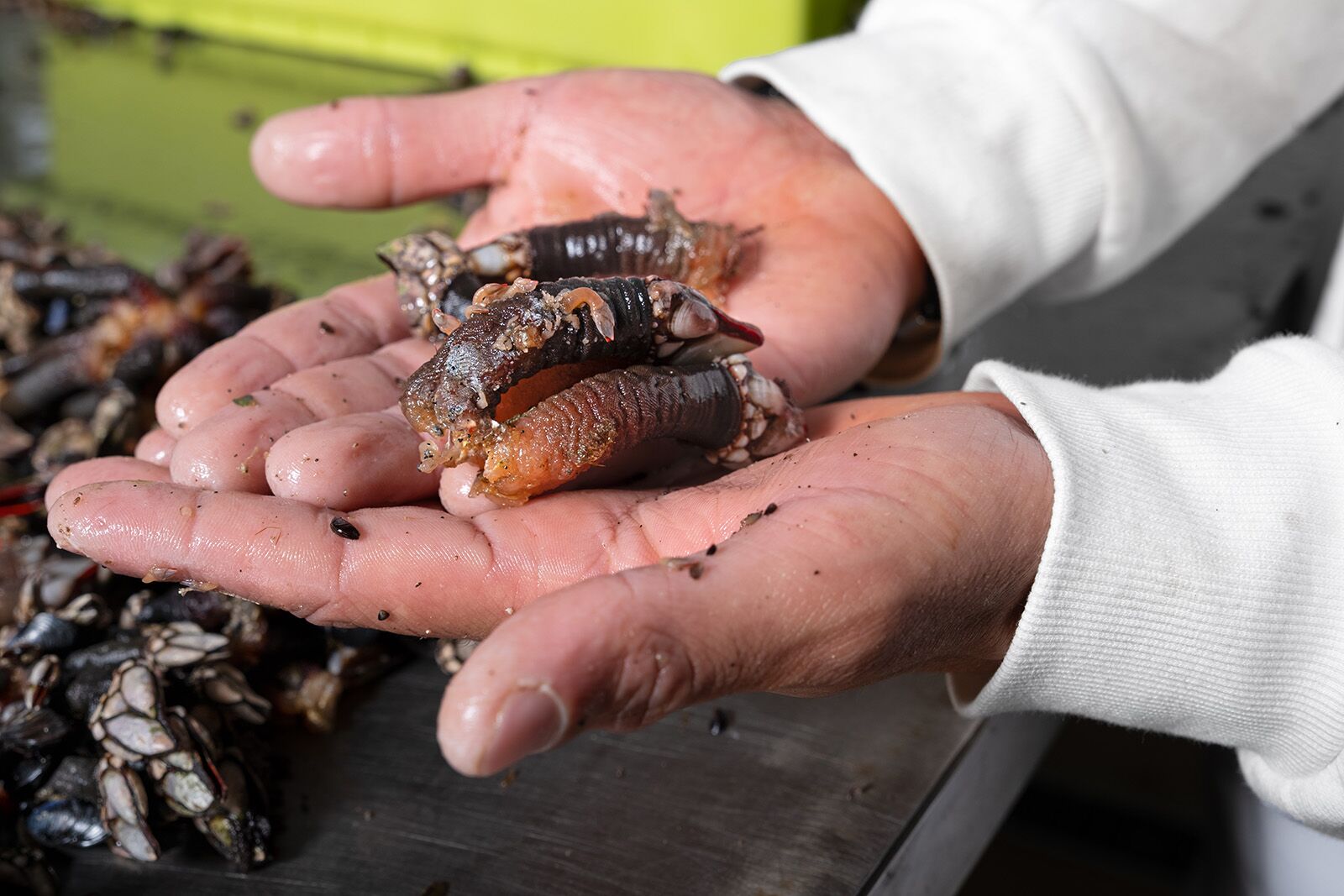
Freshly gathered percebes. Photo: Emimili/Shutterstock
Not every stretch of Spain’s coast looks like the calm, clear blue waters that star in tourist brochures. Galicia’s Costa da Morte (Coast of Death), for example, has cliffs that drop straight into a wild sea. There, percebes, or goose barnacles, are gathered by hand by percebeiros (and percebeiras) who risk their lives against the crashing waves. You might need help figuring out how to eat them, but you can count on Galicians sitting at the next table to help.
Farther east lies the Cantabrian coast. In Donostia (San Sebastián) or any of Pasaia Bay’s fishing villages, you’ll want to order chipirones, small squid typically cooked in their own ink (en su tinta). They’re so common as a tapa that you can’t leave the city of sculptor Eduardo Chillida, whose El Peine del Viento (“The Comb of the Wind”) sits at the edge of town, without trying them.
Next is a coastal rice dish that isn’t paella. Spain’s rice cuisine is typical of the Levante region, and one signature dish (of many) is arroz de caldero, or cauldron rice, a specialty from Cartagena and the Mar Menor in Murcia. Its main ingredients are ñoras (a variety of sweet peppers produced locally) and different kinds of fish, which are also used to make the stock. Eat it after a morning in Cartagena’s historic center, strolling past the Sea Wall and the Roman Theater.
From the Mediterranean back to the Atlantic, Cádiz’s Costa de la Luz (Coast of Light) has built its identity on fishing for centuries, and bluefin tuna is at the center of it, caught using the traditional almadraba technique (setting up net barriers to trap the tuna when they migrate). Bluefin tuna is everywhere in Cádiz in spring, when the city and surrounding towns hold plenty of food fairs and festivals where you can taste it.
From the fields: Spain’s flowering interior
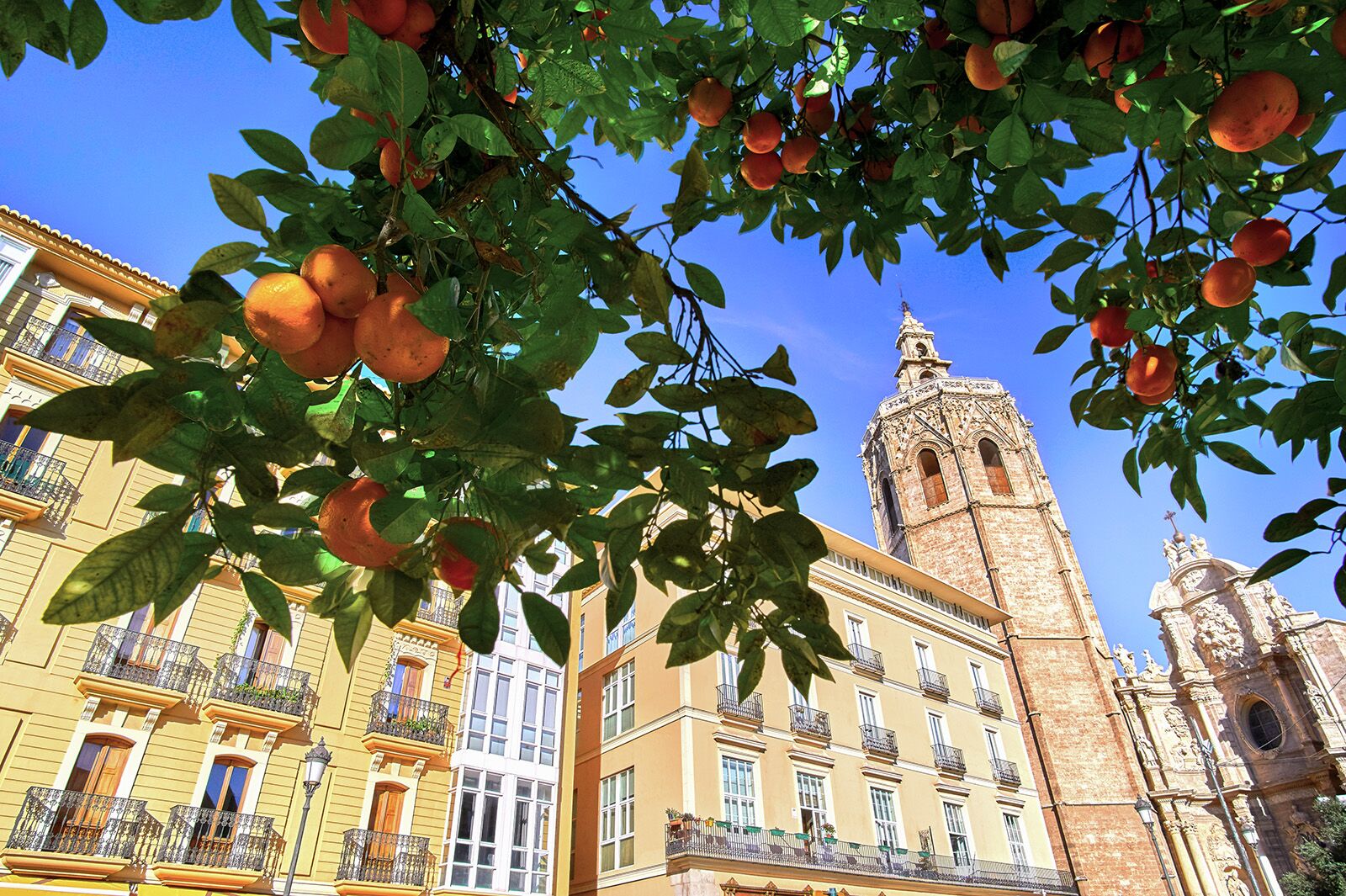
Orange tree in Valencia’s Old Town. Photo: Razvan Dragomirescu/Shutterstock
There’s a reason Spain is said to be Europe’s orchard. All across the country, you’ll find miles and miles of cultivated land that produces some of its most exported products. In the Jerte Valley, Extremadura, cherries with Protected Designation of Origin status grow big and juicy on trees that blossom every spring, turning the valley white. The bloom brings food fairs, local festivals, and special activities to villages throughout the valley.
For fields covered in flowers outside of spring, Castile-La Mancha, the landscape Cervantes made famous in Don Quixote, delivers in October. Spain was once one of the world’s leading saffron producers, and the violet fields that color the region each fall are still tended by companies working the trade. Some of that saffron ends up in paella, giving the dish its yellow hue.
In Valencia, you’ll discover another proud local product: oranges. To the north in Castellón, you can see orange trees in bloom. Hop on a bike and pedal the Ruta del Azahar (azahar means orange blossom), which runs along the coast. Breathe deeply to enjoy the smell of citrus and salt.
Elsewhere, a calçotada might welcome you to Catalonia. This is a gathering where family and friends roast and eat calçots, a sweet onion grown across the region’s interior. Calçotadas are commonly held in the first quarter of the year, when the calçots are harvested.
From the islands: Spain’s other(worldly) tables
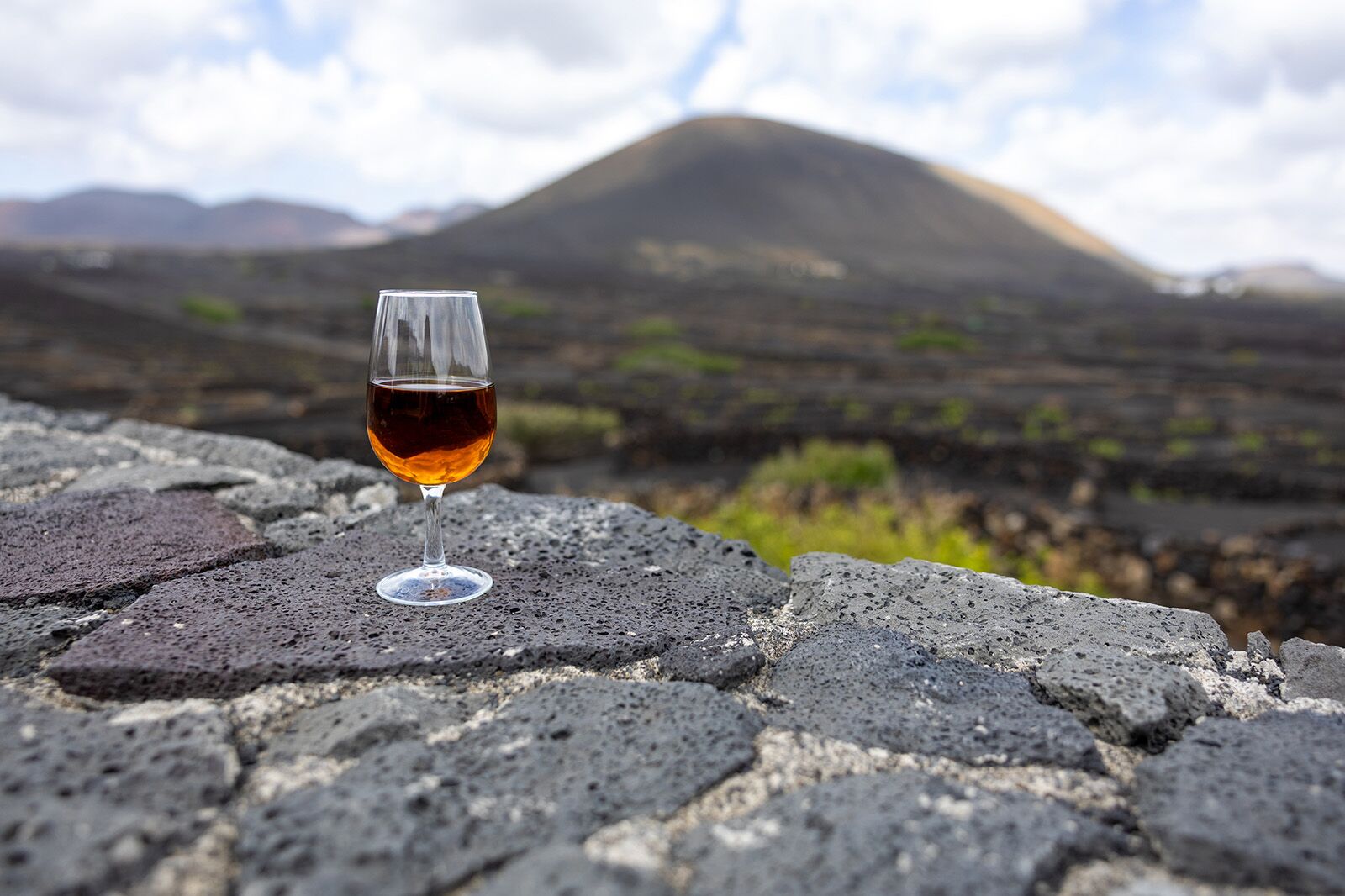
The volcanic vineyard landscape of Lanzarote. Photo: trawellkat/Shutterstock
Anyone born and raised on an island will tell you their coasts are different, their fields are different, and their mountains have nothing to do with those on the mainland. The culinary specialties produced in Spain’s two main archipelagos, the Canary and Balearic Islands, are proof of this.
Let’s start with the obvious: if your island has a volcano, and you plant vineyards on its volcanic sands, you’ll produce a pretty special wine. That’s what they do in Lanzarote, in the Canary Islands, specifically in the areas of La Geria, Masdache, and Tinajo, where black soil and green vines make the landscape look like it belongs to another planet.
Still in the Canaries, locals will tell you about gofio, a type of flour made from roasted grains (wheat or maize) that dates back to the Guanches, the islands’ original inhabitants. It turns up in soups, with honey and almonds as a dessert, or stirred into milk like cocoa, and you’ll find it across the archipelago.
In Formentera, in the Balearic Islands, it’s easy to spend days moving between small beaches and miss the island’s salt flats, active for millennia and today a protected nature reserve with real biodiversity. Salt is still harvested here, now in liquid form. The salines are worth a visit year-round, but if you want to see them when their surface turns a pallid pink, go toward the end of summer.
Also in the Balearics is Mallorca, where you can spend time at the beach, walk small villages, and pick up bread and sobrasada (a cured pork sausage made with paprika, salt, and other spices, usually eaten as a spread) for a snack by the water. Better yet, if you visit in October, you can go to Campos, where they celebrate the Fira de Matances, a food fair devoted to pork products.
Whichever region pulls you in first, remember there’s no one taste of Spain. Eat your way through the coastline, the mountains, the fields, and the islands, and you’ll have a dozen reasons to return to each delicious landscape. 