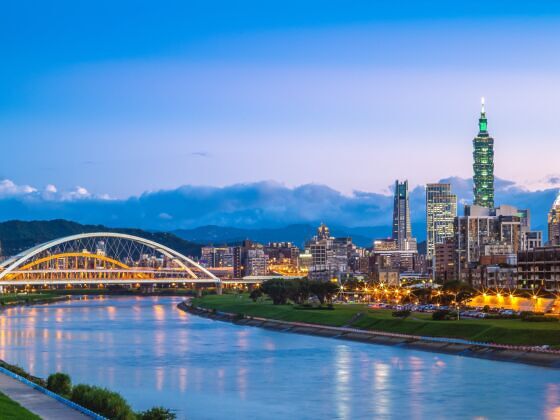
Skyline to Summit: Experiencing Taipei’s Living Landscape
By Tim Wenger

Taipei, the capital of Taiwan, is just a 40-minute drive from the main international airport. The city is surrounded by lush mountains and a vibrant coastline. For travelers from North America and Oceania, it offers a rare balance of modern convenience and deep cultural heritage.
A quick ride on the city’s MRT system can take you from bustling night markets and temples to hot springs, forested trails, and tea plantations. With English-friendly infrastructure, diverse food scenes, and easy access to nature, Taipei is a compact yet immersive destination that invites slow travel and meaningful connection. The Taipei Grand Trail, which encircles the city, reflects this spirit by linking neighborhoods, mountains, rivers, and centuries of living culture into one unforgettable route.
Broken into eight sections spanning the Taipei Basin, the 81-mile Taipei Grand Trail is an immersive journey through the Taiwanese capital’s striking natural and cultural contrasts. Think of the Grand Trail as your nature-inspired passport to ancient temples, steaming fumaroles, tea plantations, and lush grasslands where water buffalo graze just outside of Taipei. If you have the time and stamina, this epic trail can be done as an eight-to-10 day thru-hike. It’s far more approachable, however, to ride Taipei’s Mass Rapid Transit (MRT) to the blooms, hills, and riverbanks that call you.
One moment, you’re ascending misty trails lined with ferns and whispering bamboo, the urban landscape seemingly far behind; the next, you’re gazing down at bustling neighborhoods below. The Taipei Grand Trail brings perspective to how urban life can coexist with the surrounding environment.
Take, for example, the famed Elephant Mountain and its iconic view of the Taipei 101 skyscraper — just a quick MRT ride to Xiangshan Station on the Red Line. At the stop, signs lead to the Elephant Mountain Trail entrance. Ascending the well-maintained stone steps through lush forest for about 15 to 20 minutes concludes at a viewing platform overlooking the Taipei skyline.
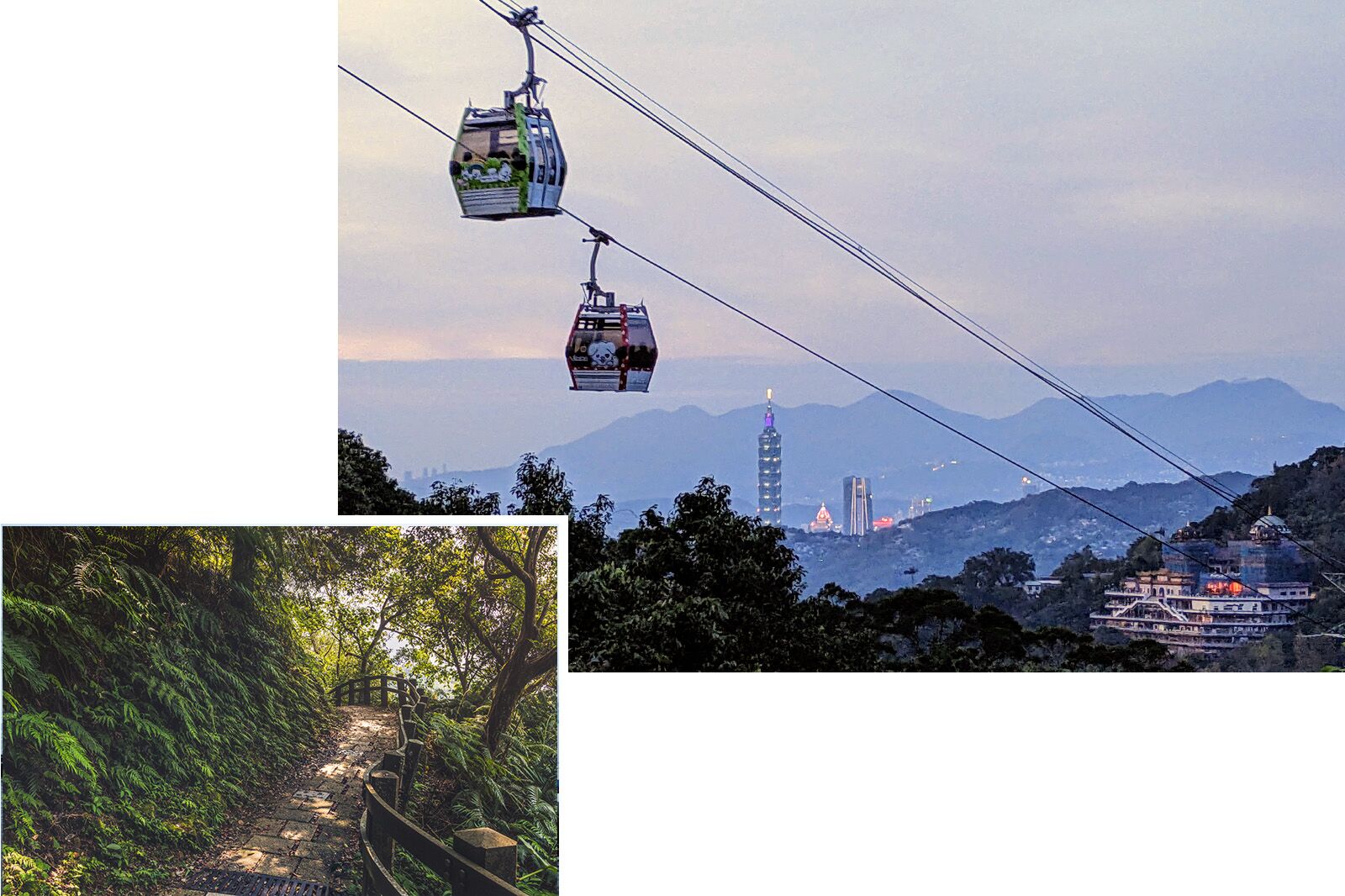
Photos: Taipei Travel and annaj77/Shutterstock
Beginning a ‘grand’ adventure
In a matter of minutes, you can step off a busy MRT line and into a dense, bird-filled corridor of camphor trees, bamboo groves, and mossy stone steps — no car necessary. The trails that weave through neighborhoods like Neihu and Muzha are fully-formed micro-adventures, complete with elevation gains, hidden temples, and — especially in the hills around Muzha — the occasional troop of wild macaques. Some routes, like Elephant Mountain and Jiantanshan, deliver postcard skyline views. Others, like the Xianjiyan and Fuyang Eco Park trails, reward you with quiet immersion in second-growth forest.
Taipei’s trails through urban and urban-adjacent forests are filled with history — a timeless stone bench here, a war bunker there — while remaining an important part of life in the city (you will almost certainly see a few elderly locals on their morning ritual of power-climbing the steep inclines). On weekends, the trails become social spaces. Hikers with trekking poles, birders with cameras, and families with bags of guava all share the shade. Despite being minutes from 7-Elevens and bus stops, these paths feel distinct from the city, offering a kind of green exhale that balances Taipei’s dense, humming city life.
This car-free ease of exploration extends to the Taipei Grand Trail. Section 1 of the eight trail sections begins at the Guandu MRT Station, a primary connection point on the north side of Taipei near Taipei National University of the Arts. Completists can start here, while those short on time or looking for a specific experience can jump ahead.
These are the can’t-miss sections of the Grand Trail to see for yourself, whether you choose to thru-hike parts or all of the route, or access what you want to see via public transit.
Stopping for fumaroles and hot springs
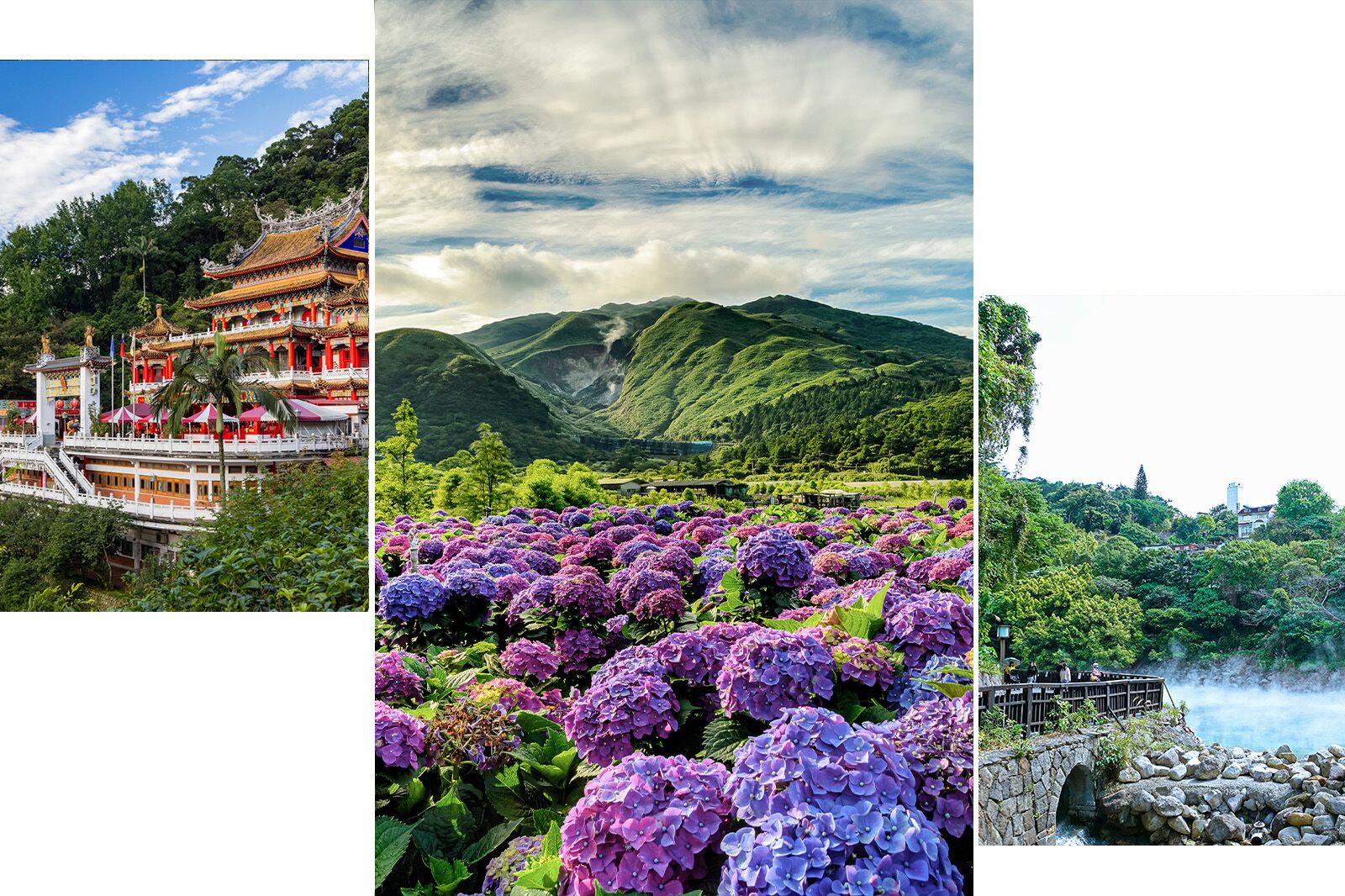
Photos: Taipei Travel
- Taipei Grand Trail Section 2: Erziping to Xiaoyoukeng
- Taipei Grand Trail Section 3: Xiaoyoukeng to Fengguikou
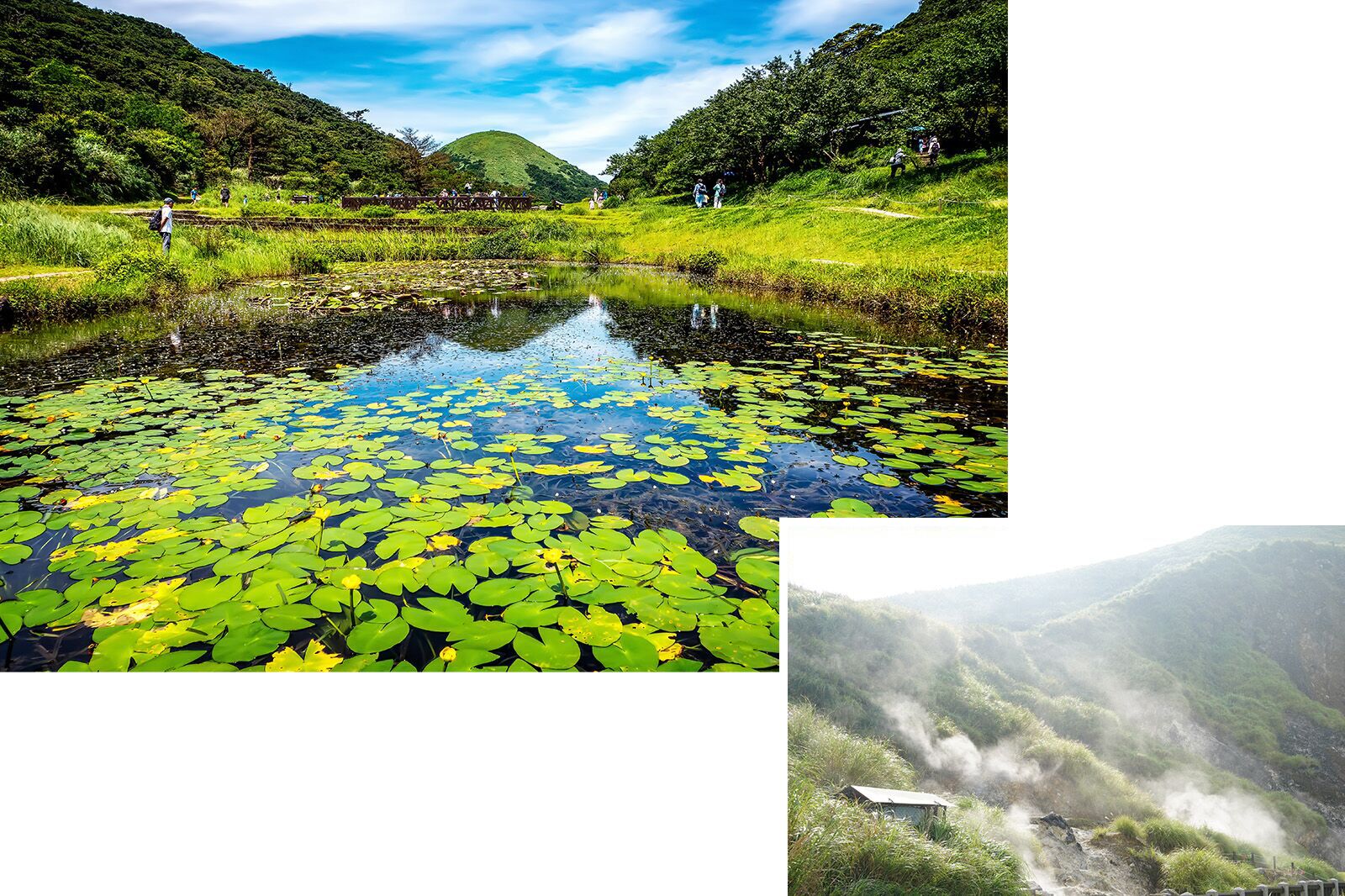
A fumarole is a volcanic opening that releases hot sulfurous gases. The dramatic steam hisses, billows, and reeks like a forgotten science experiment through the natural vents in the earth in a mesmerizing way. These steamy wonders are the star of Sections 2 and 3 of the Taipei Grand Trail.
Section 2 climbs from Erziping to Xiaoyoukeng. Here, trails wind through open grasslands before tipping into a geothermal theater of boiling mud pits and sulfur-crusted rock. As you near Xiaoyoukeng, the ground literally smokes beneath your boots. The smell? Let’s call it volcanic cologne — sharp, eggy, and unforgettable. It’s a wild contrast to the peaceful temple-lined paths in Section 1, and a visceral reminder of Taipei’s volcanic origins.
Continuing into Section 3, the terrain tilts upward toward Qixing Mountain, the city’s tallest peak at 3,674 feet. The route skirts fumaroles, scrambles over wind-beaten ridge lines, and opens to staggering views of Yangmingshan’s green bowl and beyond. You’ll pass fields still etched with thermal activity where occasional steam jets puff from beneath ferns.
Trekking the Maokong tea hills
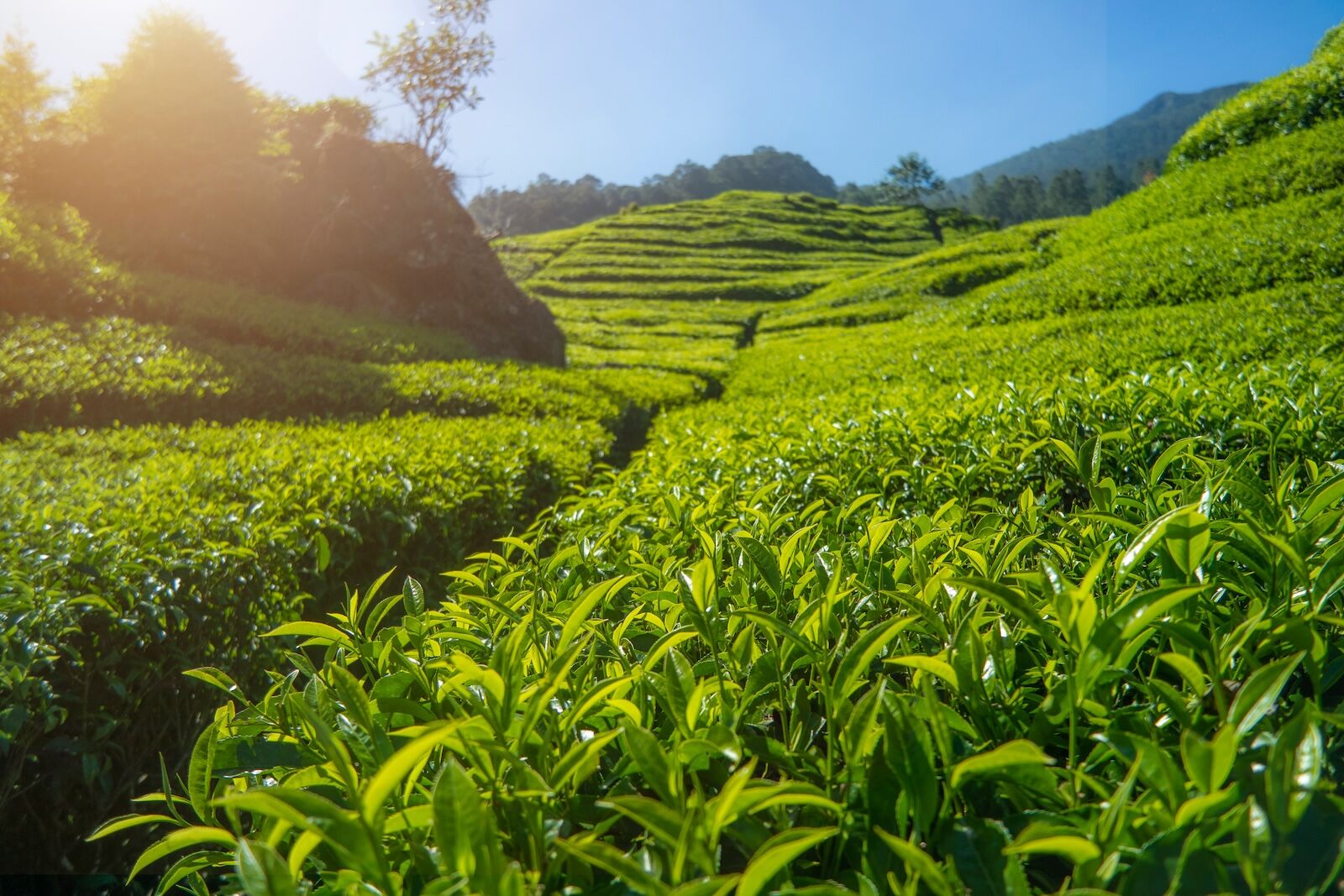
Photo: Ismail Rajo /Shutterstock
- Taipei Grand Trail Section 7: Shlinyan (Zhinan Temple area) to Maokong Station
Section 7 guides hikers through the Maokong tea region’s hillsides that are cultivated with rows of Camellia sinensis, the plant that’s the source of all black, green, white, and oolong tea. It’s a stark sensory shift from the volcanic ridgelines in earlier sections of the Taipei Grand Trail. This was no accident — the Maokong tea region is Taipei’s most awe-inspiring (and aromatic) region.
Starting near Zhinan Temple, the trail meanders past stone lanterns and quiet temple courtyards before ascending into a landscape shaped by centuries of tea farming. The path is flanked by neat rows that will eventually be turned into Tieguanyin and Four Seasons Spring oolong, the leaves rustling in the wind as the trail climbs gently through the hills. The Camphor Tree Trail adds a softer note with shaded switchbacks and seasonal blossoms that make it one of the more meditative stretches of the entire trail system.
What makes this section distinct is the rhythm it strikes between nature and culture. Dozens of teahouses line the ridgelines, each providing a rest stop that’s a window into Taiwan’s contemporary tea scene where tradition meets slow tourism. The gondola station at Maokong marks a fitting endpoint, with sweeping views back toward Taipei’s skyline.
This region particularly appeals to those who appreciate unique cuisine. Many teahouses serve handmade dishes built on the ingredients that are locally abundant — namely, tea. Tea-smoked chicken retains the delicate aroma of tea and the essene of the surrounding mountain landscape.
Other popular dishes in the Maokong tea region include tea-infused ice cream, jelly, and cookies. At many teahouse stops, you can enjoy tea while gazing over the Maokong Gondola and Taipei 101 in the distance.
Exploring riverside parks
Photos: Taipei Travel
- Taipei Grand Trail Section 8: Zoo Station to Guandu MRT Station
Of course, you don’t have to even leave Taipei City limits to get into nature. That’s proven at the end of the trail as well as the start. Section 8 of the Grand Trail opened in 2022. Spanning roughly 24 miles, Section 8 of the Taipei Grand Trail is the only riverside trail among any section of the trek. Added bonus: This is also the easiest section to do as a short excursion for a couple of hours. Or for full relaxation, simply pick a riverside park in the heart of the city and post up with a picnic.
The broad loop along the Tamsui, Keelung, Xindian, and Jingmei rivers weaves through a series of parks — Dajia, Meiti, Fuhe, and others. Each offers long stretches of car-free paths, open green spaces, birdwatching opportunities, and striking views back toward the mountains that surround the city. It’s a refreshing contrast: the terrain flattens out, the city feels close but not overbearing, and the rhythm of your walk (or bike ride) is set by the curve of the river.
The riverside stretch is also the trail’s quiet triumph. By adding Section 8 in 2022, Taipei transformed its Grand Trail from a linear journey into a full-circle experience. While the earlier sections climb through tea hills and volcanic peaks, this one glides beside wetlands, suspension bridges, and bike-friendly promenades. Guandu, at the northern end, and the Taipei Zoo area, at the southern edge, serve as natural entry or exit points. Both are well connected by the MRT. And though most of the city lives just beyond the flood walls, the experience here feels open and tranquil where you’ll truly see how the city breathes beside the river. 