
Food is sacred in Spain, so much so that every year a Catalan town throws a festival for an onion. A week or so earlier and some 200 miles northwest, cider makers outside San Sebastián tap the season’s first barrels.
Each of Spain’s 17 autonomous communities has food that’s tied to the area and, often, a specific season. It might be a prized ingredient, a dish with centuries of history behind it, or a staple that never leaves the menu. Put them in order and you get a year of eating across Spain, one region at a time.
SPRING
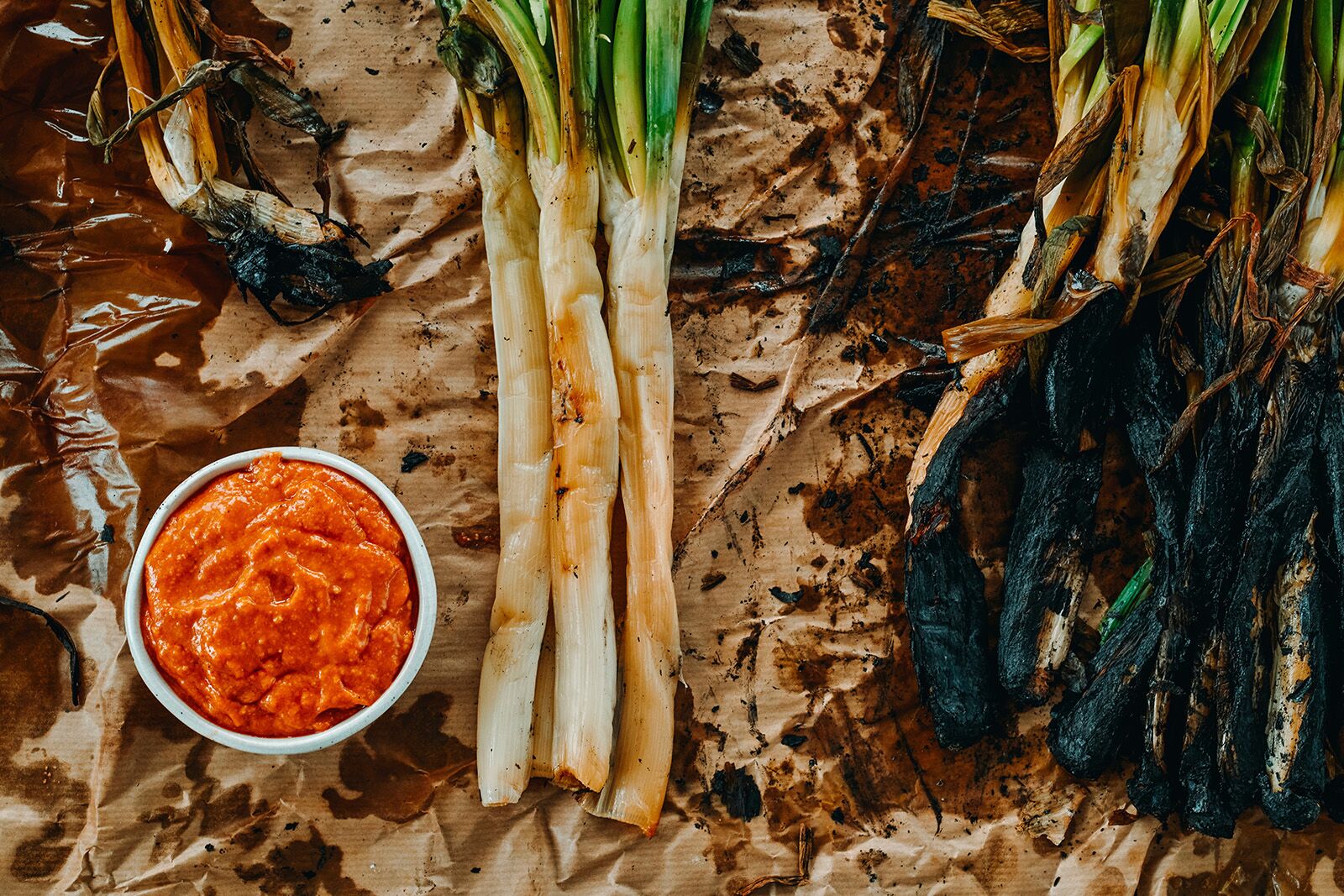
Photo: nito/Shutterstock
Catalonia: Calçotada
Each winter and into spring, Catalonia‘s farmers pull up calçots (a sweet green onion) and herald calçotades. A calçotada is an outdoor feast where family and friends grill bundles of calçots over burning vine cuttings and eat them by hand. Valls, a town in the Tarragona province, throws a Gran Festa de la Calçotada every January.
Calçotada season typically begins in late November, peaks around February, and runs through April. Calçots are charred until the insides are tender, then wrapped and served in newspaper. You peel away the blackened layers before dipping the calçot into romesco, a creamy sauce made with almonds, peppers, tomato, garlic, and olive oil. Then you lean your head back and dangle the calçot into your mouth to eat, no utensils required.
Navarre: White asparagus
Navarre spans from the Pyrenees on the French border south to the Ebro River valley. Its white asparagus, often called “white gold,” is a much-awaited spring vegetable. The spears are protected as Espárrago de Navarra under the EU’s Protected Geographical Indication (PGI) program, which limits production to a designated area in and around Navarre. They’re harvested by hand and prized for their tender texture and slight bitterness. Cooks often steam them and serve them simply, drizzled with olive oil or mayonnaise. When they’re in season, they’re also added to menestra de verduras, a vegetable dish with artichokes, peas, green beans, and more.
La Rioja: Artichokes
La Rioja is famous for its wine, but the region’s fertile land is also prime for growing artichokes. They crop up at the end of winter and throughout the spring. Fresh artichokes also appear in menestra de verduras, which highlights in-season produce and is served in many homes. You’ll also find it on restaurant menus, often as a starter or first course. Another way to enjoy La Rioja’s artichokes is alcachofas a la riojana en salsa, which serves them in a garlic and onion sauce with cured ham.
Cantabria: Santoña anchovies
Northern Spain’s Cantabria has a long fishing tradition. Just look at Santoña, where the Cantabrian anchovy is a significant part of the town’s identity. This anchovy has long been enjoyed fresh in the region, but in the late 19th century, Italian salters helped build Santoña’s preserved-anchovy industry, making it possible to eat the fish year-round and transport it easily. Today, the anchovies are caught, cleaned, salted, and cured before being filleted and canned, typically in olive oil. The fishing season runs in spring, yet canned anchovies are eaten throughout Cantabria and the rest of Spain, where they’re most often served as tapas.
SUMMER
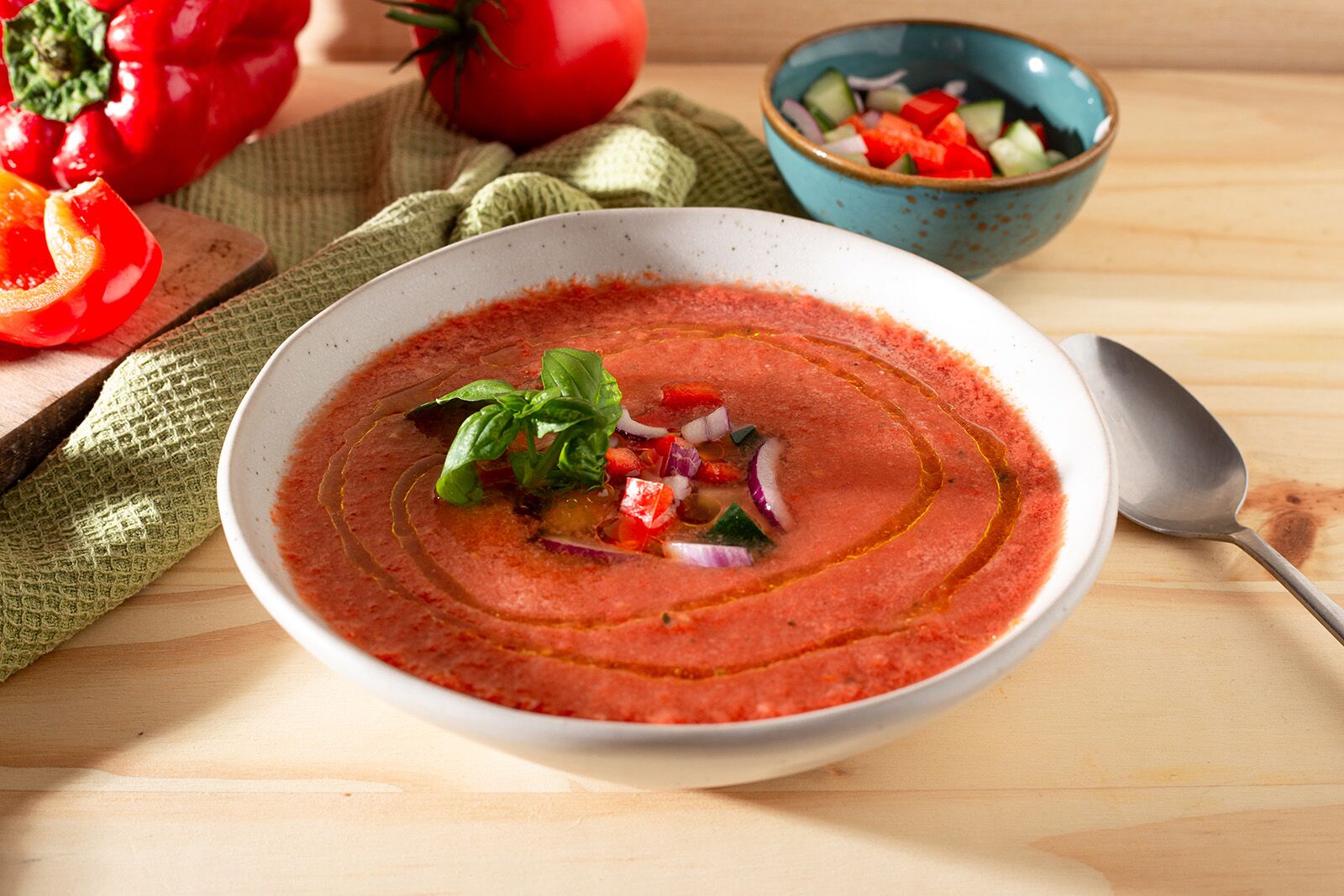
Photo: Noemi Foodpictures/Shutterstock
Andalusia: Gazpacho
Andalusia, mainland Spain’s southernmost region, sits between the Portuguese border and the Mediterranean. During the region’s hot summer months, gazpacho, a cold soup, is everywhere in home kitchens and on restaurant menus. Made with tomatoes, peppers, cucumbers, stale bread, garlic, olive oil, and a dash of vinegar, it’s a welcome reprieve on a steamy day. Some restaurants also serve variations, such as watermelon gazpacho.
Canary Islands: Gofio
Gastronomic influences in the Canary Islands span from the fields to the sea. Gofio, a traditional ingredient made from toasted maize or wheat meal, has long been a filling breakfast staple. Indigenous Canarians ground toasted barley into gofio; maize entered the mix after it arrived from the Americas. Gofio is now protected as the Gofio Canario PGI, and many chefs are innovating with the traditional ingredient, making desserts like gofio mousse or nougat.
Galicia: Pulpo a la gallega
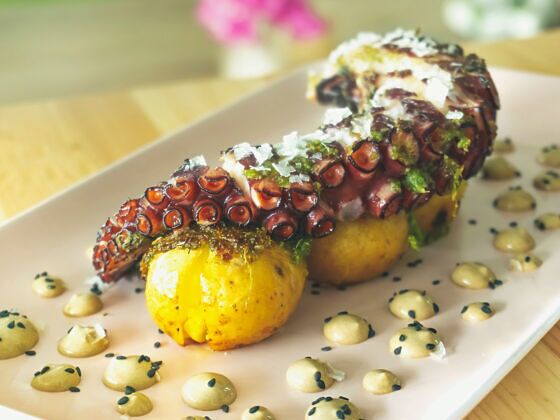
Galicia occupies Spain’s northwest corner, has an Atlantic coastline, and is famous for pulpo (octopus). Its best-known octopus dish is pulpo a la gallega, in which the octopus is boiled, cut into pieces, typically served on a wooden platter, and drizzled with olive oil and sprinkled with coarse salt and paprika. Toothpicks often replace forks for spearing the pieces. In Galician, the dish is called polbo á feira, or “fair-style octopus,” because it was traditionally cooked and served at village fairs and festivals.
Murcia: Ensalada Murciana
Murcia sits on Spain’s southeastern Mediterranean coast and is known as Europe’s garden. Ensalada murciana (Murcian salad), also called moje or mojete, combines tomatoes, onions, Cieza olives, boiled eggs, and tuna. The tomatoes are commonly jarred rather than fresh, since before fresh tomatoes were available year-round, preserving the harvest was the only way to have good ones in winter. The result is loose and juicy, served with bread to soak up the tomato and olive oil at the bottom of the bowl. It’s most popular in summer, when it makes a filling, cold lunch.
Valencia: Paella valenciana
Paella valenciana started as a farmers’ dish in the rice fields around L’Albufera, the lagoon just south of the city of Valencia. It was cooked over a wood fire in a wide, shallow pan (paella means “frying pan” in Valencian). Today, Valencians eat paella at lunch, and it’s made to order at restaurants and beach bars.
In 2021, the regional government declared paella valenciana an intangible cultural asset. Research into the traditional recipe identifies 10 ingredients: Valencian rice, chicken, rabbit, flat green beans, garrofó (a large, flat lima bean), olive oil, water, tomato, salt, and saffron. It’s common to see paella de marisco with seafood like mussels, clams, and large shrimp in the region, but call one of those paella valenciana in front of a Valencian and be prepared for a lengthy discussion.
FALL
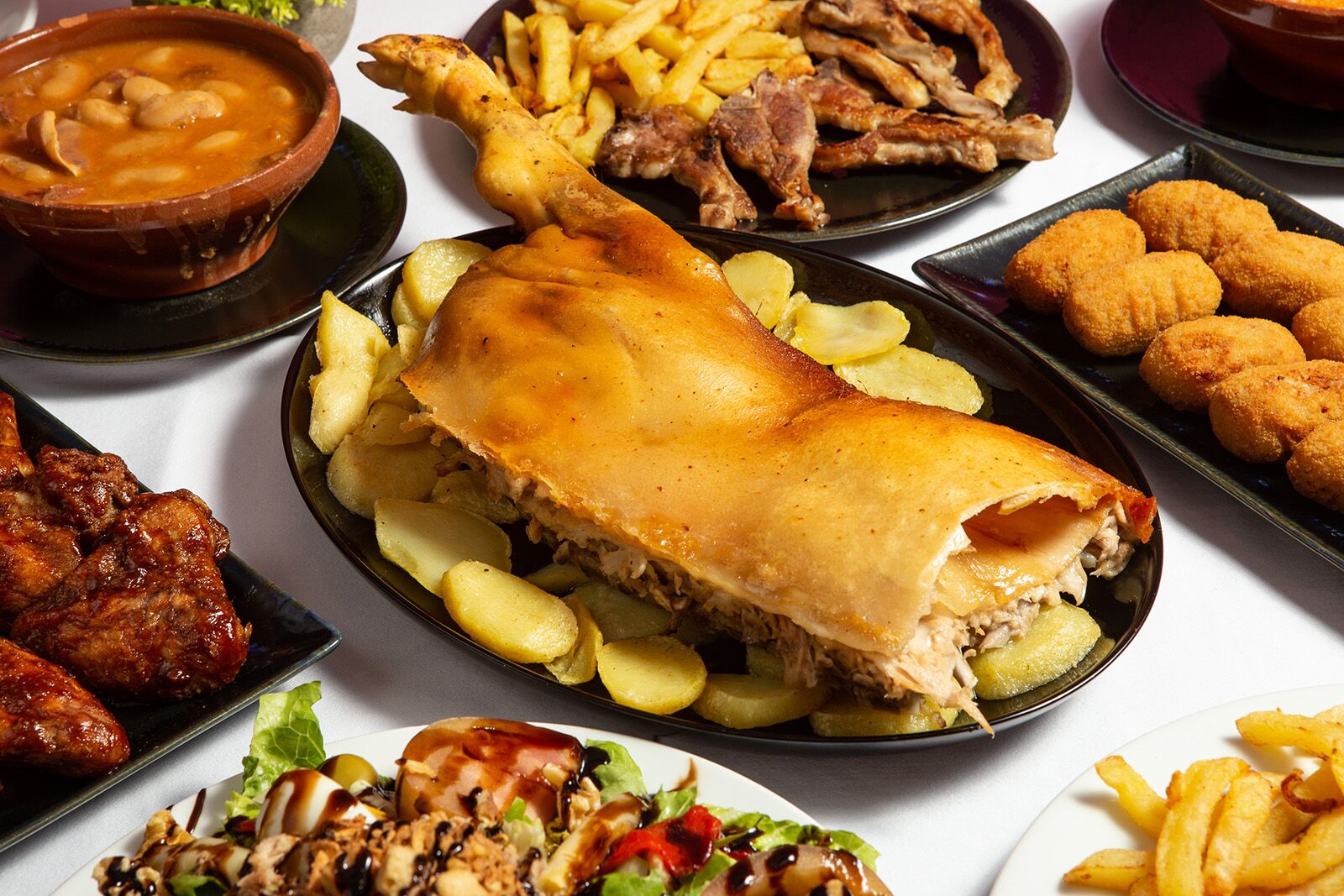
Photo: demidoff/Shutterstock
Castile-La Mancha: Manchego
Castile-La Mancha spreads across the high plains south of Madrid. An icon of the region and a well-known Spanish cheese, Manchego is made in La Mancha from the milk of Manchega sheep. Protected as the Queso Manchego PDO, it must age for at least 30 days (60 for larger wheels) and no more than two years. You’ll see it sold as semicurado (semi-cured), curado (cured), and añejo (aged).
Extremadura: Iberian ham
Extremadura borders Portugal on Spain’s western side, and its dehesa (open pasture dotted with holm and cork oaks) is where Iberian pigs are raised. Iberian ham is tied to the region, especially ham carrying the Dehesa de Extremadura PDO, which comes from pigs that spend the final months of their lives eating acorns and grass during the montanera period, from October to March. The acorns leave fine streaks of fat running through the meat. Many restaurants serve the delicacy by the platter, showcasing its balance of umami and slight sweetness.
Castile and León: Cochinillo asado
Castile and León, Spain’s largest region by area, covers much of the high plateau north and west of Madrid. It’s renowned for roast suckling pig, or cochinillo asado, a piglet no more than three weeks old that’s fed only on its mother’s milk and later roasted until the skin is crisp and the meat is soft enough to cut with the edge of a plate. That’s how some restaurants in Segovia carve it tableside. When they finish serving, the carver lets the plate crash to the floor as if the whole thing was a theater performance.
Balearic Islands: Ensaimada
The ensaimada is a spiral-shaped pastry customary in the Balearic Islands. It’s primarily associated with Mallorca, but you can find it on all four main islands. Made with flour, eggs, sugar, yeast, water, and pork lard, or saïm, it’s eaten year-round. You’ll find small single servings at bakeries or larger sizes to share. There’s the traditional ensaimada dusted with powdered sugar, as well as sweet and savory variations, including custard, chocolate, cabello de ángel (“angel hair” from a variety of winter squash), sobrasada (a paprika-seasoned spreadable pork sausage), and more. Ensaimada de Mallorca received Spain’s Denominación Específica in 1996 and EU PGI protection in 2004.
WINTER
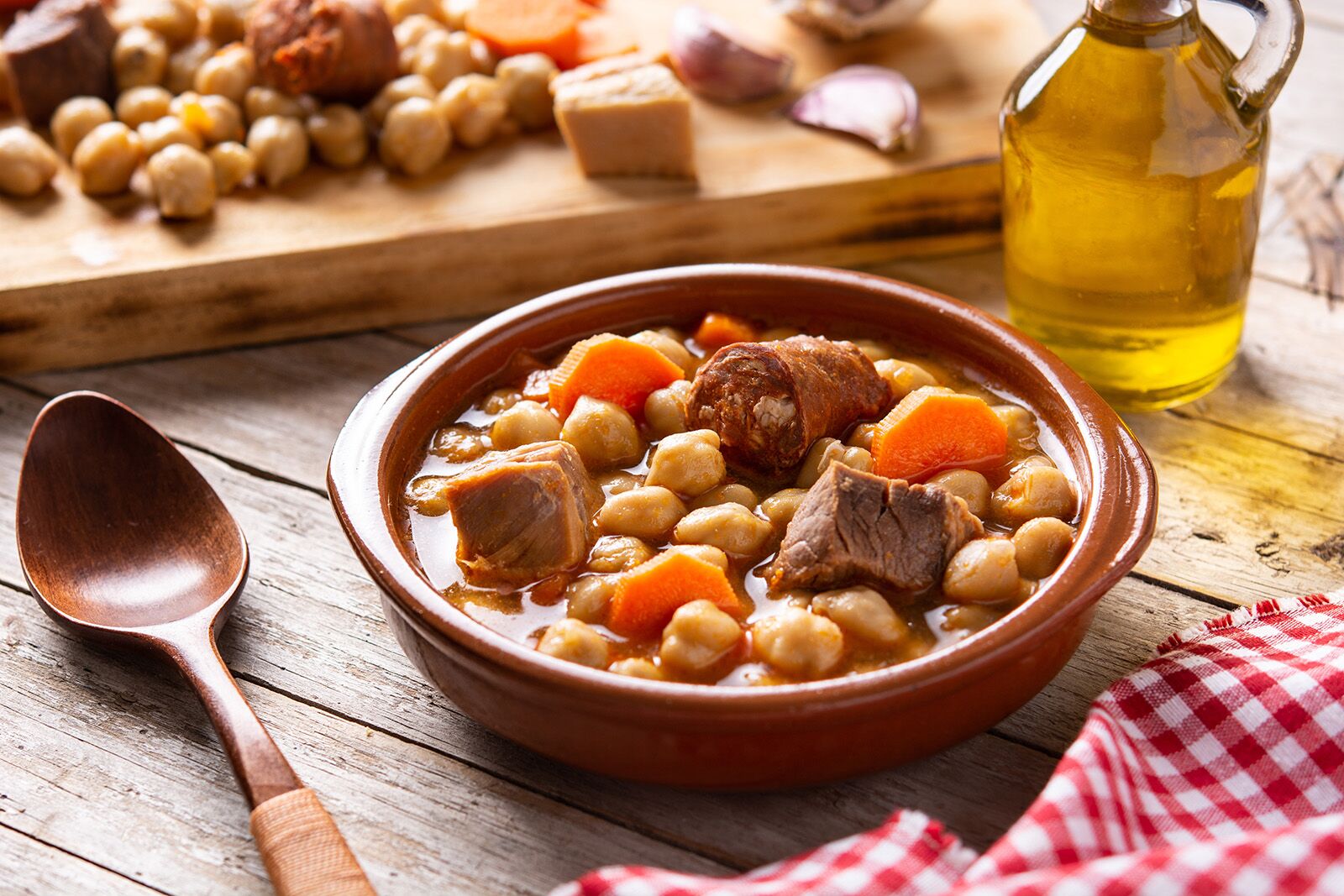
Photo: etorres/Shutterstock
Asturias: Fabada
Asturias runs along Spain’s northern coast between Galicia and Cantabria, with the peaks of the Picos de Europa rising inland. Its winters are cold, wet, and perfect for a warming bowl of fabada, a hearty bean stew made with a white bean known as fabes. The stew is cooked and topped with sacramentos (also known as compangos), a variety of meats that typically come from the recent matanzas (pig slaughter). Chorizo (smoked sausage), morcilla (blood sausage), pancetta (salt-cured pork belly), and lacón (dry-cured pork shoulder or front leg) all feature in this Asturian dish.
Basque Country: Cider
Basque cider, or sagardoa, ferments for about three months in wooden barrels called kupelas, so the new cider is ready in January. Many cider houses, or sagardotegi, are concentrated in Gipuzkoa province, especially in Hernani and Astigarraga just outside San Sebastián.
From mid-January to April, you can reserve a spot at one of the many cider houses and take a seat at a long wooden communal table while servers bring out dishes to share: tortilla de bacalao (cod omelet), fried cod with peppers, grilled txuleta (bone-in rib steak), and Idiazabal cheese with quince paste and walnuts. When someone calls out “Txotx!” — the signal that a barrel is being opened — grab your glass and line up to taste how the cider differs from barrel to barrel.
Madrid: Cocido madrileño
Cocido madrileño is a classic dish in Madrid made with chickpeas and meat and served in three separate courses. The broth comes first served with noodles, then a plate of chickpeas with vegetables (such as sautéed cabbage, carrots, and turnips), and the final course is meats such as chorizo, morcilla, pork belly, and chicken.
Aragon: Ternasco
Aragon extends from the Pyrenees on the French border south past the Ebro River valley to the mountains of Teruel, with its capital, Zaragoza, on the river. Ternasco de Aragón is young lamb from Aragon’s native sheep breeds. In 1989, it became the first fresh meat in Spain to receive a Spanish quality designation, and it’s been protected as the Ternasco de Aragón PGI since 1996. Although it’s available year-round, it’s a common dish during Christmas and local festivals.
By the time the ternasco comes off the Christmas table, Valls is getting ready for its Gran Festa once again. Because whatever month you land in Spain, some region is bound to be in the middle of its biggest food season. 