Switzerland is a small country — about the size of Vermont and New Hampshire combined — but it packs in an extraordinary amount of geography. The Alps run across the southern half, rising to some of the highest peaks in Europe, and the villages scattered across those mountains are among the most scenically situated on Earth. Most first-time visitors pass through Zurich, Geneva, or Lucerne before heading to the well-known resort towns like Zermatt or Interlaken, which are genuinely worth the trip. But Switzerland has regions that most visitors never reach.
8 Small Swiss Villages That Are Worth the Detour
Switzerland has four official languages depending where you are: German across the north and centre, French in the west, Italian in the south, and Romansh in a handful of remote eastern valleys. Moving between regions can feel like crossing a border — the architecture shifts, the food changes, and the landscape takes on a different character entirely. The villages here cover that range, from the German-speaking Bernese Oberland a couple of hours south of Zurich, to the Italian-speaking southeast near the border with Italy, to the remote eastern valleys where Romansh is still spoken daily. Here are some of the most charming small hamlets in the country worth the detour.
All products and listings featured on Matador Network are independently selected by our writers and editors. Matador Network may receive compensation if you make a purchase through these links.
Lauterbrunnen
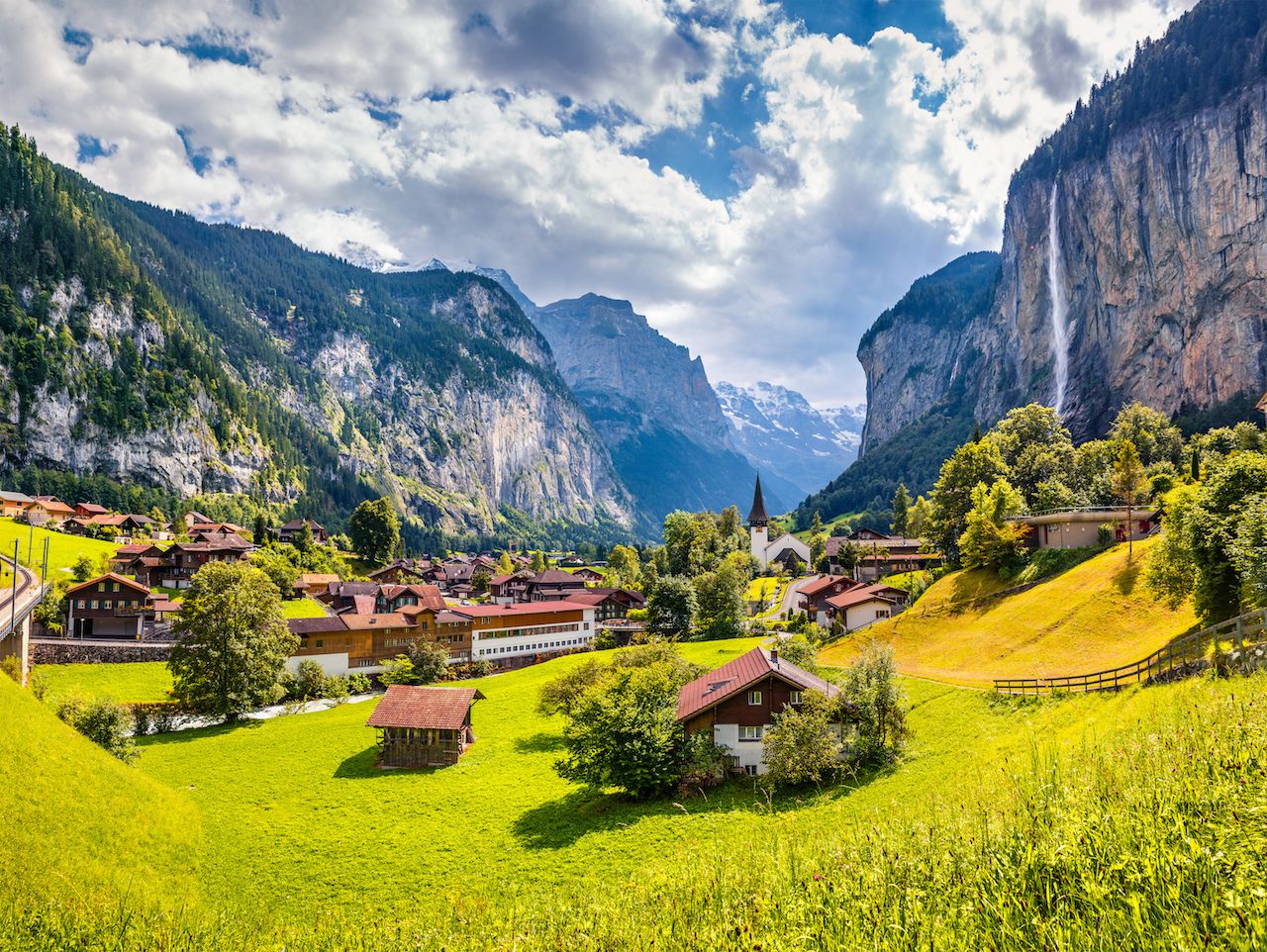
Photo: Andrew Mayovskyy/Shutterstock
Don’t miss: Trümmelbach Falls, a 15-minute bus ride from the village. These are ten glacial waterfalls inside a mountain, fed by meltwater from the Eiger, Mönch, and Jungfrau, carrying up to 20,000 litres of water per second through tunnels and gorges carved into the rock over thousands of years. They are the only glacier waterfalls in Europe located inside a mountain that are accessible to visitors, and they are considerably more impressive than anything visible from the valley floor.
Where to stay: There is no standout high-end hotel in the village itself. The best option in the area is to take the short train up to car-free Wengen, which sits on the sunny side of the valley above the crowds. Hotel Silberhorn is the most well-reviewed property there, with spa facilities, mountain-facing balconies, and direct access to the Jungfrau railway.
Despite the village’s ease of access — the train from Zurich takes around two and a half hours — and sheer Instagrammability, Lauterbrunnen still maintains all the charm you’d expect from a Swiss village.
The village is set in the Lauterbrunnen Valley, which is surrounded by steep rocky cliffs rising to over 3,000 feet, with 72 waterfalls cascading off them. The most famous, Staubbach Falls, drops 974 feet near the village center, dispersing into mist before it reaches the valley floor. On a clear day you can see the summit of the Jungfrau, and when the conditions are right you’ll hear the crack of wingsuits tearing through the air above the valley floor. Lauterbrunnen has been one of the world’s most revered BASE jumping destinations since 1989.
It may be one of Switzerland’s more touristy villages, but with a single main road, under 800 permanent residents, a single grocery store, and scenery on a scale that photos don’t capture, it’s worth the journey. Come by train and stay at least one night — the local authority has been actively exploring a Venice-style entry fee for car-based day-trippers since 2024, and the village at its quietest, in the early morning or after the tour buses leave, is a different place entirely.
Gimmelwald
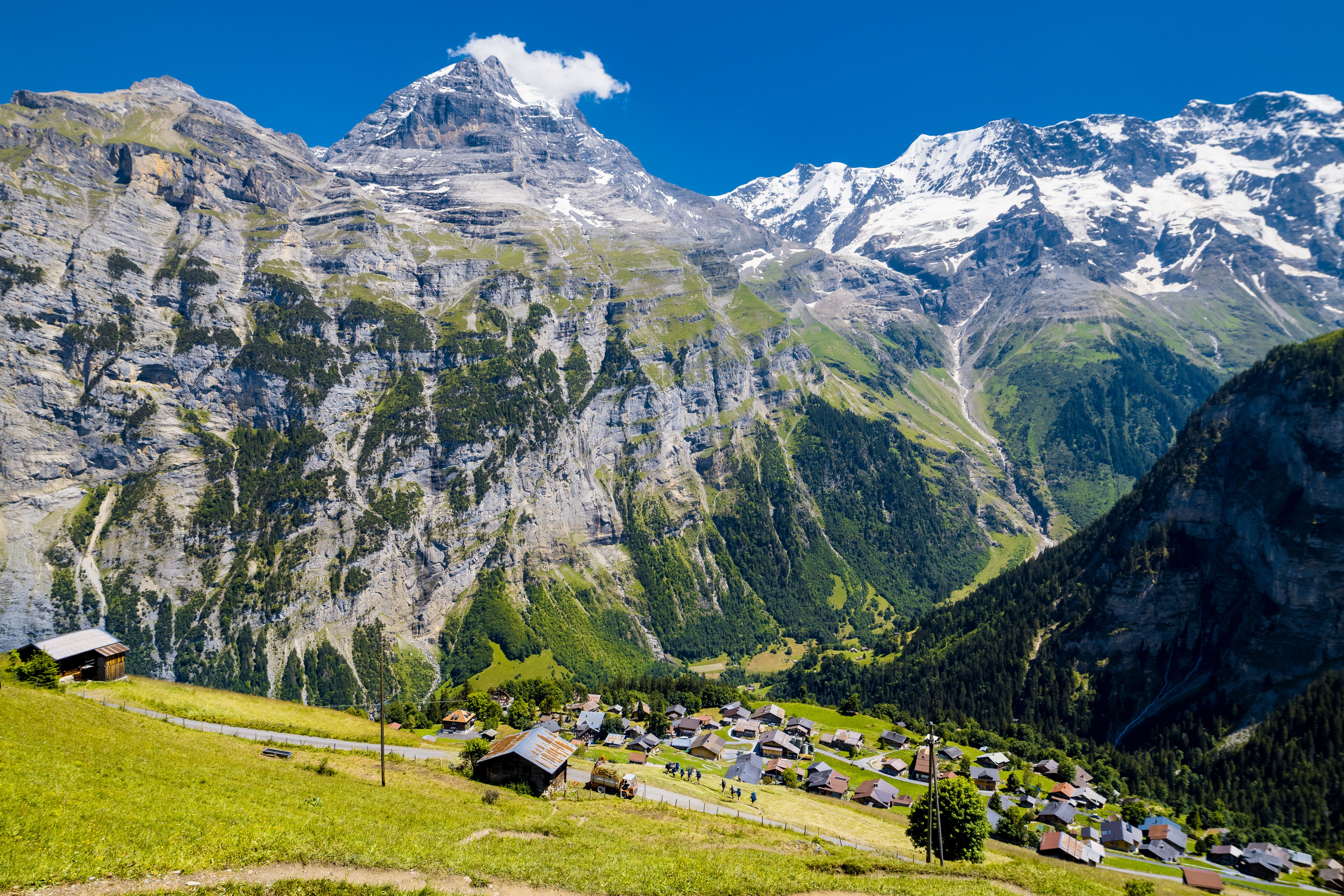
Photo: jaras72/Shutterstock
Don’t miss: The hike up to Mürren which is about 45 minutes on a paved path from the village. From Mürren the views open across to the Eiger, Mönch, and Jungfrau.
Where to stay: Gimmelwald has no high-end hotel. The Mountain Hostel and Pension Gimmelwald are about as far as it goes. If that’s not for you, Mürren is a five-minute cable car ride up. Hotel Edelweiss draws consistently good feedback for its rooms, views and breakfast, and sits close to the cable car.
Gimmelwald is located on a small patch of land high up on a mountain, at the far end of the Lauterbrunnen Valley. The village is so small and isolated that its population of around 130 relies on Lauterbrunnen for schooling and groceries — the village school closed in 2010 when the number of children dropped too low to keep it running.
The tiny village has everything you’d want in a remote Swiss village — clanging cowbells, the odd herd of bleating goats, Alpine views, and a friendly community that has kept the outside world largely at arm’s length. It has stayed this way partly by luck and partly by design. When developers came looking to build a ski resort here, the farming community reclassified the village land as an avalanche zone, making serious construction legally impossible.
Gimmelwald is car-free by necessity and there are no roads up the steep cliffs to the village. To reach it, take a bus from Lauterbrunnen to the Stechelberg cable car station at the valley floor, then ride up one stop to Gimmelwald. The journey takes around 20 minutes in total.
Andermatt
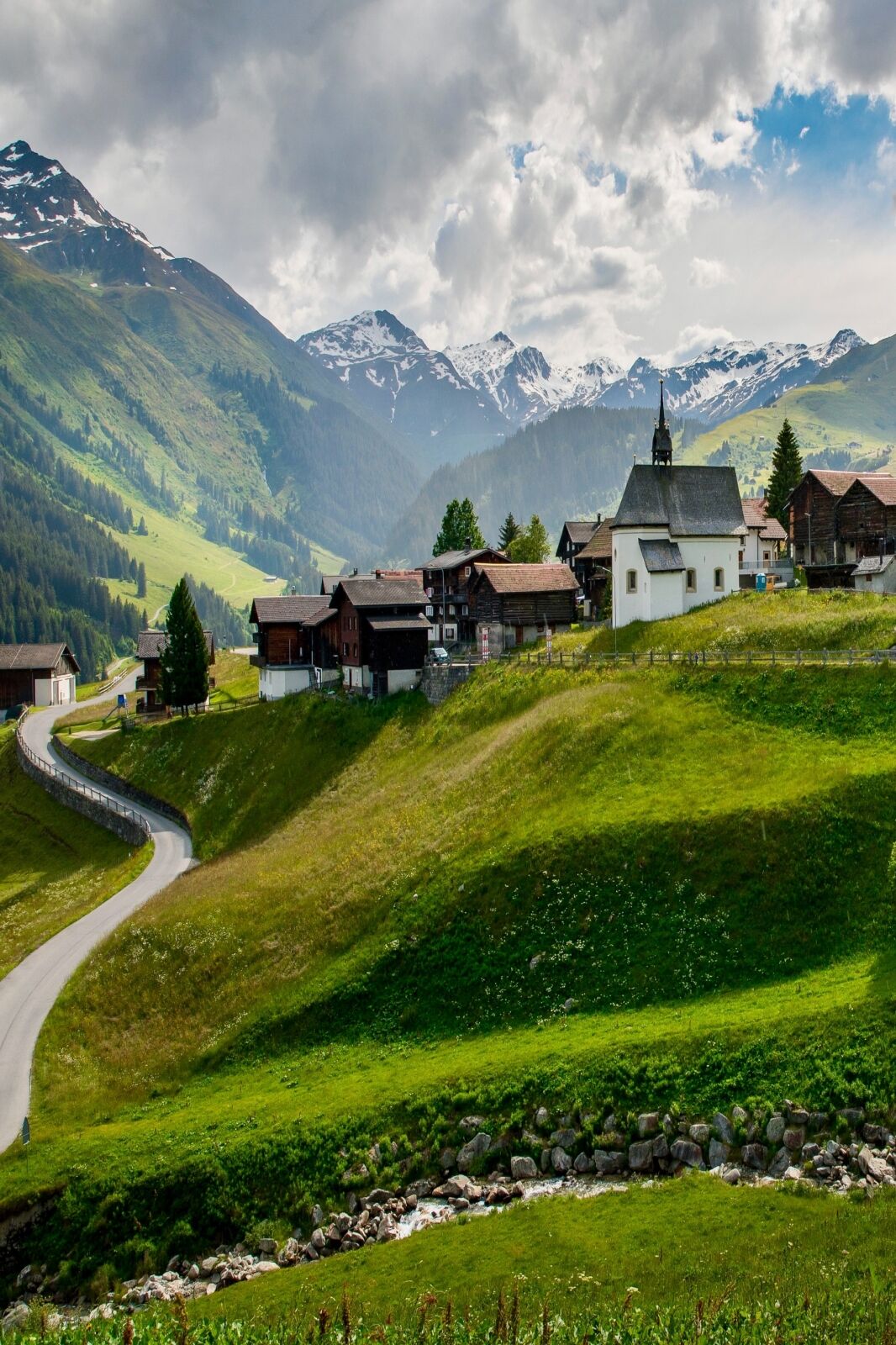
Photo: SennaRelax/Shutterstock
Don’t miss: The Schöllenen Gorge, a short walk from the village center. The gorge cuts through the rock below Andermatt and contains the Devil’s Bridge, a medieval stone arch over the rushing Reuss where Suvorov’s Russian army crossed during the 1799 Alpine campaign. The scale of the place makes that history easy to believe.
Where to stay: The Chedi Andermatt was the first five-star hotel to open here, in 2013, and is still the best address in town. If you’d rather stay in the old village, Hotel Sonne is a well-regarded smaller property on Gotthardstrasse.
At an altitude of just below 5,000 feet, the village of Andermatt is the ideal destination for skiers in winter, and a excellent hiking base in summer. It sits at the crossroads of Switzerland’s north-south and east-west mountain passes in the Ursern Valley, and for most of its history it was exactly as quiet as that geography suggests.
That has changed considerably since 2009, when Egyptian entrepreneur Samih Sawiris began a development project that has since seen around $2 billion invested in the valley, bringing five-star hotels, Michelin-starred restaurants, an 18-hole golf course, a concert hall, and a new pedestrianised retail district. Vail Resorts bought a majority stake in the ski area in 2022, connecting it to their Epic Pass network. The cobblestoned old village on Gotthardstrasse — family-run shops, the 1900 butcher still operating, the Ursern Valley Museum in its 1786 patrician house — remains intact alongside all of this. The two parts of town sit either side of the river Reuss and feel genuinely different from each other.
Because it’s on the Glacier Express route, Andermatt makes a worthwhile stop between Zermatt and St. Moritz. With 112 miles of pistes now connecting Andermatt, Sedrun and Disentis, it’s one of the largest ski areas in central Switzerland.
Wengen
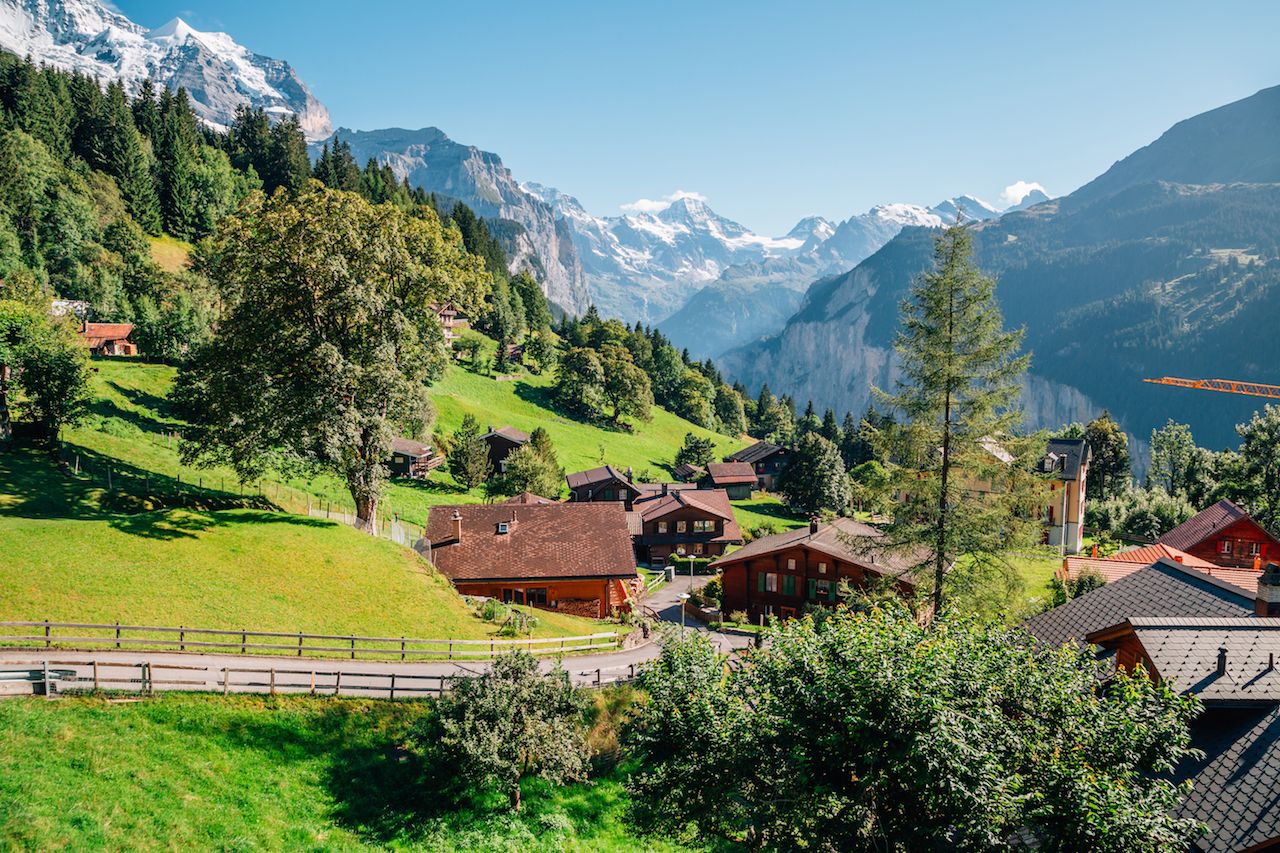
Photo: Sanga Park/Shutterstock
Don’t miss: The Lauberhorn Races, held each January since 1930. The downhill course is the longest on the World Cup circuit, and around 70,000 spectators line the slopes for race week. Outside of January, you can ski the course itself once racing season closes.
Where to stay: The Grand Hotel Belvedere, now part of the Beaumier collection following a recent renovation, is the best address in Wengen. The Art Nouveau building has been thoughtfully updated, with an indoor-outdoor pool, balcony rooms facing the Jungfrau, and staff that guests consistently single out.
Wengen sits about 45 miles from Bern and around two and a half hours by train from Zurich, on a sunny plateau above the Lauterbrunnen Valley — and yet it feels far away from any kind of urban reality. It has been car-free since the Wengernalp Railway first connected it to Lauterbrunnen in 1893, and remains reachable only by that train.
The town is somewhat touristy — it’s a popular waypoint on the way to the Jungfrau’s summit. But like so many villages in the region, it has maintained a careful balance between kitsch and authentically Swiss, helped in no small part by its phenomenal mountain views, including of the famous Eiger.
The village is beautiful year-round; in winter the snowfall in Wengen is abundant, but come summer, only the highest peaks retain a dusting of snow, serving as the perfect contrast to deep blue skies and emerald pastures.
Mürren
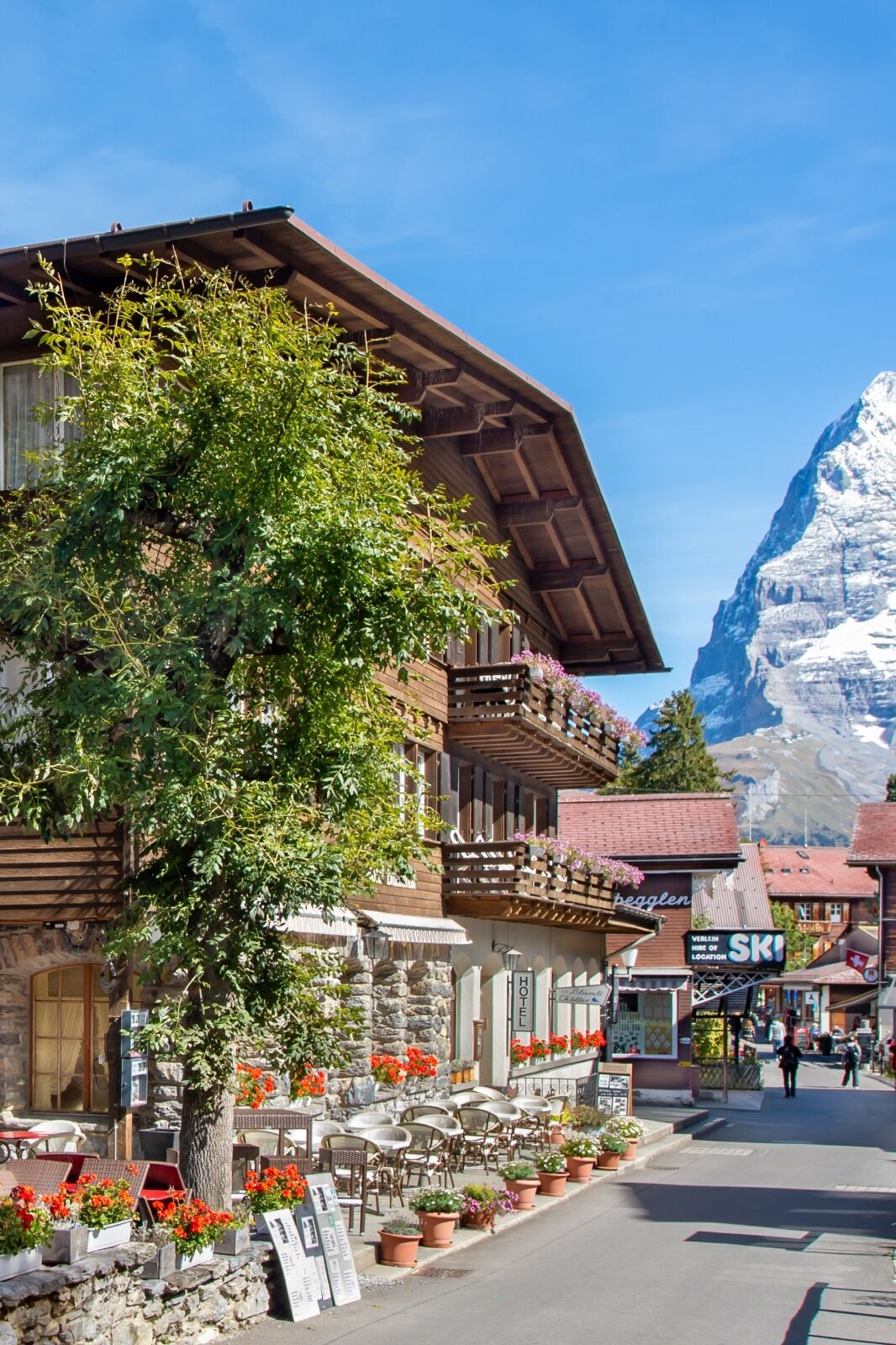
Photo: Boris-B/Shutterstock
Don’t miss: The cable car up to the Schilthorn summit at 9,744 feet, which takes about 30 minutes from Stechelberg. On a clear day the panorama takes in over 200 peaks, and on a less clear day the revolving restaurant still turns slowly regardless.
Where to stay: Hotel Eiger is a family-run property directly opposite the train station with an indoor pool, mountain-facing balconies, and a restaurant.
Mürren is a tiny mountain village at 5,374 feet, sitting on a plateau above the Lauterbrunnen Valley at the foot of the iconic Schilthorn, famous for its role in the 1969 James Bond film On Her Majesty’s Secret Service. The revolving restaurant at the Schilthorn summit, Piz Gloria, served as Blofeld’s mountaintop lair; the production company paid to complete the building’s interior and construct a helicopter landing pad in exchange for filming permission, and the restaurant still runs a Bond-themed breakfast today.
From Mürren, there are dozens of hiking trails across a range of difficulties that serve up some of the best views in the Alps. But if you want to stay put, the village is also a great place to unplug. Smoke drifts from nearby chimneys, cowbells carry across the mountainside, and without a single motor vehicle in the village, it stays that way all day.
With no road access to Mürren, you reach it either by cable car from Stechelberg at the valley floor, or by the mountain railway from Lauterbrunnen via Grütschalp.
Guarda
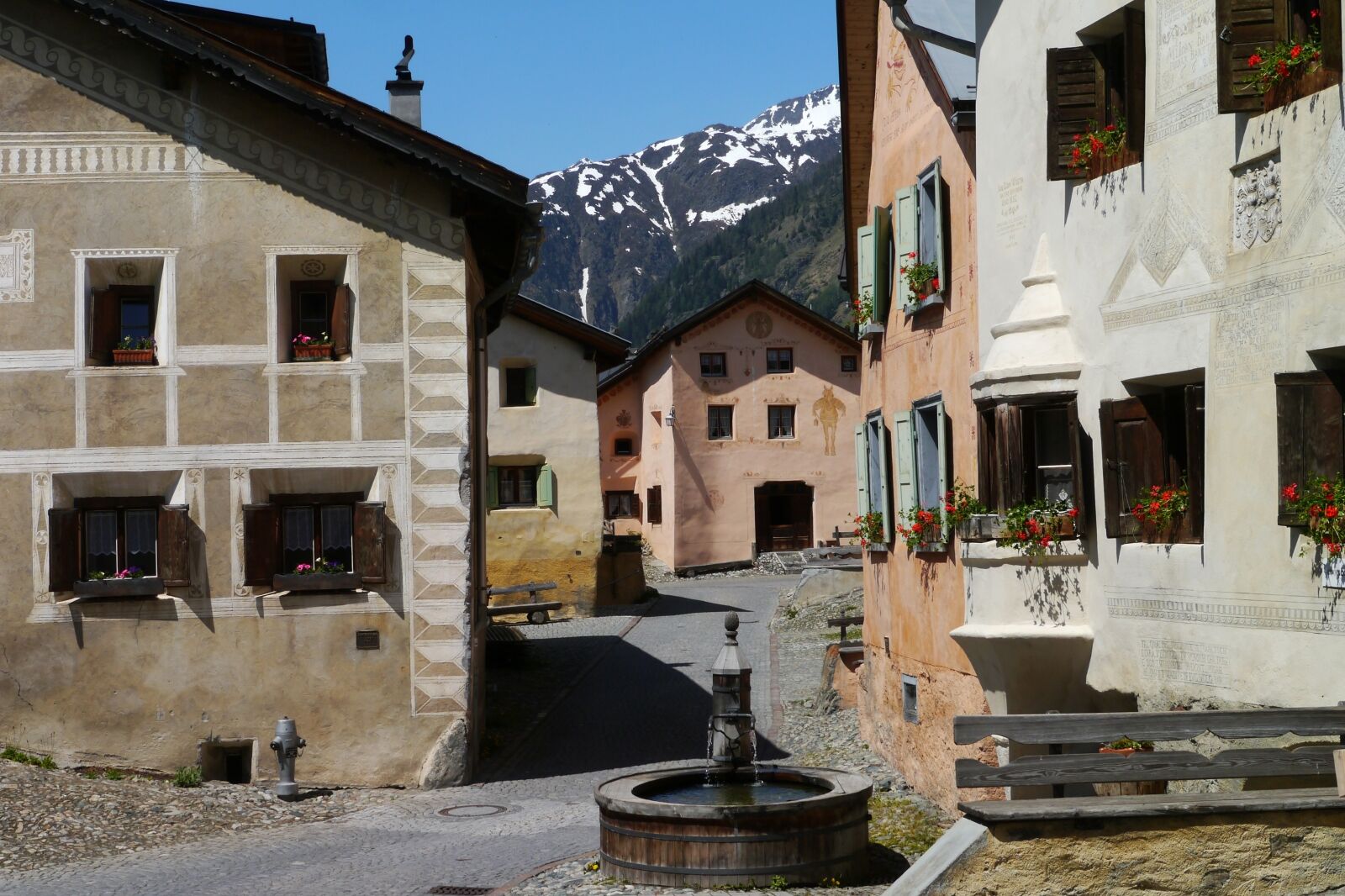
Photo: Bildagentur Zoonar GmbH/Shutterstock
Don’t miss: Walking the village slowly enough to read the houses. Many carry inscriptions etched into the plaster in Romansh, and the meanings range from biblical verses to sardonic observations about life. The church at the centre of the village, dating to the 15th century, is also worth the detour.
Where to stay: Hotel Meisser is a family-run property housed in two 17th-century farmhouses that has been operating since 1893. The restaurant focuses on local Engadine produce and is a draw in its own right.
The scenery surrounding the village is the stuff of postcards, and is perfect for the outdoorsy types in both winter and summer. But it’s the traditional Engadine houses, lovingly maintained and still decorated by residents, that make this one of the most distinctive villages in the country. The decoration is called sgraffito — a technique brought to the region from Italy in the 16th century, in which the outer layer of wet plaster is scratched away to reveal a contrasting colour beneath, forming patterns, animals, mythical creatures, and on many houses in Guarda, proverbs and inscriptions in the local Romansh language.
Grindelwald
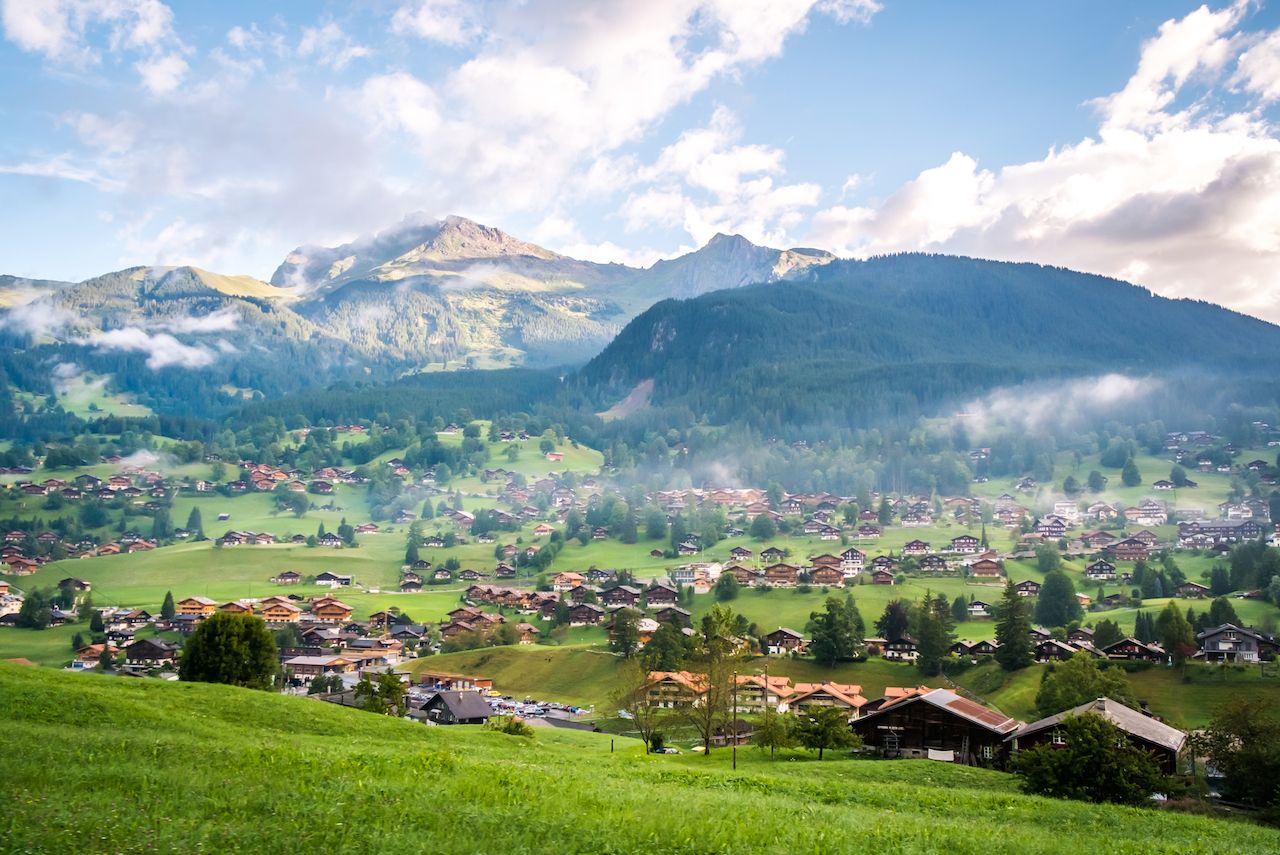
Photo: Byjeng/Shutterstock
Don’t miss: The hike to Bachalpsee, a glacial lake about an hour and a half on foot from the first gondola station. On a clear morning, the Eiger, Schreckhorn, and Faulhorn reflect off the surface, and the path there is flat enough that it remains accessible without serious hiking experience.
Where to stay: Hotel Belvedere is a family-run four-star property five minutes on foot from the train station, with south-facing rooms looking directly at the Eiger. The onsite restaurant holds a Michelin star and is one of the better reasons to stay in the village rather than passing through.
Grindelwald is a popular resort village located around 3,400 feet above sea level in the Bernese Alps, about two hours by train from Zurich. In the winter, skiers and snowboarders tear it up on the various slopes, and then head to the town’s bars and restaurants for lively après-ski. In the summer, it’s somewhat more relaxed, with hikers using the village as a base from which to explore the nearby mountain peaks.
The scenery surrounding the village is what you’d expect from these parts, and easy accessibility by road and railway makes it one of the more visited villages in the Jungfrau region. The Eiger Express gondola, which opened in December 2020, connects Grindelwald Terminal directly to Eigergletscher in around 15 minutes and cuts the journey to Jungfraujoch by nearly an hour. Up on the mountain above the village, the First Cliff Walk — a steel walkway and suspension bridge bolted to the cliff face at around 7,100 feet — has become one of the most visited attractions in the Bernese Oberland. Although the village’s growth has impacted its charm, Grindelwald is still a pretty, if well-worn, village worthy of your Swiss francs, particularly as a base for the wider region.
Soglio
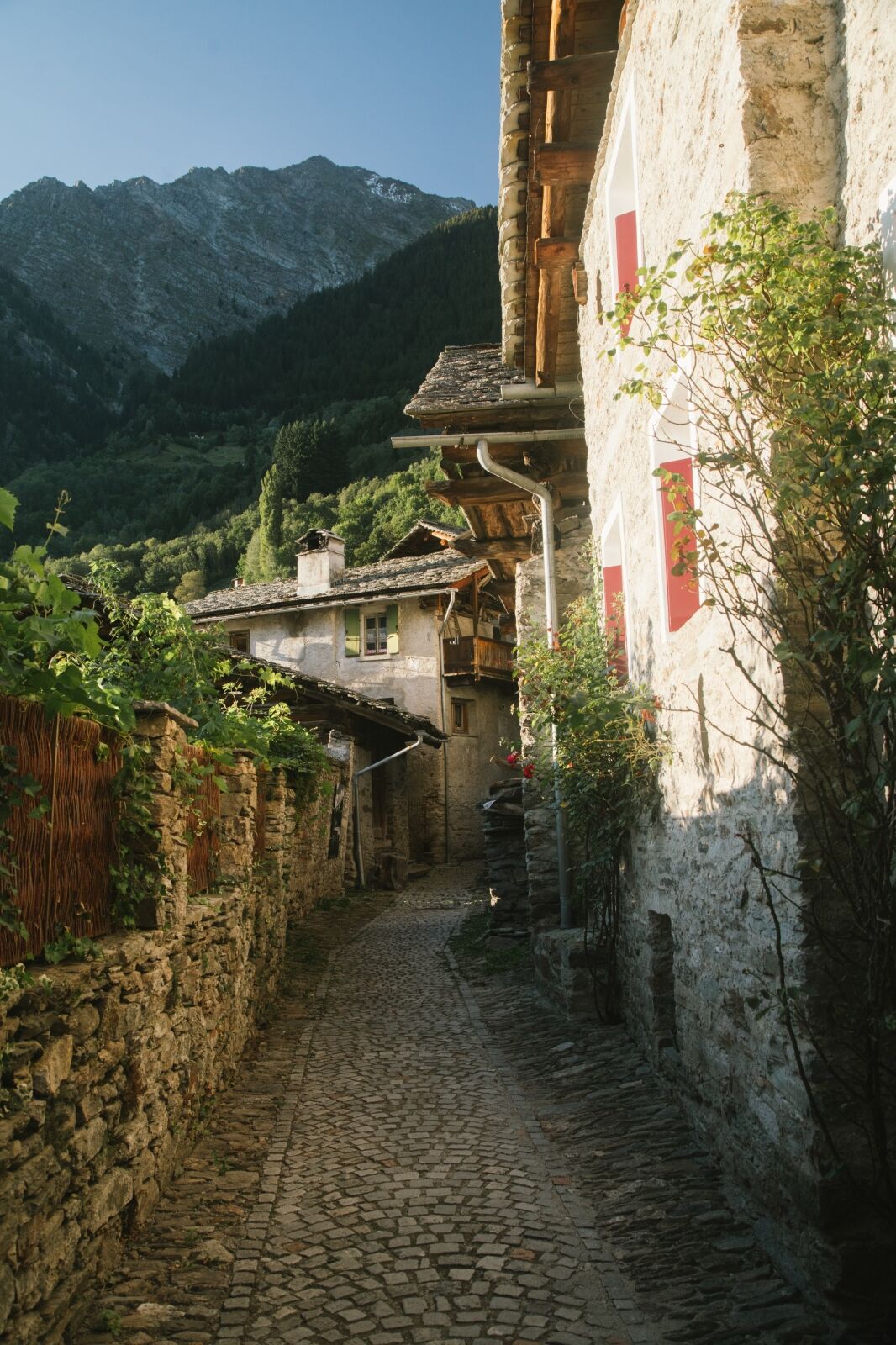
Photo: canadastock/Shutterstock
Don’t miss: The Sentiero Panoramico, a point-to-point hike from Casaccia (reachable by bus from St. Moritz) through chestnut forests and abandoned hamlets down to Soglio. It’s an intermediate trail and the views across to Piz Badile get better the closer you get to the village. Casaccia is also where the Romans once crossed into the valley, and sections of the old mule track are still intact.
Where to stay: In Soglio, Palazzo Salis is a 17th-century patrician residence that has been a hotel since 1876, with 16 rooms furnished with period pieces, a walled baroque garden, and a restaurant serving Bergell and Engadine produce. Rooms vary considerably — some have private bathrooms, some share — and the fittings are historic rather than pristine, but the setting is genuinely hard to find elsewhere. It opens April through October, books up fast in summer, and is worth contacting directly. If you’d rather base yourself somewhere with more options and use Soglio as a day trip, the Kulm Hotel St. Moritz in St. Moritz has been the address in town since 1856 and has consistently strong reviews.
Soglio sits in the far southeast of Switzerland, in the Italian-speaking Bergell Valley, about 40 minutes by car from St. Moritz and ten minutes from the Italian border. The chestnut trees replace the larches, the houses press together in granite rather than painted timber, and the road into the valley drops through the Maloja Pass before the whole character of the place shifts. You’re still in Switzerland, but it doesn’t feel like the Switzerland most Americans picture.
The village sits at 3,576 feet on a south-facing mountain terrace, with a direct view across to the granite north faces of Piz Badile and the Sciora group. Fewer than 300 people live here year-round, in houses dating to the 16th and 17th centuries, many with carved door lintels recording the names of the families who built them. The 19th-century painter Giovanni Segantini spent time here and called it la soglia del paradiso — in Italian, soglia means threshold, and it’s hard not to feel that he chose the village in part for the wordplay. 