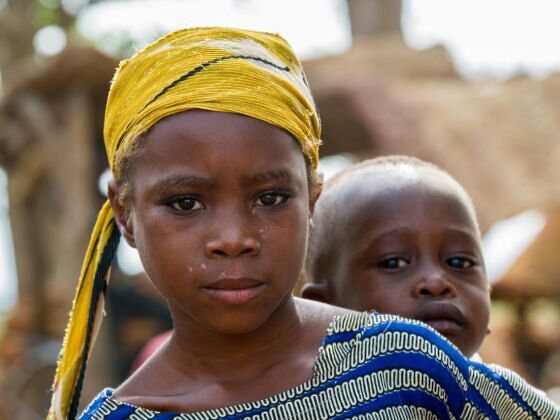
Zambian-born economist Dambisa Moyo says it’s time to rethink aid to Africa.

Photo Turkairo

For years, aid to Africa has been a staple of many western nations’ foreign policy, and more than a few famous actors and musicians.

Most of us assume that this aid in necessary for the survival of the African people, especially in the devastatingly war-torn countries, places that experience extreme drought, and the areas most affected by AIDS.

So my ears perked up when I recently heard Zambian-born economist Dambisa Moyo discuss her book, Dead Aid on America’s National Public Radio (NPR).

She relates a shocking statistic:

Between 1970 and 1998, when aid flows to Africa were at their peak, poverty in Africa rose from 11% to a staggering 66%.

Moyo, who has worked for the World Bank and Goldman Sachs, describes how foreign aid actually hinders self-sustainability and innovation by African people. One example she gave was when a Hollywood star donates a large batch of mosquito nets to be given out for free, it disposes the local business selling these same nets.

Worse, she says, is that much of this aid breeds corruption in African governments, as “pity” from western nations puts money in the hands of corrupt and tyrannical leaders while turning a blind eye to their actions.

She also says that the world’s view of Africa plays a major role in the issue of aid:

The largely unspoken and insidious view that the problem with Africa is Africans – that culturally, mentally and physically Africans are innately different. That, somehow, deeply embedded in their psyche is an inability to embrace development and improve their own lot in life without guidance and help.

What African nations should do instead, Moyo says, is invest in bonds and the sale of African food and goods on the world market, and work more closely with China, who at least gives the impression of business between equal partners.

She adds that current aid could be funneled toward microfinance.

Yet critics say that her focus on market investments as the answer to Africa’s problems falls flat in the current economic crisis. There is also the issue of China’s not-so-impressive-stance on human rights.

What do you think of Moyo’s take on aid to Africa? Share your thoughts in the comments!

Activism + Politics
 

About The Author

Christine Garvin

Christine Garvin is a certified Nutrition Educator and holds a MA in Holistic Health Education. She is the founder/editor of Living Holistically...with a sense of humor and co-founder of Confronting Love. When she is not out traveling the world, she is busy writing, doing yoga, and performing hip-hop and bhangra. She also likes to pretend living in her hippie town of Fairfax, CA is like being on vacation.

  • Bryant Knight

    This comes as a surprise to you?

    Aside from voluntary private donations by celebrities and the rich, foreign aid can generally be described as the process of taking money from the poor people of rich countries and giving it to the rich people of poor countries.

  • http://www.evolutionary2012.com Russell

    The idea of foreign aid killing Africa feels right – it is nice to hear this, for it is a first-glance paradox that makes sense when you consider it. So-called “developed” nations and their pathological influence is Africa’s only problem – it has always been this way from slavery to colonization. Most likely, the fine print on foreign aid comes with many conditions that actually makes everything worse for the people and better off for the corporation that funded the aid to begin with – just like most bills in America that become “law.”

    Meanwhile, I think it is naive to believe that the misery in Africa isn’t orchestrated in one way or another. Civil War and genocide serve their purpose while the resources of the Motherland are raped and pillaged. The World Health Organization did mass immunizations during the late 1970′s in the same places where AIDS broke out most prevalently. Now, people are forced into slave labor as the only means by which to get their medication. Africa has become a 500 year experiment in human bondage, population control, and resource extraction – the enslavement and manipulation of an entire continent.

    Today, African nations suffer from genocide, starvation, poverty, and disease. Therefore, it sounds “funny” to hear someone talk about African nations investing in bonds and getting their products out into the world market. So, I believe this to be a ridiculous idea. And I would be weary of any western nation’s ideas or plans for “development” – especially any advice coming from the World Bank. Africa has been under “development” for many hundreds of years. Africa needs leadership, empowerment, and inspiration and a reconnection to its culture more than any outdated economic models that help it participate in the global economy. It needs to become self-sufficient and sovereign from foreign influence. The cultures in Africa that have thrived – the ones you don’t hear about – are the communities who have kept themselves off the globalized economic grid.

    Otherwise, all this African hardship might be an opportunity to be creative and experimental as well – to try something new. Imagination is the key.

  • http://www.huevosalamexicana.com Sarah Menkedick

    Hi Christine,

    Thanks for the thought-provoking article. I’m not sure if I agree with the argument that withdrawing aid will encourage Africans’ “creativity;” I don’t think people are too worried about being creative if they’re starving. Also, when many African countries are continually exploited by the first world (take a look at Nigeria’s history with oil, for example) the suggestion that Africans should somehow come up with their own creative solutions to poverty seems to be irrelevant at best and insulting at worst.

    But I can also easily see how aid in Africa, like in so many places, ends in the hands of corrupt leaders and ends up doing more harm than good.

  • http://www.truequanimity.com Christine

    Thanks for the comments, all. I wanted to add what struck me about what Moyo was saying–though I don’t necessarily agree becoming more involved with the world market as the answer–was the underlying notion that everyone needs to take their hands off of Africa. The exploitation goes hand in hand with aid, and only serves to keep corrupt governments in charge (Zimbabwe, anyone?). Moyo even said that humanitarian aid–short-term help for natural disasters and such–didn’t need to be eliminated, but rather the over-arching World Bank funds that are given directly to these oppressive governments.

    And I do agree with Moyo’s point that much of the world thinks that Africans can’t take care of themselves, when in reality it is the rest of the world that has destroyed their land, culture, and contributed to the immense suffering many face on a daily basis. As in the Middle East, much of western involvement on the continent has to do with our own interests, not the people’s.

  • http://fortunafinds.blogspot.com fortuna

    It’s odd that Zimbabwe would be suggested as an example – there have been serious political sanctions in place for awhile that have been fairly detrimental and haven’t ousted Mugabe. Zimbabwe is actually one of a few countries where it’s arguable corrupt leadership has been maintaining control without aid, in fact Mugabe expelled a lot of organizations in the last decade and it’s relatively difficult to even do relief work there as a foreigner.

    That’s the thing about Africa. It’s huge and diverse, the problems are complex and multifaceted and often arise from the unique history of a particular country. Aid is equally complex. It’s not always funneled into corrupt governments directly – an NGO may harm more than it helps by allowing a government to avoid providing services, placating people so they don’t seek political action. The fragmented nature of foreign aid makes it unstable in regions that require stability and coherent government strategies to deal with problems.

    And honestly, the only successful NGO I’ve visited was constructed by people from the nation to deal with the problems of the nation and used articulate representatives and strategies to attract funding. It’s been running for thirty years and is the difference between success and despair in that community – and it’s training young people who grow up there to be political activists. It keeps foreigners out, training Africans to help other Africans.

    What Moyo gets right is trade, although I’d focus more on lifting barriers. Few in North America are aware of the way trade agreements, negotiated by stronger Western governments, tend to negatively impact African development. If you study GATT and other binding agreements African nations are required to sign in order to sit at the negotiating tables you start to see the problems (cotton subsidization is a prime example). The deals the IMF cuts with nations in crisis have been no better – the restrictions placed on the money resulted in the “debts” that were so kindly “forgiven” by those who had profited from them. We don’t need to tell our governments to devote more to aid, we need to tell them to engage in large scale fair trade.

    The result are frustrated resource economies that allow Western governments cheap access due to a lack of other imports and exports – keeping African economies immature helps us to live inexpensively and keeps the taps on. Even South Africa – leader in Southern Africa – relies heavily on gold.

    Combined with “food aid,” the Western world actually ends up profiting from “assisting” nations while ensuring they are unable to develop the economies and infrastructure necessary to grow and survive. The NYTimes actually did some great work on this one last year. For yet another example, the disaster that has been state HIV/AIDS antiretroviral provision is largely perpetuated by intellectual property trade agreements and complex licensing procedures – protecting profits for North American pharmaceutical companies.

    Trade agreements matter.

    Bonds matter – they insulate against currency volatility.

    I realize the concepts are difficult but they should come as no surprise in a country where fictional asset trading is currently wreaking havoc on the economy. The information is out there. If you want an African perspective on what is happening you can start by reading allafrica.com, reading information by African political theorists and economists, and talking to friends who’ve immigrated.

  • Political Analyst

    That smug comment about “China’s not-so-impressive-stance on human rights” was quite nauseating coming from a USAian. China has 4 times more total population than the USA, but fewer total people in prison. The USA has more people in prison than any other nation on earth, and most of them are there for trifles and thought-crimes like possession of a harmless plant, a plant the founding fathers grew on their plantations, or for belonging to the wrong ethnic group, or for disrespecting some MegaCorporation’s “intellectual property rights.” The USA even arrests and kidnaps foreign nationals for violating US laws outside of US territory. What next, will the USA start sending people to prison for disrespecting “human chattel property rights” like they did in the 19th century? Alabama already brought back the chain gang, and Wackenhut runs private prisons and farms out prisoner labor for profit. Remember, millions of Tibetans are still around to protest for more independence because over the centuries of occupation, China did not slaughter and exterminate the Tibetan population like the USA did to most of the nations on US territory. Why don’t we hear about, say, the Massachusetts Indians protesting for more independence from the USA? Because over 99% were exterminated, so they aren’t around to protest. The list of contrasts goes on and on, and China comes out looking better over and over again. Is China perfect? Of course not; no nation is perfect. But if you start comparing human rights records and history of attitudes towards African people and other “colored” peoples, China looks much better than the USA, much better than western Europe, and much better than Japan.

  • http://www.huevosalamexicana.com Sarah Menkedick

    @ Political analyst – I completely agree that the U.S human rights record is pretty atrocious, particularly in the past 8 years. But I completely disagree with your reasoning. Living in China I heard this argument so many times–”well, who are you to say China’s human rights record is awful? The U.S is just as bad!!” It is such a grim race-to-the-bottom way of thinking that defeats the ultimate goal–improved human rights everywhere. I really don’t understand the logic of saying that simply because one’s own country has a shitty human rights record, one has no room to criticize other countries. If we follow this way of thinking to it’s end, it’s essentially saying that because the U.S exterminated other people’s, China can do it too, and we can’t criticize them. This is the ultimate case of history repeating itself–shouldn’t we be doing something to prevent this from happening again?

    Also, I don’t understand the reasoning of saying “no country is perfect” or “China is better than the USA”–this is a sort of comparative logic that says, “Well, hey, the U.S is pretty awful, but it’s better than Zimbabwe, so hey, don’t criticize it!” And China’s record of human rights violations towards many types of people, from Falun Gong practitioners to homosexuals, is pretty awful. While I was living in Beijing a Chinese journalist was thrown into jail for criticizing China’s AIDS policy (or lack thereof) and his wife and newborn baby were put on house arrest and denied milk formula.

    Now, I do not think that it’s a very intelligent or helpful strategy to say, “well, sure, that might be bad, but it’s better than torturing prisoners in Guantanamo”–both are awful and should be changed. If anyone affiliated with any negative regime lacked the ability to speak out against human rights violations, what would the world come to?

  • Christine

    Thanks for your thoughtful responses…
    Just wanted to reply to a couple of points. Fortuna, aid has not completely stopped to Zimbabwe–in 2007, China loaned Zimbabwe 100 million pounds, and was negotiating a 1 billion dollar loan (http://www.dailymail.co.uk/news/article-503694/Cameron-calls-China-stop-providing-aid-Zimbabwe-despot-Mugabe.html). And some blame the 1.6 billion dollars loaned to Zim between 1980 and 2000 (http://web.worldbank.org) for Mugabe’s ability to take total control, with his infamous ‘land reform’ occuring “with British development support” (http://www.reason.com/news/show/117402.html). Although World Bank aid has been halted, it’s hard not to see the connection between Mugabe’s seize of power and the vast amount of funds going directly to their government for years.

    Political Analyst–the comment about China was not made with smugness. Trust me, my mother is 100% German, a country that obviously had the worst human rights record of the 20th century. I know very well that the US was founded on the backs of many broken people due to racism, sexism, classism, and the extermination of many natives, and continues to spread its seed throughout the world. But my argument was not that Africans should work with the US or other western countries instead of China, but rather they should have a chance for automony and freedom. The reality that human rights violations are happening to an extent that the Chinese government refuses to discuss the subject with any world body does not bode well for a relationship free of these abuses between China and Africa.
    And the crackdown and killing of Tibetan Buddhist monks just last year does not bode well for your statement “China did not slaughter and exterminate the Tibetan population like the USA did to most of the nations on US territory.” The numbers (which we do not know for sure because of China’s control of the media) may not be the same, but the intent was.

  • http://www.onourownpath.com Kyle

    The problem isn’t aid, it’s how it is being done. Instead of simply giving things out to the population, there needs to be involvement by the community. For example. let’s say you build a bridge for a community and donate all the labor and materials. The bridge is finished, it is a success and everyone is happy. But what happens when the bridge starts to crack or if the bridge isn’t large enough to accommodate a new need? If no one in the community knows the first thing about bridges, people will sit around and ask that the nice people come back and fix the bridge. It’s a vicious cycle. What needs to be done is to have programs that require community involvement and awareness so that the community has a personal stake in the success. Of course this won’t solve all the problems, but it is a better way of doing it than just simply handing out aid.

  • RS

    Which is why capitalism works.. China treats Africa as a potential growth partner, not as some sad sodden has-been to be saved. The savior complex has wrecked Africa. Instead of developing infrastructure, education etc – ie. teaching a man to fish, money has been spent feeding the man.

  • Angel

    Did we ever stop and ask Africa what it really wants? Giving them money is obviously only making things worse as it gives their corrupt governments more to work with. We need to send things that will only strengthen Africa not weaken the people in it.

  • Bailey

    Nash!

  • Bailey

    First, I’m an idiot speaking blindly. Second, If anything Africa and the middle-east are examples of how to massively INCREASE an areas population. Maybe France and Sweden should introduce aids and “Genocide”, because it seems almost to have the same effect as stressing a rose bush to get it to bloom. I know how monstrous that sounds, but I don’t know what else to conclude from the numbers.
    I hope corruption will suddenly end, and the afflicted nations will emerge to join the first world, but I don’t think cutting off aid to these countries will do that. Why don’t we work harder to build schools there, to educate the women, so they only have a couple children, and they teach their children, and so on. I mean an educated citizen of any place is less likely to vote for a corrupt politician, or to let what is theirs be stolen by a corrupt company. Africa has enormous natural resources, but a handful of people have some how managed to gather it up, while the majority are starving and desperate:<

  • http://jacofoods.blogspot.com Richard mufumbya

    MUST WE ALWAYS ADHERE AND BASE OUR DEVELOPMENT POLICIES ON WHAT MULTILATERAL INSTITUTIONS/DONOR COMMUNITIES FORECASTS AS OUR MEASURES OF UNDERTAKING FOR ECONOMIC EMANCIPATION?

    Delving into this aura of discussions is actually unleashing a Pandora box of sorts. While many a developing economy grapple with the ever mounting foreign debt, several schools of thought are beginning to emanate as to what would best prescribe medicine to curb this forth with. Whether foreign loans have outlived their usefulness so to say?

    - What absorption methods would make a quick fix for any such monies from international loan schemes to have to cause tangible and sound economic achievements
    - Whether we really need these loans anyway for much of them are subject to be misused by recipient governments while lenders look on?
    - How about the trade not loans undertaking which has worked for well positioned Asian tigers.

    In realty substantive arguments would call for a clearing of the air on the subtle effects of the thousands of billions of dollars ever pumped into our economies courtesy of IMF and its likes over the years.

    The policy dictates of the solidly backed IMF, World Bank, and other multilateral lenders are such that whatever the situation, it’s only ideal that whichever monies they will advance can create positive economic change irrespective of political will of sitting recipient governments.

    Sizable chunks of money are hoarded away in politicians’ private bank accounts. Rather daunting an experience that such is the money that’s approved by legislative bodies for public procurement and other development purposes. Populating the many creative schemes of corruption a case of Uganda are the Ghosts that are a household name and no facet of government ministry has been spared. So lucrative a scheme that has overnightly propelled several from rags to riches.

    The situation has not been helped by the newly enacted international money laundering legislation thanks to the war on terror. Only some Governments have realized domestication of the laws while others continue to flout them locally. Needless to say that some mileage could be achieved as misappropriated funds would meet a dead end, for many belligerent thieves can’t risk keeping money under their pillows; but would rather channel it into real estate also avoid wiring it to any inquisitive bank. The only favorable explanation to the haphazardly constructed but often substandard new structures dotting the skylines of cities like Kampala

    Unlike the many donor Governments that hire reputable audit firms back home like PWC, Ernst and Young, its not a pre-condition for disbursing loanable funds to recipients, I anticipate this would be a deterrent to errant borrower governments to allow for benchmarks in place tailored for the evil undoing

    Political patronage serves to even strangle any right skills deployment to foster fruitful implementation, supervision as well as audit of critical development schemes; cronyism is just a tip on the iceberg on the many deficiencies bedeviling public works that come to the public eye.

    To lesser extent it’s not vital a conditionality to have favored relations with recipient Governments that harness Democracy, but somewhat a window dressing form diplomacy takes precedence for multiplicity of donors to the extent of pampering dictators as long as they work for them, rather striking is a tinged tone that gets fronted to the so called pariah states, and the many rogue nations say Zimbabwe who continually unleash a barrage of insults on the “imperialists” as Mugabe likes calling them. Impunity in clear contravention of UN humanitarian aspirations is the order of the day but only gets a nod in some quarters from western capitals. Whatever is the cause of the two faced policy is cause for concern to many of us.

    The norm of autocratic regimes is that self evaluation is alien territory devoid of traversing, right from flawed elections always supervised by western powers and waived to be free and fair, to the nascent clampdown on media houses to the ultimate organization of genocides and their likes while the world watches is the order of the day. We should note here that a government that steals elections will steal anything including money and land if given a chance.

    We the Africans are positioned to be spectators while our countries waste away and donors pumping sycophants with hefty sums which they use to arm themselves, unleash the wrath of their brutal machinations on those with alternative ideas. All the funds will never benefit us or our kids for they are reimbursed under the guise of hospitality endeavors but ought to be paid at a latter date.

    Any feasible endeavors to promote trade are a nemesis of such friction as to warrant a tirade of words. Some of the many failed attempts to come to responsible trade terms will remain an eye sore if not a scar on the faces of the earth. From Doha to any other multilateral arrangements, such is the spirals of lingering trade talks as remnant of the unethical haggling continues to haunt our trade regimes.

    The newest trade battleground is EPA; here European and African trade negotiations lie in limbo as haggling drags on. Any signing of EPA agreements will deal a death knell to what remains of the vestiges of Africa’s trade with Europe, opening the flood gates of much feared subsidized products to our markets. Thus would be an uphill battle for Africans to sell to Europe. It’s pivotal therefore for Africa to stick to their guns and throw out this arrangement once and for all.

    Home grown media houses seem to be getting a thorough bashing from the usually agile multifaceted international news giants. Their slot to rightly inform the world of an African renaissance has been high jacked. What continues to feature on Africa in many a western media thanks to the likes of CNN is the hunger stricken, AIDS infested and conflict ridden continent, catalyst enough to deter arrival of meaningful investors. In the ensuring battle of the air waves numerous local media houses simply reinvent themselves by running western style programmes to lure back some of their viewer-ship like in sitcoms albeit pressing home grown problems pivotal for development.

    In his book Prof .Moyo Dambisa has however muscled in some of the stormiest economic discussions of the decade. The Harvard scholars emphasizes the mopping up of own resources instead of always harnessing donor Dollars flying around. The clearly well mobilized and much valued locally mobilized funds will be put to much use than the readily available easily accessible yet quickly economically destabilizing foreign dollars. People will resort to chasing the Dollars subject to ease of availability but with less absorption capacity for many a business concern leading to wastage.

    If we are to look intently at what this entails, much substance ought to be attached to
    Necessitating local capital mobilization and then juggling the international and local
    Markets to sell our wares. The whole series of events given the operation, will offer tangible results for countless stake holders concentrating on the grass root capacity building as to stimulate a viable tax base and a highly effective local capitalization well oiled machine, its at this point given the acquired fiscal discipline, propel us to the best informed donor money utilization.

    So Donor dollars should come in as second or third tier support if we are to realize any meaningful economic emancipation. The breast thumping as to who has splashed more into the debt till relative to the others should stop forthwith, a constructive engagement
    Regime to bring down the spiraling yet useless Third world debt instituted. Meanwhile consultations on this matter are bound to continue to iron out modalities.

  • http://yahoo Williie Fabiola

    Foreign aid is causing more harm in Africa than good following the world’s economic situation today.There is no developed country today who genuinely goes out to help those poor countries without thinking of having something in return(especially natural resources ).When you keep on giving someone fish without showing him how to get it in your absent, there is no doubt he will constantly look up to you for every thing.Let those foreign aiders show the under-developed world how to get what they(the developed countries) are giving them by themselves.

  • http://msn John

    I see a lot of very well versed rhetoric.

    However the world of academia views it, Africa is still a tribalistic and corrupt mass.
    Collectively it can not remove it’s self from it’s past and utilise the unbelievable quantities of cash, hardware and expertise that the first world has wasted on this continent

    How long must the first world carry this burden concious ……….is it not time for Africa to get off it’s knees and fill it’s own begging bowl

  • RandomnOne

    Just had to say John, you brought nothing to the conversation. Prof Moyo is right, aid is crippling Africa and most governments who are preaching democratisation are the same ones who are propping up defunct leaders just because they want something in retuen…eg America kept Mubarak around for their Middle East agenda. They could not care less about the people, thus turned a blind eye to his pillaging. America has the worst Human Rights history in my opinion. Everyone runs with the sensationalist stuff but how many times do you hear about it’s arranged assassinations of leaders like Patrice Lumumba, it’s secret prisons, torture, violence from Vietnam to the Congo. While the comment about China may have not been meant to be smug, that’s how it came across. America believes that it is ok to kill citizens of other countries and therefore their human rights record is clean. No.

    As for Mugabe, he is a raging egomaniac but he is also a brilliant chess player. He has managed to survive under difficult sanctions. Of course China came to his rescue because China has been where Zimbabwe is today. They were also colonised and subjects of what is today the world view on Africa and it’s people.

    Prof Moyo is correct when she says that Africans are viewed a certain way. She should know because she is one just like me!!

    Richard – Prof Moyo is a girl!! (lady)

Activism + Politics →

Maybe their hearts were in the right place. Maybe not.

Activism + Politics →

There's no rest for the wicked, and politics is a wicked business.

Activism + Politics →

"What will I do with the unrestricted Super PAC money? Give it to me and let’s find...

Activism + Politics →

Mass protest seems alive and well. Yet is protest just another form of victimization?

Activism + Politics →

Dismembered, bleeding, drowning, eaten alive: this is the fate of tens of millions of...

Activism + Politics →

With all the diversity, I've noticed one common thread - Belizeans doing good.

Photo Essay →

The Chilean people are letting the Government know how they feel about the decision...

Activism + Politics →

The Natural Resources Defense Council is holding a "Shindig for the Sharks," drawing...