Travel is a wonder, but how often do we wonder about our addiction to new experiences?
The moment we stepped off the bus, my panic set in. No, I take that back – the moment I looked out the window as the bus pulled to a stop in Tunduma, the panic set in.

We should have arrived in Lusaka, Zambia about four hours prior. Instead, we left Dar, Tanzania two hours late, and were stopped by the police every 70K along the way. That means we made it to the border crossing way, way after closing.

So now, two white, American girls (we were 23 at the time, so I’m not quite sure I can say “women”) and a bus full of Tanzanians and Zambians had to find our way to an accommodation for the night. Guess who the crowd of locals outside the bus went after?

This memory, among others, makes me identify with what author Lynne Sharon Schwartz is apparently referring to in her book, Not Now, Voyager (I have yet to read it): travel torture. We often talk about the wonders of travel, our amazing and beautiful experiences, how it changes us and makes us better people – all of which is true.

But, there are also the flight delays and cancellations, (hopefully) getting through customs, having all of your money stolen, or being ditched in the middle of the Zambian bush with only the hope that some sort of transport would come your way say, in the next two weeks (yeah, second night of the aforementioned bus ride).

And often, our memory projects those challenges onto the big screen, warping them into something that was painful yes, but beautiful and exciting too.

An article in the Boston Globe has Schwartz quoting the French philosopher Albert Camus: “There is no pleasure in traveling, and I look upon it more as an occasion for spiritual testing.” A spiritual growth test for each of us individually, no doubt.

But are we testing ourselves and the places we visit in a more negative fashion?

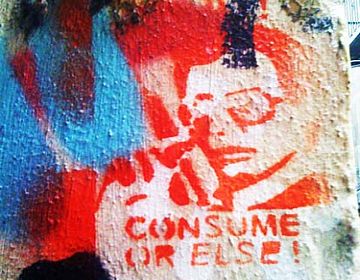
Consuming Other Cultures

Schwartz continues:

Preferring to stay put is practically disreputable in a cultural climate that prizes mobility, haste, multitasking and optimum consumption of sights, sounds, and experiences. An economy rooted in the culture of greed must place a premium on consuming rather than producing anything, even experience. . . . To keep the whole machinery running and growing, we need to consume other cultures at the great mall of travel, and we grow bloated on them.

Ah, yes, not the side of spiritual travel at which most of us would like to take a look. We ponder the environmental affects of air travel, the good and the bad of tourism economies throughout the world, but rarely the personal implications of our addiction to new experiences.

The way in the West is certainly to go out and consume rather than sit, ponder, and produce.

My drive to see the world and experience other cultures took me to Zambia all those years ago, but was it also the desire to escape from myself? Maybe there was a deeper lesson for me in the middle-of-nowhere bus drop than I realized.

Do you agree with Schwartz’s negative interpretation of travel? Share your thoughts below.

Spirituality
 

About The Author

Christine Garvin

Christine Garvin is a certified Nutrition Educator and holds a MA in Holistic Health Education. She is the founder/editor of Living Holistically...with a sense of humor and co-founder of Confronting Love. When she is not out traveling the world, she is busy writing, doing yoga, and performing hip-hop and bhangra. She also likes to pretend living in her hippie town of Fairfax, CA is like being on vacation.

  • http://caffeinatedtraveller.com Cate

    Thought provoking, I wonder if you were to go back to Zambia now would your experience be similar or different? I think there is a tendency toover-romanticise travel because the reality appears negative and nobody wants to hear about the negative.

    I know that when I travelled around Europe at 19, by myself, I found it more challenging than I’d expected and often wondered why I was doing it. But if I’d stopped then and never travelled again I would not be the person I am today. Yes travel has negative aspects to it, I absolutely loathe airports: check-in procedures, annoying airline rules, and the waiting. While I still need to learn patience it would never stop me from travelling somewhere new. Personally I don’t view travel as a spiritual experience. If I’m seeking spirituality I would go to a monastery or specific place.

    I see travel as about personal development. Some people attend classes with mentors and life-coaches, others seek it through sports or in their careers, but I see the world — both positive and negative, its challenges and annoyances — like a mentor. I’ve learned more about myself and people than I would have by staying at home.

    Not everyone is suited to travel and not everyone is comfortable staying home. But everyone is entitled to their opinion on travel.

  • http://www.posatigres.com Sarah

    Great, great article, Christine. I think there is a lot of truth to this, and I think a lot of times the way we talk and think about travel verifies this to varying degrees. The way we talk about travel is very much the way a big game hunter might talk about bagging a lion – I “did this,” “saw that,” “ate this,” “climbed that” – most of the talk between travelers is sharing trophies, be it trophies that symbolize surviving a mugging or that symbolize getting “inside” a particular culture. There’s a lot of this talk in language learning as well – I “got” French, Spanish, Portuguese, etc.

    Sometimes it all seems incredibly shallow to me. I really felt this in Borneo. There was this competition to get further up the river, further into where the “authentic” tribes lived, to go see this nature reserve and that and this giant flower, and it felt like, really, what is the virtue in this? It is very much the privilege of the (comparatively) wealthy traveler to “experience” the world – but ultimately is it just another form of consumption?

  • http://www.kaleidoscopicwandering.com JoAnna

    I think travel is a matter of perspective. It’s not all peaches and roses … but neither is the world. I think that’s what makes it a fascinating place and travel a fascinating hobby / past time / interest.

    There are things about every place I go that I despise, but without taking into account the little details that really get under my skin – the harassment, the smells, the street hawkers that won’t leave me alone – I have nothing by which to define a complete experience. All the wonderful things we encounter on our travels are countered by miserable things, but it is everything together that defines the full travel experience.

    I don’t think it’s selfish to travel. I think people learn and grow by traveling and can therefore better understand, appreciate and define the world in which we live.

  • http://meganahill.wordpress.com Megan Hill

    The bus story definitely pulled me in to this piece!

    Schwartz’s book sounds fascinating. It’s so interesting to hear from someone who really seems to hate travel. It’s a perspective you don’t often hear about this subject.

    What really struck me was the quote you pulled about consuming other cultures through travel, and how she paints that was a way of participating in the sickeningly bloated culture of consumption. I’d never really viewed myself as buying into the consumer culture–which I despise–through my travels, but she definitely has a point. I’d always viewed myself as being deliberately outside of the consumer culture–as much as that’s possible, at least–and my travels as being a part of that worldview. I don’t go to casinos or go on cruises and generally avoid chains, kitschy tourist traps, souvenirs, etc. But man, she really opens up a whole new aspect of the dialogue here–just with that one quote. I was disappointed the Boston Globe article didn’t elaborate on that, and I have a feeling it’s not elaborated on in the book because it really brings up a whole new topic than what her book appears to be about.

    Can we travel without being greedy consumers, even if what we’re consuming are non-material sights, sounds, and experiences? Is this problem inherent in traveling, and therefore unavoidable? Is this even a bad thing, or is it creating a new culture of consumption, one rooted in the spiritual rather than the material? What does that even mean? Yikes!

  • laurine

    It’s funny because the quote puts the finger on the reason I go back and forth on BNT so much, as in if I like it or not. It does something to travel I’m not sure I like by virtue of existing, encouraging constant updates and novelty. It doesn’t give me perspective as much as it encourages the same perspectives to replicate over and over again: political correctness, how great it is to be free of those people at home who live like you used to, and how much crazier party time can get if you go somewhere else. It feels like I’m being forced to attend my first year poly sci class and meet the professor kegger in perpetuity sometimes: bland and not nearly as edgy as it’s trying to be, despite the proliferation of irie Che Guevera tshirts and guitars.

    But hey, All things go.

    • http://www.ianmack.com Ian MacKenzie

      I’m not quite sure if that was a criticism of BNT or not… I personally believe BNT does not replicate the same perspectives, but tries to constantly challenge them. Sometimes this even means contradicting articles with others. The end result is to reconsider the notion of “perspective” itself.

  • http://www.holisticwithhumor.com/ Christine Garvin

    Thanks for your comments, everyone. I think this piece brings up a lot of different questions (at least it did for me), including points each of you touched on: (Cate) our travels become a large part of who we are and our worldview and we would be different people without them; (Sarah) the bragging or “I’m better than you because I’ve seen/done more than you” mentality that goes with traveling like pubs go with expats; (Megan) the consumerist system of constantly needing more, even if that more is experience (and you bring up a lot of other good questions too!), and finally (Laurine) the question if BNT epitomizes what the author is saying.

    I don’t really have any answers to these questions other than to say I think they are all worth contemplating for ourselves, and to engage with our own views and lenses of the world. I didn’t note this in the piece, but the author said she is very much into structure, which is a personality trait we do not all share. For her, it sounds as if inspiration comes from staying in place; lucky her, she doesn’t need to see the world, and therefore “consume” it because she is set at home. I, for one, am not that way. I get inspired through experience. I’ve tried to fight it in the past, to stay still, but it doesn’t work for me. I need a balance, which includes staying still sometimes (in mind and body), and moving like crazy at other times.

    And so I try and stay as conscious of my impacts as I move, which is actually the whole point of sitting still anyway (to be conscious of the now).

  • Penny

    We consume whenever we do the things necessary to sustain life — eat, drink, find clothing and shelter. How did this necessary endeavor become wrong — become labeled “consumption” as if it were bad? Traveling costs less than staying in one place (when you figure in rent and all other costs of living per day). I agree that we should reduce our footprint on the planet, but I don’t agree that there is any moral distinction between living in one place or living in several places from day to day. Further, this article seems to reduce relationships with unfamiliar people in new cultures to a kind of consumption of human connection. I don’t buy that either. One cannot be intimate with all of the folks on a planet or even in one’s neighborhood or workplace, but that doesn’t mean that everyone we encounter outside our circle of family and friends is therefore “entertainment.” Whether we stay home or move about, most of the people we meet will not be friends, family or lovers but will remain outsiders. The context of travel doesn’t change the constraints of being human, nor does it cause them. We might as usefully argue whether there is special virtue to being farmers versus city folk.

  • http://matadornights.com Kate

    Interesting article, Christine. Lots to think about here. I hear people objectifying and generalizing others through their travel experiences sometimes and this is how this article rings especially true to me.

    When I hear statements like “The men here are x,” or “The women here (or there) are so concerned with y,” I feel that certain travelers are using limited experience of another culture to feel that they have understood it – gotten it under their belt in much the same was Sarah talks about above.

    It depends on the person.

    And yes, there is a lot of anxiety and misery in travel. It shakes us up and gives us at least as many missed opportunities to see things differently as the ones we percieve.

  • http://www.RollingRains.com Scott Rains

    Well-written and provocative! Great to see our self-congratulatory illusions challenged by someone writing from personal experience. The dialogue in Comments is fascinating too.

    As someone who has spent a lot of time in monasteries for my doctoral work and publications in Monastic Studies I certainly relate to travel as spirituality (and monasteries as WORK – but that’s my personal quirk.)

    The first blog post I ever wrote included:

    This site is about seeing. The topic may be travel but the “revolve” is the-seeing-that-transforms… The seeing I mean here is the seeing of mindfulness…But if this site ever loses grounding in persons – substituting statistics or truisms for real travelers – then it will have betrayed the author’s purpose.

    That purpose is pilgrimage.

    Responders’ stories of competitive consumption of language, culture,or waypoints on a map certainly illustrate consumerism but isn’t part of the reason we travel exactly because it gives us to chance to ask ourselves the question, “Why do we travel?” Grappling with what is such a core impulse in many of us reveals the superficial pressures to to travel but also illuminates our inner landscapes and gives shape to our life projects.

    Recently at Solo Travel I was asked to talk about some of these topics from the perspective of travel with a disability (http://www.wanderingeducators.com/best/traveling/solo-travel-disability.html):

    There’s a paradox to solo travel. It is there in the value we call inter-dependence which forms the heart of disability culture.

    Unfamiliar environments remind us that even the simplest activities require us to rely on others. Environments that were never built for people with disabilities in the first place open that level of awareness to us permanently.

    Solo travel, from the outside, looks like the ultimate in asserting independence.

    Yet we know from the inside that it is really a way of deeply connecting with persons and place. By paring travel down to the essentials the solo traveler feels the consequences of their individual choices with a new immediacy. Solo travel is a lot like living with a disability.

Spirituality →

Ian MacKenzie brings us Taoist master Casey Kochmer from the Big Island of Hawaii and...

Spirituality →

Every day, we are inundated with more news and technology that "disproves" everything...

Culture + Religion →

Travel gives us a chance to let those protective walls come crumbling down around us.

Spirituality →

Legendary vagabond and author, Ed Buryn speaks on the fundamental importance of travel.

Spirituality →

Experiencing the bustle of a new place is one of the biggest reasons we travel. But even...

Spirituality →

In this final installment of a three-part essay, the Hero’s Journey concludes with...

Spirituality →

In part two of a three-part essay, Daniel Harbecke shows travelers how to find their way...

Spirituality →

In this three-part essay, Daniel Harbecke explores our potential for inner travel through...

Spirituality →

A shortlist of canonical Eastern thinkers to help inspire the inner wanderlust in us all.

Spirituality →

Inner travel helps you learn more about yourself - and just as importantly, other...

Spirituality →

The history of philosophy is a great big guide for travelers.

Christianity →

Venture on your own pilgrimage to these sacred cities around the world.