Alaska has a way of stripping the word “outdoorsy” of any self-congratulation. About 20 minutes north of downtown, the city of Anchorage gives way abruptly, replaced by the sheer scale of the Chugach and Talkeetna ranges’ 8,000-foot peaks, the long pull of Highway 1 into the Mat-Su, and a cold, clarifying sense that human comfort has a short reach here. It’s the kind of landscape I’d been imagining since 8th grade, when I’d burrow in my suburban Denver basement for hours playing 1080° Snowboarding on Nintendo 64, Blink-182 or Less Than Jake on the 3-disc changer, dreaming of halfpipes, big lines, and the glide-or-die life taking place an hour up Interstate 70. Even back then, the mythology stretched past Colorado. In Summit County lift lines, Alaska came up like a higher calling — the place where riders like Jeremy Jones were pioneering spine battles in Valdez and Mike Hatchett’s Totally Board film series was redefining action cinematography in the peaks outside Juneau.
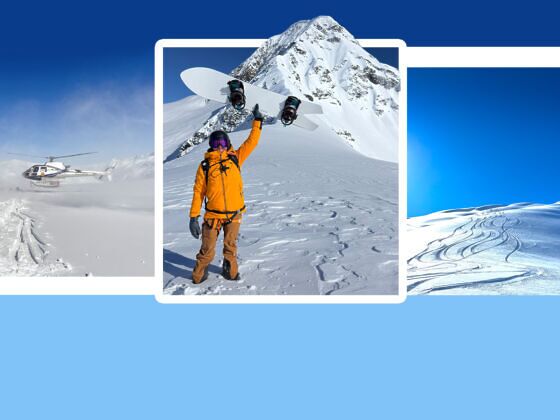
Chasing Big-Mountain Dreams and Snowboarding’s Future in Alaska
In March 2026, nearly 30 years later, I finally got my chance to follow that vision north. The question wasn’t only whether Alaska would live up to the version I’d built in my head. It was how close an ordinary snowboarder could get to the big-mountain dream that had been pulling at me since my teenage years.
Rubbing shoulders with a dream
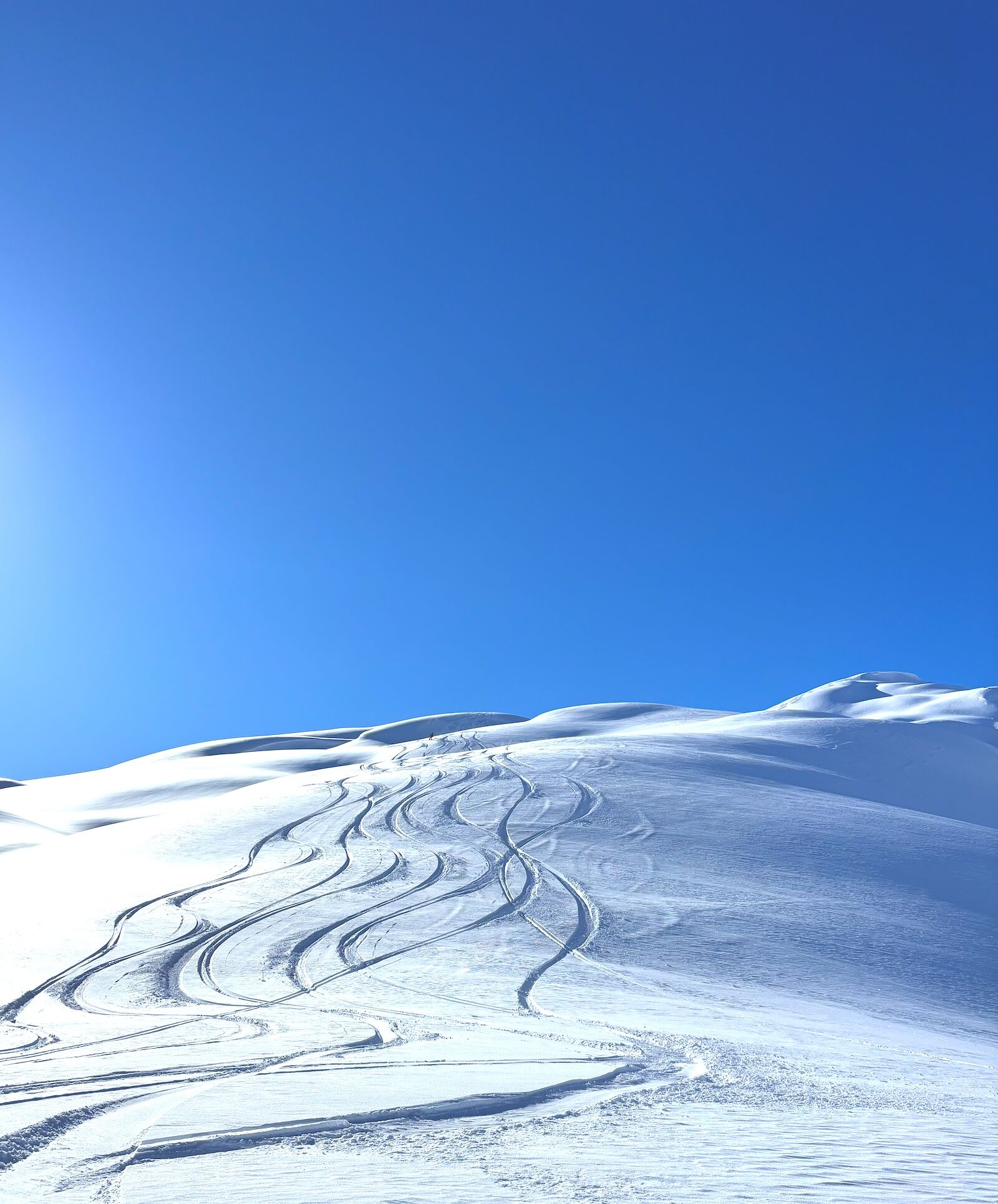
Photo: Tim Wenger
Pretty darn close, it turned out. At least, in terms of physical distance. On my first overnight at Alyeska Resort, I sat at the community dining table inside the hotel’s Sakura restaurant with the ski writer Melissa McKibbon. Across from us we heard chatter of the big-mountain-focused Natural Selection contest tour, apparently happening here, now, with the pro athletes, judges, and crew all staying in the same hotel as us. In a chance encounter we’d sat across from Grete Eliassen and Dion Newport, pro skiing veterans serving as judges at the freestyle backcountry competition. Night one and here we were, downing Nigiri with someone I’d once watched perform at the X-Games.
We were scheduled for a heli-ski day with Chugach Powder Guides the following morning, and spent dinner prying our new friends for intel on conditions. The weather looked good as CPG picked us up outside the hotel the following morning morning.
This wasn’t my first time heli-skiing, but it was by far the most efficient. On a typical day CPG runs multiple four-person groups clustered by ability and experience, with one guide each. The company operates up to four A-STAR B3 helicopters. The small group size means guests are in a single cabin with the pilot and guide as they soar above the peaks, seeing what the guide is seeing as they scope lines in real-time. The smaller birds also allow for great maneuverability – several runs we took included landing and strapping in atop rocky corniced ridges that promptly dropped into massive fields of open powder.
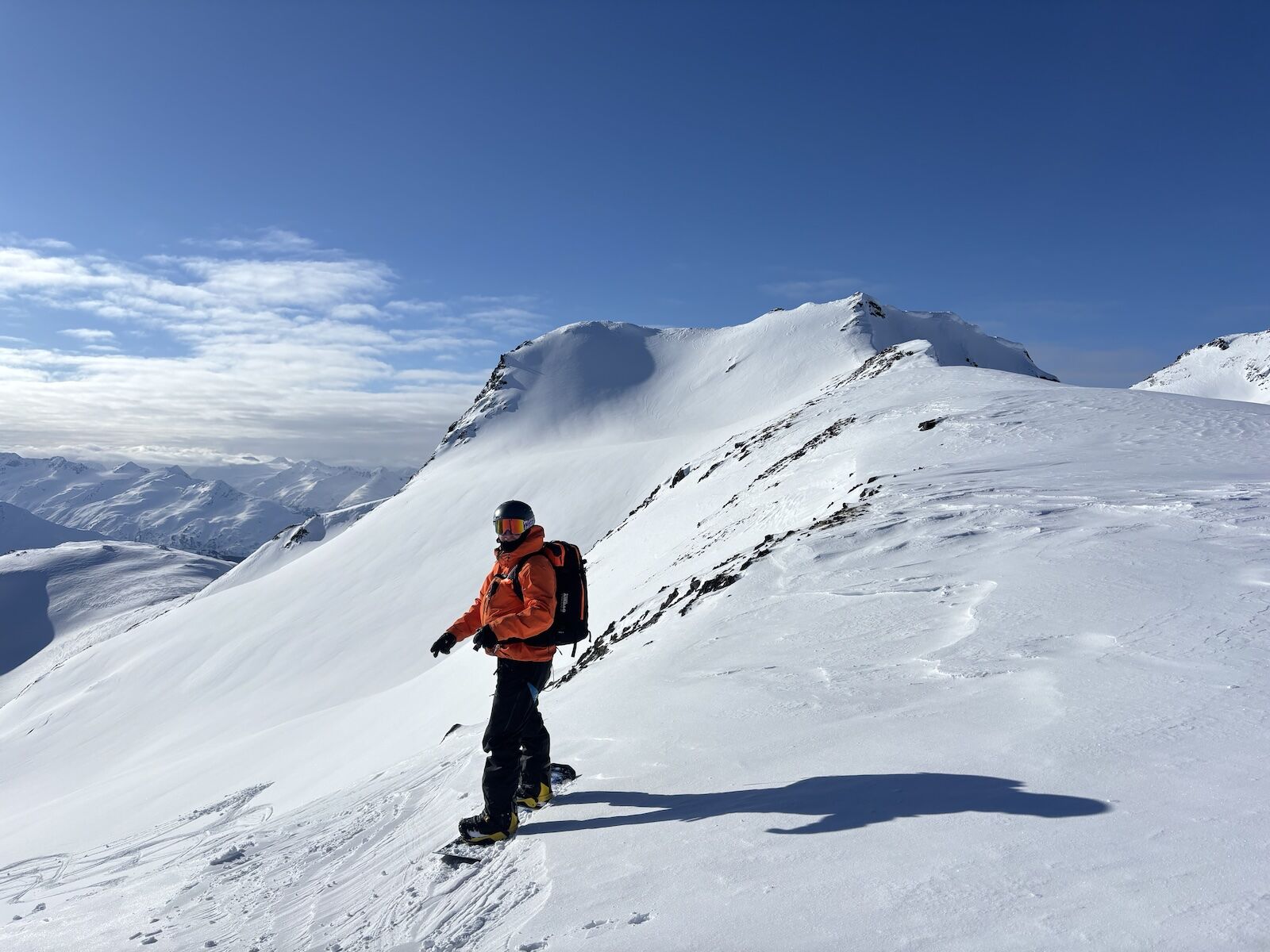
Our guide, calling lines as he sees them. Photo: Tim Wenger
Our group consisted of the two of us along with a California-based ski patroller and his father. each of us experienced backcountry skiers or riders. This put good terrain and fast laps on the table. Avalanche conditions were “moderate,” which eliminated spines and other long steep pitches where “sluff” accumulates rapidly, but it also opened up the possibility of riding the big northern and eastern faces that the Chugach range is known for. I was on my swallowtail Korua Dart snowboard, ideal for carving lines with long, arcing turns as well as promptly reacting to the natural rollers and nuanced terrain of the Alaskan high country. Starting in the far east of the operator’s tenure, we lapped 2,500-foot runs down some of the most pristine terrain I’ve ever experienced, chasing our passion swiftly downhill towards the frozen current of the Cook Inlet. We pushed a little harder with each run. The temperature never topped 20 degrees but the sun shined high and unobstructed, loosening the snowpack’s top layer and making for perfect turns. As we gained the trust of our guide, Zach, he began to widen the zone of descent, adding terrain features that allowed the willing to boost from the mountain only to touch down to a spray of cold powder across the face.
We took nine runs totaling more than 18,000 feet of vertical descent. All this happened in about five hours, including a high-alpine lunch break of sandwiches, charcuterie, and coffee. Prior to taking flight the CPG staff familiarized the day’s guests with the backcountry gear we’d be using and ran through a beacon rescue drill to make sure everyone felt comfortable using the emergency transponders. The day moved quickly and was well-executed. Another unique aspect of CPG’s operation is that most of its guests are staying at the Alyeska Resort, making it easy to grab a happy hour with those in your group after returning.
Riding the inbound steeps at Alyeska Resort
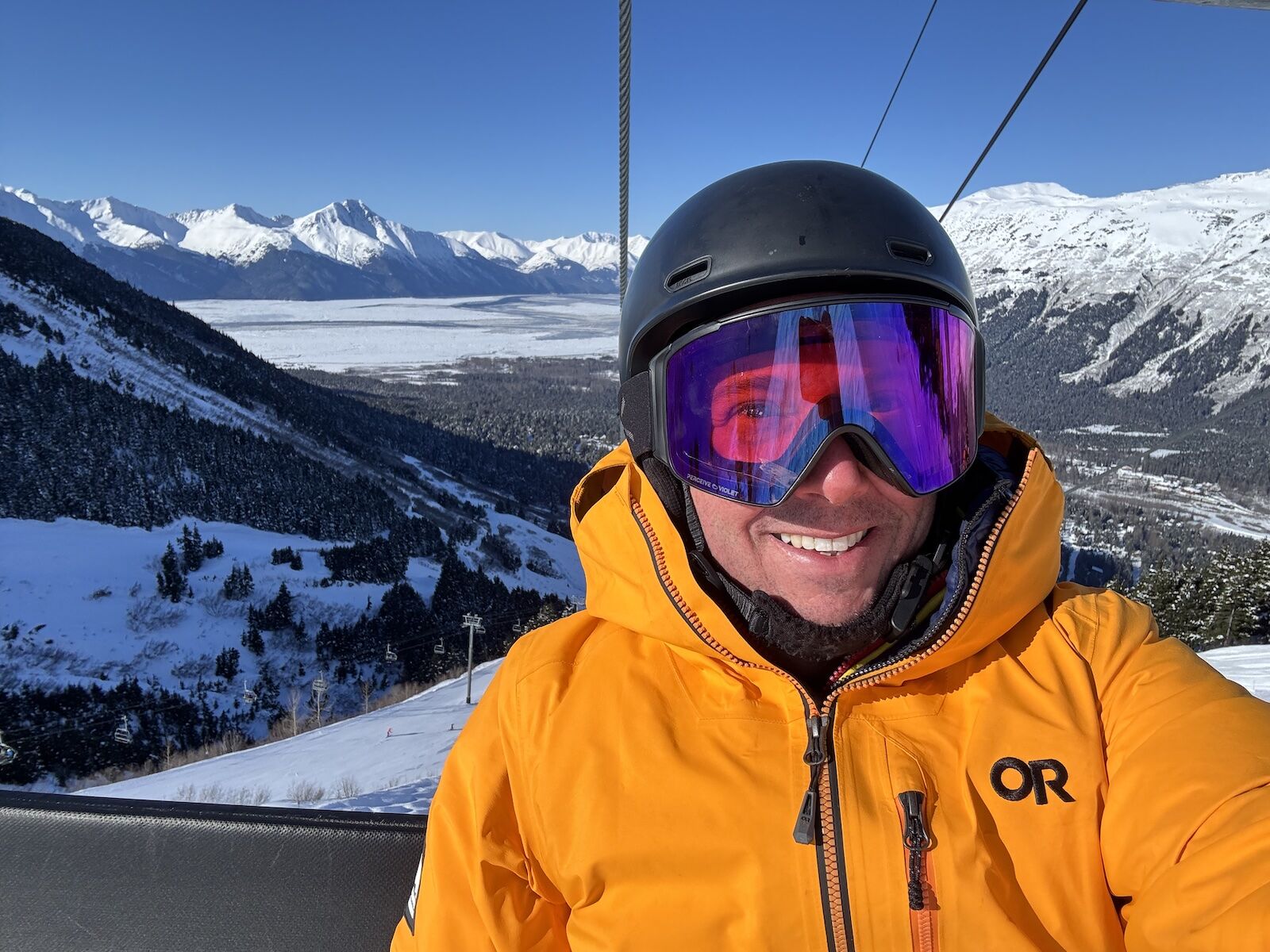
Views riding up the Glacier Bowl Express. Photo: Tim Wenger
Both the resort and the heli-operation are based in the town of Girdwood, Alaska’s only true resort town. Alyeska itself came into clearer focus the following day. Heli-skiing with Chugach Powder Guides had delivered the steep faces and long powder descents that allow a rider to let go and live in the moment, completely at the mercy of their surroundings. The resort’s hotel provides walk-on access to the tram from 10:30 AM each morning, though it’s possible to get on the chairlifts as early as 10 AM in certain cases. Also onsite is the Alyeska Nordic Spa, which offers a series of hot and cold pools, as well as saunas and a relaxation cabin, in true Scandinavian fashion. Hotel rooms run from just over $200 per night.
Alyeska’s inbounds terrain sits in dramatic country, with steep pitches and nearly 700 inches of annual snowfall. Riding the tram from the base of the hotel put us at the top of some of the gnarliest inbounds lines in North America. Over two days at the resort I rode two gated runs on the iconic “North Face” of the resort, Ragdoll and Pandora. Each is steep and technical, mixing open snowfields up top with glades on the lower half of the run. Beyond those two runs we spent much of our time lapping the Glacier Bowl Express, with its access to long, steep groomers that allow a rider to really open up and lean into their turns.
My time in Girdwood showed me one side of Alaska’s snow culture. But a couple hours north in the Mat-Su, my perspective on the dream I came to fulfill began to shift.
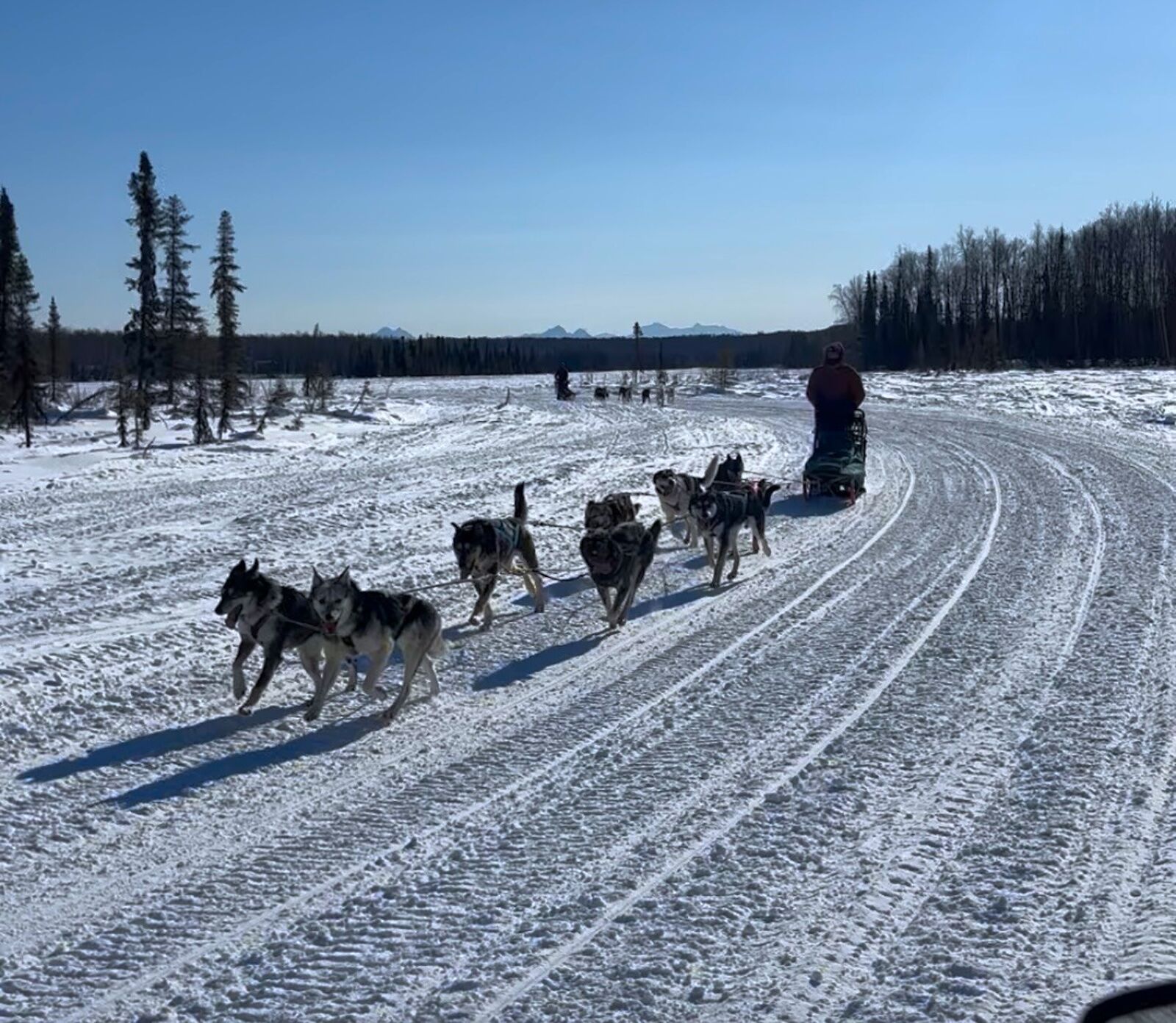
Several sled dog teams passed us during the snowmobile tour. Photo: Tim Wenger
Here, I traded chairlifts and rotor blades for a snowmobile with Snowhook Adventure Guides, covering winter terrain the way many Alaskans do. In lieu of traditional sidewalks, roadways in the Mat-Su tend to be sandwiched by snowmobile tracks, occasionally darting sharply up a roadside hill when the rider blazing the season’s path seemingly couldn’t resist the chance to slay a fresh pow turn. I embarked on a three-hour snowmobile trip with Snowhook, an activity that, as a splitboarder in Colorado who prefers hoofing up the hill, I’ve often deemed unnecessary. But getting onto a “snow machine” myself – to use the Alaskan parlance – seemed the only true way to experience the region as a local does. At multiple points along the ride, teams of sled dogs passed by us on the trail, the first time I’d seen the sport in action.
Brat-bratting across frozen lakes and on tight, winding trails through the surrounding pine forest opened another window onto the same geography I’d come to ride, revealing access as its own kind of local knowledge. It didn’t hurt that, when the clouds parted in the late morning, we could see Denali in the distance, its jagged massif easily identifiable even from some 200 miles to the south. By then, the trip was becoming a broader look at the different ways people here reach snow — by helicopter, by lift, by skins, and by sled. That shift set the stage for what I’d find at Skeetawk, where the most lasting part of the journey had less to do with my own ambition than with watching the next generation come into its own.
Passing the dream to the next generation
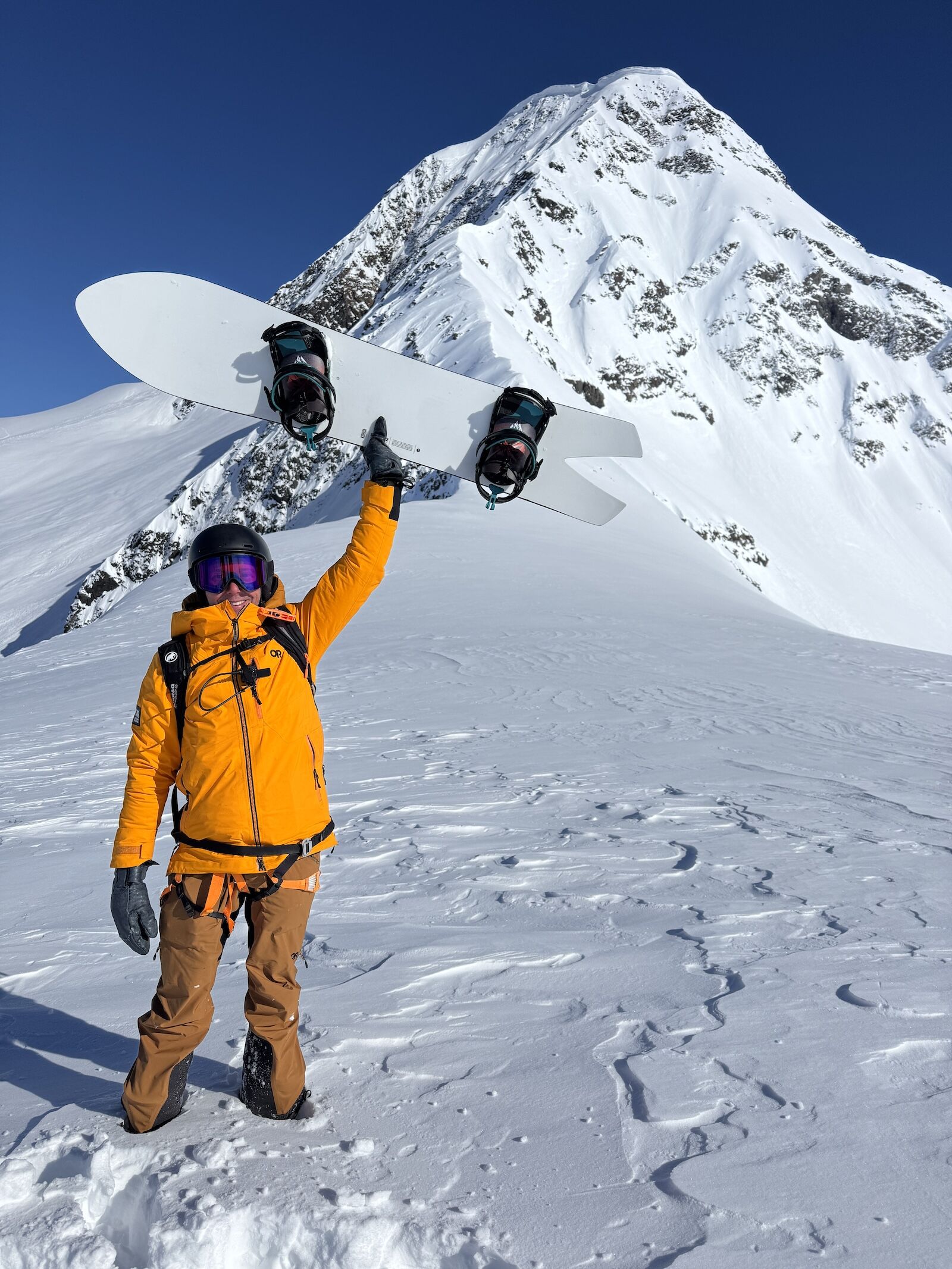
The stoke is real with Chugach Powder Guides. Photo: Melissa McKibbon
From a trailhead on Hatcher Pass, I donned skins on my splitboard and worked up the slope until I was high above the lift-accessed boundary of Skeetawk, a small ski area in the Mat-Su that opened in 2020 to quell local demand for more winter recreation. After about an hour on the ascent, I transitioned my splitboard into downhill mode and took off down the slope toward treeline and the resort below. The tour up and down satisfied another part of my urge in the Alaskan backcountry, but it was what I discovered within the ski area’s purview that stuck with me on this day.
I entered the lift line for the resort’s sole chairlift, a three-person chair bought secondhand from New Hampshire’s Gunstock Mountain Resort, that accesses 300 vertical feet of mostly beginner and intermediate terrain. Though currently small, the resort is in the process of expanding, and will open a gondola in late 2027 to access much of the area I’d just ridden down, currently accessible only by touring up or by purchasing a pass to ride in the ski area’s snowcat.
“Do you see that over there?” a 10-year-old snowboarder asked me as we rode up the three-person chairlift at He pointed to a set of slopes just north of the ski area’s current boundary. “That’s where we’ll be able to go in the future.”
The excitement in his voice was palpable, amplified by his friend on skis who proclaimed, “I can’t wait until they put a lift in there.”
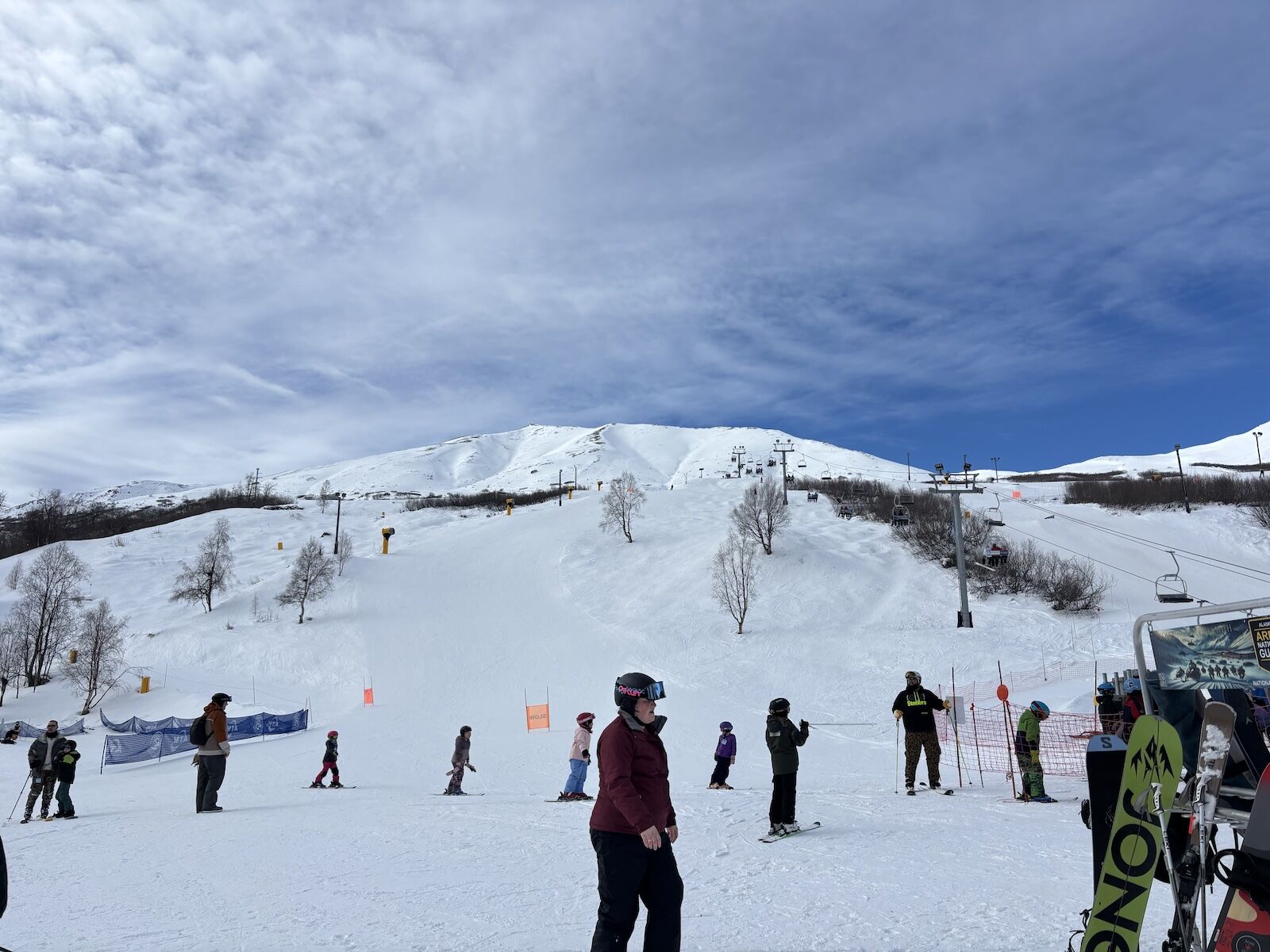
Photo: Tim Wenger
Excitement permeated Skeetawk, from the top of the lift to the canvas yurt that serves as its day lodge, ticket office, and de facto pub. In a sport where major resort conglomeration and $200 lift tickets are increasingly the norm, Skeetawk, where a lift ticket costs $39, represents a different future. One where growth is fueled organically by the local community rather than deep-pocketed investors. Equally important, one where young grommers like the two I met on the lift can gain confidence and find the same love for the sport that I’d found as a kid. That invisible line between Anchorage and the beyond harbors hope for the future of the sport I love so dearly.
The best thing about Skeetawk isn’t that the tickets are cheap or that the backcountry access is easy. The best thing is that there are kids on the mountain, and lots of them. The picnic tables outside the yurt were lined with families enjoying a Sunday together. The trails were full of dads teaching toddlers how to pizza, and grade school friends loudly pushing each other to conquer the next trick or the next turn, “OOOHS” and “AWWWWs” regularly emanated from the mouths of onlookers after an inevitable wipe out. The resort’s vibe is unmistakably positive. As for me, I had come to Alaska on selfish terms. I’d wanted to find my own “last frontier,” to see if I could hack it in the mountains that made the careers of my snowboarding heroes. I’d boarded a helicopter and a tram, as well as strapped on a pair of skins to see what I could find. By the end of the trip, though, that didn’t matter so much as hearing hoots and hollers and high-pitched laughter ricochet off the crags of Hatcher Pass. The echo that returns to the base of Skeetawk’s aging triple chair is all the proof I needed that my dream is alive. 