Photo: frank_peter/Shutterstock

A Guide to the Chicago Skyline Through 28 Buildings That Define It

Chicago Travel Art + Architecture
by Sarah Boles Apr 7, 2026

Chicago’s skyline has not always been filled with gleaming skyscrapers. The Great Chicago Fire in 1871 wiped out much of the city, displacing roughly one-third of its residents. Though a tragedy, the fire led to improved building materials and fire codes, which paved the way for the age of the skyscraper.

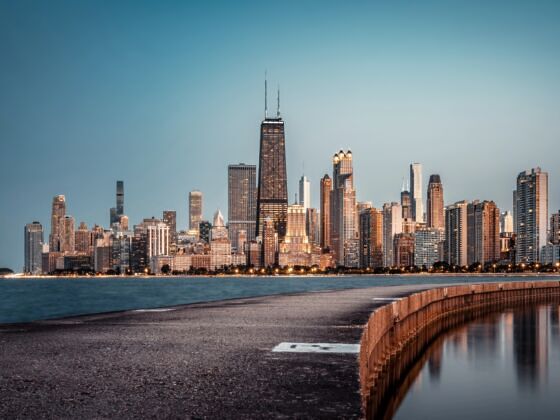
The skyline you see today reflects more than a century of architectural styles, building materials, and evolving building heights.
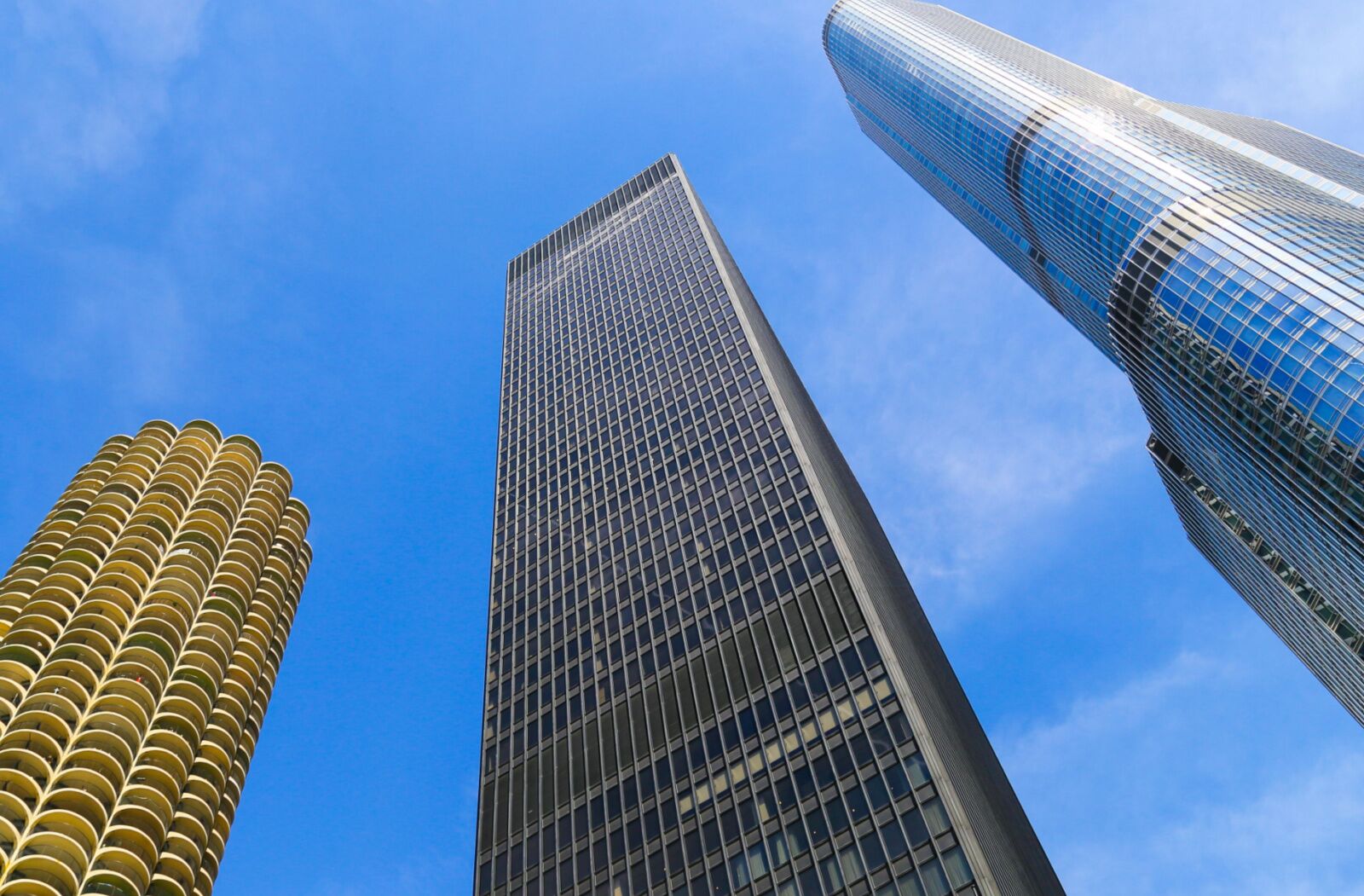
Impressive from any angle, the Chicago skyline is best viewed from Lake Michigan. Take an architectural river cruise on the Chicago First Lady or a Wendella boat about an hour before sunset to watch the sky turn pink and orange behind the skyline, then see the city shift from day to night as you head back along the Chicago River.

If a boat cruise isn’t your thing, head to the Museum Campus for a view along the shoreline between the Shedd Aquarium and the Adler Planetarium. Or you can go to one of Chicago’s two public observation decks for 360-degree views stretching more than 50 miles.

No matter where you view the Chicago skyline, you’ll want to familiarize yourself with its most prominent buildings. It’ll help you plan your Windy City adventure and impress your friends with your in-depth knowledge of the historic city.

North Side Skyline | Downtown Core | South Loop and Grant Park

North Side Skyline

This section covers the northern edge of downtown, where the skyline meets Lake Michigan. It includes some of the most recognizable buildings along Michigan Avenue and the river.

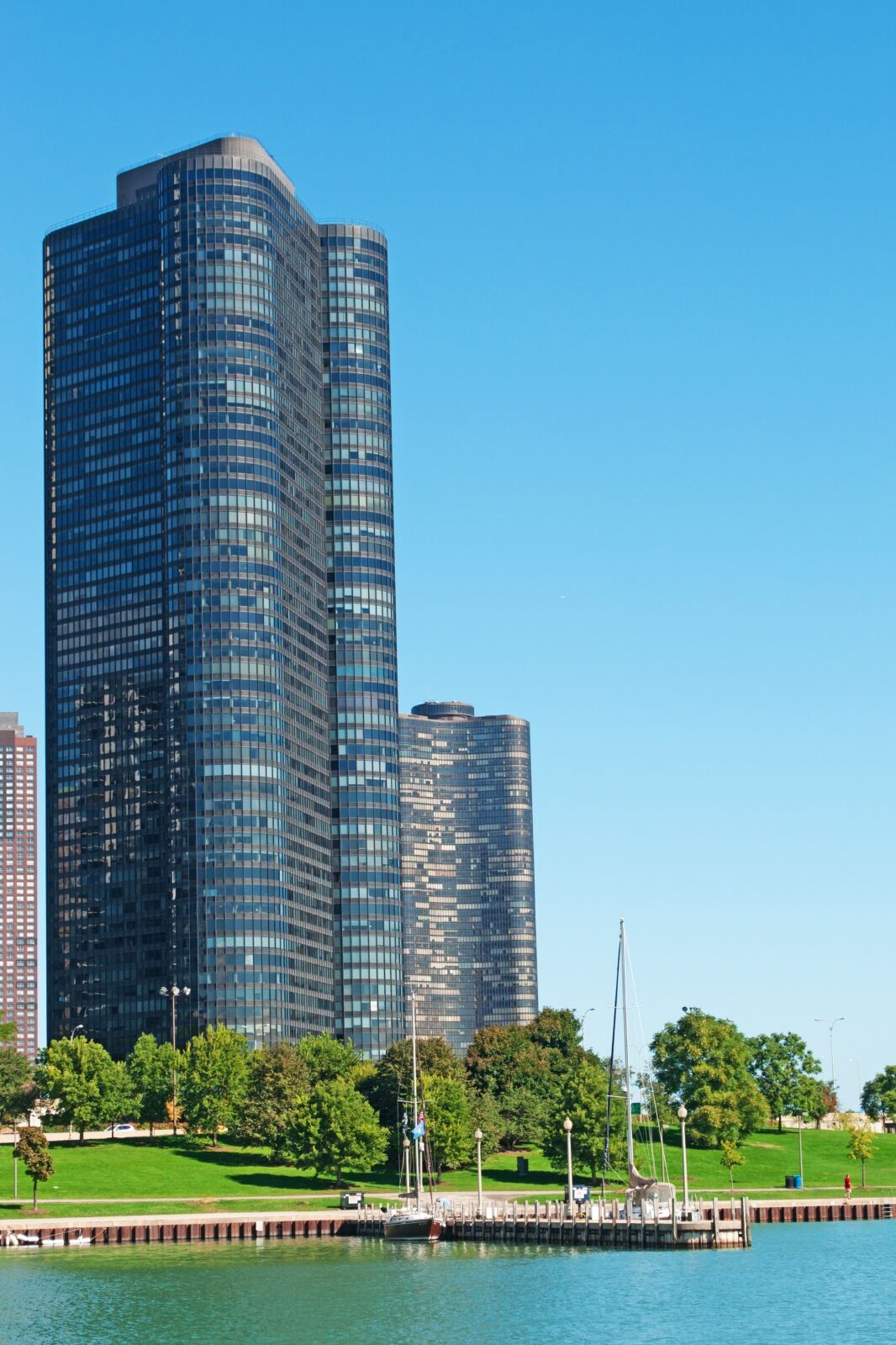
Lake Point Tower

the Lake Point Tower Chicago

Photo: Naeblys/Shutterstock

  • Where: 505 N. Lake Shore Dr.
  • Floors: 70
  • Height: 645 feet
  • Also known as: Lake Point Tower Condominium
  • Fun fact: It’s the only skyscraper east of Lake Shore Drive

Lake Point Tower is well known for its tinted glass framed in gold metal that reflects sunlight off Lake Michigan, giving the building a golden glow. Its curved shape is said to have inspired the Chicago-born designer of Dubai’s Burj Khalifa, the tallest tower in the world. Lake Point Tower has an upscale restaurant on its top floor, Cité, which features unbeatable 360-degree views from its sky lounge. It’s the perfect place to watch the sunset behind the Chicago skyline and witness the city come alive after dark.

400 Lake Shore

  • Where: 400 N. Lake Shore Dr.
  • Floors: TBD (under construction)
  • Height: 858 feet
  • Fun fact: This is the first skyscraper project on this site since the canceled Chicago Spire.

Located at the meeting point of the Chicago River and Lake Michigan, 400 Lake Shore is one of the most prominent new additions to the skyline. The development replaces the long-vacant Chicago Spire site and includes two towers, with the taller north tower rising to roughly 858 feet. Designed by Skidmore, Owings & Merrill, the project is already reshaping one of the most visible parts of the skyline from the lake. Once complete, it will add a significant residential presence to an area long defined by open views at the river’s edge.

AMA Plaza

AMA building chicago

Photo: Michael Rosebrock/Shutterstock

  • Where: 330 N. Wabash Ave.
  • Floors: 52
  • Height: 695 feet
  • Fun fact: This building was featured in the first episode of Ozark, as well as Batman: The Dark Knight.

Located on the Chicago River, the AMA Plaza is home to the Langham, a high-end hotel with two restaurants you won’t want to miss. Travelle serves upscale American seasonal breakfast, lunch, and dinner, while Pavilion hosts the popular Langham Afternoon Tea, starting at noon on weekends.

Trump International Hotel & Tower

  • Where: 401 N Wabash Ave.
  • Floors: 98
  • Height: 1,388 feet
  • Also known as: Trump Tower
  • Fun fact: Originally planned to be the world’s tallest building, it was scaled down after the September 11th attacks.

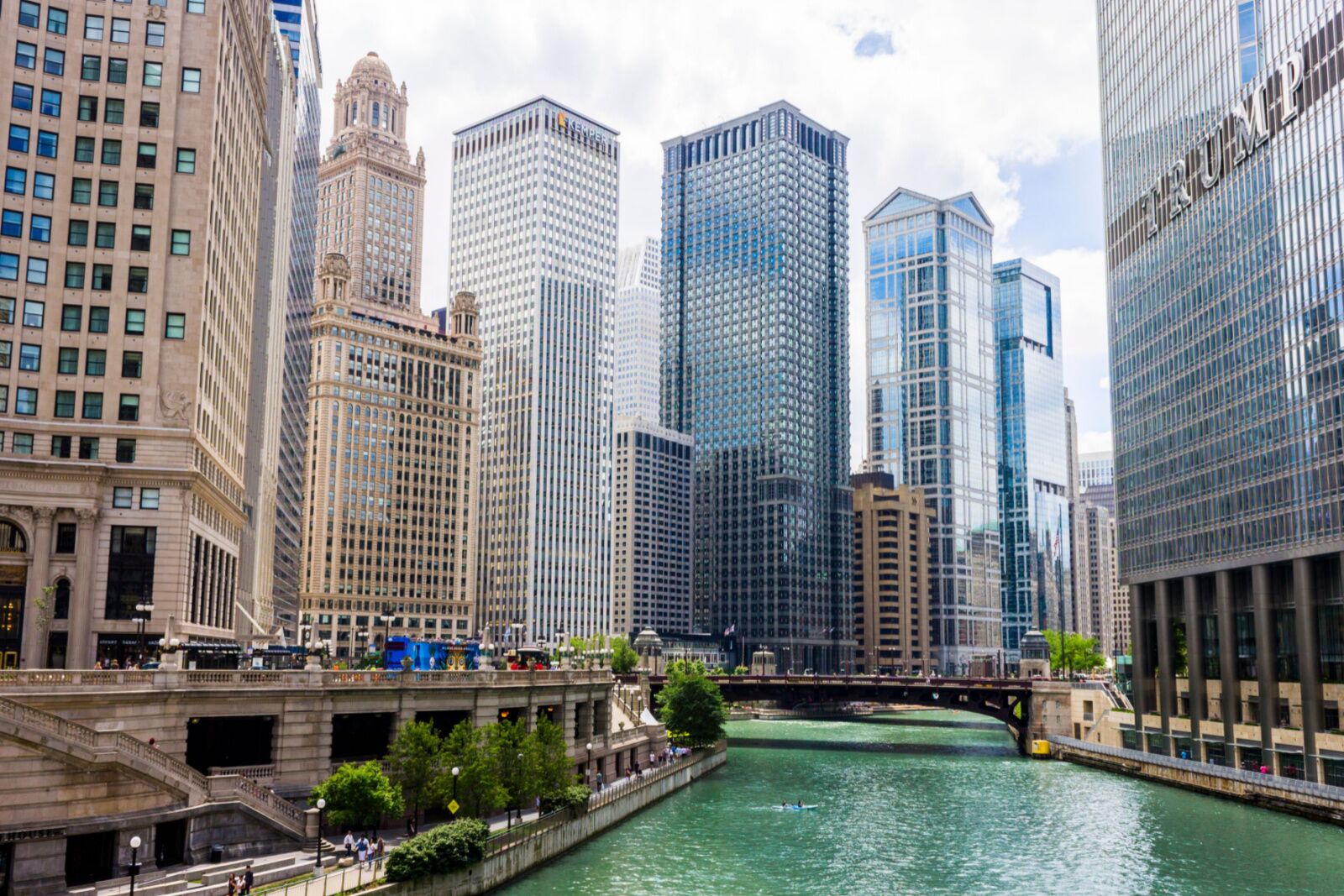
Built on the site of the former Chicago Sun-Times building, Trump Tower is on the north bank of the Chicago River next to the iconic Marina Towers (shaped like corn cobs). The tower hosts a hotel and condominiums, as well as great views of the buildings lining the Chicago River. Trump Tower was designed to fit in with and visually complement the surrounding buildings. It has a stepped, asymmetrical shape and stands out on the Chicago skyline. And yes, there have been periodic discussions about renaming the building.

875 North Michigan Avenue

360 chicago

Photo: Alex Cimbal/Shutterstock

  • Where: 875 N. Michigan Ave.
  • Floors: 100
  • Height: 1,128 feet
  • Fun fact: Park tower pioneered the use of x-bracing — using crossed, X-shaped bars to resist movement from wind.

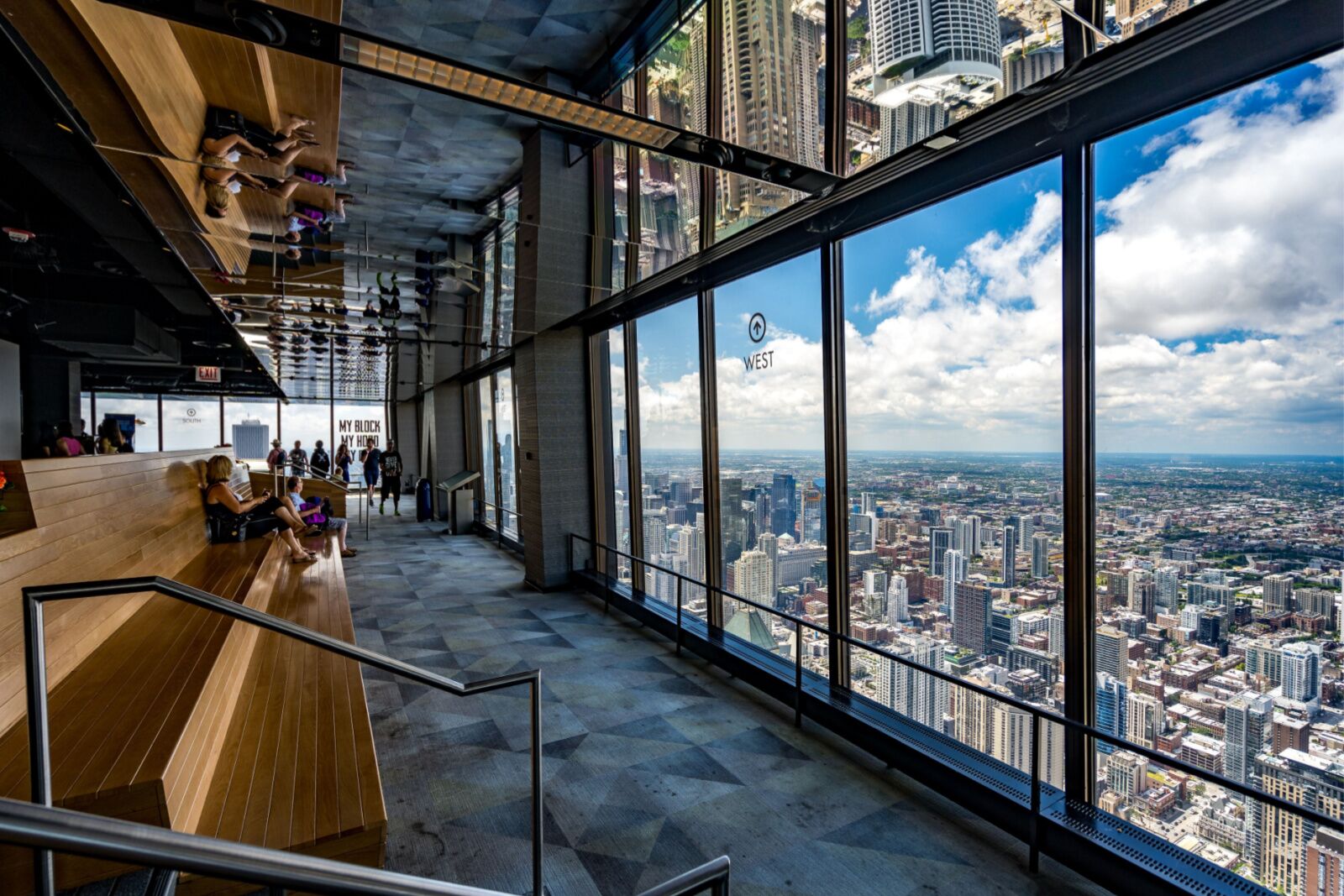
875 North Michigan Avenue, widely still referred to as the John Hancock Building, is home to one of Chicago’s two observation decks. 360 CHICAGO offers views of the Chicago skyline, Lake Michigan, and up to three states from its position on the 94th floor. The ride to the top takes less than one minute. 360 CHICAGO has an enclosed platform, called TILT, that leans riders out over Michigan Avenue from 1,000 feet above street level. You can also grab a drink at Bar 94, Chicago’s highest bar.

Water Tower Plaza

  • Where: 835 N. Michigan Ave.
  • Floors: 74
  • Height: 859 feet
  • Fun fact: It’s named after the nearby Chicago water tower, which is one of the few buildings to survive the Great Chicago Fire of 1871.

Water Tower Place is a vertical shopping mall with eight retail floors on the Magnificent Mile along Michigan Avenue. The skyscraper also houses a Ritz-Carlton Hotel and condominiums. It’s an important part of the Chicago skyline because it opened the Magnificent Mile to middle-income shoppers by bringing economically mainstream stores into an area long dominated by upscale luxury brands.

900 Michigan

900 North Michigan

Photo: Sorbis/Shutterstock

  • Where: 900 N. Michigan Ave.
  • Floors: 66
  • Height: 871 feet
  • Fun fact: 900 Michigan hosts everything from art installations to cooking classes and musical performances in the mall area throughout the year

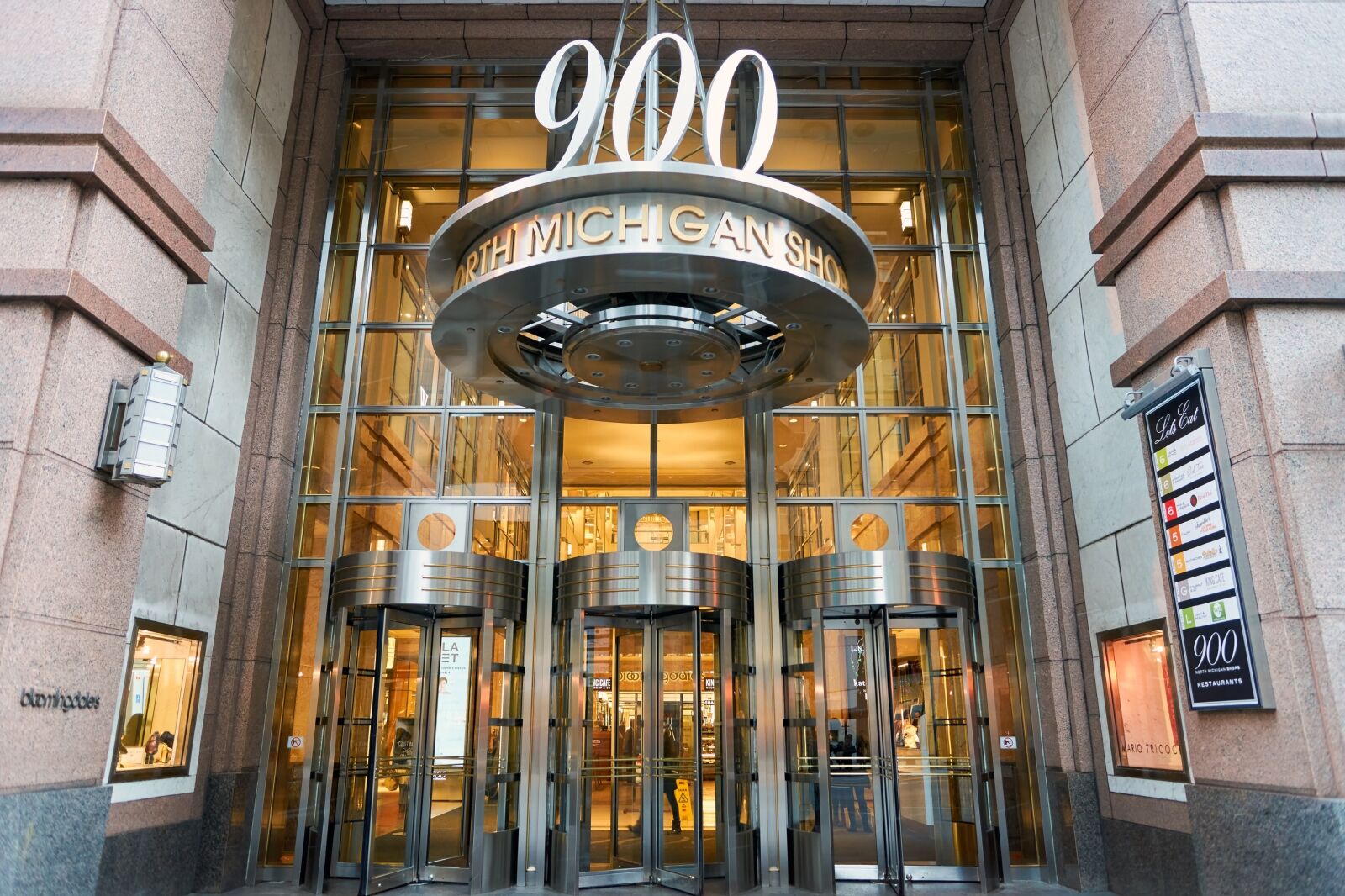
900 N. Michigan lights up the Chicago skyline with four rooftop lanterns that stand out at night along the Magnificent Mile. Inside the building is a Four Seasons Hotel and the 900 North Michigan Shops (a large, upscale shopping mall). The mall has a six-story atrium with luxury retailers, restaurants, and a TopGolf Swing Suite where you can do everything from working on your swing to playing zombie dodgeball.

Park Tower

  • Where: 800 N. Michigan Ave.
  • Floors: 70
  • Height: 844 feet
  • Fun fact: It is one of the taller reinforced concrete residential towers in Chicago.

Park Hyatt Hotel makes up the lower portion of Park Tower, while the upper floors house condominiums. Within the hotel is a fantastic restaurant – NoMI, a nod to its “North Michigan” Avenue location. The restaurant has three parts. “The Kitchen” offers upscale American cuisine and “The Lounge” is a sushi bar, wine cellar, and spacious bar. “The Garden” is an open-air terrace. If you’re looking for views of Chicago’s historic water tower, Lake Michigan, or the Chicago skyline, it’s the perfect place to enjoy a bite to eat.

Downtown Core

This is the densest part of the skyline, where the tallest office towers and historic buildings are concentrated. Many of Chicago’s best-known landmarks are clustered within a few blocks here.

Aon Center

aon tower chicago

Photo: Lyubov Timofeyeva/Shutterstock

  • Where: 200 E. Randolph St.
  • Floors: 83
  • Height: 1,136 feet
  • Also known as: Standard Oil Building, Amoco Building
  • Fun fact: The building was completely refaced at a cost of $80 million after Chicago’s massive temperature swings caused a chunk of marble to fall off the building.

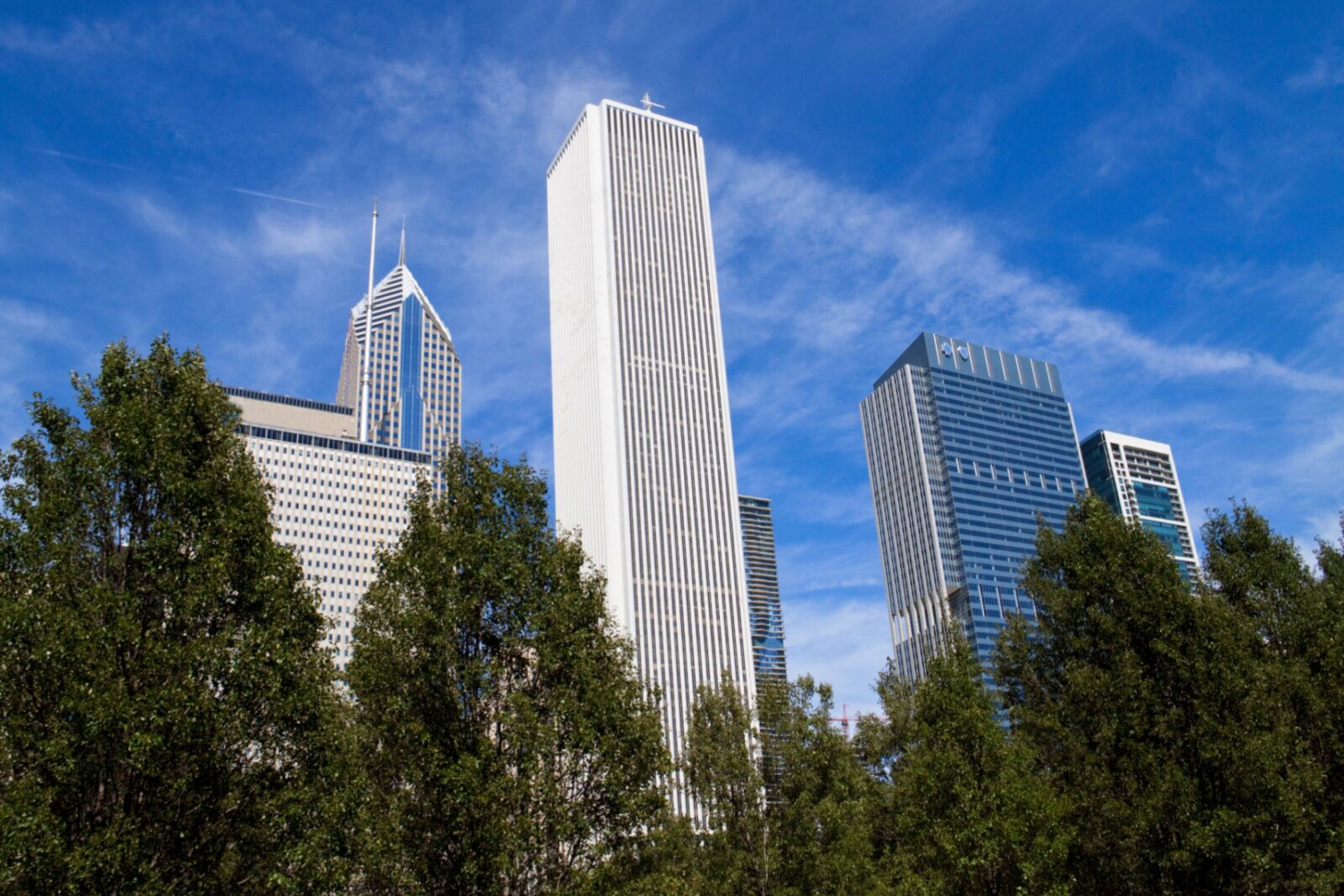
The Aon Center is one of Chicago’s tallest buildings and stands out for its simple, rectangular design clad in white granite. Completed in 1973, it was originally faced in marble before being reclad after panels began to crack and fall due to temperature changes. Today, it remains a prominent part of the skyline just east of Millennium Park.

Two Prudential Plaza

  • Where: 180 N. Stetson Ave.
  • Floors: 58
  • Height: 995 feet
  • Fun fact: The building and its plaza make a cameo in the 1994 movie Richie Rich.

As the sister skyscraper of One Prudential Plaza, Two stands out in the Chicago skyline thanks to its chevron-shaped setbacks and an 80-foot spire set on top of a 45-degree rotated pyramid.

Blue Cross Blue Shield Tower

Blue Cross Blue Shield Tower

Photo: Alexandre Tziripouloff/Shutterstock

  • Where: 300 E. Randolph St.
  • Floors: 54
  • Height: 744 feet
  • Fun fact: This building was constructed in two different phases across two decades.

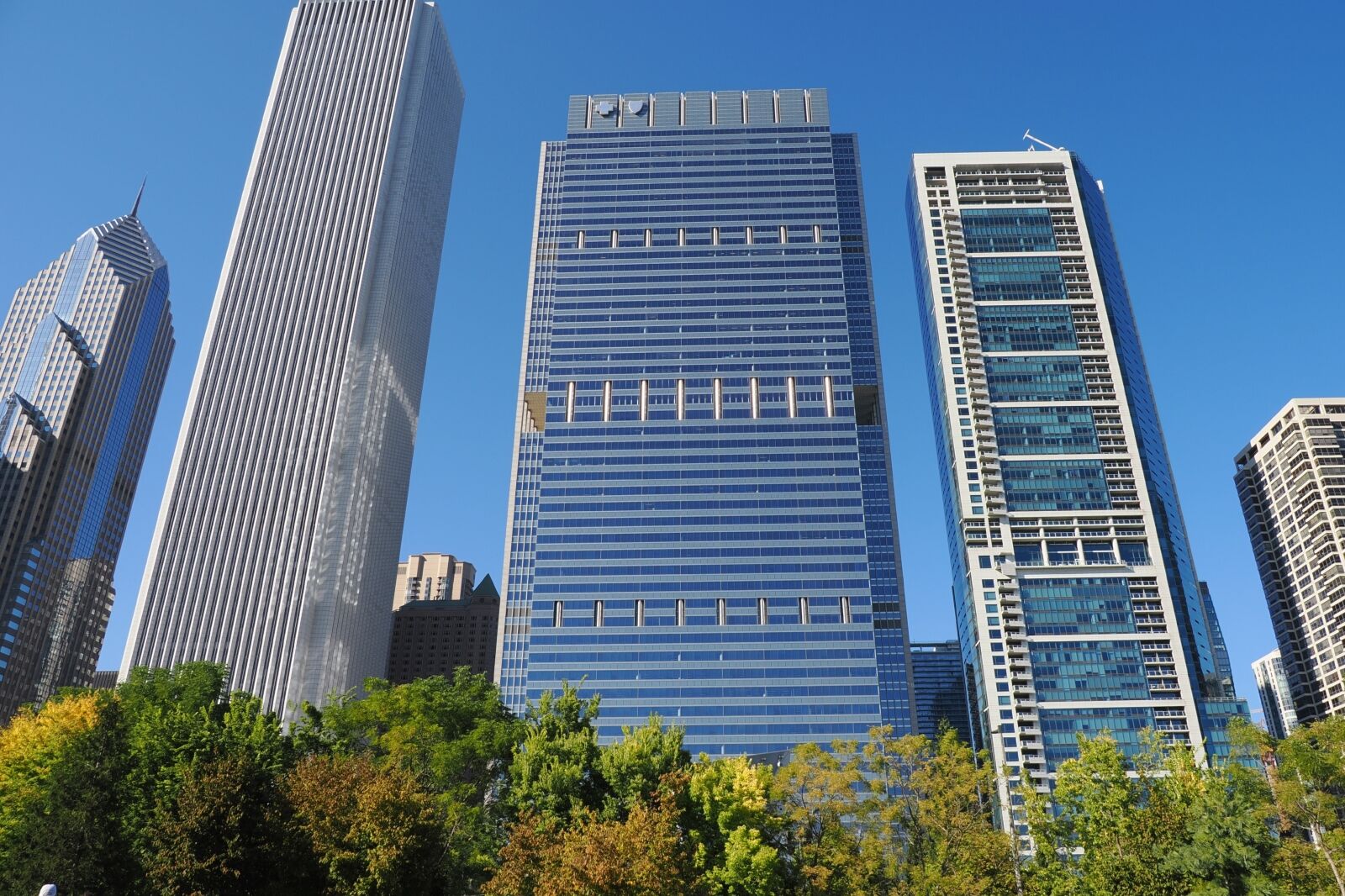
When the Blue Cross Blue Shield Tower was originally constructed, the owners intended to expand it upward. More than a decade later, builders added another 24 floors. The tower frequently acts as a Chicago skyline message board on the side facing Grant Park, addressing healthcare issues and cheering on local sports teams.

340 on the Park

  • Where: 340 E. Randolph St.
  • Floors: 62
  • Height: 672 feet
  • Fun fact: 340 on the Park was once among the tallest all-residential buildings in Chicago.

If you’re near Millennium Park and have a taste for seafood, check out Brown Bag Seafood Co. inside 340 on the Park. The restaurant aims to “bring seafood to the masses” (meaning it has reasonable prices), and the skyscraper itself is one of the most eco-friendly in the Chicago skyline.

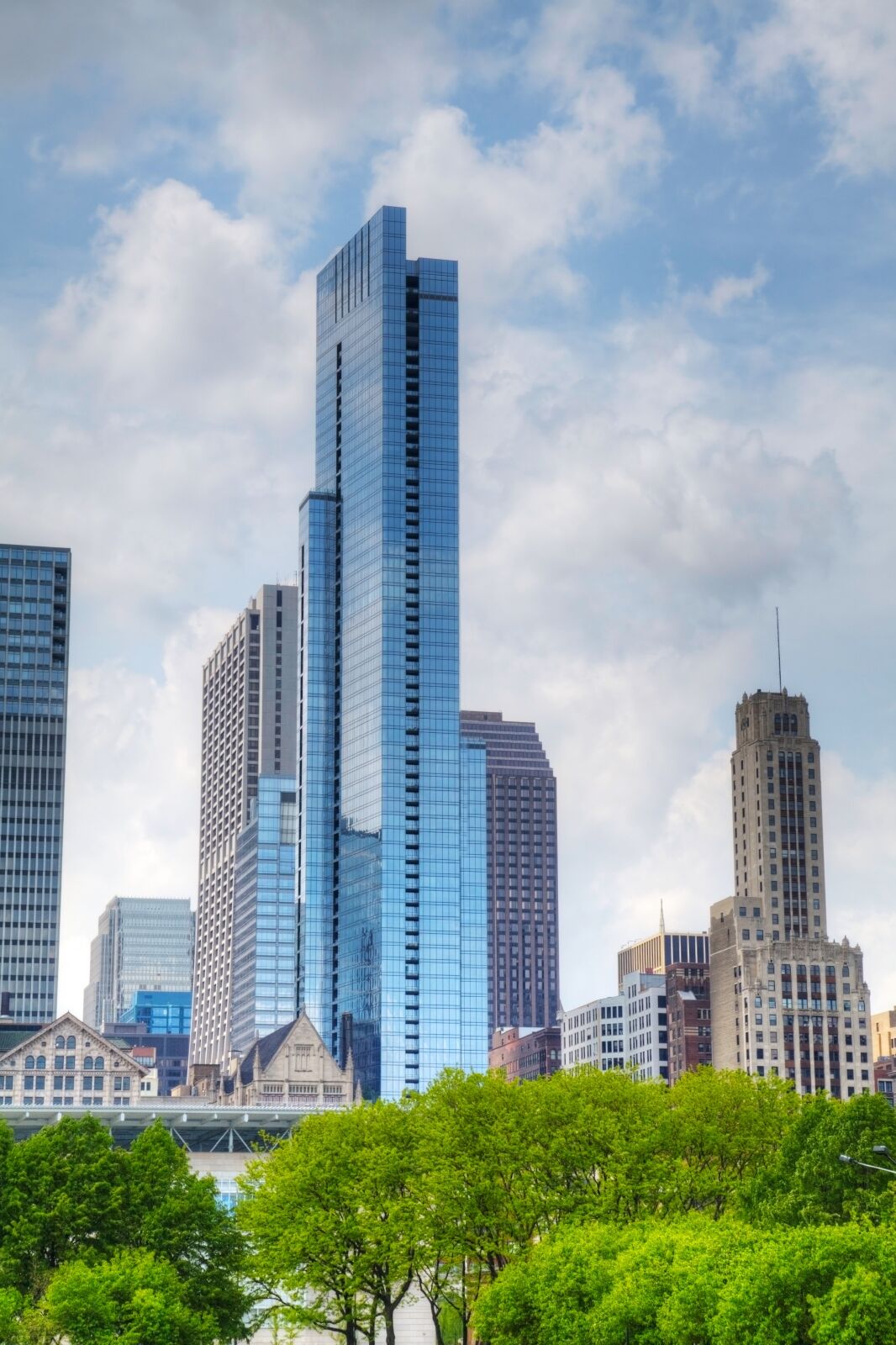
The Legacy at Millennium Park

Downtown Chicago, IL cityscape with Legacy Tower

Photo: photo.ua/Shutterstock

  • Where:: 60 E. Monroe St.
  • Floors: 72
  • Height: 822 feet
  • Also known as: Legacy Tower
  • Fun fact: The building’s narrow design ensures great views for all residents.

This tall, blue-glass member of the Chicago skyline is a condo building and has classroom space for the School of the Art Institute of Chicago. Besides admiring from afar, there’s nothing for the public to do.

The Heritage at Millennium Park

  • Where:: 130 N. Garland Ct.
  • Floors: 57
  • Height: 631 feet
  • Fun fact: It’s one of the taller purely residential buildings in the Loop.

Designed by the same firm as Legacy Tower, The Heritage is on the west side of Millennium Park. It has a rooftop terrace with gorgeous views of the Chicago skyline, lake and parks, as well as the bi-weekly summer fireworks. Unfortunately, the terrace is not open to the public.

55 East Monroe

  • Where: 55 E. Monroe St.
  • Floors: 49
  • Height: 583 feet
  • Also known as: Mid-Continental Plaza
  • Fun fact: This building was originally planned to be two 40-story towers.

55 East Monroe is an office building with 10 floors of condos at the top. It’s also home to Forum 55 Food Hall, a casual dining space with multiple vendors in the building’s lower level.

Crain Communications Building

  • Where: 150 N. Michigan Ave
  • Floors: 41
  • Height: 582 feet
  • Fun fact: This building was featured in the 1980s classic Adventures in Babysitting.

Owing to its diamond-shaped flat top with a vertical gap down the center, the Crain Communications Building is known to most Chicagoans as the Diamond Building — or, to some, the Vagina Building. Urban legend claims the building was designed to combat the typical phallic shape of skyscrapers, but the man who designed the building claims it’s a coincidence. Regardless of what you call it, you’ll have great views of it from Maggie Daley Park or Millennium Park. The diamond-shaped roof is outlined in white lights and often displays illuminated messages to celebrate sporting events and holidays.

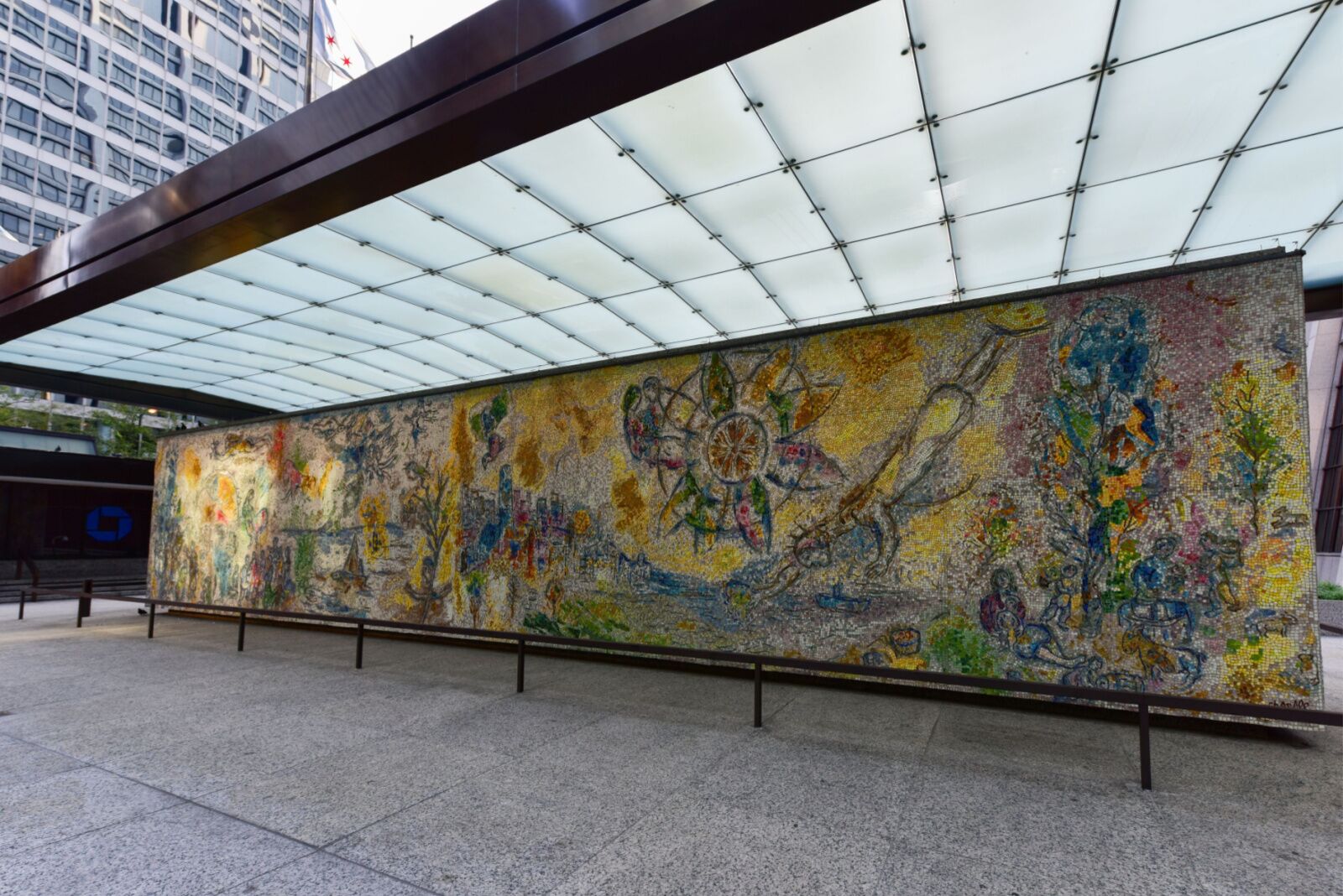
Chase Tower

March chagall chicago skyline

Photo: Felix Lipov/Shutterstock

  • Where: 10 S. Dearborn St.
  • Floors: 60
  • Height: 850 feet
  • Fun fact: There’s a mosaic by Marc Chagall in the outdoor plaza.

If you’re in the Loop, head to Chase Tower. If you’re nearby, stand close and look up for a unique view of the distinctive curved shape; it’s hard to appreciate looking at the Chicago skyline from afar. The building and adjacent plaza cover an entire city block. Inside is the Chase Auditorium, which has hosted NPR’s news quiz show Wait Wait…Don’t Tell Me! In front is the Exelon Plaza, a sunken space that marks the geographic center of the Loop.

Grant Thornton Tower

  • Where: 171 N. Clark St.
  • Floors: 50
  • Height: 756 feet
  • Also known as: Chicago Title and Trust Center
  • Fun fact: It won the Chicago Athenaeum’s “Best Building” Architecture Award in 1990.

Located on the former site of Chicago’s Greyhound Bus Station, the Grant Thornton Tower is a skyscraper known for its unique roof. The east side of the roof features a steep slant, while the west side looks like something topping a Mayan temple. Both sides are illuminated brightly at night, making the tower stand out in the Chicago skyline.

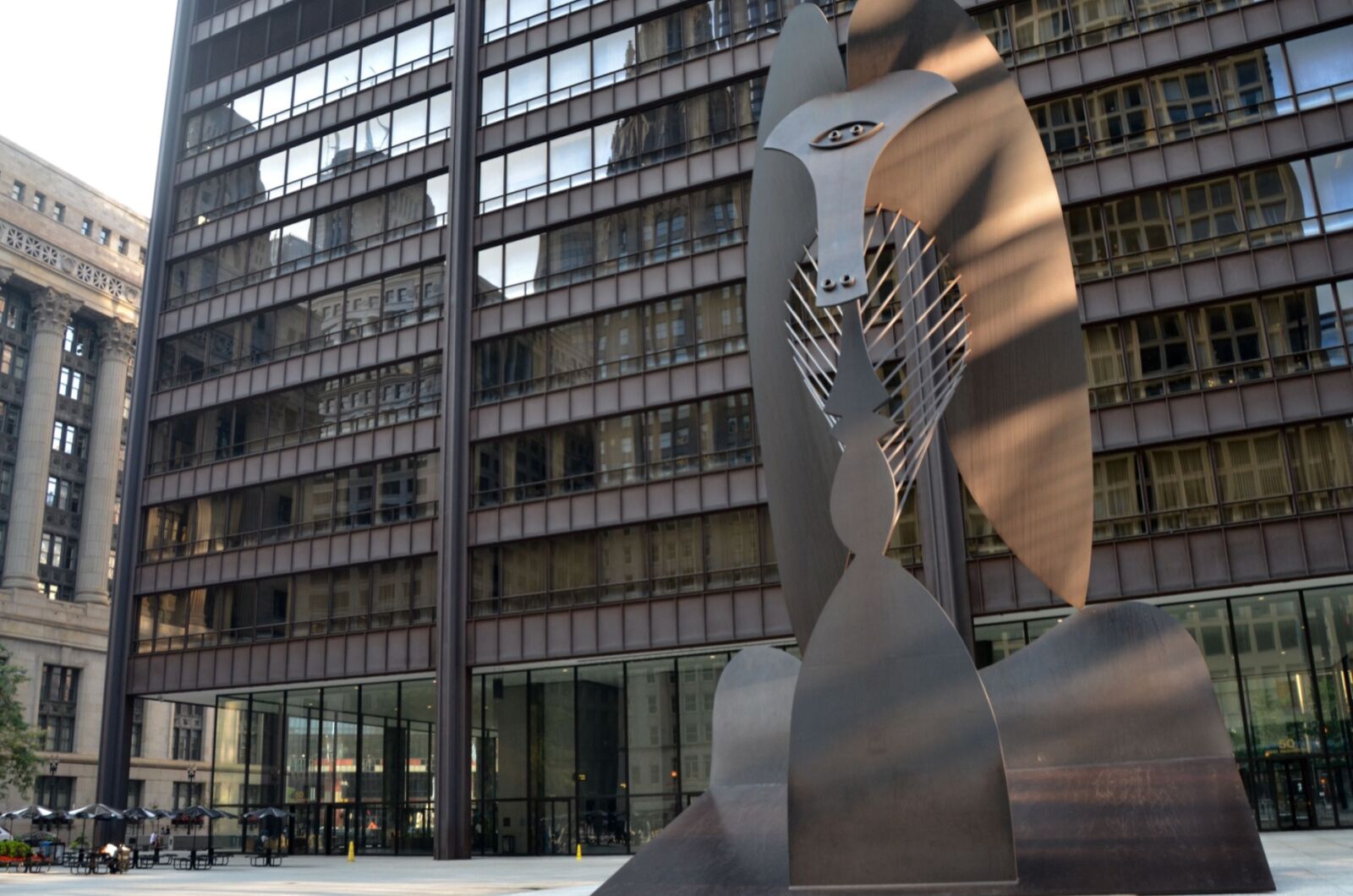
Richard J. Daley Center

chicago skyline daley center plaza

Photo: Victoria Lipov/Shutterstock

  • Where: 50 W. Washington St.
  • Floors: 31
  • Height: 648 feet
  • Also known as: Chicago Civic Center
  • Fun fact: It’s the tallest flat-roofed building in the world with fewer than 40 stories (thanks to the high ceilings needed for courtrooms)

While the Richard J. Daley Center building is interesting from an architectural point of view, the real draw is the Daley Center Plaza, which houses fountains and a 3D, 50-foot-tall cubist sculpture by Pablo Picasso. Often referred to as “The Picasso” or “The Chicago Picasso,” the sculpture is officially unnamed and makes for a fun photo op. Every weekday at noon, the plaza offers a Noontime Event, which features free cultural programming at the Picasso.

Chicago Board of Trade

  • Where: 141 W. Jackson Blvd.
  • Floors: 44
  • Height: 604 feet
  • Fun fact: A statue of Ceres, the Roman goddess of agriculture, sits atop the building.

If you plan to visit Chicago’s financial district, check out the Chicago Board of Trade (CBOT) building at the head of the LaSalle Street Canyon. Inside, you can stop at the Ceres Café while you appreciate the lobby’s marble, three-story walls lined with elaborate murals. You’ll need to take a tour to explore beyond the lobby. The Chicago Architecture Center offers an Art Deco tour of buildings in the Loop that includes the CBT, and the Chicago Merc (CME) has offered tours of the trading floors. Outside, you can recreate scenes from your favorite movies as the building’s façade is a favorite among filmmakers. The streetscape was a backdrop in movies like Man of Steel, Road to Perdition, Transformers: Dark of the Moon, and The Untouchables. You may recognize the CBT from the memorial scene in Batman: The Dark Knight, where the Joker makes his attempt on the life of Gotham City’s mayor.

111 South Wacker Drive

  • Where: 111 S. Wacker Dr.
  • Floors: 51
  • Height: 681 feet
  • Fun fact: This building is LEED-certified on multiple levels and was among the largest LEED Platinum-certified buildings in the US when it earned the award in 2019.

This relatively new (2005) office building is recognizable in the Chicago skyline by its panes of blue glass. The first seven floors of the skyscraper house a dramatically lit spiraling ramp that reflects down into the 44-foot tall lobby below. The spiral theme continues through the lobby and onto the pavement outside. It’s closed to the public but worth admiring from the outside if you’re into sustainable architecture.

Franklin Center

  • Where: 227 W. Monroe St.
  • Floors: 60
  • Height: 1,007 feet
  • Also known as: The Franklin, formerly the AT&T Corporate Center
  • Fun fact: The Franklin has rotating featured artists on display open to the public midweek.

Beyond the elaborate lighting fixtures and lobby’s marble floors and walls, there’s not much for the public to see here. The building contains retail and office spaces. In the Chicago skyline, it stands out thanks to its gigantic presence, spiked roof pinnacles, and illuminated setbacks on the exterior.

Willis Tower

  • Where: 233 S. Wacker Dr.
  • Floors: 103
  • Height: 1,450 feet
  • Also known as: Sears Tower
  • Fun fact: The tower’s average sway is about six inches, but it’s designed to sway up to three feet.

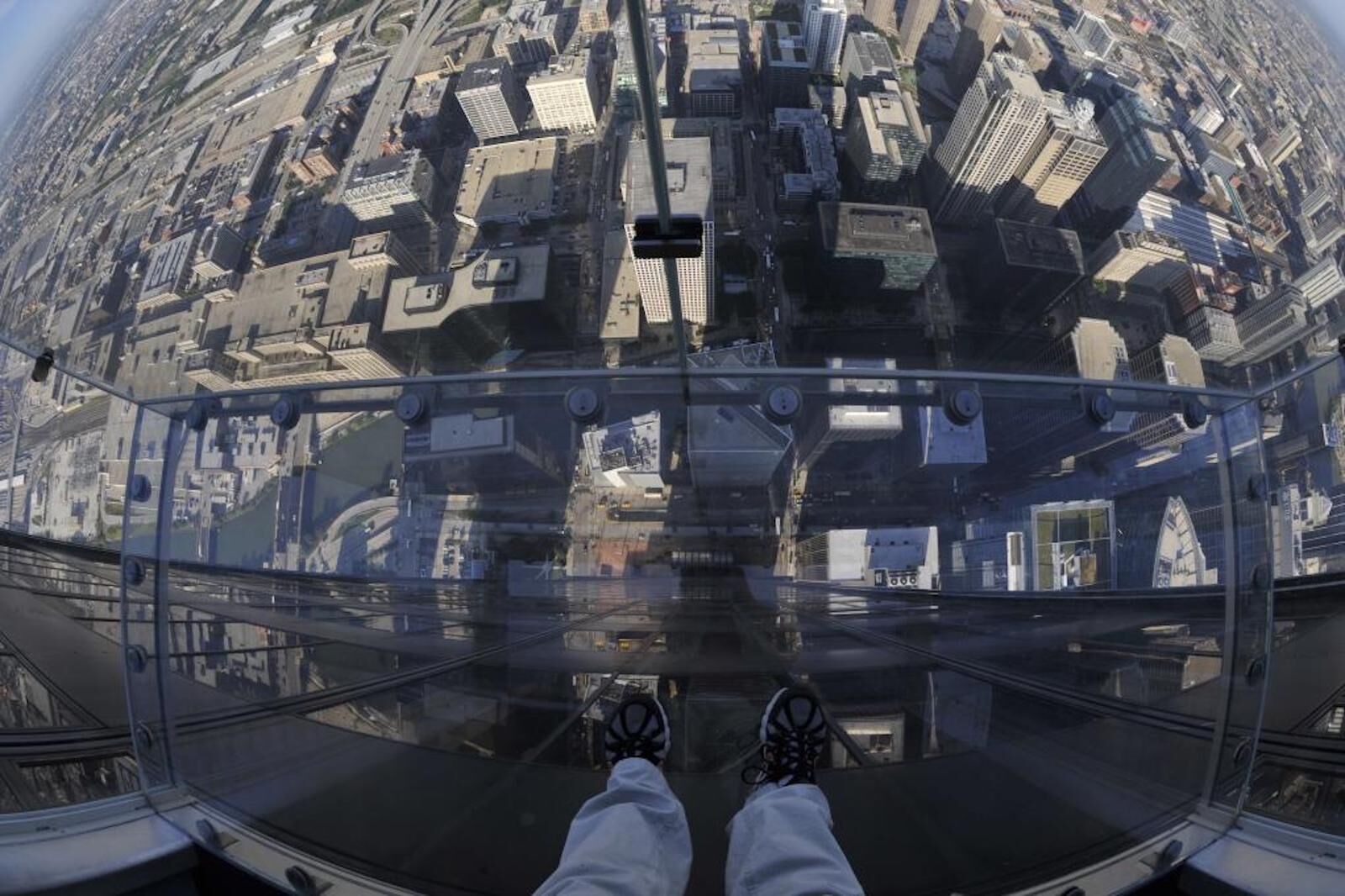
In as little as 60 seconds, you can go from street level to more than 1,300 feet in the air to visit the top of Chicago. The Skydeck on the 103rd floor of Willis Tower offers impressive views of the Chicago skyline, and visitors can see up to 50 miles. On clear days, you can see four different states, but the best time to go is an hour before sunset. That’s when you’ll witness the city’s colorful transformation from day to night. While enjoying the views, take it one step further — literally — on the Ledge. The glass-bottomed platform, raised 1,353 feet in the air, offers a chance to walk over the city, looking down onto Wacker Drive and the Chicago River below.

311 South Wacker Drive

The top of the 311 South Wacker Drive. It is one of the tallest skyscrapers in the world at 293 meters (961 ft). Built in the city of Chicago.

Photo: Edlane De Mattos/Shutterstock

  • Where: 311 S. Wacker Dr.
  • Floors: 65
  • Height: 961 feet
  • Fun fact: At one time, it was the tallest reinforced concrete building in the world.

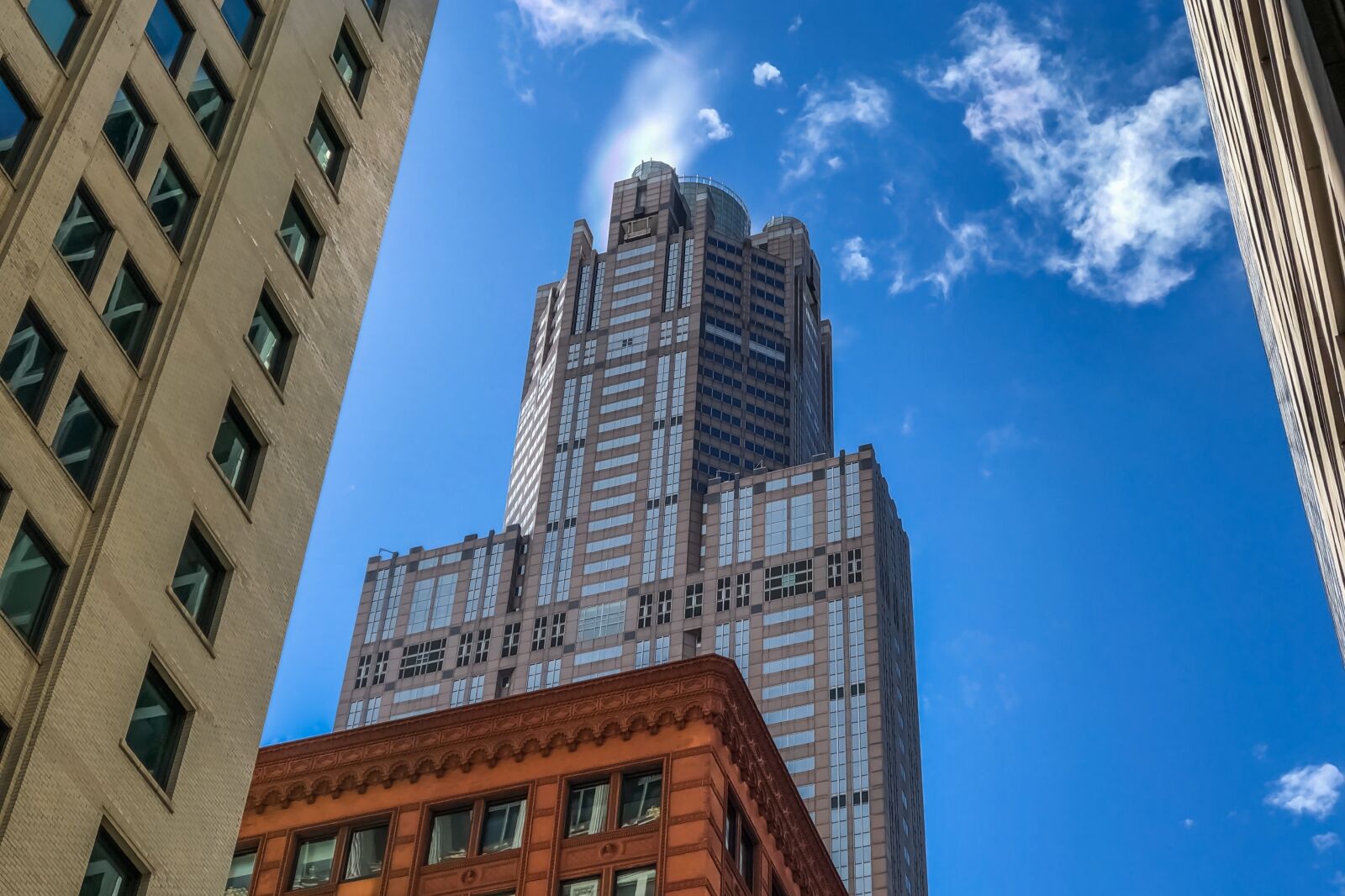
When you see the Chicago skyline from Lake Michigan — hands down the best vantage point for viewing it — the first prominent building on the left is 311 South Wacker Drive. This skyscraper is known for its illuminated and distinctive crown: a 105-foot-tall, translucent cylinder surrounded by four smaller cylinders. The crown’s color changes to mark holidays and local celebrations. While there’s no observation deck at the top, there’s plenty to do at ground level. The five-story lobby has an impressive fountain, as well as a glass-ceilinged atrium. On the northwest side of the building is a one-acre park, one of the larger open green spaces in the Chicago Loop. It hosts everything from farmers’ markets to cultural festivals to concerts throughout the year.

35 West Wacker

leo burnett building

Center, right of KEMPER building. Photo: Joaquin Ossorio Castillo/Shutterstock

  • Where: 35 W. Wacker Dr.
  • Floors: 50
  • Height: 635 feet
  • Also known as: The Leo Burnett Building
  • Fun fact: Square windows show off one version of the “Chicago windows” common to the Chicago Style of architecture.

Remember the Discovery Channel special feature where professional daredevil Nik Wallenda successfully crossed the Chicago River on a high wire? He began at the west Marina Tower and ended at 35 West Wacker (then known as the Leo Burnett Building). The general public can visit Catch 35, the upscale seafood restaurant on the first floor of 35 West Wacker. In addition to its seafood menu, Catch 35 regularly hosts live jazz music.

77 West Wacker

  • Where: 77 W. Wacker Dr.
  • Floors: 50
  • Height: 668 feet
  • Also known as: R.R. Donnelley Building, United Building
  • Fun fact: The building has a rooftop inspired by ancient Greece.

Fans of the film The Negotiator will recognize 77 West Wacker as the offices for the movie’s Internal Affairs Division of the Chicago PD. In real life, it’s a post-modern office building on the Chicago River. The ground floor has a 59-foot tall atrium — a fairly modern concept — but the roof has triangular gables akin to those you’d find on ancient Greek buildings. Directly next to this building, but hard to see, is the Pittsfield Building, with 38 floors and a height of 557 feet. The building is named for the town in Massachusetts where department store founder Marshall Field first worked. It was built in the 1920s and stands out in the Chicago skyline with its traditional setbacks and green pyramid-shaped roof. Inside is a five-story shopping area lined with balconies and stores. The Pittsfield Building has a ground-floor food hall with a mix of casual dining options.

Kluczynski Federal Center

chicago skyline flamingo statue

Photo: Busara/Shutterstock

  • Where: 230 S. Dearborn St.
  • Floors: 42
  • Height: 562 feet
  • Fun fact: This modern design is from the famed architect (also called star-chitect) Ludwig Mies van der Rohe.

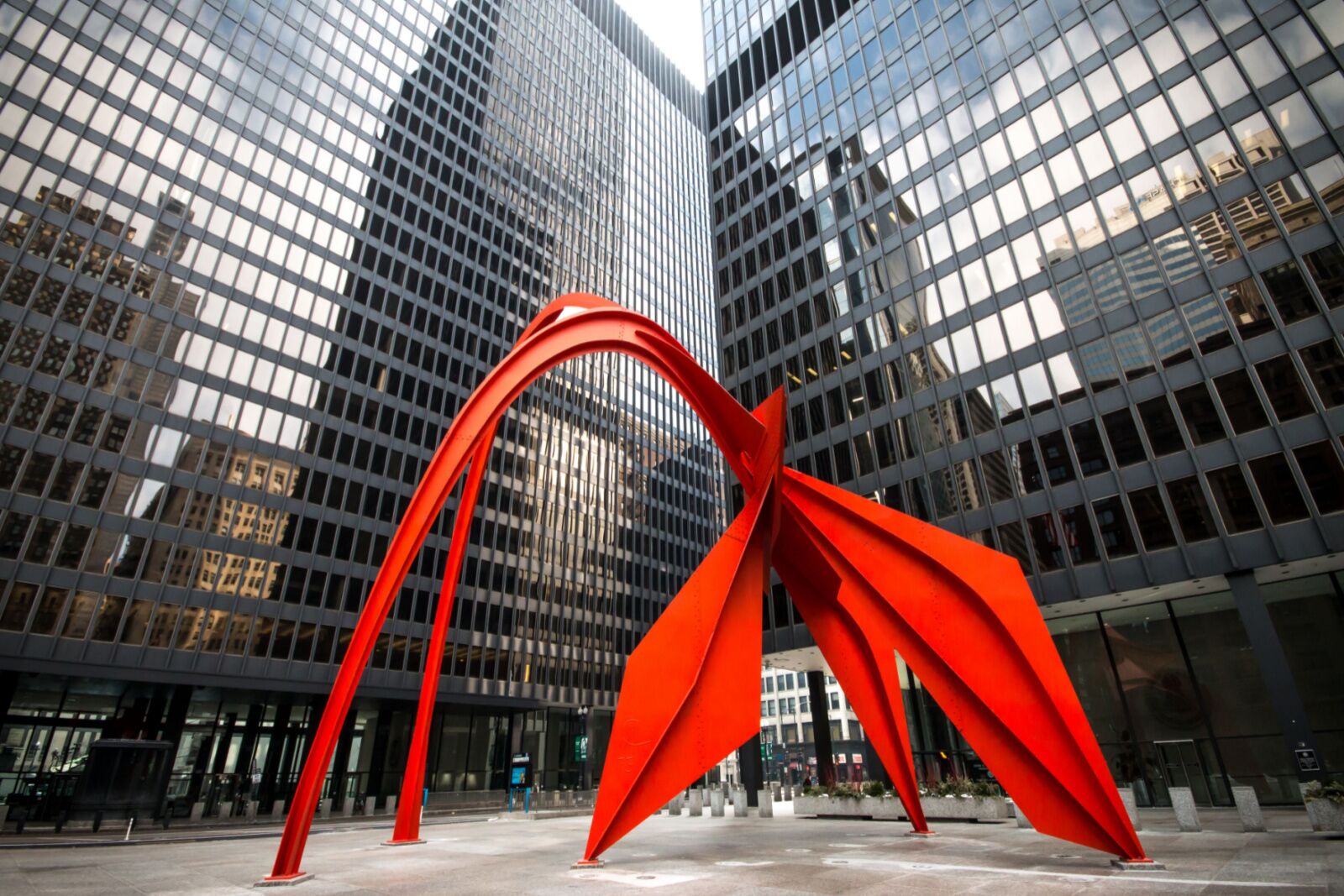
Named after a former congressman, the Kluczynski Federal Center was designed without the usual lavishness found in civic buildings, but the Federal Center Plaza outside is worth a visit. This public square hosts farmers’ markets, festivals, and protests. It’s also home to the famed public art sculpture “The Flamingo.”

333 South Wabash

  • Where: 333 S. Wabash Ave.
  • Floors: 44
  • Height: 600 feet
  • Also known as: Big Red, CNA Tower
  • Fun fact: It’s one of Chicago’s most recognizable office buildings, for the obvious reason.

Painted bright red, 333 South Wabash stands out on the Chicago skyline day or night. The windows are often used to display lighted messages for holidays and local celebrations. There used to be a popular dining hall inside, but it closed in early 2022.

South Loop and Grant Park

The skyline thins out as it moves south, with more residential towers and newer developments near Grant Park. This is where recent construction has expanded the skyline beyond the traditional downtown core.

1000M

  • Where: 1000 S. Michigan Ave.
  • Floors: 73
  • Height: 832 feet
  • Fun fact: The building was designed by Helmut Jahn, one of Chicago’s most influential architects.

Located at the southern edge of Grant Park, 1000M adds a modern glass tower to a part of the skyline that has seen significant recent growth. Completed in 2024, the residential building stands out for its clean vertical lines and prominent position along Michigan Avenue. The tower was one of the final projects by architect Helmut Jahn and reflects his long-standing influence on Chicago’s architectural identity. Its placement helps extend the visual density of the skyline further south from the Loop.

Metropolitan Tower

  • Where: 310 S. Michigan Ave.
  • Floors: 30
  • Height: 475 feet
  • Also known as: The Beehive Building, formerly the Straus Building
  • Fun fact: It was one of the earliest buildings in Chicago with 30 or more floors.

If you pose with the famous lion statues guarding the Art Institute of Chicago, you’ll glimpse the Metropolitan Tower up-close. The U-shaped condo complex sits on Michigan Avenue facing Grant Park. The Metropolitan Tower stands out in the Chicago skyline at night thanks to a 40-foot pyramid on the roof, adorned with a 20-foot glass “beehive” ornament that emits a bright blue light.

Discover Matador

Save Bookmark

We use cookies for analytics tracking and advertising from our partners.

For more information read our privacy policy.