In a controversial move announced mid-February, the US Department of the Interior announced that entry reservations will no longer be required at three extremely popular national parks: Yosemite National Park in California, Glacier National Park in Montana, and Arches National Park in Utah. The reservation systems were instituted in Yosemite in 2021, Glacier in 2021, and Arches in 2022, as a solution to severe overtourism issues, including heavy traffic, overcrowding at trailheads and parking lots, and environmental protection challenges during peak visitation periods.
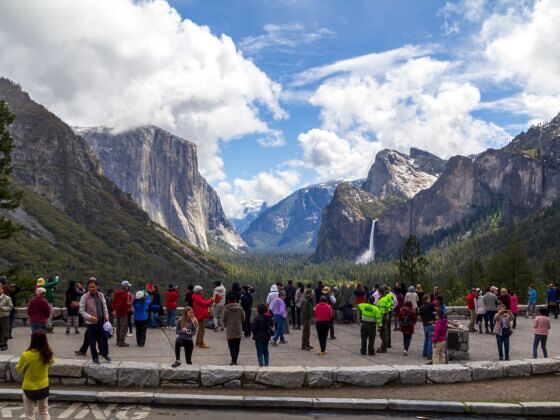
Photo: Jordi C/Shutterstock
Three Iconic National Parks Just Scrapped Their Reservation Systems. It's a Bad Idea.
The change was announced in a National Park Service release laying out “park-specific visitor access plans for Summer 2026.” Acting assistant secretary for Fish, Wildlife and Parks Kevin Lilly said the priority is keeping parks “open and accessible” while maintaining safety and responsible management during peak visitation.
One day after the federal announcement, Yosemite National Park issued its own statement echoing the decision, citing instead plans to rely on increased signage and traffic monitoring. It also announced that visitors should plan to arrive early, avoid weekends, and choose trails outside of the popular Yosemite Valley. Arches National Park released a similar statement, advising that visitors plan for crowding, especially in late morning and early afternoon, and consider visiting early or later in the day. It also advised that it may have to close sections of the park if they get too crowded. Only one park mentioned in the announcement, Rocky Mountain National Park in Colorado, will keep its reservation system.
At Glacier, the park said vehicle reservations will not be required for 2026 at major areas that previously used a reservation system, including the Going-to-the-Sun Road, Many Glacier, Two Medicine, and the North Fork. Instead, Glacier said it will pilot a “ticketed-only” Going-to-the-Sun Road shuttle system with early-morning express routes to popular Logan Pass.
Supporters of eliminating timed entry have framed the change as reducing barriers to access and simplifying trip planning, particularly for spontaneous travelers and visitors who thought the reservation system was too hard to use. Some also say it will increase spending in the surrounding gateway towns, with conservative Senator Mike Lee of Utah saying the change will be more profitable to local businesses.
For many environmental advocates, conservation non-profits, and national park employees, the rollback is an unwelcome change during a time when parks are already dealing with unprecedented overcrowding issues. The National Parks Conservation Association said the Department of the Interior’s decision “undermines National Park Service expertise and the safety of visitors” and puts “iconic park resources at risk,” while the Coalition to Protect America’s National Parks called it a “bad precedent” that will “harm fragile ecosystems, endanger wildlife, jeopardize the ability of parks to respond quickly to emergencies, and stretch already overworked staff to the breaking point.”
Who will benefit from the new change?
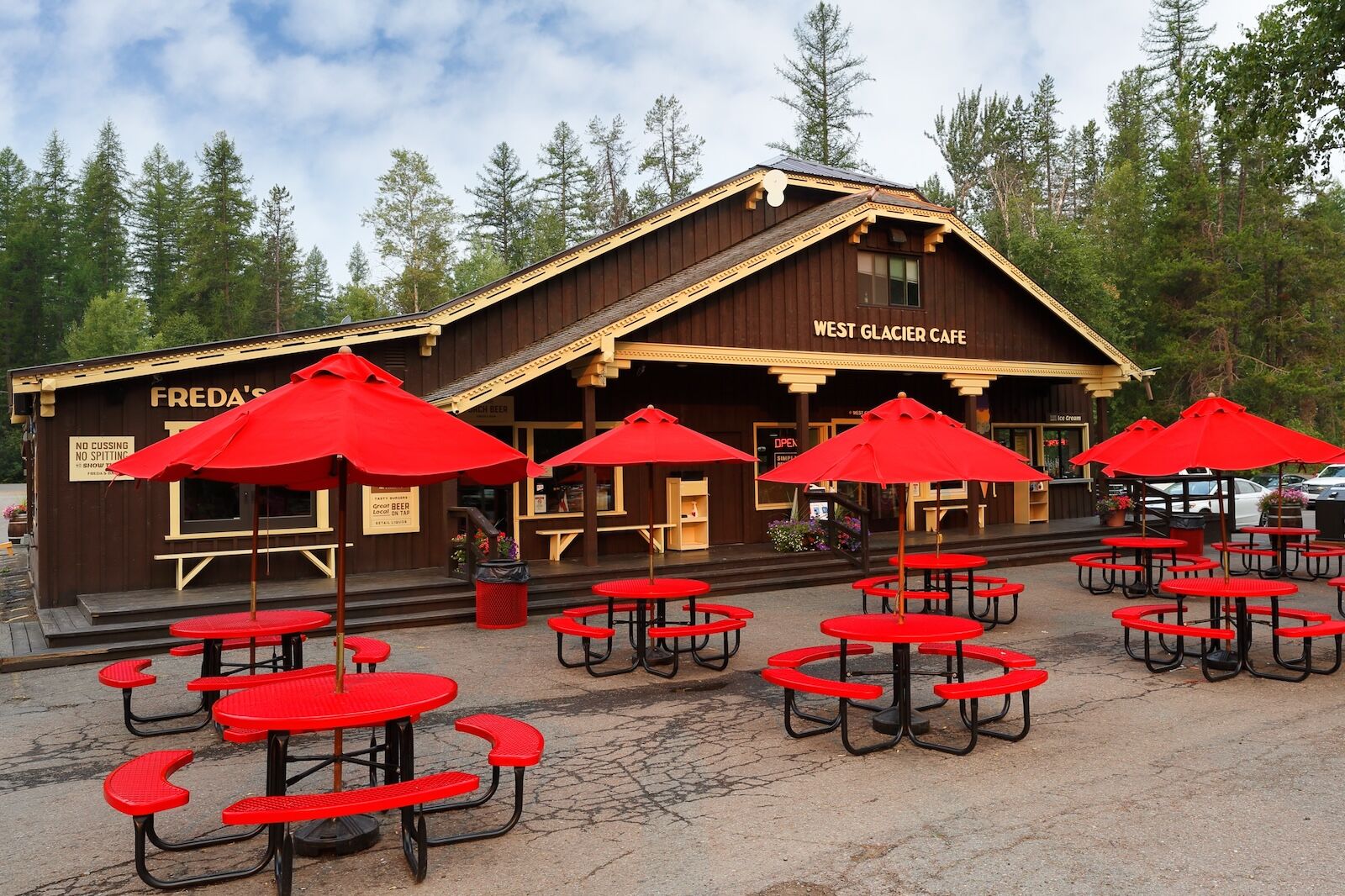
Businesses in towns outside national parks will likely see more income in response to parks ditching the reservation system. Photo: Jay Yuan/Shutterstock
The removal of the reservation system will benefit two groups of people: last-minute planners, and business owners. The policy was announced by Acting Assistant Secretary for Fish, Wildlife and Parks Kevin Lilly, whose professional background is in finance and investment rather than public lands management. The announcement did not give any indication that the parks were consulted in the decision making process, and all the parks mentioned issued their own statements after the federal statement was released, rather than in conjunction with.
The change will allow for more last-minute travel, potentially rewarding people who prefer spontaneous travel, and definitely rewarding local businesses, who will almost certainly reap the benefits of even more people trying to visit national parks.
What are the downsides of the new system?
While bringing more money into small businesses near the park entrances is a good benefit, it’s doing so at the expense of supporting an unsustainable system. National parks are a finite resource, and prioritizing economic benefit above all other concerns will intensify the damage done to our shared public lands, despite visitors’ best intentions. The decision to eliminate reservations in key parks could lead to irreversible environmental damage, strain already limited staffing, and shift park access to favor a smaller group of people — all at a time when visitation remains at historic highs.
Most visitors will find the parks less enjoyable

A squirrel eating trash left outside by guests in Glacier National Park. Photo: Glacier NPS Flickr/Public Domain
Yosemite, Glacier, and Arches national parks all introduced reservation systems in response to uncontrollable damage caused by overtourism, from increased carbon emissions to water quality and sewage issues to habitat damage and erosion, increased wildlife deaths and changes in wildlife behavior, public safety concerns, unmanageable litter issues, and more. Walking past overflowing dumpsters, closed restrooms, damaged meadows, and traffic gridlock is not consistent with an enjoyable park experience.
National parks are a shared public resource and we all share the burden for protecting them. Individual access has to be balanced against the parks’ long-term health and the experience of other visitors. Limiting or structuring access isn’t about denying enjoyment or trying to keep visitors out, but about preserving the conditions that make that environment so unique. That benefit has to outweigh any one individual’s preference to enter at any time without constraints.
Even visitors who disagree with that and think their personal desires are more important have to acknowledge that large, consistent crowds create a less pleasant experience: hours-long traffic backups at entrance stations that can’t be planned around, trailheads so congested that views are obscured, wildlife drawn toward human food, and campsites overflowing with litter. Reservation systems weren’t an arbitrary decision — they were heavily researched and tested tools to balance guest enjoyment with resource and infrastructure limitations. It’d be fantastic if there is a way to do that without timed reservations — but there’s a reason these parks implemented those programs in the first place.
Removing the reservation system is actually less egalitarian
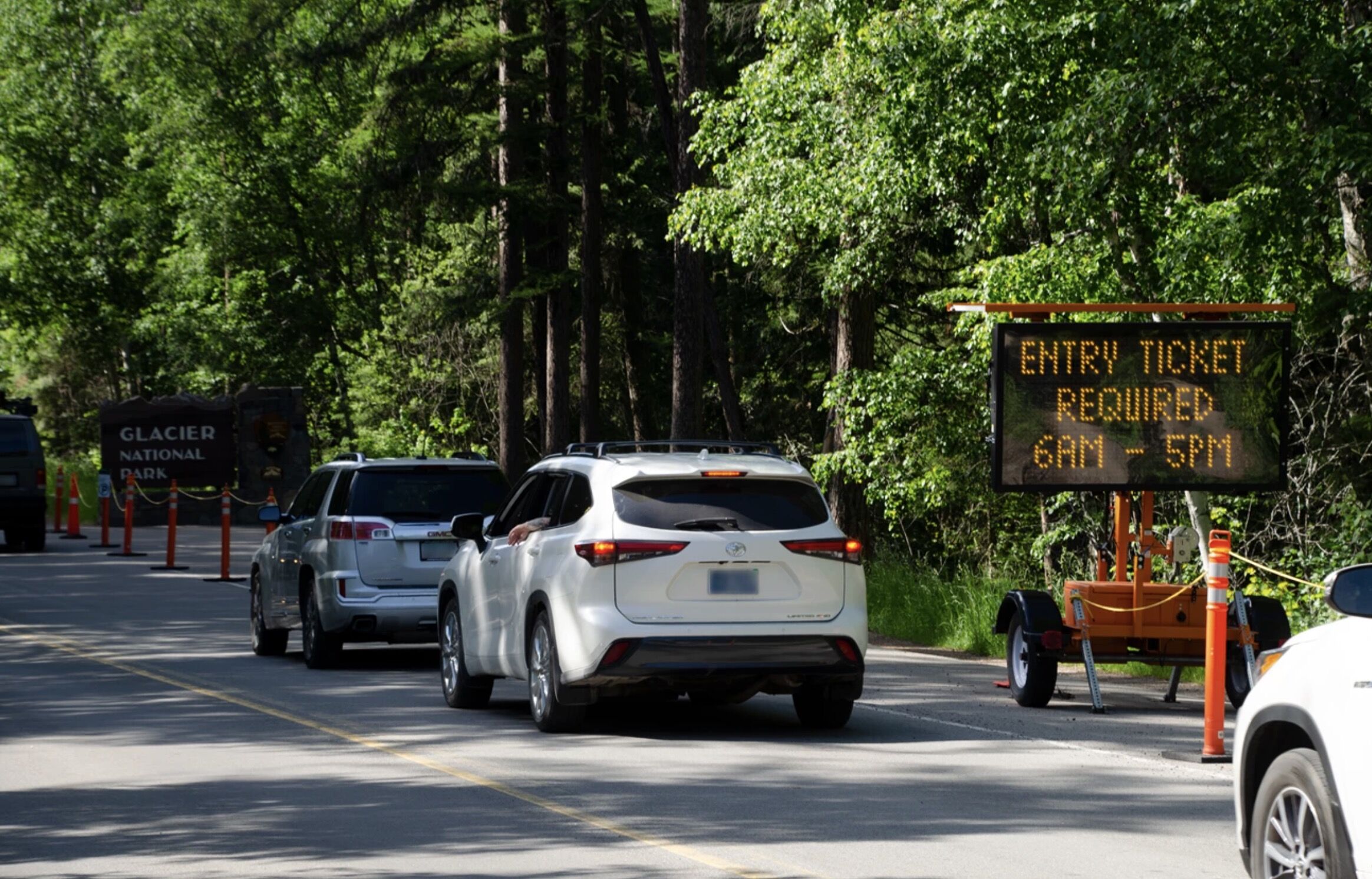
Cars at Glacier National Park. Photo: NPS/Michael Faist
The beauty of having reservation systems is that everyone had equal access to getting a reservation. You can’t pay to get better priority, nor does it reward white collar workers above hourly workers, or retirees above 20-something backpackers. There’s even a feature on the free Recrceation.gov app that will tell you when the specific reservation you want becomes available. Eliminating reservation systems may appear to expand access, but in practice, it may just shift the advantage to visitors with the most flexible schedules. Visiting midweek tends to favor retirees, remote workers, and visitors with paid time off. Families with children and hourly workers with limited vacation days have far less room to adjust.
Eliminating reservations also takes away certainty and rewards visitors who can be more unconventional with their travel plans. All three parks announced that without the reservation system, arriving very early on the morning is best (often before sunrise). That favors visitors able to wake up early and drive in the dark, putting families with small children, older visitors, people with disabilities, and visitors who don’t own cars, at a disadvantage.
That changes with reservations. A family driving eight hours to Yosemite or flying across the country to visit Glacier knows before they leave home that they’ll be able to get in. Without reservations, access becomes a race, and whomever arrives first gets to go where they want in the park. Some may plan as much as they can and still face four-hour lines at the entrance gate, taking away valuable family time in the park. It favors people who live nearby, have flexible schedules, and can afford multiple nights of lodging to hedge against the risk of not being able to see all they want in a day or two.
The current administration has a poor track record for environmental protection
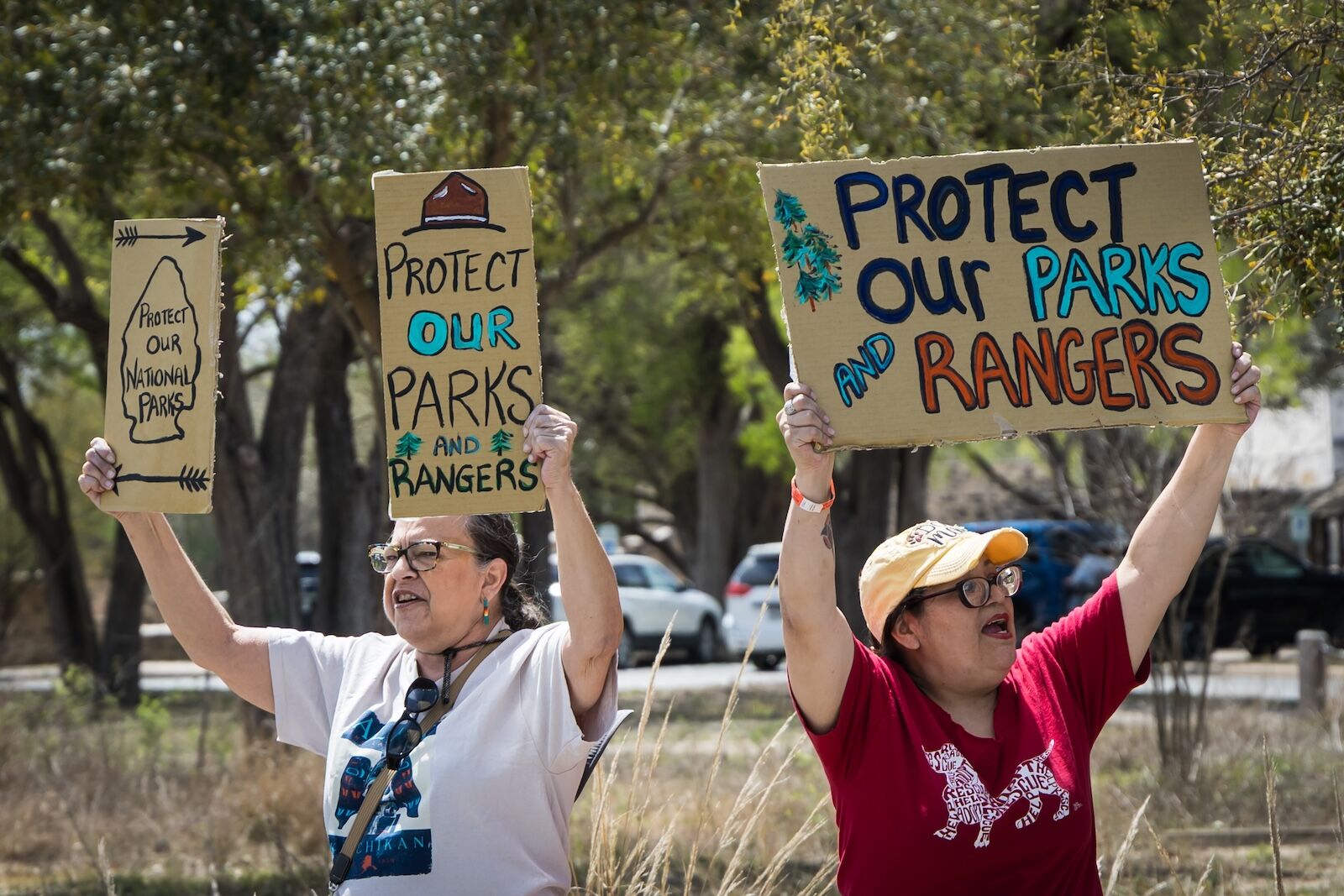
Protesters holding signs in response to federal Department of Government Efficiency (DOGE) efforts to cut national park staffing in March 2025. Photo: NYCKellyWilliams/Shutterstock
There’s skepticism about the Interior Department’s assertion that it can expand access while simultaneously “preserv[ing]” the parks and “protect visitor safety,” especially in light of the administration’s dismissiveness of environmental concerns and severe staffing reductions across the National Park Service. In 2023 and 2024, the NPS workforce declined significantly due to federally led layoffs, hiring freezes, and buyouts under the short-lived “Department of Government Efficiency,” or DOGE. It left many parks operating with far fewer permanent employees than they had a decade ago, even as visitation reached record levels. The National Parks Conservation Association found that staffing at national parks dropped by 25 percent last year.
Eliminating reservation systems shifts the burden to on-the-ground strategies that require more people, such as traffic control, parking enforcement, trail monitoring, maintenance services, and emergency response, despite the fact that parks have fewer employees in relation to the size of their crowds. While seasonal employees can be helpful, they don’t replace the institutional knowledge and high-level management many of these programs will require. It raises questions about whether the federal government’s plan to “strengthen seasonal staffing and operational readiness to support strong visitation in 2026,” will really come to fruition, or if it will just leave the parks to deal with the impact of its decisions.
Visitation to national parks is trending significantly up
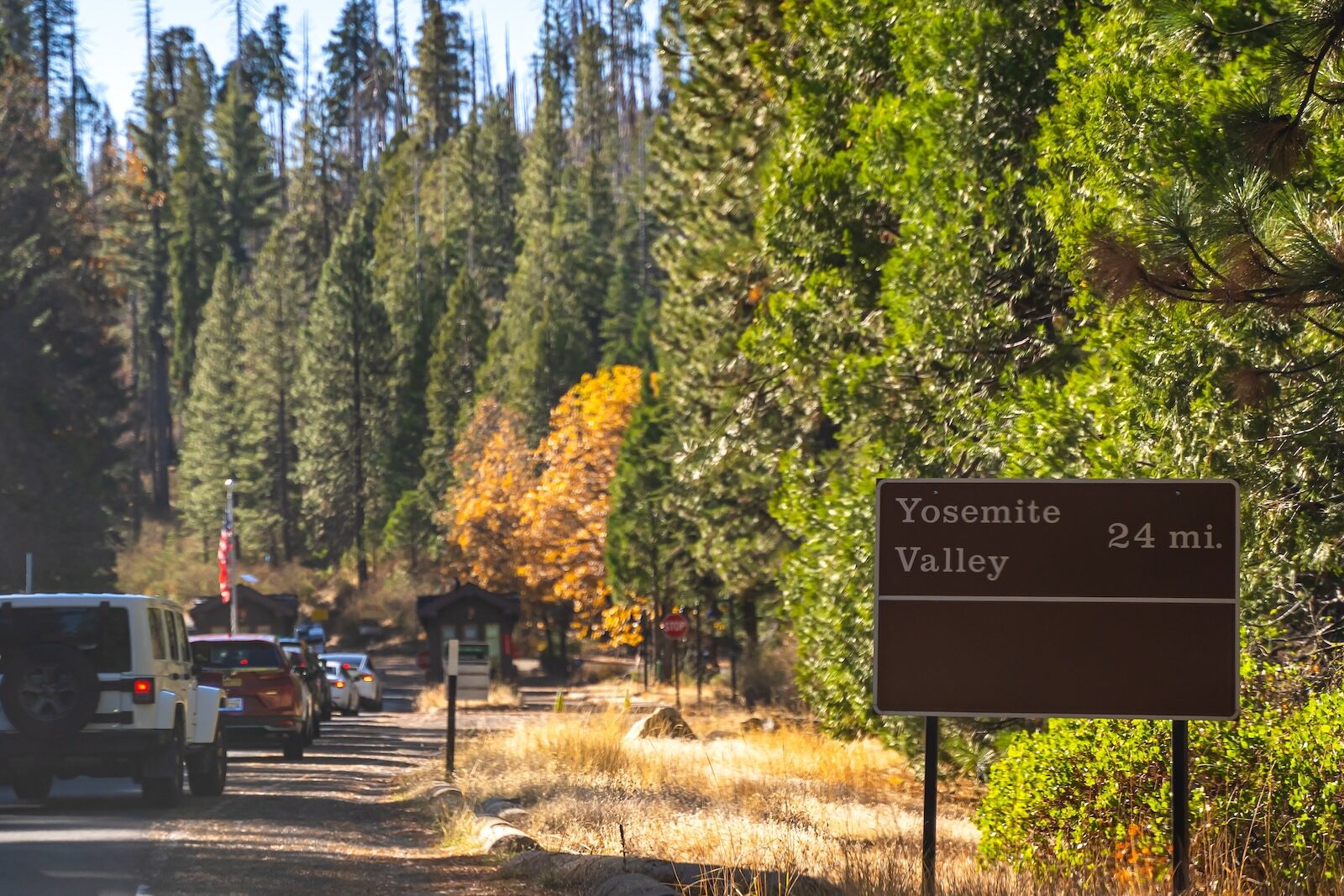
Traffic at the entrance to Yosemite National Park. Photo: Iv-olga/Shutterstock
Park visits in the United States have reached historic levels, placing pressure on park infrastructure and national resources in a way that could suggest reservations should be implemented at more parks, not fewer.
In 2024 the National Park Service recorded a system-wide record of about 331.9 million recreation visits, up roughly 2 percent from 2023. At Yosemite National Park, annual visits climbed from about 2.2 million in 2020 to 4.3 million in 2024 (an increase of roughly 82 percent), 75 percent of whom visited during the busy summer months when reservations used to be required. Save for during 2020 COVID-related closures, there hasn’t been a single year when the park saw fewer than 3 million visitors since 1986.
Arches National Park near Moab, Utah, saw visitation grow by roughly 74 percent between 2011 and 2021, prompting the start of the timed-entry system to manage crowding, long entry lines, and parking congestion. Before the reservation system, it would sometimes have to close the entrance stations with no warning for hours at a time until crowds thinned out, creating huge headaches for guests waiting to get in. Glacier National Park’s visitation has been hovering around the 2 million to 3.2 million mark since 2007, putting significant pressure on the trails and infrastructure along the park’s sole east-to-west road.
These are not small amounts of people, especially for wild places already feeling the effects of issues like climate change and wildfires. And with the trends showing no sustained declines in recent years to suggest demand has eased, scaling back reservation systems appears less like a response to improving conditions and more like a policy shift totally removed from the reality of visitation. If the mission of the National Park Service is truly to “preserve unimpaired the natural and cultural resources and values of the National Park System for the enjoyment, education, and inspiration of this and future generations,” moving away from regulation risks undermining that goal, not strengthening it.
Were the parks consulted — and is this a move in the right direction?
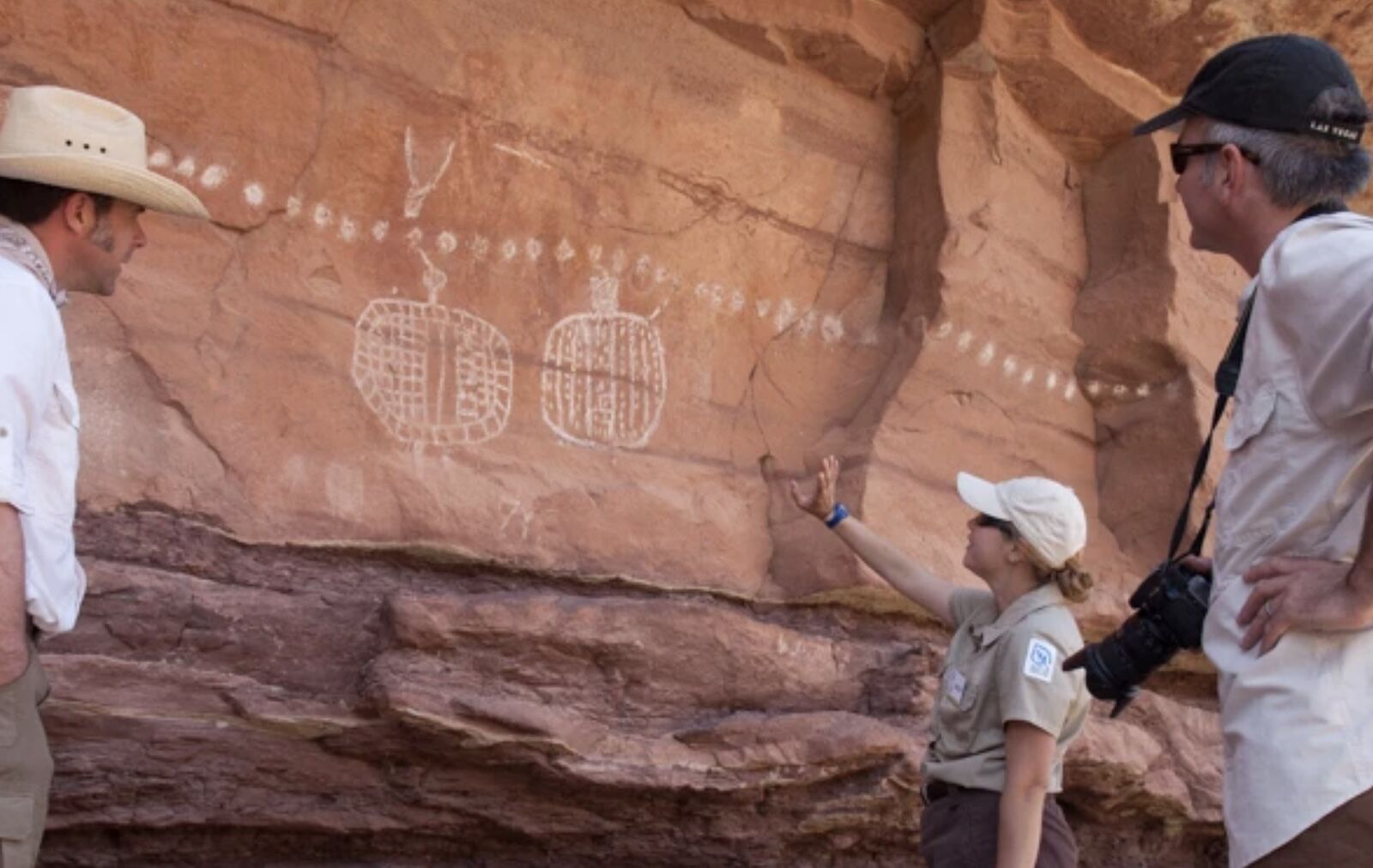
Indigenous rock art in Arches National Park. Photo: NPS/Jacob W. Frank
One key unanswered question is whether superintendents and on-the-ground park leadership were consulted before the decision was announced. If career park managers and resource specialists were closely involved in the decision making, it may at least suggest that it’s a decision guided by field-based expertise rather than policy decided by bureaucrats. Clear communication about that process would be a step in the right direction.
But that still wouldn’t alleviate the broader concern. Visitation remains at or near historic highs, staffing levels have declined, infrastructure in many parks is aging, and climate-related pressures are increasing. Against that backdrop, removing one of the best tools used to balance enjoyment and congestion moves in the opposite direction of what the data suggest is needed. The problem with national parks isn’t that they’re so beloved — it’s that they’re fragile, important places that can’t physically handle all the visitors they receive. If everyone puts in just a little effort — like planning for a reservation, instead of arriving whenever they want — we can protect these important parts of America’s natural legacy. 