Everyone knows flying in the US can be a little bumpy, both literally and figuratively. But it’s about to get significantly more delayed in light of the current US federal government shutdown, as the Federal Aviation Administration (FAA) made a significant announcement on Wednesday, November 5. Citing the immense strain on staff from the record-long government shutdown, it announced it would cut flight traffic by 10 percent at 40 of the country’s busiest airports. The announcement was made at a press conference by US Department of Transportation (DOT) Secretary Sean Duffy, who oversees the FAA, following vague comments earlier in the week to completely close some portions of US air space if the shutdown continued.
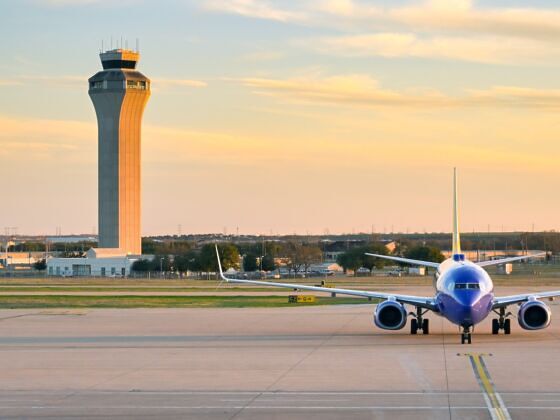
Photo: Ceri Breeze/Shutterstock
FAA Slashes Flights at 40 Major US Airports in Light of Government Shutdown
Unconfirmed sources tell media outlets the scale-back will happen gradually, beginning with a four percent reduction on Friday, November 7, a five percent reduction on Saturday, November 8, eventually reaching 10 percent reductions by mid-November. FAA Administrator Bryan Bedford said he was unaware of a time in his 35 years of work in the aviation industry when the government had taken such measures. On October 31, the FAA posted on X that many airports were already scaling back traffic in response to shortages. “Currently, half of our Core 30 facilities are experiencing staffing shortages,” it wrote, “and nearly 80 percent of air traffic controllers are absent at New York–area facilities.” In early November, New Jersey’s Newark Airport outside New York City reported average delays of more than two hours and rerouted dozens of flights to other airport.
View this post on Instagram
According to flight tracking website FlightAware, 4,302 flights to or within the US were delayed on Wednesday, November 5. The most impacted airports were SFO in San Francisco, California; LAX in Los Angeles, California; and Phoenix Sky Harbor Airport in Phoenix, Arizona. Based on data available thus far for Thursday, November 6, delays are likely to grow exponentially, with the number of delays doubling or tripling at many major US airports.
Why are airports facing staffing issues?
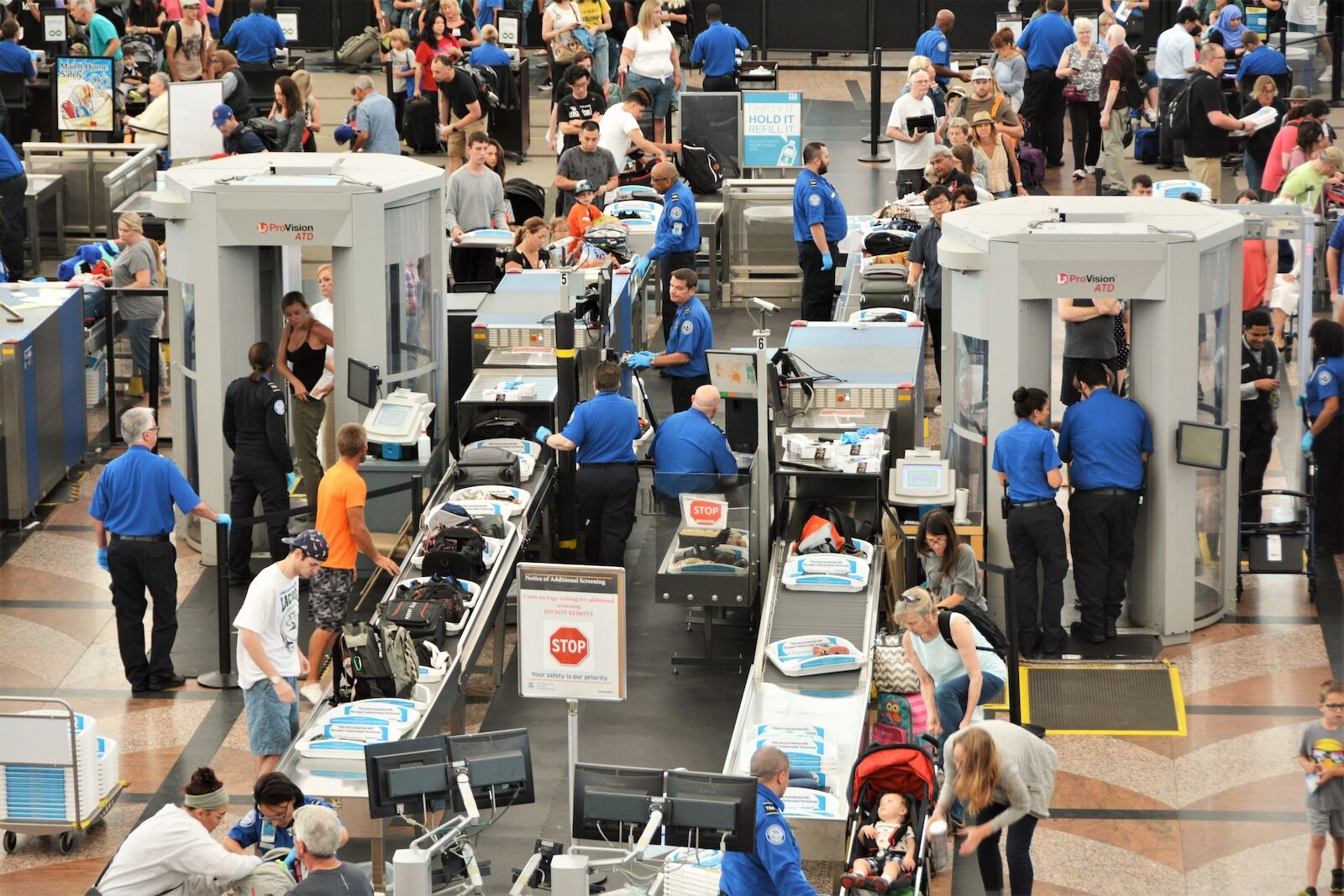
Fewer available employees means more stress and fatigue for those who do. Photo: Jim Lambert/Shutterstock
During a shutdown, most government employees are sent home. However, employees deemed “essential,” such as border control agents, food inspectors, and federal police, are required to keep working. Since a shutdown happens when lawmakers can’t agree on a budget, those essential employees don’t get paid while working, despite being told they must keep showing up to work — and sometimes, that they have to work mandatory overtime. Usually, government shutdowns are short, and the employees receive back pay when it opens again. But the US just entered its 37th day of government shutdown, making it the longest shutdown in US history.
That means the roughly 14,000 air traffic controllers needed to keep US airspace safe and organized aren’t getting paid. And just like with most jobs, two things happen when people suddenly stop getting paid: interest and motivation wane, and employees become more likely to call out sick or not show up for work. And the lack of a paycheck may make it difficult for acts like buying gas to get to work.
Even before the shutdown, the US has had a critical shortage of air traffic controllers. Add to that weeks of work with no pay and no guarantee of future pay, and it’s easy to understand why so many are deciding not to work. Those who are still going to work are shouldering more and more responsibility, with the FAA noting “immense stress and fatigue” among controllers.
Earlier this month, Secretary Duffy said as a guest on Fox News that many employees were looking for second jobs with companies like Uber, noting that staffing-related delays had gone from three percent to 53 percent during the shutdown.
A DoT spokesperson told Matador Network via email on Wednesday, “While the vast majority of TSA’s nationwide operations remain minimally impacted by the government shutdown, occasional delays at some security checkpoints are to be expected. The longer the shutdown goes on, the more severe the impact on our TSA workforce who have expenses they must pay for, making it harder to show up for work when not being paid.”
The 2019 Government Employee Fair Treatment Act says furloughed federal employees are to be paid “as soon as possible” after a lapse ends, but payment still depends on Congress approving the funding. In public interviews, President Trump has said back pay isn’t guaranteed, and may depend on whether the employees “deserve to be taken care of.”
What airports could be impacted?
On midday Thursday, the Department of Transportation announced which airports will be directly impacted. On X, Secretary Duffy shared that DoT is “assessing the risk in the airspace. Delays and cancellations will be based on which controllers are coming to work.” The current list includes the airports below.
- ANC — Anchorage, Alaska
- ATL — Hartsfield–Jackson Atlanta, Georgia
- DFW — Dallas/Fort Worth, Texas
- DEN — Denver, Colorado
- ORD — Chicago O’Hare, Illinois
- LAX — Los Angeles, California
- JFK — New York, New York
- CLT — Charlotte Douglas, North Carolina
- LAS — Las Vegas (Harry Reid), Nevada
- MCO — Orlando, Florida
- MIA — Miami, Florida
- PHX — Phoenix Sky Harbor, Arizona
- SEA — Seattle–Tacoma, Washington
- SFO — San Francisco, California
- EWR — Newark Liberty, New Jersey
- IAH — Houston Intercontinental, Texas
- BOS — Boston Logan, Massachusetts
- MSP — Minneapolis–St. Paul, Minnesota
- FLL — Fort Lauderdale–Hollywood, Florida
- LGA — New York–LaGuardia, New York
- DTW — Detroit Metro, Michigan
- PHL — Philadelphia, Pennsylvania
- SLC — Salt Lake City, Utah
- BWI — Baltimore/Washington, Maryland
- IAD — Washington Dulles, Washington, DC (Northern Virginia)
- SAN — San Diego, California
- DCA — Washington National (Reagan), Washington, DC
- TPA — Tampa, Florida
- HNL — Honolulu (Daniel K. Inouye), Hawaiʻi
- MDW — Chicago Midway, Illinois
- DAL — Dallas Love Field, Texas
- PDX — Portland, Oregon
- HOU — Houston Hobby, Texas
- CVG — Cincinnati/Northern Kentucky, Kentucky
- IND — Indianapolis, Indiana
- MEM — Memphis, Tennessee
- OAK — Oakland, California
- ONT — Ontario, California
- SDF — Louisville International, Kentucky
- TEB — Teterboro Airport, New York
What does that mean for travelers?
Photo: oatawa/Shutterstock
It’s not known how much this will impact flyers, though all travelers should be prepared for extensive delays. A spokesperson for the aviation statistics company Cirium told various news outlets that the change could mean as many as 1,800 canceled flights on Friday, November 7, representing a loss of more than 268,000 scheduled passengers.
A press release from United Airlines confirmed that flight reductions will begin that day, noting that flights between United hubs would not be impacted, choosing instead to reduce regional routes. It also offered refunds to anyone who wanted to change their flight plans, including travelers on basic economy or non-refundable tickets. American Airlines also announced a temporary carte blanche refund policy for travelers who wanted to change or cancel their tickets, and Southwest also announced it would offer “flexibility in travel plans,” Delta issued a statement saying customers should expect delays, but didn’t indicate if refunds would be possible.
Editor’s note: This story will be updated as additional information becomes available. 