In an era when economy airline seats are getting smaller and smaller and legroom feels like it’s slowly disappearing, Delta Air Lines quietly changed its rules. On January 6, it made it a little harder for travelers to bring items onboard that make flights more tolerable. The Delta website now bans a swath of comfort items and “travel hack”-type items, many of which are once-viral travel items beloved by flyers.
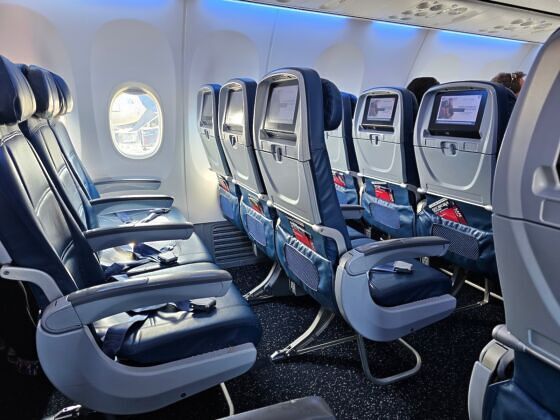
Photo: ShutterstockKirk Fisher
Delta Bans Items That Make Economy Flying More Comfortable. Here's What You Can't Use.
Under the new policy, Delta will not allow passengers to use a host of “comfort items and personal devices.” These include:
- Inflatable wedges used as footrests in the bulkhead seats or pillows placed on top of tray tables
- Inflatable seat beds/cushions that create extra padding or leg support
- “Knee defenders” or other items that prevent the seat in front from reclining
- Foot hammocks that attach to the seat in front and help alleviate pressure on hips and glutes
- Organizers that attach to windows or tray tables
- Any type of privacy curtain, tent, or divider
- “Full head helmets”
Why Delta is taking comfort off the in-flight menu
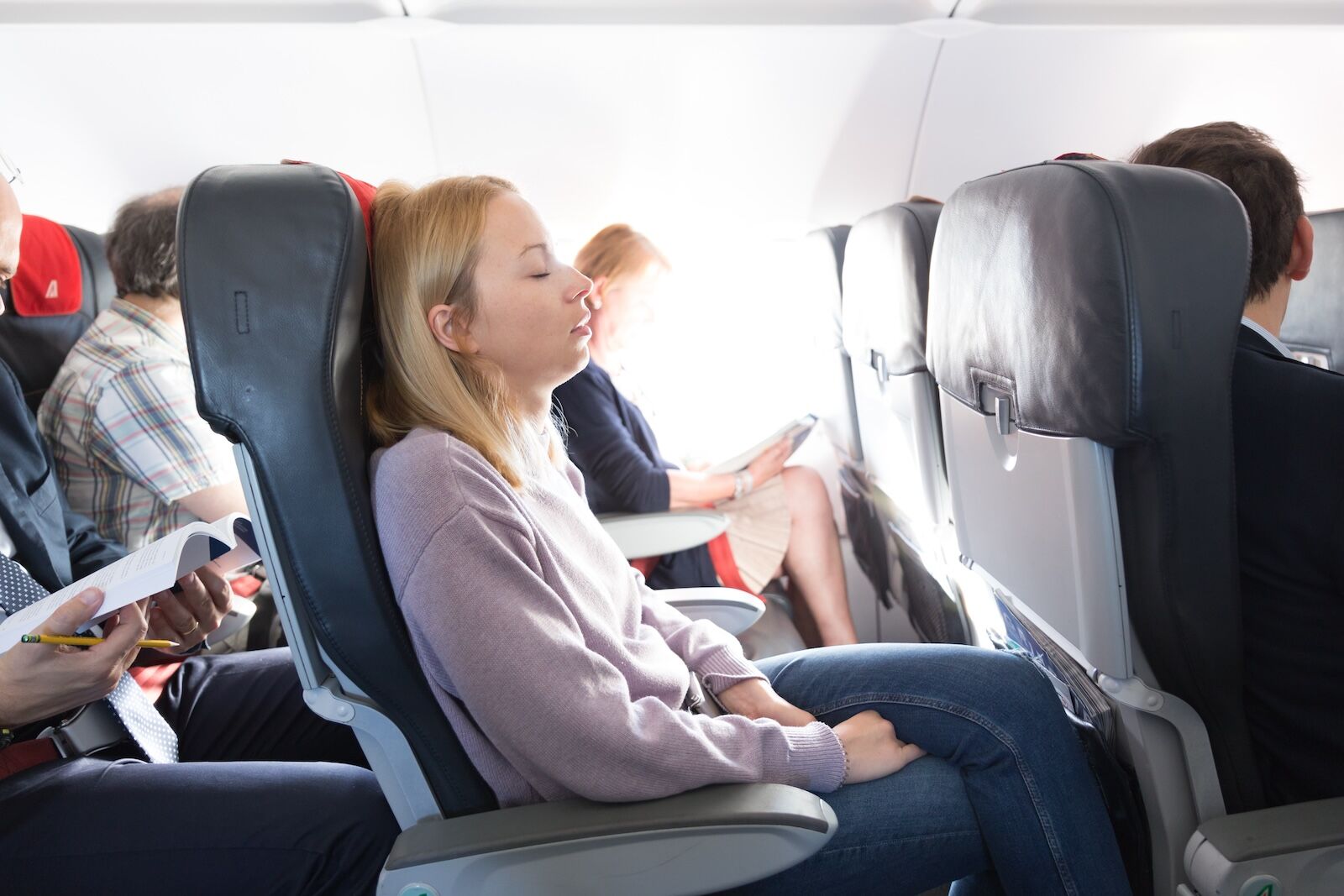
Photo: Matej Kastelic/Shutterstock
The airline also banned some comfort items for toddlers, inluding any items that attach to the seats, windows, or tray tables. Items not explicitly listed may be allowed if they fit within the carry-on size limits and can be quickly stowed — but it’s not a guarantee, and passengers may be told they’re not allowed to use them. Even “allowed” items, such as blankets, may be banned if the passenger attempts to drape it over the headrest or otherwise use it in a way that could be interpreted as a “tent.”
For many travelers, this may feel like a step backward at best or, at worst, an intentional decision to push travelers toward upgraded seats. The Delta website states that the items are banned “for safety reasons” and that passengers can’t use “items that block aisles, footwells, or pose a tripping hazard.” Most likely, it’s thought that these items could hinder passenger or flight attendant movement during an emergency.
Are ‘comfort items’ the real problem?
A 2020 report from the US Department of Transportation (DOT)’s Office of Inspector General found that the last Federal Aviation Administration evacuation safety standard testing happened in 1991.
Since the 1990s, seat pitch (the distance between seats, or legroom) has shrunk by four to five inches, while seat width has decreased by an average of 1.5 inches. This is done primarily to increase the number of economy passengers in the same amount of economy space. The DOT report concluded that the “FAA also has not conducted sufficient research on passenger behaviors—such as evacuations with carry-on bags and the presence of emotional support animals—and seat dimensions to show how they affect evacuation standards.” In 2022, following years of lobbying from consumer advocacy groups, the FAA asked for public comment on whether it should consider regulating seat size and spacing as “necessary for passenger safety.” Ultimately, no action was taken.
For their part, airlines claim that as long as they pass the 90-second test: a test that requires plane manufacturers to show that a full plane can be evacuated in under 90 seconds while using only half of its emergency exits. This testing is done by the plane manufacturers in a hangar with volunteers briefed in advanced, with no real smoke, fire, or panic.
The testing method has led many experts to question whether the tests are representative of real-world situations. That includes Senator Tammy Duckworth of Illinois, who has publicly criticized the 90-second test, saying it’s unrealistic as it uses only able-bodied passengers and doesn’t reflect modern crowded cabins. Congressman Steve Cohen of Tennessee went one step further, suggesting that the testing was influenced by the airline industry and couldn’t be trusted.
Under that lens, it’s unclear whether use of a window shelf or inflatable pillow would make the difference between whether or not passengers can evacuate a plane quickly in case of emergency.
How will the ban be enforced?
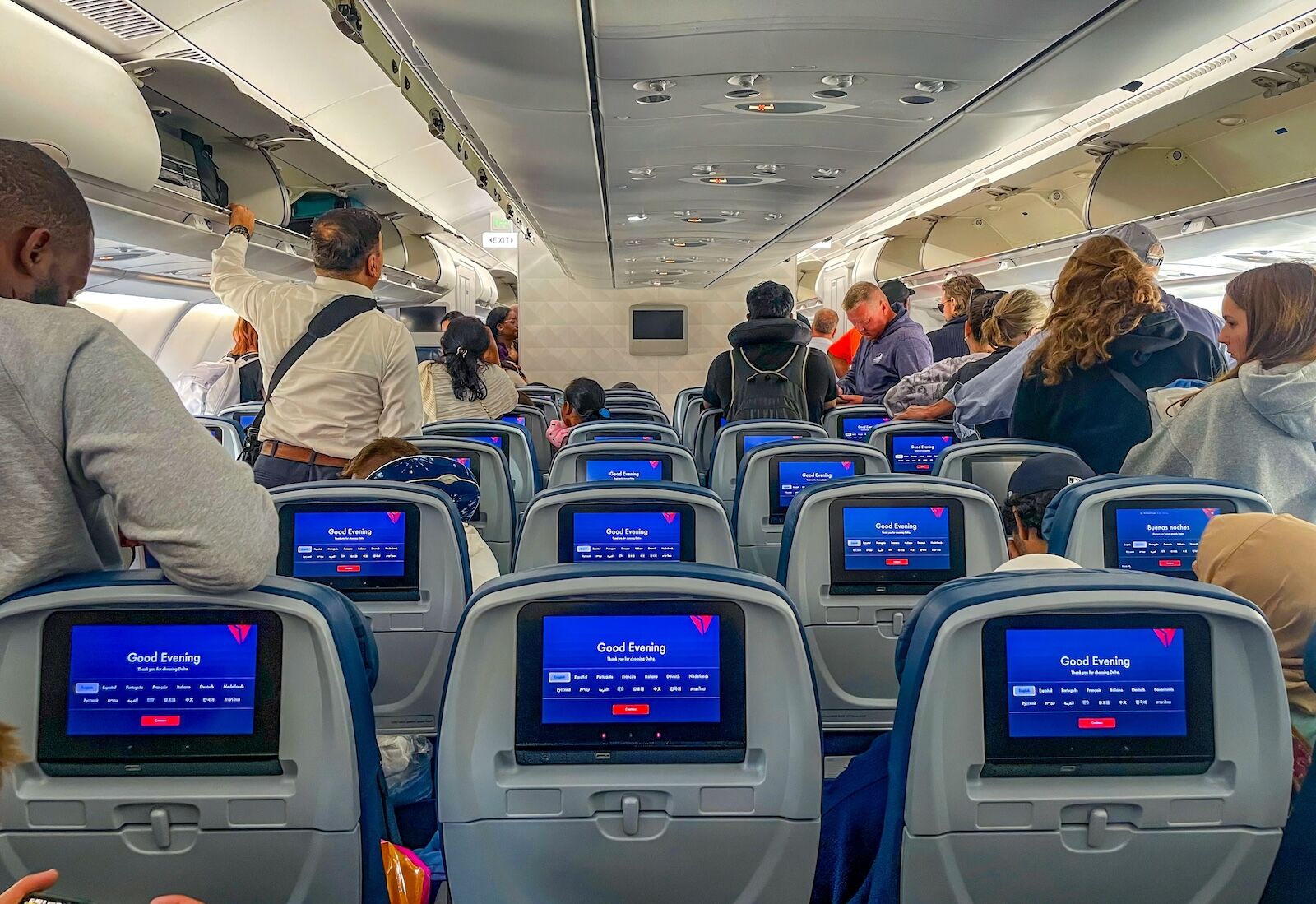
Flyers waiting to exit a crowded Delta Air Lines plane. Photo: Schager/Shutterstock
Delta leaves enforcement of the ban up to staff, and items that are easier to hide, such as a foot hammock under a blanket, may go unnoticed on some flights. In general, flight attendants and gate personnel are the primary enforcers of bans on in-cabin items. Those employees can require passengers to stow, gate check, or otherwise remove any prohibited items at any point in the travel experience.
How does it compare to other airlines?
Most US airlines lack a clear policy on comfort items as specific as Delta’s. United Airlines doesn’t list similar comfort items on its list of banned on-board items, though an official post on Twitter in 2023 stated that inflatable footrests aren’t allowed. Neither Southwest Airlines nor American Airlines specifically ban “comfort items” akin to Delta’s list on their websites. Personal comfort items don’t appear on TSA’s list of federally banned in-cabin items, which includes items such as lithium batteries, bowling pins, and kayak paddles. However, while in the air, flight attendants generally have the authority to ask passengers to alter their behavior if they deem anything a safety hazard. So while they may not be explicitly banned, it’s not a guarantee you’ll be able to use your inflatable tray table pillow on any other US airline, either.
However, other airlines around the world have explicitly banned similar items, such as Qantas, Emirates, and British Airways. 