The forests that still feel genuinely wild are, almost without exception, the ones under the most pressure. Lowland rainforests in Southeast Asia have been cleared for palm oil and rubber plantations at a pace that has left only isolated patches standing. In East Africa, ancient montane forests that survived the last Ice Age now border some of the most densely populated agricultural land on the continent. On the California coast, old-growth redwoods at the southern limit of their range face intensifying drought and fire, and across the country, the Southern Appalachians have less than 20 percent of their range under formal protection.
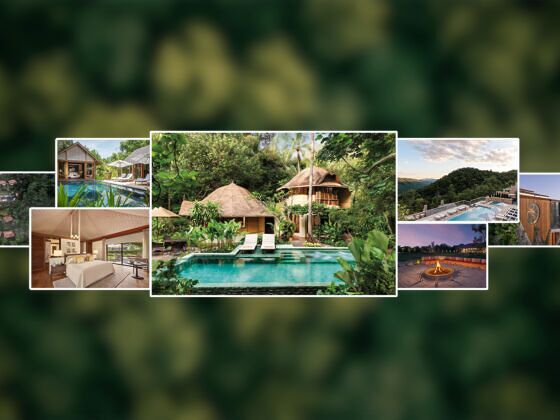
The Best Luxury Resorts in the World's Most Threatened Forests
The eight properties below sit inside those landscapes, from the Vindhya Hills of central India to the foothills of the Great Smoky Mountains in Tennessee. They are there because these places are extraordinary, and extraordinary landscapes attract the world’s top hoteliers. Some have built conservation programs into how they operate. Some have designed their architecture around the trees. All of them sit inside some of the most threatened and most remarkable forests remaining.
All products and listings featured on Matador Network are independently selected by our writers and editors. Matador Network may receive compensation if you make a purchase through these links.
Rayavadee resort, Krabi, Thailand
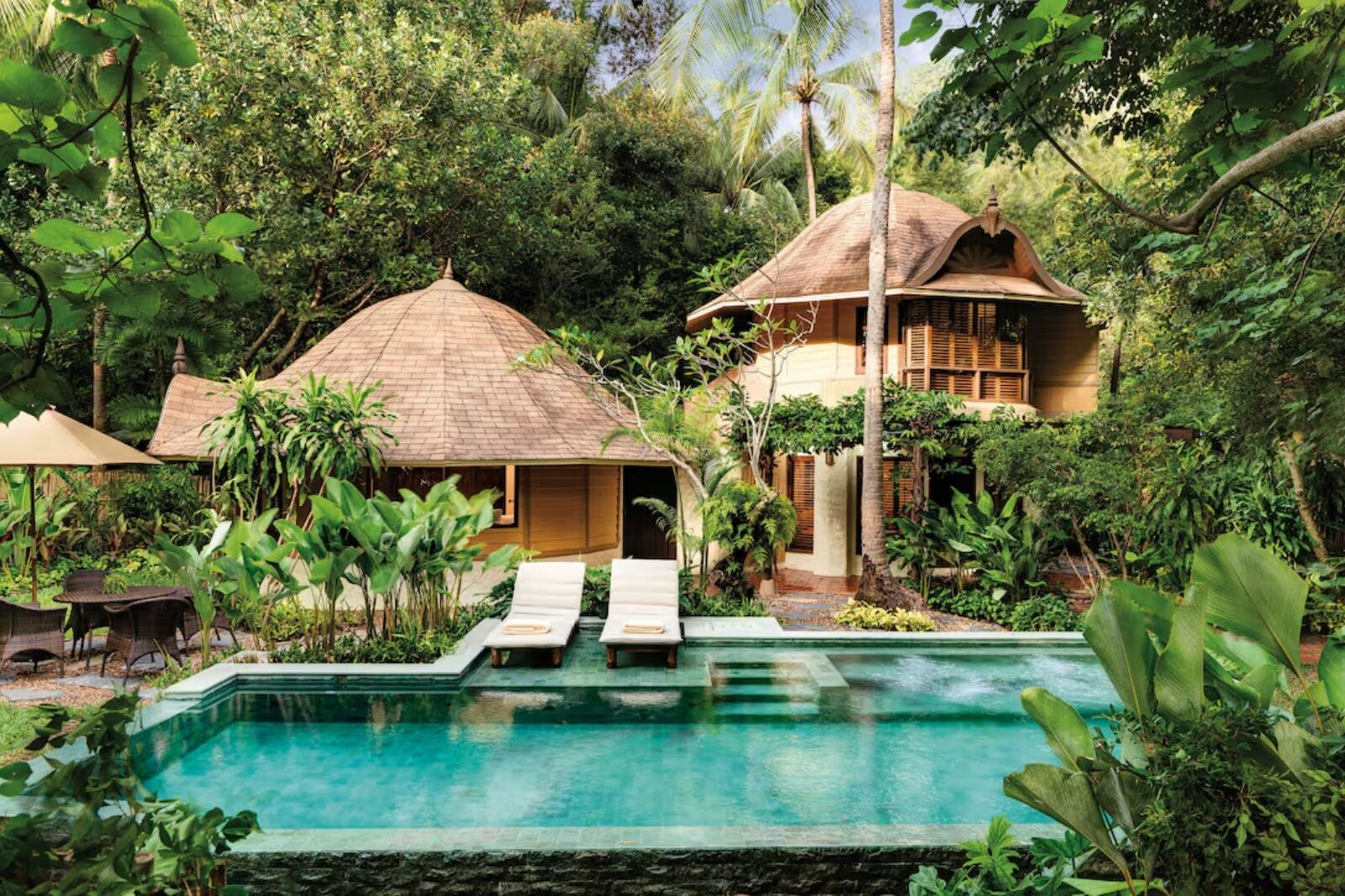
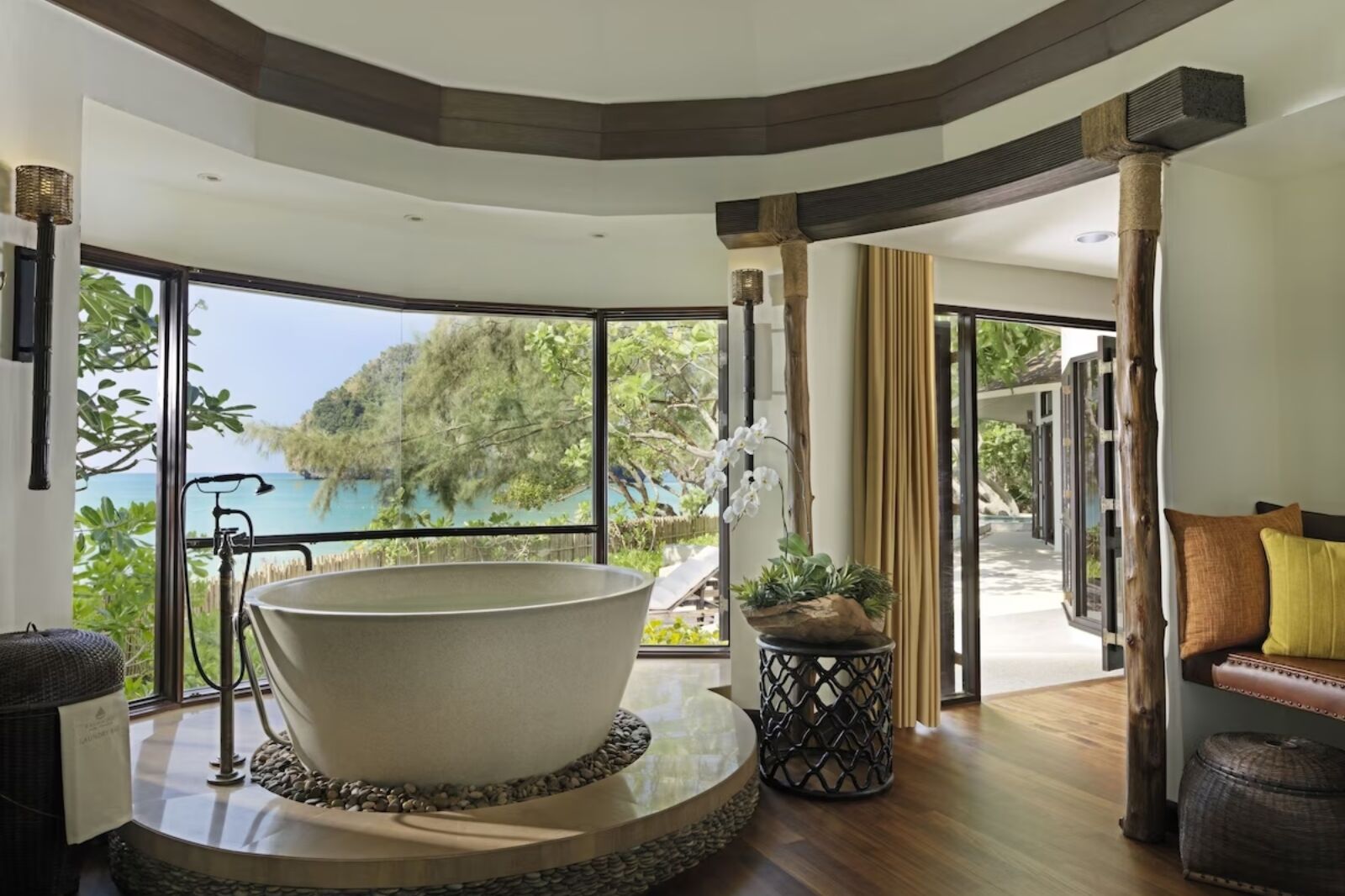
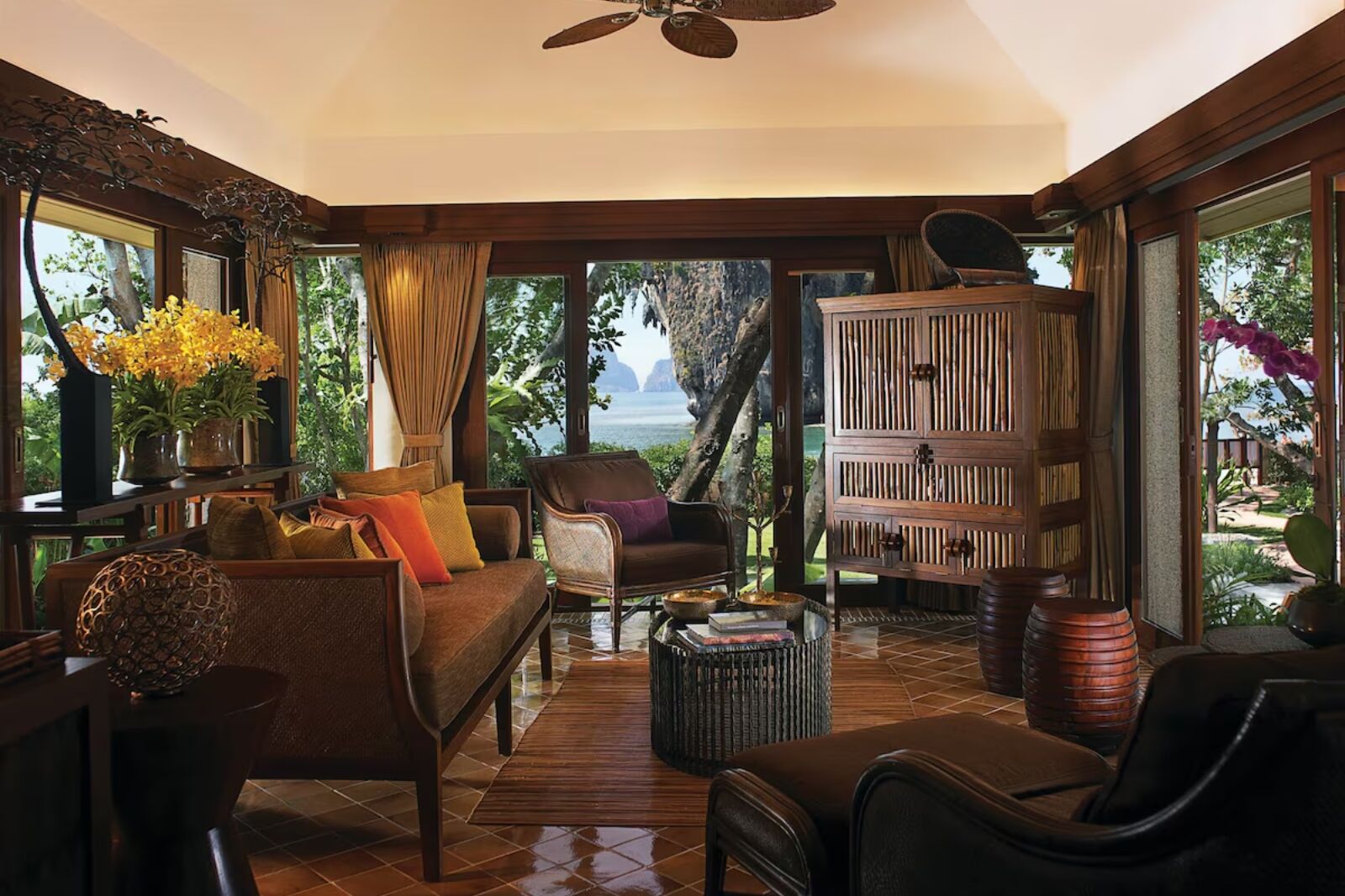
The province of Krabi on Thailand’s southern Andaman coast sits within a network of national parks and marine reserves. Inland, Khao Phra-Bang Khram Wildlife Sanctuary protects what remains of Thailand’s lowland rainforest, a habitat so reduced by palm oil and rubber plantation expansion that this sanctuary now holds one of the last intact patches in the country. More than 320 bird species have been recorded here, including Gurney’s Pitta, a small ground bird rediscovered in Krabi in 1986 after decades without a confirmed sighting, and now critically endangered and functionally extinct in Thailand due to habitat loss.
Rayavadee has been operating inside Krabi Marine National Park since the early 1990s, and its approach to the surrounding environment is what separates it from most luxury properties in the region. The resort’s 94 two-story pavilions and seven villas are spread across 26 acres of coconut groves on the Phranang Peninsula, accessible only by boat, with organized conservation programs — beach cleaning, mangrove planting, marine repopulation — running alongside the spa and four restaurants. Railay and Phranang beaches are a few minutes’ walk.
Blackberry Mountain, Tennessee
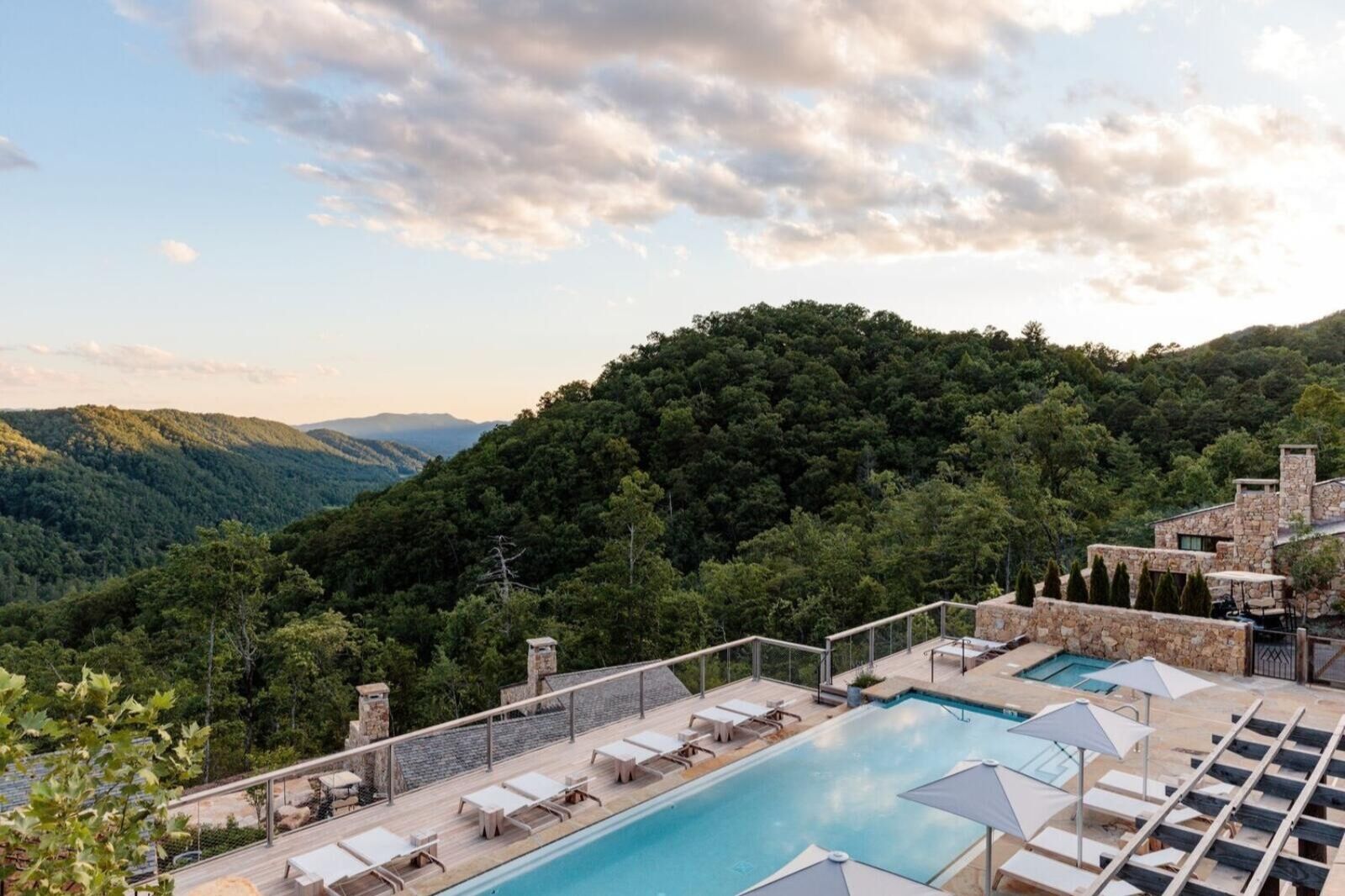
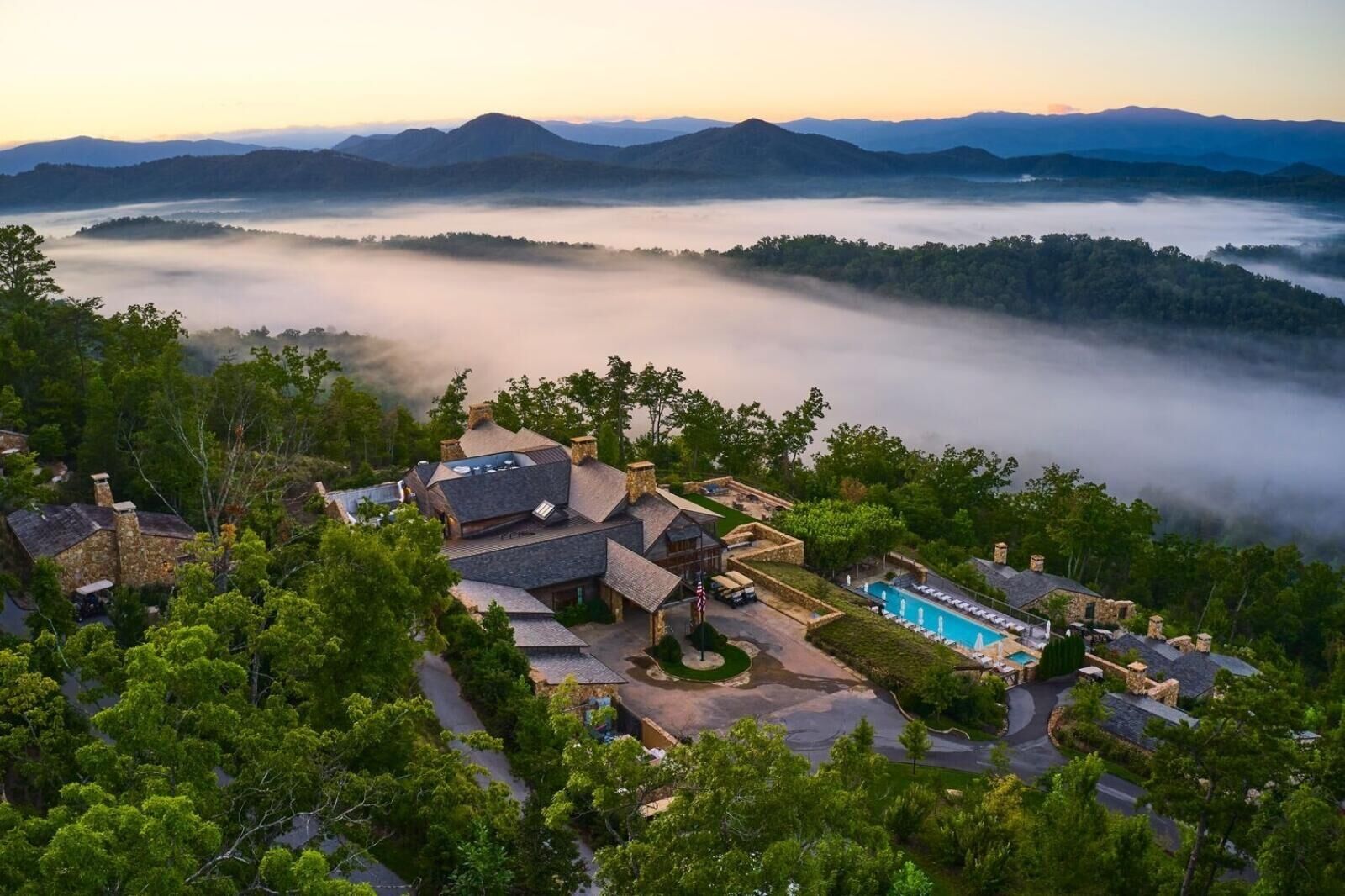
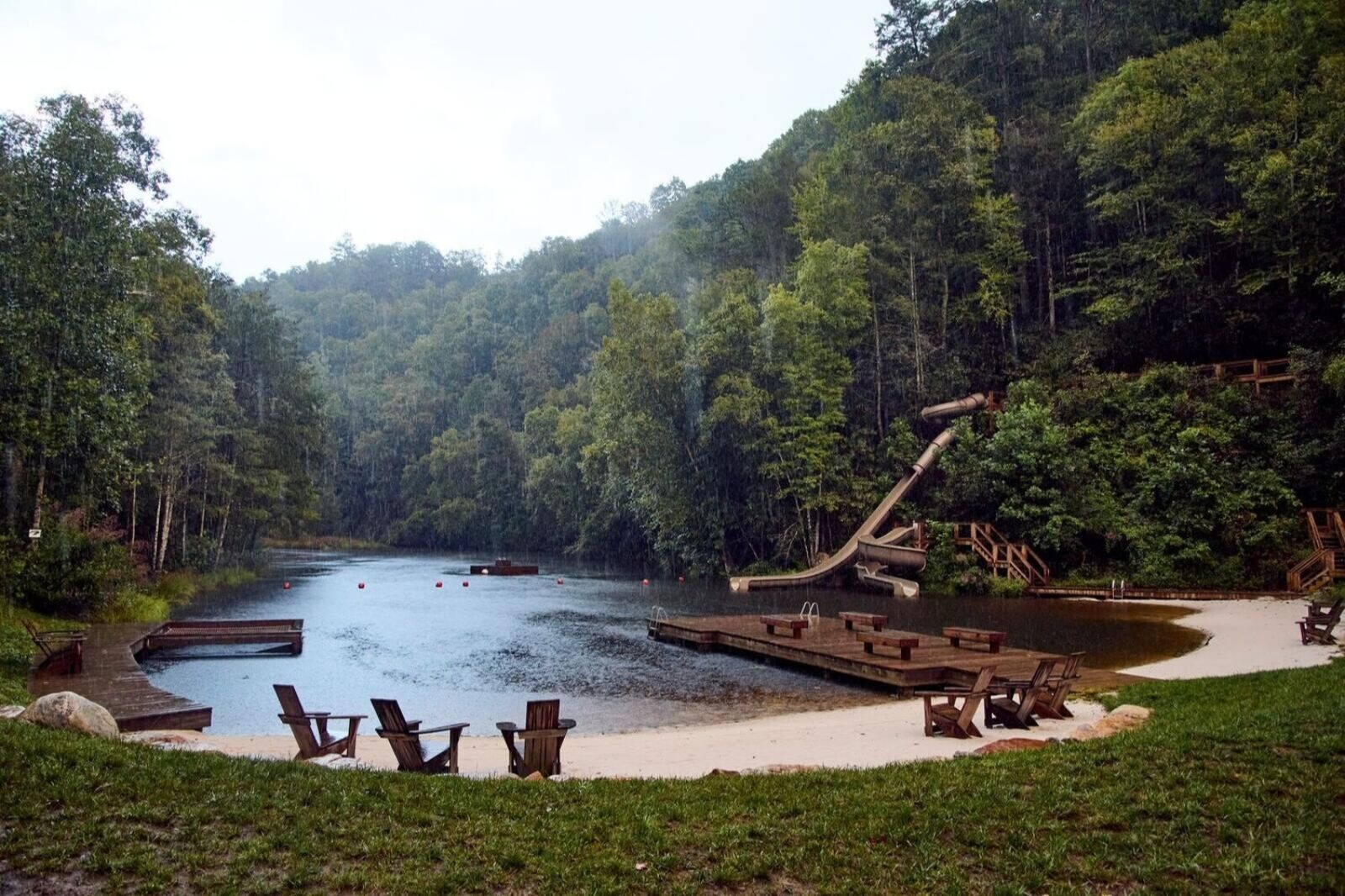
The Southern Appalachian forest is one of the most biodiverse temperate ecosystems on Earth, home to around 160 tree species and hundreds of endemic plants and animals found nowhere else. Fragmentation from logging, urban sprawl, and rural construction has reduced and isolated what remains. The foothills of the Great Smoky Mountains in eastern Tennessee sit at a critical point in that landscape, directly adjacent to protected park land.
Blackberry Mountain covers 5,200 acres in those foothills outside Walland, with 2,800 acres placed into conservation. The property borders Great Smoky Mountains National Park and shares its ridgeline with sister property Blackberry Farm. Stone cottages built from rock quarried on the mountain, treehouses in the forest canopy, watchman cabins along the top ridge, and multi-bedroom homes make up the accommodation. Around 40 miles of private hiking trails cross the property, alongside fly fishing, mountain biking, rock climbing, and horseback riding. Two restaurants draw on locally sourced ingredients, and the Nest Spa is carved into the mountain itself.
The Oberoi Vindhyavilas, Bandhavgarh National Park, India
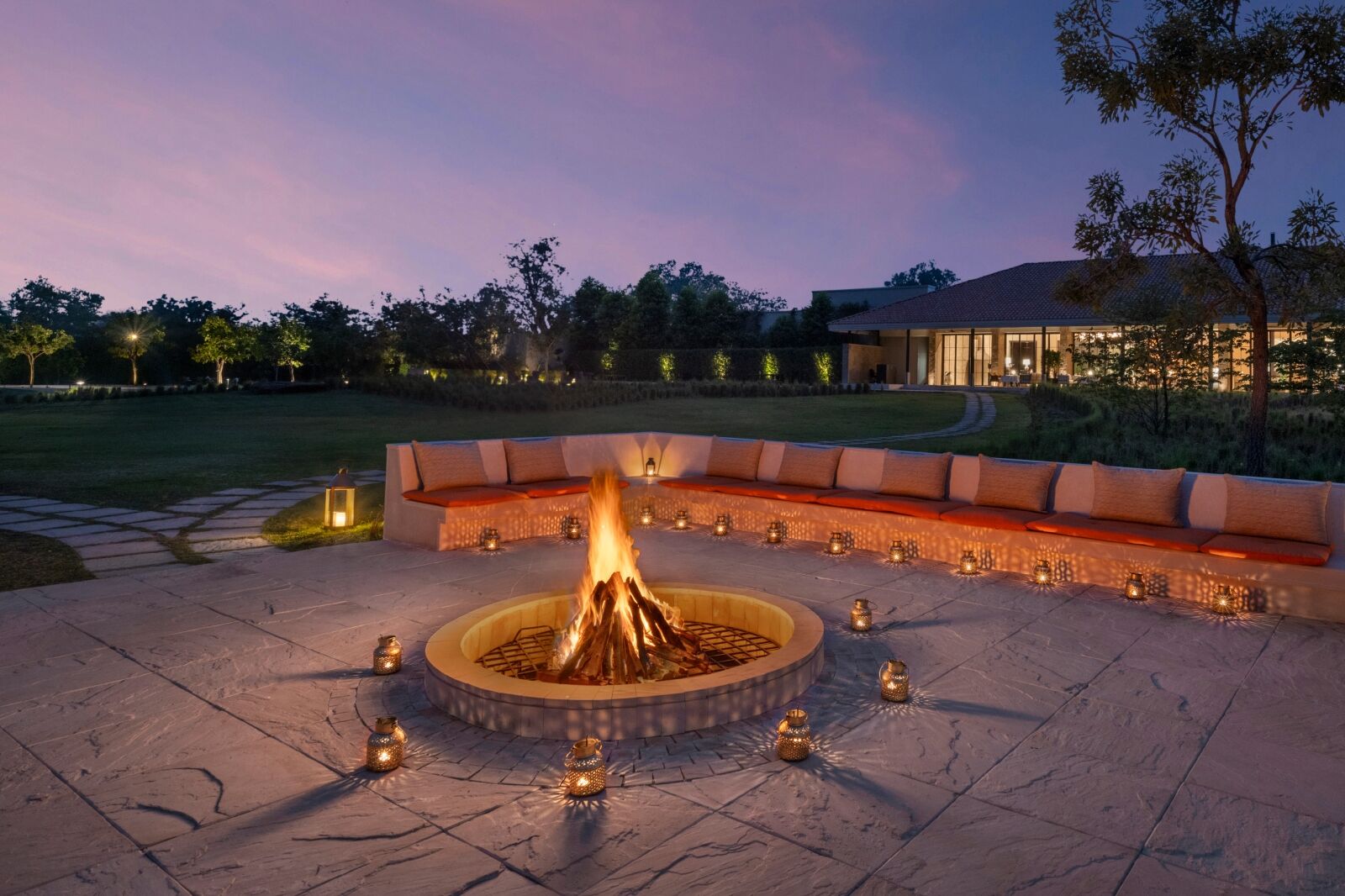
Photo: Amit Mehra / The Oberoi Vindhyavilas Wildlife Resort
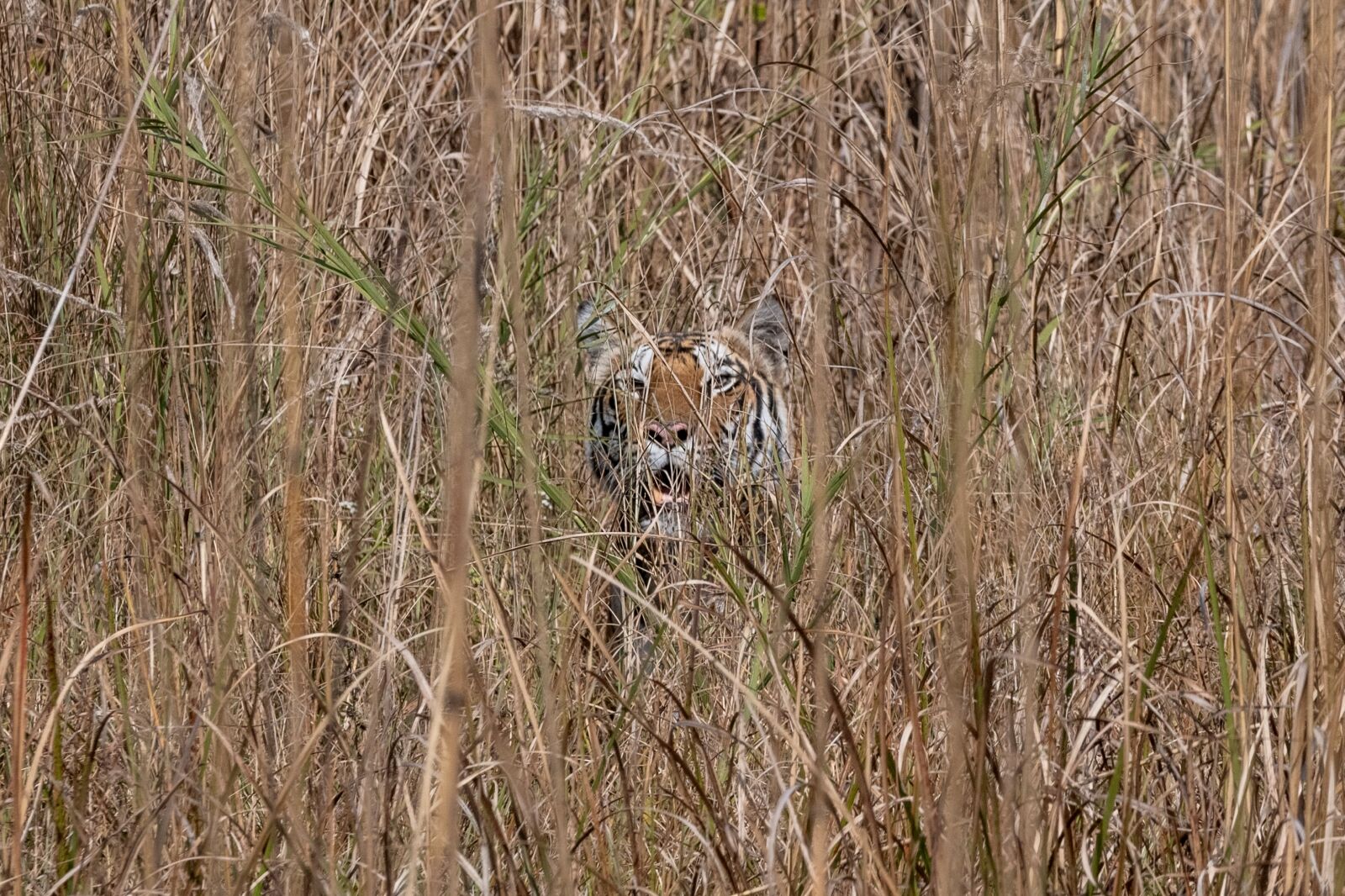
Photo: Amit Mehra / The Oberoi Vindhyavilas Wildlife Resort
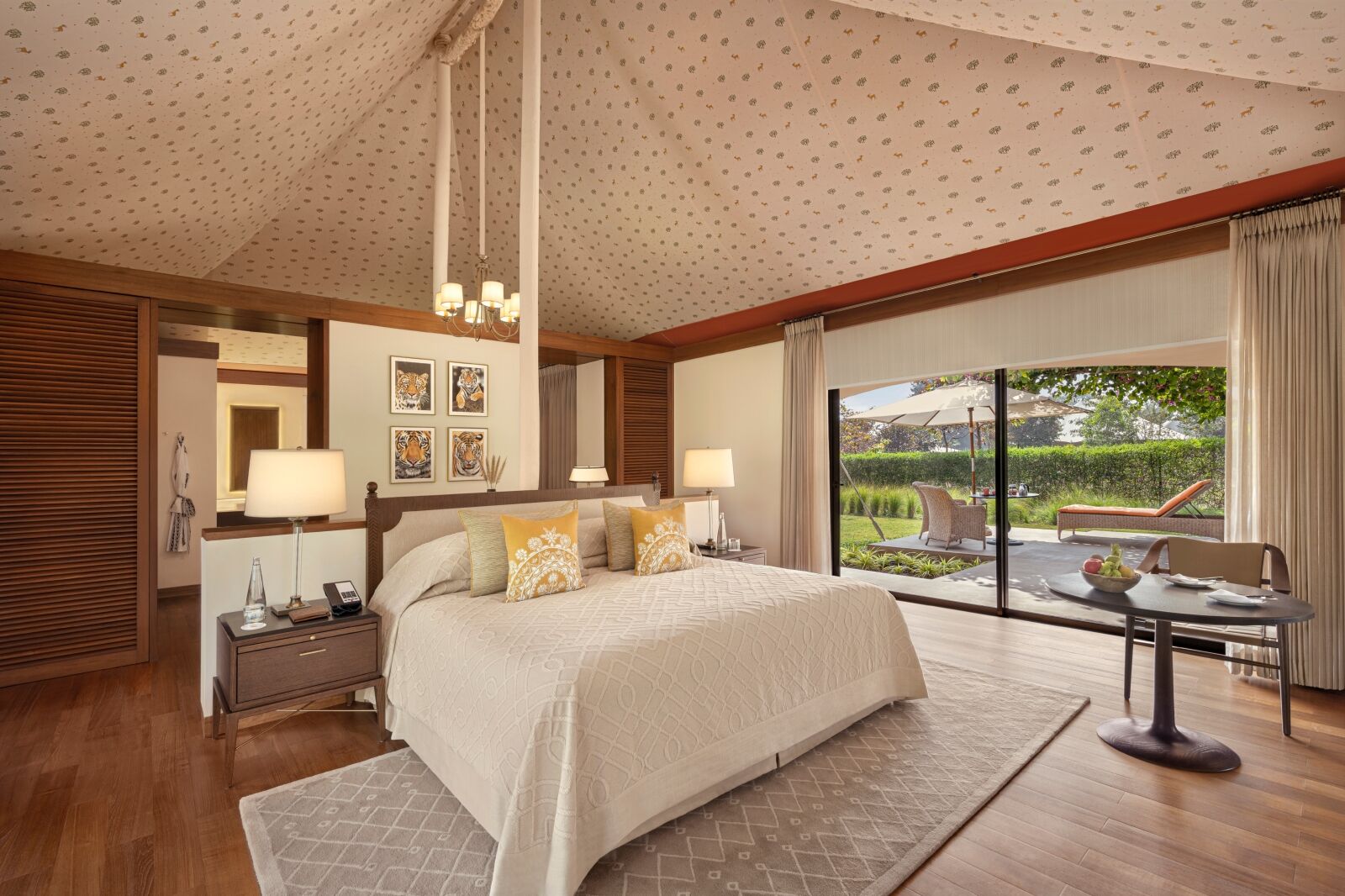
Photo: Amit Mehra / The Oberoi Vindhyavilas Wildlife Resort
Bandhavgarh National Park sits in the Vindhya Hills of Madhya Pradesh in central India, covering dense sal forest, bamboo thickets, and grassy valleys that shelter one of the highest densities of Bengal tigers anywhere in the world. The park carries a specific piece of wildlife history: in 1951, the Maharaja of Rewa captured the last known wild white tiger here, a cub named Mohan that became the ancestor of virtually every white tiger in captivity today. The Bengal tiger remains endangered globally, but Bandhavgarh’s population has grown steadily since the park came under formal protection in 1968 and joined India’s Project Tiger program in 1993.
The Oberoi Vindhyavilas opened in March 2025 on just over 20 acres a few minutes’ drive from the park entrance. The 19 luxury tents each have a private garden and deck; two villas add private pools. Interiors feature Gond tribal artwork and hand-carved details by local artisans — the Gond and Baiga communities have lived in this landscape for centuries. Guided safari drives are led by the resort’s trained naturalists, and the property runs on solar energy with water conservation systems throughout.
The Datai Langkawi, Langkawi, Malaysia
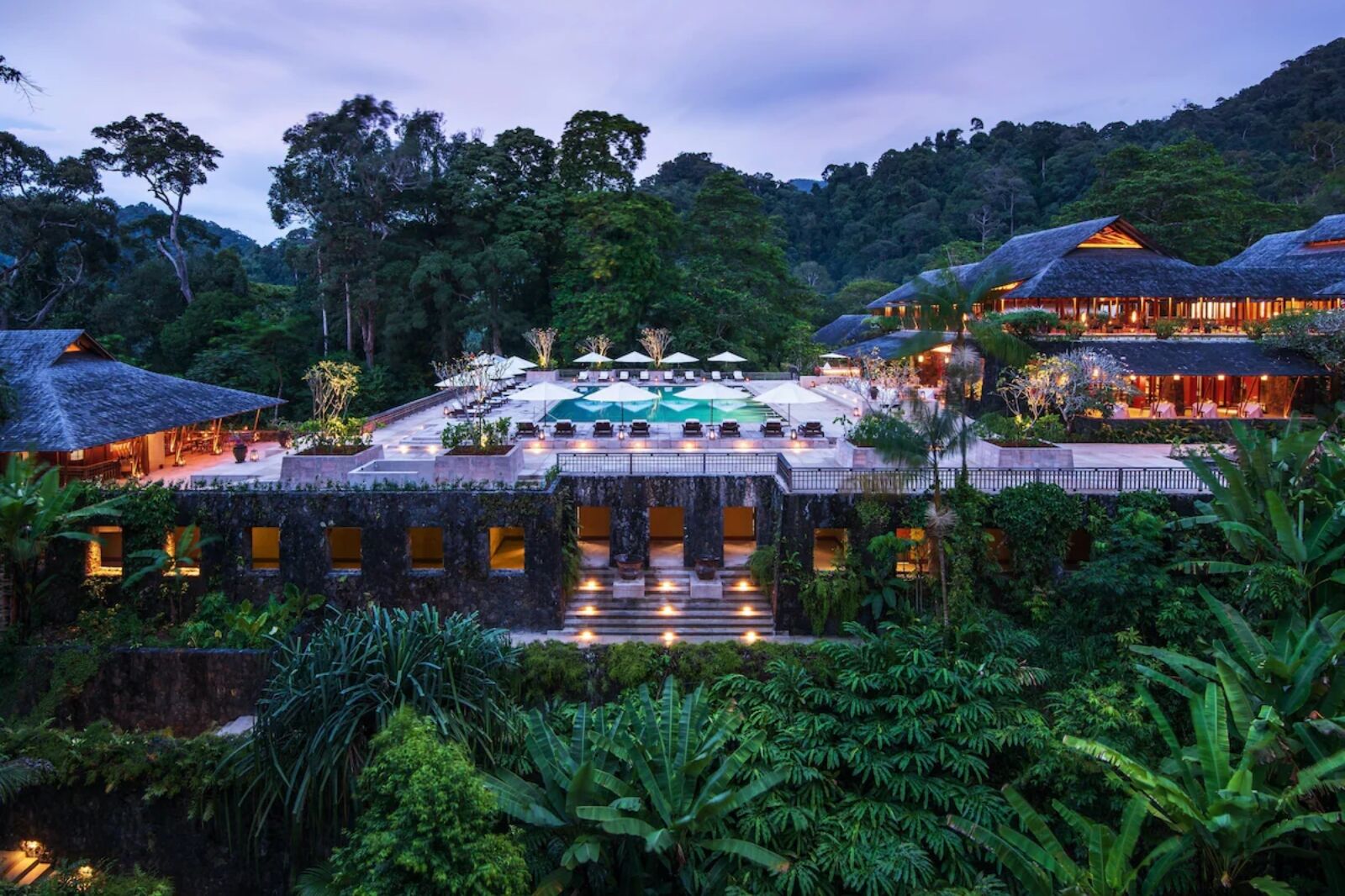
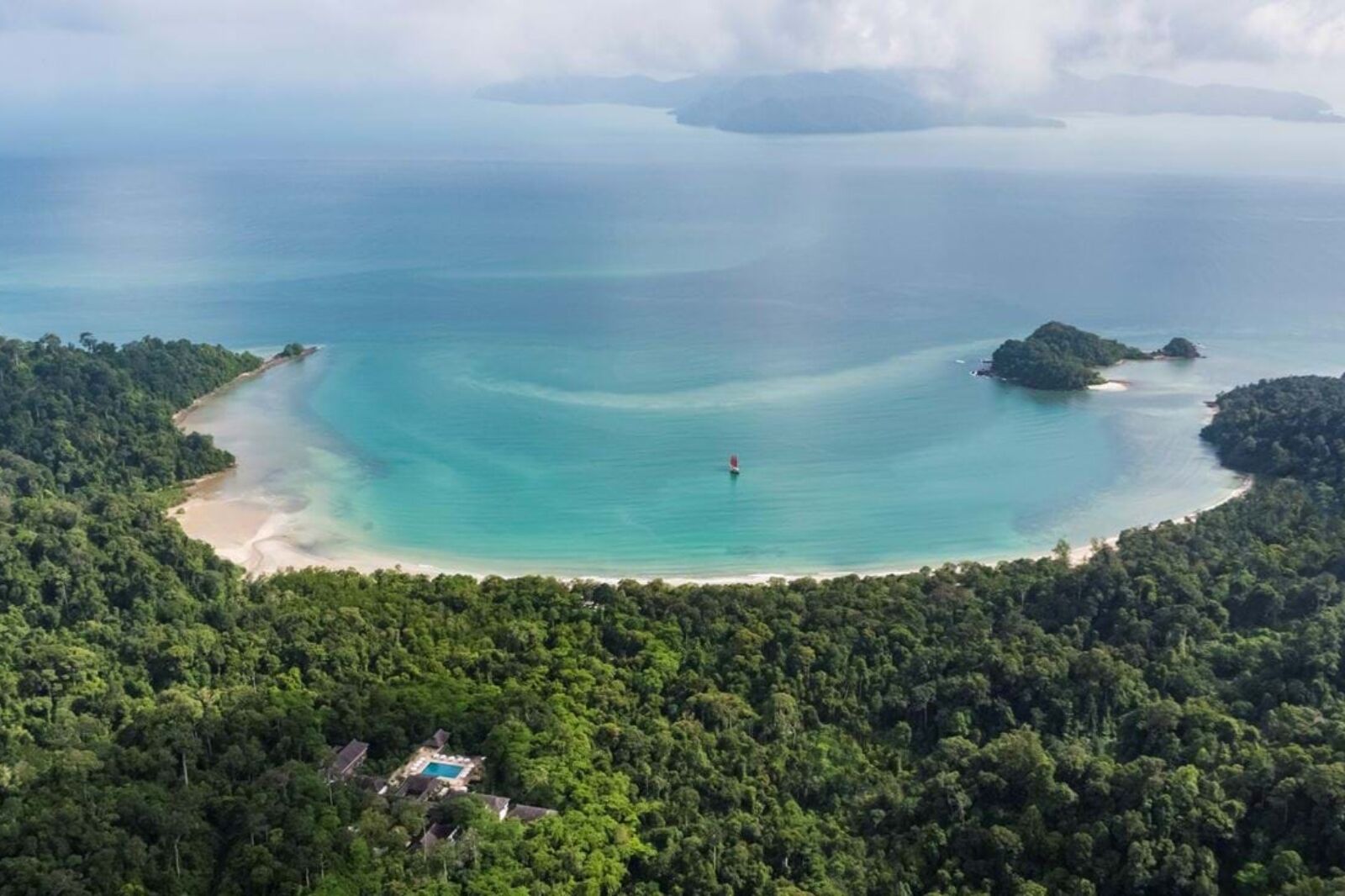
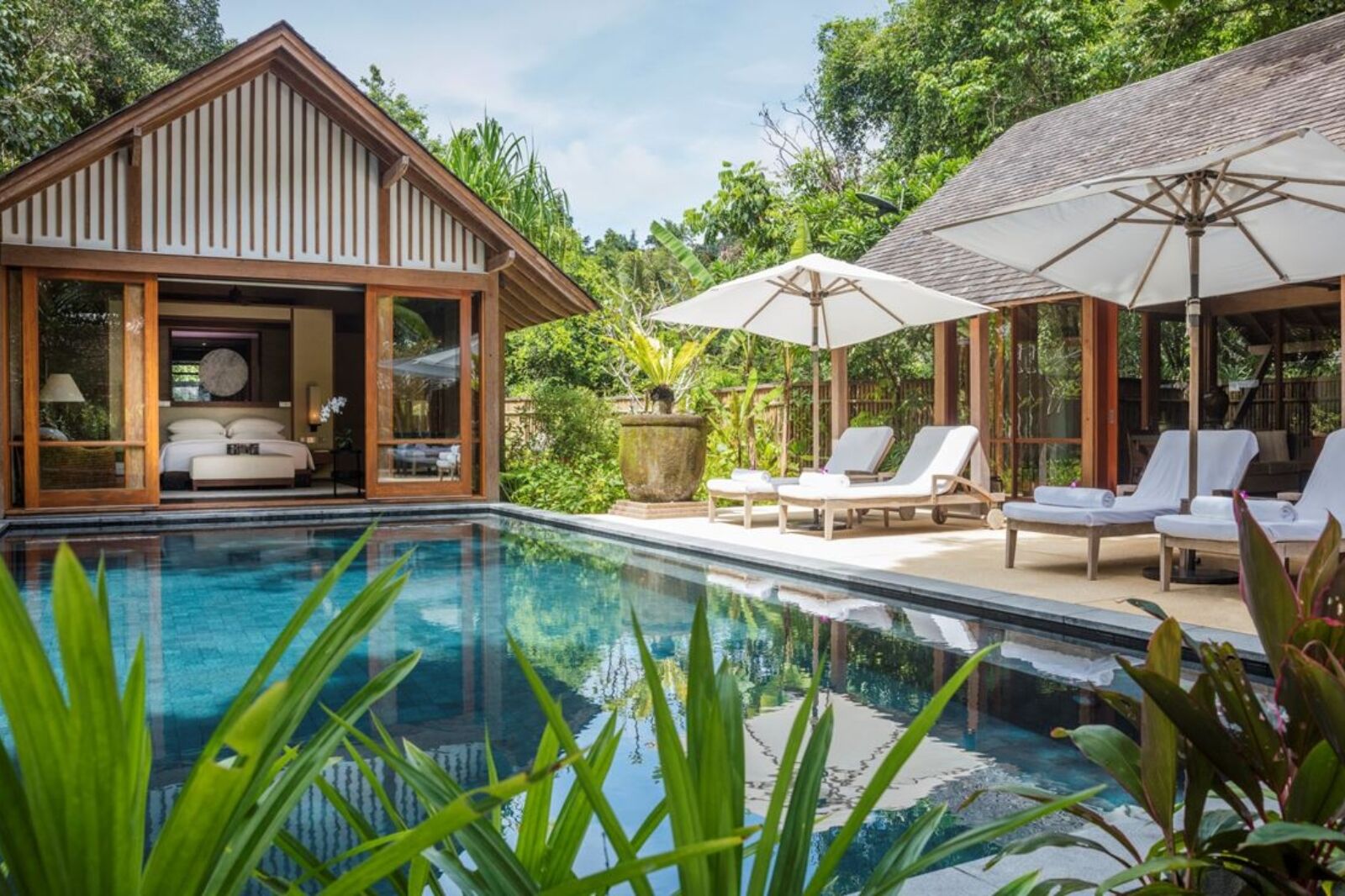
Langkawi is an archipelago of 99 islands in the Malacca Strait, 20 miles off the coast of northwestern Malaysia. The rainforest covering the main island is estimated to be 10 million years old, but roughly half of it has been lost to development and agriculture over the past three decades. What remains is fragmented, and the island’s endemic species — among them the Great Hornbill and 350 butterfly species found nowhere else — are under documented pressure from continued habitat loss.
One of the intact patches that remains is Datai Bay on the northwest coast, where The Datai has operated since 1993. Designed by Australian architect Kerry Hill to minimize its footprint, the resort occupies a forested ridge set back from the beach. A $60 million renovation in 2018 added a Nature Center with a working laboratory and ecology classes alongside naturalist-led walks through the woodland. The resort also runs its own native tree nursery, collecting seeds from the surrounding forest and replanting them across the island in partnership with Malaysia’s Department of Forestry.
Nandini Jungle by Hanging Gardens, Ubud, Bali
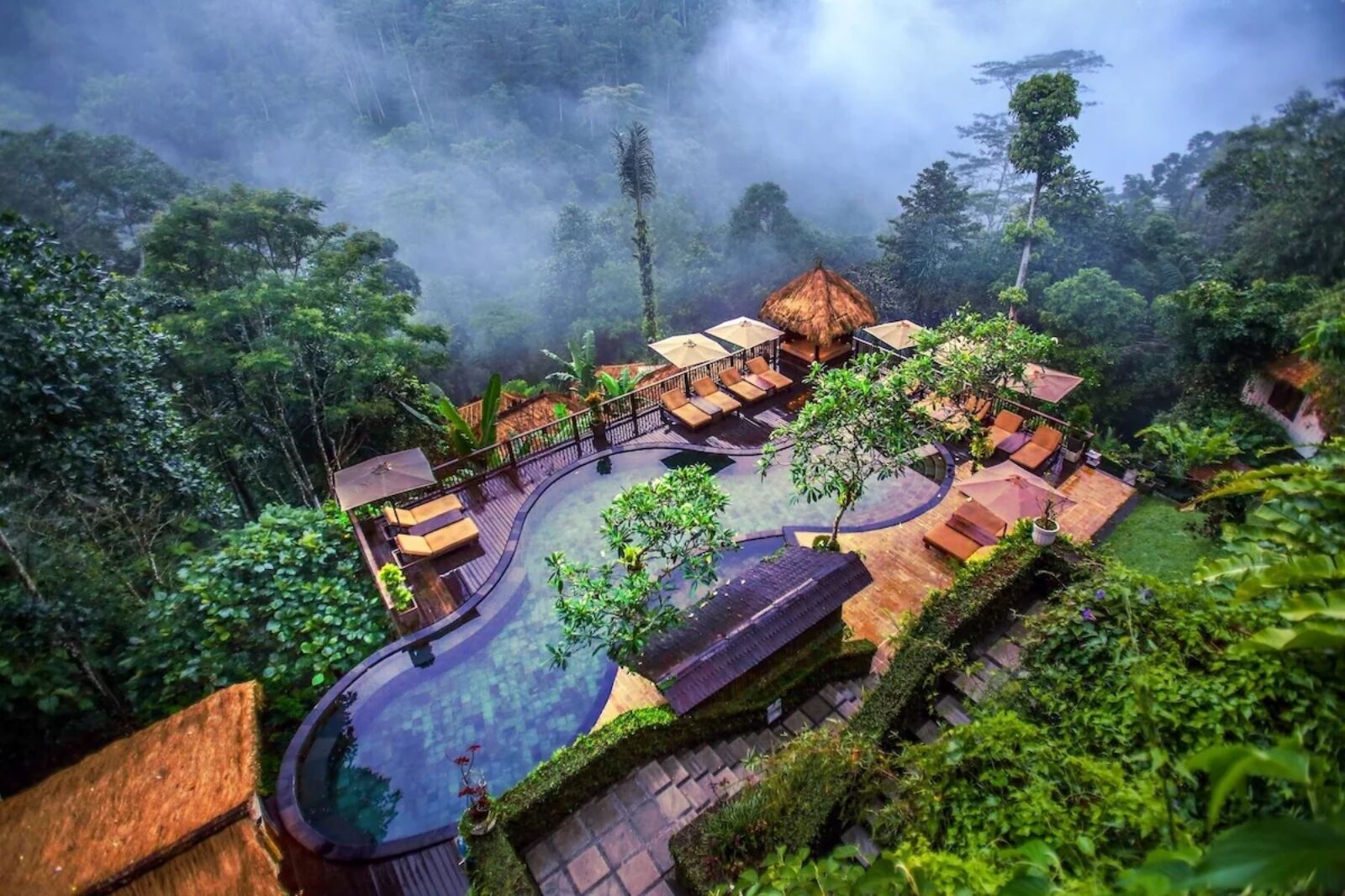
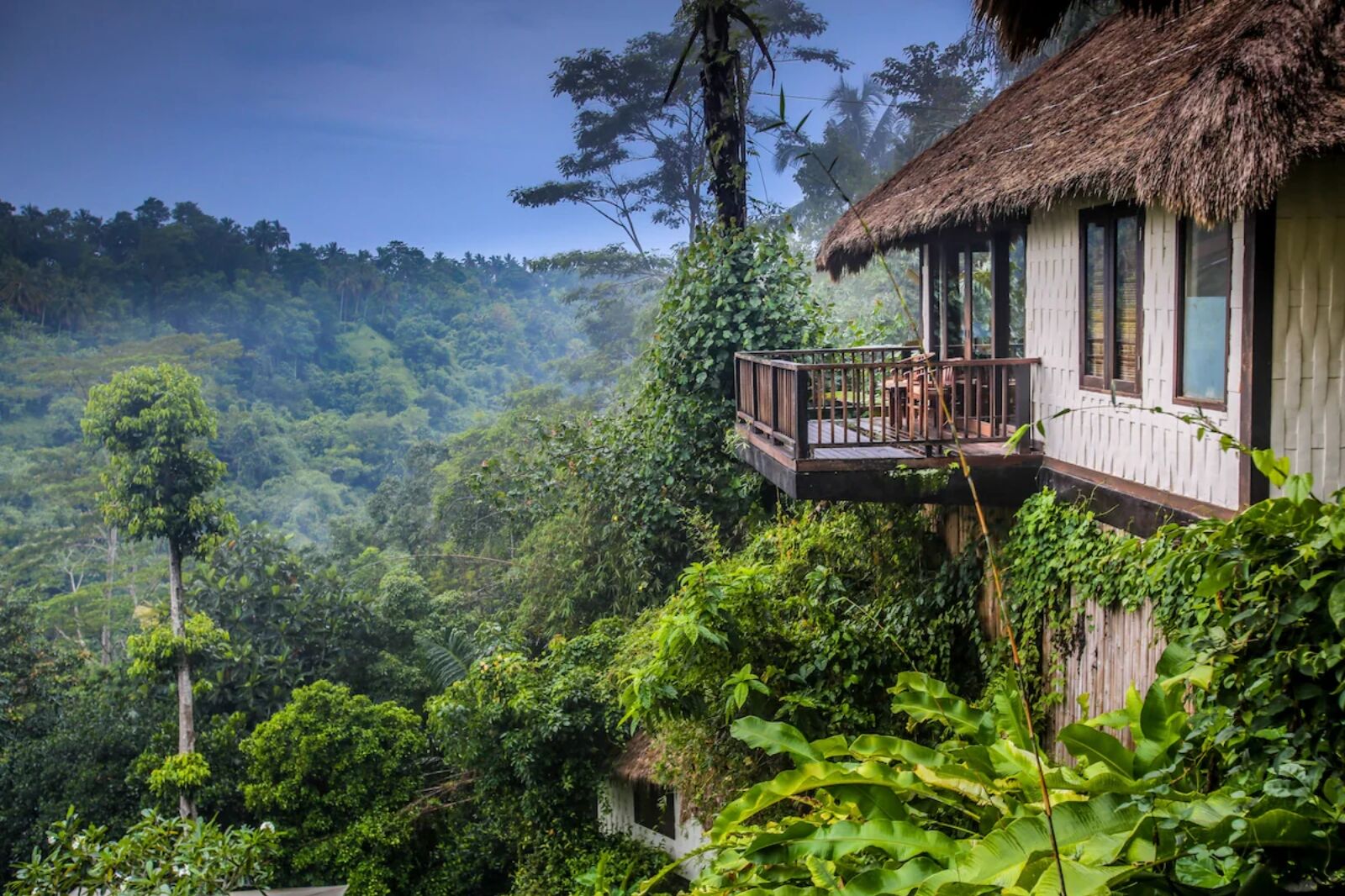
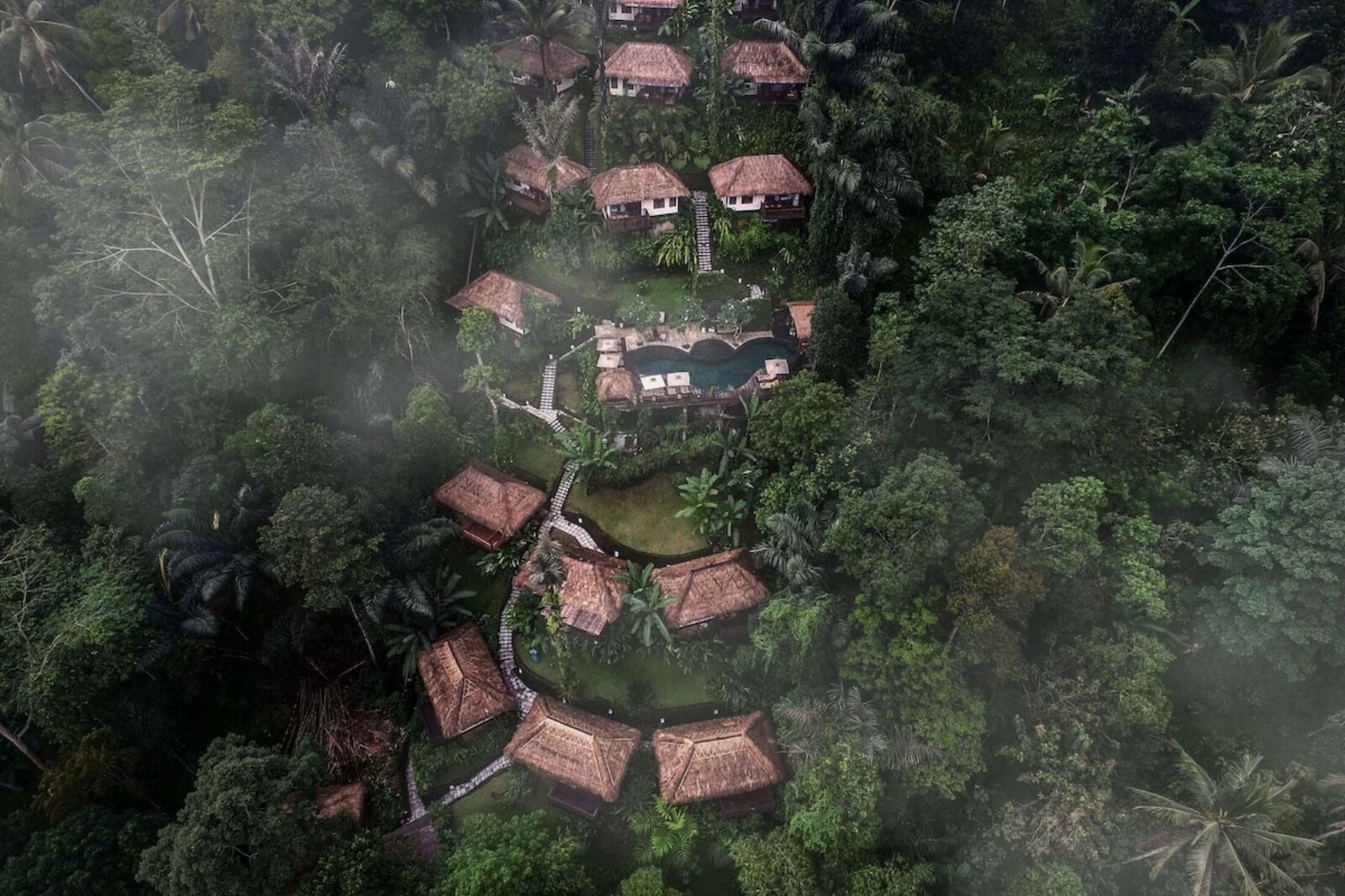
Bali has lost nearly 90 percent of its natural forest cover to agriculture and development. In the uplands around Ubud and Payangan, luxury tourism construction has become one of the primary drivers of what remains being cleared. The Ayung River gorge holds one of the island’s last intact stretches of riverine rainforest, and it sits at the center of that pressure.
Nandini Jungle by Hanging Gardens is set above the Ayung gorge in the Payangan rainforest, about 30 minutes from Ubud. The 18 villas are positioned along the ravine edge, each with a private balcony looking out over the river below. The Sungai Spa operates at the river’s edge using water from a local freshwater spring, with treatments drawing on traditional Balinese practice: flower baths, Balinese massage, coconut body scrub. A resort monorail runs down to the river, and morning meditation and guided jungle walks are available on site.
Pacuare Lodge, Limón, Costa Rica
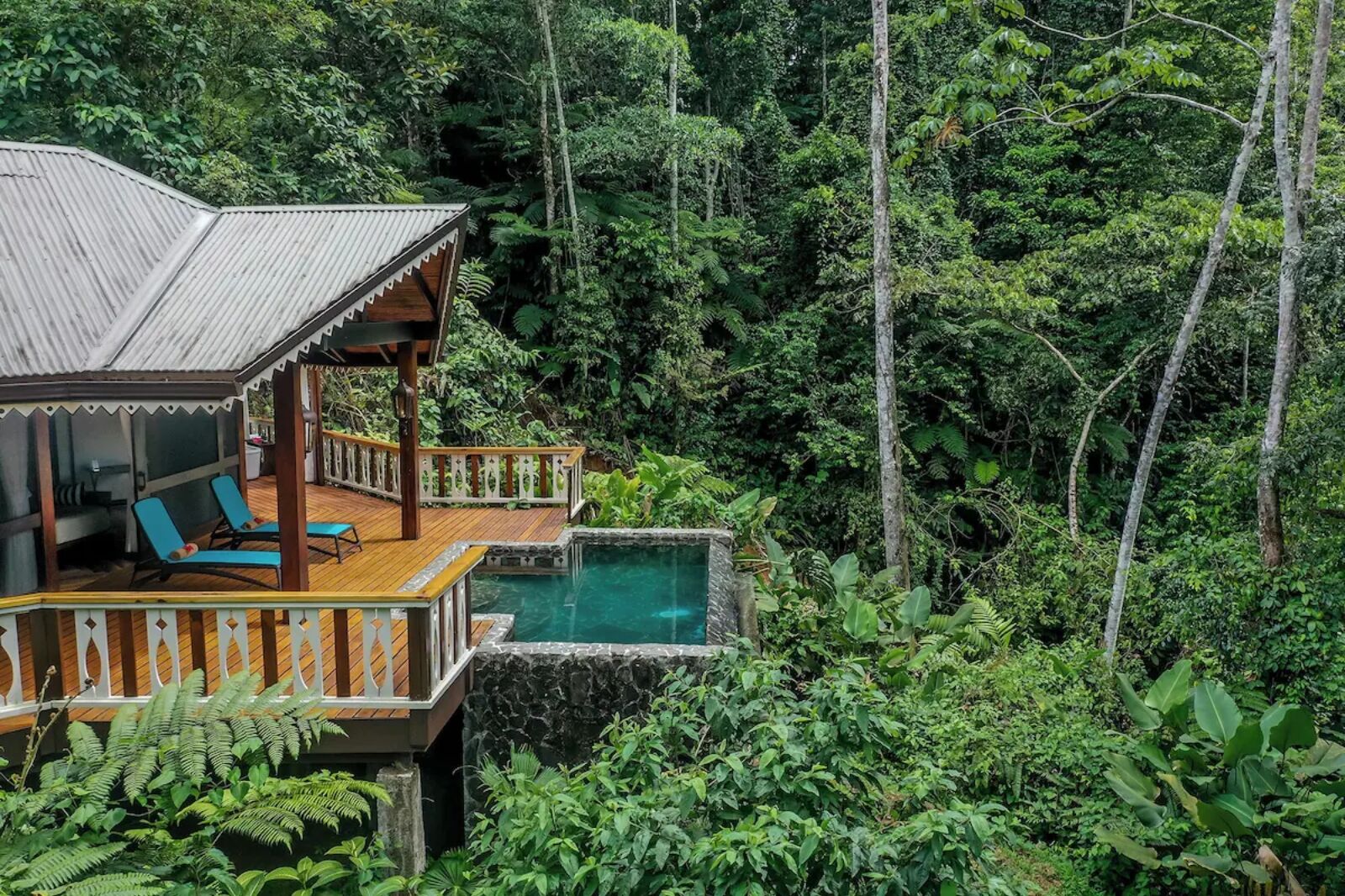
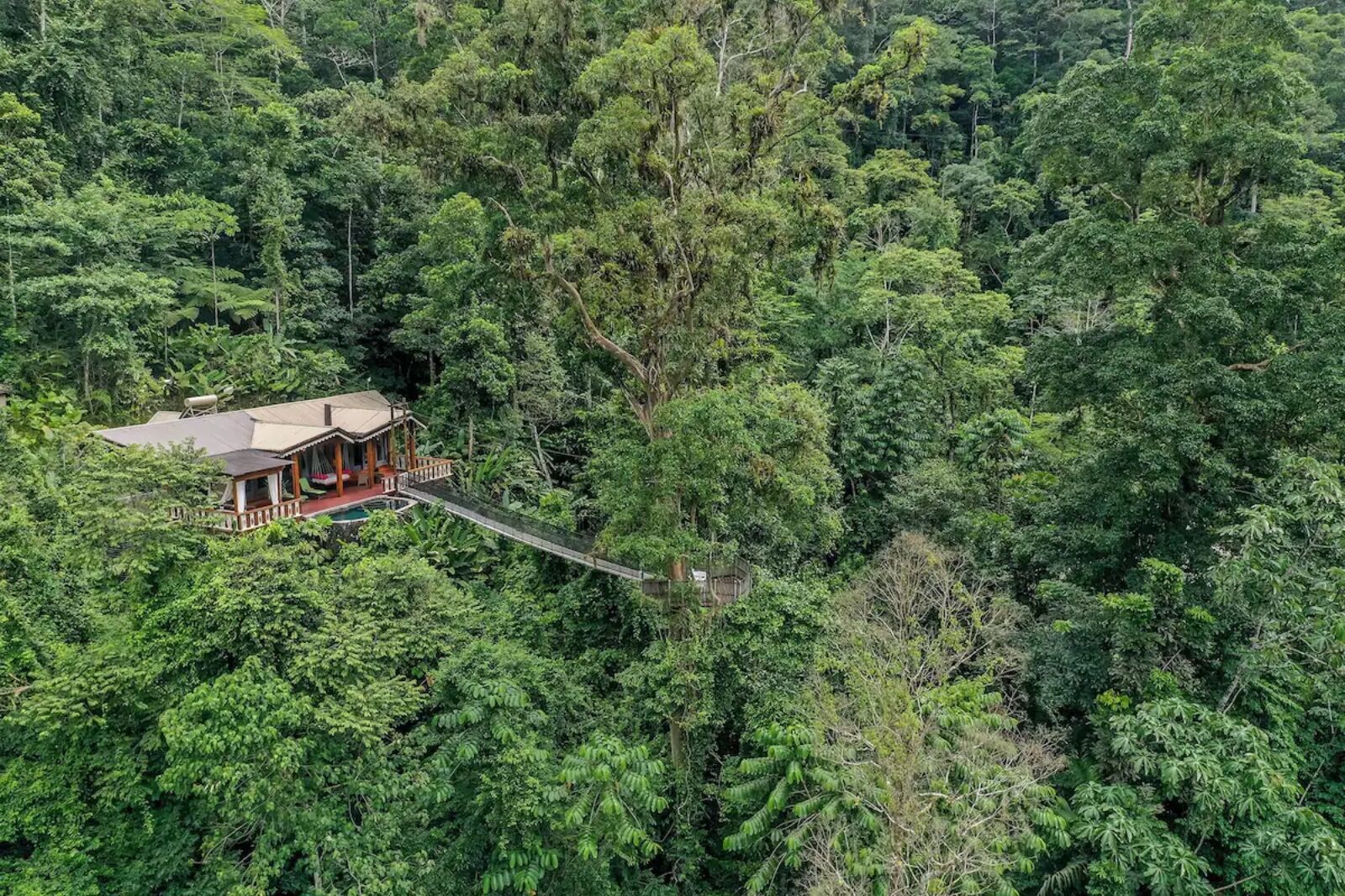
The Río Pacuare drops from the Cordillera de Talamanca through 85 miles of primary rainforest before reaching the Caribbean coast north of Limón. The river and the jungle lining its banks support jaguars, ocelots, tapirs, over 300 bird species, and nesting sea turtles at its mouth. Costa Rica’s national energy company has pursued hydroelectric dam proposals on the Pacuare since the 1980s. A presidential decree currently protects the river from large-scale projects until 2030, but the threat has not gone away.
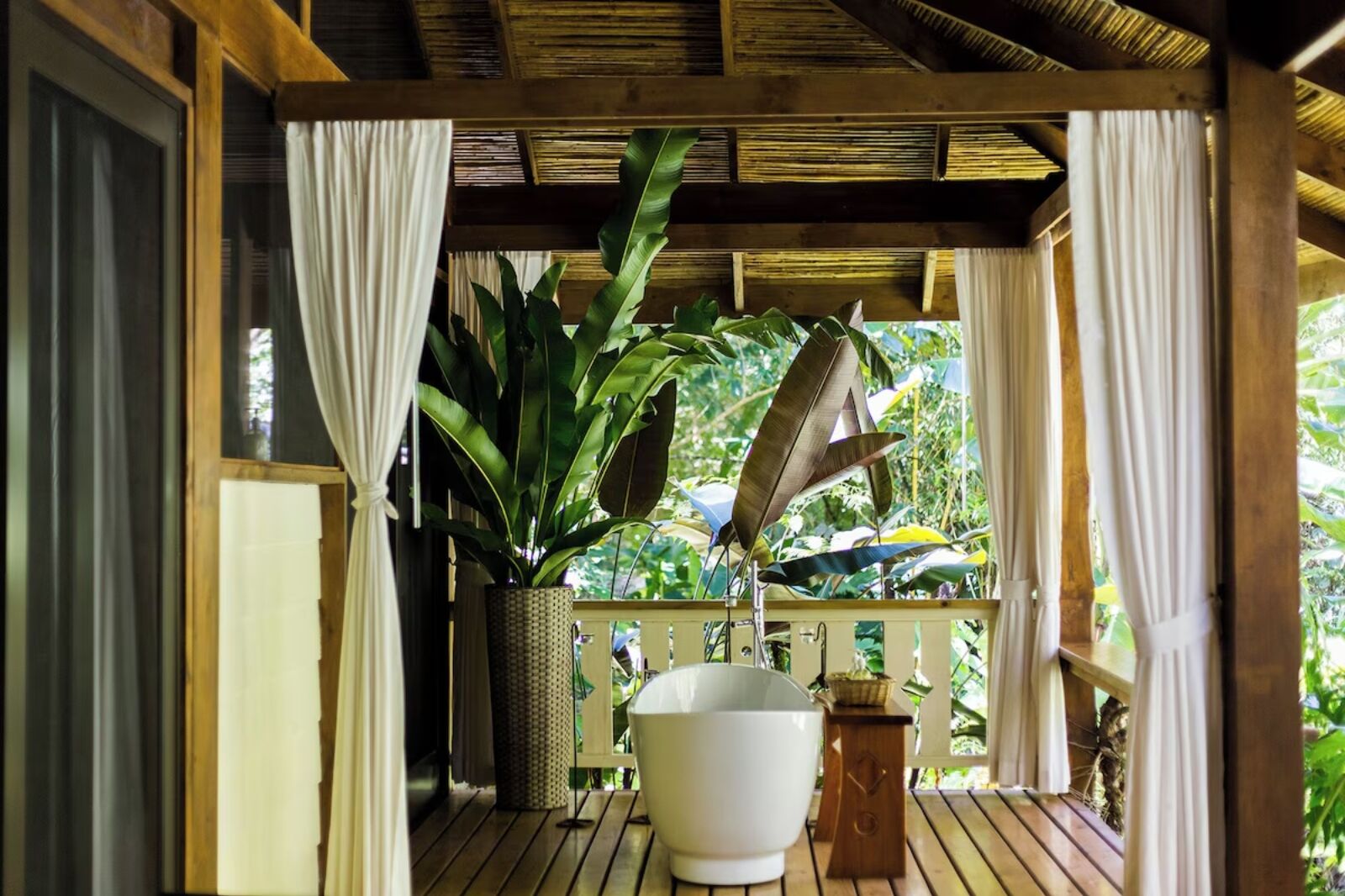
The lodge sits on the river’s banks and is reachable only by rafting the Pacuare itself. The 20 suites and villas are built in a style drawing on the architecture of the indigenous Cabécar people, whose territory borders the lodge. Guided cultural hikes are also led by Cabécar community members, and the property maintains a direct revenue-sharing relationship with them. Room categories range from open-air riverside suites to the Linda Vista villas on the ridge above, each with private plunge pools and views over the surrounding rainforest. The kitchen draws on locally grown organic produce, served in the two-story Nairi Awari restaurant.
Kaara Gorilla Mountain Lodge, Bwindi Impenetrable National Park, Uganda
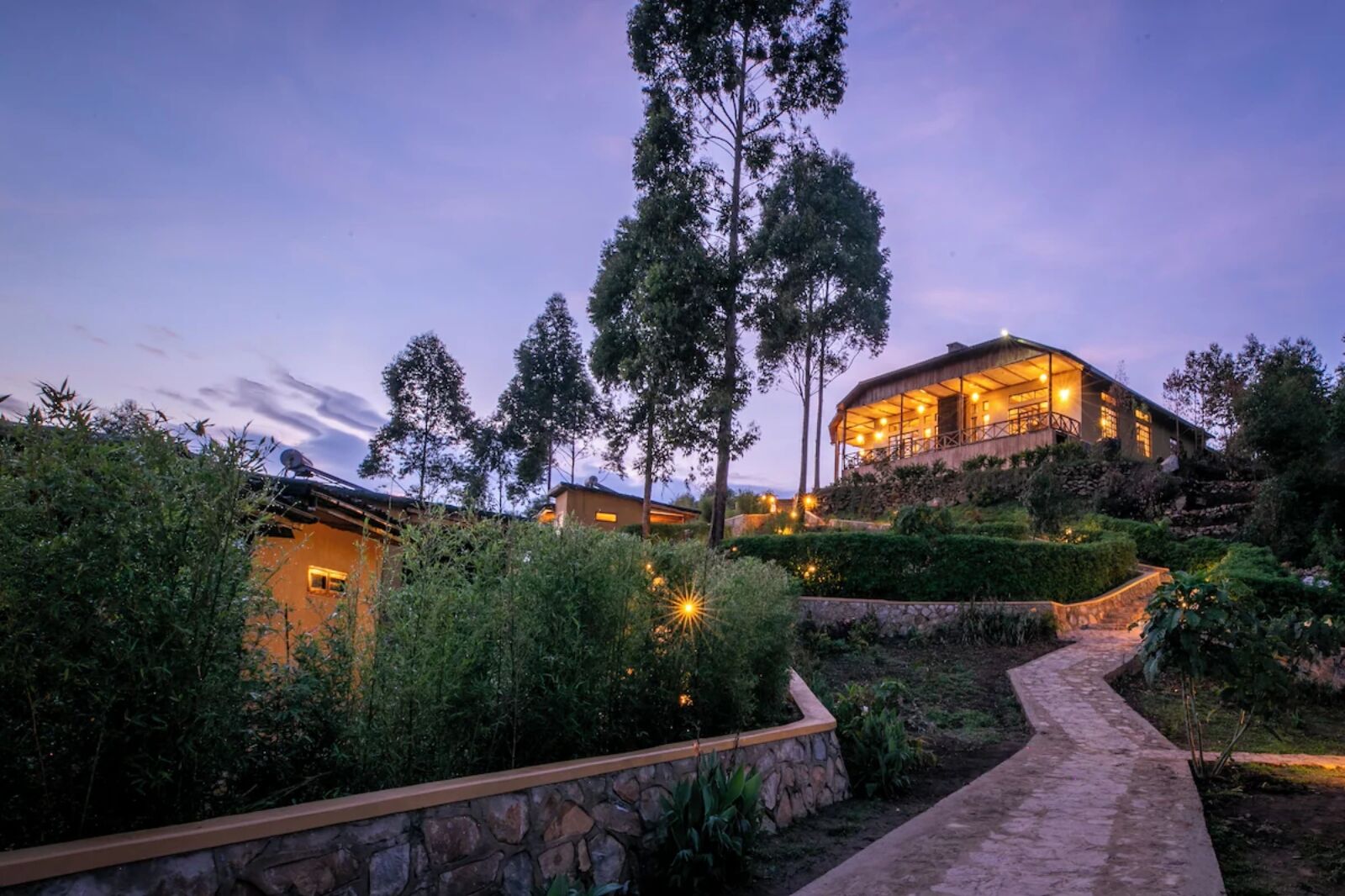
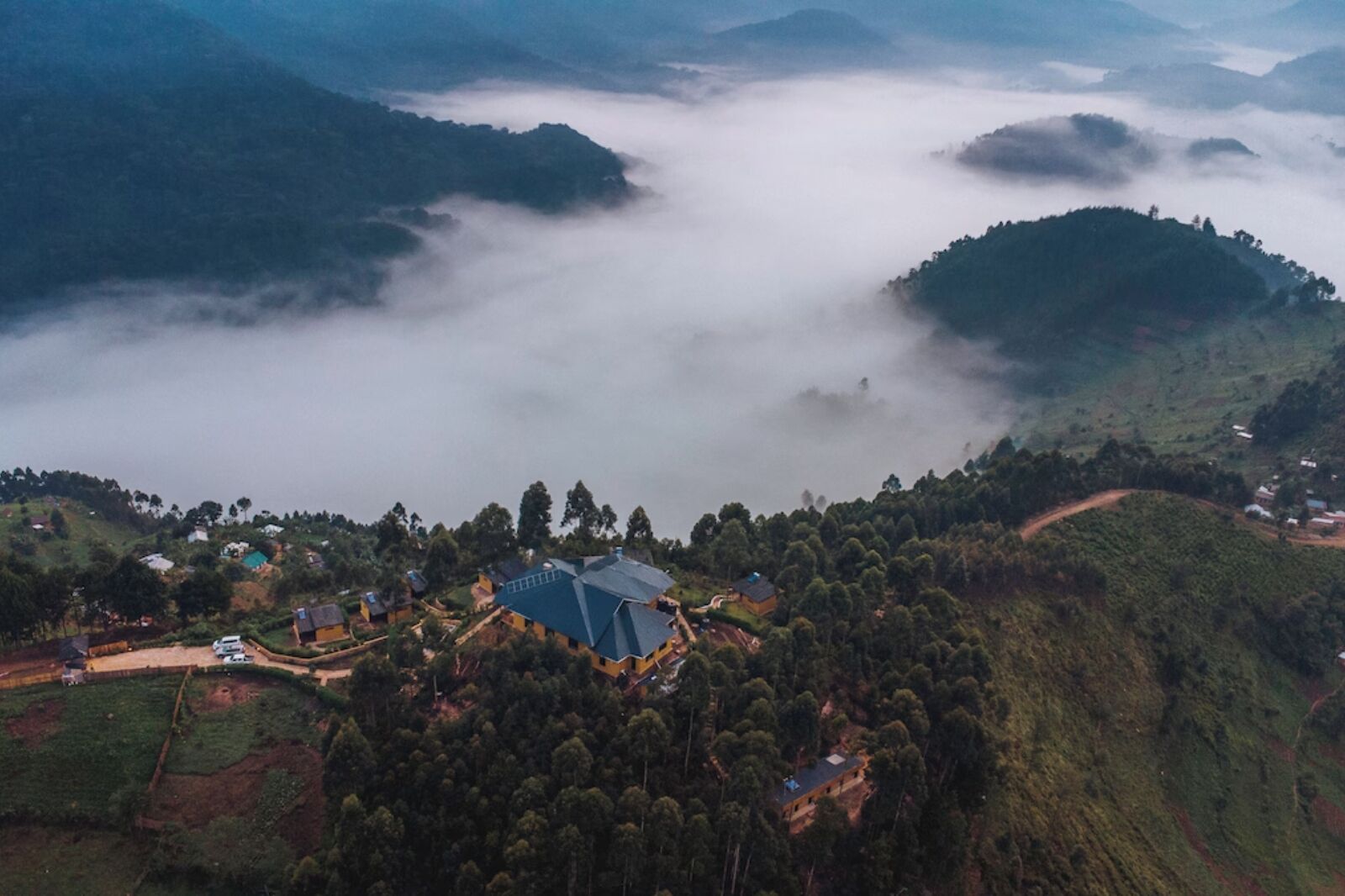
Bwindi Impenetrable National Park occupies the eastern edge of the Albertine Rift in southwestern Uganda, a forest more than 25,000 years old that survived the last Ice Age as a refugium when surrounding landscapes dried out. It covers roughly 80,000 acres at elevations between 3,800 and 8,550 feet, and its age and altitude range give it more tree species than almost any comparable area of forest in Africa. Bwindi is a UNESCO World Heritage Site and home to around 460 mountain gorillas — roughly half of the global population of just over 1,000. The gorilla population here is the only wild great ape population confirmed to be growing, a recovery built on decades of conservation work and trekking permit revenues that fund both park protection and programs for surrounding communities, including the Batwa, who were displaced when the park was established in 1991.
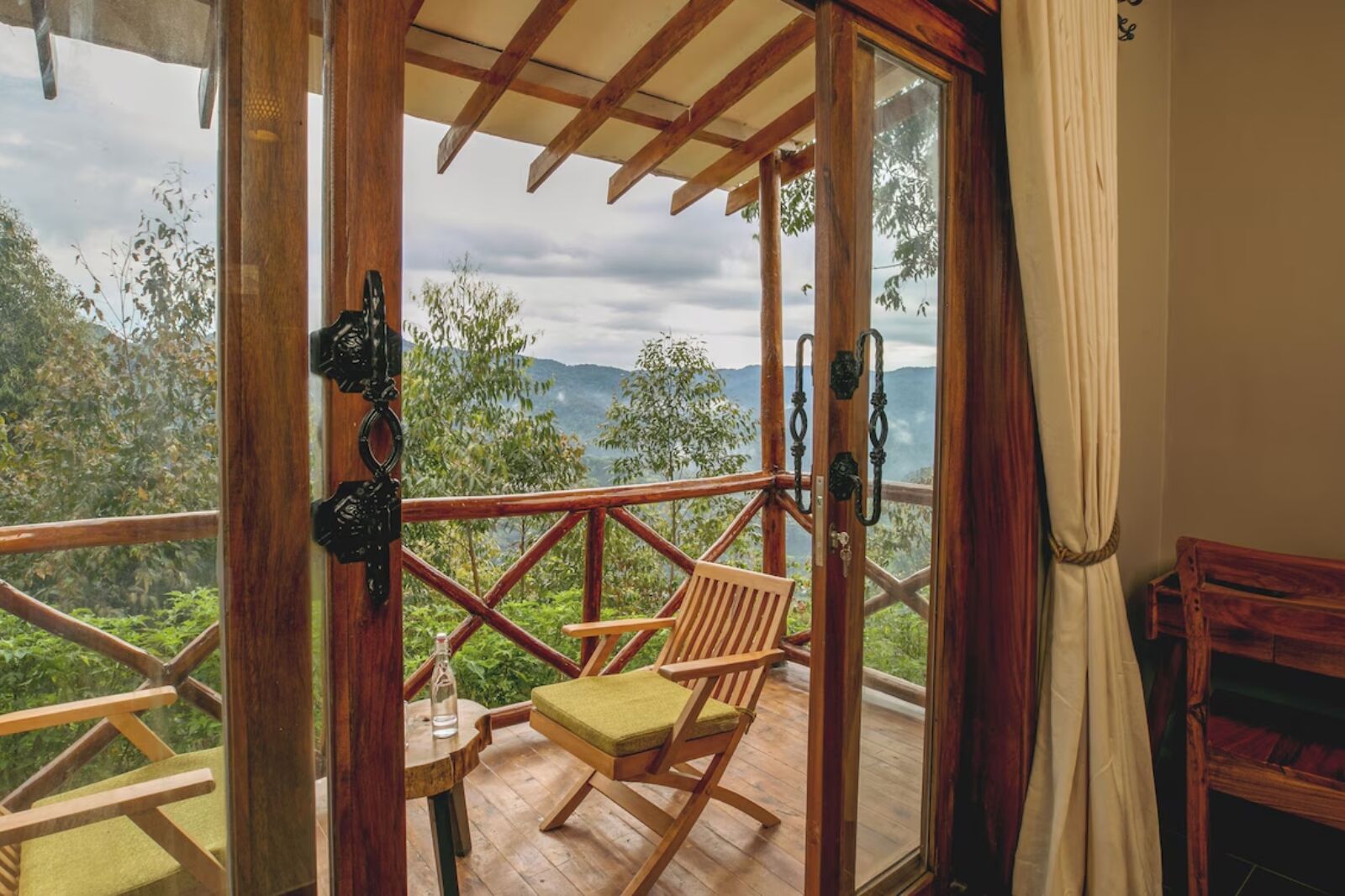
Kaara Gorilla Mountain Lodge is in the park’s southern Rushaga sector, 15 minutes from the gorilla trekking briefing point. Rushaga hosts eight of Uganda’s 23 habituated gorilla families, giving it the highest concentration of trackable groups in the country. The 18 cottages each have a private balcony looking out over Bwindi forest and the Virunga Mountains. The lodge has a full-service spa, a restaurant serving breakfast and dinner, and can arrange gorilla trekking permits and guided forest walks.
Post Ranch Inn, Big Sur
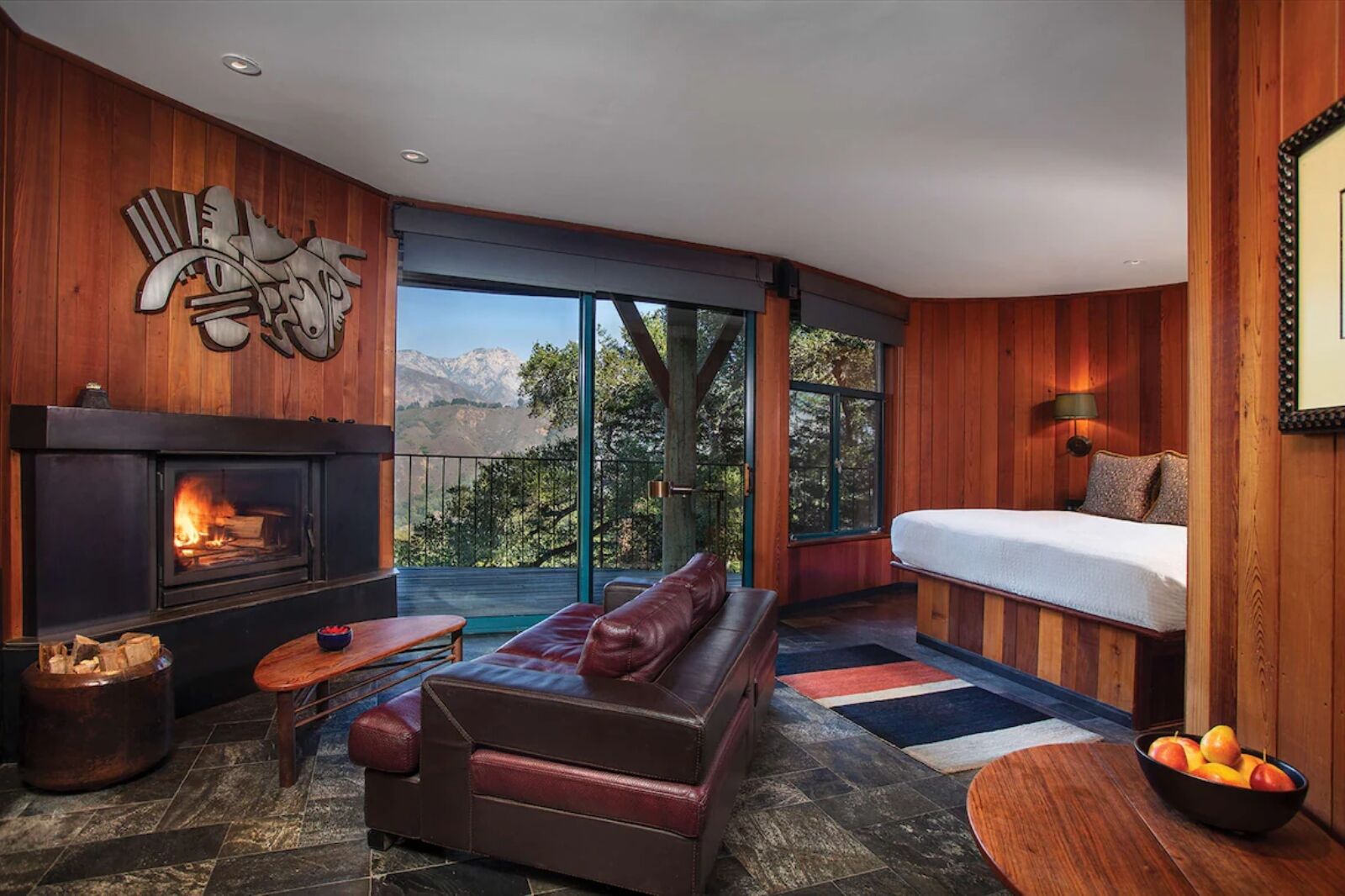
The coast redwood’s range ends in the Santa Lucia Mountains of Big Sur, the southernmost point where these trees survive. They depend on coastal fog for summer moisture, and as drought intensifies and fog patterns shift with climate change, habitat modeling suggests the southern end of their range could contract by 50 percent by mid-century. Wildfire pressure compounds the threat. Big Sur has seen increasingly severe fires driven by fuel accumulation and drought stress, putting forests that took centuries to establish at accelerating risk.
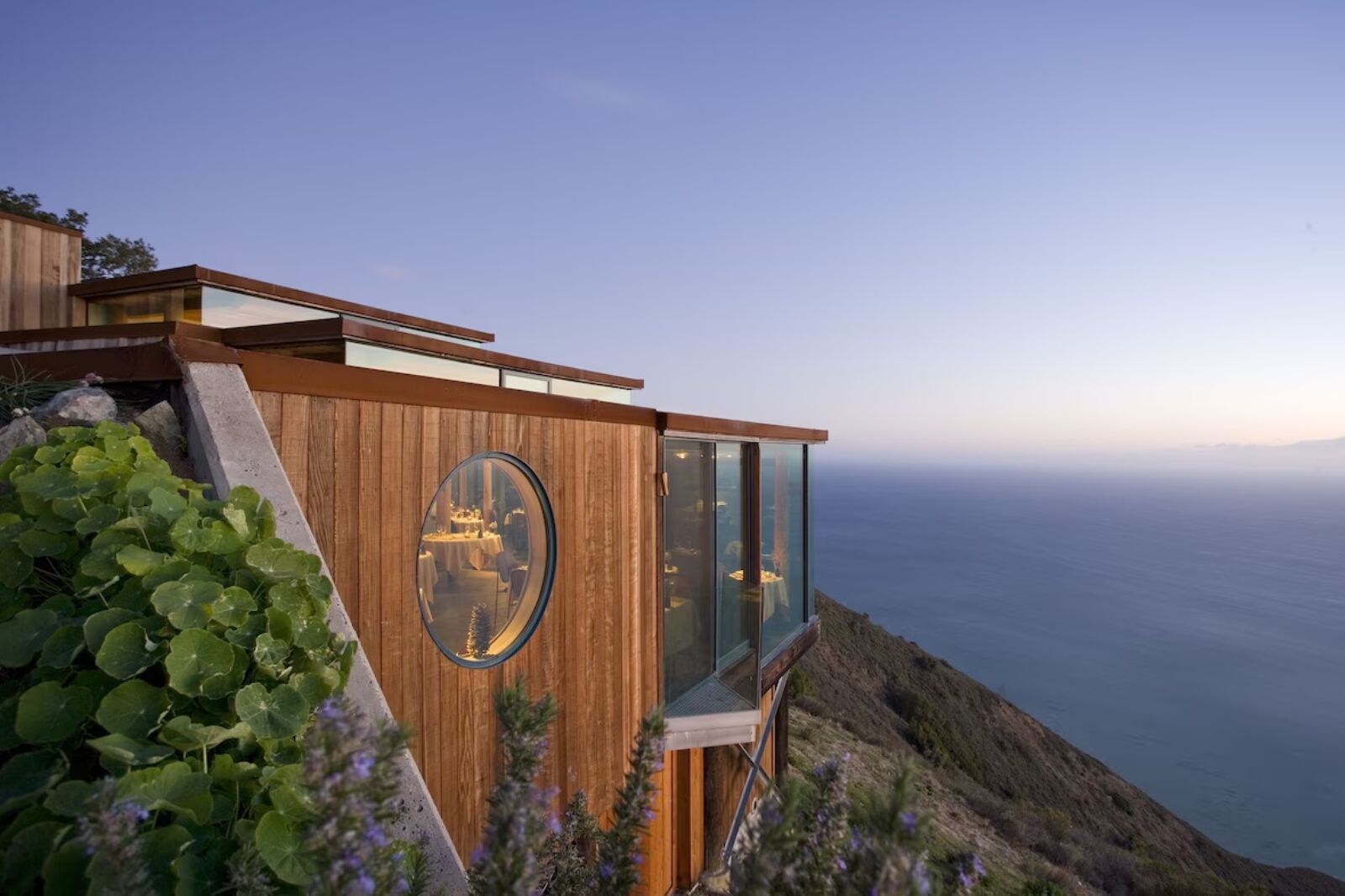
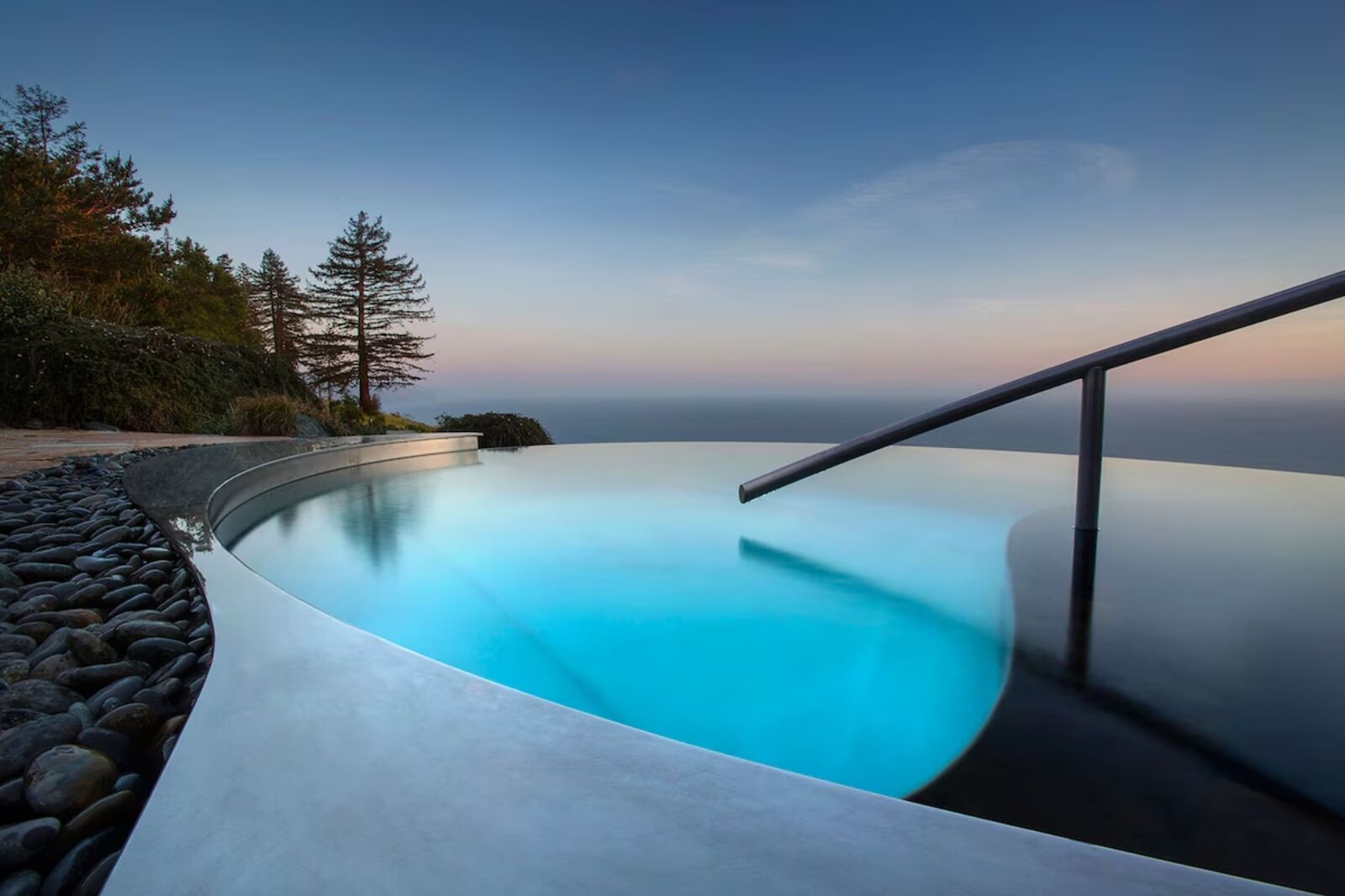
Post Ranch Inn occupies that forest, on 100 acres of cliff-top land 1,200 feet above the Pacific. When architect Mickey Muennig designed the property in 1992, the trees came first. Treehouses stand on stilts to protect the root systems of ancient redwoods and oaks below them. The Cliff and Ocean Houses are built from reclaimed wood with passive solar design. The Living Roof rooms are planted with native grasses and wildflowers that insulate the buildings and restore ground-level habitat. Ninety percent of the property is managed open space supporting threatened species including the Smith’s blue butterfly, the California red-legged frog, and the California condor. The resort has planted over 150 redwoods on the property and generates nearly all of its electricity from a monumental solar installation. 