Photo: Korean Air

I Now Get Why People Fly Premium Class, and It's Barely About the Flight

Luxe Travel Airports + Flying
by Suzie Dundas Jun 25, 2026

There’s a version of arriving in Rome that goes like this: you step off the plane, drop your bags at the hotel, and within an hour, you’re at a corner table with a carafe of house red and a plate of cacio e pepe, genuinely present and taking it all in. The light is golden. You are exactly where you want to be.

Then there’s the other version — the real version, for most travelers. You peel yourself out of a middle seat after nine hours of half-sleep, shuffle through baggage claim feeling like something that washed ashore, collapse into your hotel bed after throwing your wrinkled clothing on the floor, and wake up at midnight with no idea what continent you’re on. If you’re anything like me, you’ll spend the next two days in a fog, waking up at 3 AM and falling asleep standing up at 4 PM – not to mention dealing with headaches, back pain, and a sore neck. I’ve missed a tour of Barcelona’s Sagrada Familia, hit a metaphorical wall on a ski slope in Japan, and missed cocktails in the sun in Switzerland because I’ve been almost crying from exhaustion. And the older I get (elder millennial here), the more it affects me.
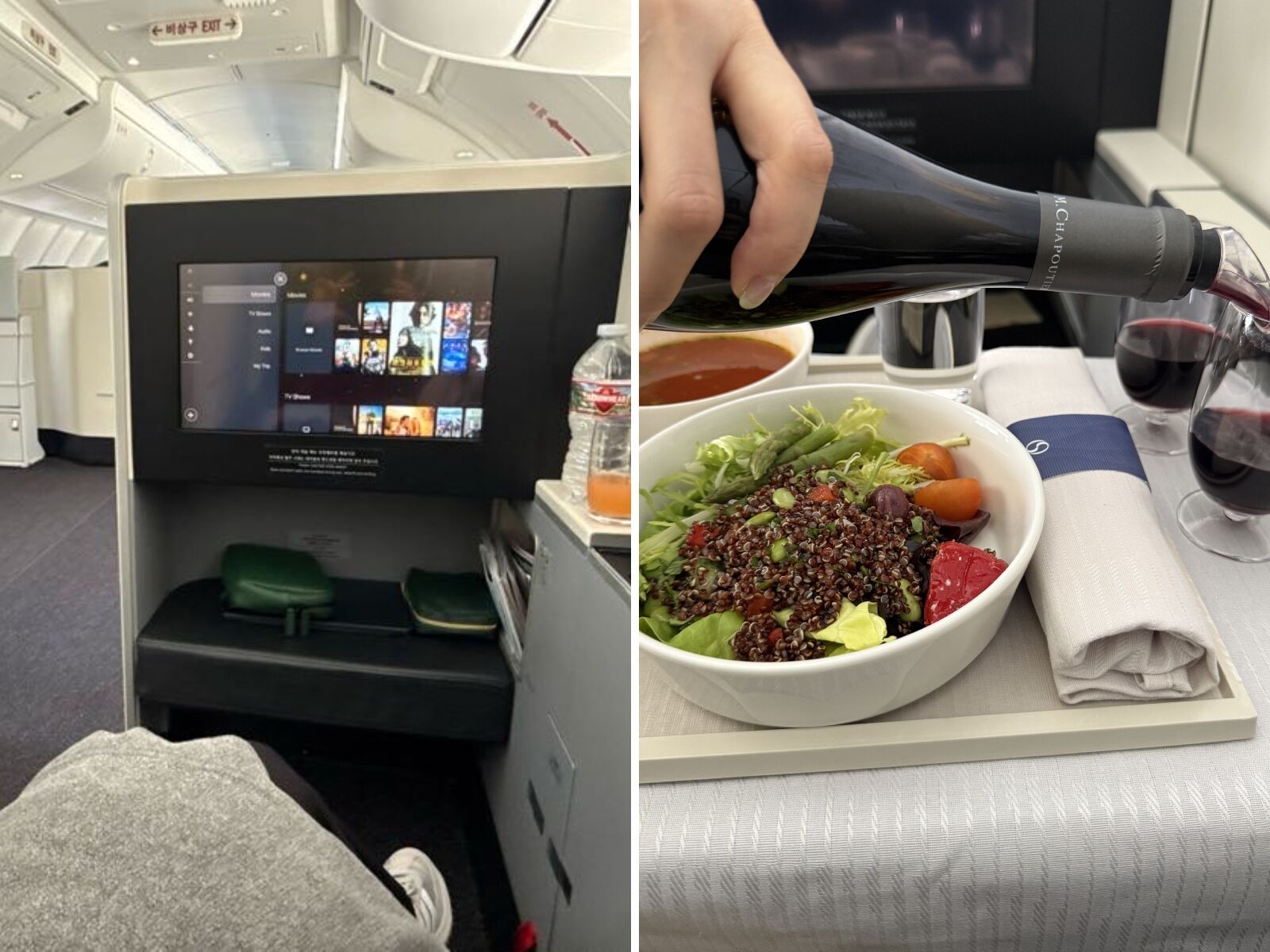

korean air prestige class - table service

When I couldn’t decide which wine to try, the flight attendant had a great solution: try both. Photo: Suzie Dundas

But for so long, I didn’t put two and two together, assuming the impacts of jet lag were an unavoidable side effect of flying. I also assumed flying premium was a waste of money — after all, everyone on the plane ends up in the same place. It seemed like a vanity indulgence for millionaires.

Then in May, I flew Korean Air Prestige Class (business class) to Seoul, Korea, arguably the trendy city of the moment for western travelers. It was a 13-hour flight there and an 11-hour flight home. But landing in Seoul was the moment it finally clicked why people spend so much money on premium flying. It’s not about the in-flight bibimbap, the lie-flat seats, or the luxury amenity kit, though those are all nice. Really, it’s about how much better your body feels when you land because of those things.

The costs of arriving already destroyed

premium class worth it? woman sleeping at table

Basically me on the first few days of every international trip. Photo: AnaLysiSStudiO/Shutterstock

Jet lag and travel fatigue are such accepted parts of long-haul travel that most people have stopped questioning them. Of course you feel terrible for the first few days. That’s just the tax. You plan around it, writing off the first days and keeping plans light, hoping you’ll be functional by day three.

But that “tax” is actually enormous when you do the accounting properly. Wild as it sounds, on my trip to Seoul, I was only there for 4.5 days, despite the 16 to 18 hours of time to get there all-in. If I had spent two or three of those jet lagged and tired, I would have missed out on some of my favorite experiences, like walking through Myeongdong before the crowds hit, taking a night ghost and folklore tour of Seodaemun, and hitting an evening food market even though I’d be in work meetings since 7 AM.

Consider what a major international trip actually costs, including hotels, tours, restaurants, and activities. If you’re spending $8,000 on a trip to New Zealand and you lose three days of it to travel fatigue, you’ve lost roughly $2,400 worth of trip. That can make a business-class promo fare seem like a much more logical decision.

korean air prestige class 2.0

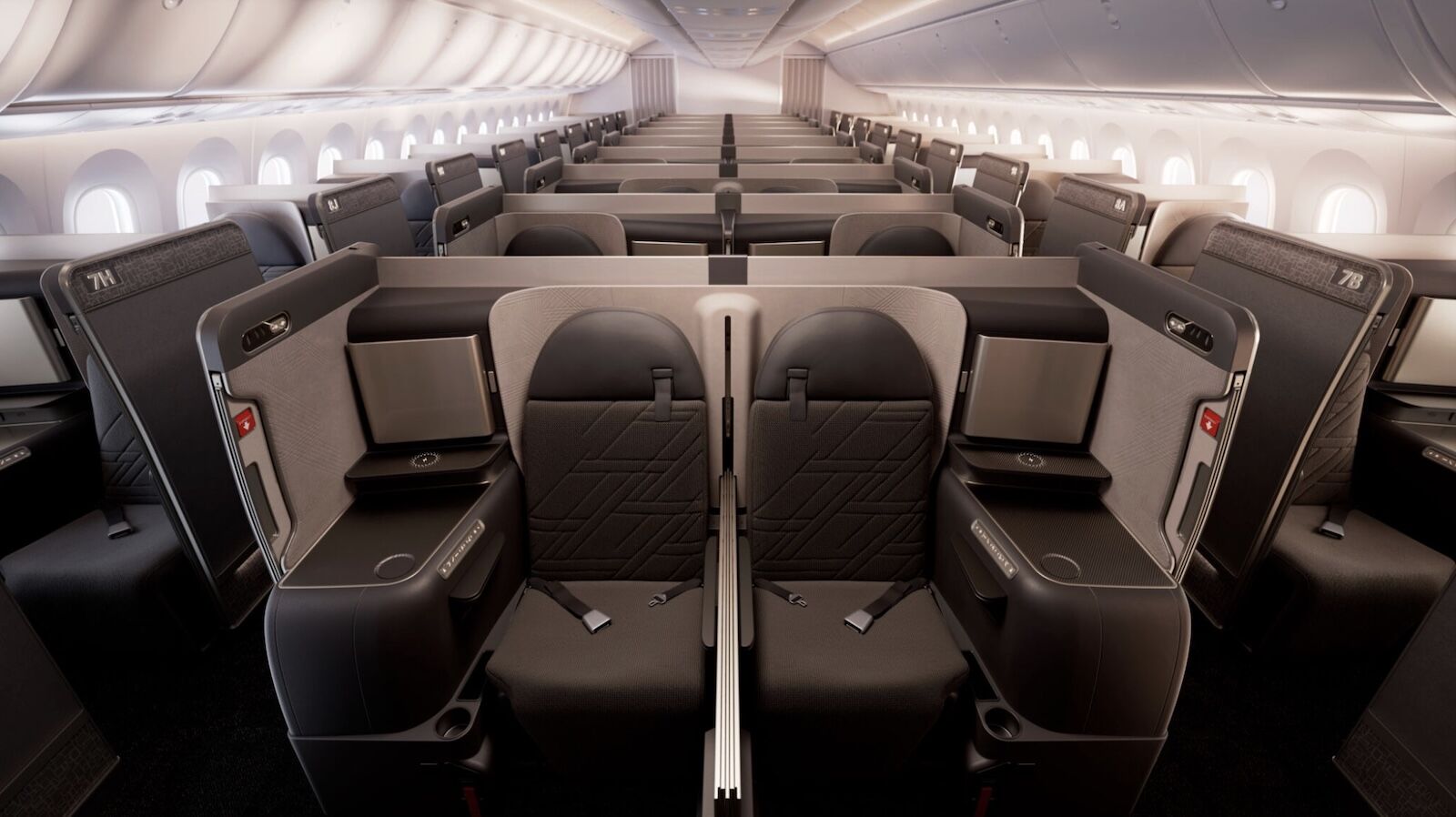
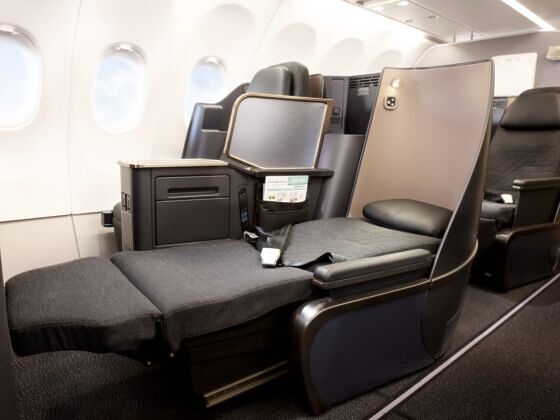
Korean Air has several tiers of Prestige Class, including Prestige 2.0 (shown here). However, I found the oldest version of Prestige Class to be the roomiest. Photo: Korean Air

The math doesn’t always work out, and I don’t think I’d ever upgrade on flights under five or six hours. But when you start looking at nine, 10, 14, or 15 hours, I may start thinking about it less as “do I want a nice experience on the plane” and more as “how much of this trip am I comfortable missing?”

Not everyone has the ability to drop a few extra thousand on flights, even if the numbers work out (I sure don’t). But I see why people who can afford it spend more on the flights in order to actually enjoy more of the trip.

Flying is harder on you than you realize

crowded economy class plane cabin

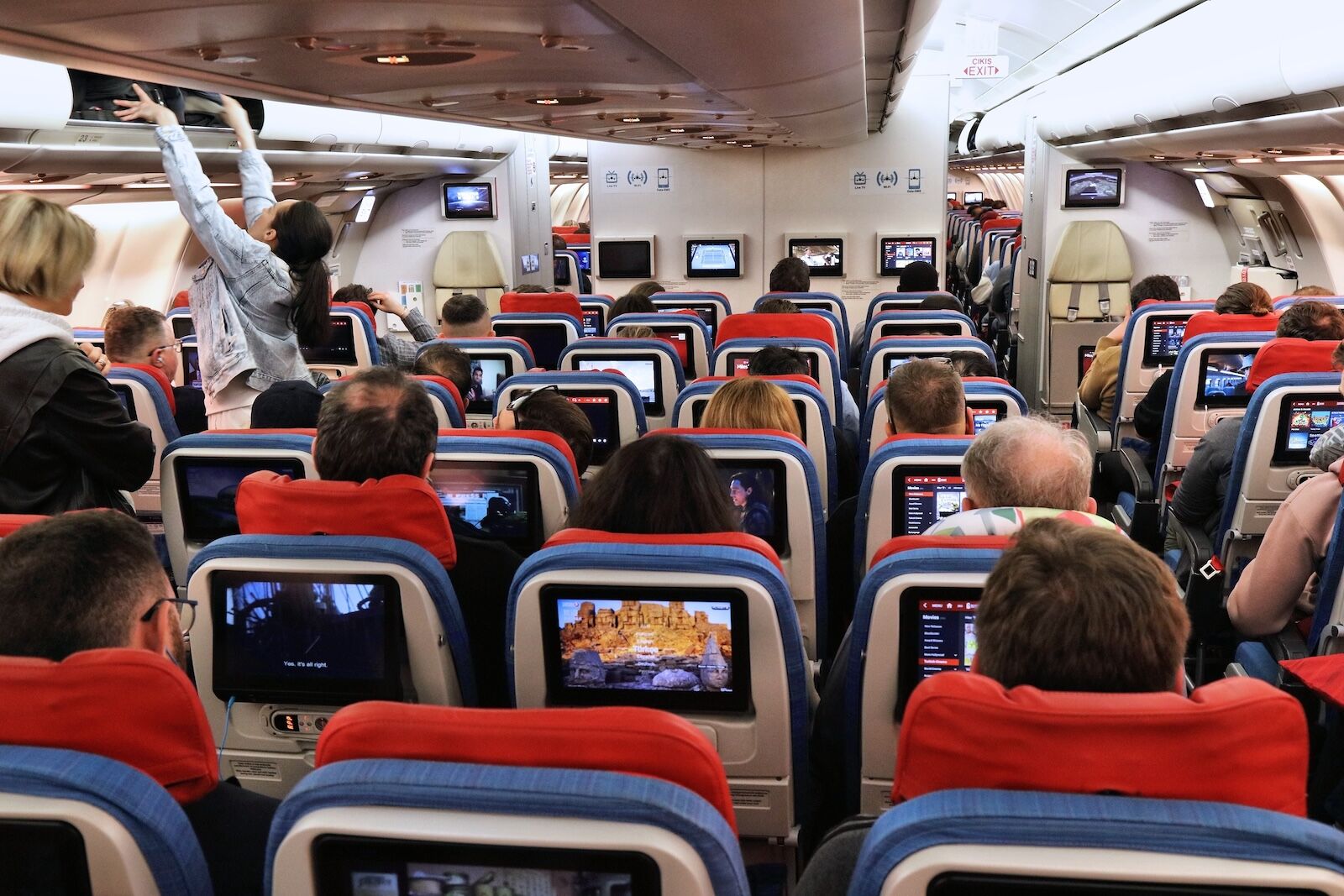
For most humans, your nervous system can’t reach a relaxed or restorative state with the amount of space per person in economy class, no matter what the airline. Photo: Pascal Huot/Shutterstock

The human body in long-distance economy-class conditions takes a serious beating. Cabin humidity on most commercial flights runs between 10 and 20 percent (drier than the Sahara Desert, at about 25 percent) which causes dehydration and all the physical effects that come with dehydration, even in passengers who chug water and hydration powder. And that’s before you factor in the actual time zone displacement.

The American Sleep Association estimates it takes about one day per time zone crossed for your body to fully adjust to the new time zone, though flying westbound is generally easier than flying eastbound. Sitting in a fixed position for that long leaves many people with swollen feet, stiff backs, and a creeping joint ache that can linger for days. I love to do hiking, mountain biking, and scuba diving trips, and it’s really hard to arrive with a sore back before your hiking trip has even started. Sometimes I’ve arrived in a new country so tired and sore I’m practically nauseous.

korean air prestige class sleeper

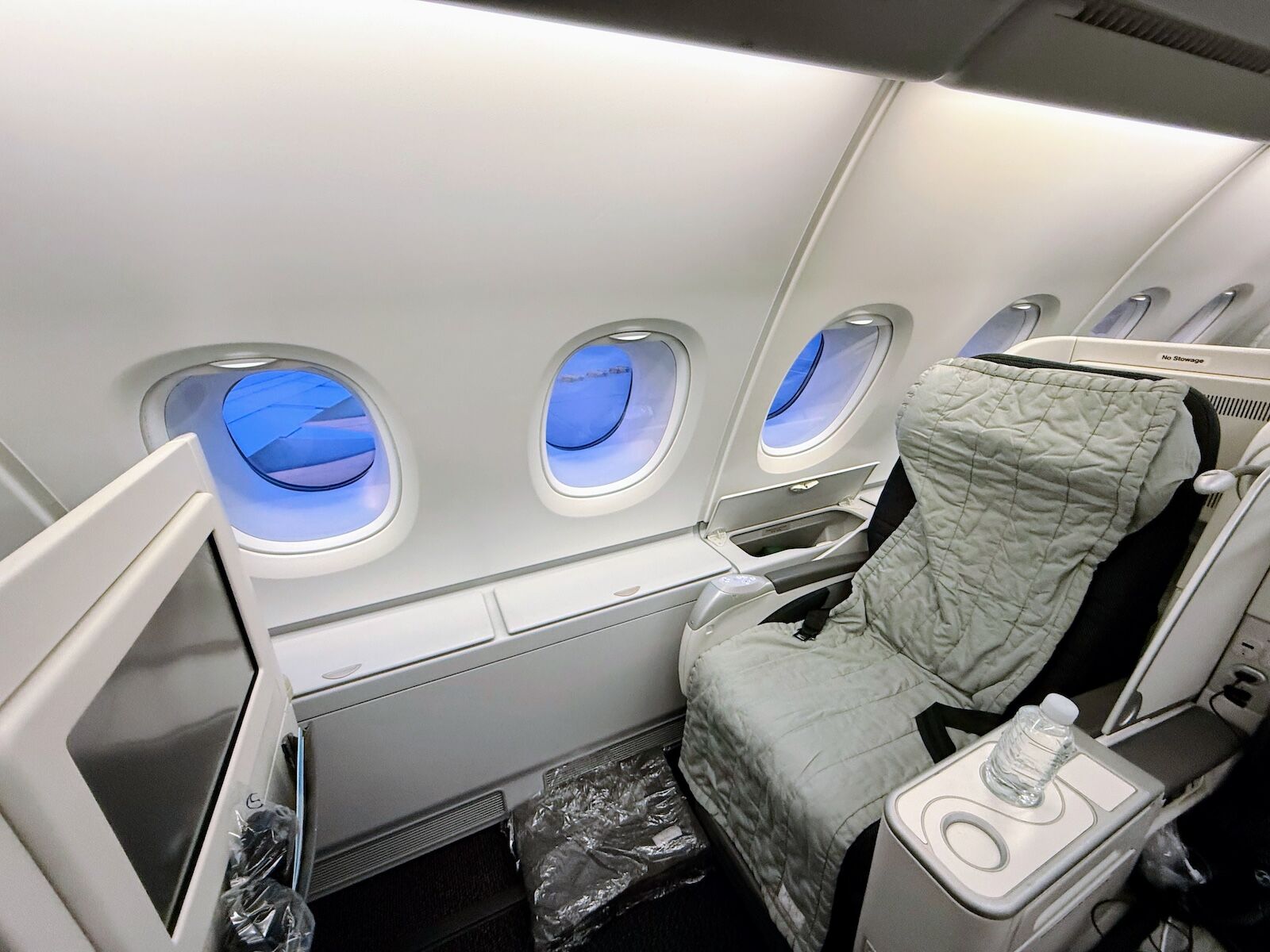
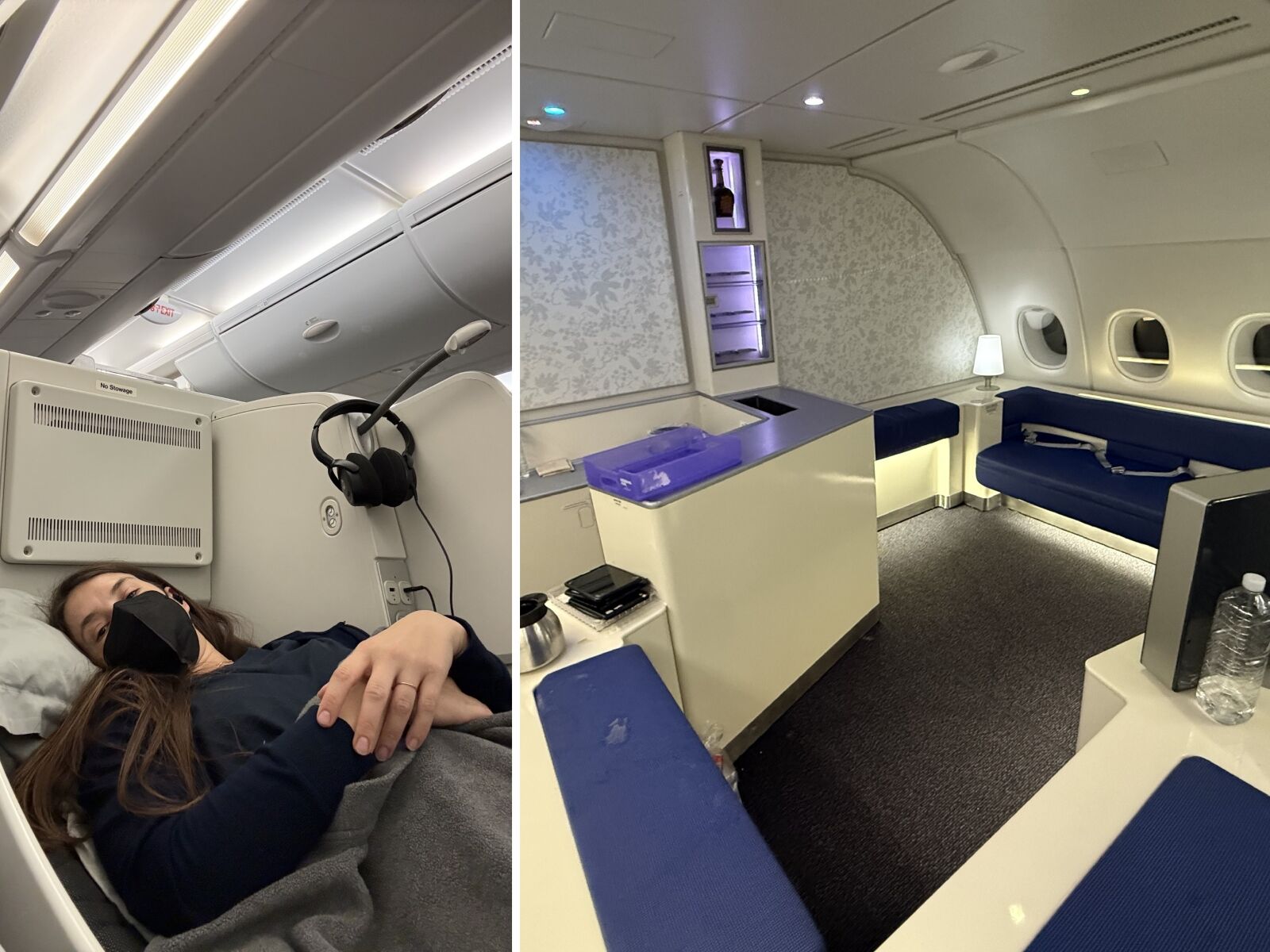
My Korean Air Prestige Sleeper seat (the oldest Prestige seat available) had an unheard of amount of space per person. Photo: Suzie Dundas

But it’s not just me getting older: Economy seats have become tighter over the past decade, and the average seat pitch has fallen since 2011 from about 35 inches to 31 inches in 2022, with some budget carriers giving economy flyers a mere 28 inches.

But many of those issues go away when you fly first or business class (or at least they did for me, in Korean Air’s Prestige class). Arrive in good shape, and the jet lag is more of a minor issue your body can work around, not yet another thing compounding on your already overtaxed body.

The science of sleeping at 38,000 feet

korean air prestige class - slippers

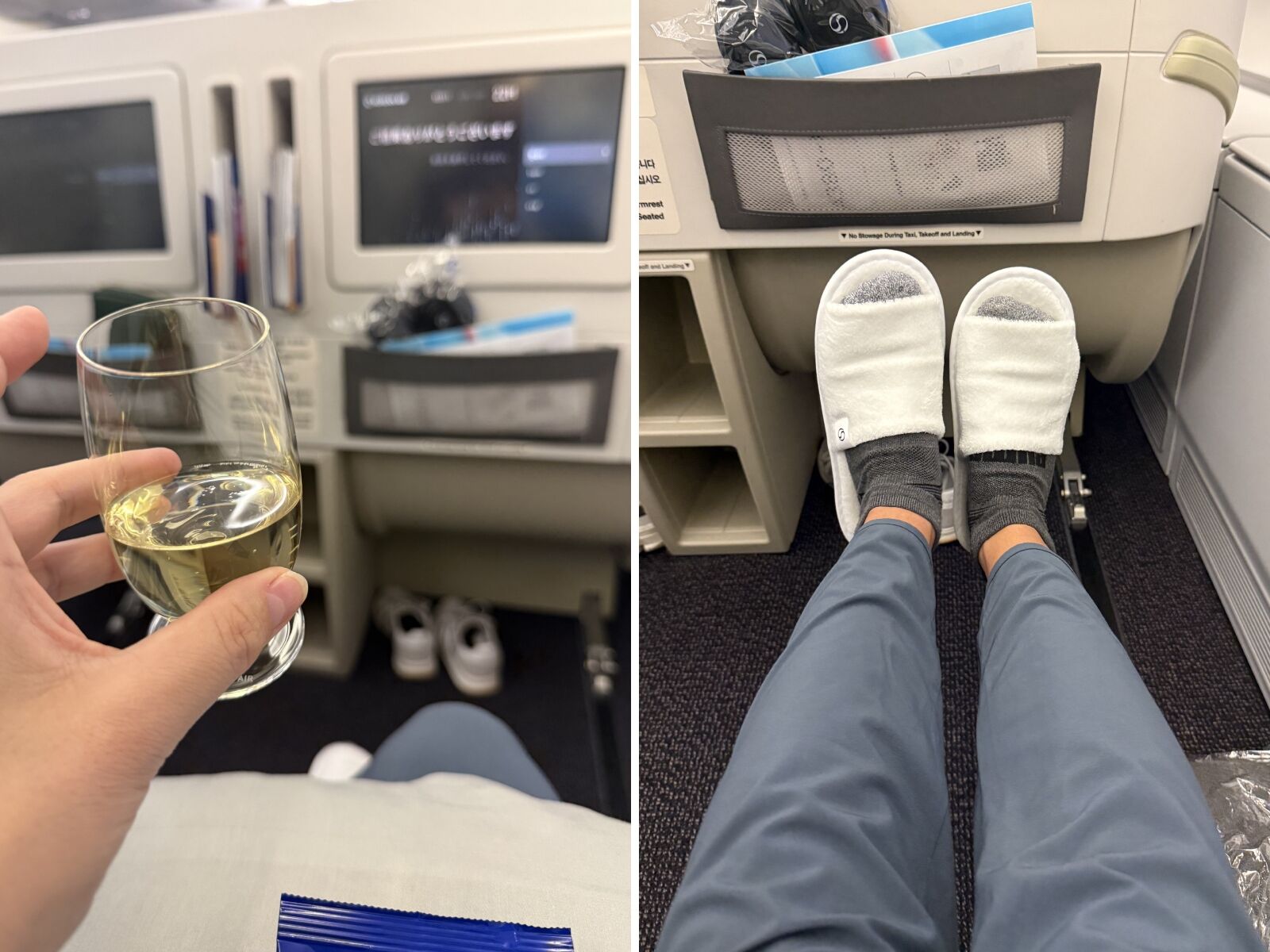
Flying on Korean Air Prestige Class was definitely a comfort-first experience. Photo: Suzie Dundas

Business and first-class cabins usually are engineered entirely around comfort — specifically, comfortable sleeping. I used to never want to sleep on the rare occasion I flew premium class as I didn’t want to miss out on the experience or amenities. But now, I know the real amenity is not feeling like you’re coming off a three-day hangover when you arrive.

On my flight from LAX to Seoul, the transition to comfort mode started immediately, even though it was only noon. There were slippers at my seat and a padded seat cover when I arrived (and yes, the flight attendant had to show me how to use it).

The fully flat bed and privacy dividers made a difference not because they’re comfortable in some abstract luxury sense, but because they allow your body to do something you straight up cannot do in a reclined economy seat: actually rest in a restorative way. Your spine can decompress. Your circulation normalizes to a sleeping rate. Mentally, you feel less exposed. The nervous system, which the discomfort of economy flying keeps in a state of alert, gets to relax.

korean air prestige class - ways to relax

Sleep in your lay-flat bed, or chill in the in-flight lounge. Prestige Air had multiple ways to move around and get comfortable. Photos: Suzie Dundas

And that last part matters: a relaxed nervous system is one of the core requirements for quality sleep, since the body can only shift into deep (physically restorative) sleep once it gets out of sympathetic “alert” mode to parasympathetic “relaxed” mode. For most people, it’s much harder to do that when you’re cramped, cold, and rubbing knees with a stranger.

The cumulative physical toll of sleeping or sitting in economy means your body simply can’t do the things it’s supposed to do while sleeping, like regulating emotions, physical repair, and resetting your blood sugar and energy levels.

The welcome drink is nice. The leather-bound amenity kit from British darling brand Graff felt chic and premium. The food was genuinely good. And never in my life have I had four airplane windows to myself. But the real benefit is that you actually feel like yourself when you step off the plane.

Where Korean Air went above and beyond


I’ve flown premium a few times thanks to upgrades on empty flights, but my particular experience on Korean Air was one of those amazing times when a work trip actually flies you business class. So the experience arrived without the psychological expectation of making sure it was “worth my money.” But it was still a step above the other experiences I’ve had.

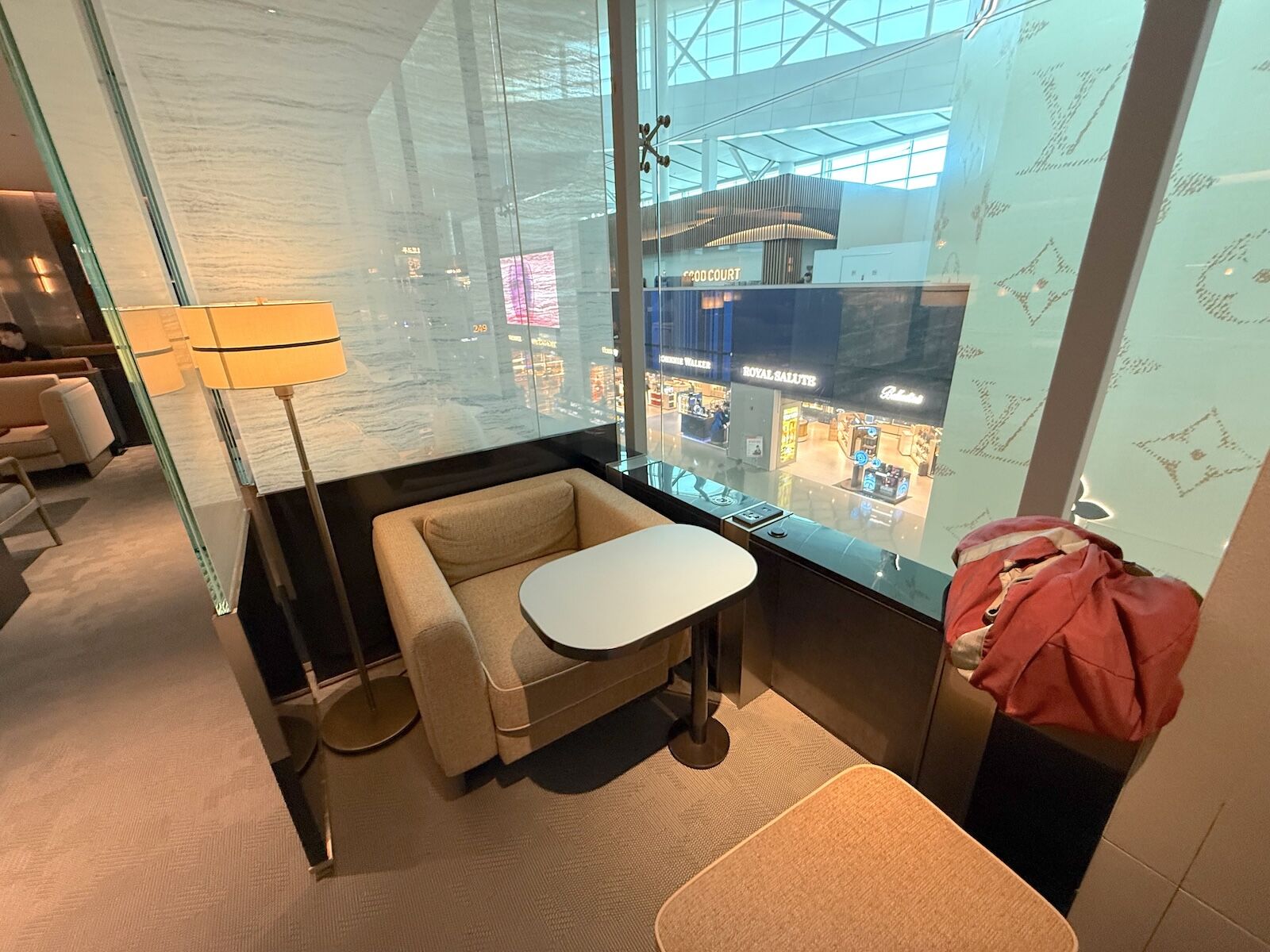
Korean Air has an almost cult-like following for its beloved in-flight bibimbap, which was better than some bibimbap I’ve had in restaurants. On the flight back to LAX, the entire top floor of the plane was dedicated to Korean Air Prestige Class, complete with a roomy lounge in the back that made me feel like I was flying in the Mad Men era. The Korean Air lounges in Seoul had a ramen library, private spaces for solo travelers, relax rooms with sleeping areas, and a complimentary chocolate-making studio. My assigned seat had a storage space next to it big enough for my entire carry-on. There’s a private check-in counter at the airport. The wine menu in the lounges and on board was commendable. The list goes on.

korean air lounge

I loved the private nooks designed for solo travelers in the various Korean Air lounges. Photo: Suzie Dundas

That said, what I appreciated most wasn’t the food or the giant TV screens. It was being able to land in Seoul, drop off my bags, and go straight out for dinner and drinks while feeling fine. Not “good for being jet lagged” fine or “good considering I flew in economy” fine. I was actually, really, genuinely fine.

About Korean Air

korean air donated 747

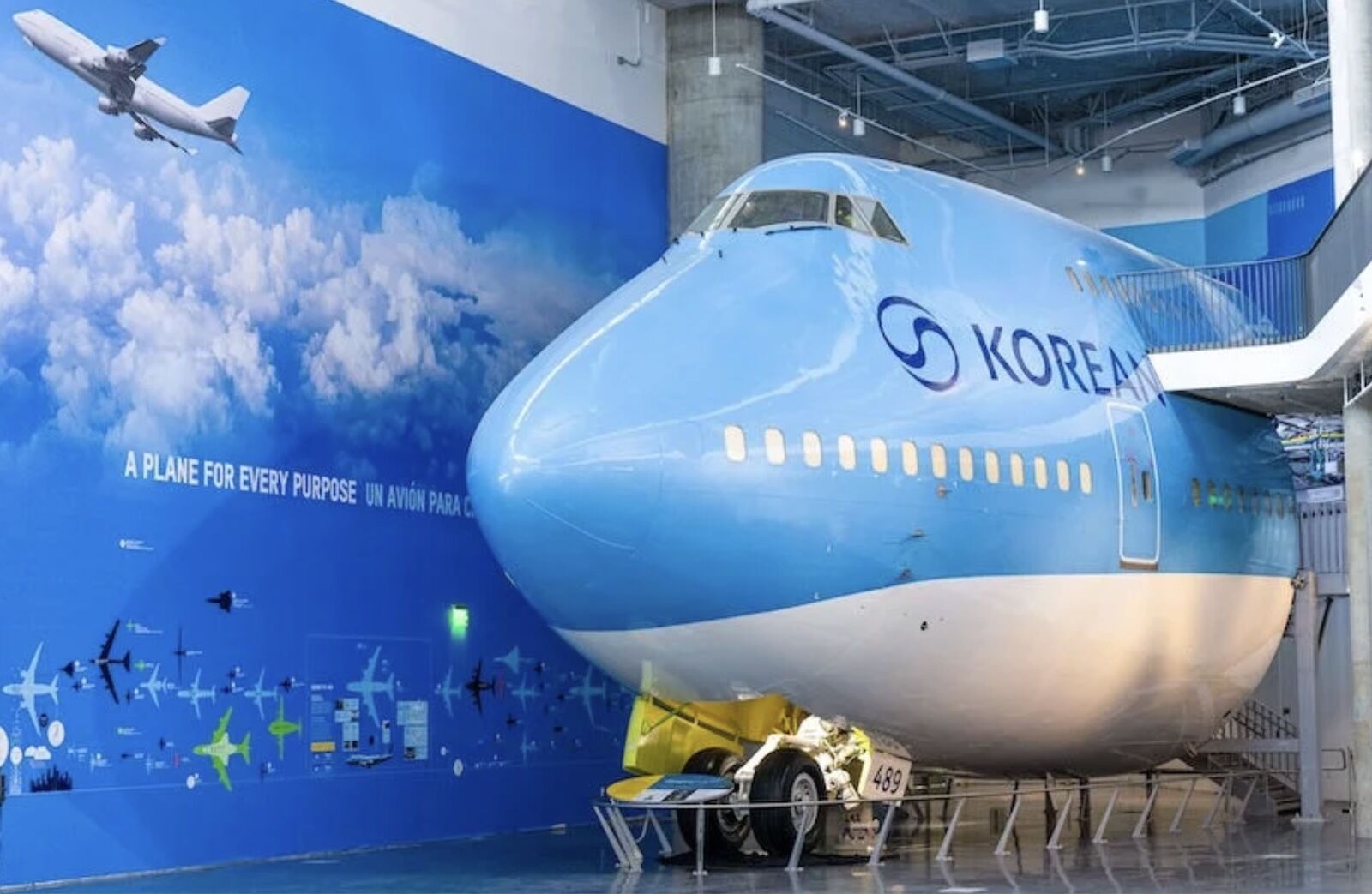
The expanding airline recently donated a full-size 747 to an aviation exhibit at the California Science Center. Photo: Korean Air

This was my first time on Korean Air but I sincerely hope it’s not the last. It’s South Korea’s flagship carrier and operates one of the larger long-haul networks between the US and Asia. As of June 2026, the airline serves 90 international destinations across 35 countries from its hub at Seoul’s Incheon International Airport. In the US, it flies nonstop between Atlanta, Boston, Chicago O’Hare, Dallas–Fort Worth , Honolulu, Las Vegas, Los Angeles, New York–JFK, San Francisco, Seattle–Tacoma, and Washington Dulles. They’re directs, so the routes are long. The Atlanta–Incheon and JFK-Incheon flights are each around 16 hours.

The airport that anchors most of Korean Air’s US service, and the airport I flew out of, is LAX in Los Angeles. LAX is also home to the first Korean Air Lounge outside of Korea, which has an “outdoor” area overlooking the terminal, a hot food station, and a bibimbap bar. (Can you tell I love bibimbap?)

Korean Air is in SkyTeam, which also includes Delta Airlines. So if you’re flying from a city Korean Air doesn’t serve, as I did, you can connect to a Korean Air hub on Delta. Because Korean Air has such a huge presence at Incheon Airport, it makes a convenient airline for connecting to other major cities throughout Asia, too.

On December 17, 2026, Korean Air will fully absorb longtime rival Asiana Airlines, further expanding it’s already robust route network.

Discover Matador

Save Bookmark

We use cookies for analytics tracking and advertising from our partners.

For more information read our privacy policy.