Photo: hemro/Shutterstock

9 Reasons Egypt’s $1 Billion Grand Egyptian Museum Is One of the World’s Most Spectacular

Egypt Museums
by Matador Creators Nov 11, 2025

After two decades of anticipation and billions of dollars, the Grand Egyptian Museum (GEM) has finally opened its doors beside the Pyramids of Giza. Bigger than Vatican City and housing over 100,000 artifacts, the GEM is the largest archaeological museum in the world dedicated to a single civilization.

The museum is located near El Remayah Square along the Cairo-Alexandria Desert Road in Giza. It’s open to the public daily from 9 AM to 6 PM — tickets can be purchased through the official GEM website, which lists access to the main galleries, the Grand Hall and Staircase, Khufu’s Boat Museum, gardens and commercial zone.

Whether you’ve long been obsessed with the wonders of Ancient Egypt or you simply love great architecture, history, and museums, Egypt’s newest ambitious cultural landmarks is a can’t-miss experience. These are the top 9 features you need to know before you go.
1. A museum worth the wait

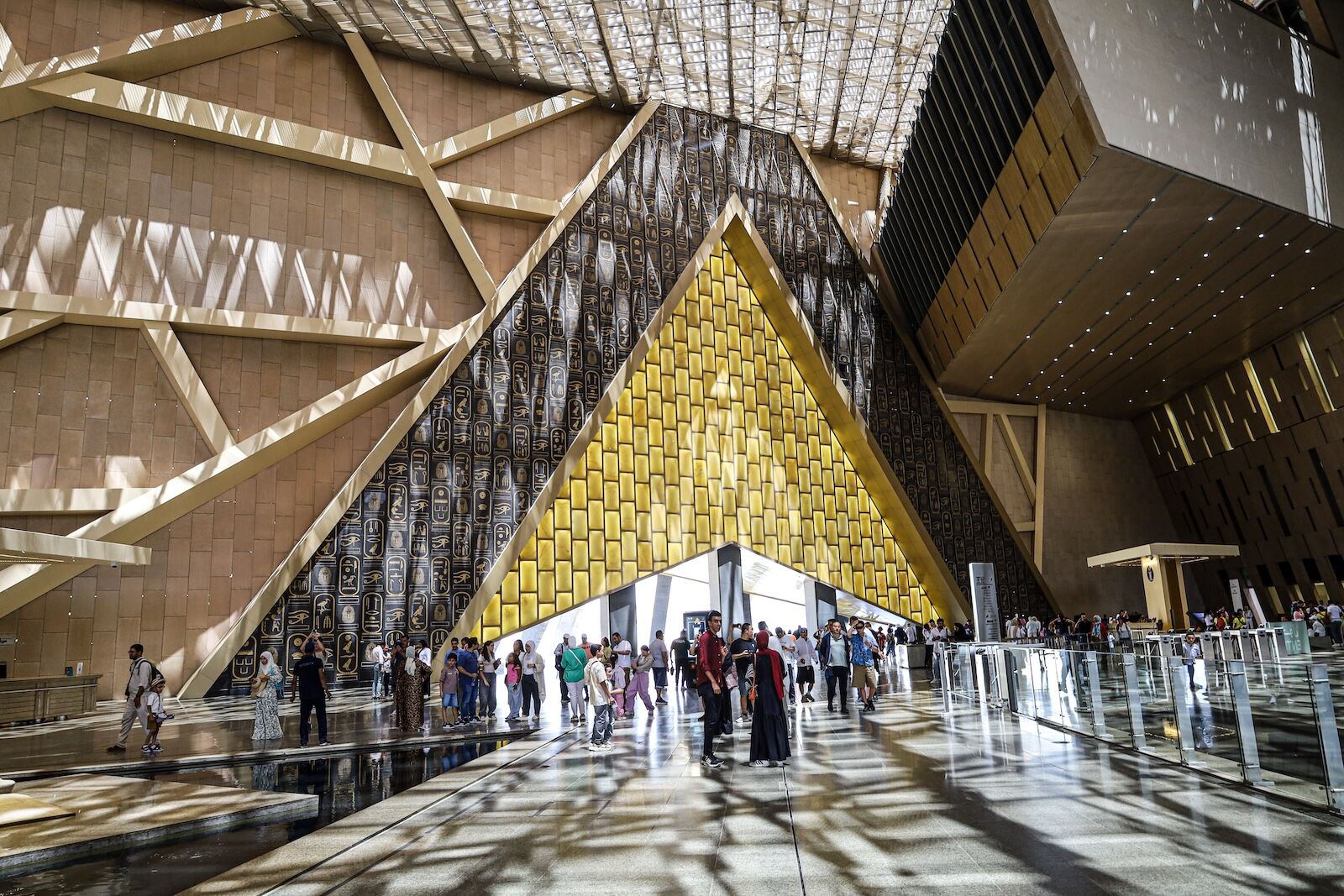
Giza, Egypt, Jul 16 2025: The GEM The Grand Egyptian Museum, New Giza Museum, the largest archaeological museum in the world

Photo: Ayman Zaid/Shutterstock

Anticipation has been building since the early 1990s, when the original plans were laid. Those plans for the Grand Egyptian Museum weathered revolutions, funding shortfalls, and a pandemic. Now people get to see what the wait was for. The $1 billion complex puts the story of Ancient Egypt from prehistory through the Greco-Roman era under one roof in a way that’s never been done for one civilization. It’s a project with the perfect setting: Set just two kilometres from the Great Pyramid that is perhaps the defacto symbol of Ancient Egypt, the museum offers an unprecedented, chronological journey through 5,000 years of history.

2. The “fourth pyramid” of Giza

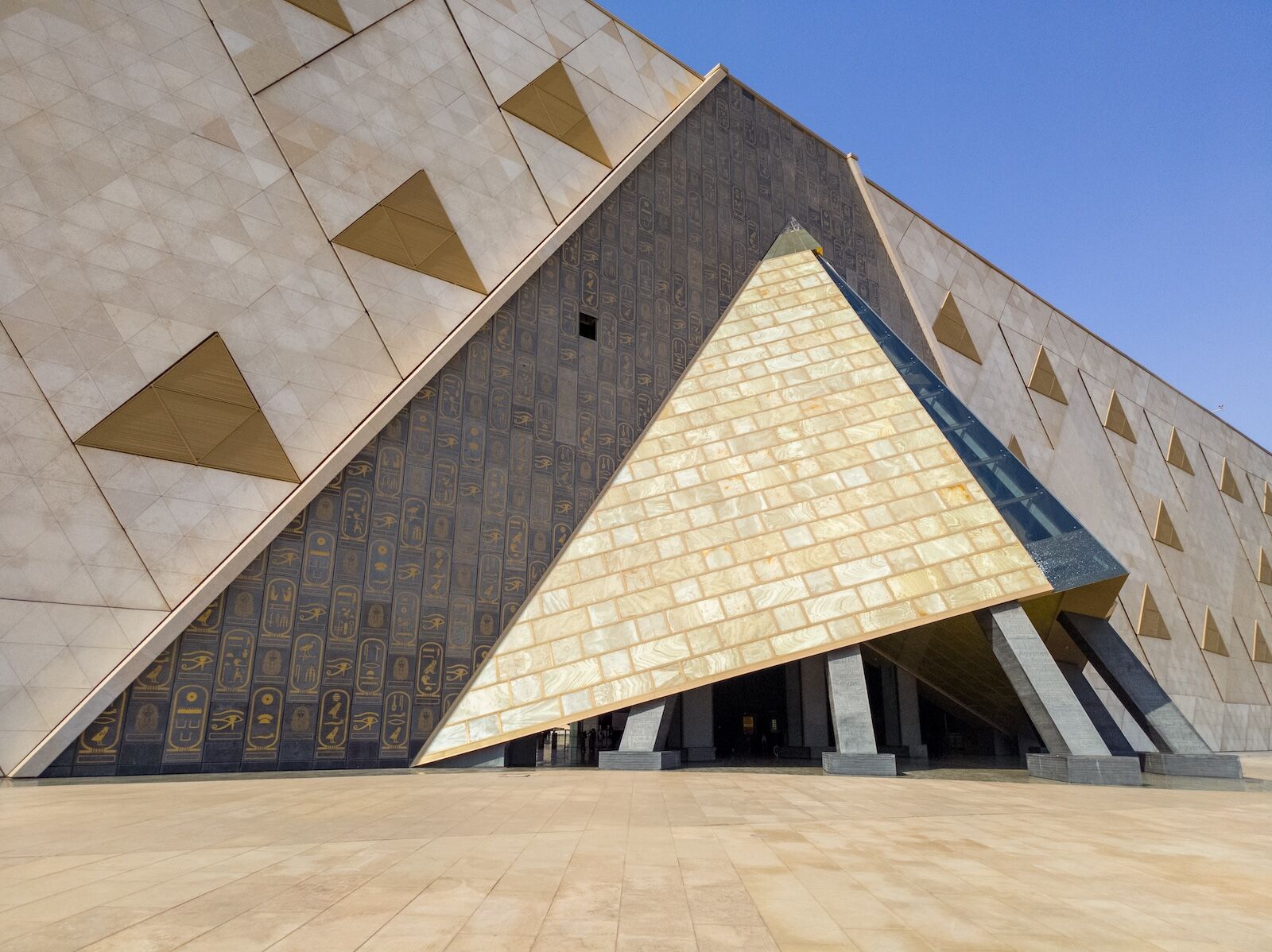
19.10.24 Giza, Egypt: Largest Archaeological Exhibition in GEM Grand Egyptian Museum in Giza Egypt.

Photo: Maciek Grabowicz/Shutterstock

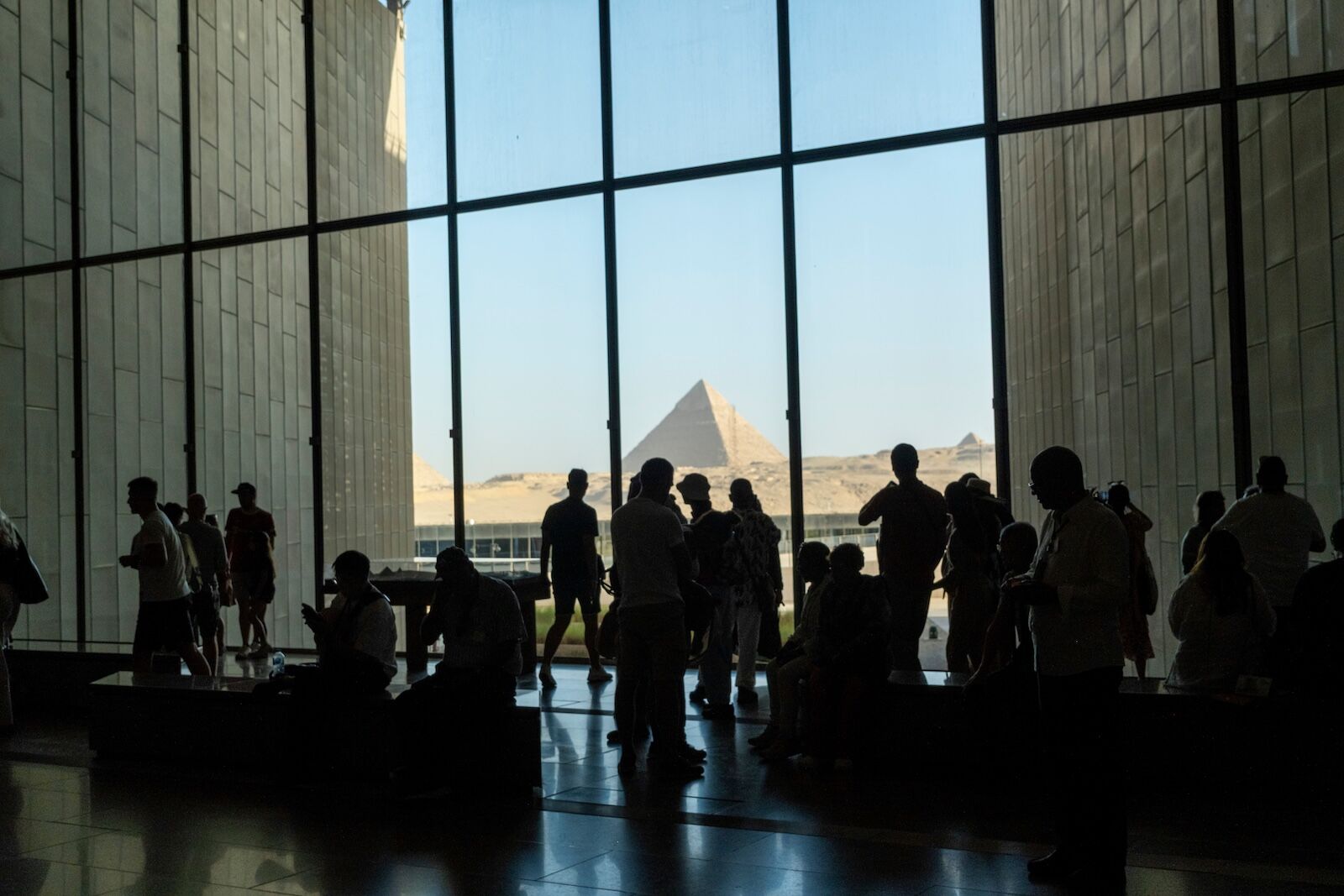
The museum’s chamfered-triangle design subtly mirrors the geometry of its famous neighbors. Dublin-based architects Heneghan Peng aligned the museum’s north and south walls with the Great Pyramid of Khufu and the Pyramid of Menkaure. From inside, floor-to-ceiling windows perfectly frame the Pyramids beyond.

3. Built into the desert — and built green

Giza, Egypt. October 2, 2025: Grand Egyptian Museum (GEM). A large group of visitors are silhouetted against the museum's glass facade, with a pyramid of Giza clearly visible in the distance outside.

Photo: Turkey Photo/Shutterstock

The architects leaned on the elevation difference between the Nile Valley and the desert plateau to keep the building from extending above the plateau to continue to give the Giza pyramids their spotlight along the horizon line. Sun-filtered light, translucent stone cladding, solar panels and water-harvesting systems all contribute to this building’s status as the first green-certified museum in Africa and the Middle East.

4. The Grand Staircase: a journey through time

Artefacts inside the newly opened Grand Egyptian Museum. Giza, Egypt. October 28th 2024

Photo: Colinmthompson/Shutterstock

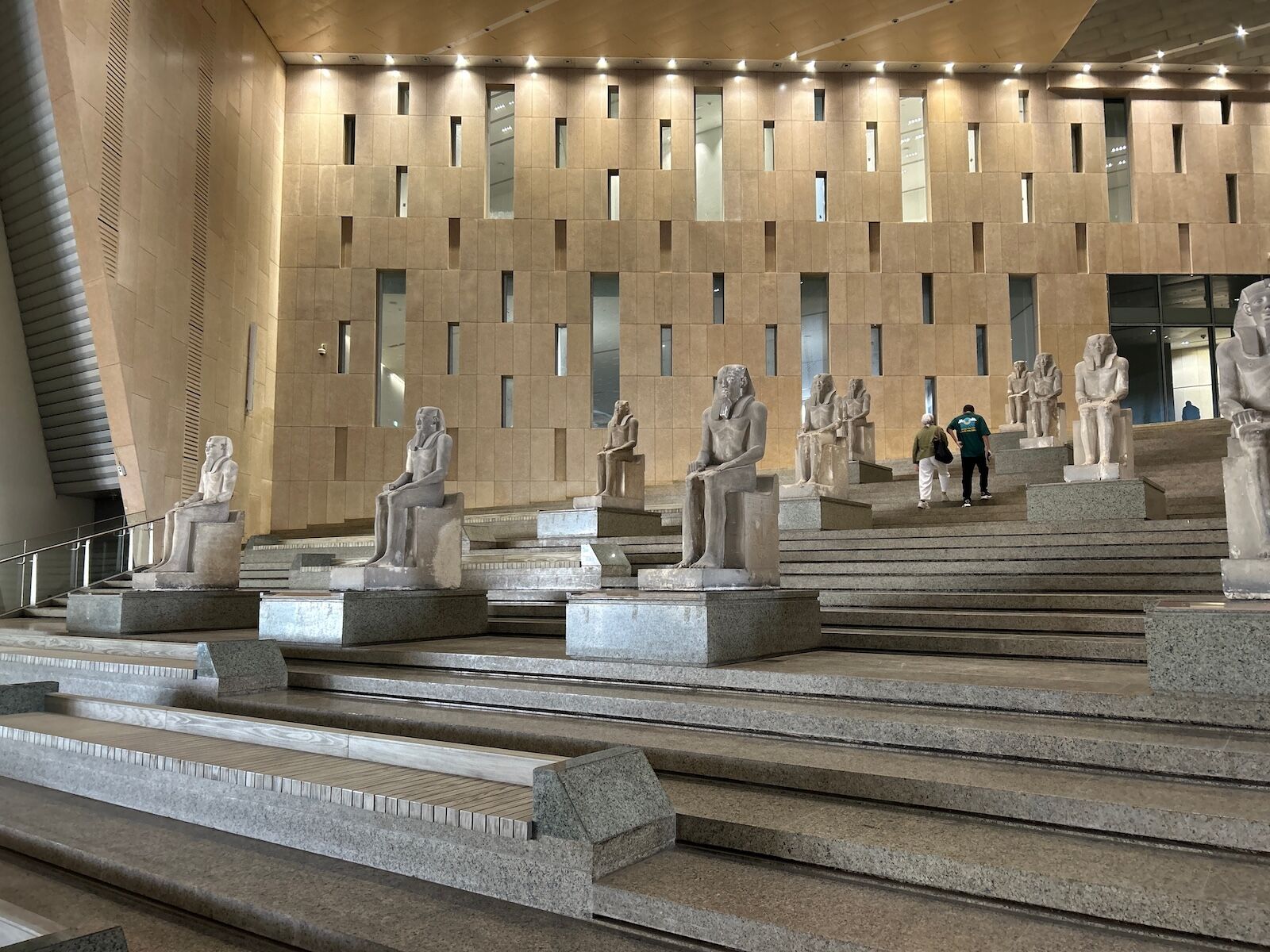
The museum’s dramatic six-story Grand Staircase is a narrative built into the architecture. Sixty colossal artifacts line the ascent, each terrace marking a different era of Egypt’s history. The oldest artifacts are at the bottom, and progress chronologically as you go. At the top, you emerge onto a viewing platform with sweeping views of the Pyramids.

5. King Ramses II greets you at the door

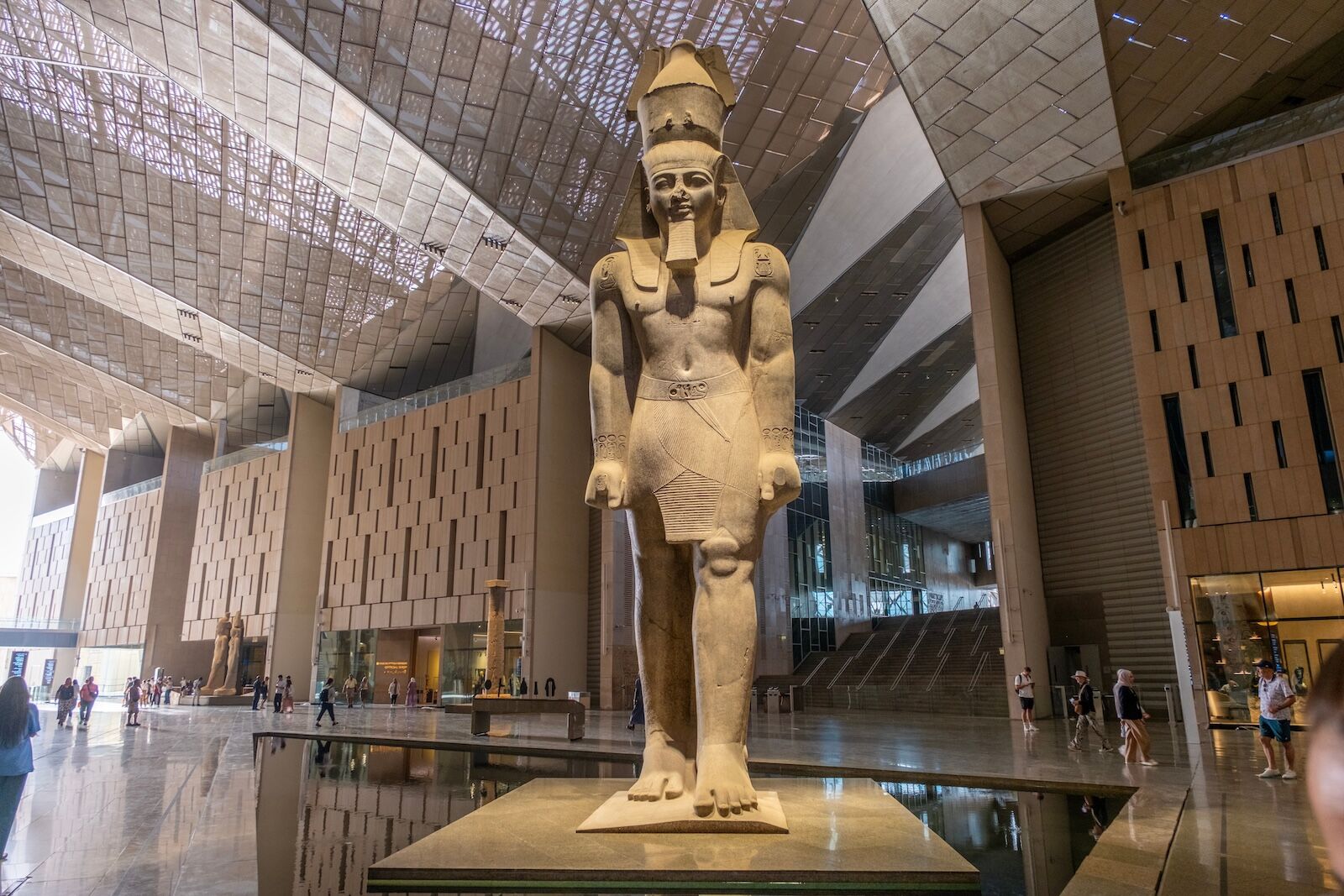
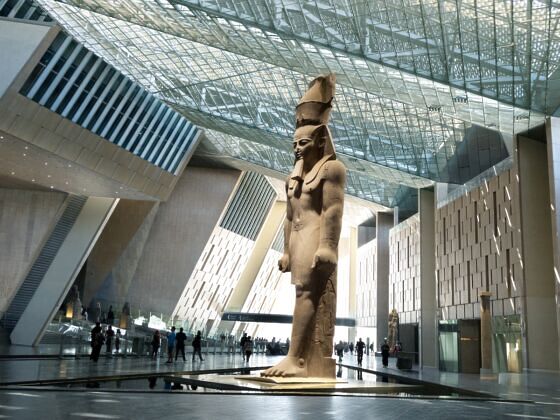
GIZA, EGYPT - OCTOBER 2, 2025: Close-up of the colossal statue of Ramses II in the Grand Hall of the Grand Egyptian Museum (GEM). The ancient figure is dramatically framed by the modern, angular

Photo: Turkey Photo/Shutterstock

Before you have a chance to see any of the wonders inside, you’re met by a 35-foot-tall statue of Ramses II, weighing some 83 tons. Transported from its former home in central Cairo in 2006, where it rested since 1954, the statue now stands in the museum’s atrium, surrounded by reflecting pools and illuminated by filtered daylight.

6. Tutankhamun, in one place at last

Photo: Photoframe123/Shutterstock

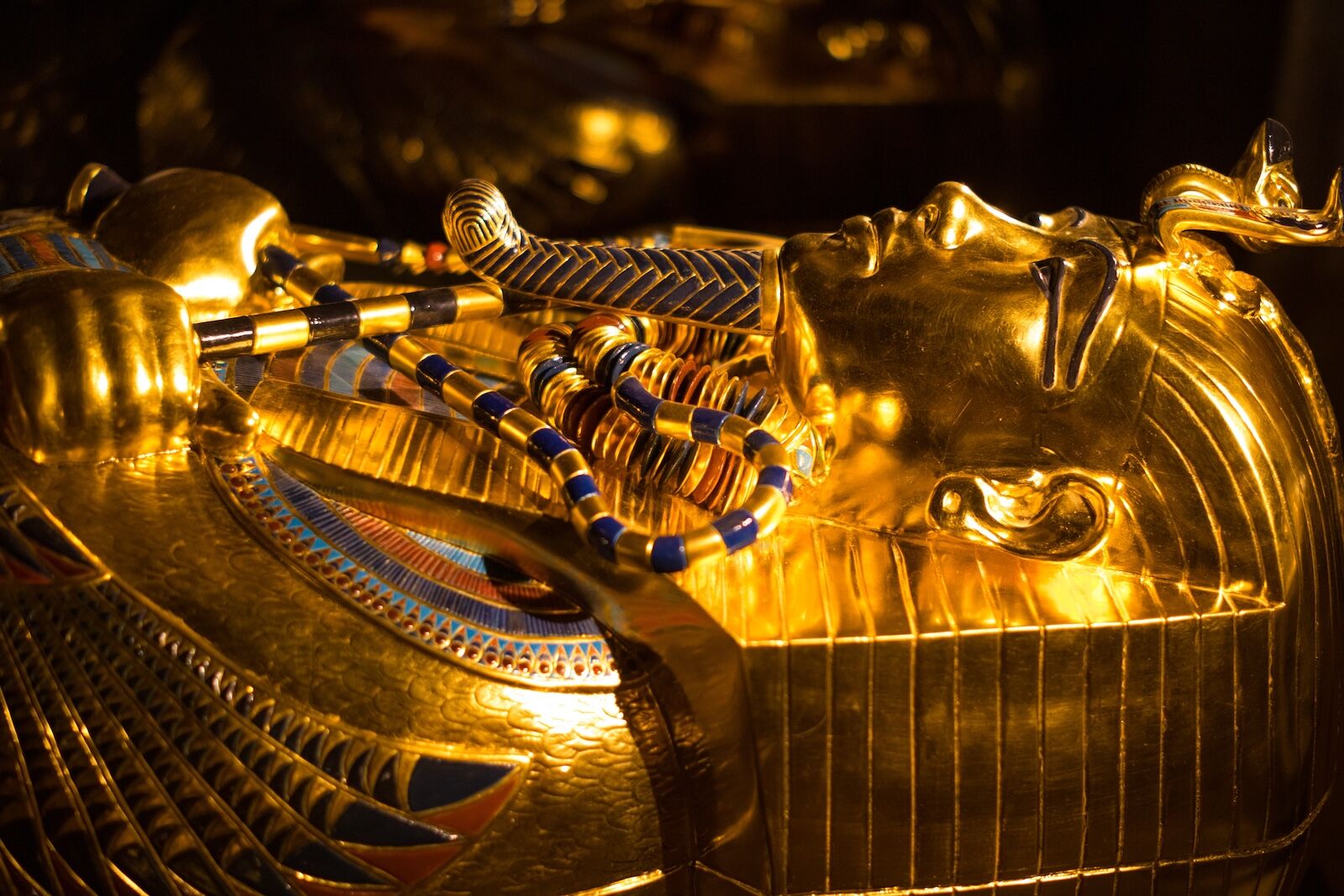
For the first time since 1922 when the tomb was found in the Valley of the Kings, the treasures of Tutankhamun are displayed together in one space designed to evoke the boy king’s burial chamber. The dedicated gallery houses over 5,000 objects created some 3,400 years ago: the famed gold death mask, gilded throne, chariots, jewelry, even his sandals and toys in about 80,000 square feet of museum space.

7. Khufu’s boat and a queen’s throne

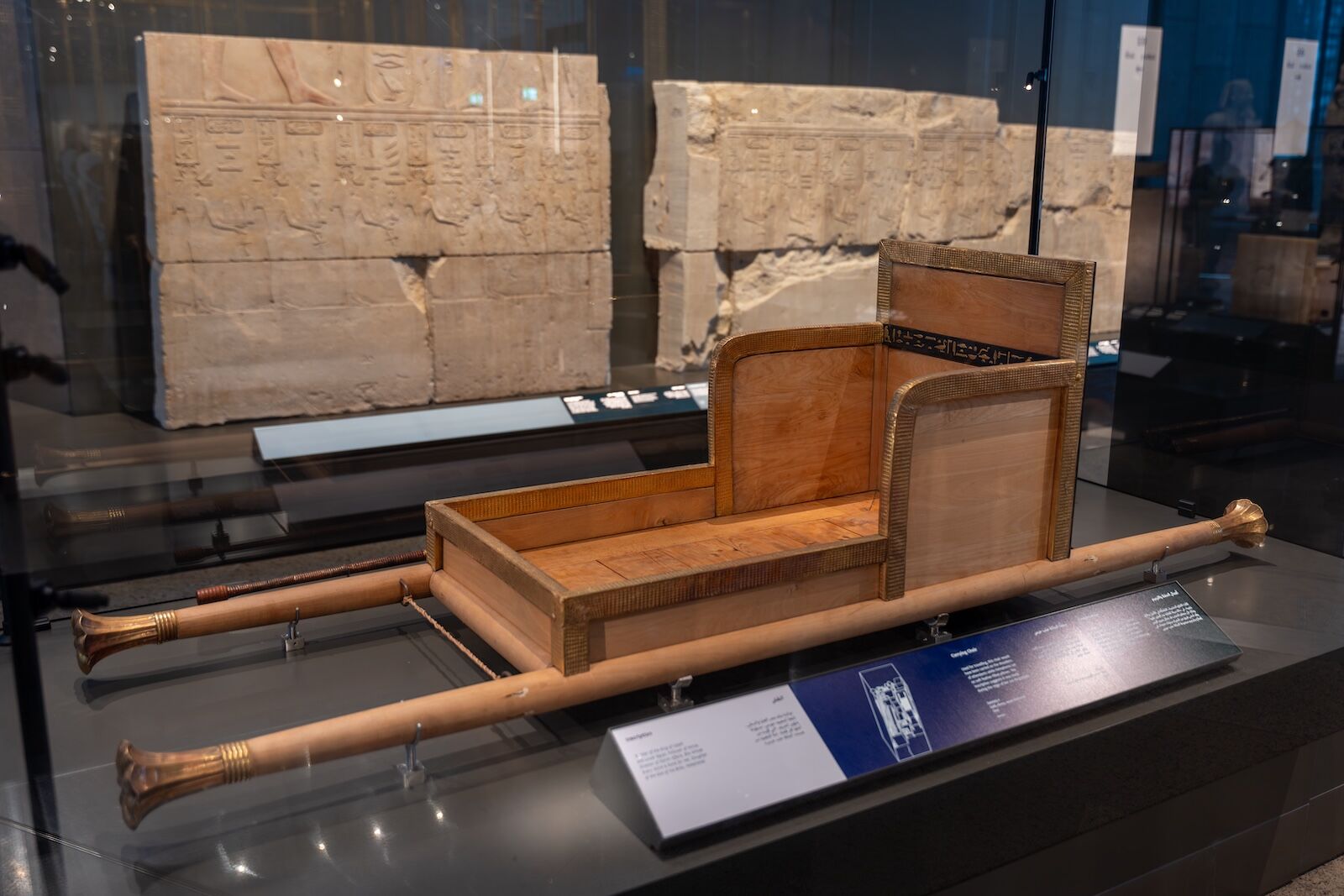
Giza-Egypt Feb 13, 2025:  The original chair of Queen Hetepheres I, discovered in her tomb, was made of wood and covered in gold and faience. Grand Egyptian Museum (GEM).

Photo: HitchLens/Shutterstock

One of the world’s oldest intact water vessels — a 4,500-year-old cedar boat made for the pharaoh Khufu, responsible for the Great Pyramid of Giza — gets prime space. Experts say it could still float today. Nearby, the collection includes a gilded bed canopy and throne of Queen Hetepheres I, offering rare insight into Egypt’s earliest queens.

8. Twelve galleries, one civilization

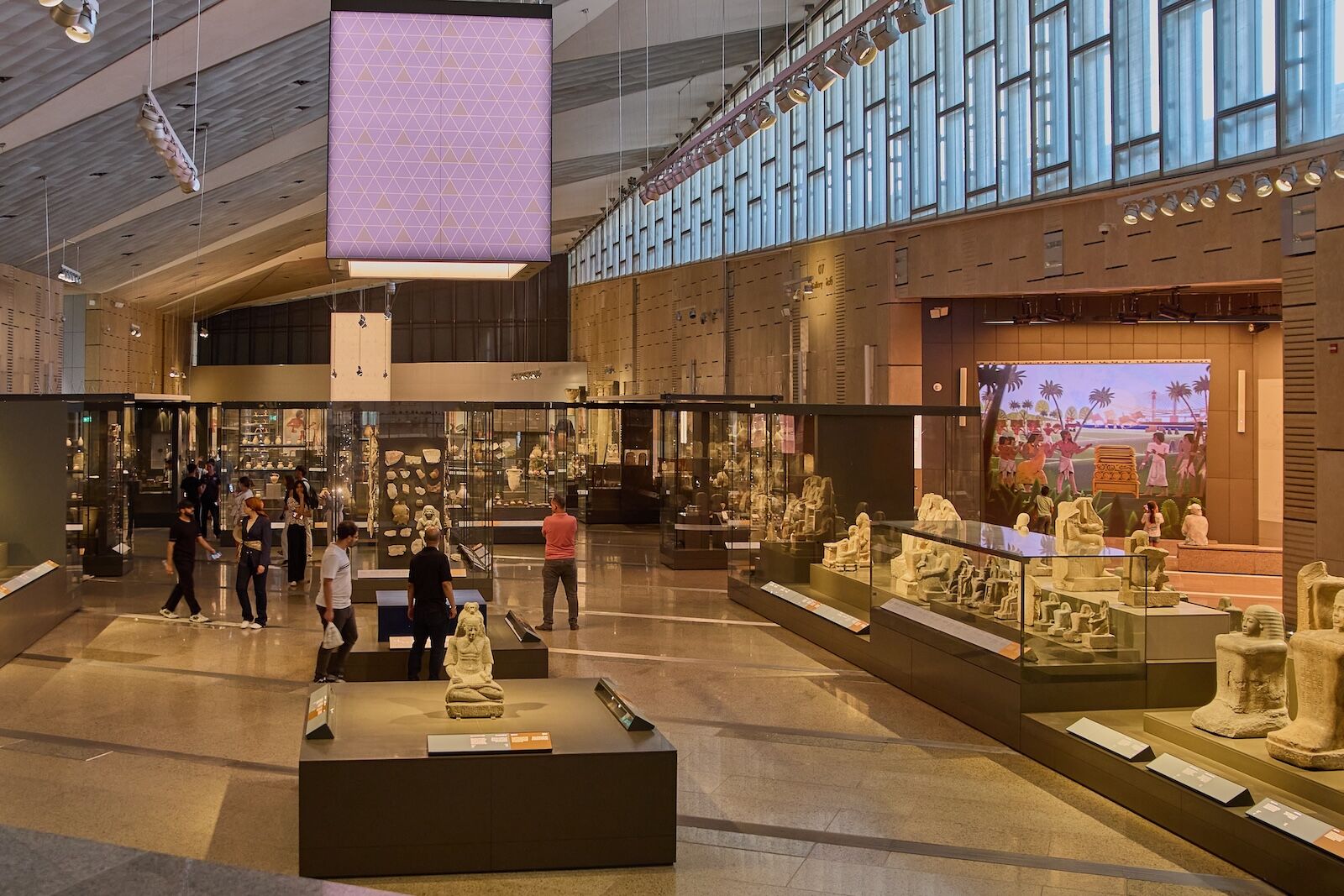
Giza, Egypt- July 26 2025: The Grand Egyptian Museum also known as the Giza Museum, is an archaeological museum  in Giza, Egypt, about 2 kilometers  from the Giza pyramid complex. Interior shot

Photo: Creativity lover/Shutterstock

The GEM’s 12 major galleries are laid out chronologically and thematically, tracing daily life, belief systems, rule and ritual. Among the artefacts: a 4,000-year-old board game, cosmetics jars, mummies (including a crocodile), and royal jewelry. Together they paint a full picture of everyday life alongside dynastic glory.

9. A living museum where history is preserved for the future

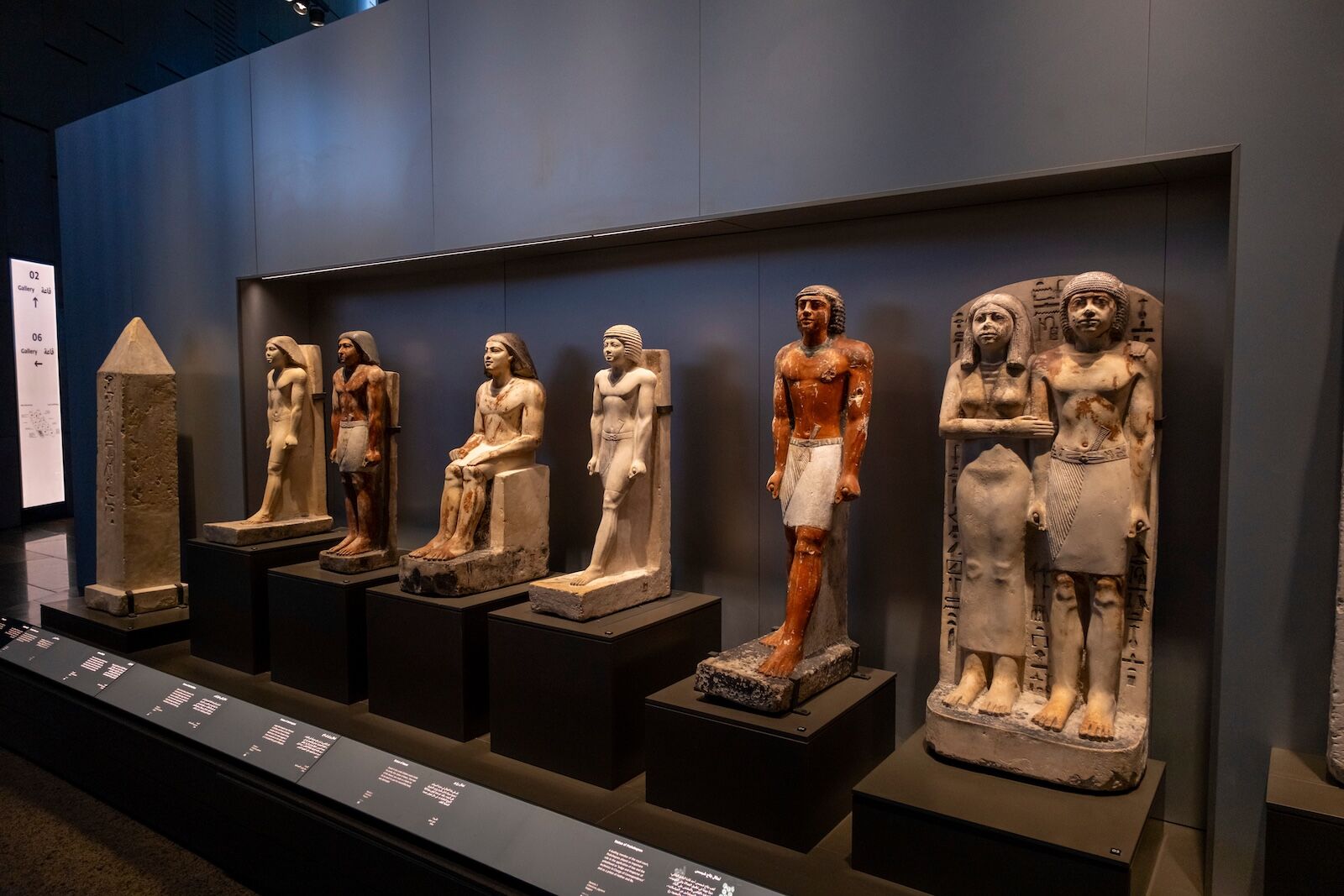
Giza, Egypt. October 2, 2025: A display of various ancient Egyptian statues, including seated and standing figures, showcasing different materials and preserved colors, Grand Egyptian Museum (GEM).

Photo: Turkey Photo/Shutterstock

Beyond the galleries lies one of the world’s largest conservation centers where 17 specialist labs connected by an underground tunnel handle the restoration for everything from Tutankhamun’s coffins to ancient textiles. On the grounds, you’ll find a children’s museum, sculpture gardens, cafés and an auditorium.

Discover Matador

Save Bookmark

We use cookies for analytics tracking and advertising from our partners.

For more information read our privacy policy.