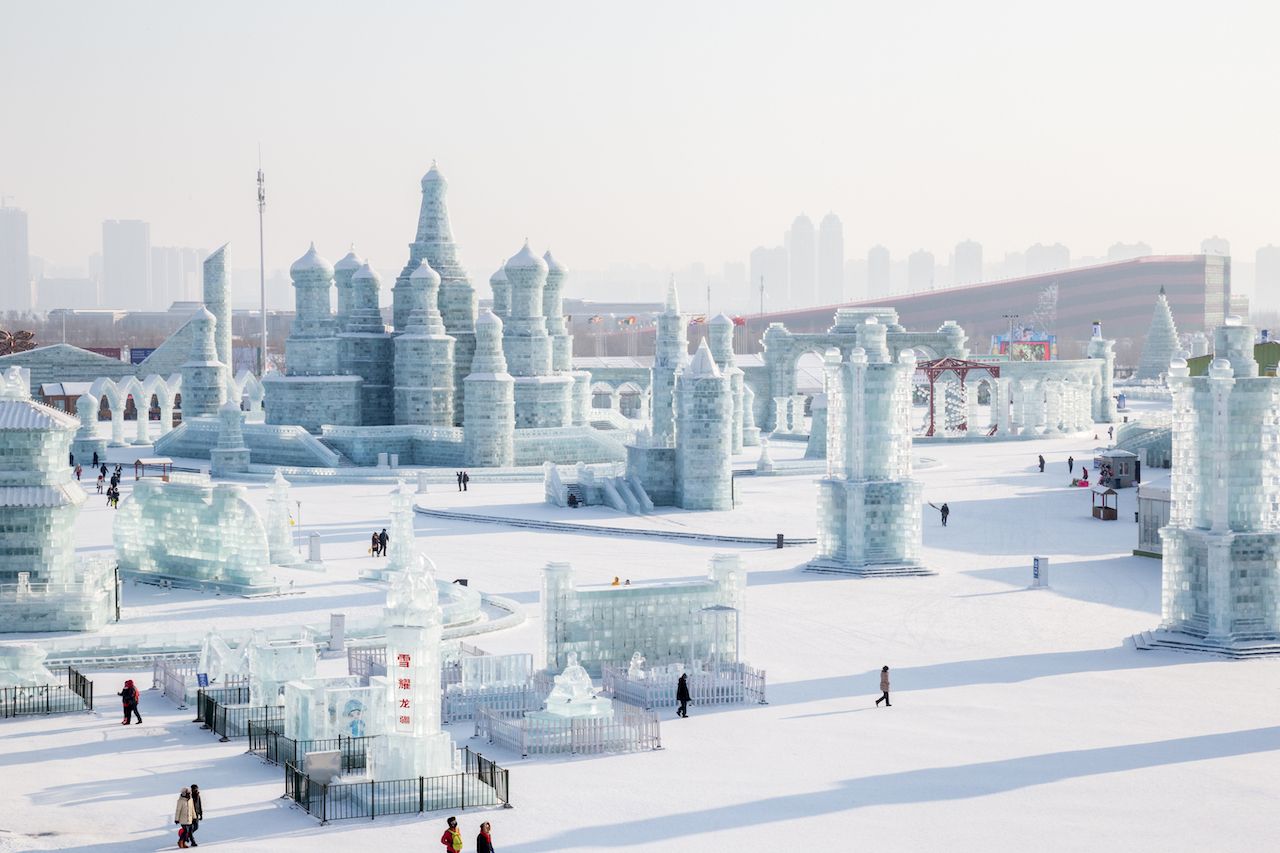
Photo: Haobo Wang/Shutterstock

The World’s Largest Ice and Snow Festival Is Underway in China

China Entertainment Cultural Traditions Art + Architecture
by Eben Diskin Jan 19, 2026

Chances are you’ve seen an ice sculpture before, whether at a town competition or in a museum, but this festival in China operates on an entirely different scale. The Harbin Snow and Ice Festival has been held in Harbin, China, since 1985, and every winter it turns a corner of northeastern China into a glowing city of ice.
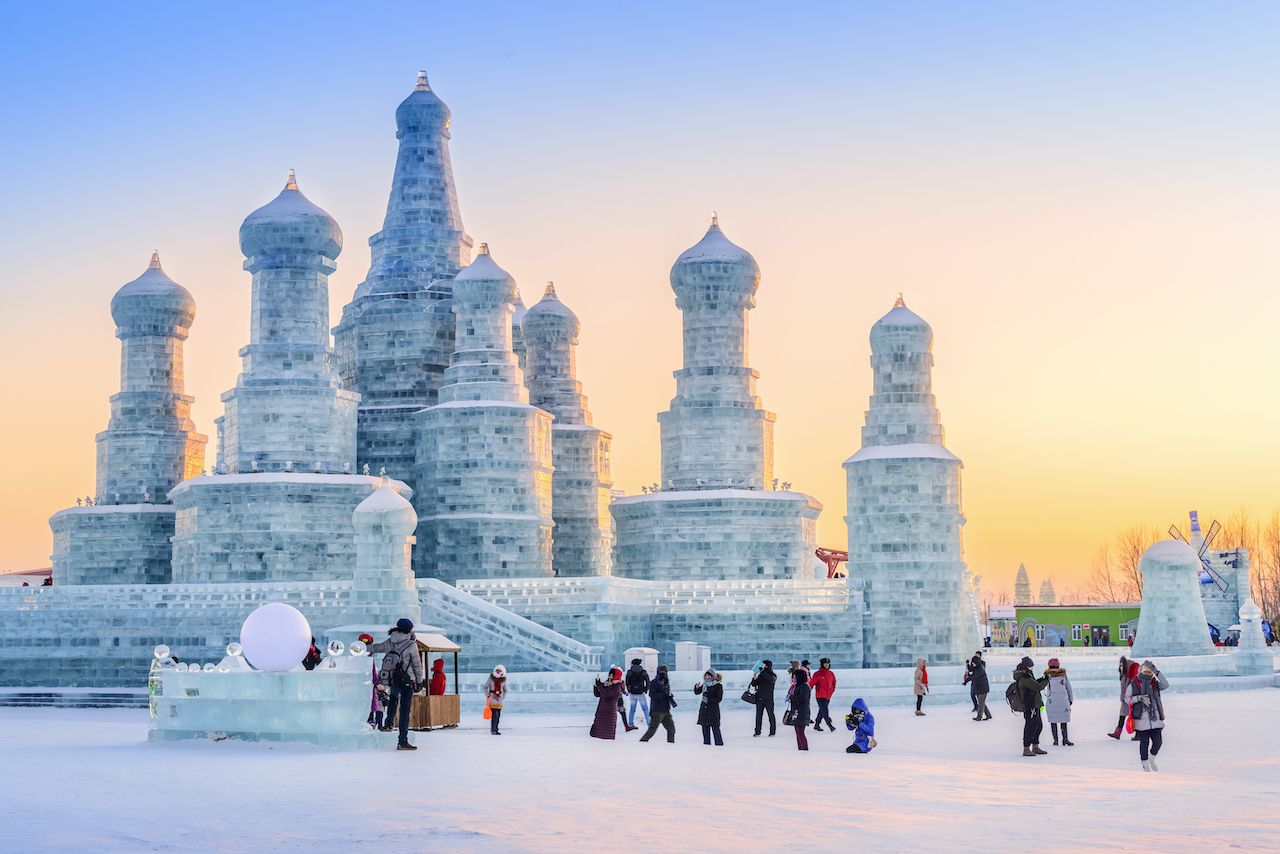
Harbin China Ice and Snow World

Ice structures at the Harbin festival are rebuilt from scratch every winter, with some sections reaching several stories high and remaining open to visitors for only a few weeks before being dismantled or melting with the arrival of spring. Photo: aphotostory/Shutterstock

If you’re picturing a single exhibit you walk through in 20 minutes, reset expectations. Harbin’s festival stretches across multiple sites, with a main park filled with large-scale ice structures, separate snow sculpture exhibitions, ice lantern displays, and activity areas set directly on the frozen Songhua River.
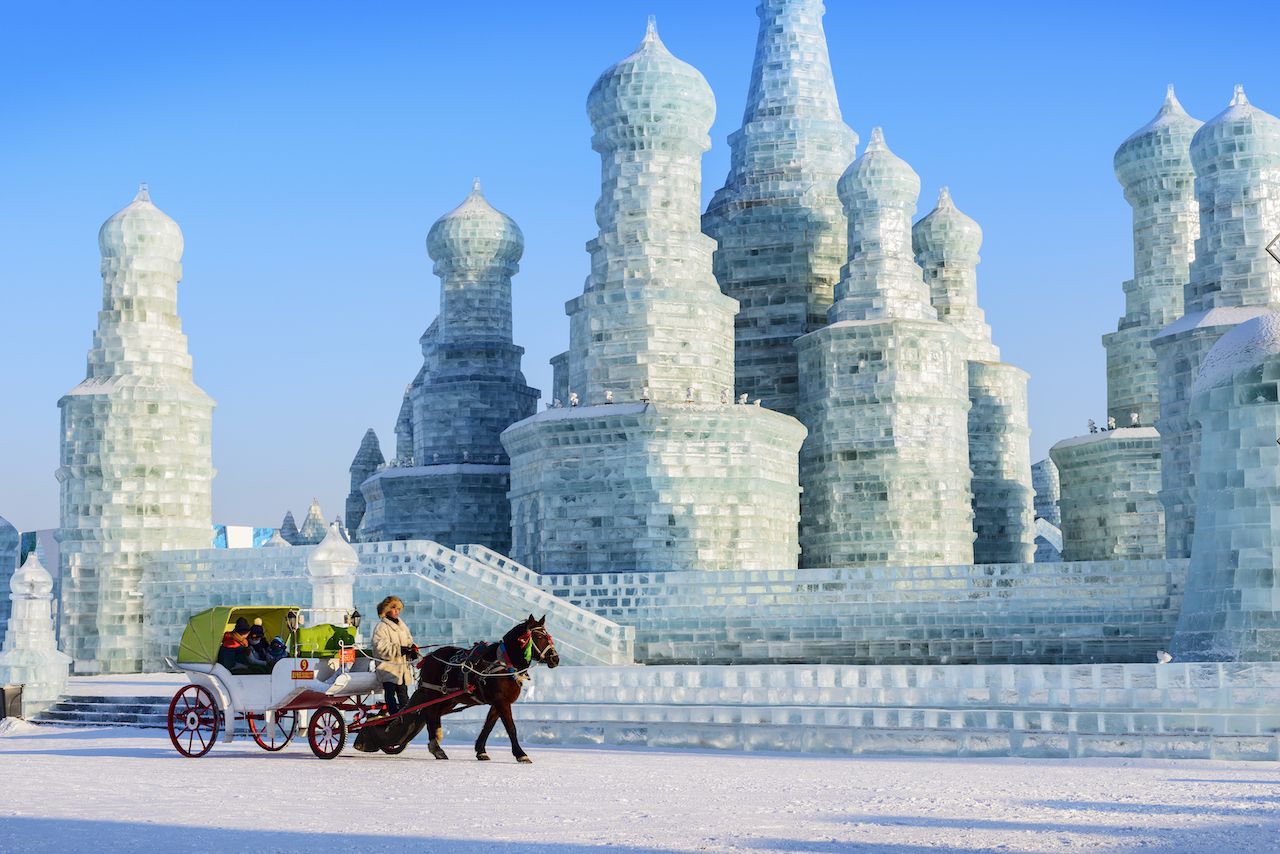
Each year, workers cut blocks of ice from the Songhua River for artists to use as material for their ice sculptures. Teams score the frozen surface, saw out thick sections of ice, and transport them to the festival grounds. The blocks are stacked into walls, staircases, arches, and facades, then fused together with water that freezes on contact. Once the structures are stable, sculptors carve surface details, and lighting is installed within the ice so the finished pieces remain visible after dark.

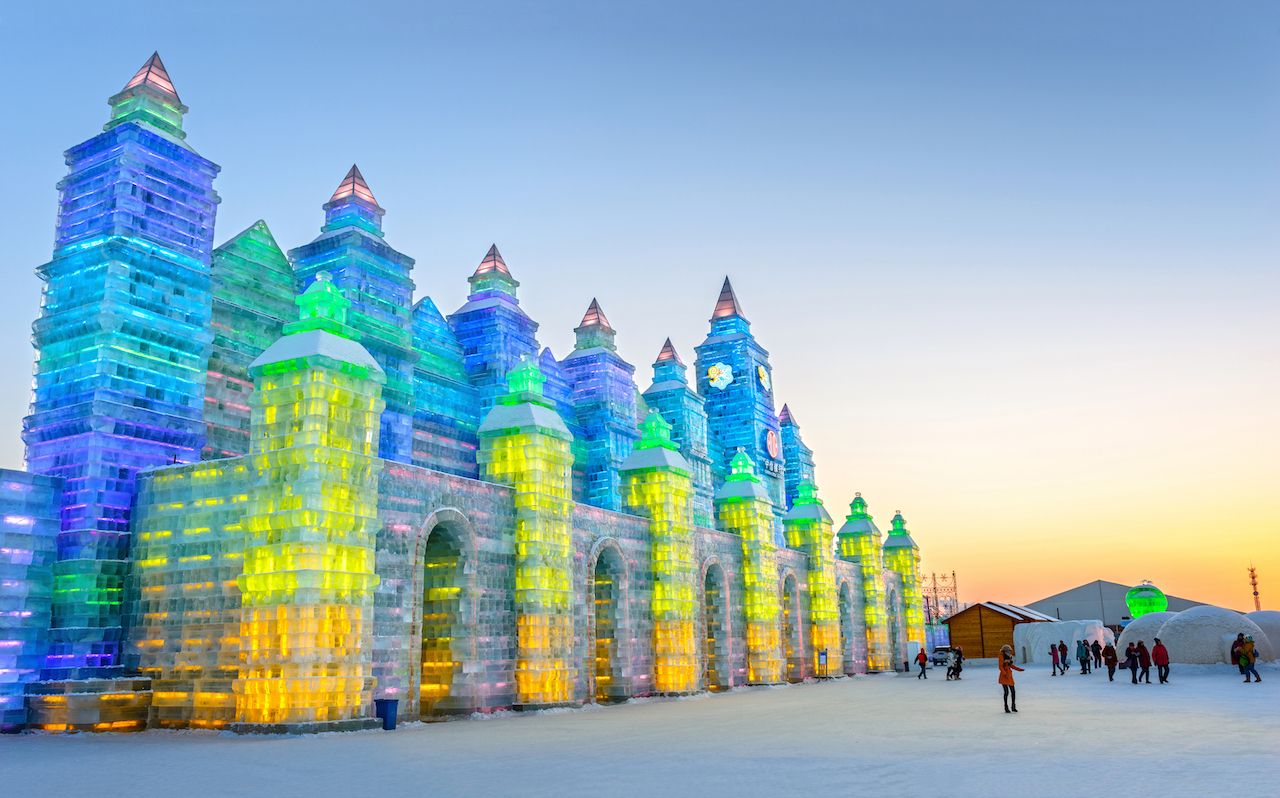
Harbin ice festival sculpture lit up

Nighttime viewing is central to the experience, with entire sections designed specifically to be navigated after dark. Photo: aphotostory/Shutterstock

After sunset, the ice structures are illuminated from within, revealing corridors, towers, and domes in saturated color as visitors move through it, bundled up in parkas and ski masks.

Harbin China Ice and Snow World

Construction typically begins in early December, with thousands of workers completing most of the site in a matter of weeks during the coldest stretch of Harbin’s winter. Photo: aphotostory/Shutterstock

The centerpiece is Harbin Ice and Snow World, the sprawling, ticketed park. This is where you’ll find the biggest “ice city” builds: castle-like compounds, monumental gates, long walls carved with reliefs, and skyline-style clusters of towers. Organizers have described recent editions as record-setting in scale, with expanded grounds and more ice and snow used than ever before.

In addition to the sculptures, there are also opportunities to ski, ice skate, play ice soccer, and even ride bicycles. Many of these activities take place on the frozen Songhua River, which functions as an open recreation area throughout the winter.

Ice city at the ice festival in Harbin

Recent editions of the festival have expanded to more than a million square meters, making Harbin’s ice city one of the largest temporary architectural sites in the world. Photo: BeeBright/Shutterstock

The festival typically opens in late December, with an official opening in early January, and runs through late February depending on weather conditions. Ice and Snow World requires a paid ticket. Harbin is accessible by direct flights and high-speed trains from major Chinese cities, and most visitors stay either near Central Street in the historic downtown or across the river near the festival grounds. Winter temperatures regularly drop well below freezing, especially at night, so proper cold-weather clothing is essential for spending time outdoors.

Entrance to Ice and Snow World costs around $45, and the festival season runs from late December through late February, weather permitting.

Discover Matador

Save Bookmark

We use cookies for analytics tracking and advertising from our partners.

For more information read our privacy policy.