Saudi Arabia’s hiking culture is evolving. Though once a hobby for small groups willing to venture onto unmarked trails, hiking and walking have now become popular outdoor activities for anyone seeking to combine fitness with heritage exploration and community building. The Saudi government and grassroots organizations are opening up formerly inaccessible areas by marking and maintaining trails, allowing everyday residents to don their hiking boots and explore their previously overlooked backyards. The goal isn’t just to be physically fit anymore — it’s also about reconnecting with nature, history, culture, and, most importantly, with one another.
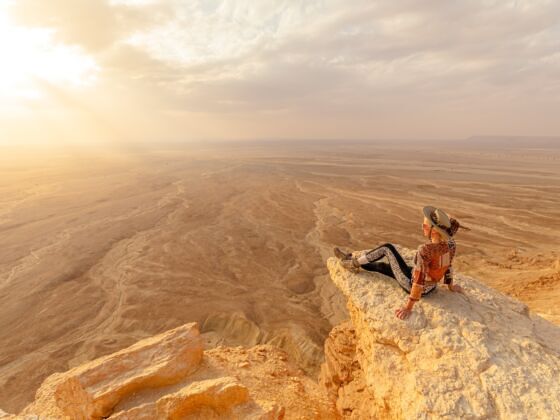
A hiker in the Tuwaiq Escarpment, Saudi Arabia. Photo: Benny Marty/Shutterstock
From the ‘Edge of the World’ to City Marathons: Inside Saudi Arabia’s Rising Hiking Boom
“Hiking culture in Saudi Arabia is growing rapidly as people become more aware of the benefits of maintaining an active lifestyle,” says Faisal Abdullah Almshari, founder of Riyadh Hiking. “However, there’s also a strong interest in exploring nature and heritage locally. This, combined with easy-to-use navigation apps, digital maps, and GPS, has really propelled Saudi Arabia’s hiking culture forward.”
From family-friendly valley walks to ancient mountain trails and urban heritage routes, hiking is slowly becoming part of daily life in Saudi Arabia, one trail at a time. At least six key factors are driving the surge in popularity, and making it easier than ever to experience the country on foot for visitors and locals alike.
Saudi Arabia has some of the region’s most dramatic landscapes
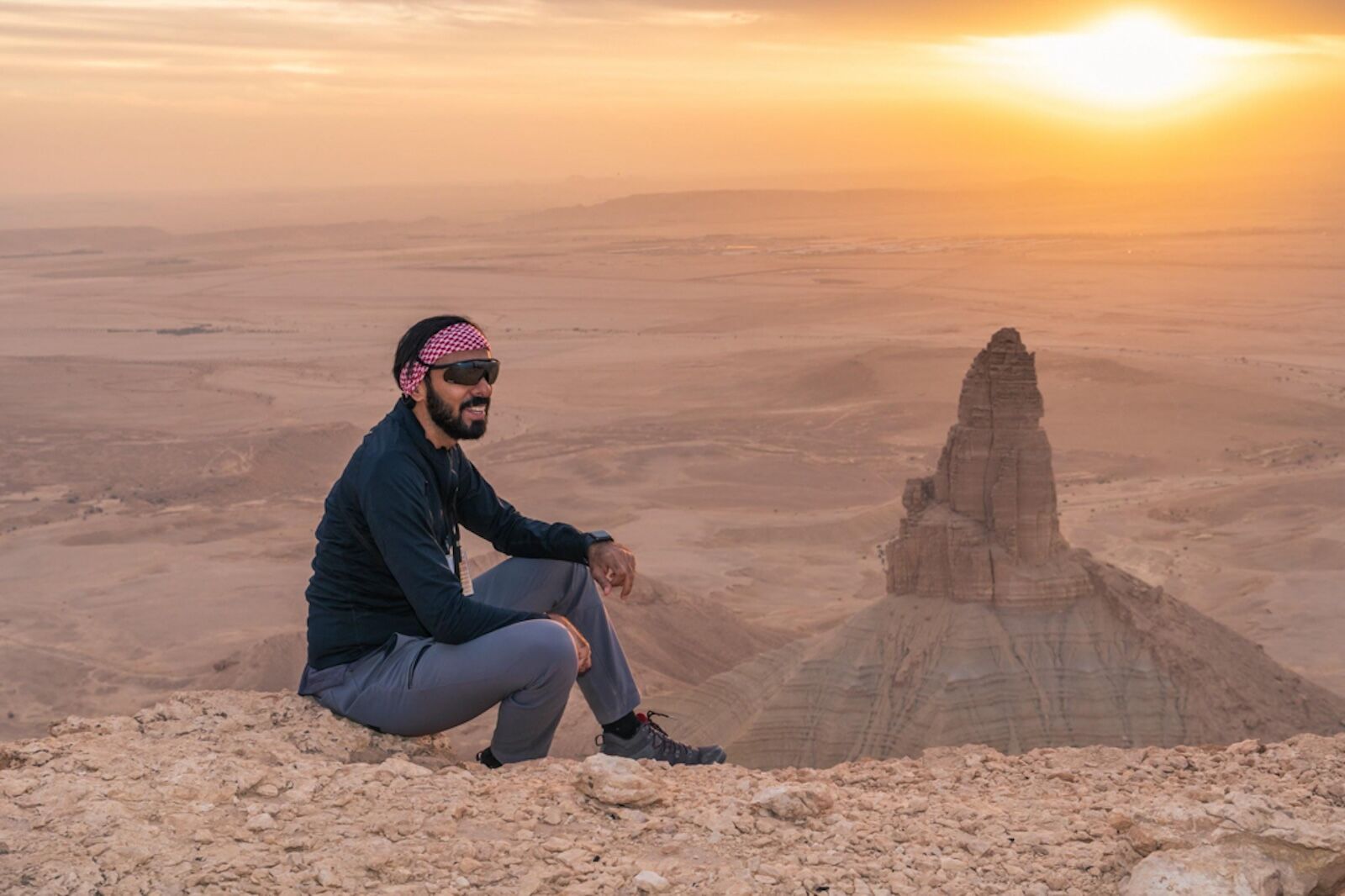
A hiker near Riyadh, Saudi Arabia. Photo: Riyadh Hiking/Faisal Abdullah Almshari
For decades, Saudi Arabia’s vast deserts, rugged valleys, and majestic mountains have functioned as beautiful backdrops – inasmuch as they were remote and largely untouched. Today, the same landscapes are taking center stage as some of the country’s best hiking destinations.
Some 60 miles northwest of Riyadh, the Tuwaiq Escarpment – a vast series of sandstone cliffs and canyons in central Saudi Arabia – rises to a height of 3,600 feet from the surrounding plains. Stretching for more than 500 miles, this dramatic sandstone wall has become a magnet for hikers and mountaineers from around the world.
“Tuwaiq is home to one of the most popular hiking spots in Saudi Arabia: the Edge of the World,” says Almshari. “Hikers love it for the sweeping desert views. It gives that once-in-a-lifetime feeling of being on the top of the world that everyone is searching for.”
To the west of the Escarpment is Wadi Al Qamar, also called Moon Valley, a hiking destination growing in popularity on Saudi Arabia’s west coast. It sits two hours north of Jeddah and is home to beautiful hiking trails lined with stunning rock formations and crater-like indentations, allowing hikers to explore an almost lunar side of Saudi Arabia’s geography.
In contrast, the lush highlands of Asir in the far south, along the Red Sea, are home to hiking trails through terraced coffee estates and dense juniper forests, as well as peaks that rise above layers of mist. Some of this region’s popular trails include the Jabal Sawda Trail (9.1 miles, 3,460 foot gain), which takes hikers to Al Soudah, the highest mountain peak in the country (at 9,892 feet above sea level). Also popular is the 4.3-mile-long Fog Walkway, known for its spectacular views over the Tihama Mountains, and the Ridge Walk, an easy 1.25-mile-long trail ideal for families and first-timers.
Many trails celebrate Saudi history and culture
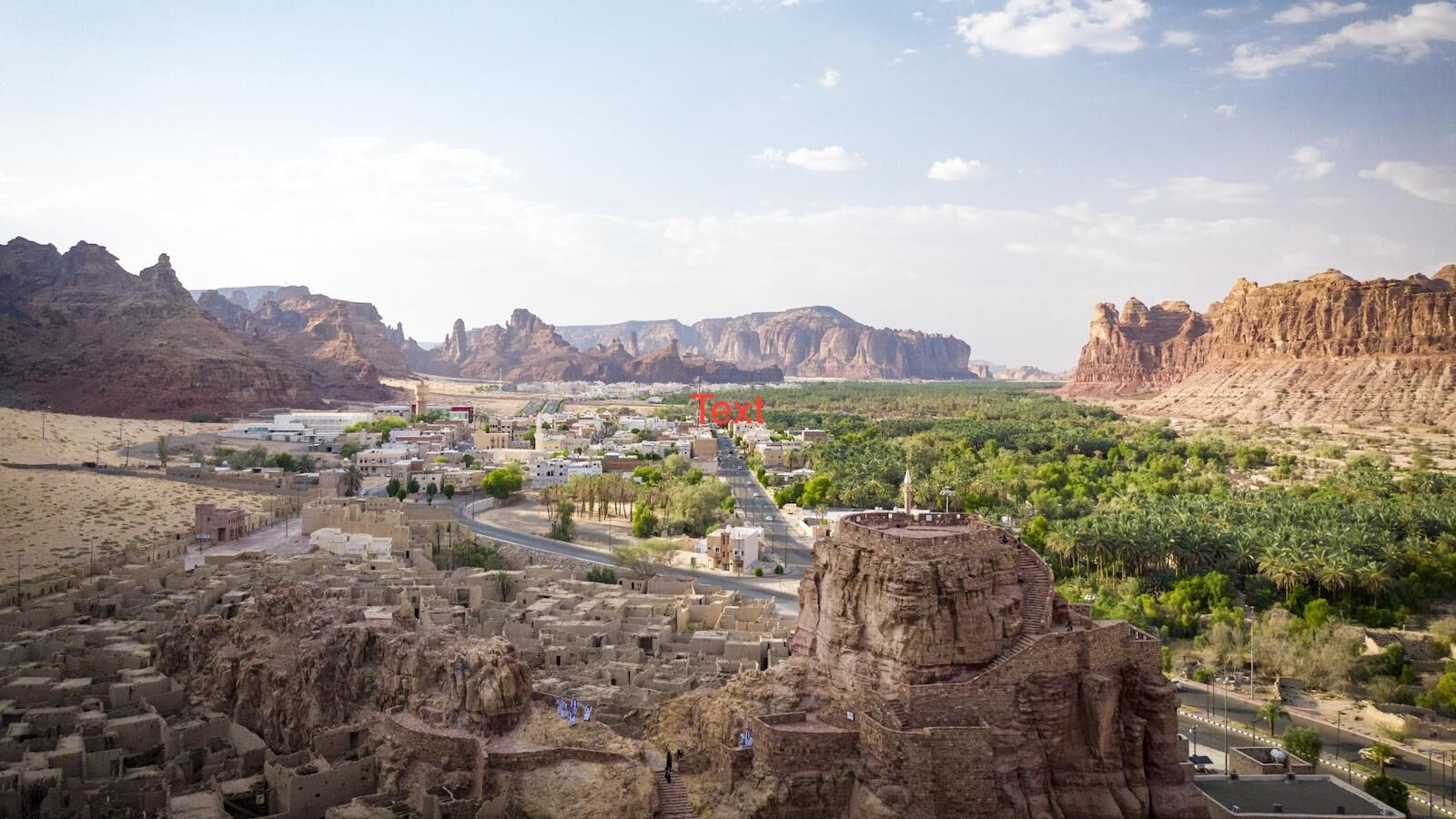
The Oasis Heritage Trail. Photo: Experience AlUla
Saudi Arabia’s long history and rich heritage add an interesting cultural angle to its hikes. For hikers who love their adventures with a side of culture, the country has plenty of places to walk through stories that go back thousands of years.
In UNESCO-listed AlUla, the Heritage Oasis Trail takes visitors through the abandoned mudbrick houses and crumbling city walls of the Old Town. The town was once home to the ancient Nabataean and Lihyanite civilizations, with numerous hiking trails that wind through Hegra’s monumental tombs, Jabal Ikmah’s 2,000-year-old rock carvings, and Sharan Nature Reserve’s incredible biodiversity, set against stunning natural landscapes.
On the Jabal Abyad hike (2.3 miles, 700 foot gain), visitors can climb to the top of Mount Abyad, Saudi Arabia’s tallest volcano, while soaking in the black-and-white checkerboard views of Khaybar.
Central Saudi Arabia offers its own historic routes. Trails such as the Mussaigrah Trail (5.2 miles, 460 foot gain) and Ajlan Archaeological Trail (1.5 miles, 600 foot gain) follow paths once used by incense and spice traders crossing the Arabian Peninsula. Dotted with 8,000-year-old rock graffiti and remnants of ancient settlements, these trails, mapped and developed by the Saudi Hiking Trails Association (DARB), provide rare and accessible insight into the region’s prehistoric civilizations.
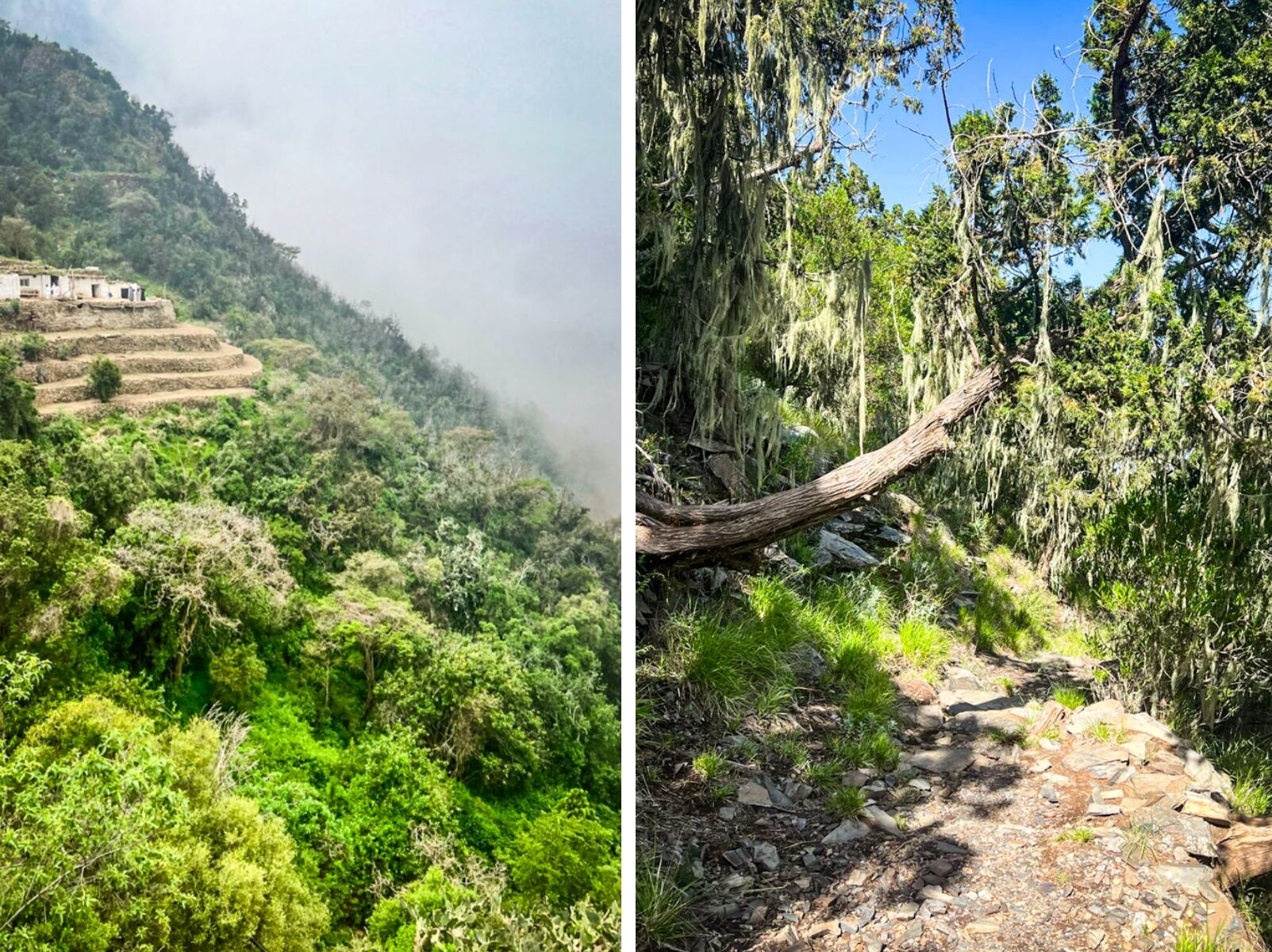
Hiking around Asir, Saudi Arabia. Photo: Abha Trips/Osama Al Qahtani
In the southwestern highlands, closer to the border with Yemen, hiking is less of a modern recreational hobby, and more a continuation of daily life. “Hiking and walking are part of local culture here,” says Osama AlQahtani, a hiker and resident of Abha, the capital of Asir. “People have been climbing mountains and walking long distances for centuries as part of life here.” It was a necessity of living in the area, he says. “They cultivated crops on steep terraces and built villages along cliffsides.”
Today, hiking tours across Asir and Jazan continue to grow. Routes typically take travelers through Khawlani coffee farms in Jazan to learn about the Kingdom’s centuries-old coffee culture, or may go into Asir’s abandoned villages inhabited by the lesser-known “flower men” — members of the Qahtan tribe who wear flower wreaths as part of their culture and live in homes decorated with vibrant Al-Qatt paintings (a centuries-old wall decoration style practiced by the region’s women). The experience is as culturally rich as it is scenic. “People love the mountains – the nature, fresh air, and cool weather,” says Al Qahtani. “Many are health-conscious, but most are drawn by the culture, landscapes, and natural beauty.”
Walking can be a social outlet in cities
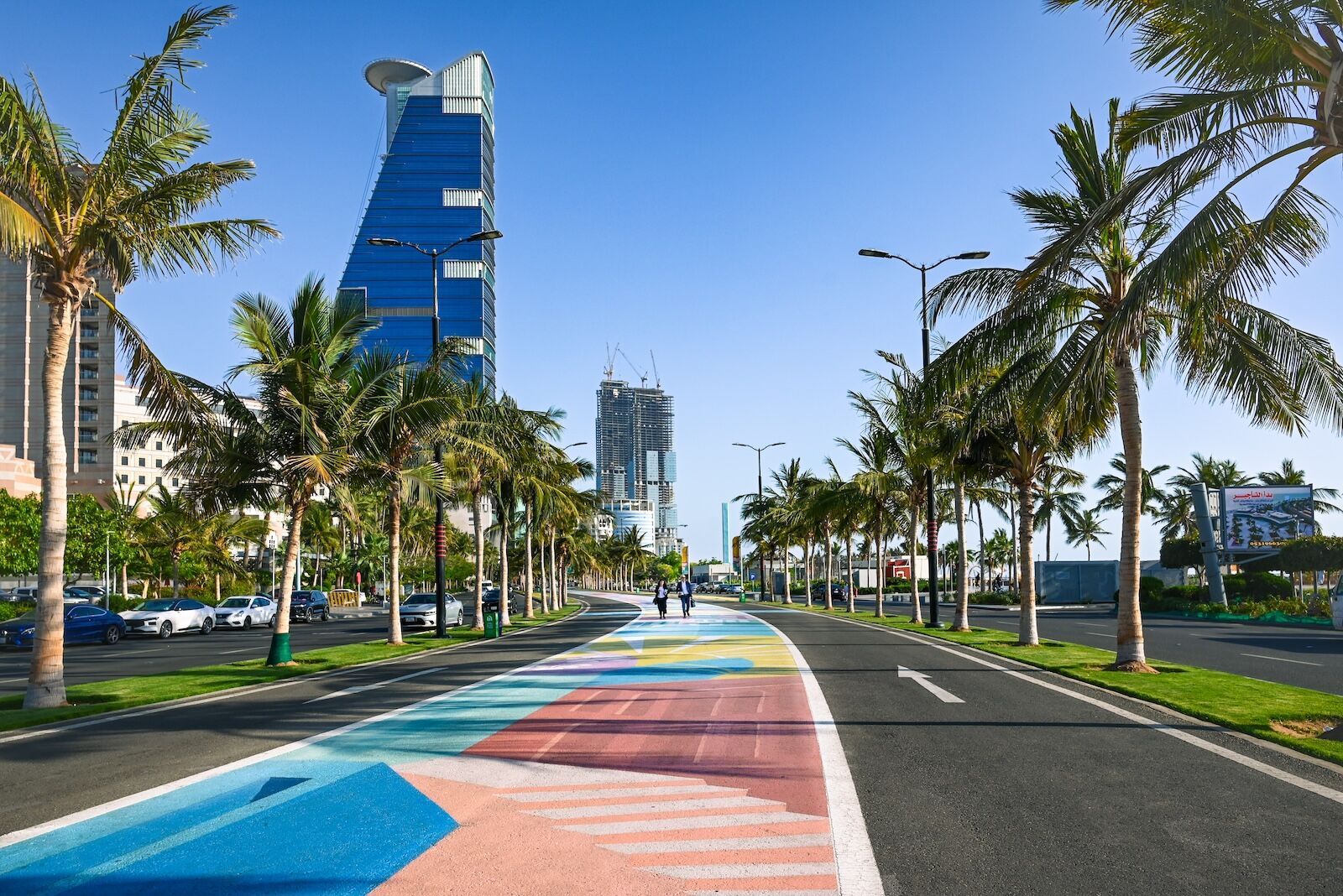
A walking path in downtown Jeddah, Saudi Arabia. Photo: Assmaa ElTouny/Shutterstock
The growth of hiking culture in Saudi Arabia isn’t limited to remote valleys and mountain peaks. In cities, walking has become a popular social activity and a meaningful way to explore urban history.
In Riyadh, volunteer-led groups such as Infinite Trails and Riyadh Walkers organize regular trips in and outside of the city to combine wellness with socialization. The excursions are designed to connect like-minded people during walks through urban neighborhoods, restored old towns, rugged valleys, and desert paths.
In Jeddah, the municipality launched Jeddah Walks 2, a program that gives participants a planned, measured approach to running and tracking their progress through the Walking Challenge app. Participants can earn points by walking and running in 25 specific areas of Jeddah over a four-week period with challenges and community-building exercises that make it feel more like a game than a workout.
The government is looking to hiking to protect natural spaces
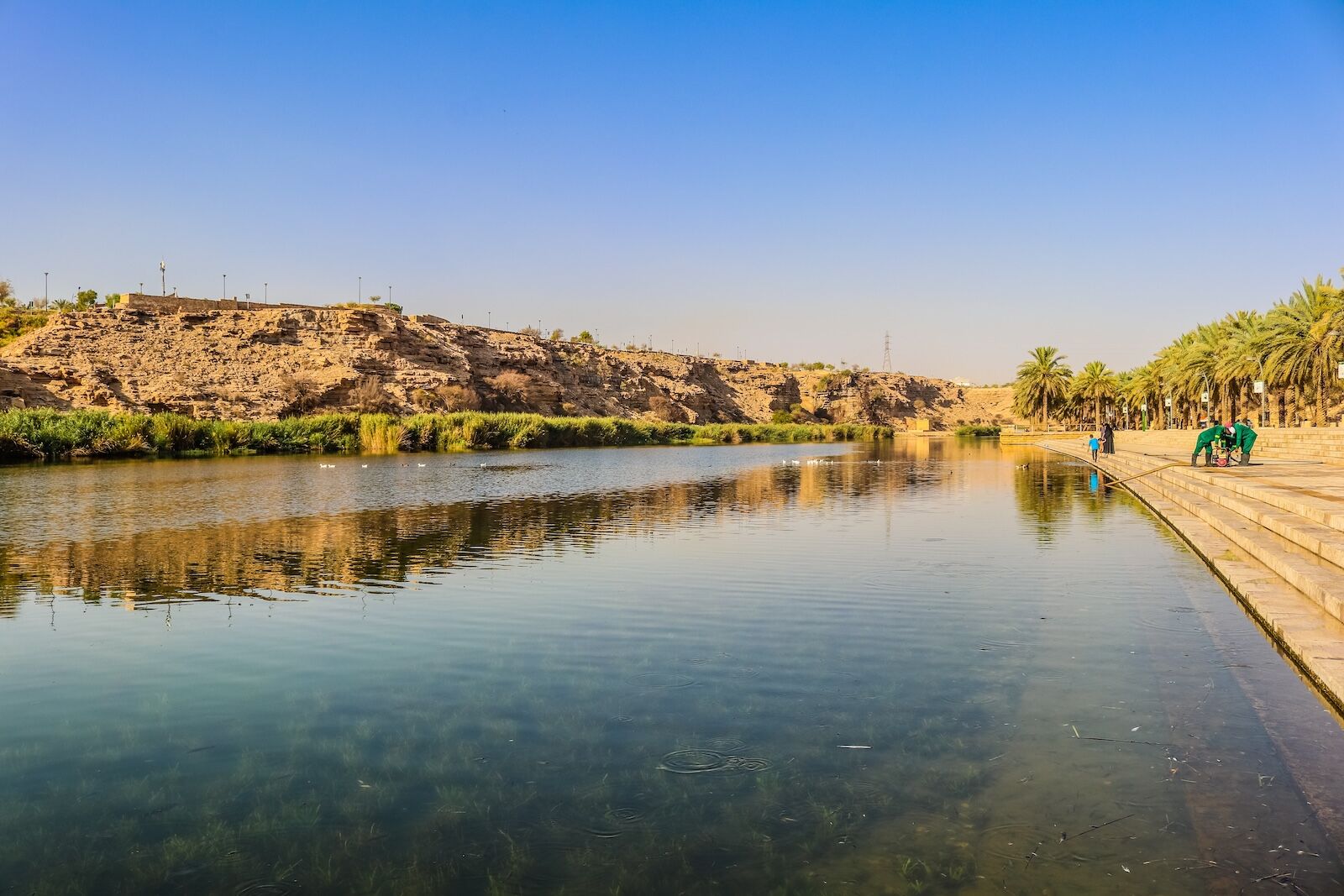
Wadi Hanifah in Riyadh, Saudi Arabia. Photo: Iwona Deren/Shutterstock
The Saudi government’s efforts to reclaim natural spaces lost to urbanization are also fueling the growth of hiking in the country.
In the Najd region, authorities extensively rehabilitated Wadi Hanifa — a seasonal river valley stretching nearly 75 miles — after severe degradation in the early 2000s. Today, it’s a natural getaway for Riyadh residents, with shaded walkways, open parks, and picnic-friendly areas that make the valley a popular destination among families with small children, casual walkers, and beginner hikers. Its network of pedestrian paths extends more than 30 miles and is stroller- and wheelchair-friendly.
“Camping facilities in Wadi Hanifa are also very good. There are clearly marked campsites, and clean, well-maintained toilets,” says Shikha Jetli Bellini, a Riyadh resident who recently camped there with her family. “Rangers are continuously patrolling the area, which made us feel safe throughout our stay.”
Running and walking events are becoming more popular
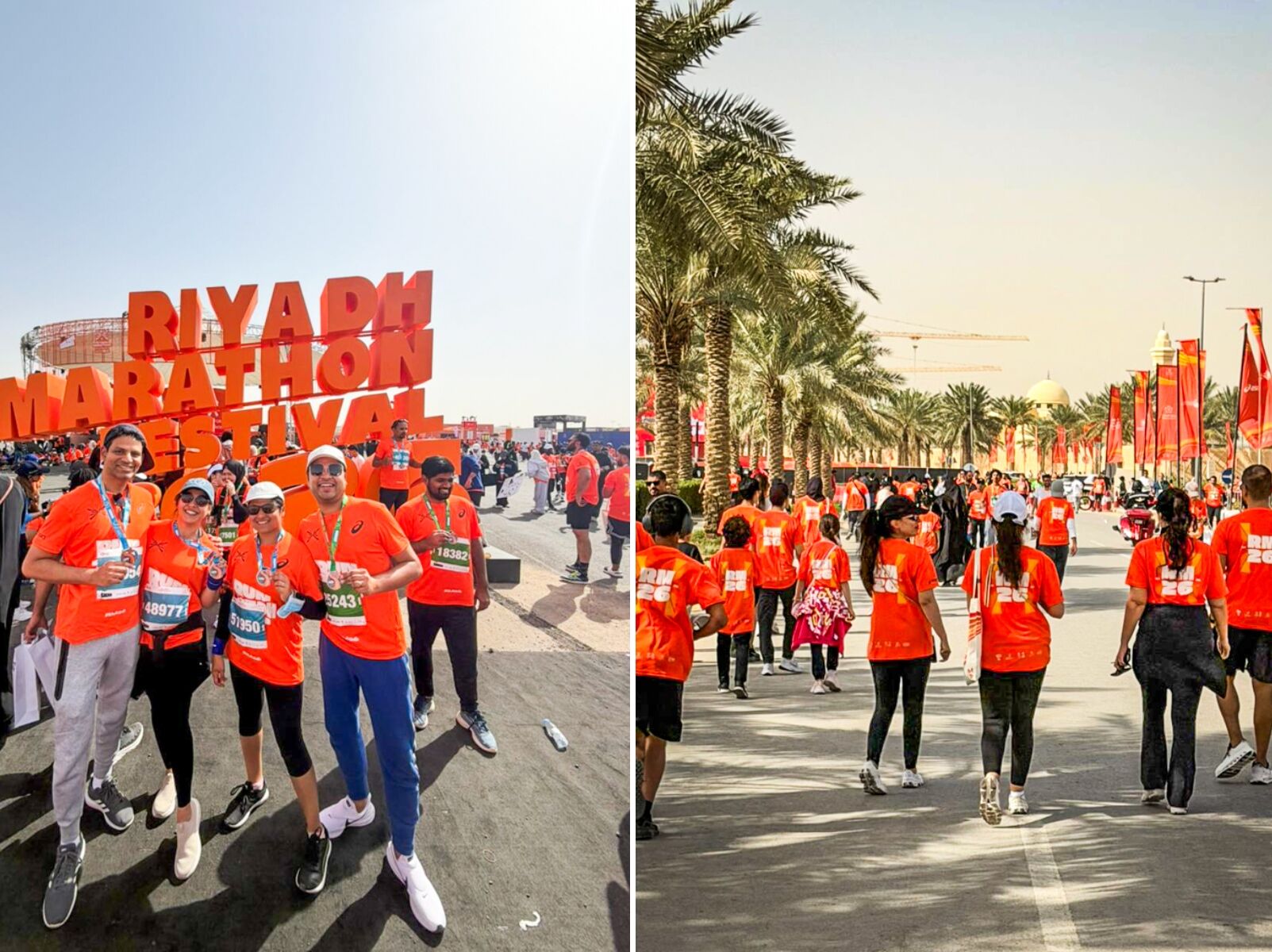
Sameer Goel (right) and friends at the 2026 Riyadh Marathon. Photos: Sameer Goel
Saudi Arabia’s growing interest in outdoor activities is also driven by a wave of dedicated running and hiking events, from city marathons to endurance trail races.
The Riyadh Marathon stands out as the country’s biggest success story. Participation has surged from 10,000 when the event debuted in 2022 to more than 50,000 runners in 2026. It’s part of Saudi Arabia’s Vision 2030 Quality of Life Program, a government-led initiative to invest in and encourage healthy lifestyles across the Kingdom. Participants can choose from full and half marathons, a 10K, or a 5K fun run.
“I signed up for the marathon this year partly to challenge myself and partly because I wanted to stick to my health resolutions,” says Sameer Goel, a Riyadh resident and corporate lawyer who ran the marathon in 2026 – his first marathon ever. “Running the whole stretch was tough at times, but the lively atmosphere made it easier. Everyone was cheering and supporting each other, which made the marathon memorable.”
In AlUla, the AlUla Trail Race offers a unique and more challenging experience. Runners and hikers move through old towns, rugged sandstone formations, and landscapes dotted with 2,000-year-old Nabataean tombs in the 62-mile ultramarathon, which blends endurance with one of the most visually striking settings in the Kingdom.
Hikers are building supportive communities
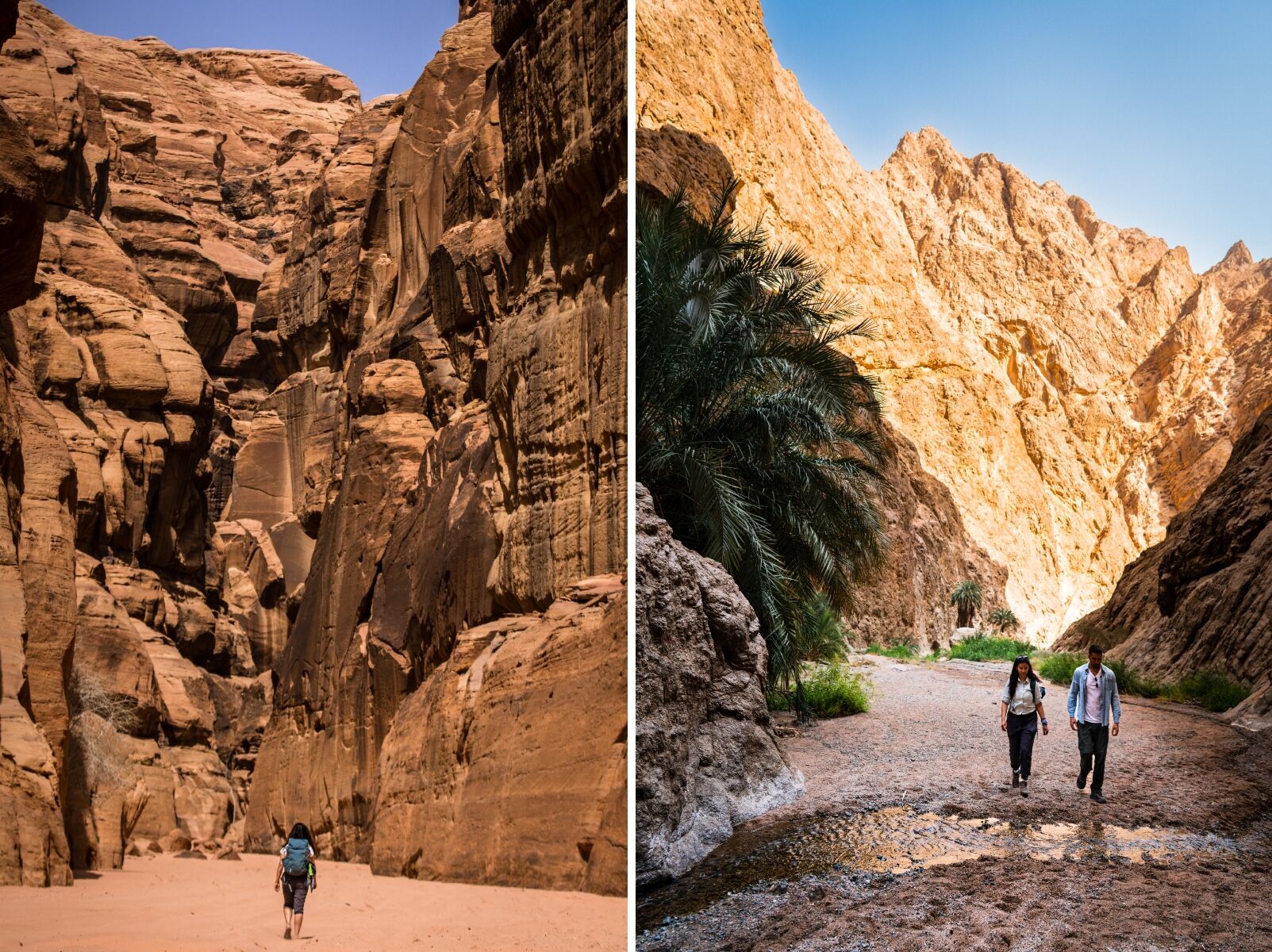
Photos: Matador Network
One of the most significant but often overlooked forces behind Saudi Arabia’s growing hiking culture is the rise of specialized, inclusive communities.
The RWG Community, a women-focused walking and hiking network, has grown into a supportive space for thousands of members across Riyadh and Jeddah. For many, it offers not just exercise, but a place to build confidence, form friendships, and access outdoor spaces that may have once felt out of reach.
Many similar inclusive groups, including MILE Worldwide, which focuses on mobility; Clique, an all-women’s running club; DRS Paces Run Club, which encourages members to push through their limitations; and the Eastern Walking Team, which focuses on running trails in Saudi Arabia’s eastern provinces, are emerging across the country. Together, they’re helping normalize outdoor activity across the Kingdom, and helping turn trail-focused wellness into a shared social movement, rather than just a niche pursuit. 