It’s the year to get your century-old kicks on Route 66 as the historic highway celebrates its centennial on November 11, 2026. Don’t feel inclined to wait until the official designation to hit the open road; cities between Chicago, Illinois, and Santa Monica, California, are expected to host celebrations throughout the year.
Linking rural outposts with major cities for the first time immortalized Highway 66 as the Main Street of America. Before it paved the way for road trips and became a symbol of cross-country freedom, the 2,448-mile route aided the movement of families seeking fresh opportunities after the Great Depression. Decommissioning the highway in 1985 did nothing to dampen its place in US society, and the Mother Road’s glory days are now preserved through roadside attractions like Cadillac Ranch, retro diners, and neon-lit motels. Among those, these historic US Route 66 hotels give you a touch of 21st-century comfort when you head out on the highway.
We hope you love these iconic Route 66 hotels! Just so you know, Matador may collect a small commission from the links on this page if you decide to book a stay.
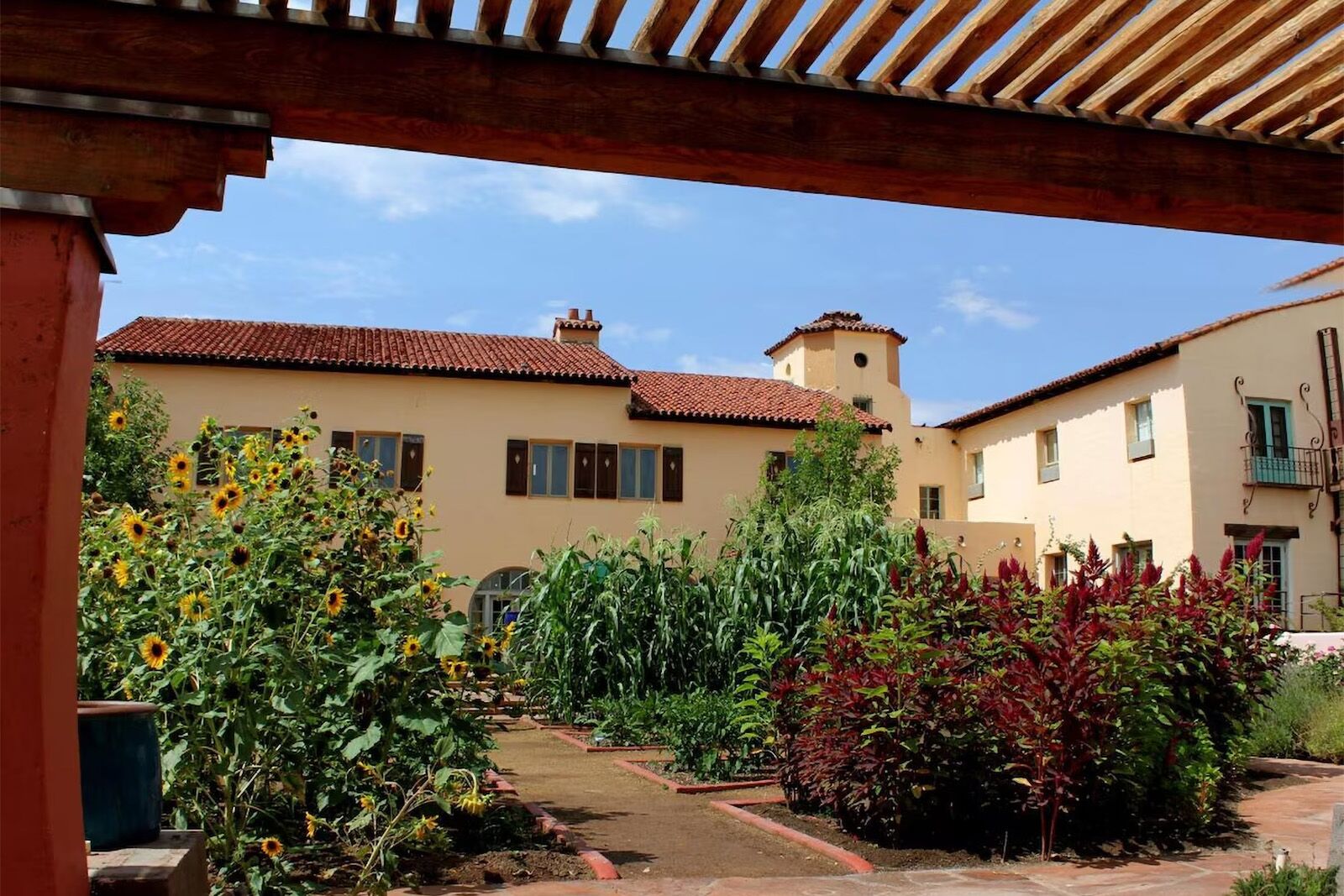
The story behind this historic Route 66 hotel gives the Mother Road a run for its money. Opening when train travel was at its heyday, the hotel attracted the likes of Albert Einstein and Amelia Earhart before an uptick in planes and automobiles upended the reign of the Santa Fe Railroad. The following decades played out in limbo before the preservationist Allan Affeldt saved Mary Jane Colter’s masterpiece from demolition.
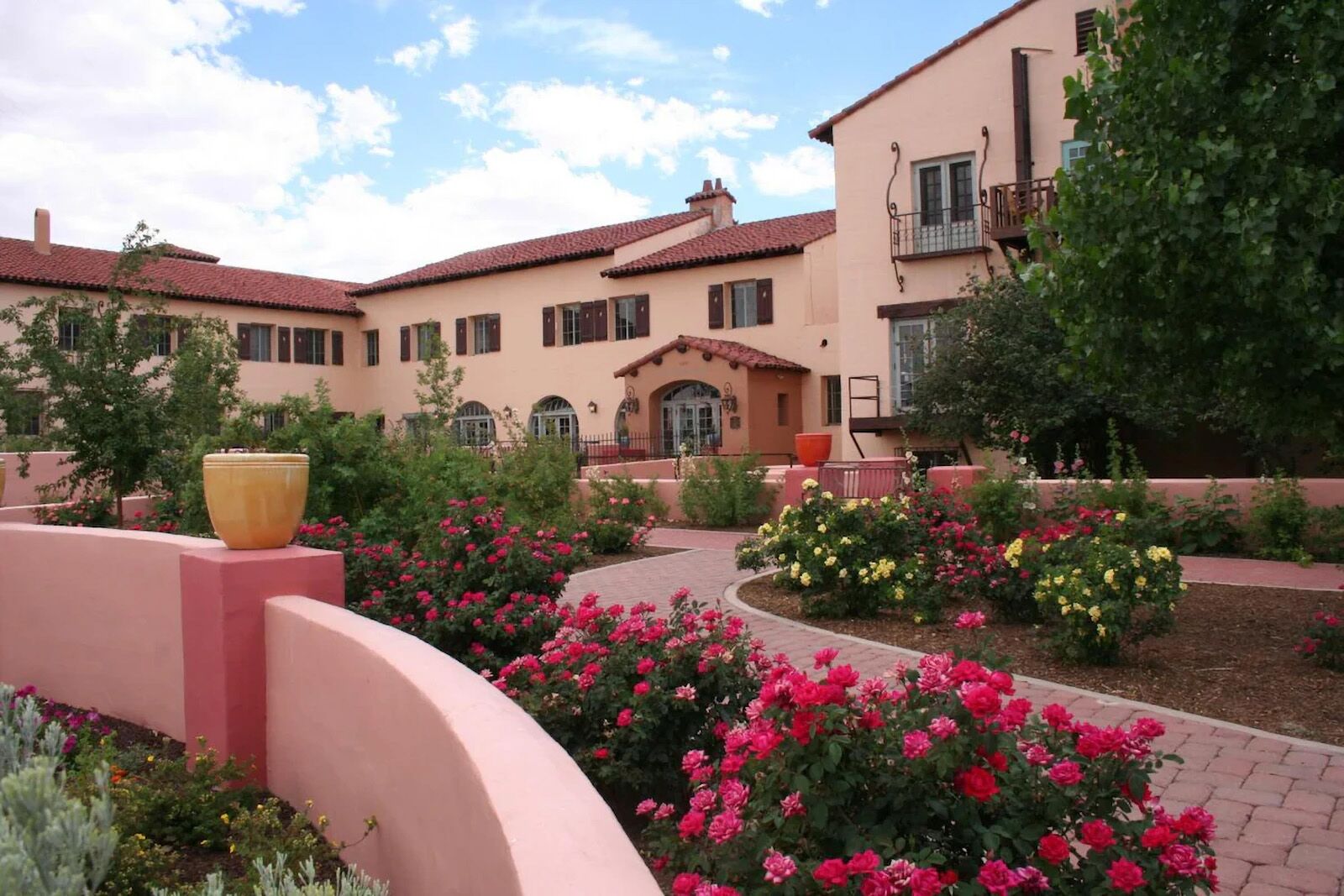
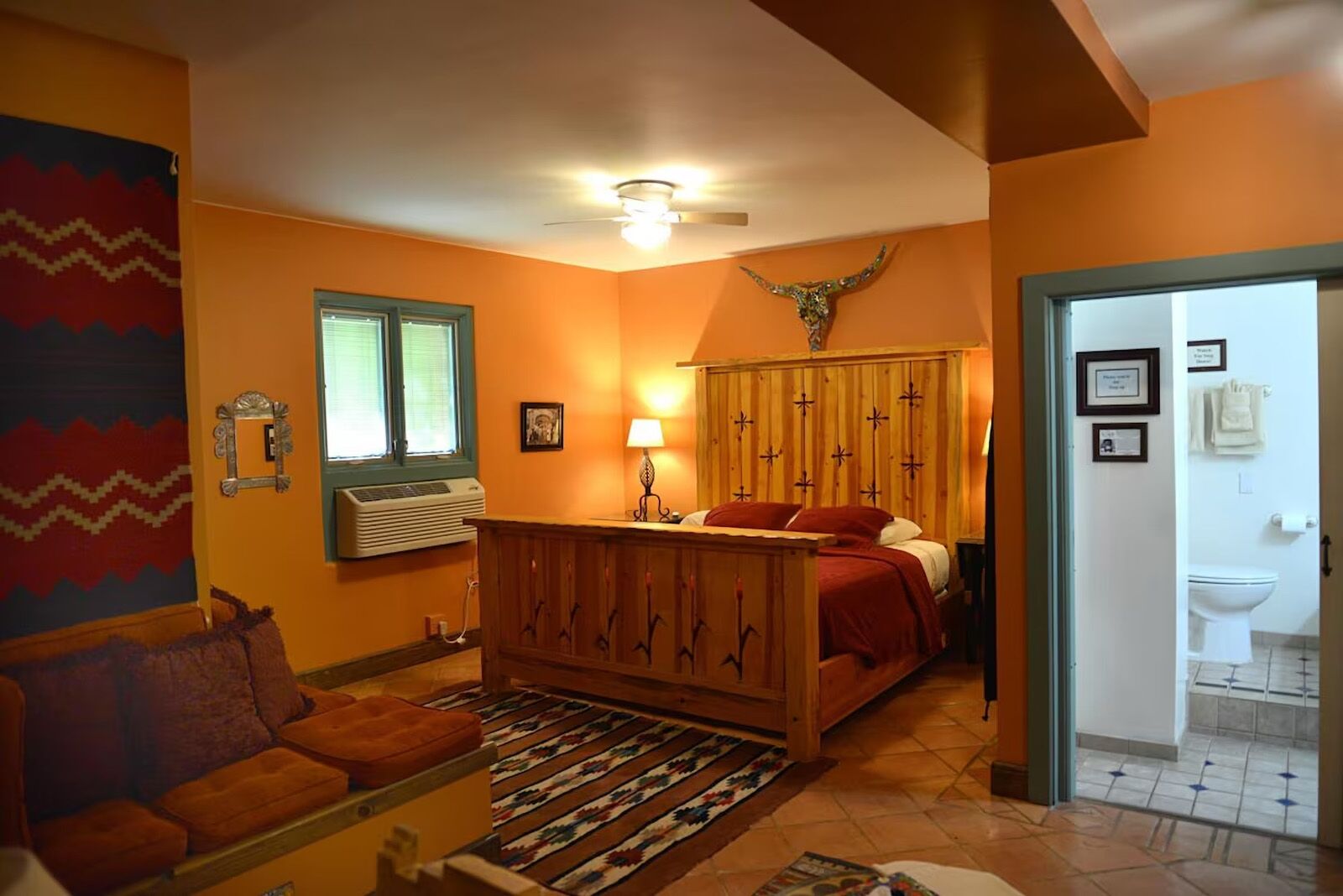
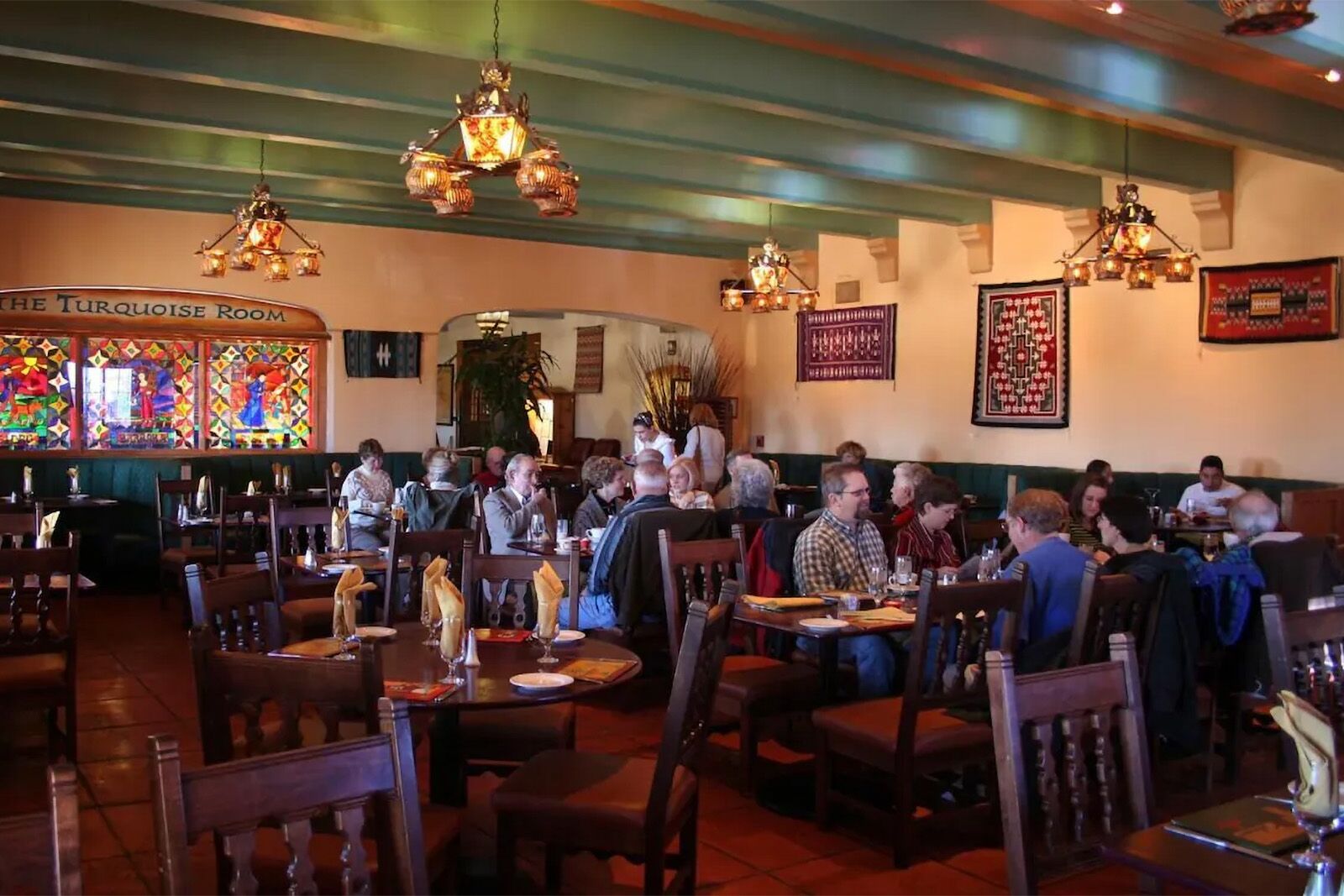
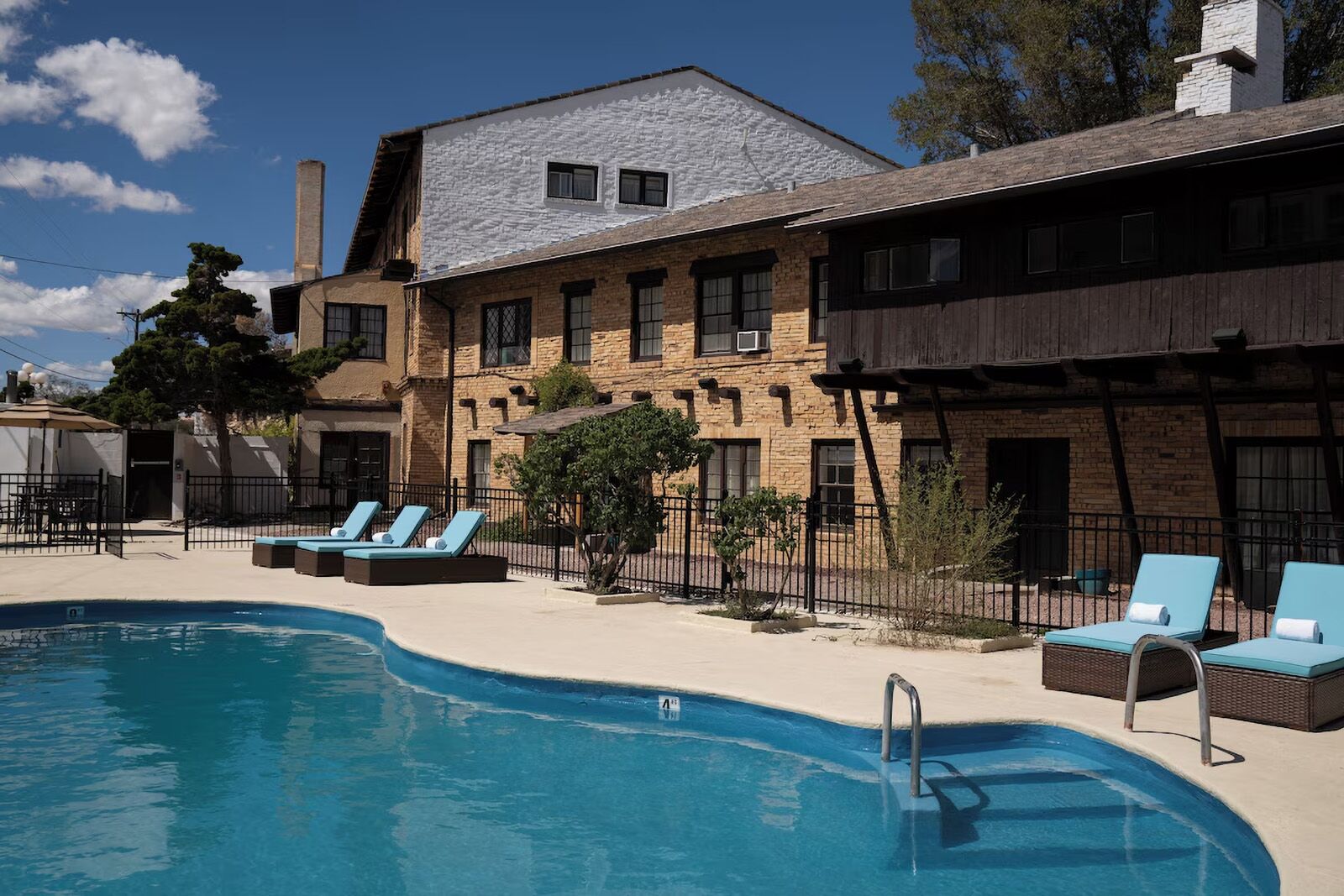
A hefty renovation rebooted the property as La Posada, “The Rest” complete with the gardens originally drawn up by Colter but never realized due to budget constraints. Besides this oasis of roses and sunken plots, the hotel impresses with its kitschy Southwest-inspired rooms, art installations, and elevated southern comforts at the Turquoise Room.
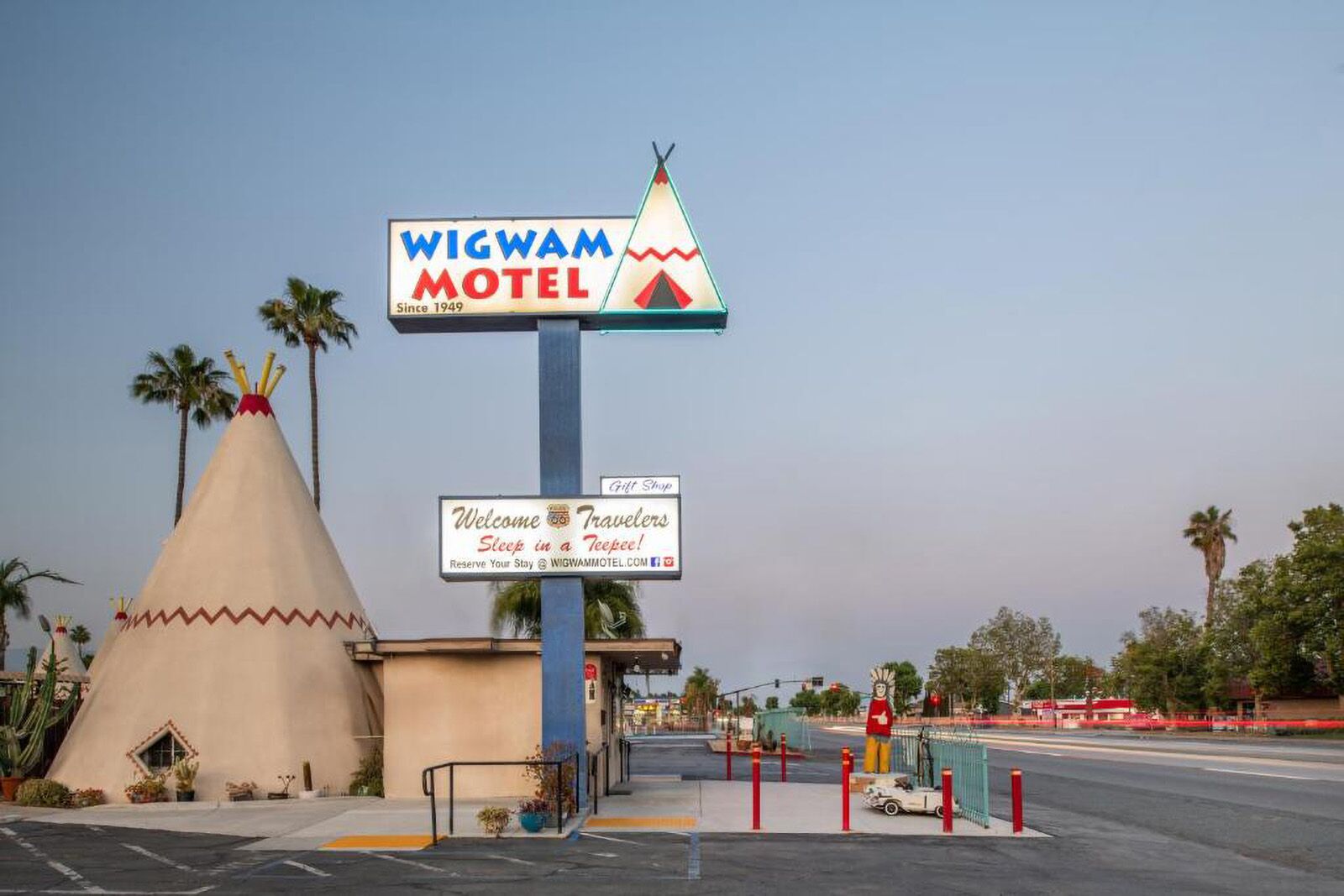
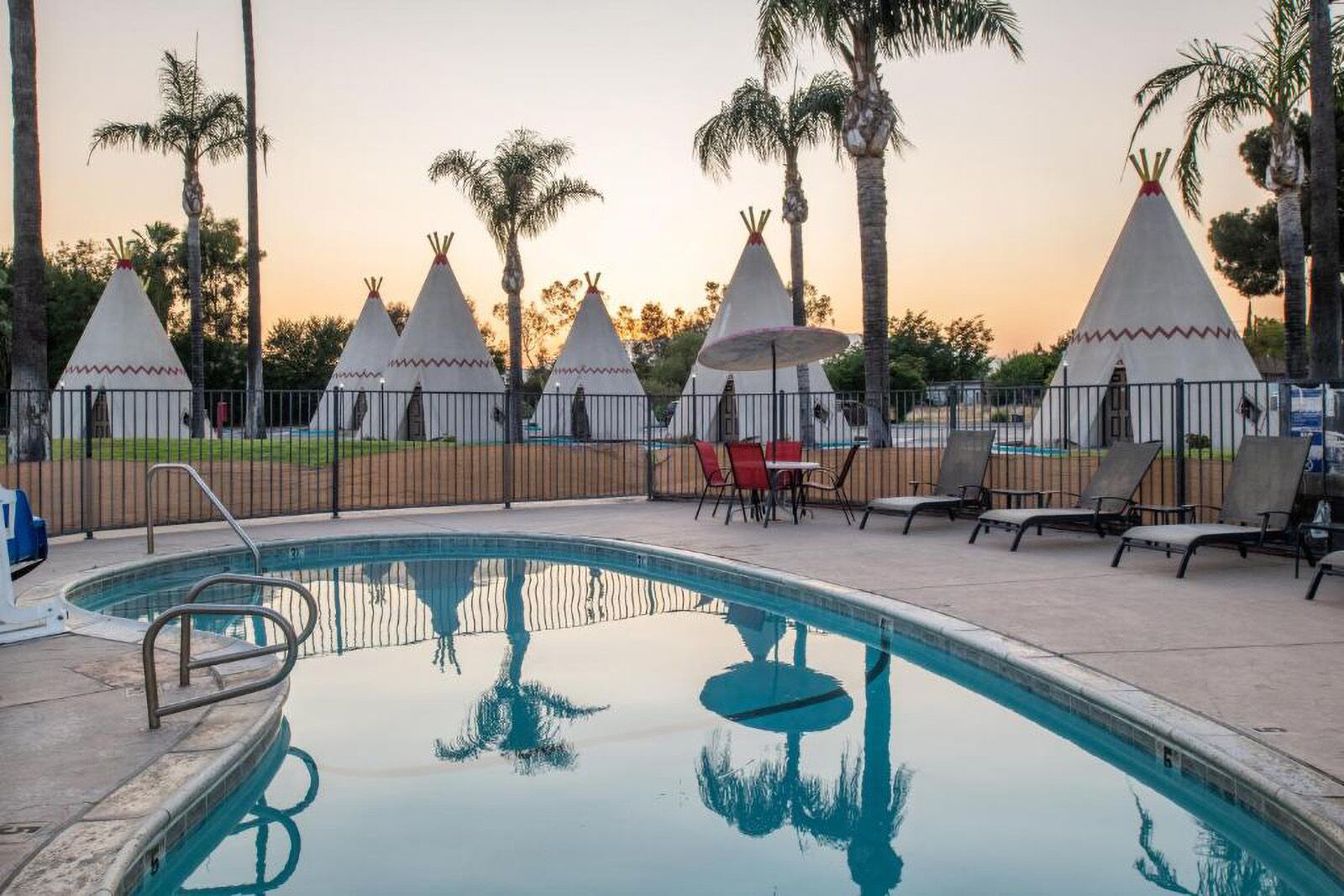
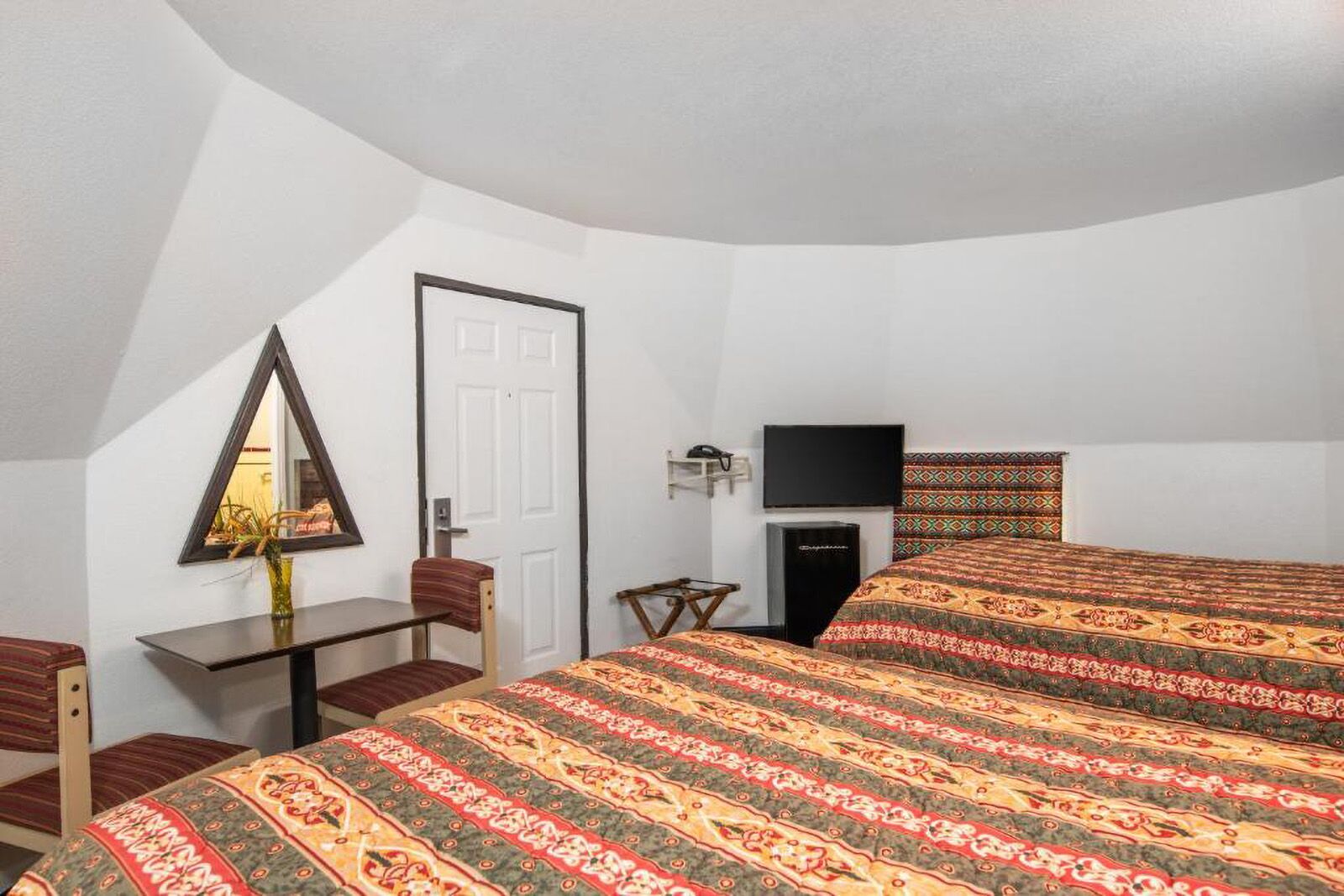
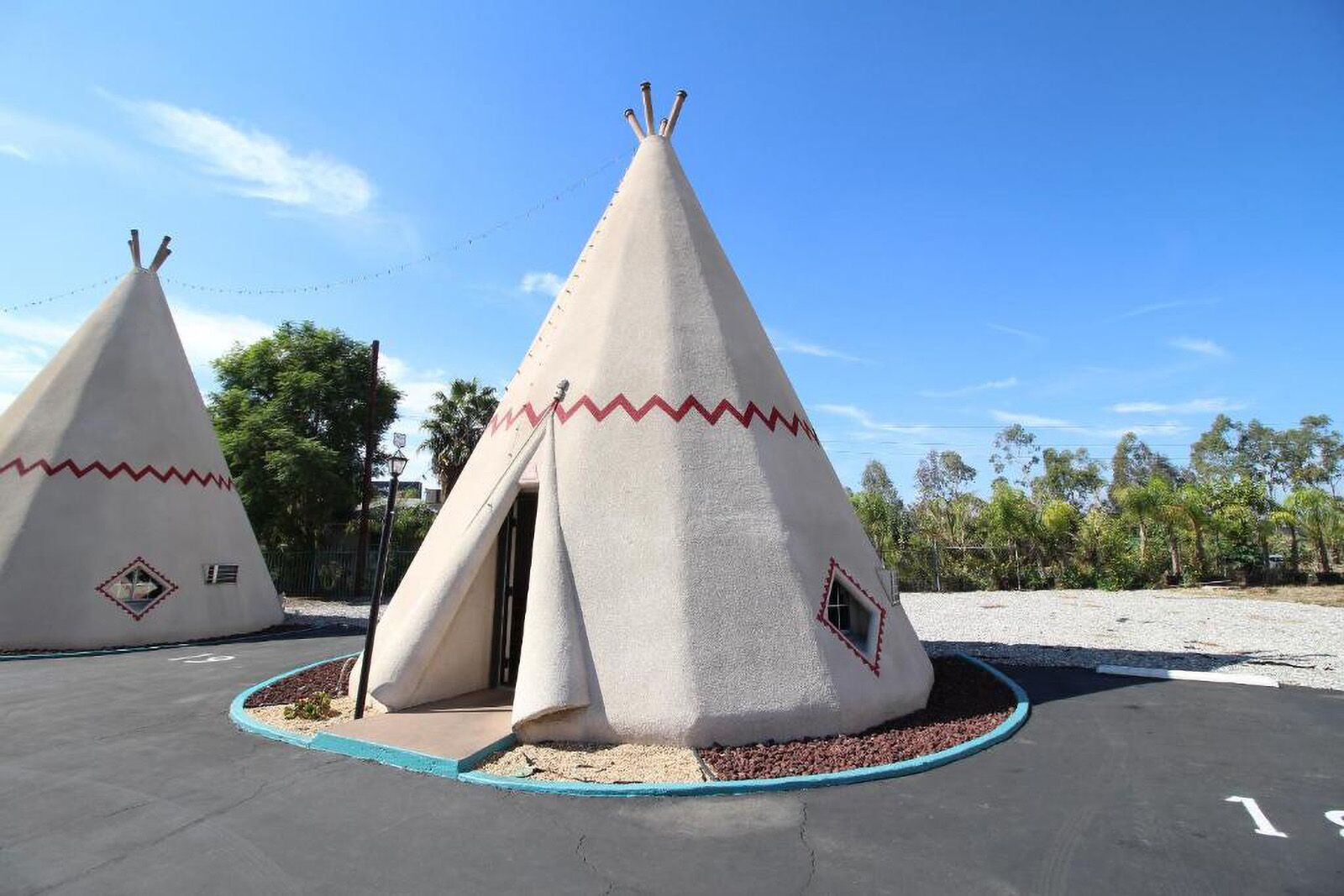
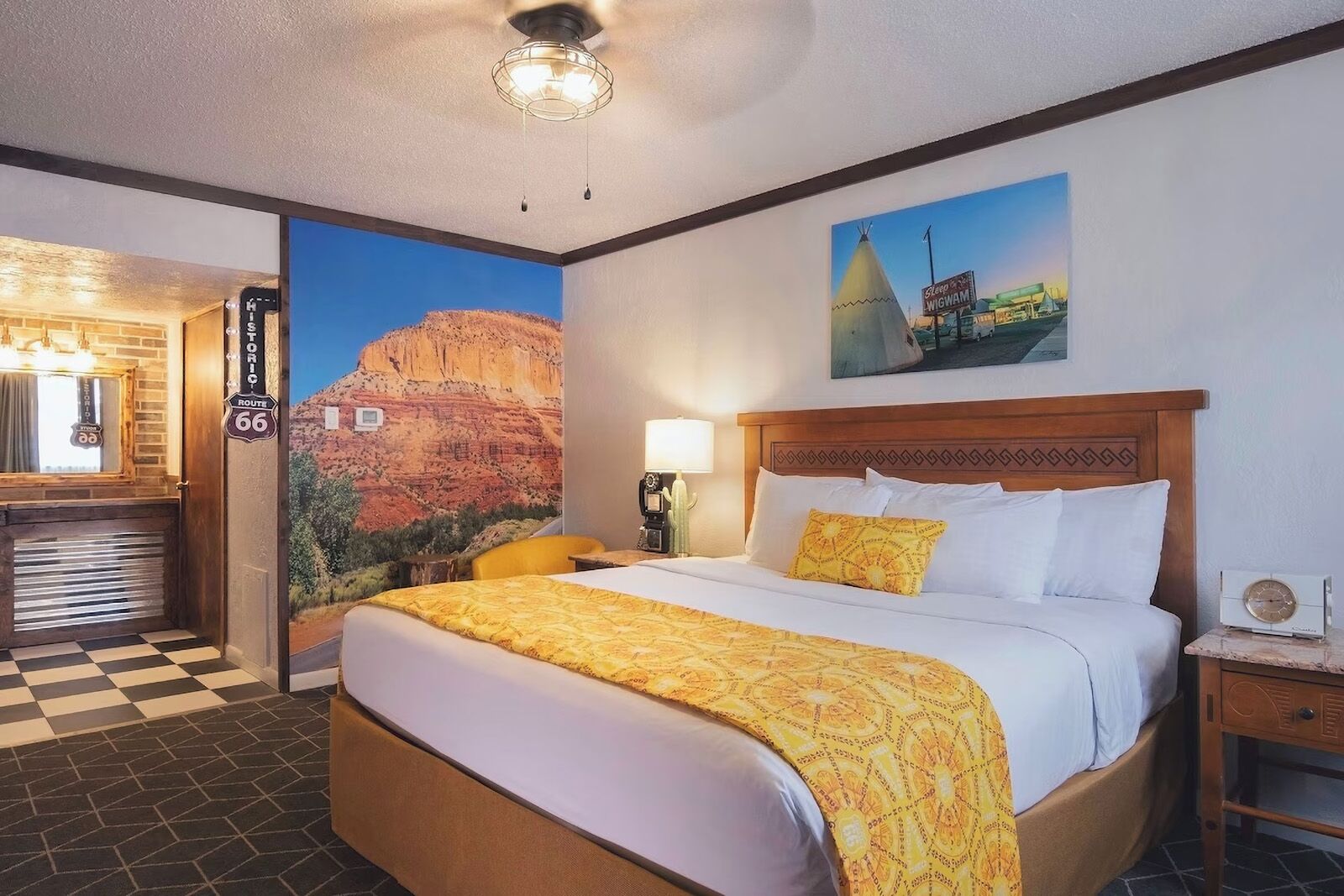
Bed down at one of the quirkiest attractions and hotels on Historic Route 66, San Bernardino’s Wigwam Motel, where a ring of 19 conical dwellings replaces the typical guest room. Fashioned from concrete and wood, these teepees pose no risk of blowing away in a gale while you get your 40 winks — and each unit has a private bathroom, high-speed Wi-Fi, and a mini fridge for added convenience.
The wigwams curl around a shared pool ringed by palms, and you’ll find a clutch of retro vehicles that make willing backgrounds for road trip selfies. Factor in some extra dollars to blow on coffee and merch from the resort’s gift store.
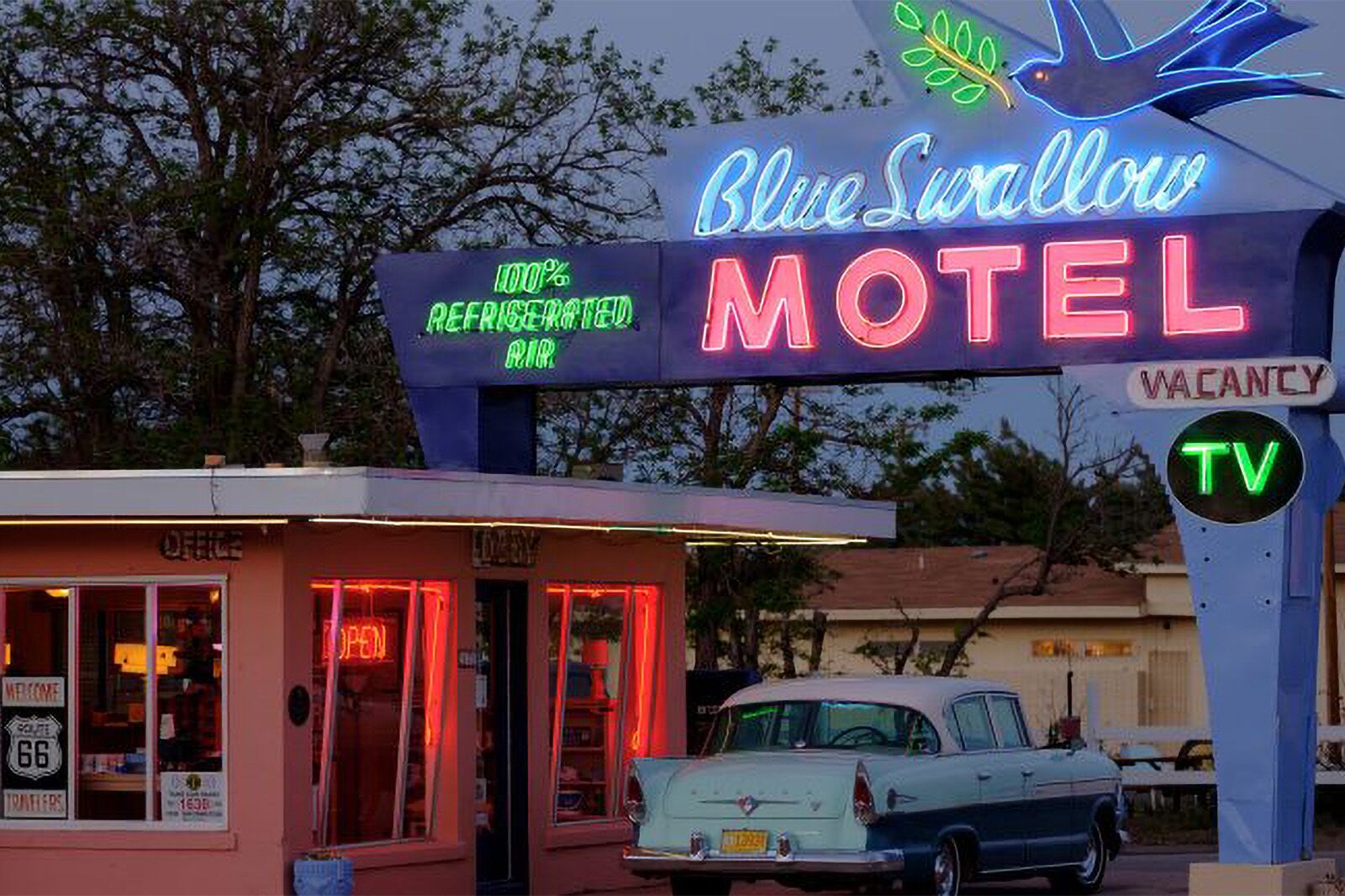
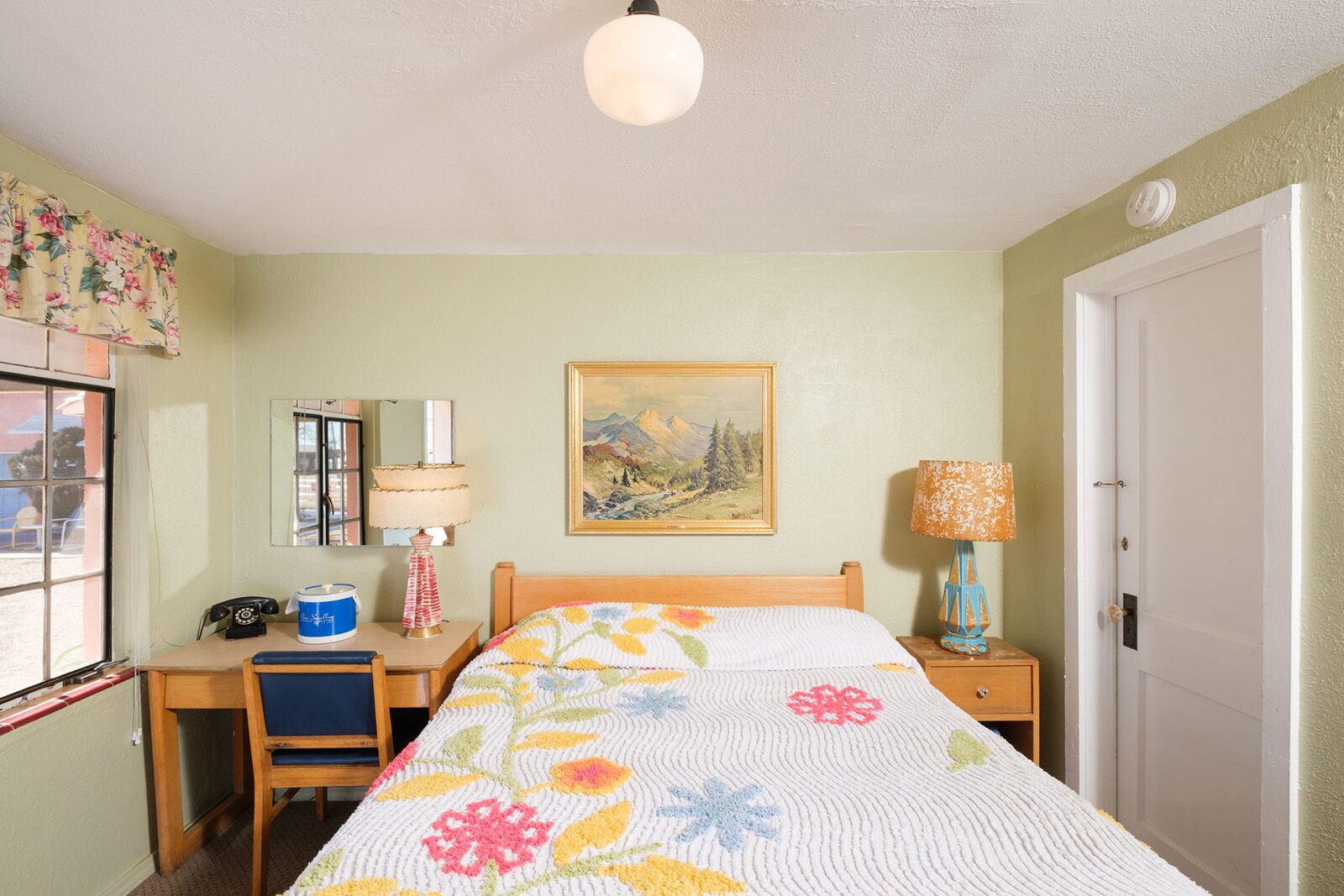
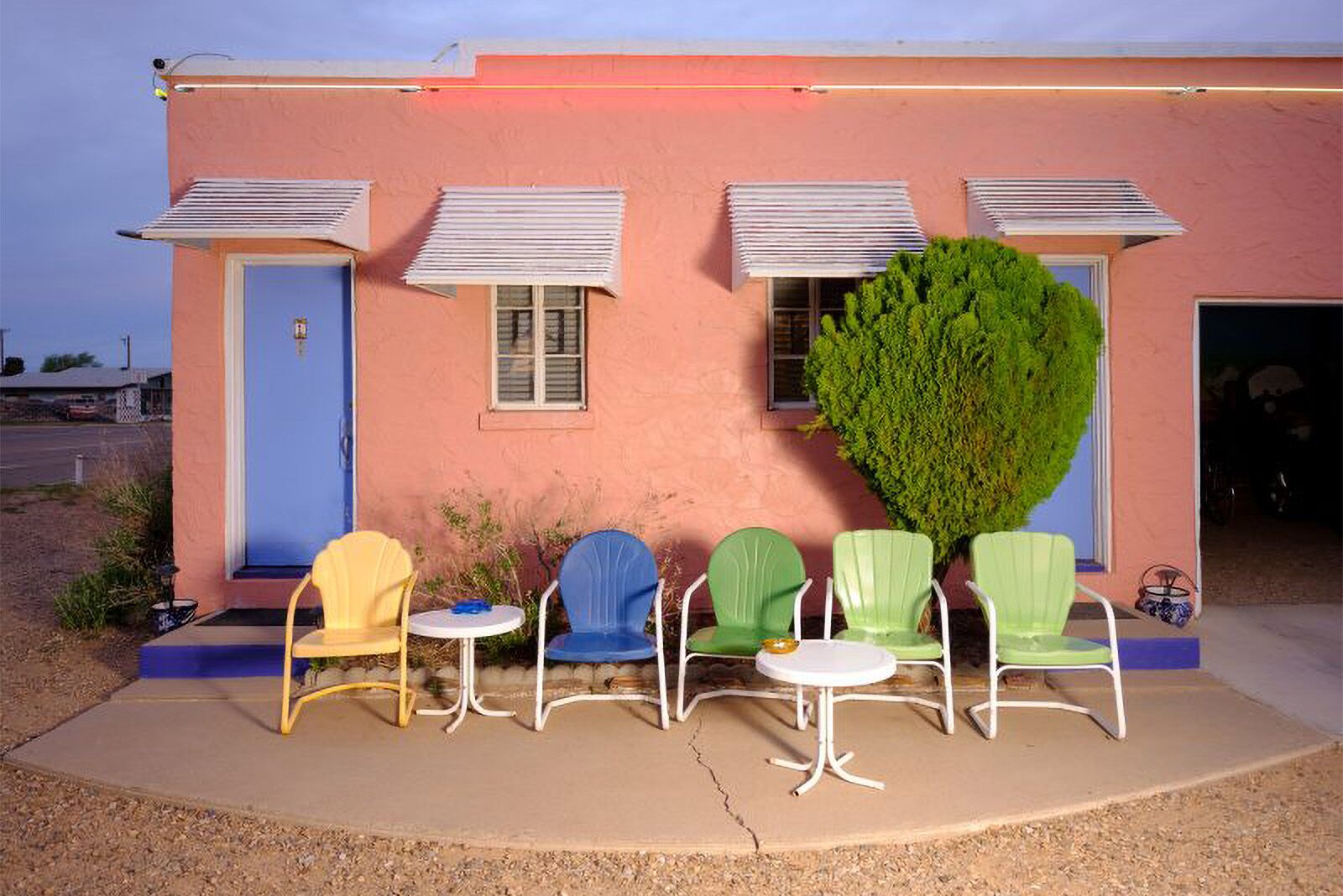
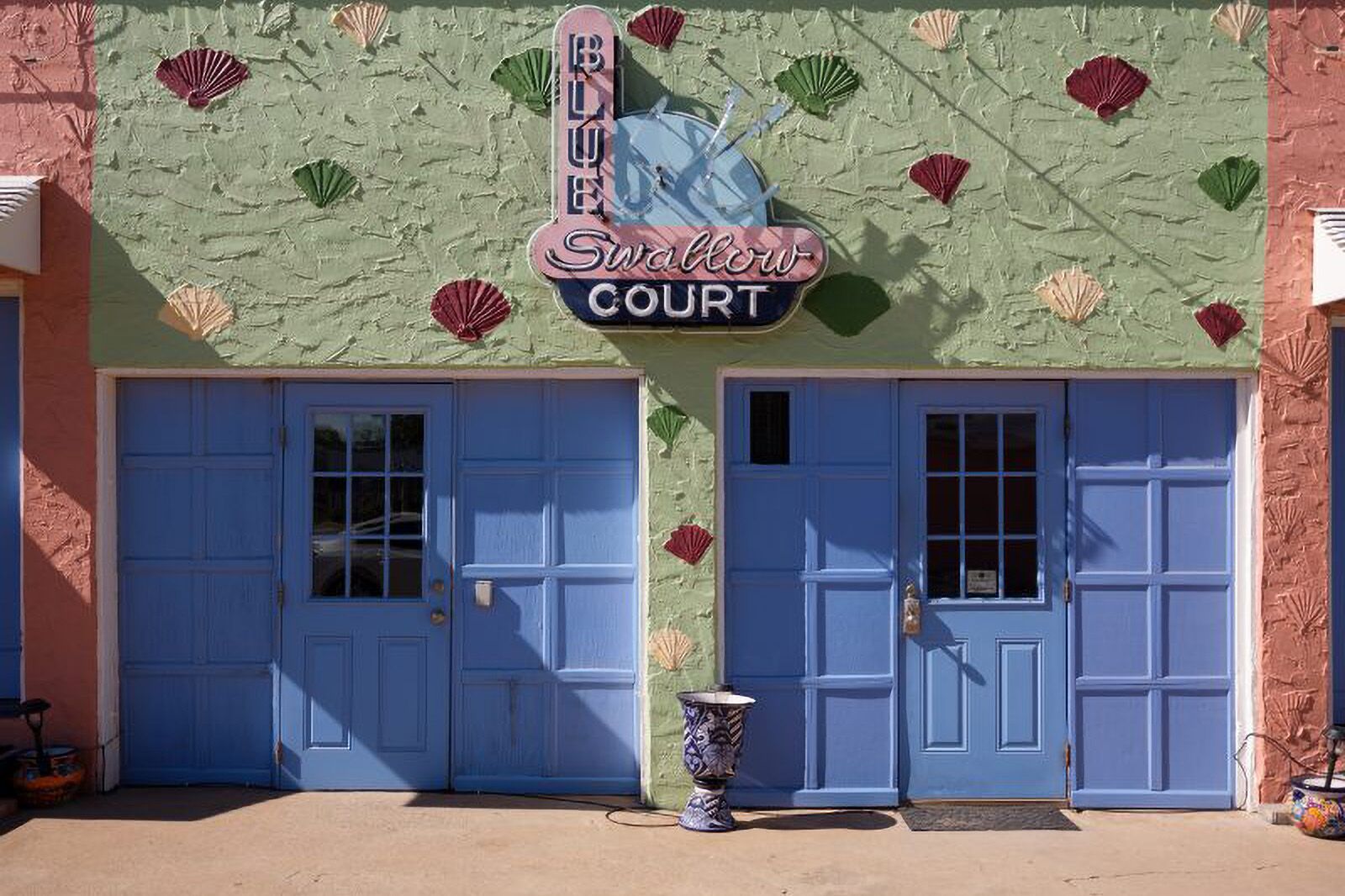
Part of Tucumcari’s Neon Strip, the family-owned Blue Swallow Motel is a reminder of the good ol’ days of travel before we needed an engineering degree to dim the room lights. From the neon signage to the pink stucco walls and humble yet cozy rooms, everything about this roadside motel is rooted in old-fashioned hospitality.
While many small-town hotels buckled as Interstate 40 absorbed the flow of motorists, the Blue Swallow was one of the few that never closed. A stream of new owners carried out extensive renovations while maintaining its charm and continuing to welcome guests like family. Most of the 12 rooms have a private garage where you can park your hot rod before kicking back with a cold one in the neon-lit courtyard. The gift store stocks a commemorative coin for the centennial.
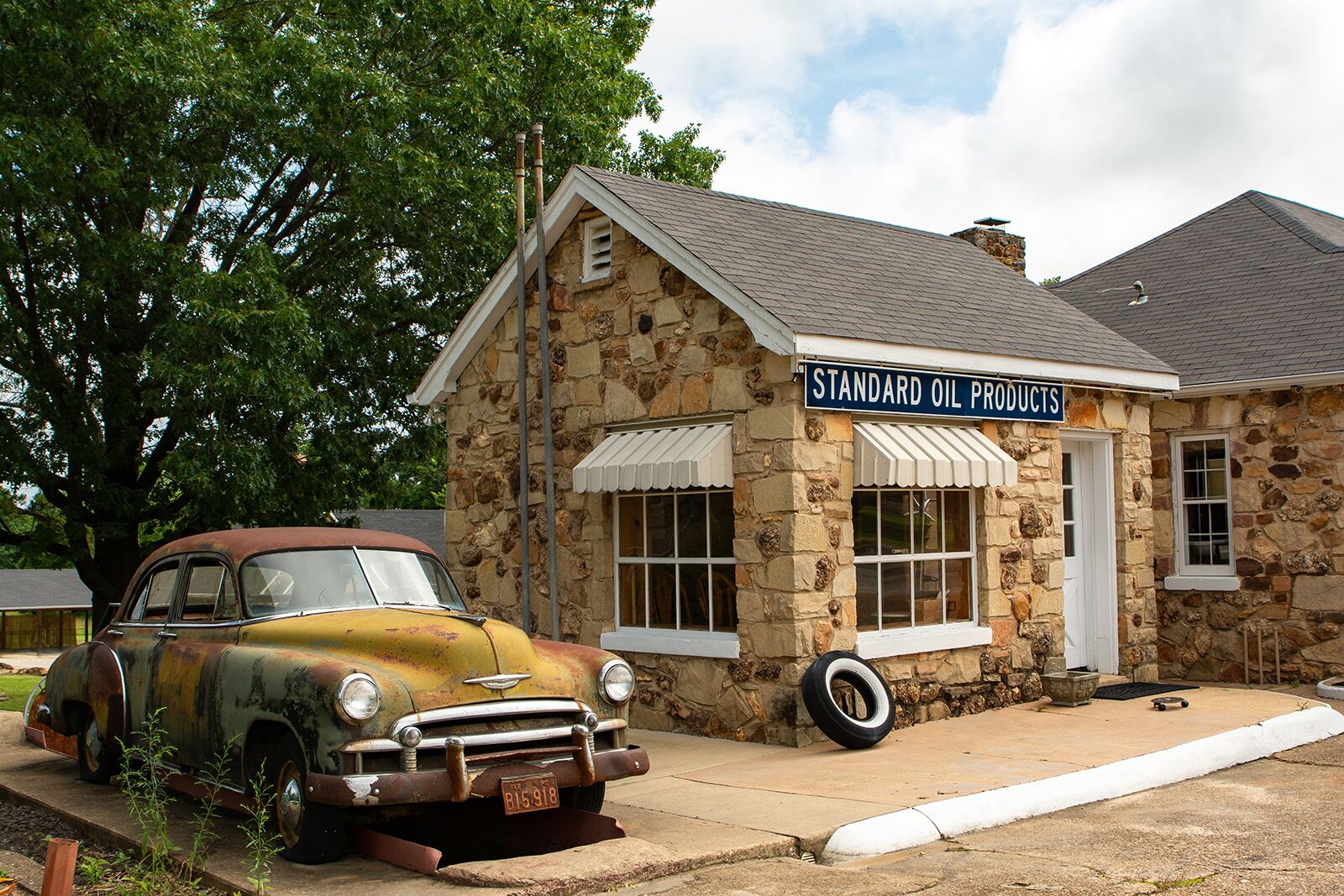
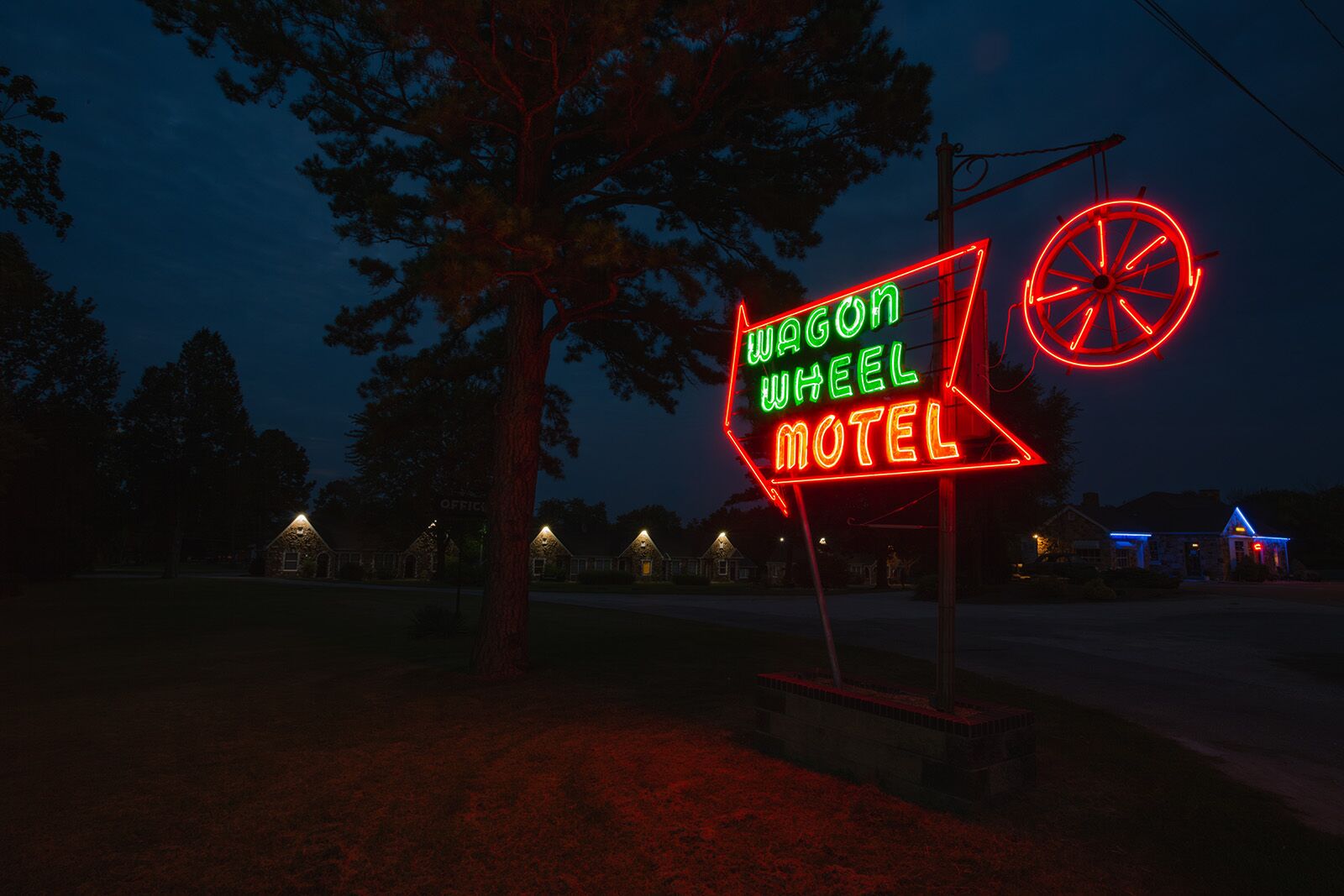
The Wagon Wheel Motel in Cuba, Missouri, was born out of the chaos following the Great Depression. As with its peers, this Route 66 hotel has a tale to tell — starting with an almost-immediate refurb of the garages to accommodate the emerging fashion for muscle cars. After purchasing the original vacation cabins in 1946, John Winifred Mathis famously sketched the neon sign for his property at his kitchen table.
Open since 1935, the Wagon Wheel is touted as the oldest continuously operating motel on Route 66, beating the Blue Swallow by four years. Available strictly on a same-day booking basis, rooms are contained inside Ozark stone cottages with fancier domains sporting jacuzzi tubs. The store has the most comprehensive selection of books, merchandise, antiques, and “bling” relating to the Mother Road.
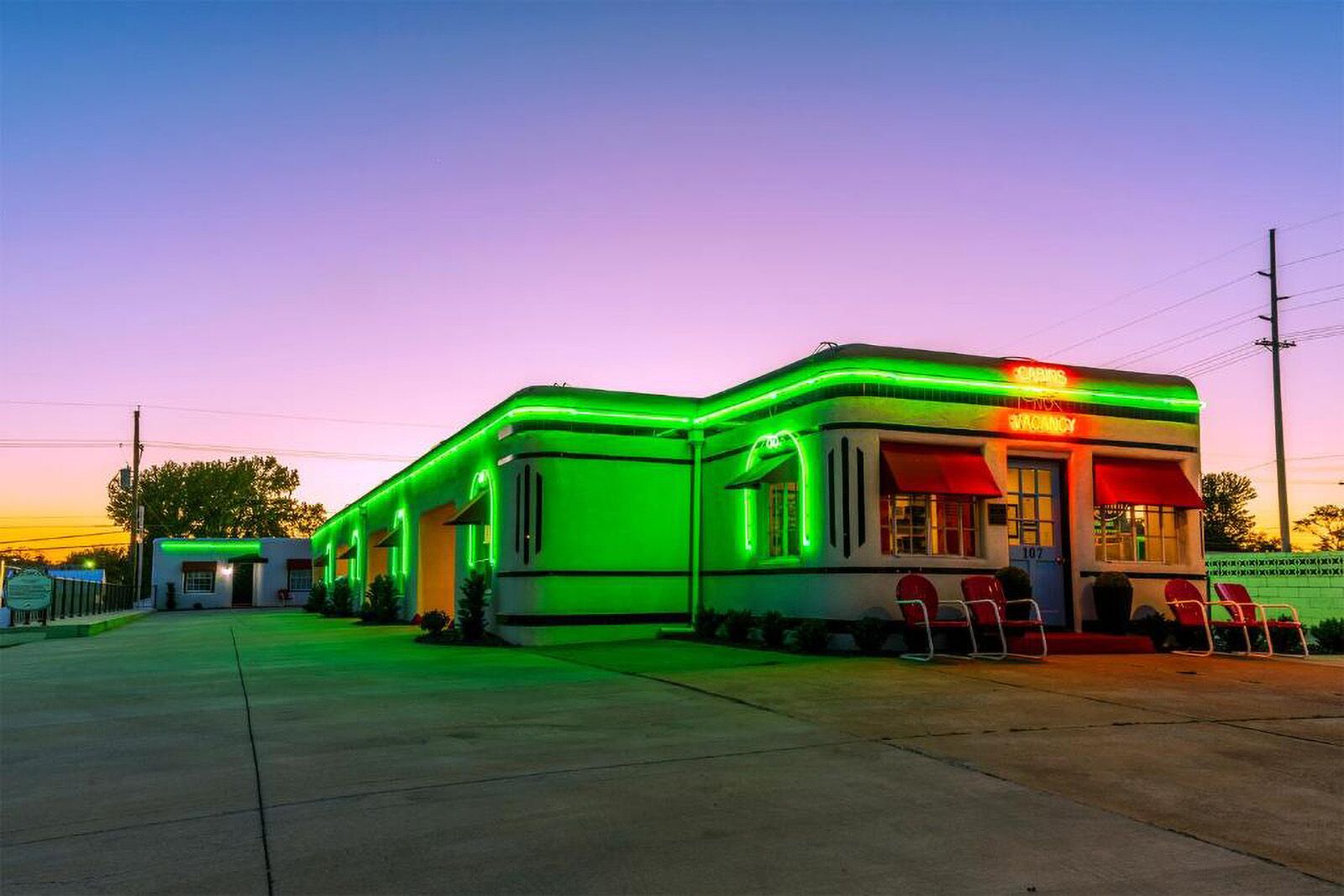
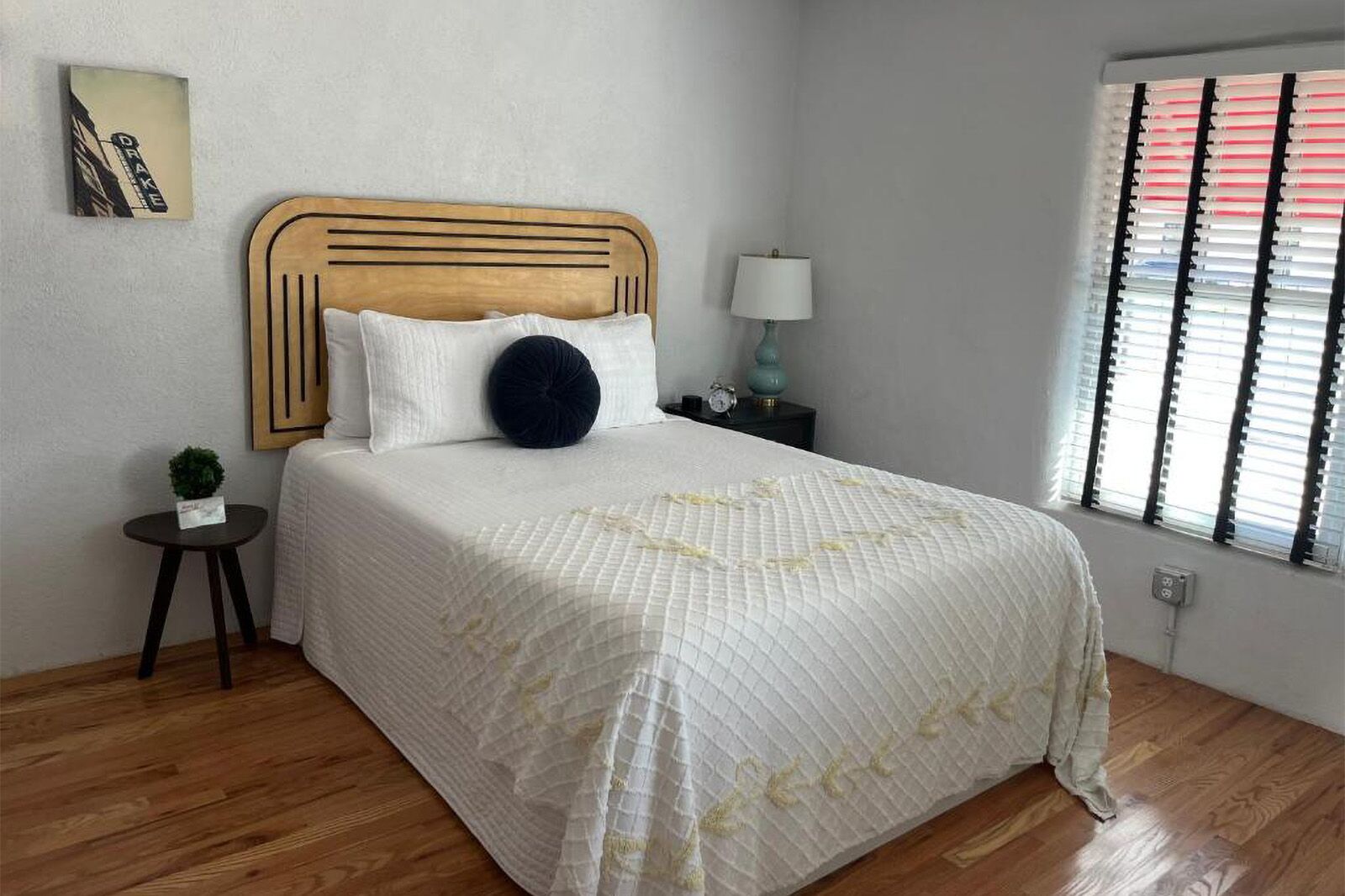
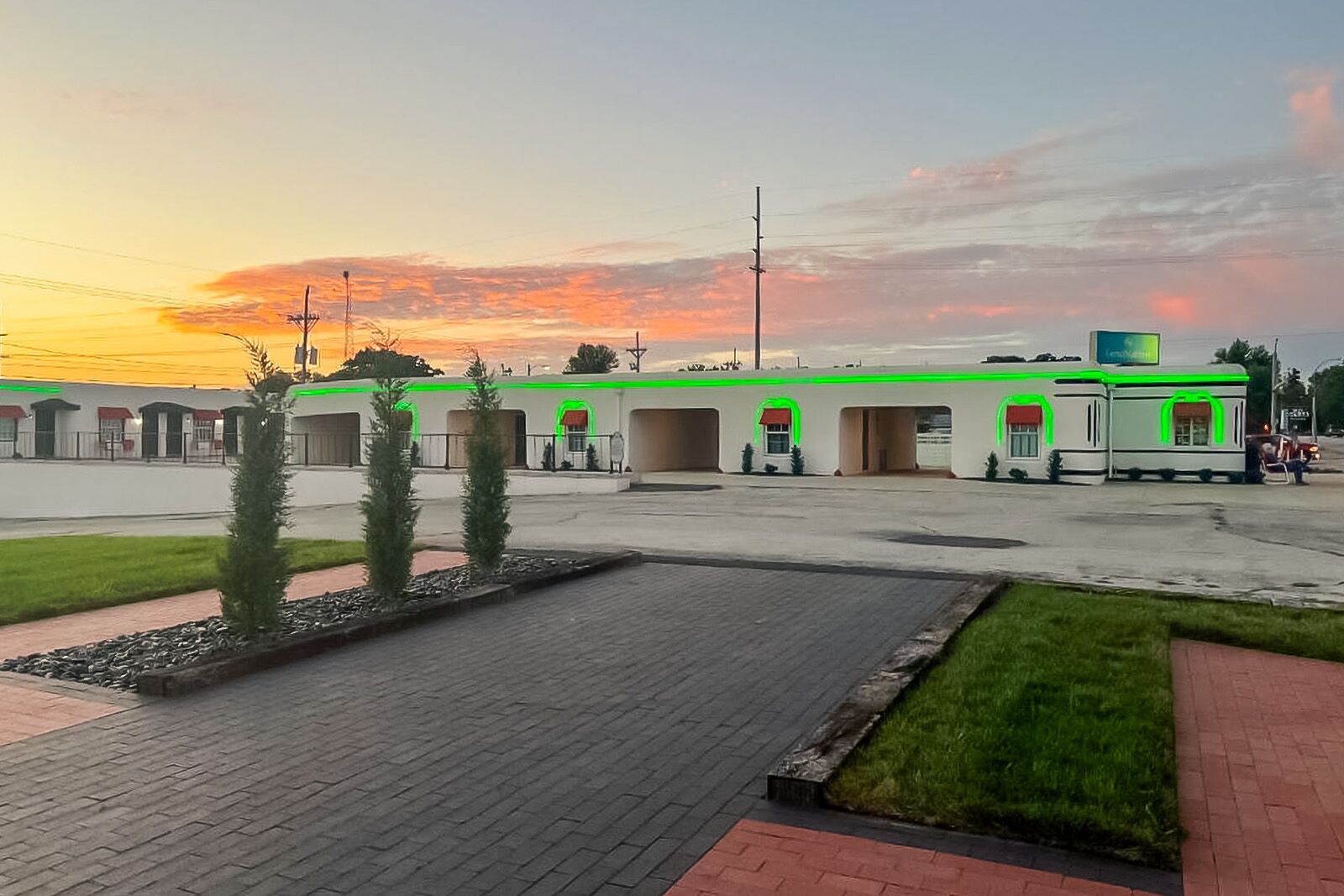
Designed in the Streamline Moderne architectural style — linear accents with soft corners, a flat roof, and a touch of nautical pizzazz — Boots Court Motel caused a ruckus when it opened in 1939 by charging an eye-watering $2.50 nightly rate. Clark Gable enjoyed his first stay enough to return at least once more before the motel slipped into decline, before being salvaged by the sisters Deborah Harvey and Priscilla Bledsaw.
Now under the care of the Boots Court Foundation, all 13 rooms are available to rent in the nick of time for the centennial. These come complete with a radio tuned to play songs from yesteryear. The motel also has a store that doubles up as a visitor center, and it’s worth spending a night purely to bask under the neon lights.
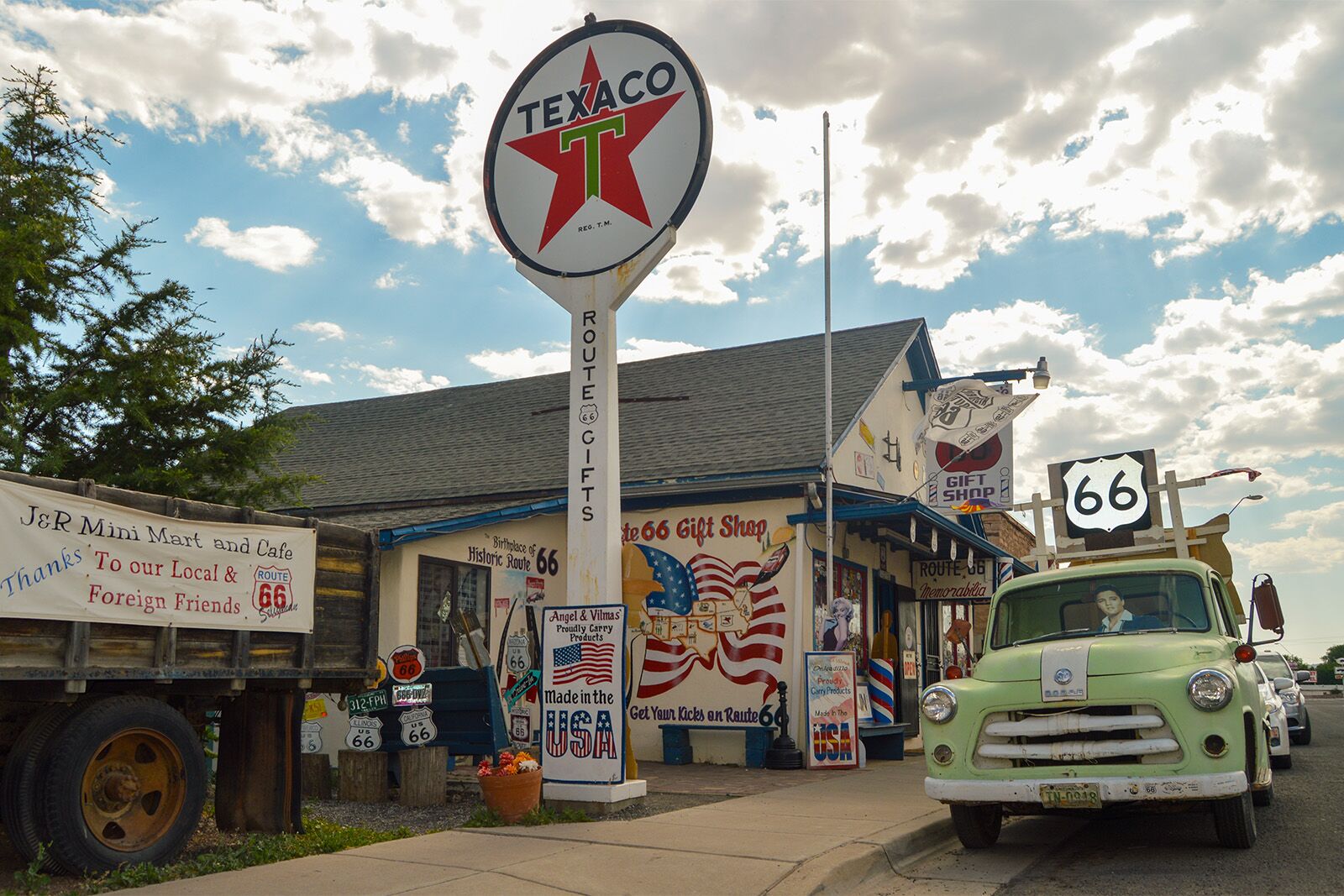
The small town of Seligman marks the beginning of what is the longest remaining stretch of Route 66 and is where the preservation initiatives of the 1980s found their roots. Canyon Lodge is charmingly low-frills with rooms themed on Marilyn Monroe, John Wayne, and Elvis. It’s a short walk from diners and saloons serving everything from hot dogs to root beer and a handful of general stores rich in heritage.
Besides the annual Route 66 Fun Run (May), Seligman is tipped to host a series of centennial activities, including the unveiling of a new sign and a slew of community events. If you’re a fan of Pixar movies, you might find similarities between Seligman and “Cars” as, supposedly, it inspired the design of Radiator Springs.
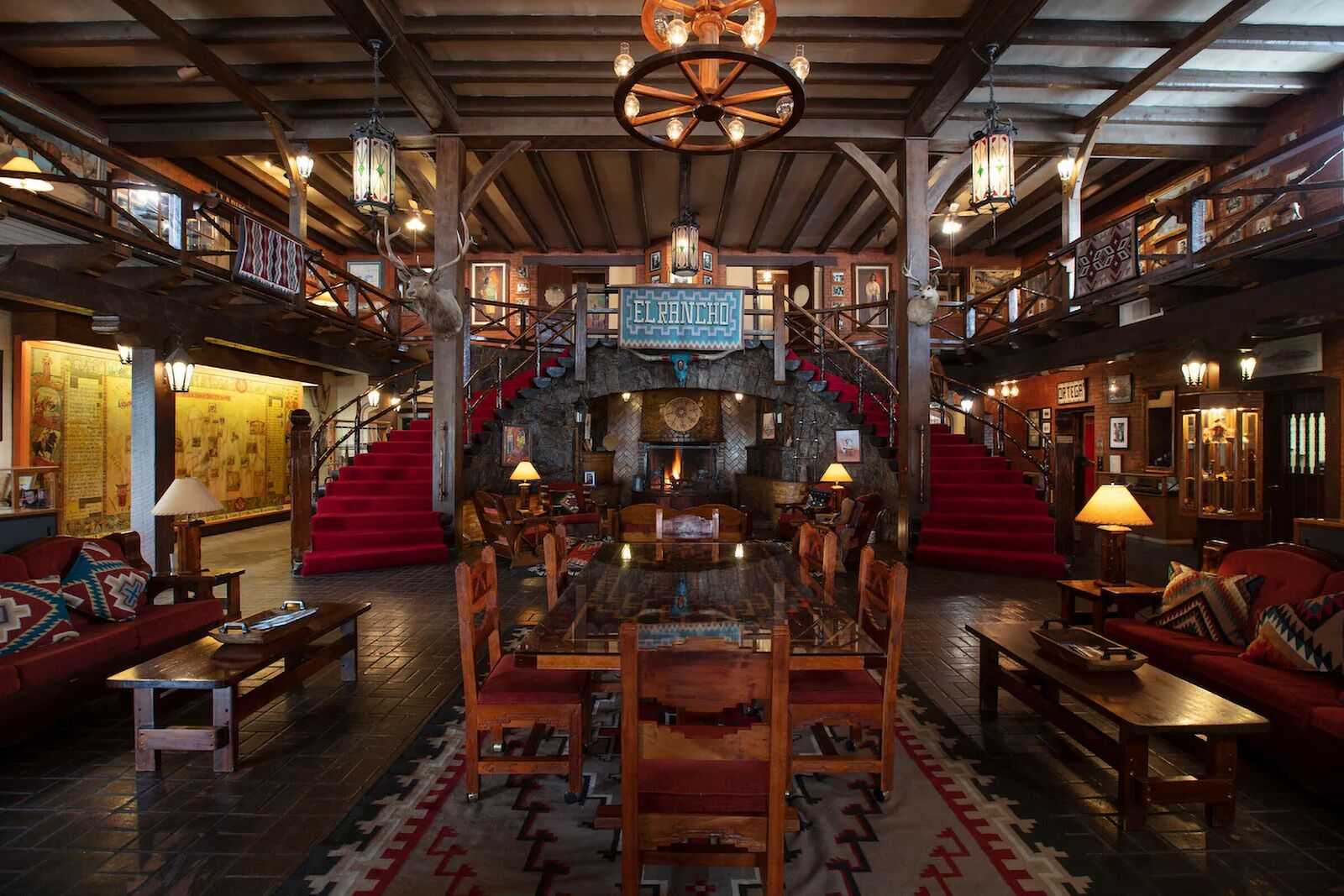
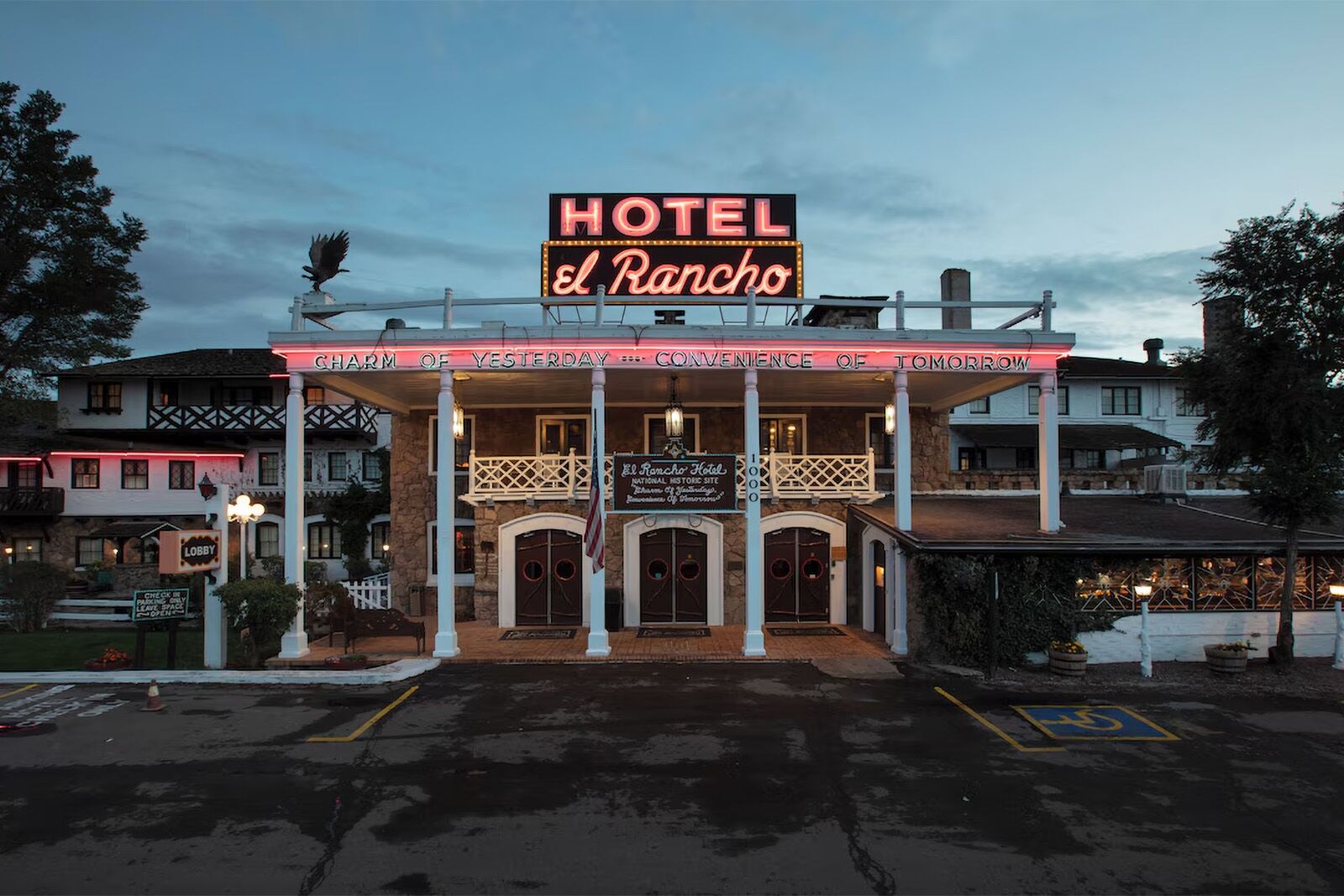
As the economy tanked, Hollywood entered its Golden Age. Rupert Earl Griffith, the brother of film director David Wark Griffith, made a name for himself as a picture house tycoon before opening the El Rancho Hotel in Gallup, New Mexico. As he predicted, directors and film crews flocked to this Wild West setting — it’s quicker to list who didn’t spend a night at this hotel — which at the same time found its place as a pitstop on the Mother Road.
A facelift in the 1980s focused on preserving the hotel’s original character. The facade is quintessentially Western and the interiors do feel like stepping back in time, or at least onto a movie set. Chili is the main character on the menu, while cozy Southwestern rooms with Navajo textiles stage a restful night’s sleep after one too many margaritas at John Wayne’s favorite bar.
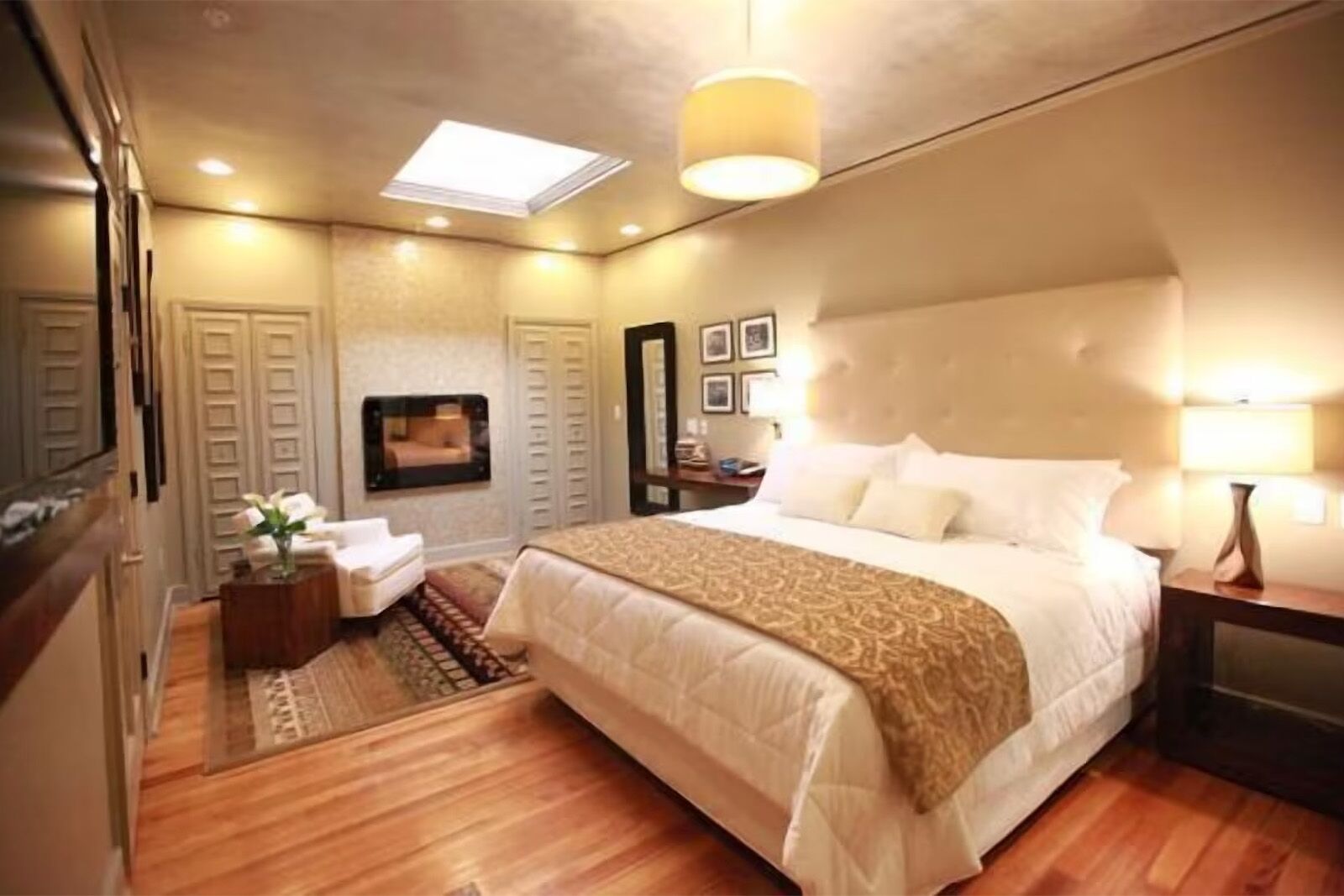
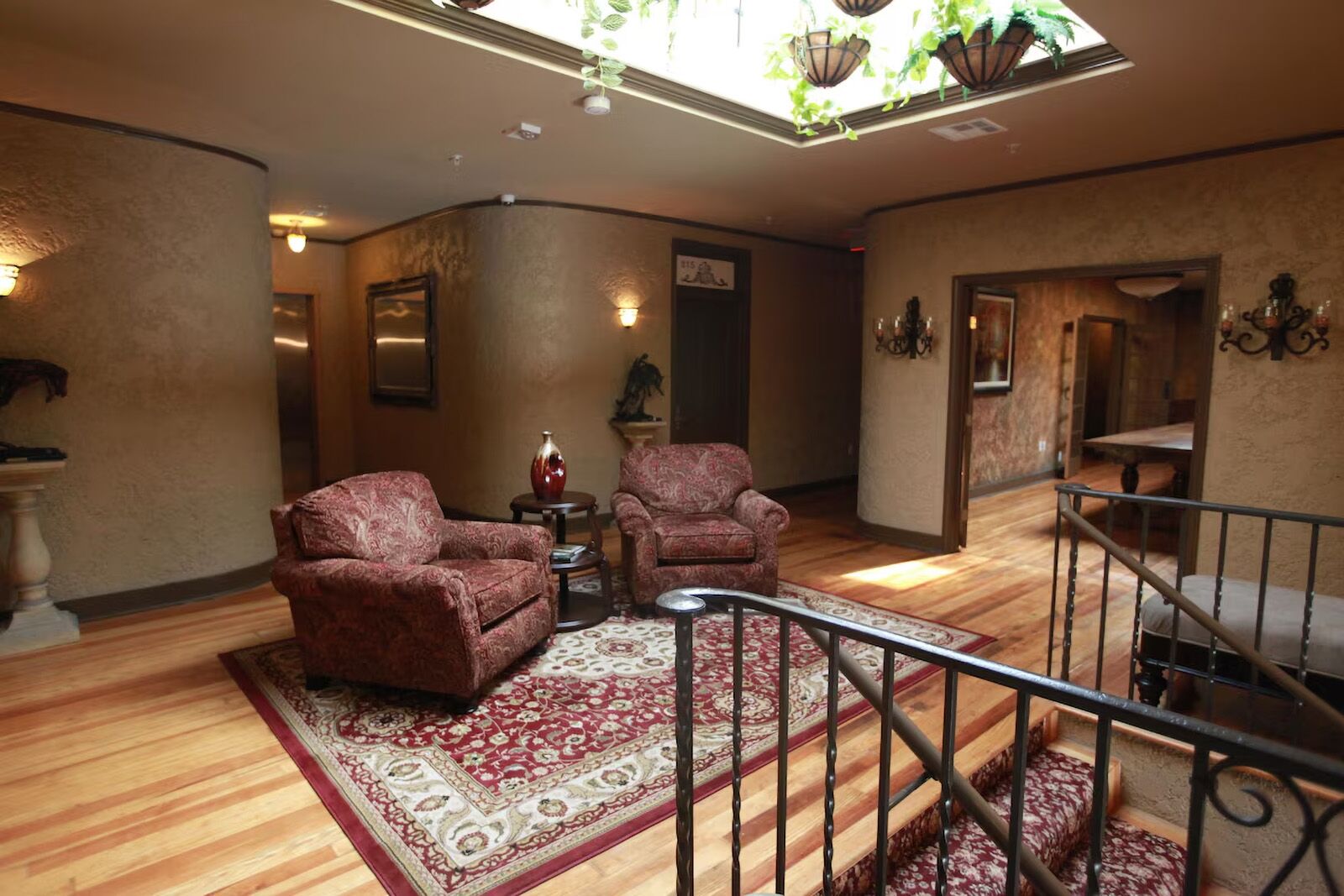
Formerly Casa Loma Hotel, this boutique hotel in downtown Tulsa, Oklahoma, is housed in a 1927 Spanish Mission-style building. Once one of Route 66’s premier hotels, the building has undergone extensive upgrades and remains one of the more luxurious hotels on the historic highway, with select suites coming with a four-poster bed or a whirlpool tub.
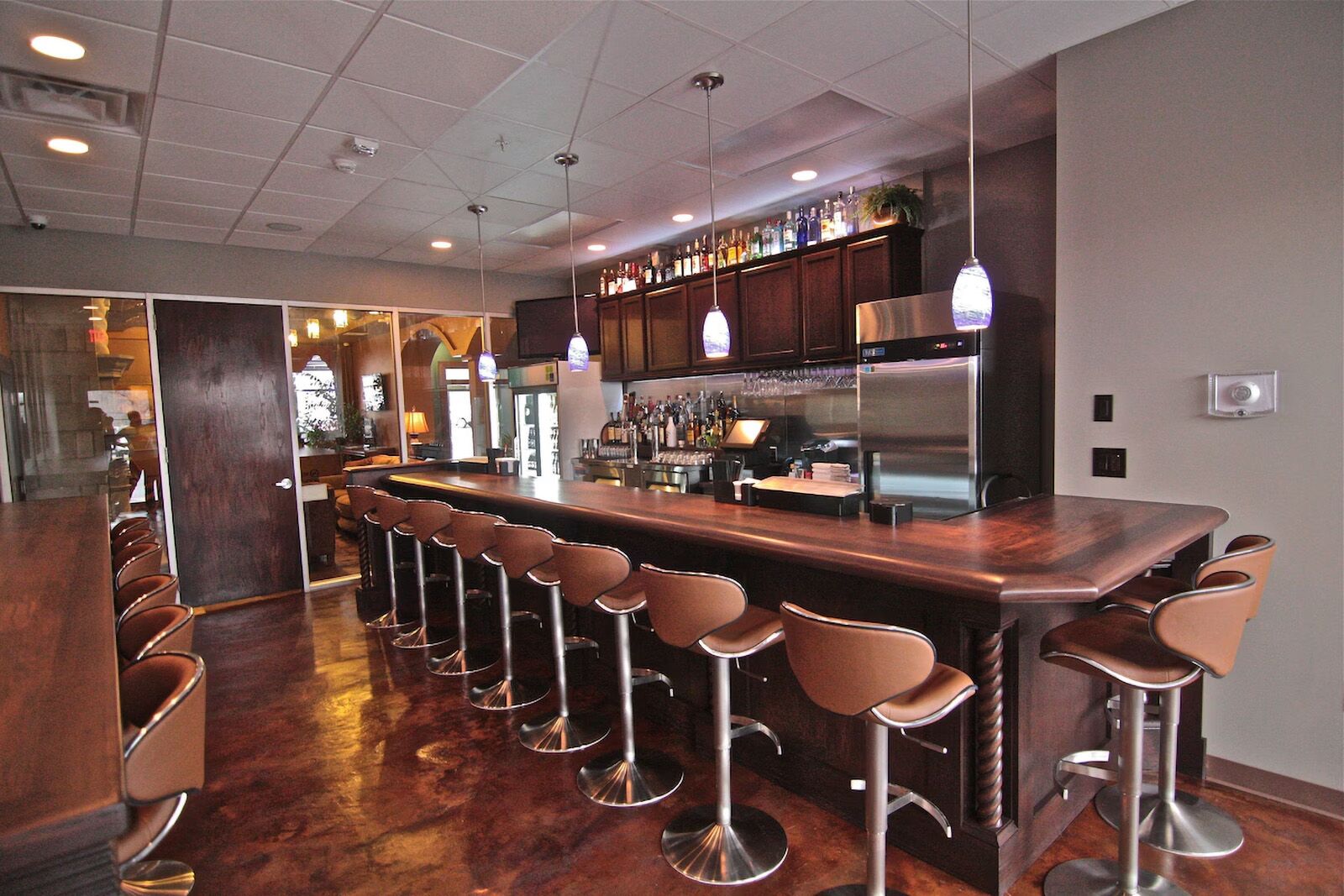
All 26 rooms are individually styled. Centennial road trippers will have to act fast to book the Route 66 Suite, which features memorabilia from the Main Street of America and other highways. The hotel bar serves local brews and classic cocktails while, next door, the Mother Road Market is teeming with Americana eats.