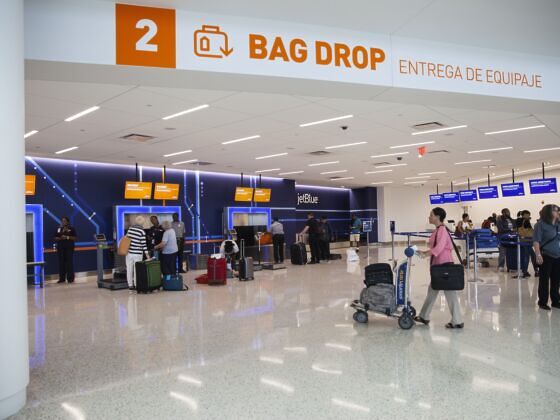
Photo: JetBlue Media Room

Two Major US Airlines Raise Bag Fees as Fuel Costs Surge

Airports + Flying
by Suzie Dundas Apr 3, 2026

Travelers flying in the US this spring have probably noticed airline tickets are getting more expensive. And now, the incidental costs that go along with flying are rising as well — at least if you fly one of these two major US airlines.

JetBlue was the first to raise fees, increasing the cost to check a bag by about $4 to $9 per bag, depending on timing and travel dates. The airline said the change helps offset rising operating costs, primarily fuel, without having to raise tickets prices even further. The change was announced on Monday, March 30. Now, the first checked bag costs $39 ($49 on holiday and peak weekends), while the second bag will cost between $50 and $59 ($60 to $69 on peak dates). If you check your bag less than 24 hours before departure, it’s even pricier, at $49 for the first bag ($59 peak) and $69 for the second bag ($79 peak).

Shortly after, United announced its own increases. Starting with tickets purchased on April 3, checked bag fees are rising by about $10. That brings the cost of the first checked bag to $45 if paid in advance, and $55 for a second bag. Bags checked last-minute cost $50 for the first bag and $60 for the second.

Both carriers cited rising fuel costs tied to the conflict in the Middle East as the primary reason for the increases. In a statement, JetBlue said “as we experience rising operating costs, we regularly evaluate how to manage those costs while keeping base fares competitive and continuing to invest in the experience our customers value.” Essentially, the airline needs to charge customers more, but doesn’t want to make tickets more expensive. United executives expressed a similar sentiment. And in March 2026, United, Delta, and American Airlines CEOs independently said rising fuel costs had added about $400 million to their operational costs since February 28, 2026, when the US launched airstrikes against sites and cities across Iran.

Why airlines are raising fees now

Fuel is usually the largest expense for airlines, accounting for between 25 and 30 percent of its operational costs. Jet fuel prices in the US have nearly doubled in recent weeks, significantly cutting into airlines’ profit margins.

Rather than raising ticket prices outright, which could push flyers toward its competitors, airlines often turn to raising ancillary fees, like baggage or seat selection, to recoup those costs. These fees are less visible during initial booking, making them a more palatable way to increase revenue per flyer without immediately impacting demand.

What other airlines are doing

Industry analysts caution that the prices hikes may not be limited to just United and JetBlue, and that other airlines may be likely to follow. While no other carriers have announced bag fee increases, other airlines have announced route changes in response rising fuel costs. So far, many are taking other steps to cope with rising fuel prices. In mid-March, Qantas announced it was raising ticket costs in response to rising fuel costs, and Lufthansa and Ryanair CEOs both said they may have to reduce their flight schedules due to the price crunch.

Discover Matador

Save Bookmark

We use cookies for analytics tracking and advertising from our partners.

For more information read our privacy policy.