What is poke? If you live anywhere in mainland America, you might know it like I did, as a sort of gloopy but delicious raw fish dish, typically accompanied by rice, greens, avocado, edamame, and whatever other ingredients you might find in a grocery store sushi roll. If you’re native Hawaiian, though, you know poke for what it truly is: an elegant, fresh, and exceptionally local dish, most often made with cubes of local fish — the word “poke” essentially means “cut into chunks” in Hawaiian.
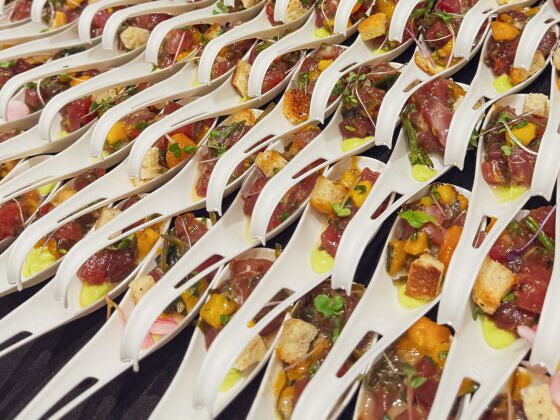
Photo: Marah Eakin
This Kauaʻi Food Fest Will Make You Rethink What You Know About Poke
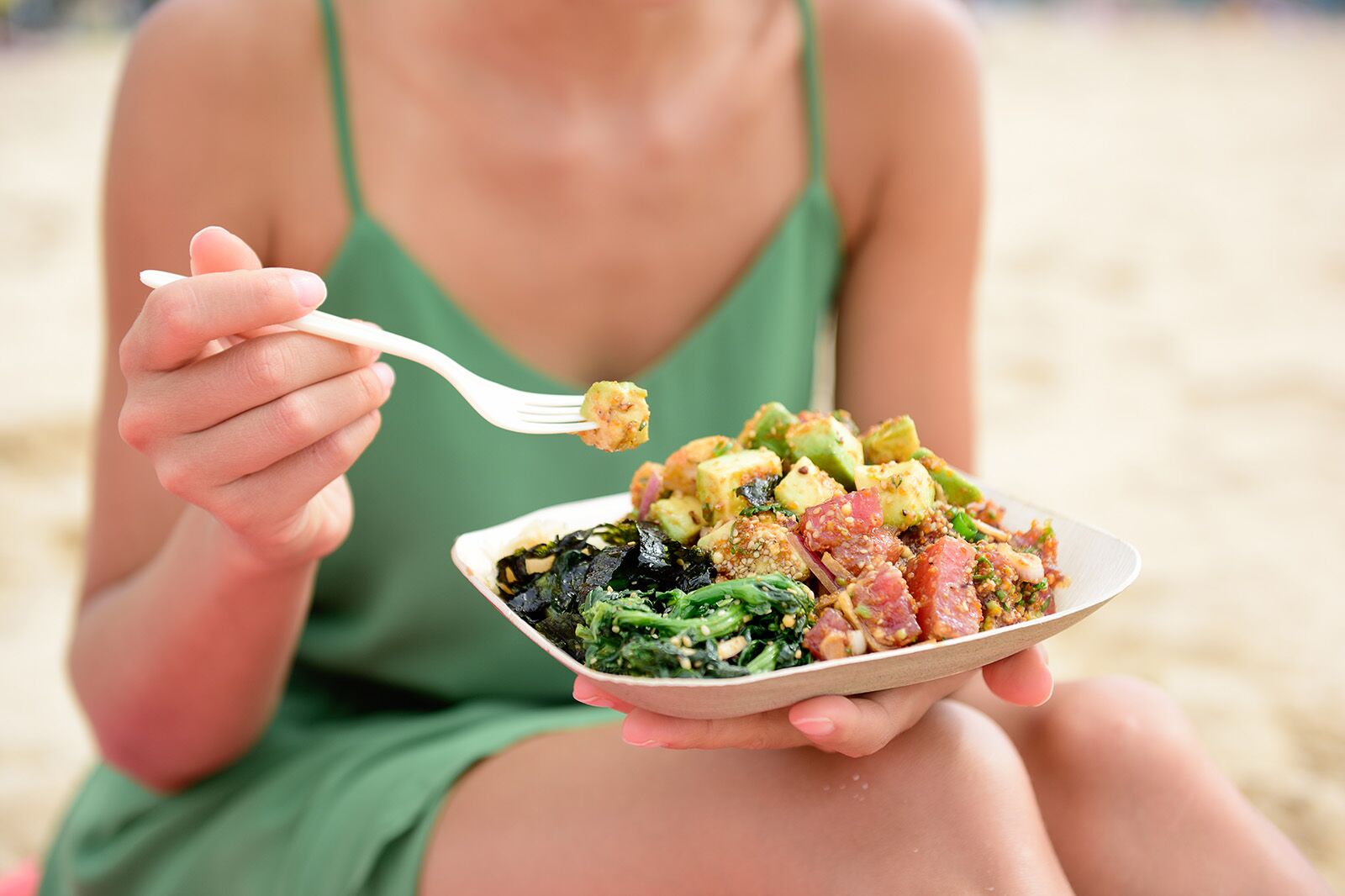
Photo: Maridav/Shutterstock
Enjoyed in Hawaiʻi for centuries, poke has changed as the islands have changed. Originally, poke was served as a means to an end, with fishermen tossing the leftover cuts of their daily catch with sea salt, inamona (candlenut seeds), and maybe some dried fish blood or limu (seaweed.) As Hawaiʻi opened up and other cultures descended on the islands, it started to absorb flavors and ingredients from other lands, like Spanish onions, Chinese oyster sauce, Japanese shoyu soy sauce, and Korean sesame seeds. A comfort food to many Hawaiians, poke has now become as varied and diverse as the Hawaiian people themselves.
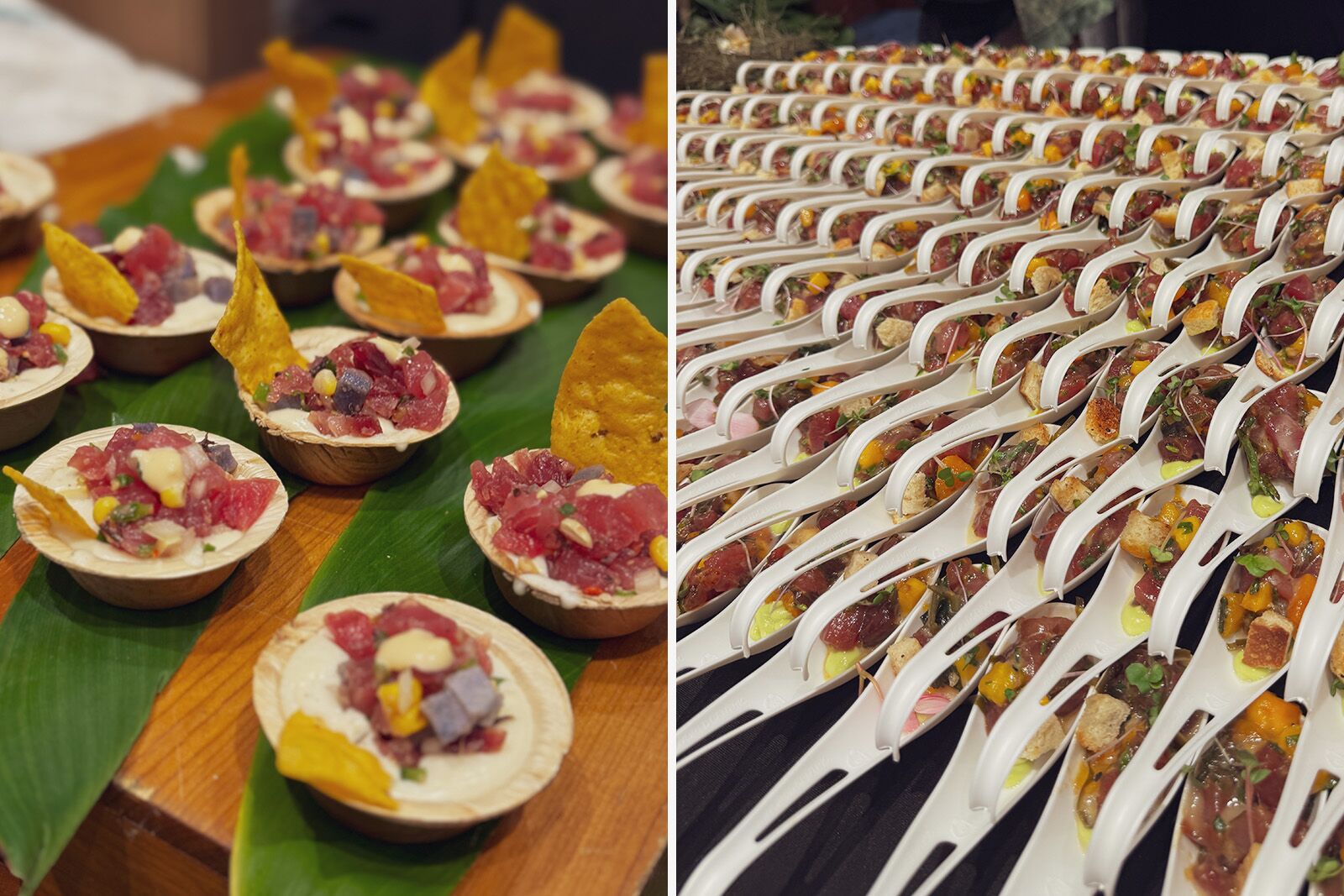
Take, for instance, the 20-odd pokes on offer at the Kauaʻi Poke Fest in June at the Koloa Landing Resort. Running the gamut from extremely traditional to extremely out there, the pokes were created by local chefs, fisherpeople, and even lifeguards, all looking to catch the eye (and taste buds) of judges like “godfather of poke” Sam Choy and Top Chef Seattle finalist Sheldon Simeon.
Kicking off Friday in view of the ocean, among swaying palm trees and joyful yelps from what’s been dubbed “the best pool in America,” the 5th annual Kauaʻi Poke Fest featured not only the marquee poke competition but also a Poke Masters’ Table dinner, which found Choy, Simeon, and Chefs Don Gusman, Ronnie Rainwater, Wendy Leanio, and Ryan Alicante exploring not just poke but also the depth and richness of traditional Hawaiian ingredients. Simeon’s dish, for instance, featured a beautifully cooked piece of fish surrounded by a buttery sauce made with Haam Ning Mung, or salted roof lemons. Leanio and Alicante’s dessert was a cheesecake made with local purple sweet potatoes and accented with haupia, or a kind of coconut-milk-based custard.
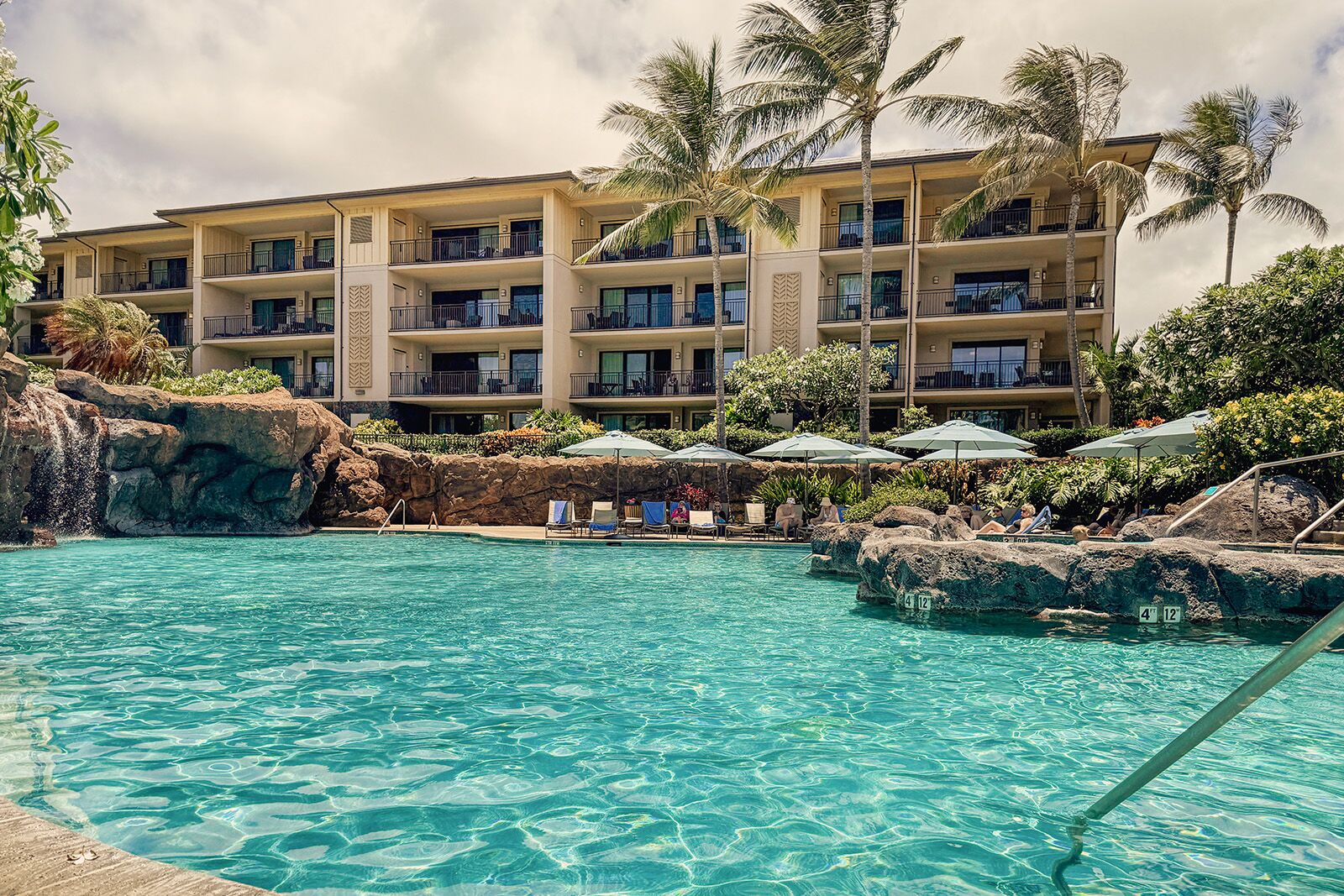
Photo: Marah Eakin
For a mainlander like me, the dinner was eye-opening not just because of how delicious it was but also because of how educational it was. I grew up in a restaurant family, with a food writer for a mom, and I’ve eaten my way around the world. Even so, I came away from the Poke Masters dinner not just stuffed but also fervently impressed with the breadth of Hawaiian ingredients. Each chef talked so reverently about their ingredients, whether it was locally farmed shrimp or humble sea salt, that the dinner felt like as much of a tribute as it was a meal. I thought I knew food, but I got schooled in the very best way that night, and I left the event committed to spreading the gospel of Hawaiian cuisine.
That commitment was only deepened the next night at the Poke Fest as I paraded the resort’s ballroom, lei around my neck. Coming from the dinner the night before, and two afternoons at the hotel pool swimming and scarfing down some truly excellent poke from the resort’s Holoholo Grill, I thought I knew the poke basics, but the variety and diversity of what was in the room was staggering. I went back for seconds and thirds of Chef Gusman’s Paniolo Poke Ahi Chowder, which paid tribute not only to the fresh local fish but also to the paniolos, or Hawaiian cowboys, who wrangled cattle across the island for centuries. A perfect marriage of dried and fresh ahi, jalapenos, ulu yams, bacon, and onions, the chowder was served with a tortilla chip, paying tribute to the Mexican vaqueros (cattle ranchers) who were once invited to the islands to share their skills.
Photos: Marah Eakin
I went back for seconds of Lawaiʻa Fish Company’s offering, too, which ended up taking third place in the contest. Dubbed Da Krazy Asian Poke, the deceptively simple preparation also tipped its hat to Hawaiʻi’s history and people, including ingredients from all the cultures who’ve come to make the islands their transplanted home. Kristy Kahananui, who created the dish, told me that she wanted to focus on the fish in the dish, keeping it “not too fancy” and without “too much stuff,” but that she felt like her dish really benefited from both the inclusion of green papaya and a friend’s chili lime sauce, which she thought gave the poke just the right amount of heat.
The other two winners — Kauai Shrimp’s Torched Kauai Shrimp and Da Reel Kapakahi Red Eye’s Reel ‘Em & Feel ‘Em — were bangers, as well, showcasing sweet local shrimp and roasted inamona made with smoked meat drippings, respectively. Each dish paid tribute to its ingredients with honor and respect, proving how fresh and lively local Hawaiian ingredients can taste.
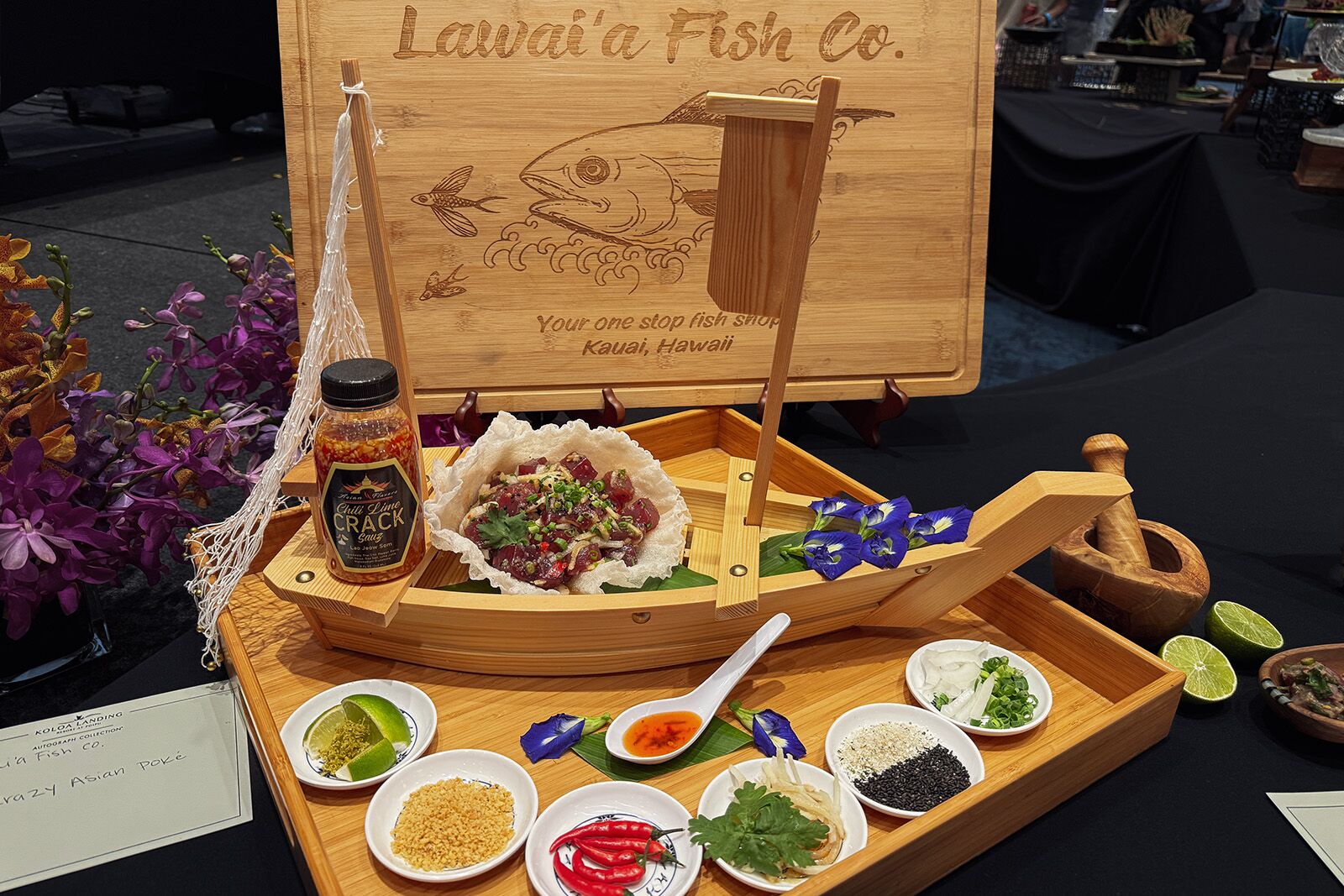
Photo: Marah Eakin
Stuffed to the proverbial gills with poke, I grabbed a beer, watched the band play, and kicked back on a couch just outside the resort’s airy main lobby. I might have been a newcomer to Kauaʻi when I first arrived, but I knew I was leaving a disciple, ready to spread the gospel of that place — and that excellent, mind-bending food — to everyone I know for as long as they let me. 