Photo: Kelsey Wilking

Walking Japan’s Kumano Kodo Trail in Search of an Ancient Form of Wellness

Japan Wellness Hiking
by Kelsey Wilking Apr 1, 2026

New wellness trends never seem to stop: red light therapy, cold plunges, biohacking. New products to buy, new medicines to swallow, new machines promising to fix you.

But on Japan’s Kii Peninsula, wellness is less focused on striving to keep up with the latest fad and more like walking through nature and honoring traditions that have endured for more than a thousand years.
I spent a week in the Kii Peninsula, a subtropical mountainous region roughly the same size as The Big Island in Hawai`i, in search of wellness to cure, well, all of me. Skipping the main tourist draws of Kyoto, Osaka, and Tokyo, I walked sections of an ancient pilgrimage beneath towering trees, visited Buddhist monks in their hillside temples, burned prayers in a fire ritual, bathed nude in onsens, and received energy work from a holistic doctor.

Walking along Japan’s Kumano Kodo trail, I found a quiet and a spiritual journey of renewal. A phrase I learned traveling the Kii Peninsula is “borrowing scenery.” When you look at a landscape, you don’t own it. You’re simply borrowing the view. It belongs to everyone and to nature itself.

Rebirth in Japan means emptying the worries from your mind, sitting in stillness, and being present in nature. Wellness here doesn’t shout. It’s quiet. And if you’re quiet long enough, you can find peace where the mountains are gods.

Rebirth along the Kumano Kodo Trail

Walking the Kumano Kodo Trail

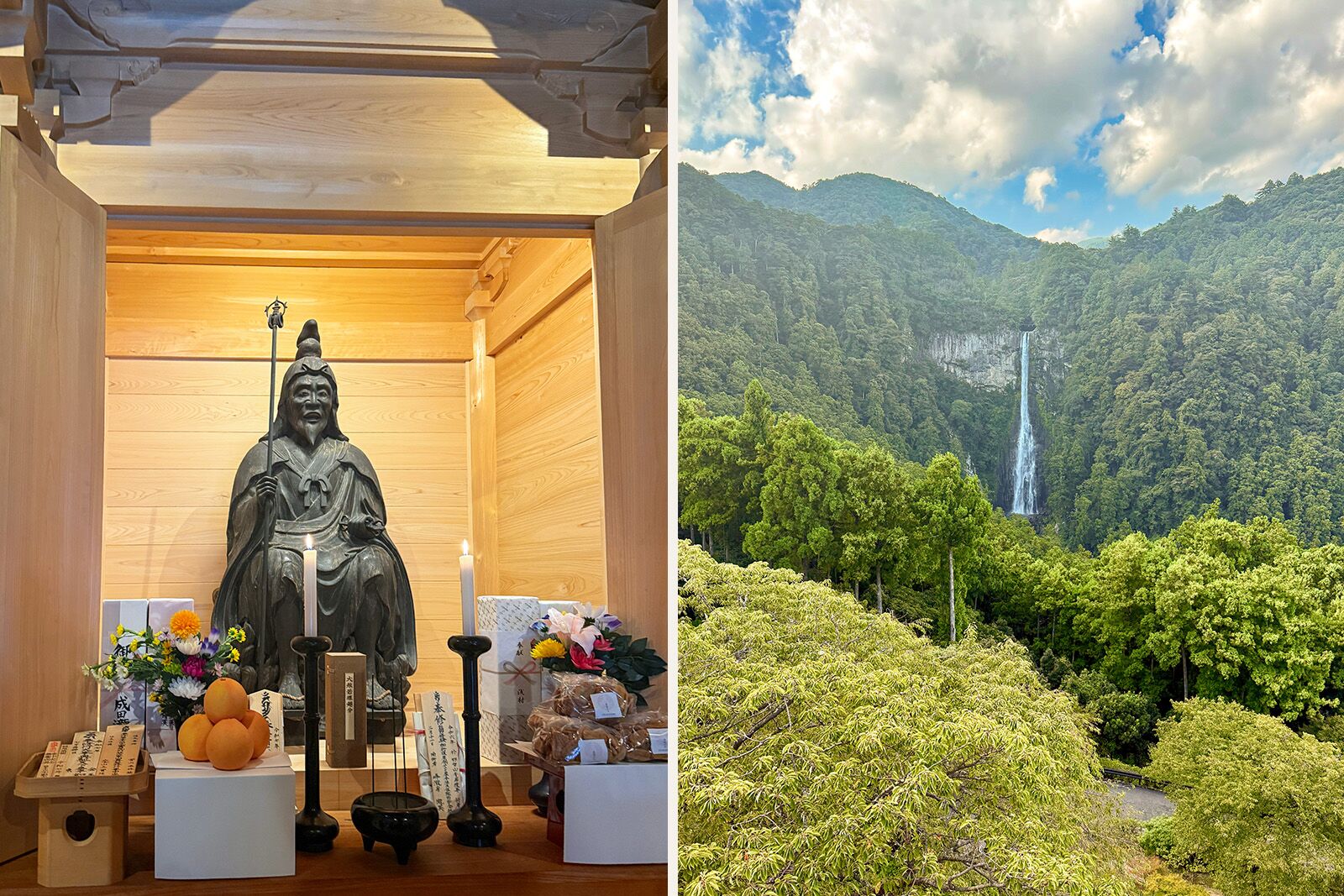
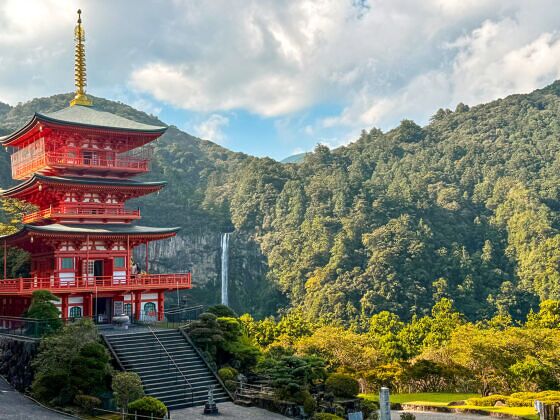
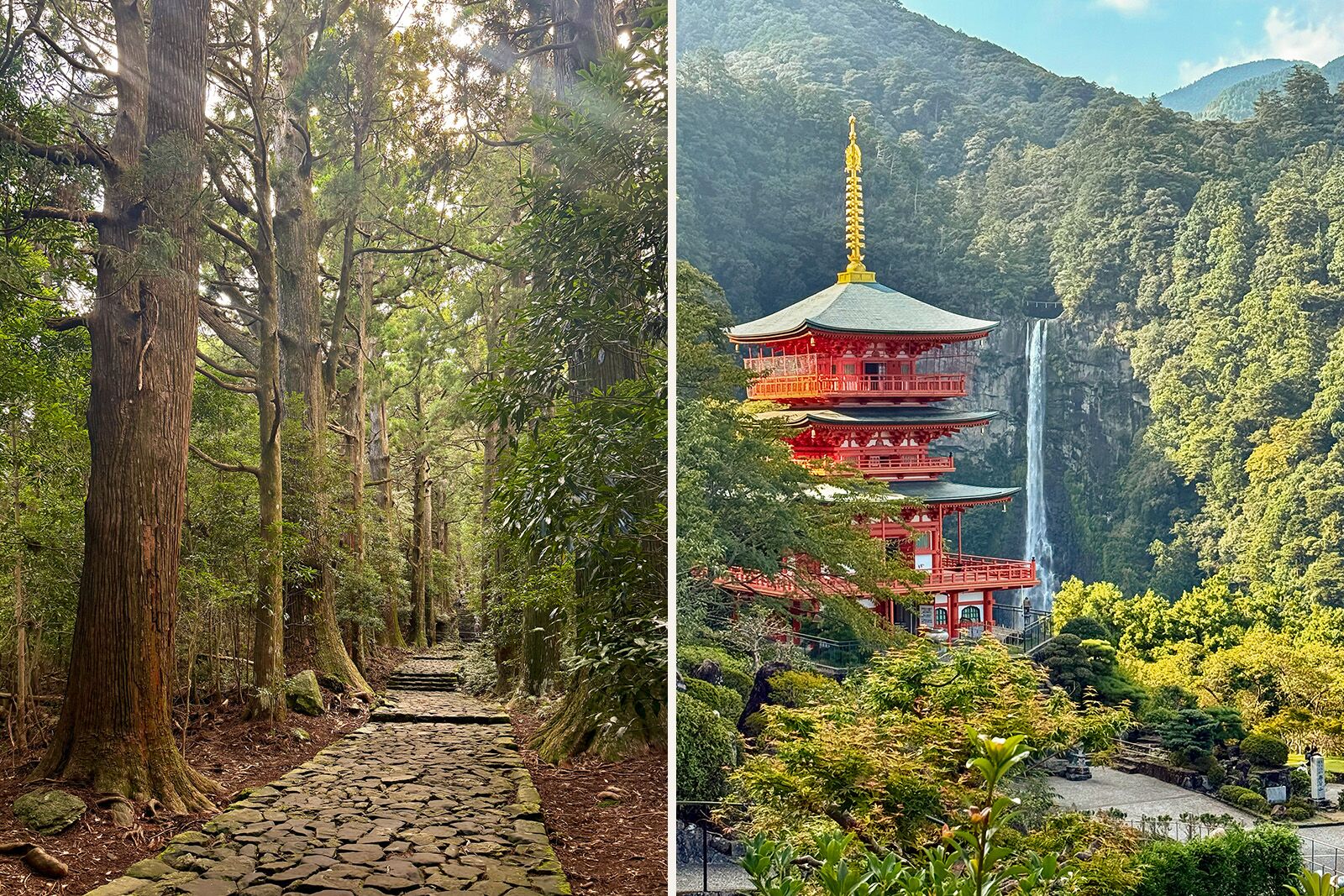
Left: Nachisan trail. Right: Seiganto-ji temple and Nachi Waterfall. Photos: Kelsey Wilking

Soft earth paths and moss-covered stone steps cut into the hillside above the Hongu shrine area in Tanabe City, Wakayama Prefecture, winding through massive ferns and towering hinoki cypress. Dust motes float in the glittering spaces of dappled light through ancient Japanese cedars along the Nachisan slopes.

Somewhere between breath and step, I found that wandering the sacred Kumano trail into the mountains lifts a certain heaviness.

In the Heian period (794–1185), the Kumano region was one of Japan’s most important pilgrimage destinations. By the 11th century, emperors and aristocrats journeyed from Kyoto seeking purification, renewal, and rebirth along these forest paths. Local lore described deities like Hirō Gongen, the deity of Nachi Waterfall, or Yama-no-Kami, the mountain spirit, who dwelled in mountains, waterfalls, trees, and rivers.

Today, the Kumano Kodo encompasses a network of routes stretching roughly 620 miles. It connects more than 100 historic shrines, temples, and sacred sites across the Kii Peninsula. In 2004, the Sacred Sites and Pilgrimage Routes in the Kii Mountain Range were designated a UNESCO World Heritage Site for spiritual and cultural significance.

Ise Jingu and the Concept of Renewal

Walking the Kumano Kodo Trail

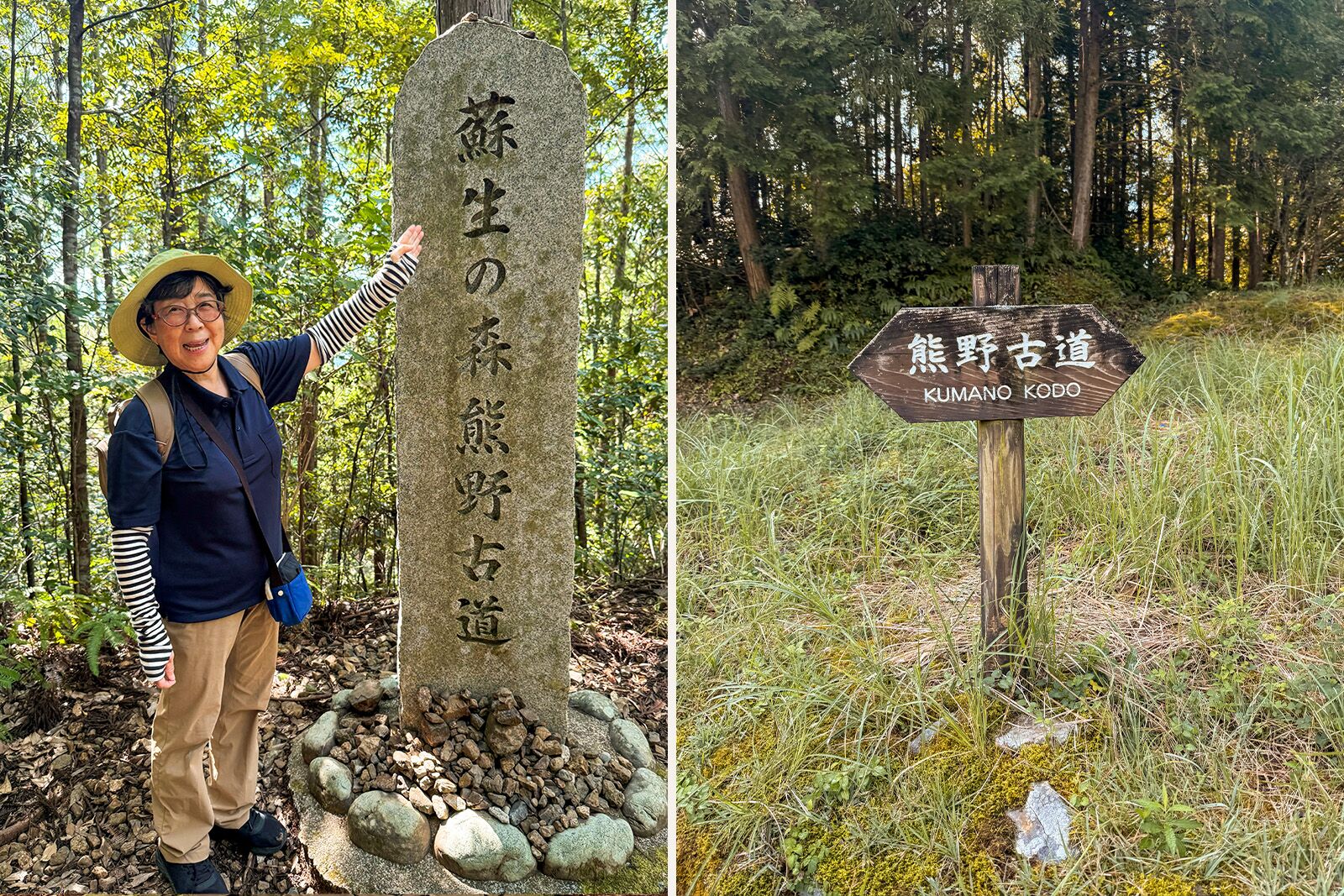
Kumano Kodo trail. Photos: Kelsey Wilking

Ise Jingu, the traditional starting point of the Kumano Kodo trail in Mie Prefecture, is one of the most revered Shinto shrines in Japan because the imperial family’s ancestral deity is enshrined there.

Before entering, I bowed beneath the torii gate, the barrier between the physical and spiritual worlds, and crossed Ujibashi Bridge. At the edge of the Isuzugawa River, I washed my hands in an ancient purification ritual required before approaching the sacred grounds of the inner shrine. At a Shinto shrine, the act of worship is simple and acts as a physical representation of reverence: bow twice, clap twice, bow once more.

No photos. No food. No drink. This is not a tourist attraction. Millions of people travel here annually to worship the sun goddess, Amaterasu-Omikami, and the deity of agriculture, Toyouke-no-Okami.

Ise Jingu is rebuilt every 20 years following a 1,300-year-old ritual known as Shikinen Sengu. The entire structure is dismantled and reconstructed in a different plot nearby, alternating shrine locations every two decades in a reflection of renewal. The shrine remains eternally young by allowing itself to be reborn.

My nationally-licensed tour guide and translator, Kimi Kuribayashi, described Japanese culture as “Cooperative. Quiet. Harmonious.” Walking the grounds, I began to understand what she meant. There is a collective respect here for ritual, nature, and communal spaces.

Kumano Hongu Taisha: Walking toward rebirth

Walking the Kumano Kodo Trail

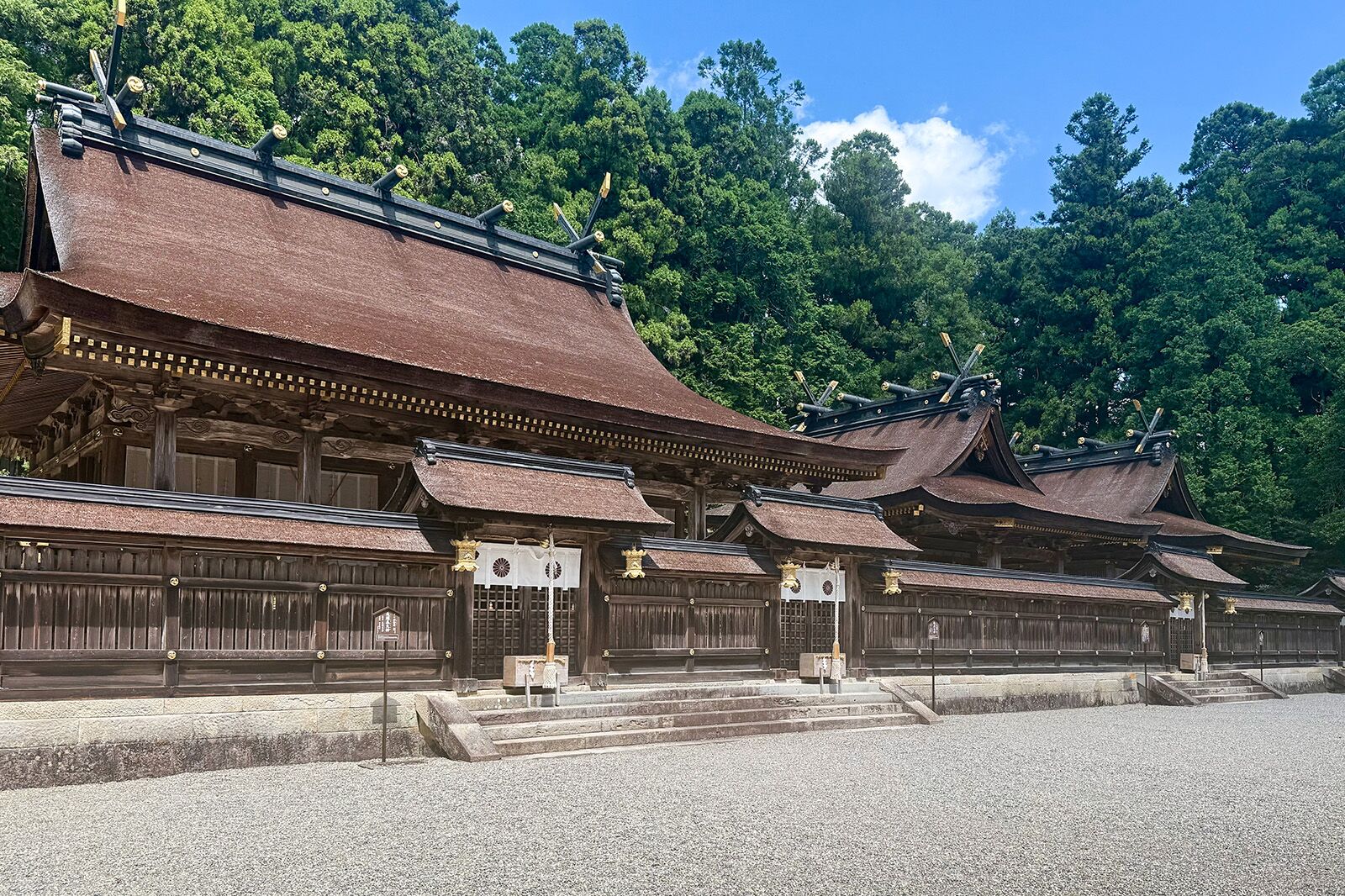
Hongu Taisha shrine. Photo: Kelsey Wilking

I joined a small group of travelers to meet Ietaka Kuki, the Chief Priest (or Gūji), of the Kumano Hongu Taisha shrine, to better understand what draws people here. Through our translator, we asked him what he hopes visitors feel when they arrive. “Peace,” he said, explaining that the UNESCO designation was to unite humanity with this “road of peace”: a place where people from anywhere in the world, and from any religion, could come and find rest.

Kuki-guji invited our group to sit and pray inside the gates, a space typically reserved for government officials and senior monks. We offered prayers to the three main deities: Izanagi (father), Izanami (mother), and their significant child Susano’o (fire god/son). He instructed us to listen to the small urging of the deities we prayed to, and we waited in unpracticed quiet.

The best way to experience Kumano is to walk slowly beneath the trees and reflect rather than rush between the many shrines. The purpose is to empty your mind from mental noise as you move. A thousand years after Kyoto’s upper class made this a pilgrimage destination, the meaning of this trail has not changed.

Nachi and Seiganto-ji Temple: A release of fire and cleansing water

Walking the Kumano Kodo Trail

Left: Mountain Monk shrine. Right: Nachi Waterfall. Photos: Kelsey Wilking

Chills. Achingly beautiful, Nachi Waterfall stood before me, misting my face with cool droplets. Revered for centuries for her healing properties, she felt like a deity in her own right. The air shifted, and goosebumps rose along my arms in 90-degree heat. A spiritual experience? Maybe. Or simply yūgen, that profound sense of awe when something in nature is so exquisitely beautiful it moves you.

Seiganto-ji Temple is beside an iconic red pagoda with Nachi Waterfall in its wake. Speaking with Chiei Takagi, Deputy Head Priest at the temple, he described the purpose of this place simply: “Assimilate with nature. Feel the assimilation yourself. You are part of nature.”

He told us of a mountain ascetic who once lived in the mountains and received healing powers to share with others from this place. What happens here, he explained, is a sharing of energy.

Juxtaposed to the water, Shugendō practitioners known as yamabushi, chanted inside the Nachisan Gyōjadō Hall and placed cedar branches on an altar. Smoke swelled and curled within the room as they prepared for a Goma fire ritual, a Buddhist rite passed down through generations of mountain monks.

We were each given a gomagi, a wooden prayer stick used specifically for this ceremony. We wrote a wish or a prayer for the world on it. One by one, we placed our sticks into the flames. As smoke lifted toward the rafters, the offerings carried upward to the mountain deities: fire to release, and then a hike to Nachi for water to cleanse.

The end of our journey: Nara, the birthplace of Japan

Walking the Kumano Kodo Trail

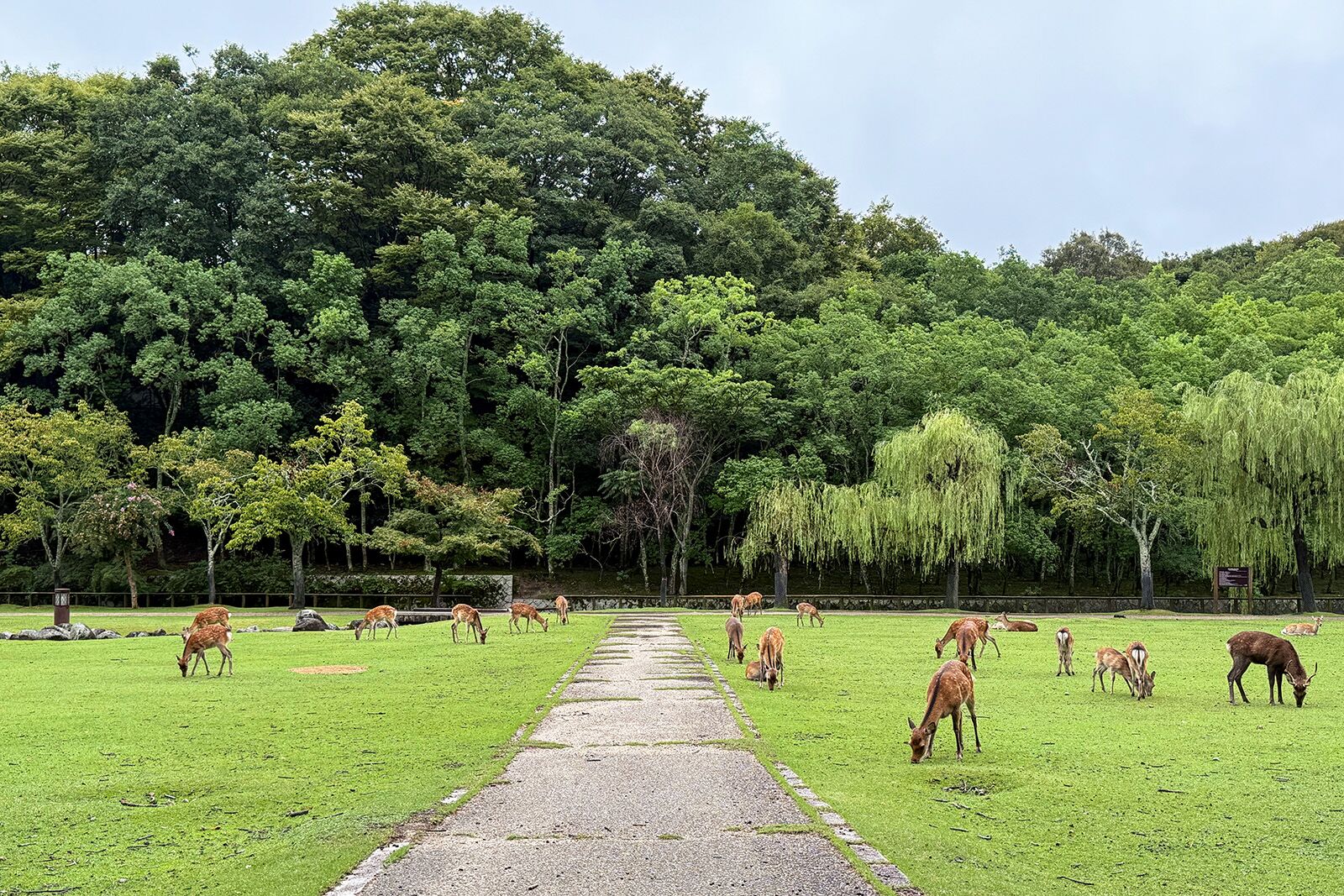
Nara Park. Photo: Kelsey Wilking

Many tourists who know Nara know it first and foremost for the Sika deer who roam free and bow for crackers. And yes, the deer are super cute and incredibly photogenic. But beyond the deer-covered merch and park photos, Nara carries a deeper sense of identity.

Heijō-kyō (present-day Nara), became the country’s first permanent imperial capital in 710 AD. It’s often called the birthplace of Japan. Centuries later, Nara once again became a symbolic place of renewal when Emperor Showa ratified the Peace Treaty of San Francisco here in 1951, which restored Japan’s sovereignty after World War II. In a way, Japan has been born twice in Nara.

I came for two more temple visits to continue my spiritual exploration.

“The deity is in the details,” the head monk at Hase-dera Temple explained as he led me up the steep wood stairs toward the inner hall. He shared a Cinderella-esque story of a woman with a barrel on her head, and another of a man whose single piece of straw transformed into a house.

These Buddhist stories are layered with moral lessons about intention and directing your thoughts toward the destiny you want. Manifesting is an overused word in Western cultures, but manifesting was the message here as mindfulness discipline.

Walking the Kumano Kodo Trail

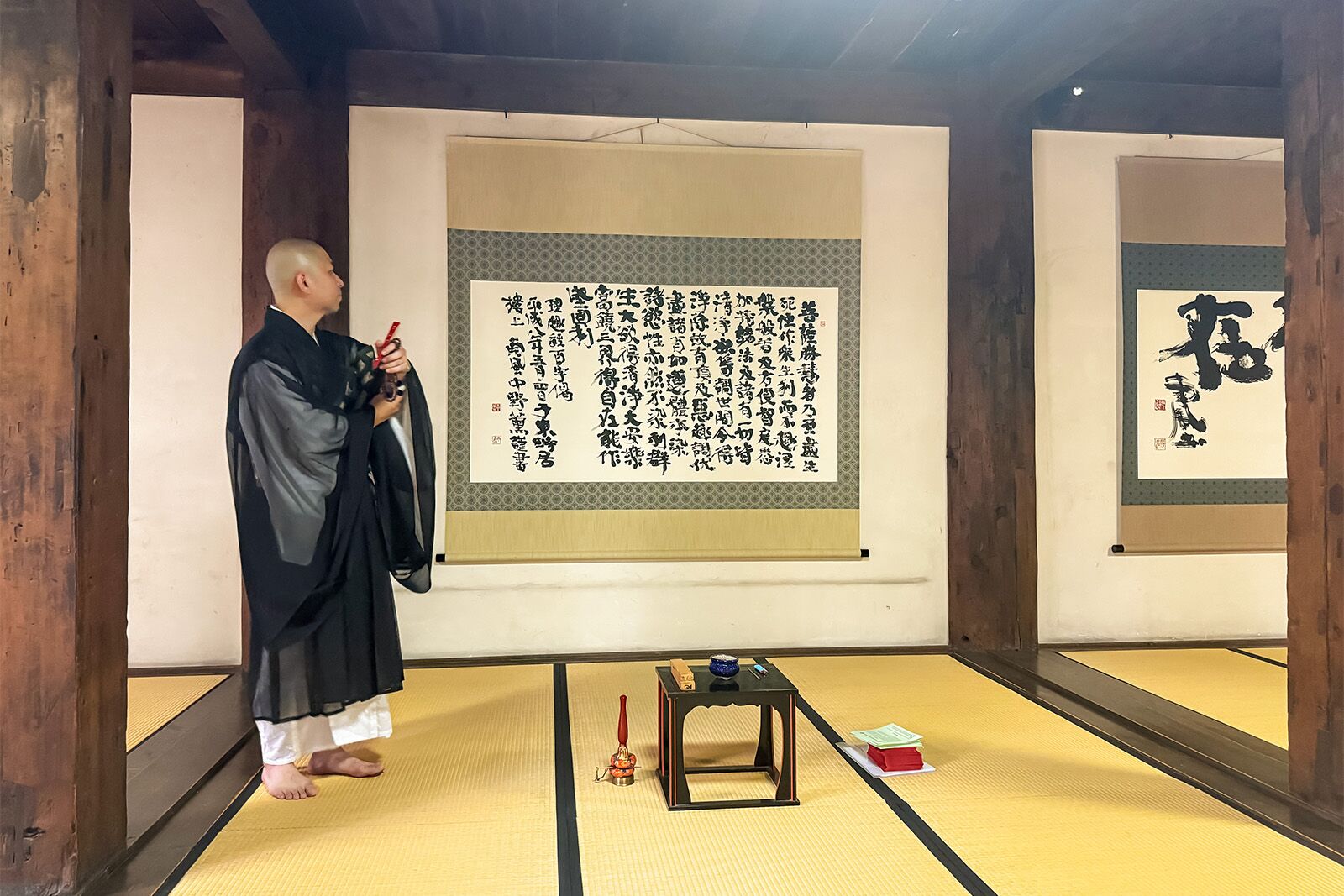
Gango-ji Temple. Photo: Kelsey Wilking

Later, at Gango-ji Temple, we practiced zazen meditation, the practice of sitting in correct posture and breathing to quiet your mind. Sitting. Breathing. Just being still. It wasn’t exactly a triumphant moment for me as my mind wandered and I kept wondering how much time had passed. But the practice isn’t about perfection. It’s a tool to return to stillness.

Fragments of my frazzled nervous system finally exhaled along the Kumano Kodo trail. It happened in nature in the mist of the Nachi Waterfall, while walking among the cedars, and in stories told by Buddhist monks. In a world chasing superficial biohacking and unattainable immortality, this kind of ancient wellness settles deeper. There is renewal and rebirth in the trail’s quiet slowness. There is peace on top of the mountain where gods are said to live.

Make this trip happen

Walking the Kumano Kodo Trail

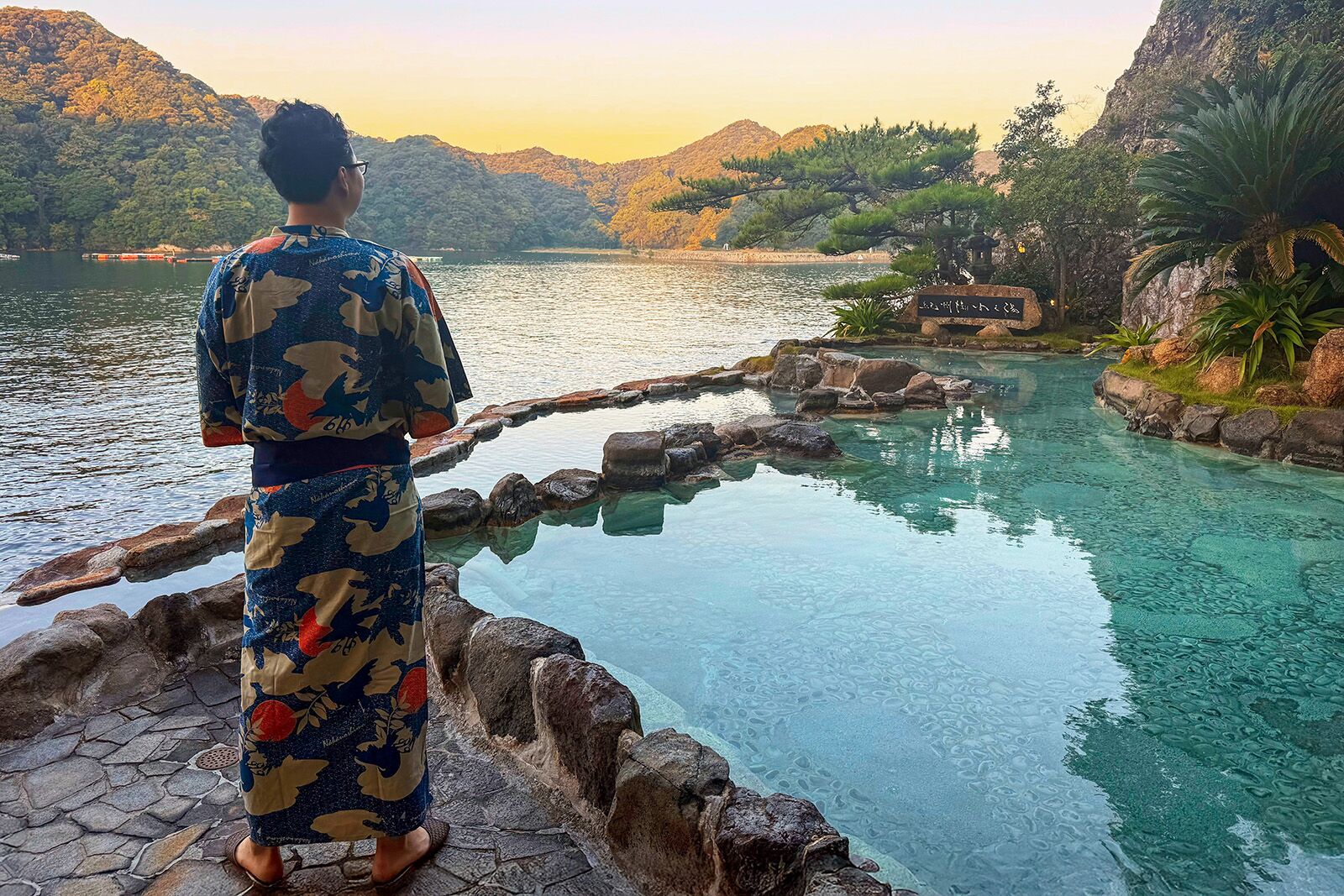
Nakanoshima Hotel. Photo: Kelsey Wilking

From Tokyo, fly about about an hour to Nanki–Shirahama Airport (SHM) on Japan Airlines, which places you close to Wakayama’s coastal resorts and Kumano pilgrimage sites. You can also travel entirely by rail: take the Shinkansen from Tokyo to Shin-Osaka (about 2.5 hours) and transfer to the JR Kuroshio limited express toward Wakayama, Shirahama, and Nachikatsuura. Alternatively, take the Shinkansen to Nagoya and connect to the JR Nanki limited express toward Mie’s Kumano region. Expect roughly 5.5 to 6.5 hours of travel time by train, depending on your final destination on the peninsula.

Once on the peninsula, travel is slower but scenic. Regional JR trains and buses connect major towns along the coast and to pilgrimage trailheads, though schedules can be limited in rural areas.

The official Kumano Kodo guide breaks down the different pilgrimage routes, trail sections, and stops.

Where to stay

  • Holistic Space Japan Medical Resort in Taiji, Wakayama: An ocean-facing wellness retreat focused on holistic therapies and restorative programs.
  • Kumano-Bettei Nakanoshima in Nachikatsuura: A classic ryokan experience on its own island with private onsens with easy access to Nachi Falls.
  • Hotel Hacienda VISON in Mie: A contemporary stay within the VISON complex, a farm-to-table culinary and cultural destination.
  • Yatakiya in Uda, Nara: An intimate, beautifully restored 300-year-old farmhouse with four guest rooms.
  • Shisui, a Luxury Collection Hotel in Nara City: A refined heritage stay steps from Nara Park.

Where to eat and drink along the Kumano Kodo Trail

  • Fushiogami Chaya: A rustic ridge-top teahouse along the pilgrimage route, ideal for a quiet rest stop with tea and light fare. 157 Hongucho Fushiogami, Tanabe, Wakayama 647-1743, Japan
  • Ichiju: Locally sourced sushi highlighting the bounty of mountain and sea. 9-3 Nanyocho, Owase, Mie 519-3614, Japan
  • Hinakaya: Michelin one-star dining focused on seasonal ingredients near the Miyagawa River. 615 Aikase, Taki-cho, Taki-gun, Mie Prefecture, 519-2167
  • Yamato Medicinal Cuisine by Kyoko Onishi: Traditional plant-forward dishes rooted in balance and healing. Asuka Village Society of Commerce and Industry, 5 Shimasho, Asauka-mura, Takaichi-gun, Nara Prefecture
  • Oharaimachi and Okage Yokocho: Historic streets near Ise Jingu lined with regional snacks, sweets, and teahouses. Ise
  • Discover Matador

    Save Bookmark

    We use cookies for analytics tracking and advertising from our partners.

    For more information read our privacy policy.