Protests, Presidents, and Protection: 6 Wild Stories Behind America's National Parks

National Parks Activism
by Suzie Dundas Jul 11, 2025

The story of America’s national parks is one often told only by descriptions and superlatives — tallest, oldest, prettiest, most impressive. But for many of America’s 63 national parks, the history and origin stories are just as compelling as the landscapes and species they protect.

Behind many national parks are stories of grassroots activism and lifetimes of dedication. Sometimes, the process of making a place into a national park was a matter of convincing the most famous families in America to donate their fortunes, while other times, it was as simple as one conservationist writing a world-famous book. (And in the case of one park, it involved a sitting US president disappearing into the wilderness for a few days.) Behind every national park is at least one relentless individual unwilling to let government and corporations destroy the country’s most beautiful and important wild places.
Every national park is filled with fascinating stories, but the origin stories of the six parks below are truly some of the wildest in the system, involving presidents, first ladies, America’s richest families, a world-famous publication, Indigenous advocates, and even the relocation of entire towns and cities.


Redwood National and State Parks (California)

Established: 1968


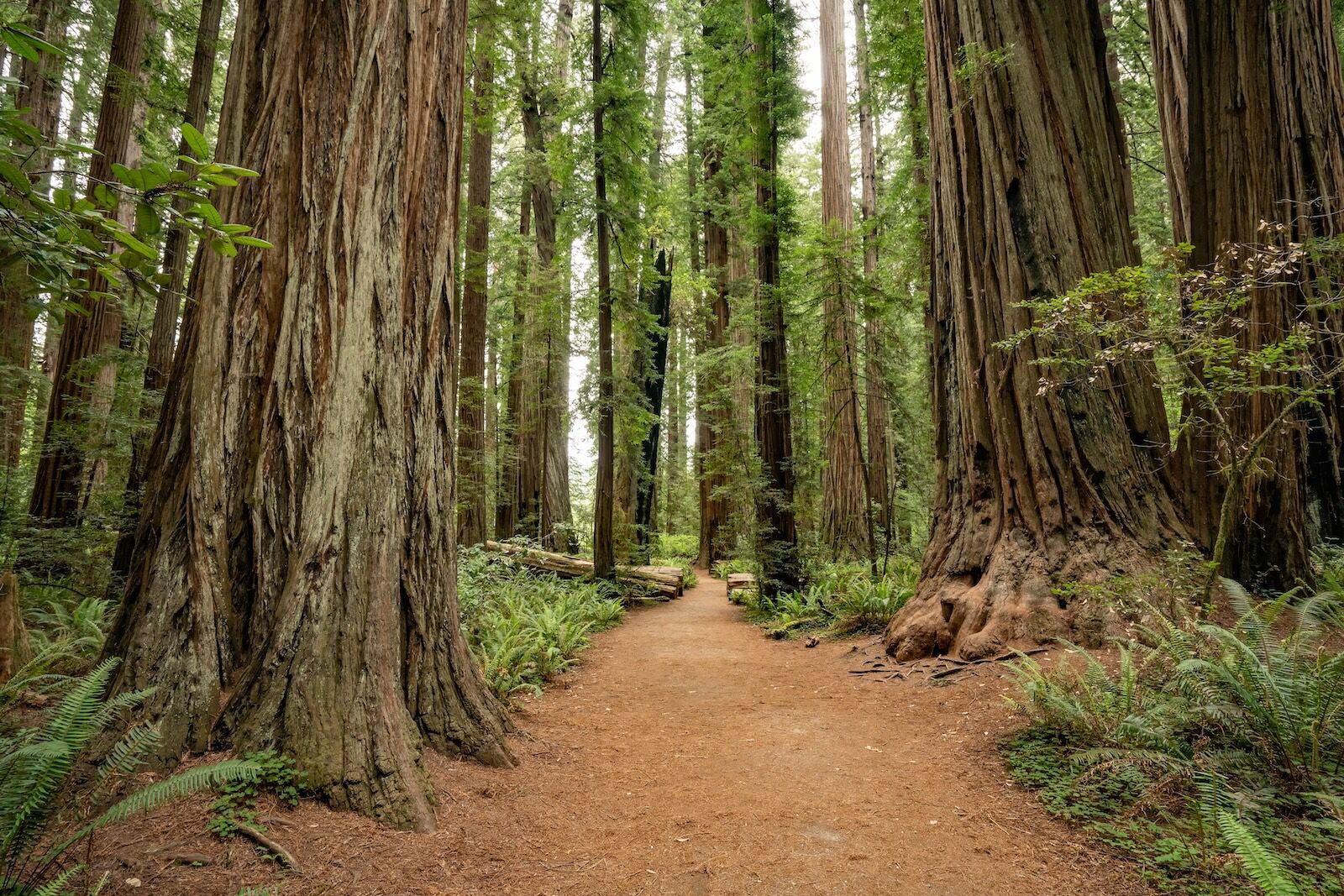
redwood national park - how were national parks founded

Photo: Bob Pool/Shutterstock

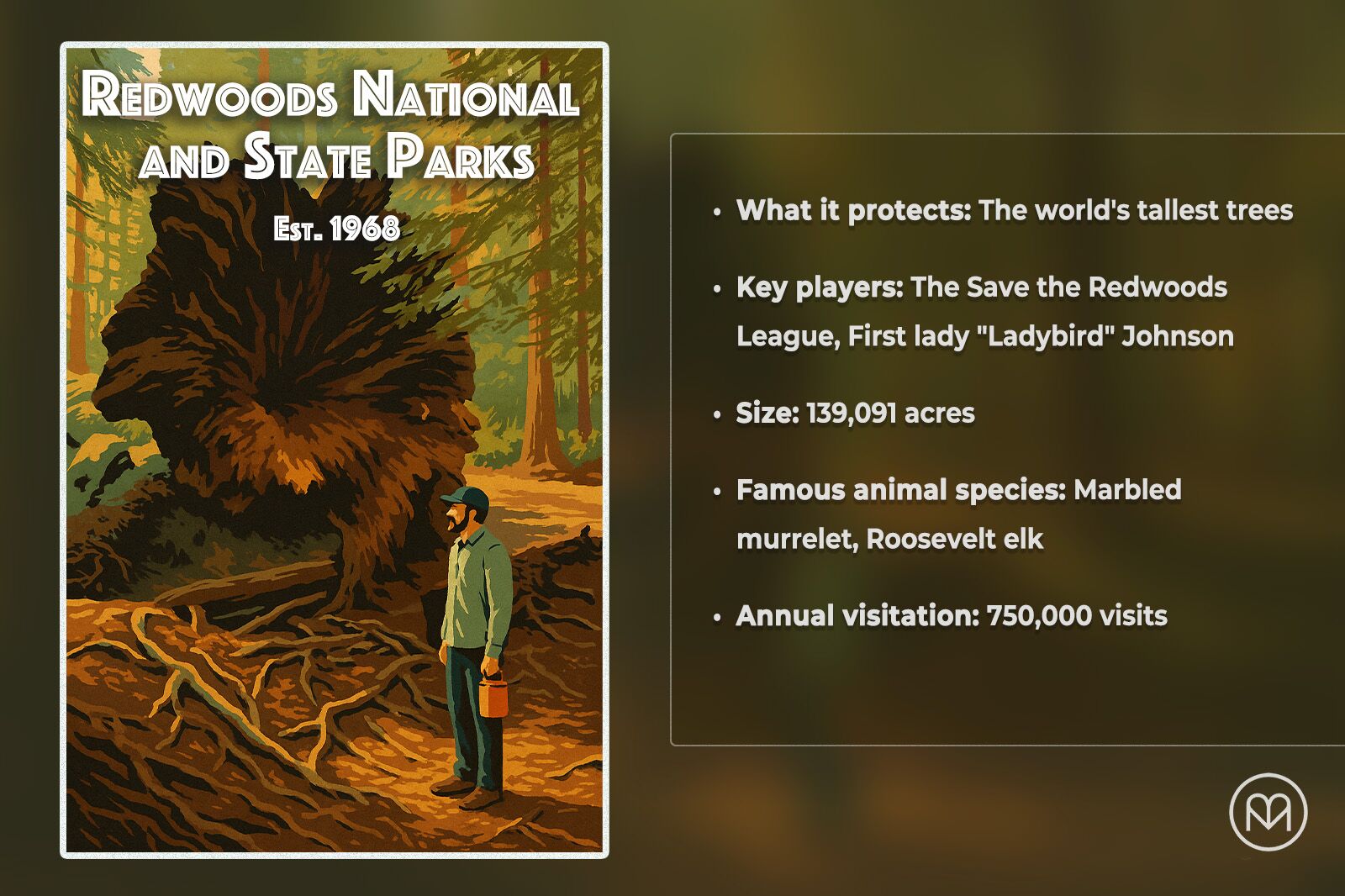
Redwood National and State Parks protect the tallest trees on Earth. But the fact they still exist is thanks to a decades-long fight involving a world-famous National Geographic photo, and a helicopter visit from the First Lady.

By the 1960s, more than 90 percent of California’s old-growth coast redwoods had already been logged. Most of the remaining trees were on private land, and multiple efforts to create a park from organizations like the “Save the Redwoods” league had failed time and time again. But in 1963, National Geographic magazine published a now-iconic 15-page spread about the massive trees, with humans positioned along its trunk to show scale. Public outcry followed, and the image became a turning point in conservation history. It’s now one of the most iconic magazine covers in the publication’s history.

The public — and Congress — demanded action after the magazine hit newsstands, but logging unions and local officials in Northern California pushed back, saying that a national park would destroy the regional economy. But the tide had already turned, with some of the most influential people in the country working with the Save the Redwoods League to protect the 350-foot-tall trees.

In 1968, First Lady Lady Bird Johnson flew by helicopter into the redwood forests along the Klamath River. She toured the very grove where the photo had been taken (a place she later called a “cathedral of silence”), and offered her vocal support. Later that year, the creation of Redwood National Park was signed into law. Today, hikers can still visit the Tall Trees Grove, where the famous “Nat Geo tree” still stands.

In the years since, the park has been expanded, and is now co-managed between the National Park Service, and California State Parks. Combined, roughly 133,000 acres of deep forest and rugged coastline are protected, including about five percent that’s true old-growth forest.

6 Stories of Founding America's National Parks

To learn more about Redwoods’ founding while visiting, start at the Thomas H. Kuchel Visitor Center (just south of Orick, CA), for exhibits on the park’s creation, the fight to save the redwoods, and the 1960s conservation efforts that led to national park status, including the Nat Geo expedition. The nearby Hiouchi Visitor Center (in Jedediah Smith Redwoods State Park) and Prairie Creek Visitor Center also offer exhibits on logging history, redwood ecology, and the role of non-profit organizations like Save the Redwoods League. On the trails, both the Big Tree Loop and Lady Bird Johnson Grove, among others, have interpretive signage and self-guided walking tours on the NPS App with tons of historical and environmental information, and in the summer, frequent ranger program dive into the park’s cultural and ecological history.

Yosemite National Park (California)

Established: 1890


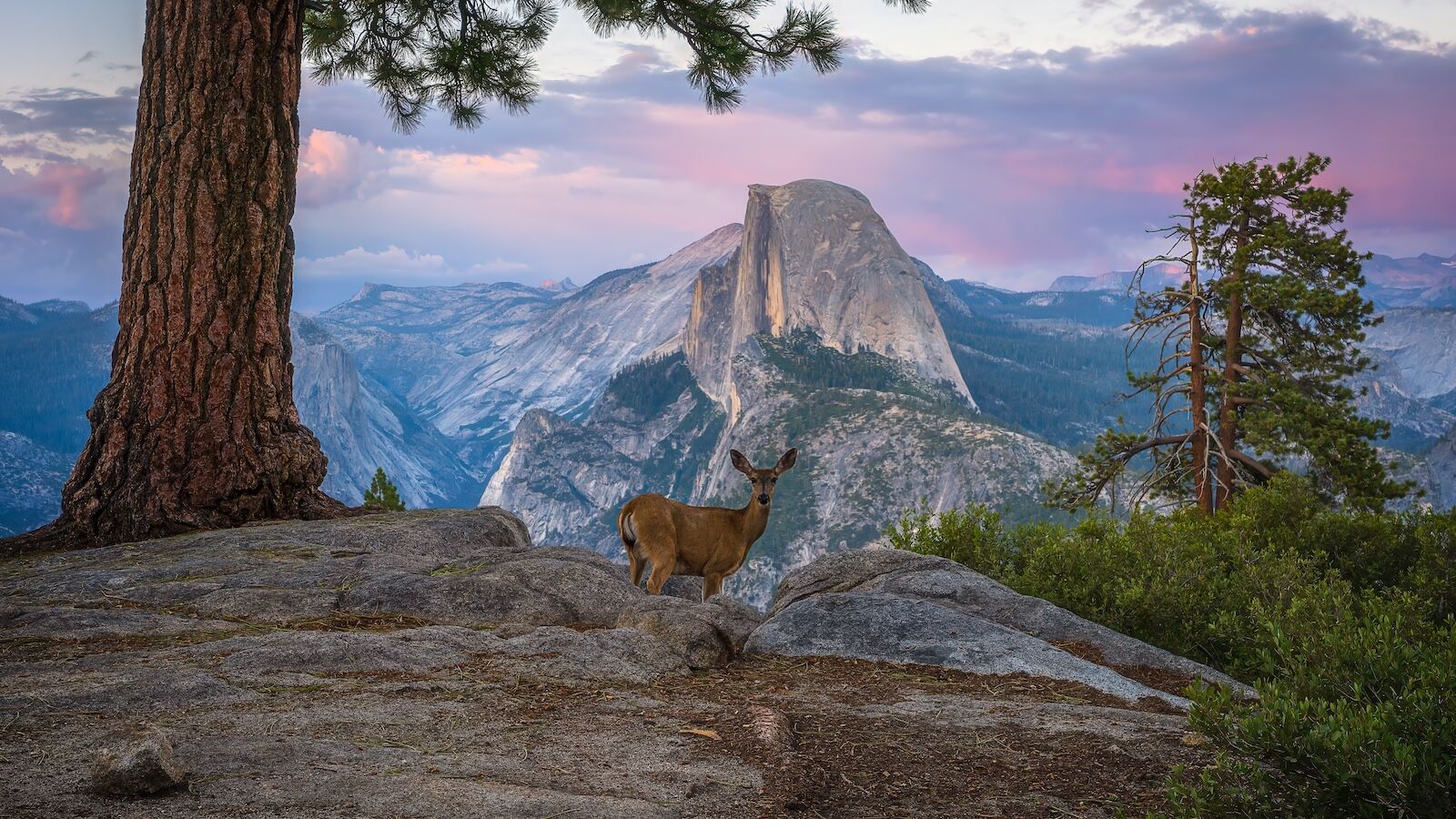
how were national parks founded -  yosemite national park

Photo: cb_travel/Shutterstock

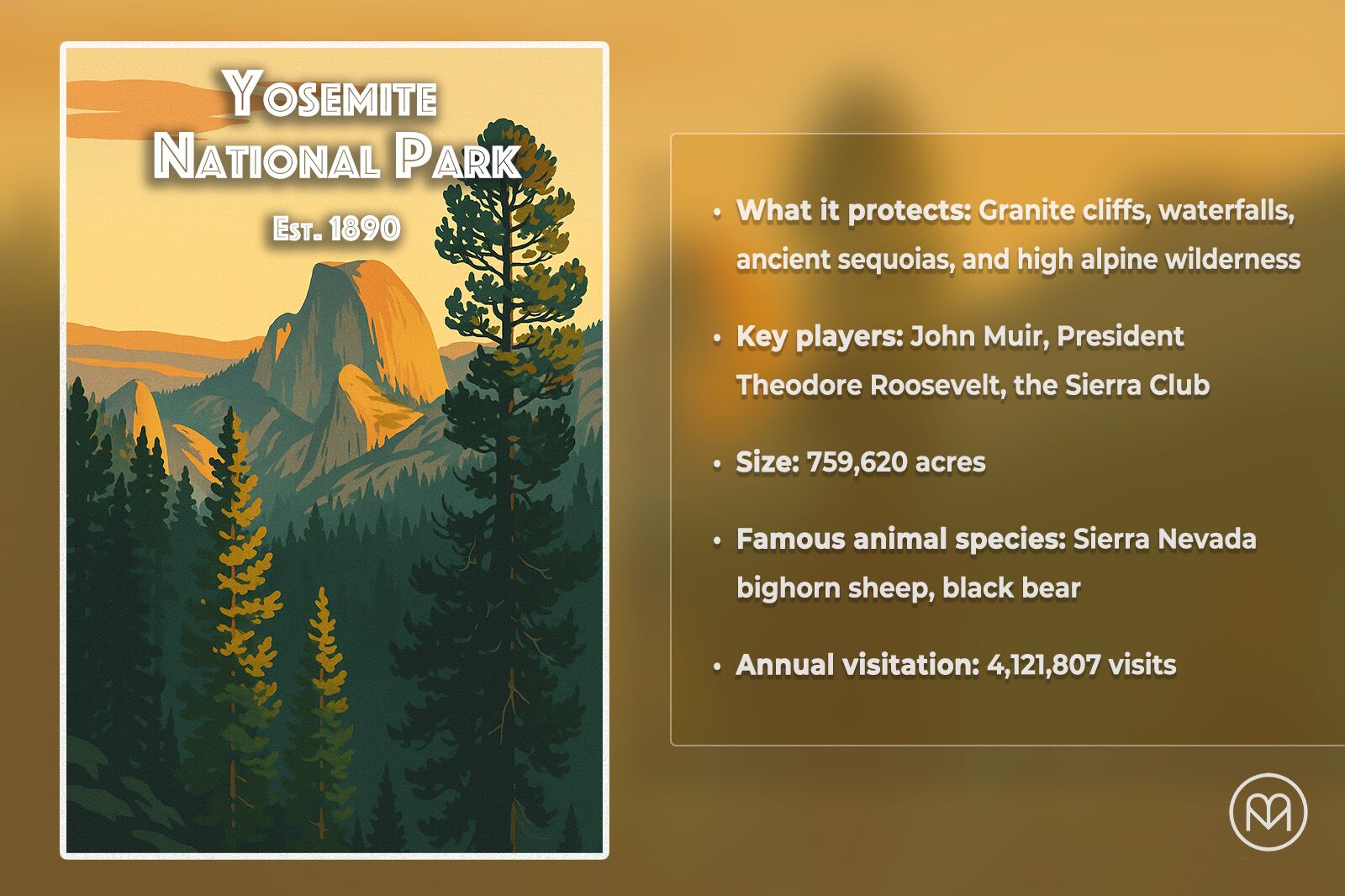
Yosemite was not the first national park in the US (that title belongs to Yellowstone), but it was the first place the federal government set aside specifically for preservation.

The effort began in the mid-1800s. When white settlers arrived in the Sierra Nevada, artists and scientists also began documenting Yosemite’s deep granite valleys and waterfalls. In 1864, during the Civil War, President Abraham Lincoln signed the Yosemite Grant. It transferred the Yosemite Valley (and nearby Mariposa Grove of giant sequoias) to the state of California for protection “for public use, resort, and recreation.” It was the first time in the country’s history that land was set aside specifically to be protected from private development.

But it didn’t have federal protection for many more decades. That push came largely from naturalist John Muir, who spent years lobbying Congress after seeing firsthand the damage caused by overgrazing and unregulated tourism and development in the Sierra Nevada. Though it sounds like something that could never happen today, in 1903, he took sitting President Theodore Roosevelt on a multi-day backpacking trip through the wilderness, sleeping on the ground and bringing just three park rangers with them for guiding and protection. Roosevelt later spoke fondly of the trip, saying it was what convinced him that the land needed to be protected.

In 1890, after decades of advocacy, Congress created Yosemite National Park to protect the surrounding wilderness (though the original Yosemite Valley and Mariposa Grove weren’t turned over to the federal government until 1906).

Today, Yosemite National Park spans more than 750,000 acres, and is one of the most well-known national parks in the entire world.

6 Stories of Founding America's National Parks

To learn more about Yosemite’s founding while visiting, start at the Yosemite Valley Visitor Center, where exhibits and the short film Spirit of Yosemite explain the park’s Indigenous heritage, early tourism, and the importance of the 1864 Yosemite Grant. Next door, the Yosemite Museum focuses on Miwok and Paiute culture, with rotating exhibits and traditional demonstrations. And across the park, you’ll find ranger talks and interpretive signage that offer more insight into the facets of Yosemite history.

Everglades National Park (Florida)

Established: 1947


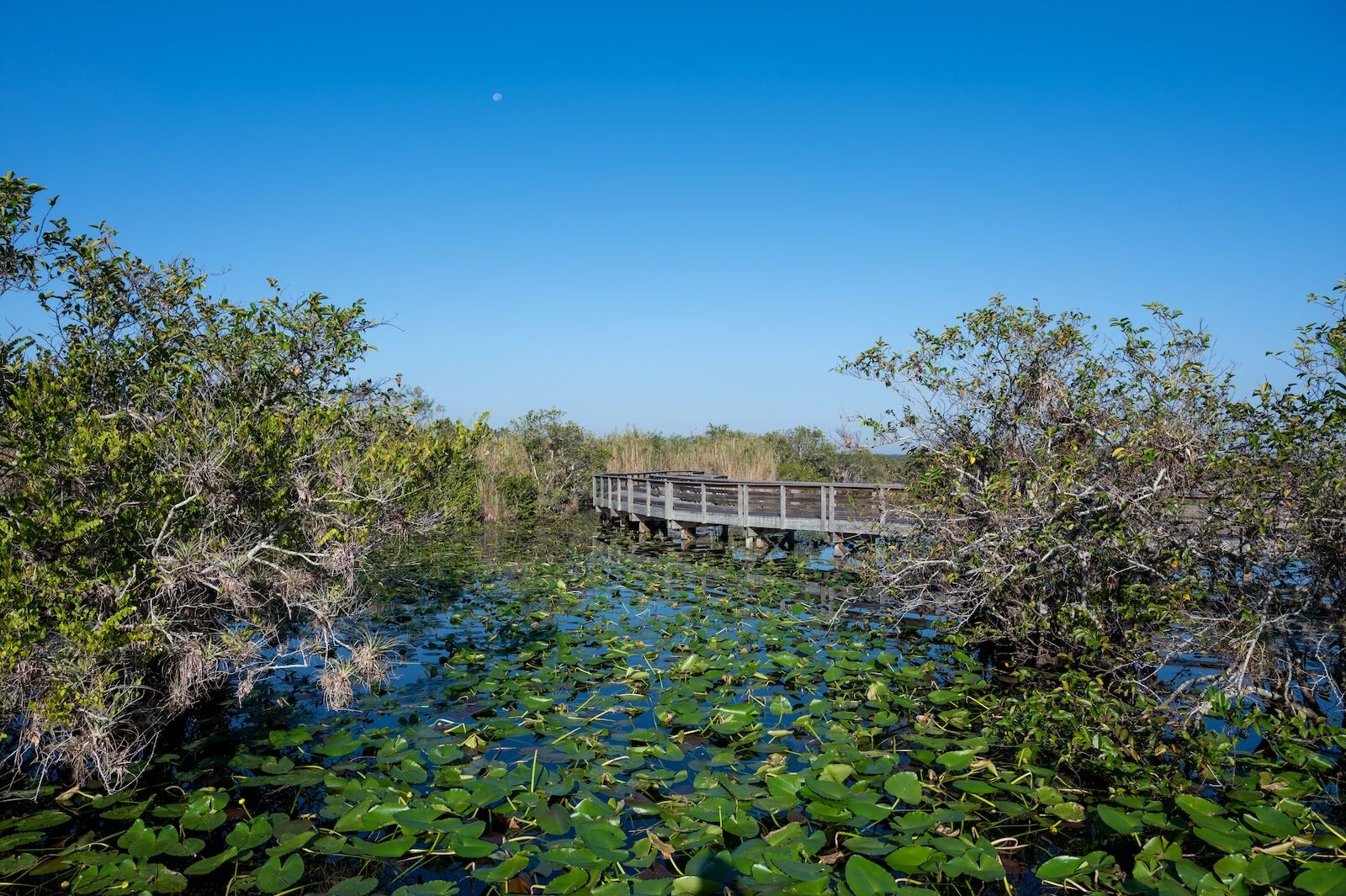
everglades anhinga trail - how were national parks founded

Photo: Francisco Blanco/Shutterstock

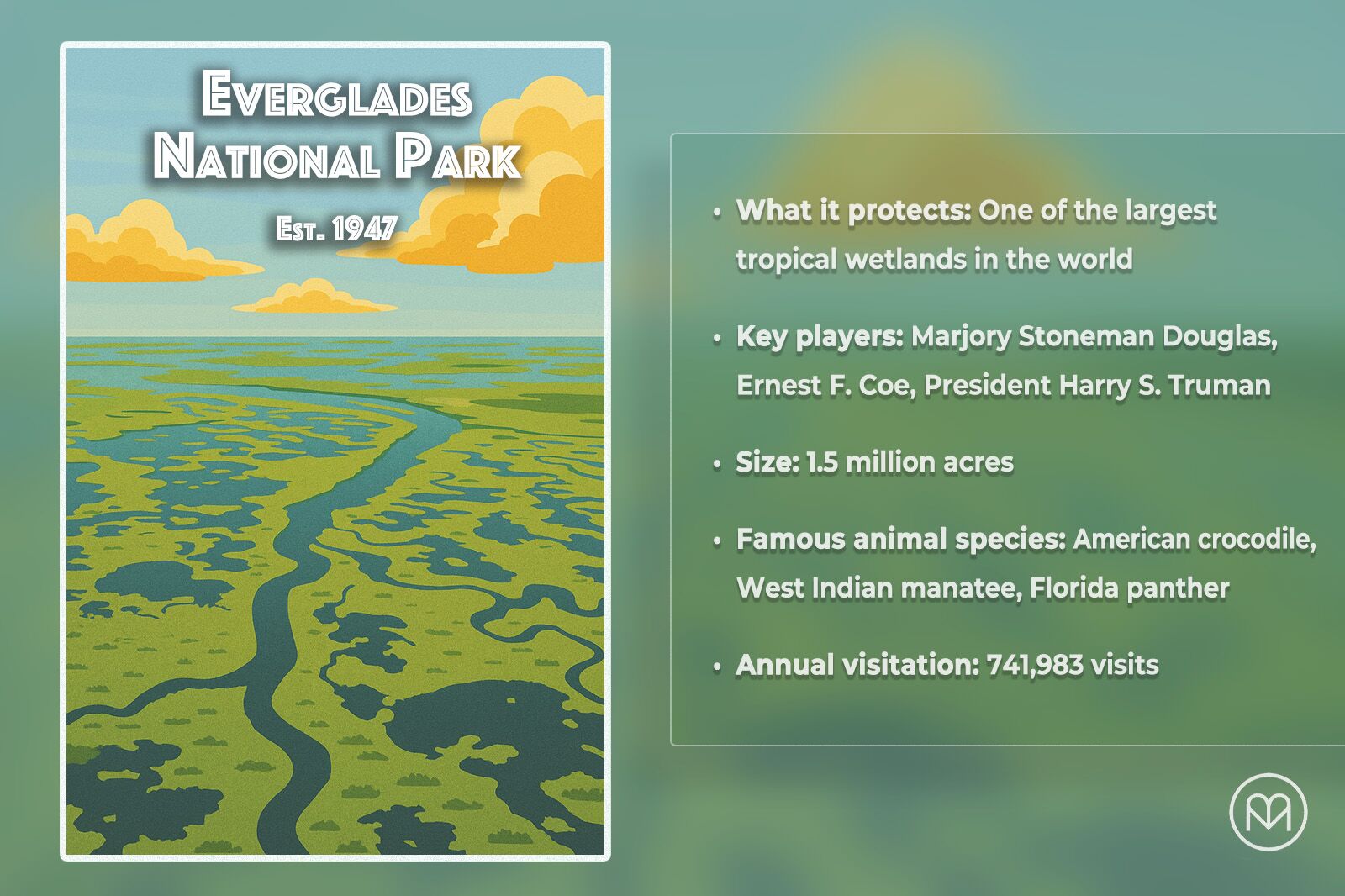
Everglades National Park protects one of the most complex and fragile ecosystems in North America. It’s a vast, swamp-type stretch of water stretching from Miami all the way to the northern part of the Florida Keys. Unlike most national parks, it wasn’t preserved for its grandeur and beauty. In fact, many Americans initially saw it as a worthless swamp.

That perception began to change largely because of one woman: Marjory Stoneman Douglas. She was a journalist and former suffragist who had covered South Florida’s rapid transformation for decades. She spent months traveling through the area by boat and on foot, bringing in scientists, Seminole and Miccosukee leaders, and local conservationists. She became convinced that the everglades weren’t a pointless swamp, but essential to Florida’s hydrology and environmental health.

In 1947, Douglas published The Everglades: River of Grass. It was a groundbreaking book that reframed the Everglades as a critically important slow-moving river nearly 60 miles wide. The book launched a national conversation and reshaped public understanding of the ecosystem. She described in detail the various microbiomes in the park, and how they were being rapidly destroyed, along with critical animal species.

That same year, after decades of campaigning from conservationists, Everglades National Park was formally established. President Harry S. Truman traveled from DC to Florida to dedicate it, calling it a national commitment to preserve “a unique segment of the American heritage.” It was the first national park in the US created to protect a critical biological system rather than scenic beauty — something Douglas was directly responsible for.

Douglas would continue advocating for the Everglades well into her 90s, often testifying before Congress, writing op-eds, and lobbying against development. She lived to be 108 and is still considered one of the most important environmental advocates in American history.

6 Stories of Founding America's National Parks

To learn more about the Everglades’ founding while visiting, head to the Ernest F. Coe Visitor Center near Homestead, loaded with museum displays and exhibits covering the park’s human and natural history. Through fall, winter, and spring, there are ranger-led programs at Coe, Shark Valley, and Flamingo, and from Shark Valley, there’s a guided tram tour with narration on the park’s political and ecological significance. Several trails, including the Anhinga Trail and Gumbo Limbo Trail, have interpretive panels that touch on early tourism, Indigenous presence, and Douglas’s campaign to shift public perception from “useless swamp” to protected national treasure.

Great Smoky Mountains National Park (Tennessee/North Carolina)

Established: 1934


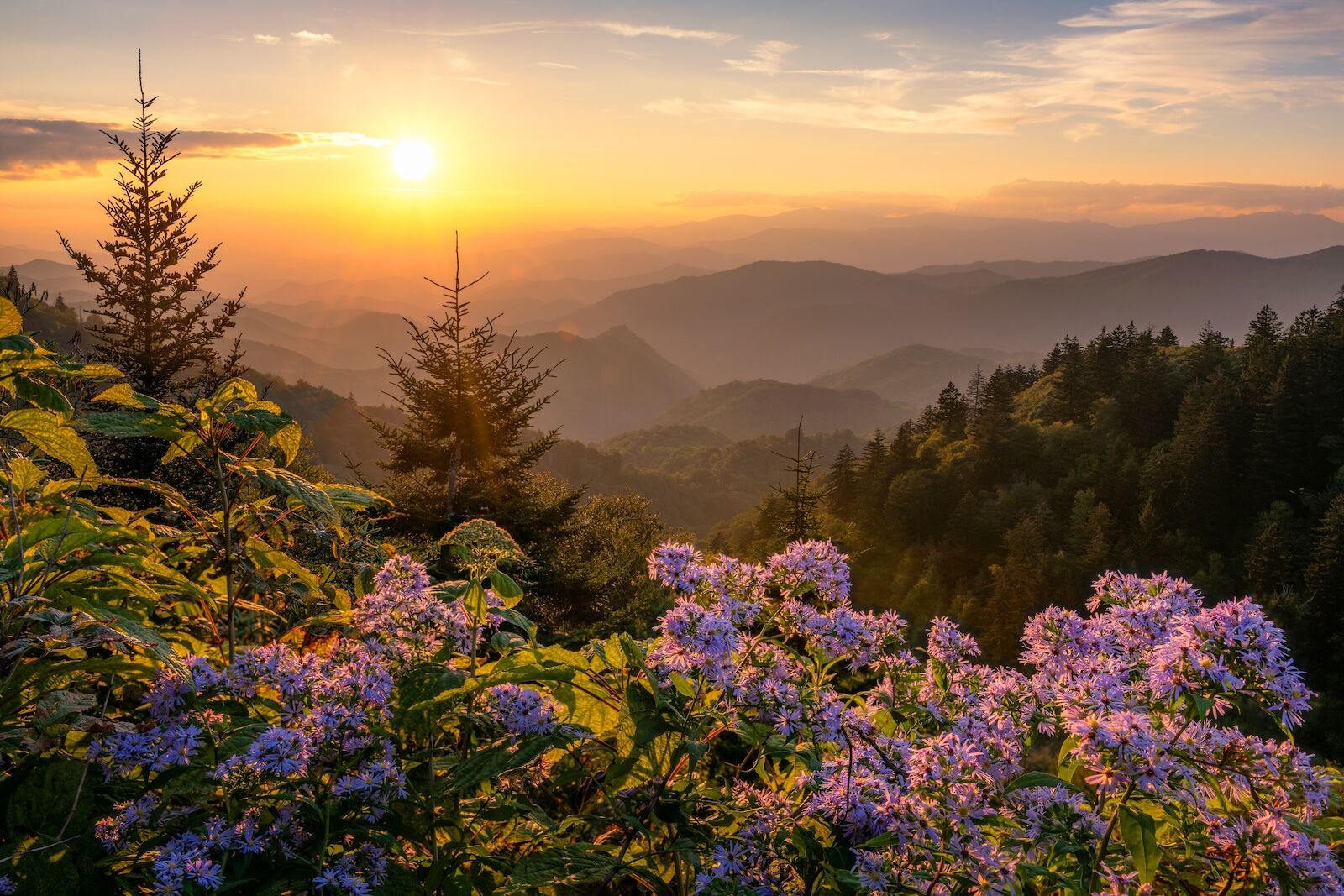
how were national parks founded - great smoky

Photo: anthony heflin/Shutterstock

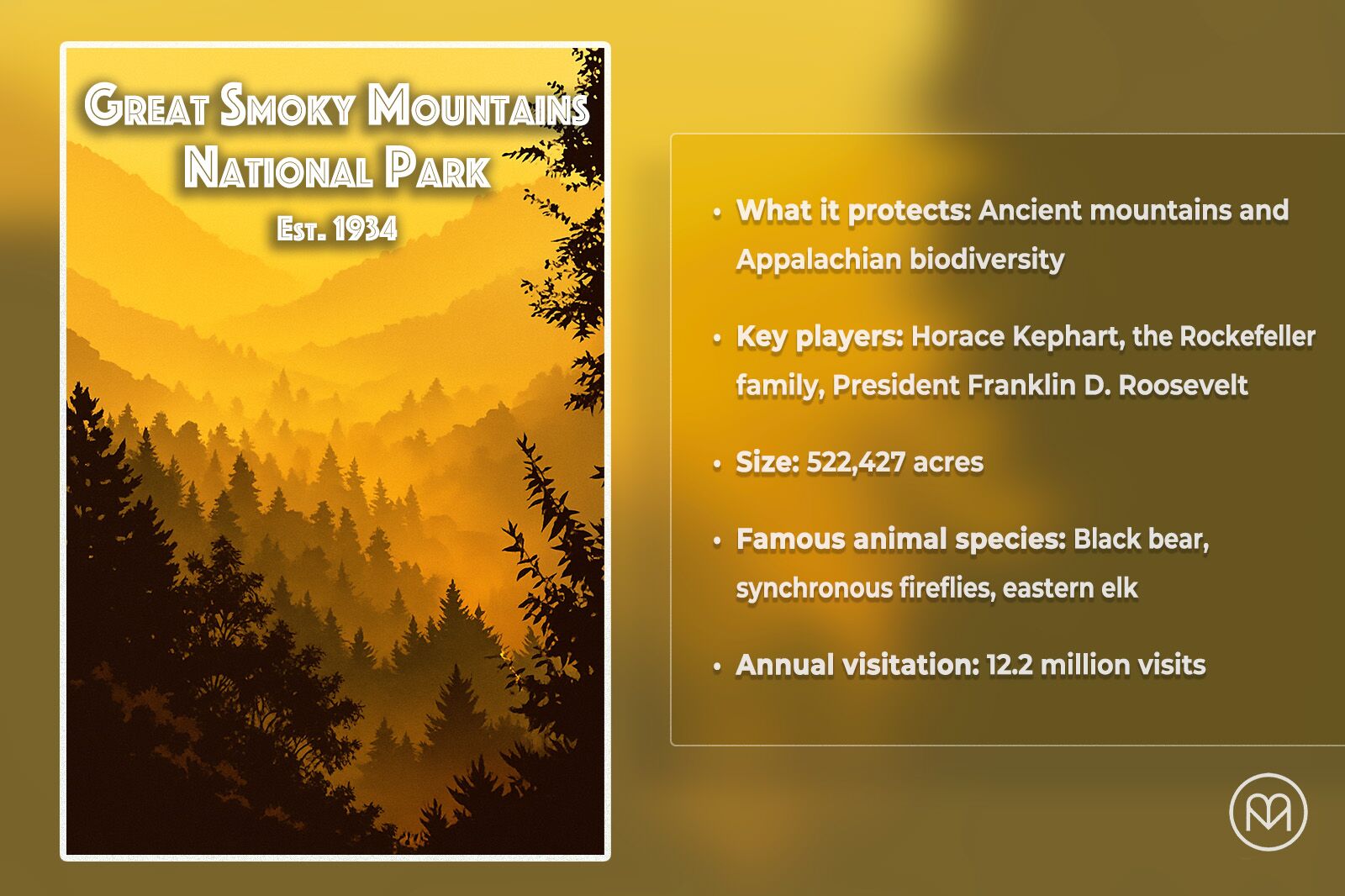
Great Smoky Mountains National Park is home to old-growth forests, salamanders, black bears, and some of the oldest mountains in North America. But getting it protected took more than an act of Congress: It took years of political wrangling, fundraising, and even a visit from then-President Franklin D. Roosevelt.

Like many parts of the US in the early 20th century, logging companies had cleared wide swaths of the southern Appalachian Mountains. Entire mountain slopes were clearcut, with entire towns built by logging companies of employees working in sawmills and on railways. It spurred early conservationists to take notice, fearing that if they’d be permanently destroyed if private companies were allowed to continue prioritizing personal economic gain over the shared public value of the lands.

But at the time, the Smokies were mostly private. So to create a national park, advocates would need to buy tens of thousands of acres. That effort was led in part by Willis and Ann Davis, a Knoxville couple who launched a grassroots fundraising campaign in the 1920s, and journalist Horace Kephart, who spent years living in the Smokies and writing about their ecological and cultural value. In 1926, Congress authorized the park — but it didn’t have any funds with which to actually buy the land.

To fill the gap, North Carolina and Tennessee each pledged $2 million. Additional support came from private citizens, local women’s clubs, the Rockefeller Family, and even local elementary school children who donated pennies at a time. To establish the park, it also involved moving entire communities like Cades Cove and Cataloochee, both of which are remembered within the park.

In 1936, organizers finally acquired enough land to form a continuous park, and it received federal protection. But it wasn’t until four years later that President Roosevelt stood on the Rockefeller Memorial at Newfound Gap between North Carolina and Tennessee, and formally dedicated the park.

Today, the park protects more than 522,000 acres and is the most-visited national park in the United States.

6 Stories of Founding America's National Parks

To learn more about the Smokies’ founding while visiting, join a ranger programs at Sugarlands, Cades Cove, or Oconaluftee. Many programs focus on the grassroots efforts to create the park, the role of the Rockefeller family, and the controversy around the forced removal of residents. The Rockefeller Memorial at Newfound Gap marks where President Franklin D. Roosevelt officially dedicated the park in 1940, and the Mountain Farm Museum at Oconaluftee Visitor Center preserves log cabins from around the region with information on 19th-century mountain life. You can also visit the Sugarlands Visitor Center near Gatlinburg, which has expansive exhibits on the wildly popular park.

Acadia National Park (Maine)

Established: 1919


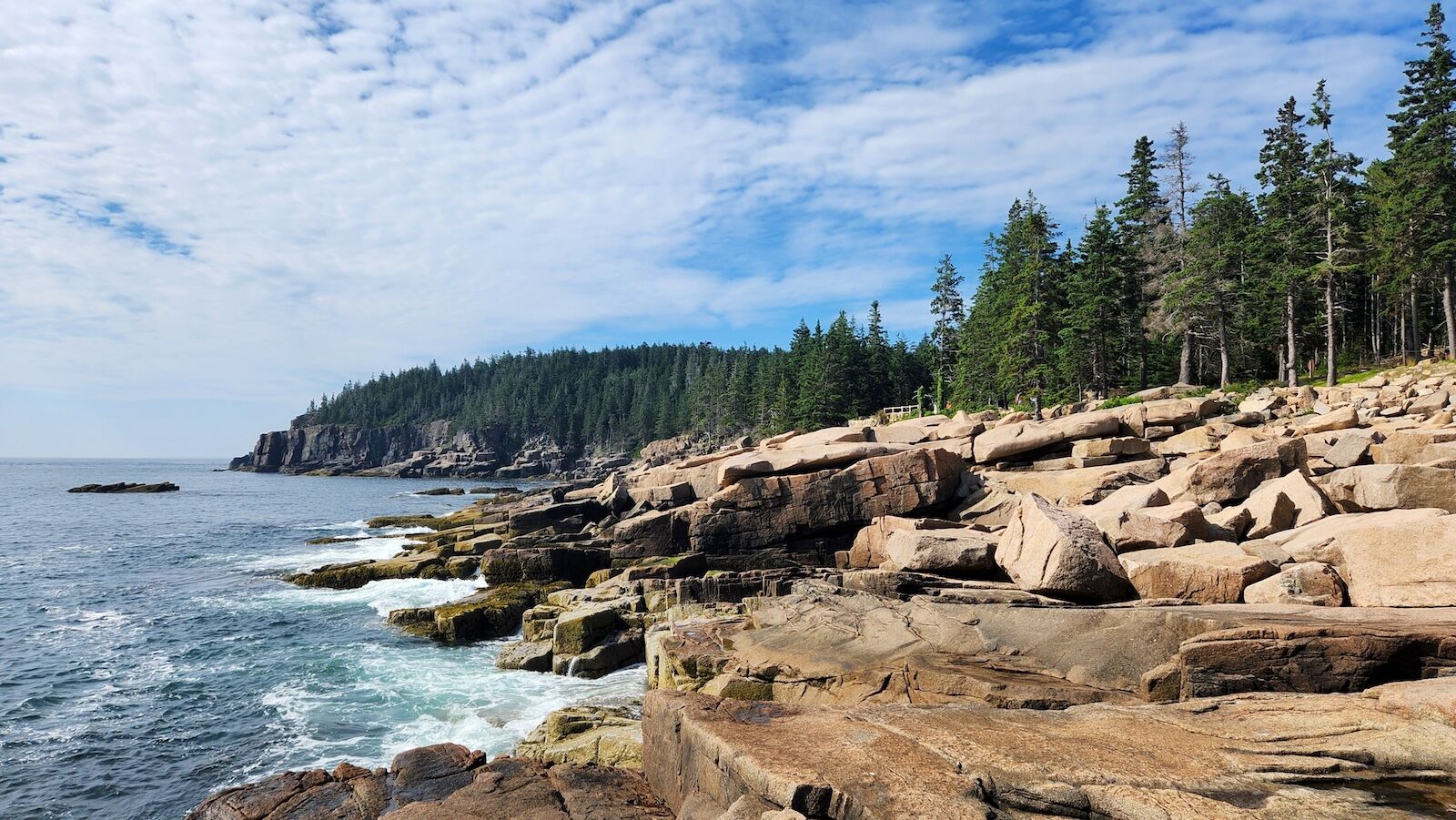
acadia national park coastline

Photo: Heather Michael/Shutterstock

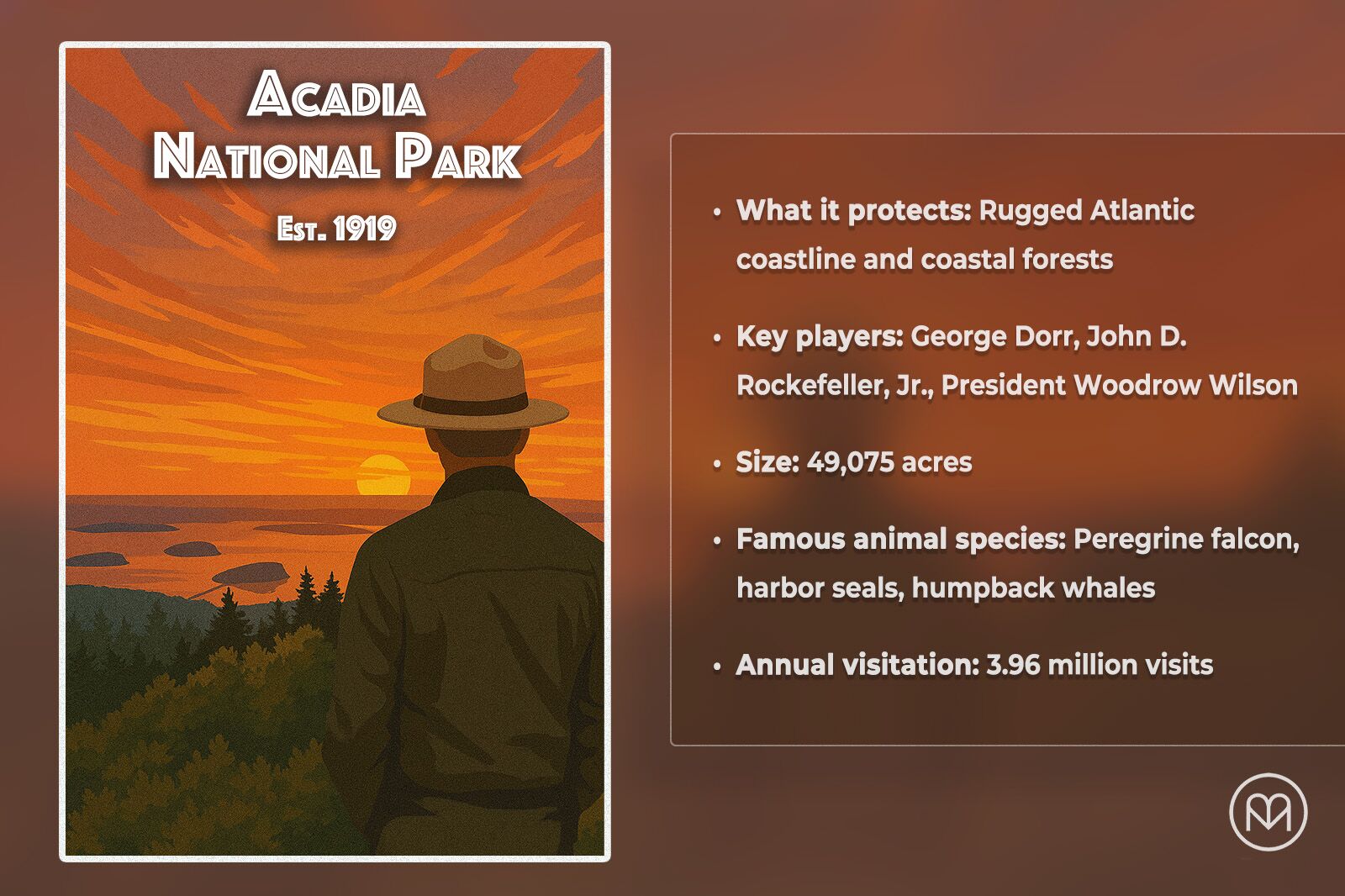
Acadia was the first national park created east of the Mississippi — and, even more interestingly, the first created using entirely donated land. It protects Maine’s rugged Atlantic coastline, granite peaks, and glacial lakes, but only exists because one person spent nearly 50 decades convincing his wealthy friends and associates to donate the land.

That man was George B. Dorr, a Bostonian who spent summers on Mount Desert Island and became alarmed by encroaching development. Along with a group of friends, he formed the Hancock County Trustees of Public Reservations in 1901, made up of other concerned citizens. It had one goal: to convince wealthy landowners, including famous families like the Rockefellers, Morgans, and Carnegies, to donate land before it could be logged or sold as smaller parcels. He lobbied Congress, and spent his own fortune to delay deals that could have made the land unavailable.

Finally, in 1916, President Woodrow Wilson created Sieur de Monts National Monument, made from land Dorr had sourced. Three years later, it was designated Lafayette National Park, but changed to Acadia in 1929, in reference to the region’s early French colonial history. During this time, donor and ally John D. Rockefeller, Jr., funded and constructed 45 carriage roads through the park, complete with granite bridges and stonework that still stands today, to allow access to the park for tourists while still keeping cars out. He also donated about 10,000 acres.

After establishing the park, Dorr continued to stay in the area, and lived in the park well into his 80s.

6 Stories of Founding America's National Parks

Acadia National Park History

To learn more about Acadia’s founding while visiting, At Acadia National Park, history is woven into both the landscape and the visitor experience. Begin at the Hulls Cove Visitor Center, where exhibits explain how local landowners, artists, and philanthropists—most notably George B. Dorr and John D. Rockefeller Jr.—helped establish the park through private land donations. The Carriage Roads, funded and designed by Rockefeller, are open to hikers and cyclists and still feature the original stone bridges and gatehouses. At Jordan Pond and Sieur de Monts Spring, interpretive signs explore Dorr’s conservation work and the park’s 1916 founding as Sieur de Monts National Monument, and the nearby Wild Gardens of Acadia highlight native plant species in the area.

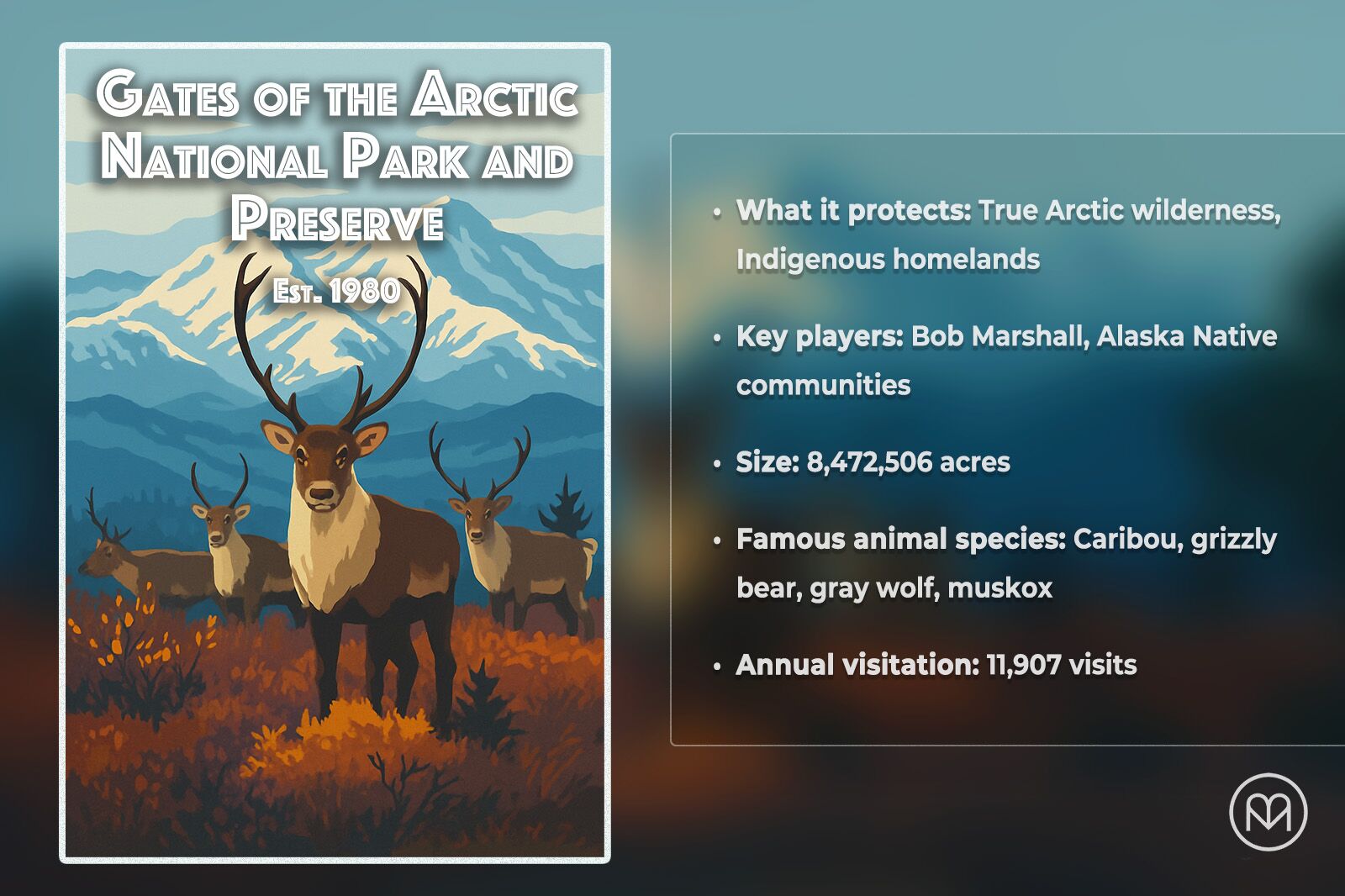
Gates of the Arctic National Park and Preserve (Alaska)

Established: 1980


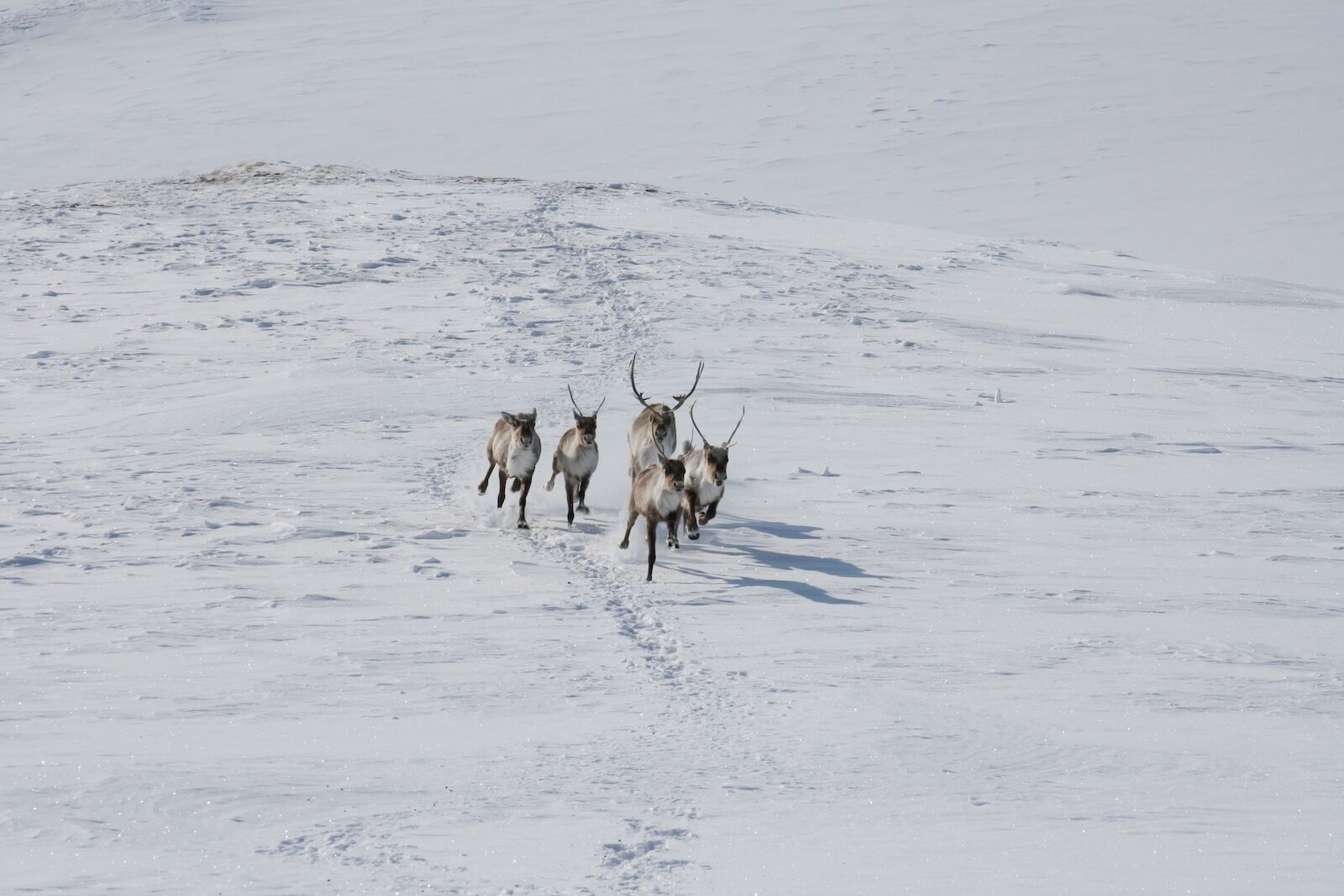
gates of the arctic national park reindeer

Photo: NPS/Kyle Joly 2012/Shutterstock

Gates of the Arctic protects more than 8.4 million acres of Arctic wilderness with no roads, no trails, and no visitor centers. It looks much the same as it did 10,000 years ago — a landscape preserved not just for its wildness, but for the Indigenous communities that have relied on it for millennia.

The park’s story begins with Bob Marshall, a forester, writer, and early wilderness advocate who spent the 1930s exploring Alaska’s Brooks Range on foot. He was awed by its isolation and grandeur, and famously nicknamed two peaks — Frigid Crags and Boreal Mountain — the “Gates of the Arctic.” His travel memoirs helped shape the modern wilderness ethic: that some places should remain completely undeveloped.

But the park didn’t exist until decades later. In the 1970s, the construction of the Trans-Alaska Pipeline sparked a major debate over land use, Indigenous rights, and conservation. In 1971, Congress passed the Alaska Native Claims Settlement Act (ANCSA), paving the way for new protections. In 1980, the Alaska National Interest Lands Conservation Act (ANILCA) created Gates of the Arctic and more than 100 million acres of additional protected land.

Uniquely, the park preserves not just ecosystems but subsistence rights for Iñupiat and Koyukon Athabaskan peoples. Hunting, fishing, and gathering are legally protected — something almost unheard of in other U.S. national parks. Today, most visitors arrive by bush plane and rarely see another person. For those who do make the journey, it offers a rare glimpse of wilderness untouched by modern development.

6 Stories of Founding America's National Parks

Gates of the Arctic National Park and Preserve history

To learn more about Gates of the Arctic’s founding while visiting, you’ll actually need to be outside the park, as there are no roads, signs, or visitor centers inside the park itself. That said, there is a small Nunamiut Iñupiat village inside the park called Anaktuvuk Pass, where a cultural center and ranger station have exhibits on the history of the land. At the Morris Thompson Cultural and Visitors Center in Fairbanks, National Park Service exhibits share the park’s founding story, Bob Marshall’s expeditions, and the role of the 1980 ANILCA legislation. There are also cultural displays from Alaska Native communities and the lives of Iñupiat and Koyukon Athabaskans in the Brooks Range.

In Bettles (a fly-in village just south of the park) the Gates of the Arctic Visitor Center (open summer only) hosts ranger talks, provides trip-planning info, and has exhibits on Indigenous subsistence rights.

Discover Matador

Save Bookmark

We use cookies for analytics tracking and advertising from our partners.

For more information read our privacy policy.