International travelers flying to the United States now have a new step to complete before boarding their flights: As of November 3, 2026, anyone boarding an international flight to the US must sign a new health declaration confirming they haven’t been in the Democratic Republic of the Congo (DRC) for the last three weeks before flying to the US.

Photo: Darya Komarova/Shutterstock
A New CDC Rule Could Prevent Travelers From Boarding US-Bound Flights
The new Centers for Disease Control and Prevention requirement applies to all international air travelers, regardless of where they’re flying from or their citizenship. Airlines are responsible for collecting the declarations and must deny boarding to passengers who don’t complete them.
The measure is intended to prevent the spread of Ebola amid a worsening outbreak in Central Africa. According to the World Health Organization, the Democratic Republic of the Congo (DRC) had reported 9,704 confirmed cases and 4,687 deaths as of October 20, with cases also spreading to Kenya and Nigeria. Although the CDC considers the risk to American travelers low, the outbreak has raised concerns about infected passengers traveling internationally before developing symptoms.
The 21-day window reflects the maximum incubation period for Ebola, meaning someone infected with the virus could develop symptoms up to three weeks after exposure. Organizations like Médecins Sans Frontières (Doctors Without Borders) are actively soliciting donations to help stop the outbreak, which has no known vaccine or treatment.
What international travelers need to know
The rule applies to every international flight departing for the US, including flights from destinations with no reported Ebola cases. It applies to US citizens, green card holders, airline crews, and passengers connecting through American airports on their way to another country. It doesn’t apply to travelers entering the country by land or sea, or to passengers on flights from US territories like Puerto Rico.
Travelers must complete the declaration before boarding their flight to the US, though the exact process will vary by airline. Carriers can collect the statements electronically or on paper, and must verify that every passenger has completed one at or shortly before boarding. The CDC recommends checking with your airline for specific instructions, but there’s no requirement to download or print a form in advance. One adult can complete separate declarations for multiple family members.
What happens if you’ve recently visited the DRC?
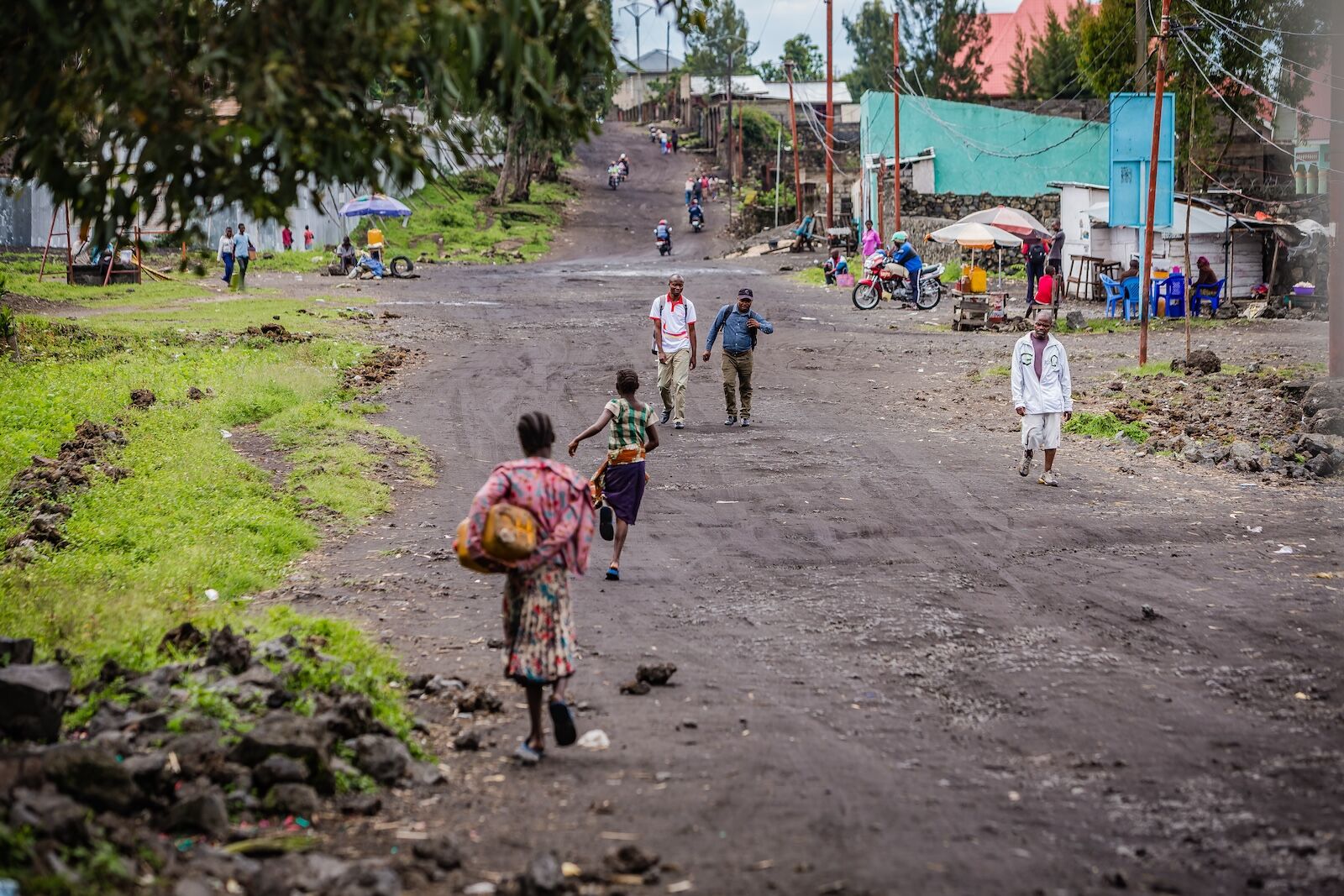
A town in North Kivu, one of the impacted provinces in the DRC. Photo: Ben Houdijk/Shutterstock
The restrictions are considerably more consequential for travelers who have actually been to the DRC.
Under the CDC’s current travel guidance, anyone who has been in the country within the previous 21 days is prohibited from boarding a flight to the US, including American citizens. That includes passengers who merely connected through a DRC airport, even if they never set foot off the plane. Travelers who have been there need to remain outside the US for a full 21 days and can return to the US on day 22.
Separate restrictions also apply to travelers who have recently visited Uganda or South Sudan, owing to their proximity to the DRC. Americans who have visited those countries can only enter if they fly through Washington Dulles, Atlanta, or New York’s JFK for a public health screening. Non-US citizens, including green card holders, generally have to wait 21 days to enter the US after leaving Uganda or South Sudan.
The requirement isn’t permanent, at least for now. The CDC’s order is scheduled to expire December 18, 2026, though officials can extend or end it earlier depending on outbreak conditions. As for enforcement, airlines must collect the signed declarations and keep them for at least 42 days, making them available to the federal government upon request. The CDC hasn’t outlined a routine process for independently verifying every passenger’s travel history, but knowingly providing false information could result in criminal fines or imprisonment. 