Anyone who flies regularly in the United States knows the feeling of searching for a flight and seeing only a handful of airline options come up. On some routes, travelers may have only a few options — and if you want to fly non-stop, your options may be even slimmer. While traveling internationally opens up a wider field of carriers, from Emirates and Korean Air to Singapore Airlines and Air France, you’ll never see those airlines as options when your flight is entirely within the US. But it’s not just a matter of airline strategy: it’s the law.
Photo: muratart/Shutterstock
A Little-Known Airline Law May Be Making Flying in America Worse
The reason is a little-known aviation law known as “cabotage,” which generally prevents foreign airlines from carrying paying passengers (or cargo) between two points within the United States. In other words, Emirates can fly you from Dubai to New York, and Lufthansa can bring you from Frankfurt to Los Angeles. But neither airline can fly passengers from New York to Los Angeles, effectively preventing them from competing with any US airlines on domestic routes.
Supporters say they protect domestic airlines and jobs and aid in national security, while critics say they unfairly shield airlines from a major source of competition — and that consumers are paying the price in the form of high fares and poor service.
It goes beyond just air travel
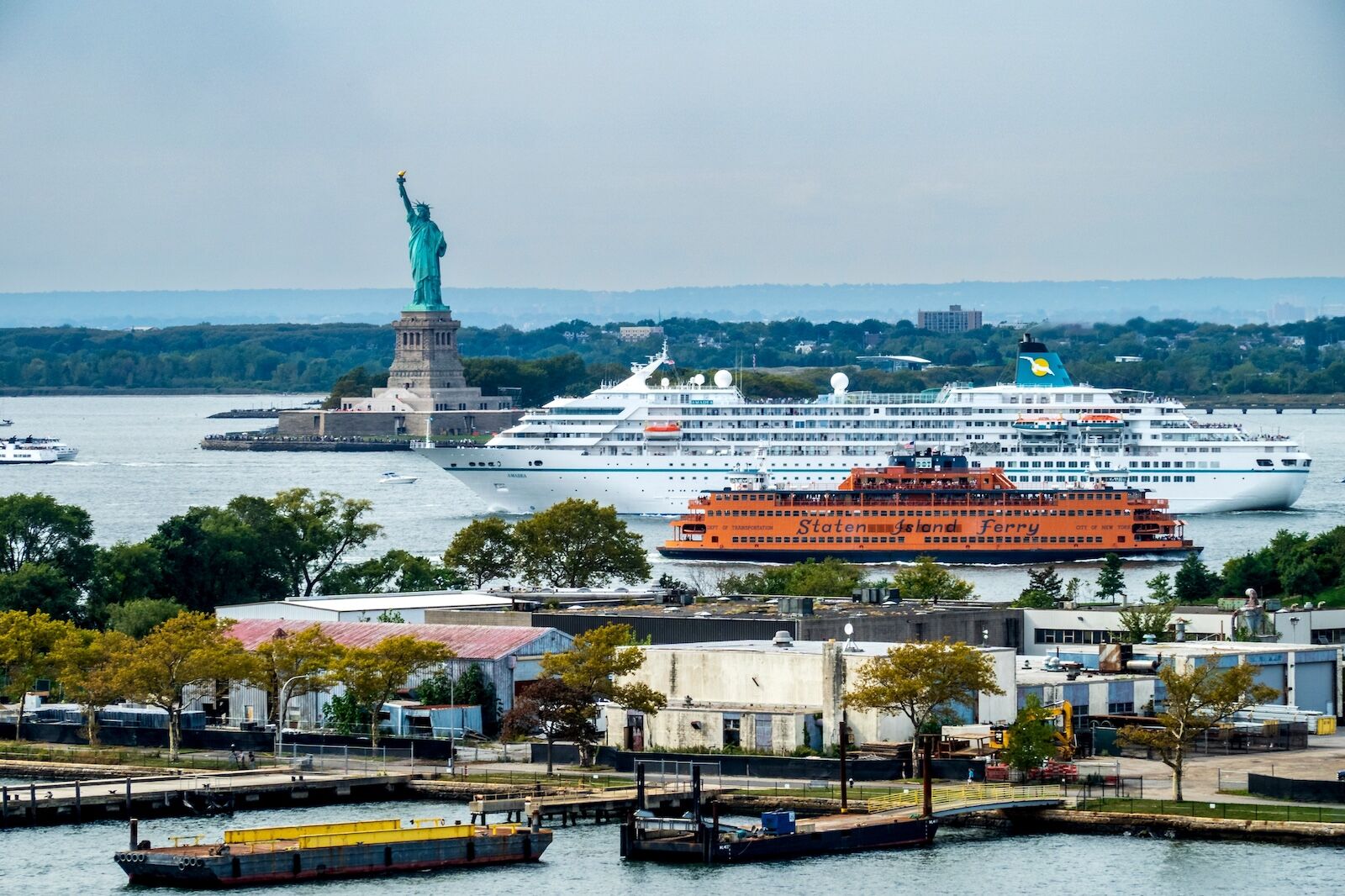
Cruise lines are subject to the same rules. Photo: Brian Logan Photography/Shutterstock
The term “cabotage” broadly refers to the transportation of goods or passengers between two places within one country by a company from another country. It comes from the French word caboter, translating roughly to “to sail along the coast.” In the 1500s, it was a word used to loosely refer to French protectionist laws that limited trade by sea to French companies. It eventually made it to the English language to refer to similar restrictions.
Versions apply across transportation industries, including shipping, trucking, cruising, and aviation. In the cruise industry, the similar US Passenger Vessel Services Act generally bans foreign-based cruise ships from transporting passengers directly between two US ports, which is why many US-based cruise itineraries include an international stop.
The first major federal aviation law, the Air Commerce Act of 1926, was signed into law in May 1926. It regulated, among other things, the ability of foreign aircraft to operate in the United States. It has a blunt restriction on commercial air travel: “no foreign aircraft shall engage in interstate or intrastate air commerce.”
That idea was kept when aviation was growing after WWII. In 1944, representatives from dozens of countries met in Chicago to establish shared rules for air travel, producing the “Convention on International Civil Aviation,” usually just called the Chicago Convention. It gives countries the right to ban foreign airlines from carrying passengers or cargo between points within its borders. It’s not a mandate, but it gave countries permission to institute bans if they wanted.
The US took advantage of the opportunity, and in 1958, it enacted it in that year’s Federal Aviation Act, and it’s still on the books. Other countries with similar laws on the books include Canada, Australia, India, China, Brazil, and nearly every country in the EU, though it operates as one EU block rather than on a country-by-country basis.
The case for cabotage
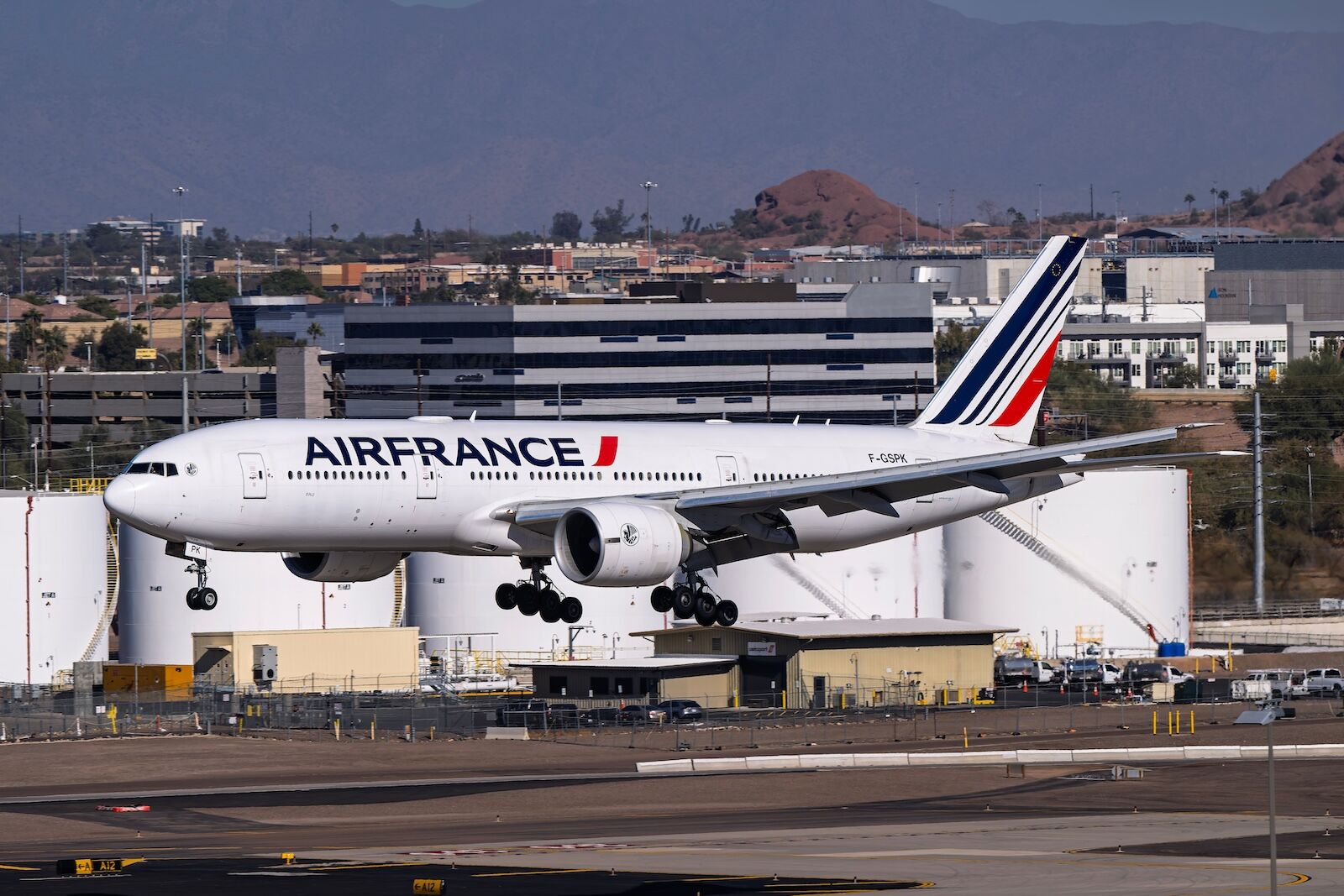
International airlines can fly to US airports, but not between them. Photo: Robin Guess/Shutterstock
Supporters of cabotage argue that airlines are too important to a country’s economy and security to treat like just another business. Commercial airlines also could potentially be called on to play a role in national defense, if needed. Under the Civil Reserve Air Fleet program, participating US carriers may be asked to make aircraft available to the Department of Defense (DOD) if the need for planes exceeds military availability. In return, they get favorable treatment when it comes to DOD contracts.
In congressional hearings, airlines have also argued that allowing foreign carriers to operate domestic routes would mean they could use workers governed by different labor and immigration rules, potentially taking jobs from Americans. Opening domestic routes to foreign airlines could allow carriers with different labor costs, government support, or regulatory structures to undercut US airline pricing, they say. In the US, commercial airlines employed more than 555,000 people as of July 2026, according to the US Department of Transportation (DOT).
The case against cabotage
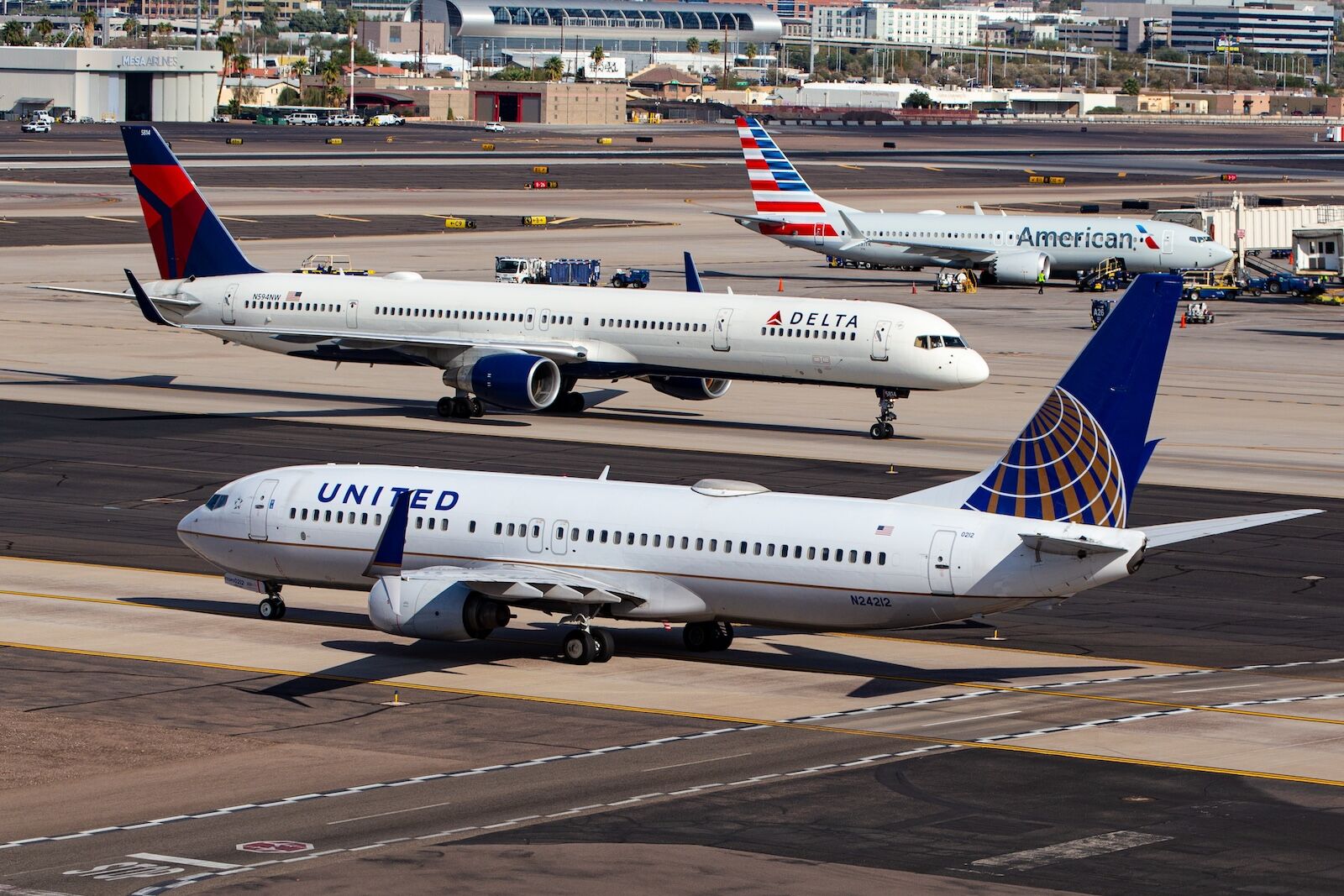
In the US, four major airlines control more than 75 percent of domestic travel. Photo: Wenjie Zheng/Shutterstock
Critics have a fairly basic argument: whatever other benefits cabotage provides, it also prevents some of the world’s biggest airlines from even attempting to compete for US domestic passengers.
Cabotage didn’t create the highly concentrated US airline market alone. That’s due to decades of mergers, bankruptcies, route changes, government interventions, and business decisions that have led to only four major airlines (United, Delta, American, and Southwest) having a combined market share of more than 75 percent. That situation was created between 2008 and 2013, according to a 2026 report from the non-partisan Government Accountability Office, when eight major airlines merged to become today’s “Big Four.”
Critics say the lack of competition could be making flying not just more expensive, but worse. That same government review reported that customers generally experienced “higher fares and lower service quality” on routes where mergers had reduced options, and six of the seven studies cited found that service quality both declined when a competitor disappeared and improved when a new one began flying the route. One study cited in the report found an alarming correlation: when the number of airlines flying a route drops from three to two, average delays increased by 25 percent and the cancellation rate increased by seven percent. In 2024, the Justice Department wrote in a news release that airline competition produces “lower airfare and higher quality.”
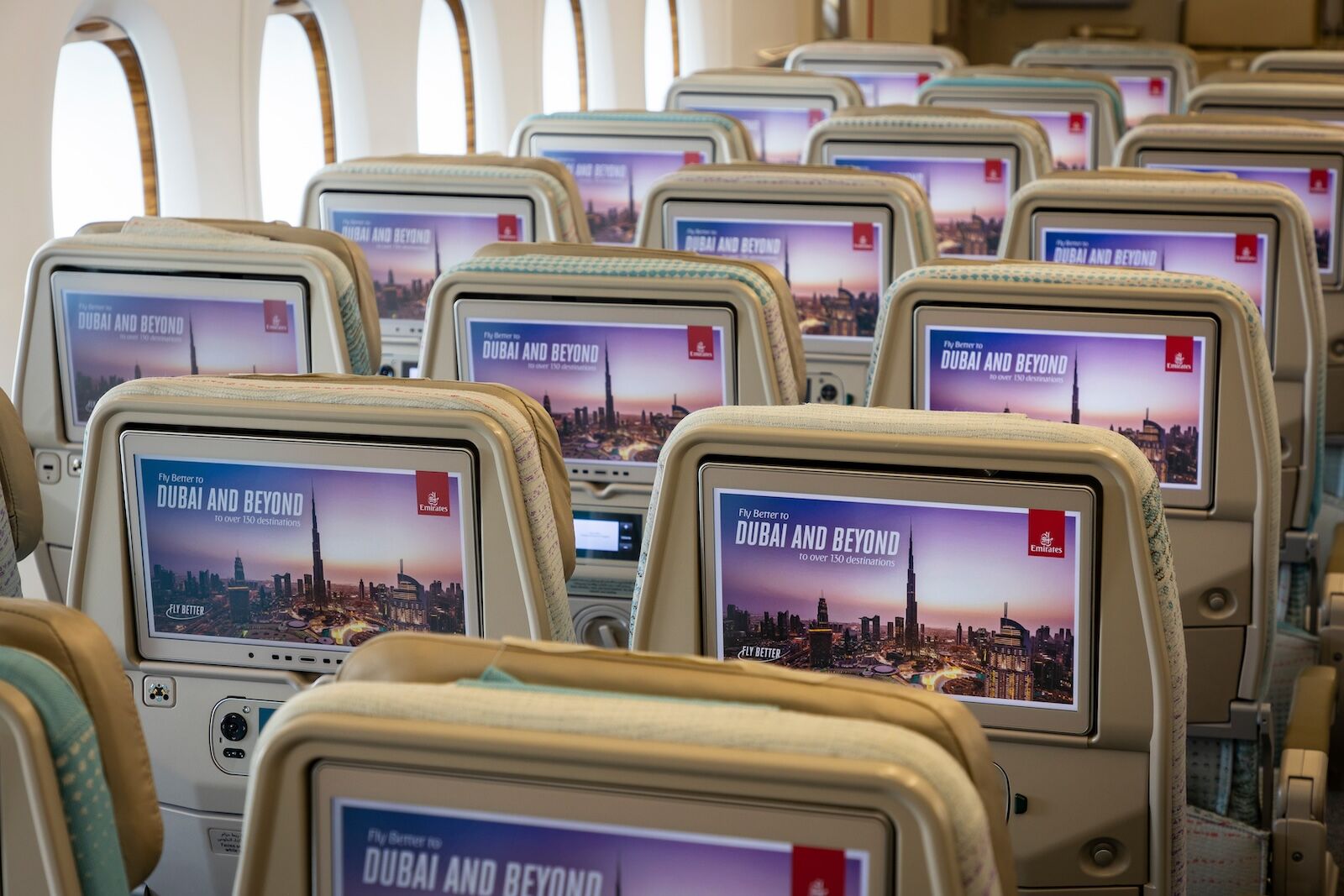
International airlines regularly outrank all US carriers on global airline satisfaction surveys. Photo: Photofex_AUT/Shutterstock
The generally poor reputation of major American carriers compared to the rest of the world is evident in public sentiment. In the 2025 Skytrax World Airline Awards, based on a large global passenger survey from more than 100 countries, no US-based airline made the top 20. The top 10 included Qatar Airways, Singapore Airlines, Cathay Pacific, Emirates, ANA, Turkish Airlines, Korean Air, Air France, Japan Airlines, and Hainan Airlines. The situation was just as bad in 2024 and previous years. The top 10 all come from countries that, for whatever reason, have more airlines regularly flying in and out of their main airports. Istanbul Airport is serviced by 116 airlines, Hong Kong is serviced by about 140 airlines, about 106 fly to Dubai, and Paris’ Charles de Gaulle airport works with just over 100 airlines.
For comparison, SFO in San Francisco is served by 57 airlines (only 12 domestic) while Chicago has 49 airlines. Other large airports, such as Dallas-Ft. Worth, have only 20 passenger airlines. Hartsfield–Jackson Atlanta International Airport, regularly rated as the busiest airport in the world, has only 28 total carriers.
Would changing cabotage laws help passengers?
Photo: Frame Stock Footage/Shutterstock
Cabotage is certainly not the sole reason for the current state of the airline industry in the US. Airline ratings are based on passenger opinions, and there’s no data or stat that can prove allowing foreign airlines to fly in the US would provide better service or lower prices. But critics see a protected market that could use more competition in order to improve the experience for domestic flyers. Research by economist Daniel Greenfield of the Federal Trade Commission’s Bureau of Economics found that “competition improves on-time performances,” and a 2008 study from multiple universities found that airlines are likely to “increase service quality” under more competitive conditions, noting that even the possibility of increased competition can improve service levels.
For travelers, the impact of cabotage is mostly invisible. You won’t find anything about it listed on the fine print of your ticket. But it could help explain why the same airlines keep coming up over and over on most flight searches — and why the majority of flyers don’t rate the “Big Four” US airlines very highly, especially compared to other major international carriers. 