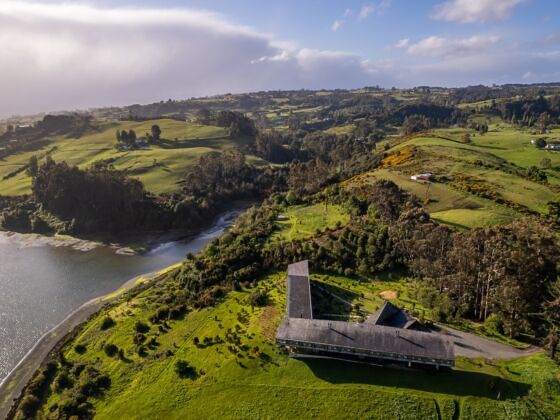
When Chiloé cast its spell on me two years ago, I promised myself I’d return to Chile’s enchanted island. Home for the week this time was Refugia Chiloé, a 24-room boutique hotel overlooking the Pullao Bay, where dolphins make almost daily appearances. After operating under Chile’s Tierra Hotel group for most of its tenure, 2025 saw the property revert to its original name and resume ownership under the Purcell family. This all-inclusive hotel, with rooms from about $514 per night, immerses travelers in the island’s beauty spots, cultural heritage, and folklore. The architecture, inspired by Castro’s palafitos, stilt homes primarily inhabited by fishermen for their ease of access to the water, blends in seamlessly with the natural environment. Chiloé’s mythological beings are depicted in canvases by Justin Graham, and a well-stocked library informs guests about Chilote history. Ten hectares of land and seashore are crossed with walking trails for guests to roam freely, keeping one eye out for the axe-wielding seducer El Trauco and the ghost ship, Caleuche.
Explore Chiloé, Chile by Horse, Boat, and Forest Trail From This Secluded Island Lodge
We hope you love Refugia Chiloé! Just so you know, Matador may collect a small commission from the links on this page if you decide to book a stay. Listed prices are accurate as of the time of publication.
All-inclusive stays at Refugia Chiloé
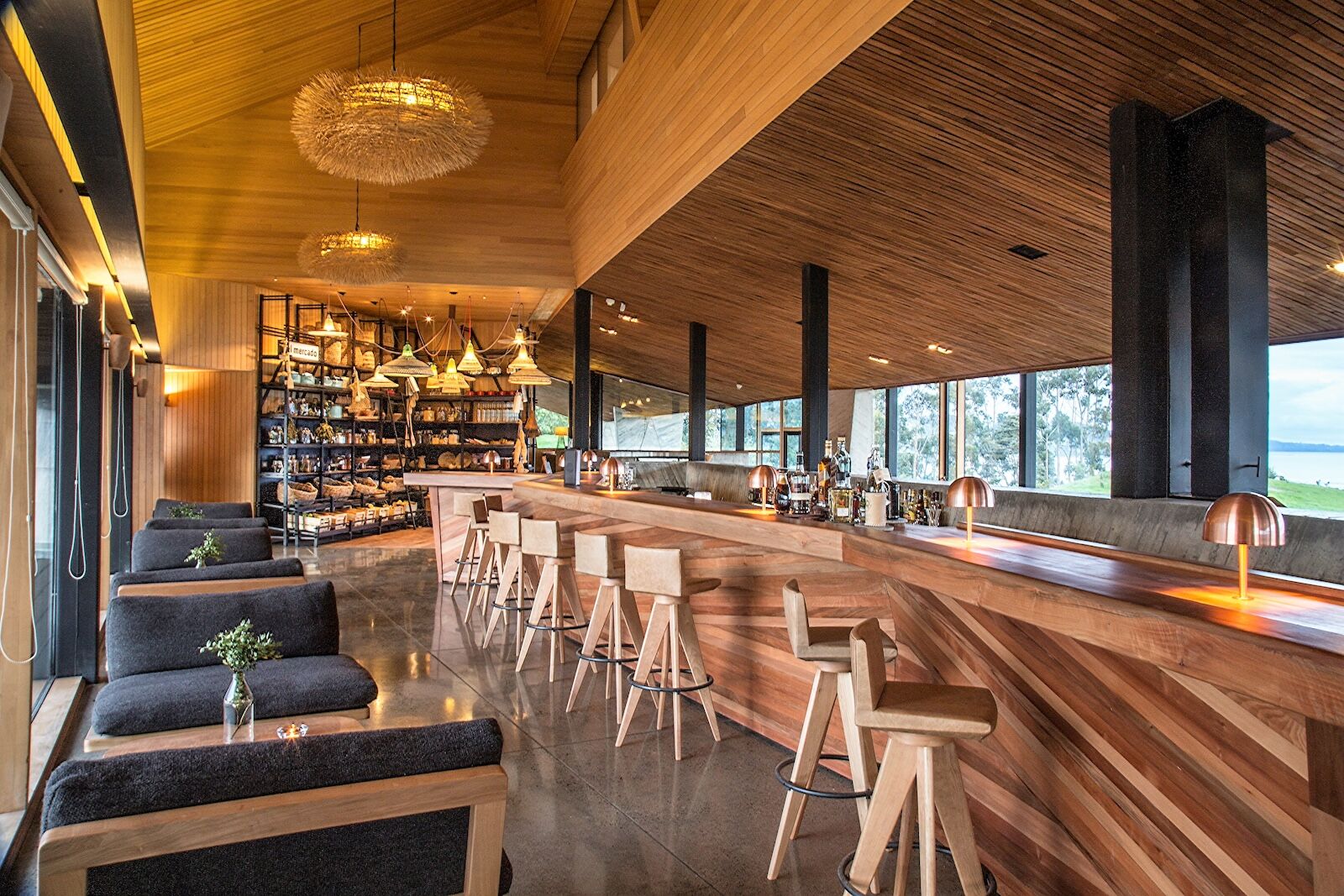
Photo: Refugia Chiloé
Jet-black skies and absolute privacy, excluding the occasional winged visitor peering into my room, meant I never closed my blinds. Each morning started with a nudge from first light, followed by a light sea breeze wafting through the open window and the squawk of seabirds. Clad with island timber and woven rugs, my room felt more like a log cabin, with the pillowy bed tempting me to skip breakfast. Returning from a day’s expedition muddy and salty, I’d dive into the freestanding tub and catch the final rays over the tidal flats while sipping coffee from the French press.
The serenity felt at Refugia Chiloé reflects the island’s soul. As the guides who showed me around were eager to express, Chile’s second-largest island is a place of peace. Although part of Chilean Patagonia, hikes lack the intensity (and crowds) of mainland parks and the temperate climate is more hospitable than the parched Atacama Desert. Come rain or shine, all outdoor activities run, which is how I found myself saddling up for “the real Chiloé experience.” As Cerezo waded through the shore, unfazed by the drizzle, my guide joked that it takes more than a spot of rain to keep Chilote farmers and fishermen from doing what needs to be done. Back at the stables, I settled down to sip stoveside mate (a herbal infusion) with René, who has served as the Baquedano (horse expert) since the hotel opened and has ridden since before he could walk.
Speaking of walking, the hotel offers five mild to moderate excursions through the island’s forests and marshes. I opted for the Tepuhueico Park’s Tricolor, or Sendero del Tiempo, which ducks into Valdivian rainforests, traverses dunes, and scales the nalca-streaked cliffs before descending to the Muelle del Tiempo (Pier of Time) — one of three installations by the artist Marcelo Orellana Rivero. After enthusing over Chilote wildlife, our driver (a wildlife photographer) proposed a detour for the ride back, in the hope of seeing a pudú, the world’s smallest deer. It seems wishes do come true in Chiloe; after a first fleeting glimpse, we crossed paths with a second pudú and its fawn, both of whom were so deeply consumed with munching on nalca (giant Chilean rhubarb) that we were practically in touching distance.
The Willichue: Exploring Chiloé by boat
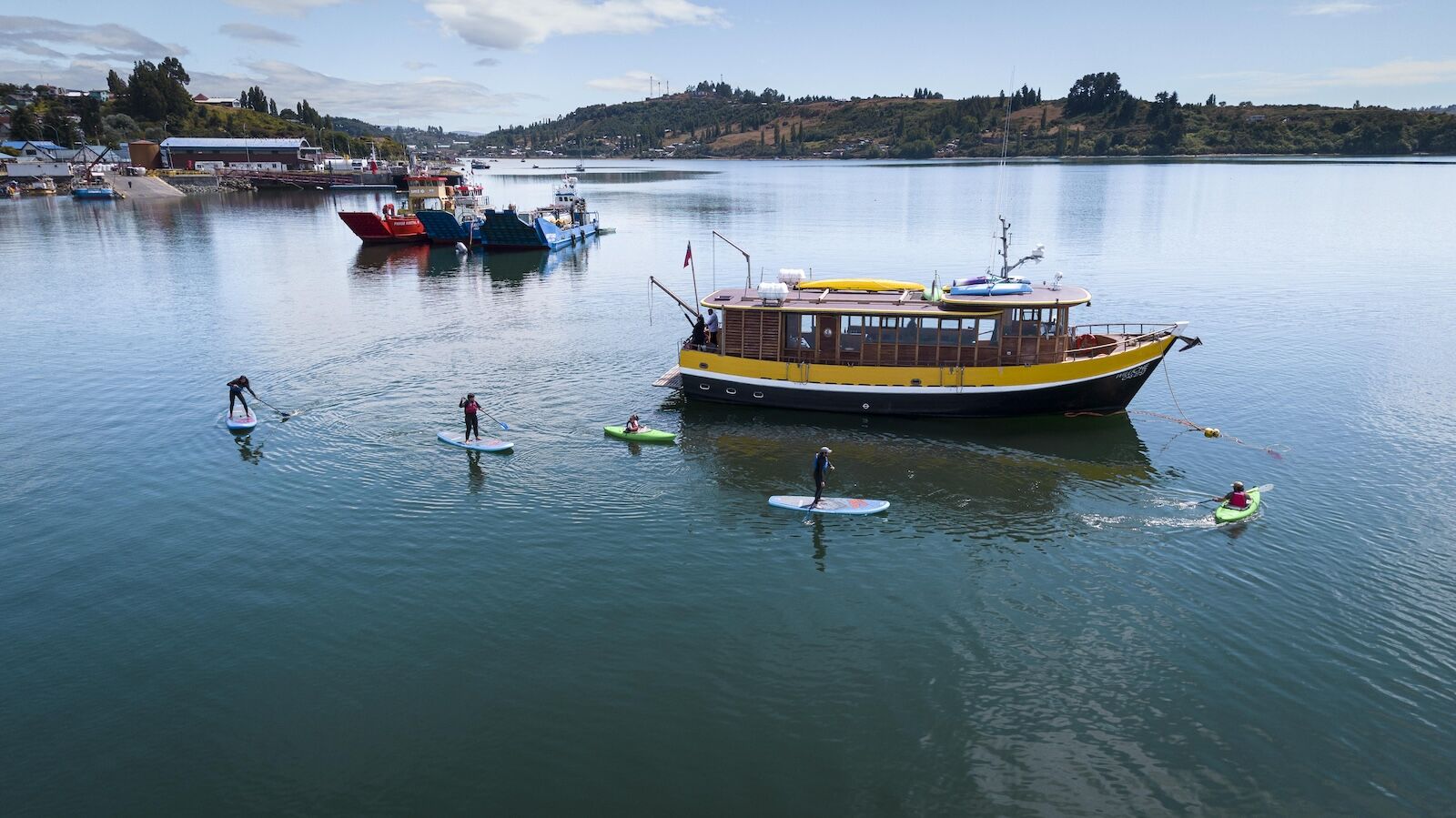
Photo: Refugia Chiloé
Continuing my lucky streak, the sunniest day of my stay coincided with the weekly full-day sailing of the hotel’s private boat, the Willichue. Comfort-wise, this wooden vessel is on par with the hotel, with an assortment of cozy throws and superb food from the onboard chef. Escorted out of the bay by the resident dolphins, we sped past a trio of Magellanic penguins and sea lions dozing on buoys before calling at the island of Chelin to visit one of Chiloé’s 16 UNESCO churches. After a glass of wine back onboard, the boat docked at Quehui, where we chose from kayaking, paddleboarding, and Zodiac safaris. A polar plunge from the top deck is optional.
Refugia Chiloé also operates a half-day cruise once a week. I’d recommend coordinating your stay around either of these outings. With tourism in Chiloé being less developed than mainland hotspots, there are few sailing options, and it’s a way to see hidden parts of the island inaccessible by road — and scout for marine creatures.
Sea-to-spoon, farm-to-fork: The art of Chilote cuisine
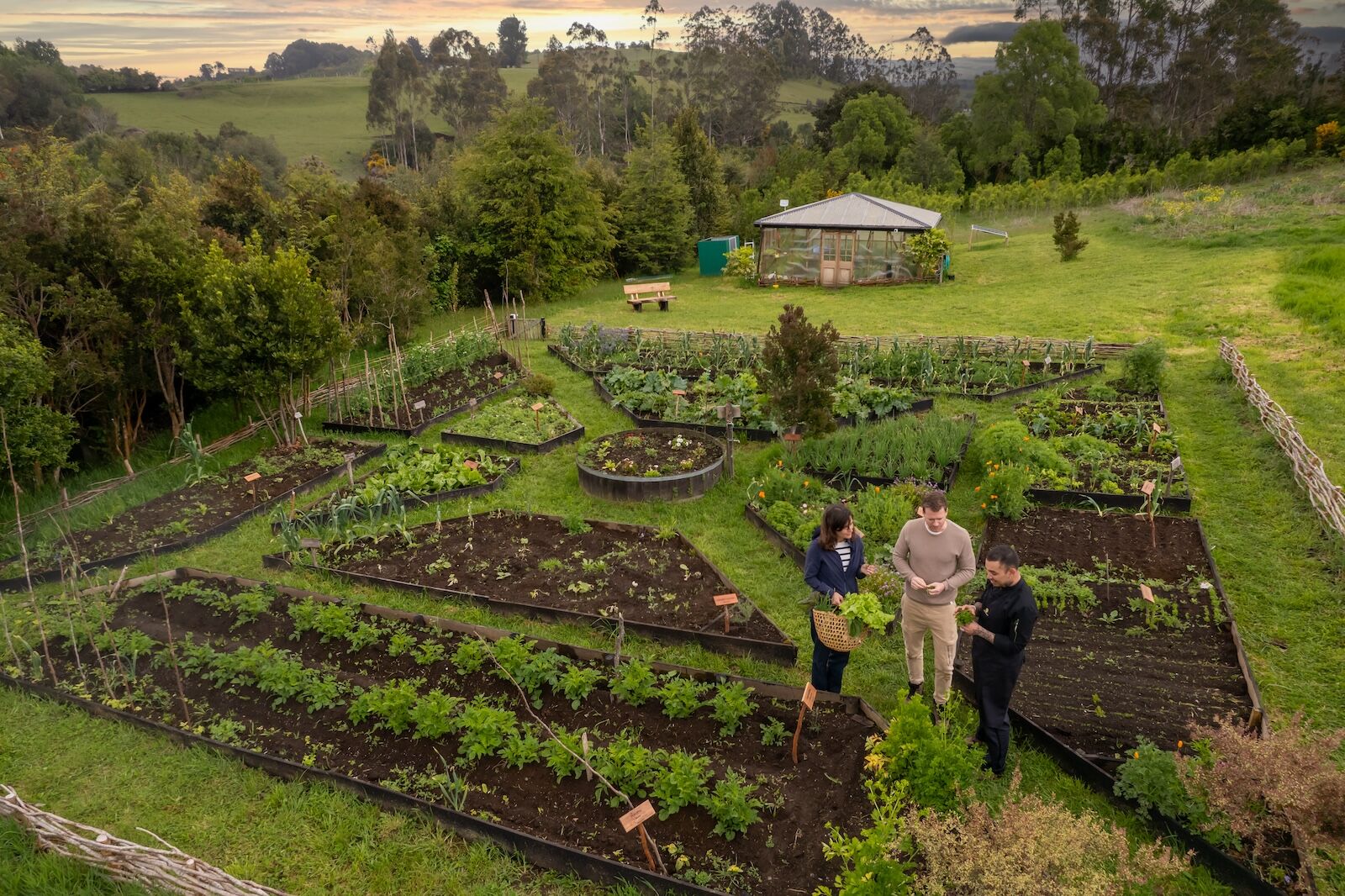
Photo: Refugia Chiloé
It takes skill to mollify an adventurer’s appetite without sacrificing the elegance of fine dining, but Francisco Castañeda pulls it off. The artistry of his dishes urged me to take my time, noticing the sweet tartness of murta berries in meat dressings and the hint of Chilote black garlic in a chocolate mousse. After trying his cochayuyo (Chilean seaweed) ceviche, I fear my go-to seafood restaurants will no longer hit the mark. Pre and post-dinner cocktails are designed to be consumed slowly in front of one of the hotel’s fireplaces. The Chiloé Sour, infused with island honey, and the Chiloé Negroni, substituting gin with island-made vodka, were my nightcaps.
Much of the greens served at Refugia Chiloé are sourced from the property garden, with the daily harvest proudly displayed in the bar. Seaweed and sea asparagus are scooped from the shore, while anything else on the menu comes from island fishers, farmers, and growers. The weekly curanto celebration is an opportunity to sample the island’s bounty in its signature dish — a medley of potatoes, meat, and shellfish cooked on rocks heated in an earthpit topped with nalca leaves — and mingle with guests and staff over cocktails. To further educate travelers on Chilote agricultural and gastronomy, the hotel facilitates cultural exchanges with local farmers.
Even without the curanto, Refugia Chiloé’s sociable atmosphere stood out during my stay. We guests would debrief on our day at the spa, daring each other to jump between the heated indoor and scenic outdoor pools. My fellow solo travelers and I were often beckoned over to dine with family groups, and staff were always keen to hear our thoughts and share their own anecdotes from life in Chiloé.
Getting to Refugia Chiloé
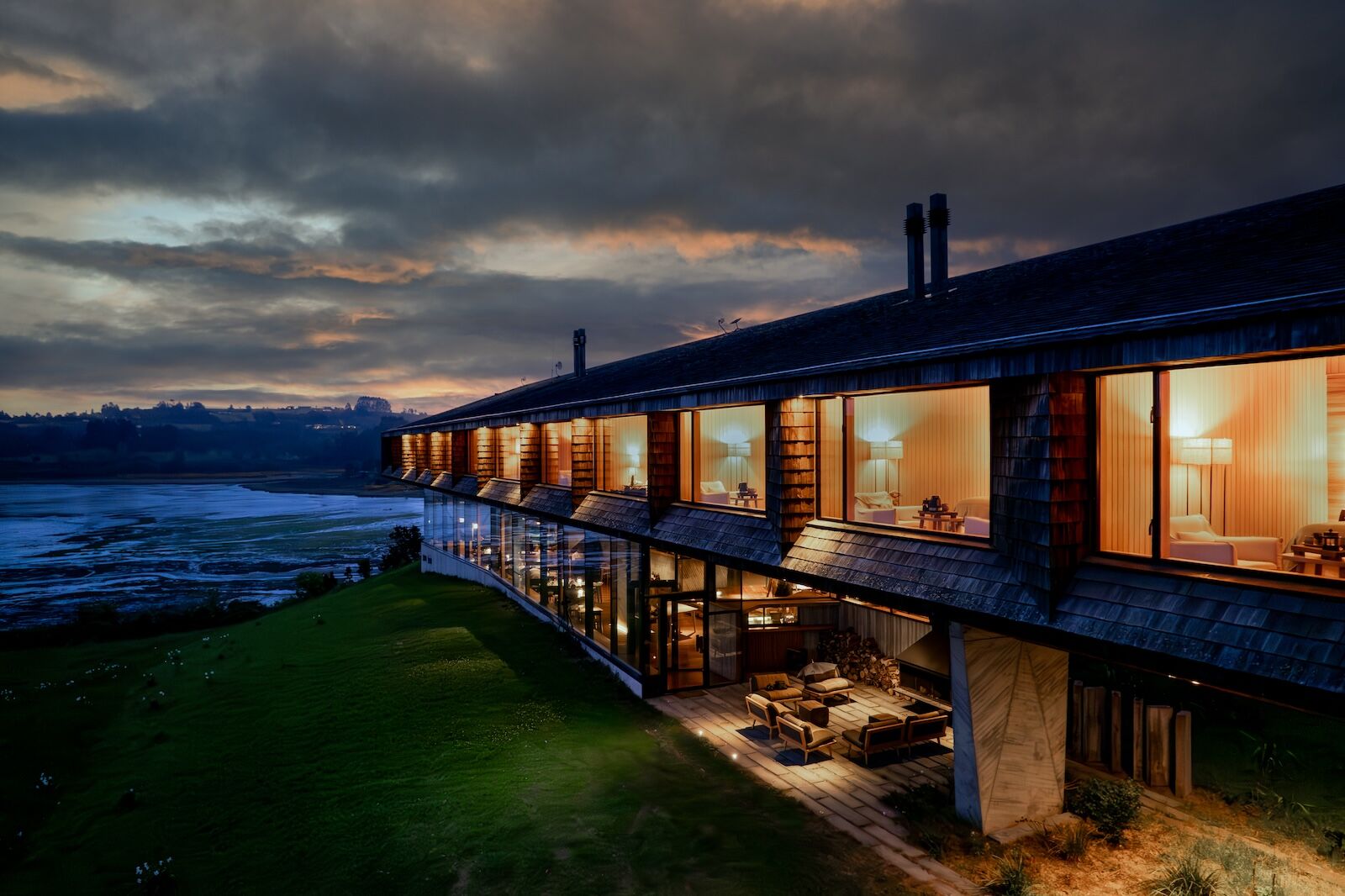
Photo: Refugia Chiloé
A two-hour flight from Santiago de Chile drops you at Castro-Dalcahue’s Mocopulli Airport, where you’ll be met by one of Refugia Chiloé’s drivers. The hotel also arranges transfers from Puerto Montt’s El Tepual Airport on the mainland. As Refugia Chiloé is an all-inclusive retreat, there is no need to rent a vehicle — the excursions package is more than comprehensive. Two “experience managers” are on hand to design a personalised itinerary upon arrival. Refugia Chiloé is open seasonally between October and the end of May. The hotel closes for winter, but if they ever decide to open, I’d be first in line. 