11 Meals Worth Traveling For in 2026, According to Matador Editors
Life as a travel editor involves a lot of hurry just to end up waiting — for delayed flights, for missed deadlines, or for that perfect photo that ties an entire story together. Fortunately, no matter where we are in the world, an incredible meal is never far away. This year Matador editors visited more than 30 countries (we’re still waiting for Antarctica’s first Michelin Star) and made a point to eat adventurously in every destination. Of all the meals we tried, the below restaurants and dining experiences are the ones that stood out the most. For some you can simply walk in, sit down, and get to grubbin’, while others require booking out weeks or even months in advance, not to mention that long flight to get there. Whether near or far, at these establishments, that resy will be more than worth traveling — and waiting — for.
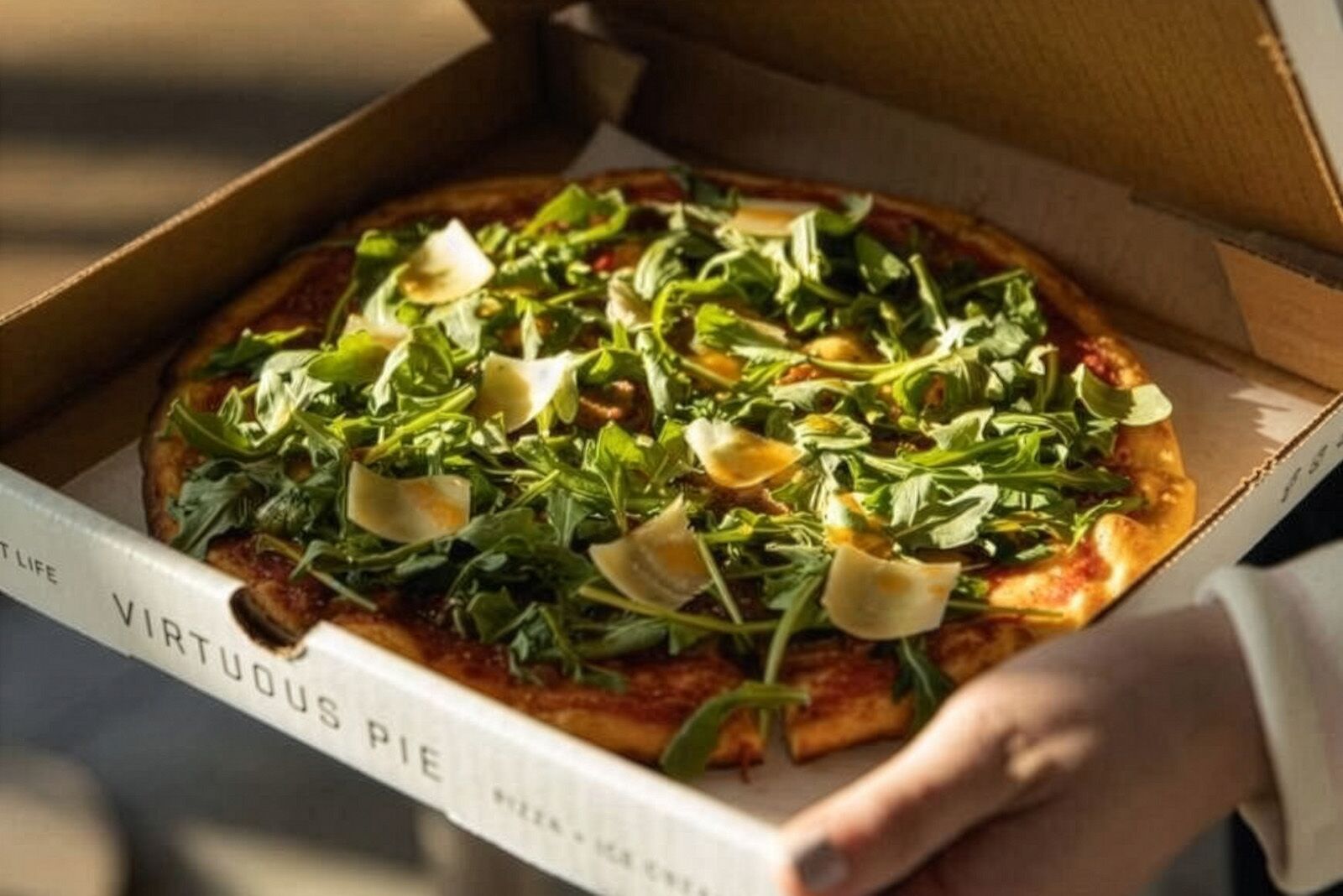
Photo: Virtuous Pie
Virtuous Pie – British Columbia
I loved dining at Virtuous Pie because the experience directly confronted me on my own preconceptions. I dined at the Victoria location, unfortunately now shuttered, but travelers to British Columbia can still snag a pie at the Vancouver location. I’m mostly plant-based, but not vegan, and I’ve long been skeptical of vegan cheese. The pizza at Virtuous Pie, started by vegan chef Rob Milne and his sons Ben and Alex, was so good I lost all hesitation on the first bite. I had the Stranger Wings pie, a pizza-fied version of cauliflower wings, and it is the single best dish I ate in all of 2025. The pizzeria itself is casual, with an open kitchen and a house brew – the Virtuous Lager – that was equally impressive. The casual atmosphere makes the food that much more memorable, as it doesn’t require shelling out big bucks or walking into an air of pretension to enjoy a great, low-impact meal with friends.
This experience, combined with dinner at End Dive the night before, convinced me that Victoria is the most underrated food city in North America for those who actually care about the environmental impact of what they eat. And that’s before I even mention Virtuous Pie’s ice cream sandwich – a meal-sized indulgence worth a trip in itself. – Tim Wenger, transactional content editor
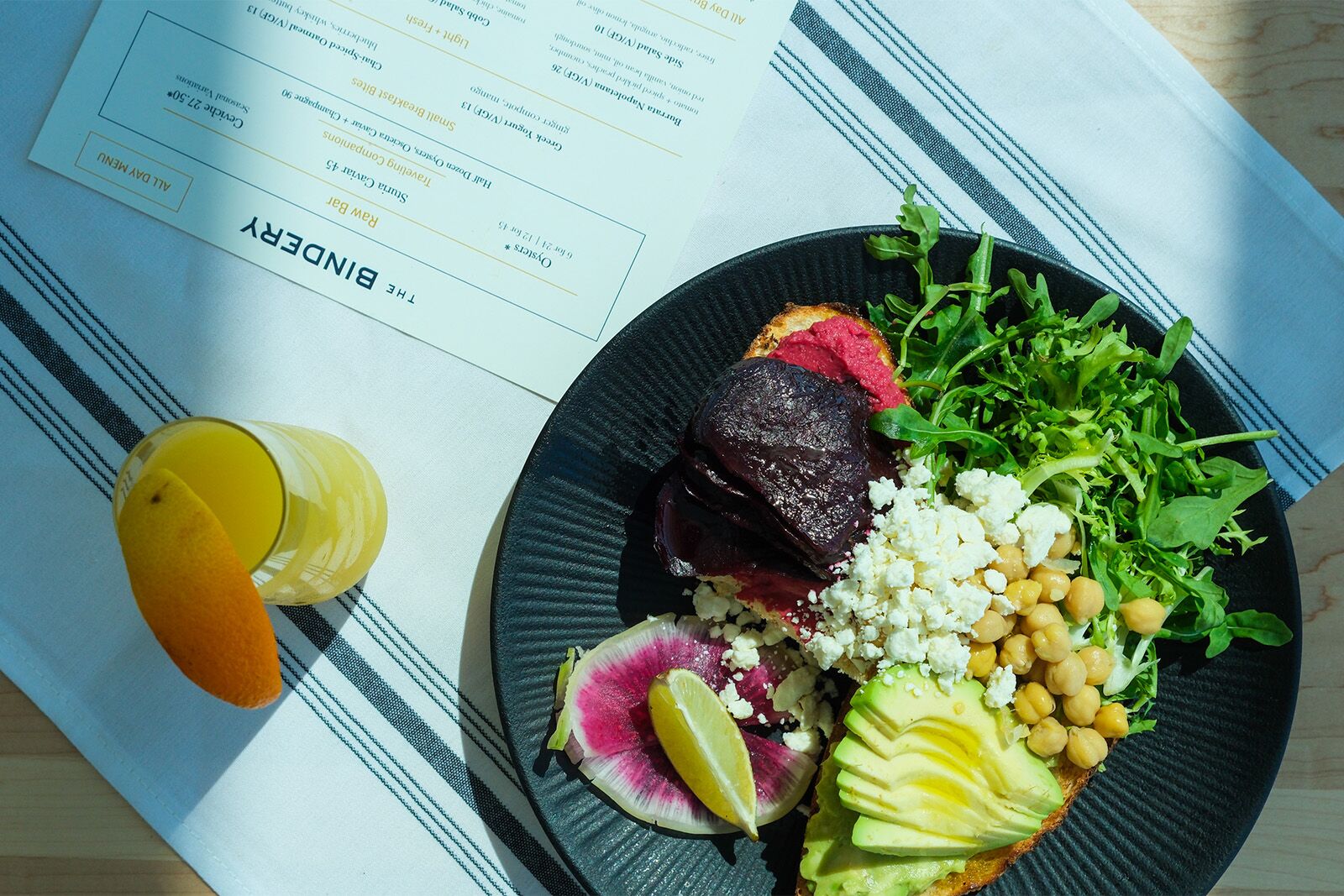
Photo: The Bindery
The Bindery at Terminal A – Denver International Airport
It’s a rare day that an airport meal is the best of a trip, but that happened to me in August on a layover in Denver. I dined at The Bindery, the recently-opened all-day restaurant from chef/owner Linda Hampsten Fox following the success of her like-named restaurant and market location in Denver’s LoHi neighborhood. The menu and experience stood out to me not simply because it easily triumphed over the sub-par buffet in the United lounge down concourse, but because it provided a new definition to the term “New American” – one that represents America at its best.
That’s because it’s diverse – a fresh raw bar serves oysters flown in from the coast, the restaurant’s iconic fries are tossed in shawarma seasoning, and Italian-style pastas are handmade by The Bindery’s kitchen staff. Even the Caesar Salad stood out, accompanied by anchovy-topped, fresh-baked bread and dressed perfectly light so the crispness of the romaine shone through the dish. In a nod to both hurried travelers and the chef’s city location that features a bakery and market, The Bindery at DIA also offers a grab-and-go menu – but sitting over a cocktail and a fine meal tops joining the gate lice crew, any day. – TW
Photos: Eric Tra/Willmott’s Ghost
Willmott’s Ghost – Seattle, Washington
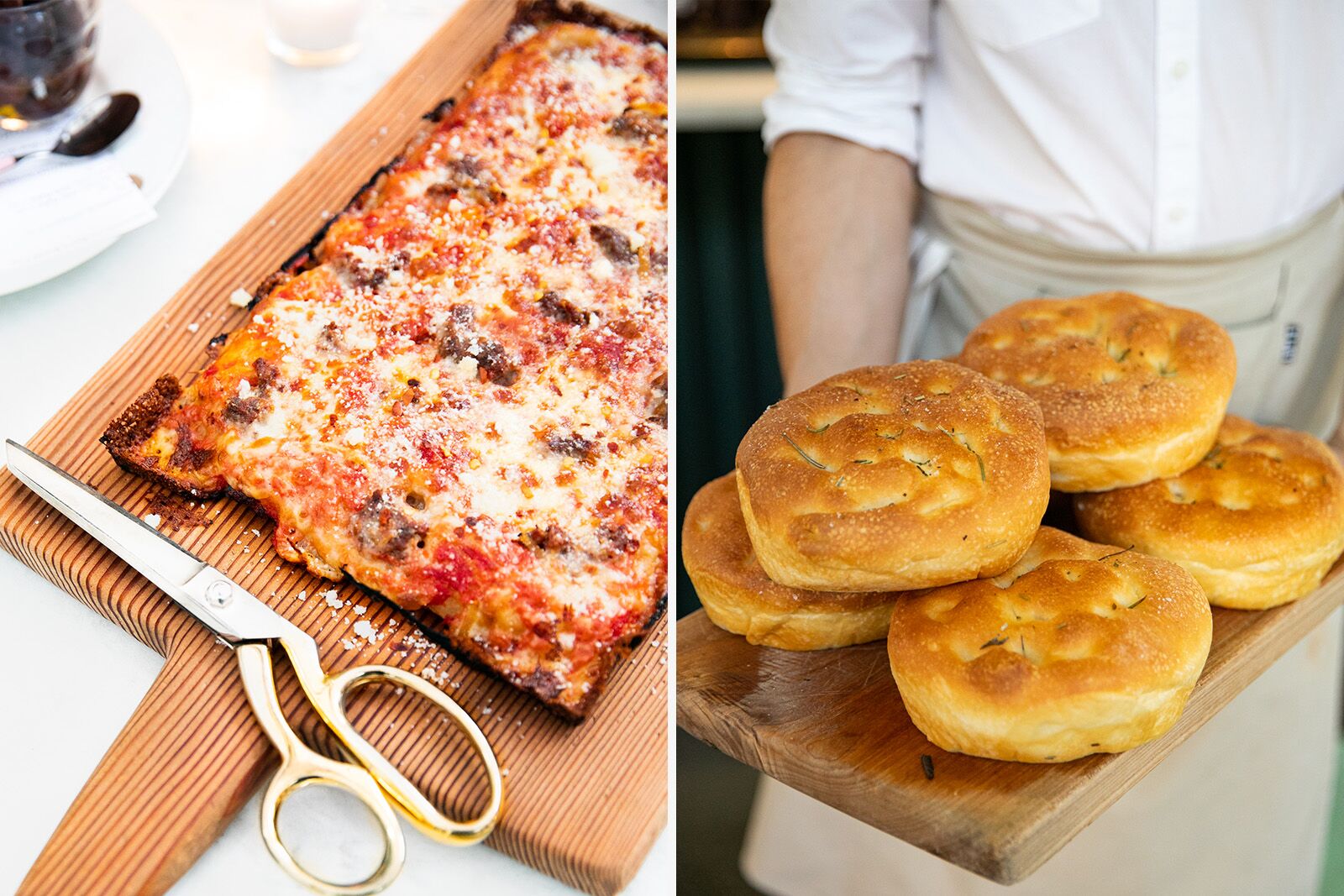
If the setting of Willmott’s Ghost looks familiar, that’s because of its famous enclave – the acclaimed Italian fine dining outpost occupies part of the ground level in the Amazon Spheres complex in downtown Seattle. Chef Renee Erickson spins Italian staples like pizza and burrata into shareable dishes that pass around the table with such fervor you’d better grab your fill when a plate reaches you because it’ll be long gone before it comes back around. The housemade sourdough is the city’s best, and the dining room harnesses the futuro-tech wizardry the complex represents to create a fun, hip, and unapologetically cool vibe. The staff follows suit – your server will be a close friend by the end of the meal. Erickson herself is a James Beard Award–winning chef and co-owner of Seattle’s Sea Creatures group (behind spots like The Walrus and the Carpenter and Bateau), who began her career in art, stumbled into restaurant work, and eventually created her now-iconic restaurants around innovative plates, global travel, and inspirational design – a fitting endpoint to a day spent exploring the Emerald City. – TW
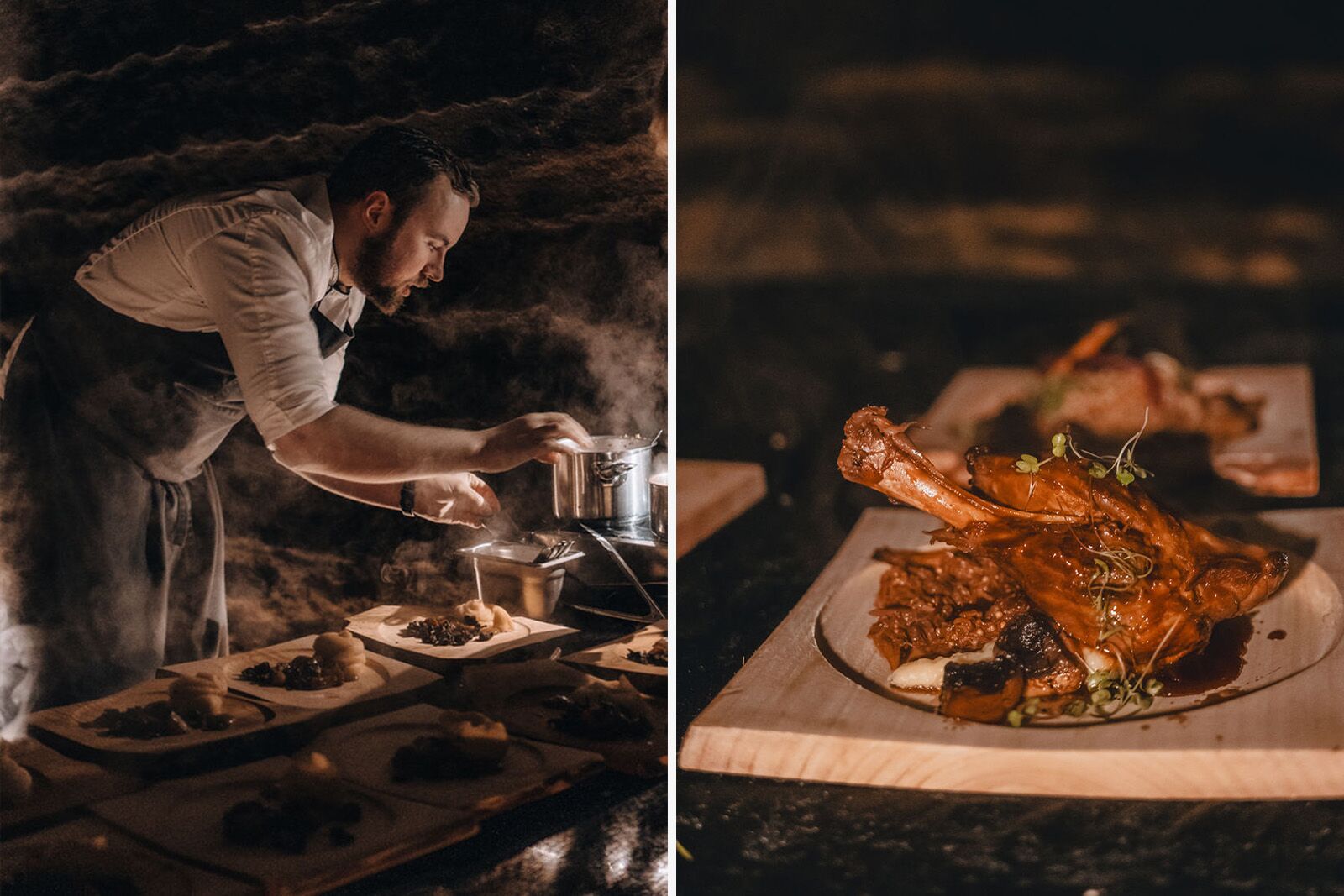
Photos: Caves of Hella
Iceland Viking Dinner
The Caves of Hella are a cluster of ancient man-made sandstone caves on a farm in iceland, about an hour from Reykjavik, in the town of Hella. What everyone agrees on is that they’re Iceland’s oldest archaeological remains still standing – but everything beyond that is a mystery. There are about 12 known caves connected by short tunnels, but their origin is a mystery. Some people suggest they pre-date Viking settlements entirely and were created by early Celtic monks. Further adding to the mystery are the vaulted chambers, carved rows of seats, and crosses and messages from throughout the centuries carved into the walls.
But aside from the archaeological mysteries the caves holds, the most exciting part of the experience for tourists is that with a little planning, you can have a Viking dinner in the cave, complete with reindeer fur on the seats, live traditional music, and mead (a.k.a.,, your choice of beers and wines) served from wooden steins. It’s a three-hour experience available only via nearby Hotel Ranga, which caters the experience (and is semi-famous for its aurora borealis wake-up calls). The multi-course meal is customizable but includes traditional Icelandic dishes like gravlax and skyr, and guests can even borrow traditional wool sweaters to stay cool inside the fascinating caves. Dinner also includes a private tour of the Caves of Hella, guided by hosts whose passion for the historical mystery will enthrall even the least archaeological-minded of guests. – Suzie Dundas, commissioning editor
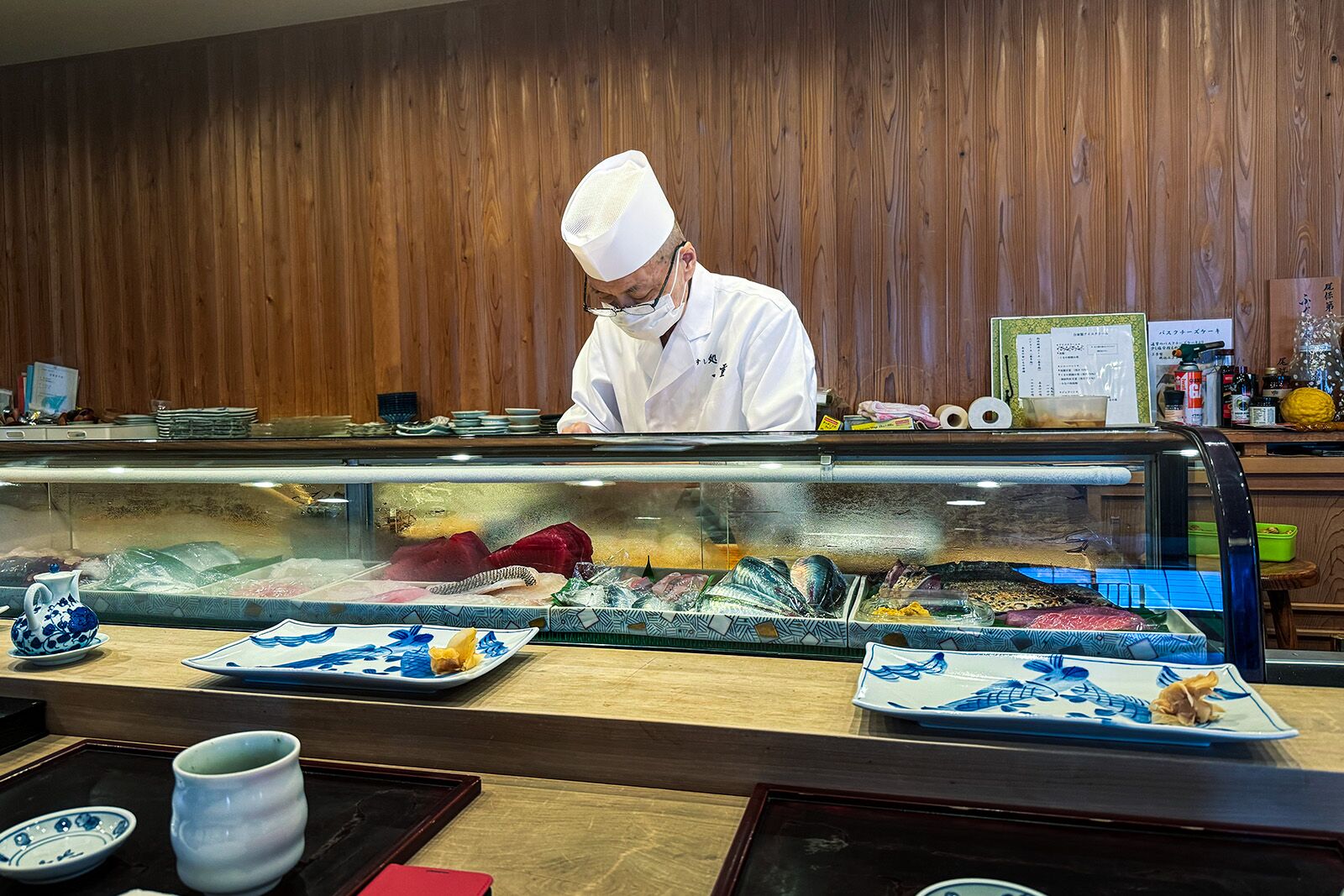
Photo: Kelsey Wilking
Sushi at Ichiju in Owase City, Japan
A humble coastal town, Owase City sits on the edge of the Pacific Ocean, which guarantees the seafood here is as fresh as it gets. Our group stopped here along the historic Kumano Kodo pilgrimage trail and sat down for lunch at Ichiju, a tiny, unpretentious restaurant tucked into an alleyway behind residential homes. It is the kind of place you could easily miss. Inside, it is little more than a single sushi bar and a small room reserved for special occasions.
Our chef, Nakayama-san, has been making sushi for over 50 years. Before opening his own restaurant nearly three decades ago, he spent 15 years studying the craft. It is the kind of long and meticulous apprenticeship that defines Japan’s culinary tradition. This is the Japan people mean when they speak of craftsmen dedicating their lives to a single skill. With the help of our translator, Kimi-san Kuribayashi, we settled in for a 10-piece sushi lunch, accompanied by a warm bowl of miso and a cup of green tea, and we began learning the story of this place.
Nakayama-san serves one piece at a time. According to him, sushi should never sit out, not even for a moment, because the flavor begins to change the second it is exposed to air. Each piece arrived with quiet explanation. He told us the name of the fish, whether it should be dipped in soy sauce or eaten as is, and whether to take it with rice or without. Yellowtail, red squid, sea snail, and other local catch followed one after another. Each piece was delicate, buttery, and melt-in-your-mouth perfect. The sea bream was my favorite, and I am still dreaming about it.
When I asked where the fish came from, he simply said it was fresh that morning from the local fishermen. And you could taste it. For someone from a landlocked state, that alone would be a delicacy. Prepared by a master, it became my favorite meal of the year without question. – Kelsey Wilking, newsletter hoss
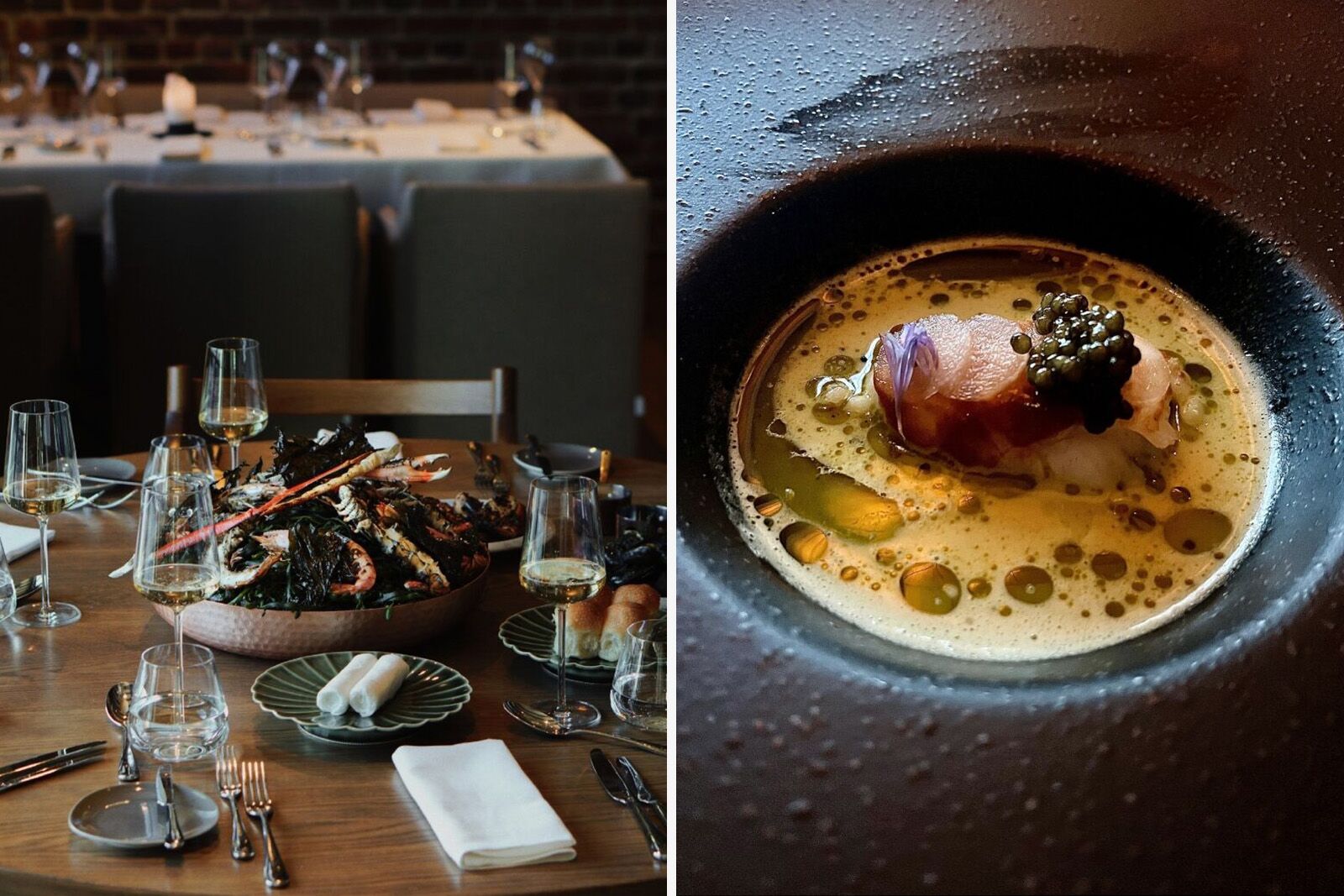
Photos: Katie Gavin
Sjøbua, Ålesund
On the last night of a food tour in Western Norway, we stayed in Ålesund and booked a table at Sjøbua, a restaurant tucked into the old fish-packing district along the Brosundet waterfront. You can still see the original structure of what was once a fish shed, with its heavy timber beams, wide-plank floors, and big windows looking out onto the water. But it has long since shrugged off its humble beginnings. Today, Sjøbua is considered among the best places to eat in the region and is one of the top seafood restaurants in Norway.
The menu shifts based on what’s coming in from the harbor and nearby producers. Most of the seafood is sourced along this stretch of coast, and the kitchen works with a small network of local suppliers. I started with grilled langoustine from Midsund, layered with fermented leek, tarragon, and Rossini caviar. For the main course, I chose halibut bathed in beurre blanc and served with roasted potatoes. Across the table, my friend ordered their lobster soup — a house staple that’s been on the menu for decades. I’m not usually a dessert person, but I couldn’t resist the poached pear wrapped in caramelized white chocolate. It was the most exquisite end to one of the best meals I’ve had in Scandinavia. – Katie Gavin, editor
Photos: Katie Gavin
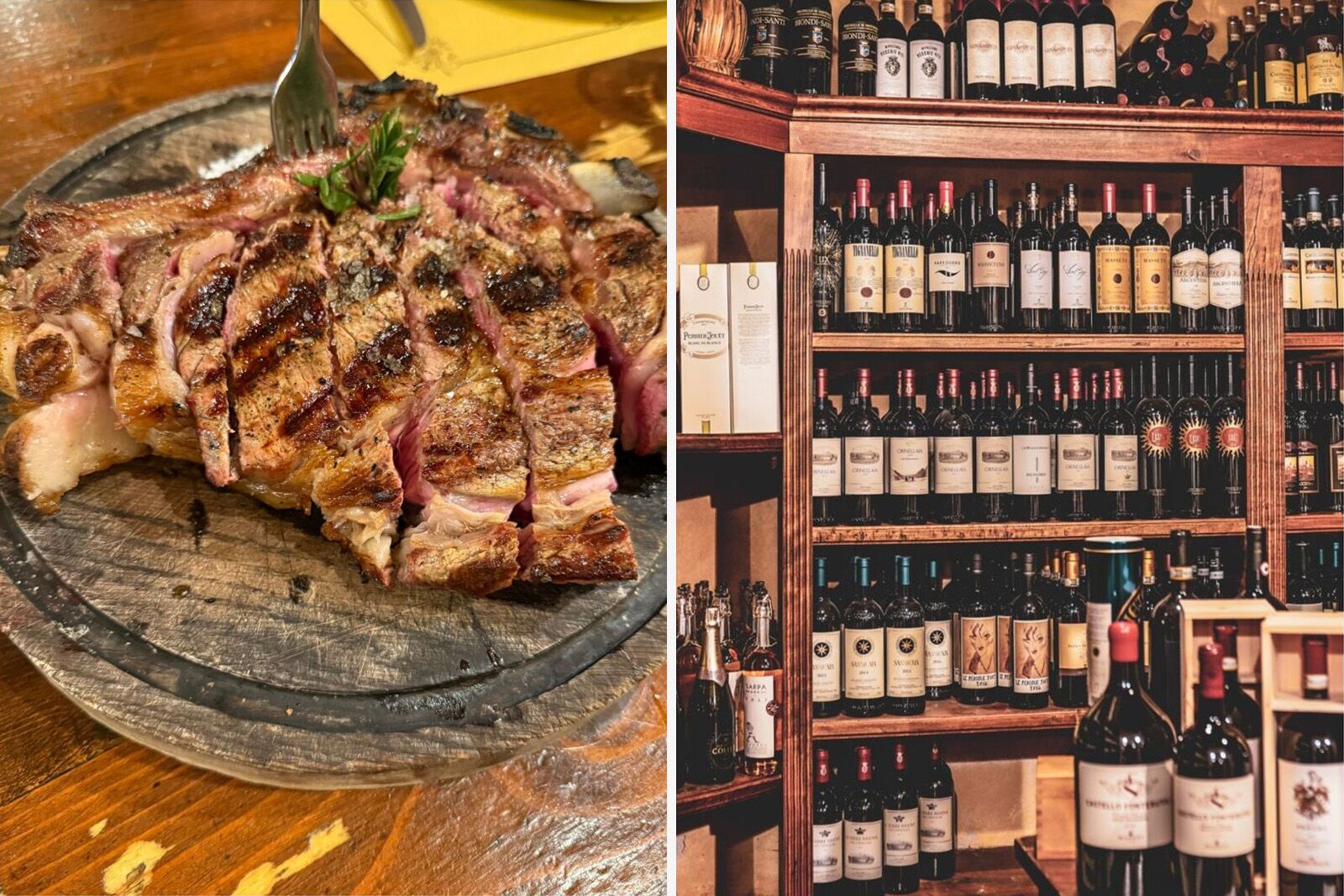
Antico Ristoro di’ Cambi, Florence
Fewer things in this world make me happier than a deep-fried zucchini flower stuffed with ricotta. Done well, it’s proof that Italian cookery will always dominate my death row menu. From what seems like an incredibly simple dish, it’s famously easy to plate a soggy mess. That is — unless you’re in Florence, sitting at Antico Ristoro di’ Cambi, where I had one of the best.
Here, the batter was delicate and whisper-thin, with an earthy sweetness of the flower and the salty cheese that held the structure. Located just beyond the old city walls in the San Frediano district, this long-standing neighborhood restaurant has been serving classic Tuscan fare since the 1950s. It’s also the table to book for a famous Florentine steak, which is a must for anyone who eats meat, and during mushroom season, for tagliatelle with porcini. The wine cellar is among the best-stocked in the city, with about a hundred Tuscan labels including Sassicaia, Ornellaia, and Tignanello, alongside decade-old vintages of Brunello di Montalcino. – KG
Photos: Birdy’s Dinner
Birdy’s Finer Diner – Moab, Utah
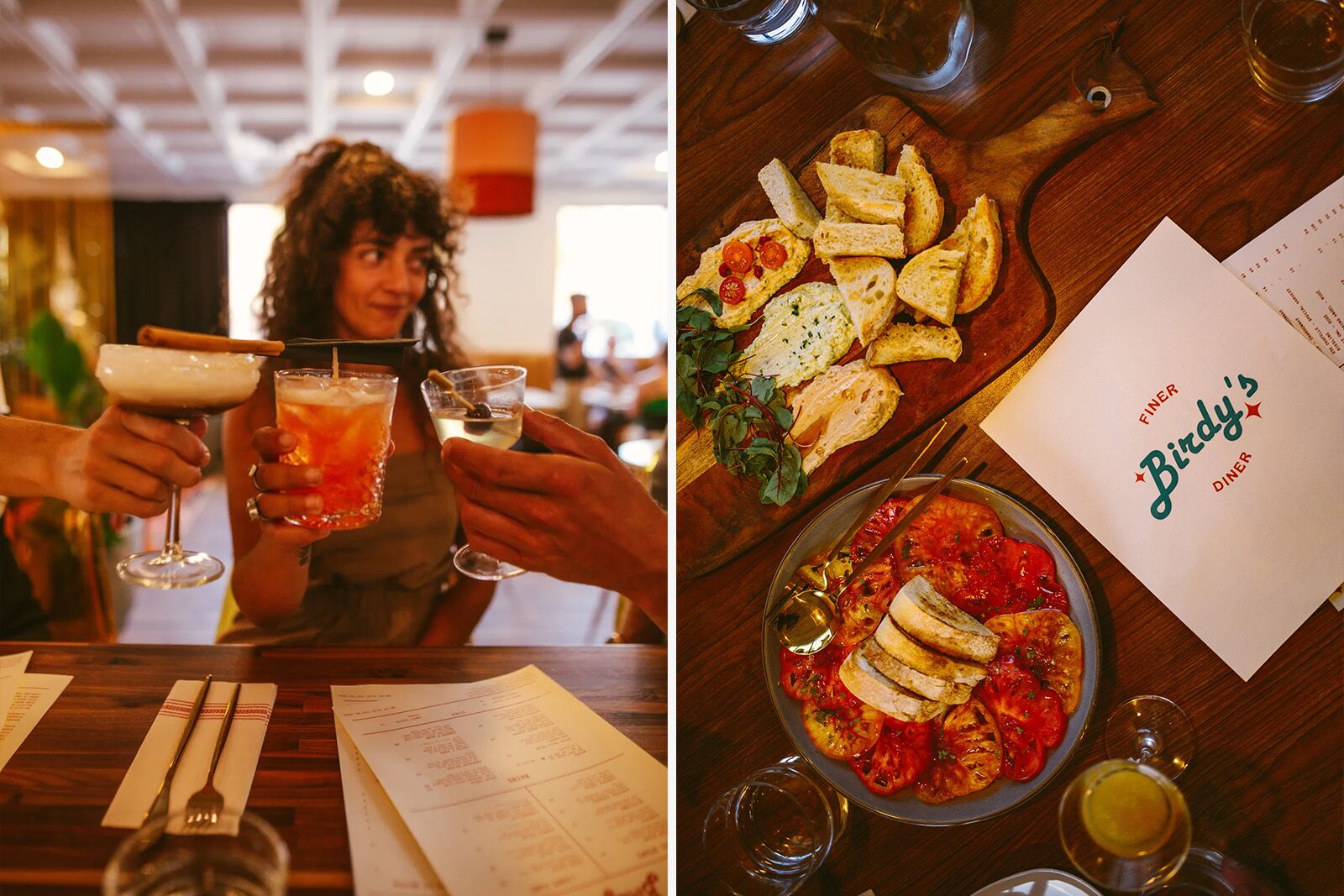
Birdy’s Finer Diner occupies the former site of a chain diner on the north side of a town still maintaining its soul amid cries of overtourism. This restaurant is proof that Moab – the real Moab, the place conservationists have flocked to since before Doc Sarvis made his first escape from Albuquerque, not the Moab where streets are named after his fellow Monkey Wrenchers – might just win the battle. The place is bursting with authenticity, from the staff to the cocktail menu.
Our waitress, Sierra, was the most personable I’ve encountered on the road this year. She recommended the mac and cheese for my daughter and sold me on the Gimlet, as well as the salmon, which was well-flavored with a hint of lemon. It’s unlikely she remembers the corner two-top occupied on an overcast autumn evening by a dad and his raucous four-year-old, but that little girl crushed her mac and cheese (not something that always happens) and remarked as we left, “I liked her dress, and that place is fun.” If she’s happy, I’m happy. – TW
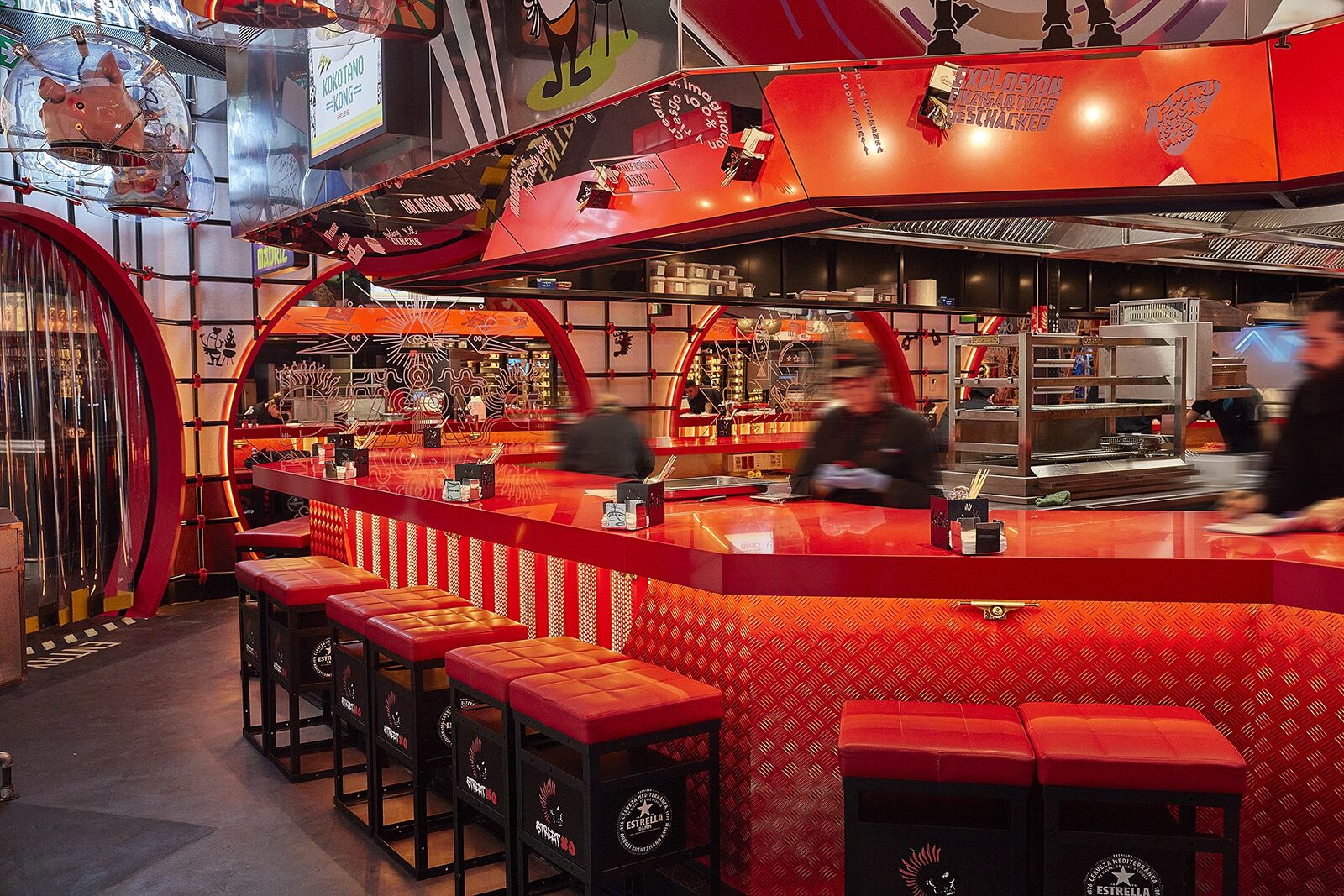
Photo: StreetXO
StreetXO – Madrid, Spain
Prior to arriving at StreetXO, I was told to expect a trendy scene and to show up well in advance of the restaurant’s 8 PM opening to get in line. I abided by these instructions, and was happy to find that rather than waiting on the bench out front of this in-mall restaurant I could wait at the bar over a cocktail. This cocktail, the Kotto Matcha Gin & TOnic, was served deconstructed and then, tea party style, put together right in front of me by the bartender, as the jealous drinkers around me looked on with their mouths watering. The drink was the best of my trip to Spain, and the meal that I’d come for followed suit.
The bar in the separate dining room fully encapsulates a large open kitchen, a team of a dozen or so chefs busily cranking out the tickets called by the expo chef at the helm. Effectively, each guest gets the pleasure of watching their dish be prepared in real time, as a playlist of eastern club tunes pumps through the restaurant. I ordered Bun Cha Dubai, a Middle Eastern take on the popular Vietnamese dish that was also served deconstructed (this time conglomerated by me) and the Chili Crab de Cocha Blanda. This dish was a highlight of my trip to a country famed for its food – it wasn’t tapas, by any means. Fried chili crab was served in a tomato sauce spiced with chipotle, sherry, and beurre blanc, and shallots, all atop a bed of fresh gnocchi. I’ve never had anything quite like this, and it is a dish I will remember for a long time.
The restaurant is set up to resemble an Asian street scene, hence the ability to watch the chefs in action – and the crowd of diners was just as excitable as you’d expect those sitting on plastic stools in Hanoi waiting for their 8 AM bowl of pho would be. The atmosphere was electric, and I walked out of there wishing the restaurant weren’t on another continent, mostly so I could bring my wife there on a surprise date night. Fortunately, the restaurant compiled its playlist for streaming via its website, so we can create our own reenactment at home. Despite this and the distance, a return trip is certainly in order. – TW
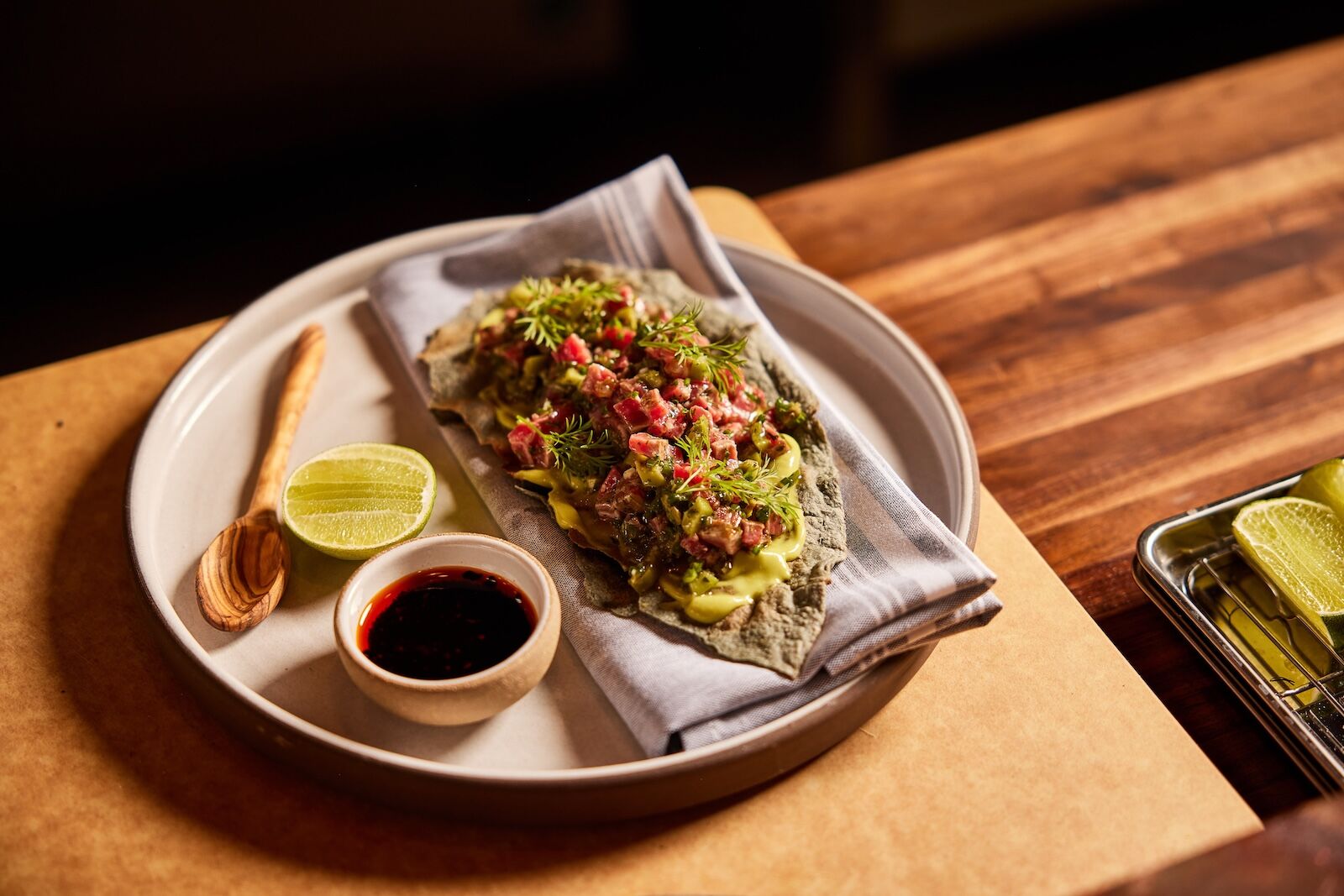
Photo: Shawn Campbell for Mezcaleria Alma
Mezcaleria Alma – Denver
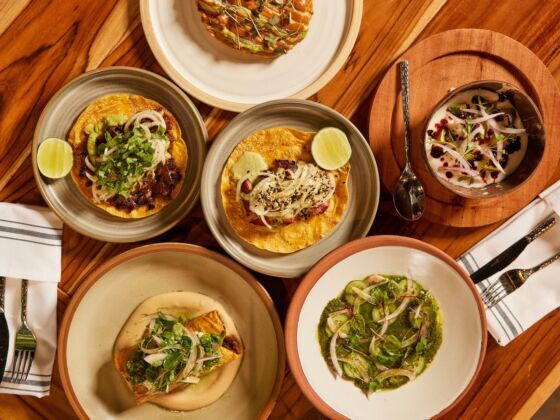
Denver gets a lot of flack for not having good restaurants. I’ve traveled the world as a food and drinks writer, grew up eating up and down the California coast, and spent five years in New York City eating at and reviewing restaurants at all levels. For the past five years living in Denver, I’ve taken a similar food-first approach to exploring my hometown. The city has about one Michelin-listed restaurant for every 22,700 residents, which is about the same as NYC. I’ve had as good, if not better, meals in Denver than just about anywhere, from hole-in-the-wall spots to Michelin-starred dining.
Nowhere is as good as Mezcaleria Alma, in my opinion. Opened in late 2024 in a slim space next door to chef Johnny Curiel’s also-incredible Alma Fonda Fina, the jury is out on whether Mezcaleria Alma is a bar or a restaurant. The truth is it’s both at the highest level.
An ode to Mexico’s many spirits sits on a shelf of bottles reaching to the ceiling: tequila, mezcal, whiskey, rum, fernet, liqueurs, and all types of agave spirits — all from Mexico. Work with the bar for a custom flight, or lean on the cocktail list for one-of-a-kind drinks like the corn sour that uses corn in five different ways. Tuna and snapper hang in dry-aging fridges mounted on either side of the paean to Mexico’s liquor, and small plates cooked behind the chef’s counter compliment the 120-plus agave spirits and cocktails.
All of the food here is inspired by the energy and flavors of Mexico City. The beautiful way each dish is plated almost makes them a shame to ruin, if they didn’t taste so good once you did. Don’t miss the crudo de atún with Santa Barbara uni and Hokkaido scallop, or the red snapper aguachile. Burrata with huitlacoche shows how any dish can have a Mexican twist for the better. The pescadilla is described as the closest thing you can get to a Mexican Hot Pocket. Different preparations of pork belly, beef, and duck shine as bright as the stand-out seafood dishes. And it’s all made while the talented chefs maintain deep conversations with the guests at the counter.
This is certainly a destination restaurant worth traveling for. I’m just glad I don’t have to travel far. – Nickolaus Hines, director of editorial content
Photos: Coco Deck
Coco Deck – Lahaina, Hawaii
I didn’t know what to expect as I searched for parking ahead of our dinner reservation at Coco Deck, my wife in the passenger seat and our two kids under three in the back. Only some of the buildings along Lahaina’s Front Street looked like they had started to recover from the devastating fires that hit west Maui in 2023. We parked a block away and walked past building foundations leveled by the same force that killed more than 100 people in the town and displaced thousands more.
When we got to the host desk, it’s not as if Coco Deck was completely removed from its surroundings — though, miraculously, the building didn’t burn. Instead, it felt like a new gathering point for locals and tourists alike. Sports played on the TVs, young kids wiggled at tables full of families, mainland visitors complained about how bright the sunset was on the patio. Waitresses gave their suggestions over the sound of ice in cocktail shakers, and there was a seemingly never-ending clang of plates hitting tables. In other words, it felt hopeful, or at least joyful.
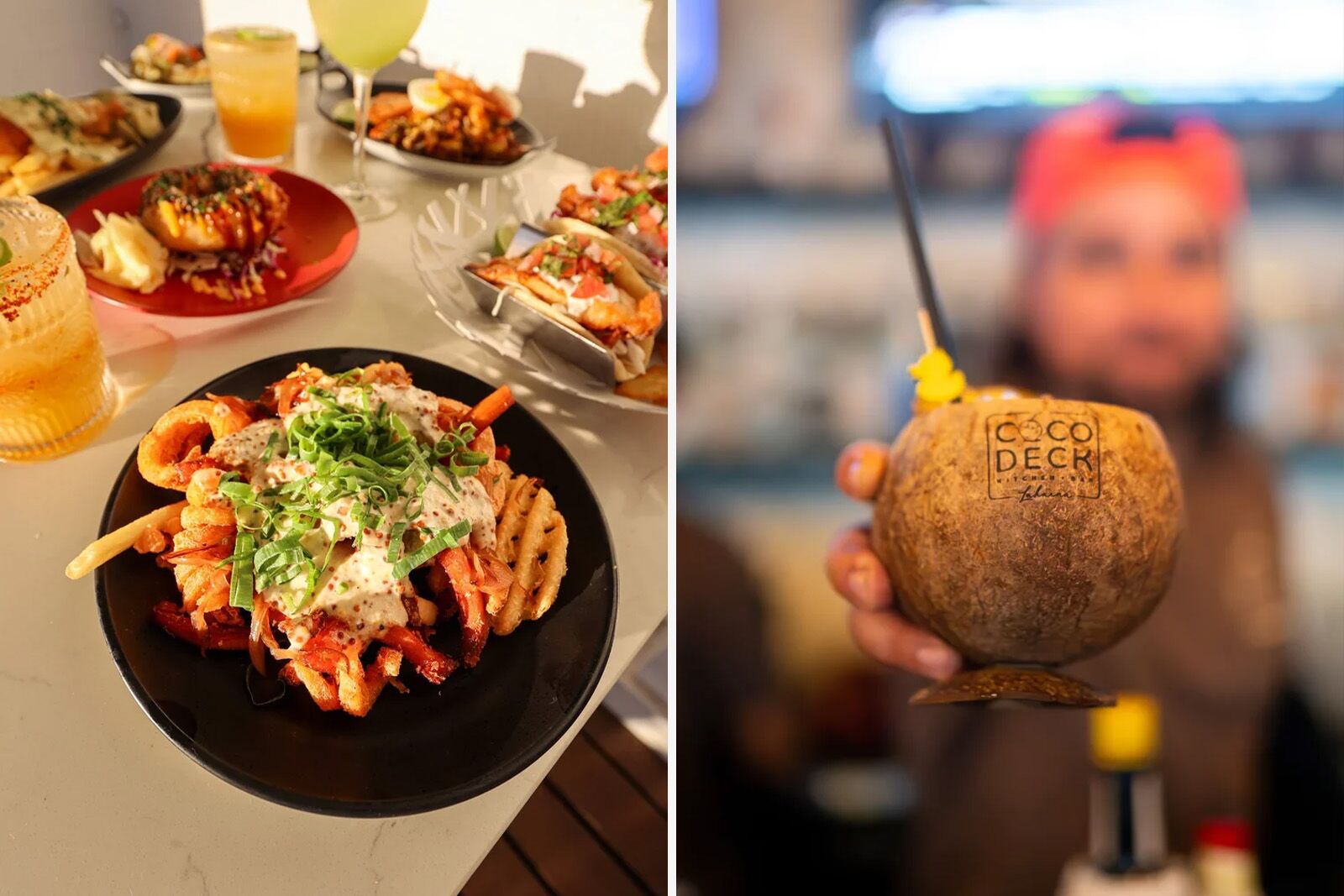
The atmosphere is an important part of a great restaurant, but just one part. The food at Coco Deck brought just as much joy. Chef Alvin Sevela brings together Hawaiian and Mexican influences for a menu that was unlike anything else I tried on that two-week trip, or any other trip to the islands for that matter. The poke donut breaks every rule in precisely the right way by putting a golden-fried ring underneath a cool layer of fresh poke. Fresh ceviche and fish tacos are brightened with the in-house Lahaina Boy hot sauce. The birria ramen hit even better than the first take on that late-night fusion I tried years ago near the border south of San Diego.
It’s easy to linger here with island drinks. That could be a cold local beer, or the refined takes on tiki cocktails. Or the 64 variations on the margarita that can satisfy any palate. Various themed nights have brought entertainers from musicians to magicians sure to delight the whole table, or game days filled with team pride no matter your sport. It goes without saying the views across the street clear out to the Pacific are unmatched. – NH 
CREDITS
Editor
Tim Wenger
Contributors
Suzie Dundas, Katie Gavin, Nickolaus Hines, Tim Wenger, Kelsey Wilking