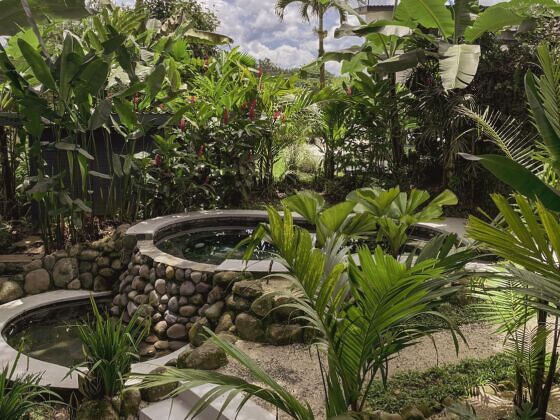
Photo: Lauren Diamont

Finding Stillness at The Vessyl in the Jungle of Costa Rica

Costa Rica Epic Stays
by Carlos Omar Gardinet Nov 20, 2026

Before I ever set foot in Costa Rica, Svetlana Parmar wanted to know what I hoped to carry home.

On a pre-arrival Zoom call, The Vessyl’s Lead Facilitator and Program Specialist sent me a questionnaire: birth date, time, and location. The answers would feed an astrological reading and introduce the systems woven through my stay, Human Design and numerology among them. When I told her I was a Triple Cancer, she let out a sigh so emphatic I half expected the planets to shift. I had no tidy answer to her question, so I arrived open, letting the days decide. The days, it turned out, had a method. They kept sending me back to my body.
The road from Guanacaste Airport in Liberia runs about two and a half to three hours, and somewhere past the pineapple fields, glossy in their rows, the jungle thickens until your phone begins to sound like a rumor from another country. I thought I knew this corner of Costa Rica. The previous August I’d based myself in La Fortuna, hiking the flanks of Arenal Volcano and sinking into thermal pools while steam curled into the evening air. Returning for The Vessyl showed me a country I hadn’t yet met.

Photo: Lauren Diamont

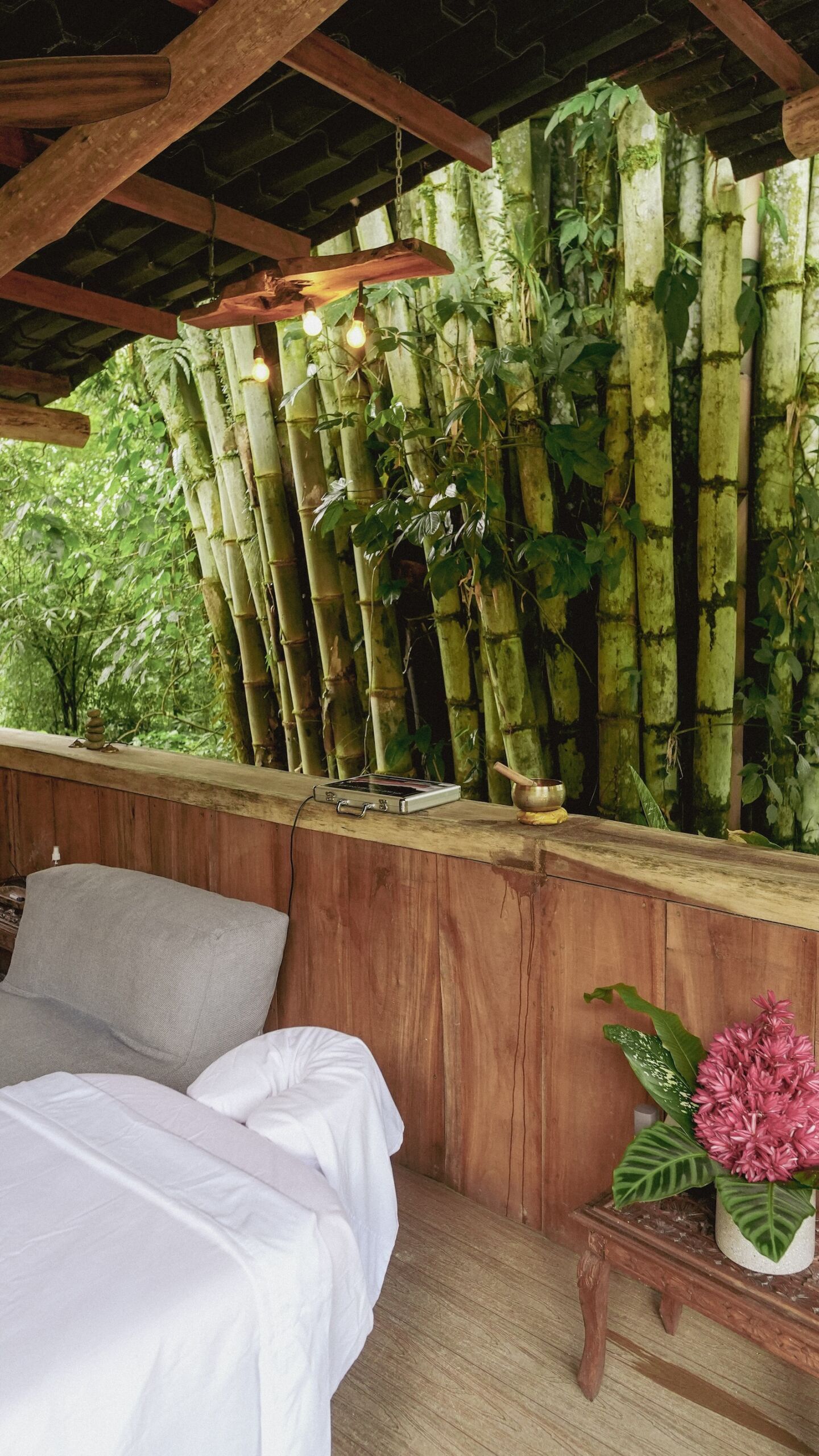
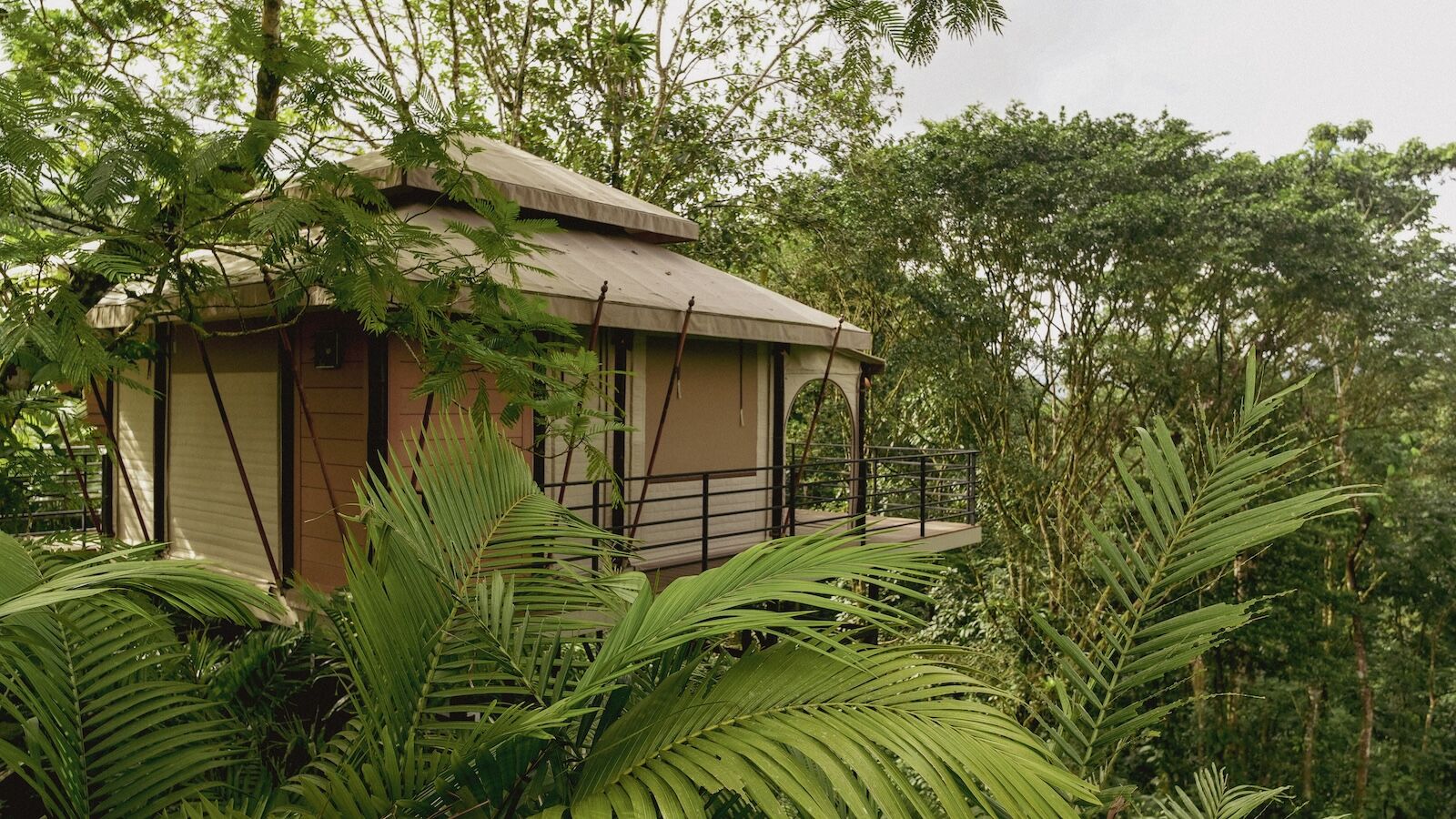
My lodging was called a tent, a name that undersells it: a luxury cabin of wood and screen with a bird’s-eye view of Arenal, the volcano’s silhouette rising through the canopy. Other guests slept differently. One stayed in a lush treehouse. Another, because of medical conditions, stayed in a two-bedroom villa with a private pool, where a waterfall cascades from the roof of the outdoor space. Parrots and toucans crossed the sky, monkeys worked the branches, and frogs sang the night in and out. One afternoon torrential rain drummed the wooden walls and filled the air with the smell of wet earth. I stayed in and did absolutely nothing, and it felt entirely legitimate. Stillness, I learned, is only the doorway at The Vessyl.

Photo: Lauren Diamont

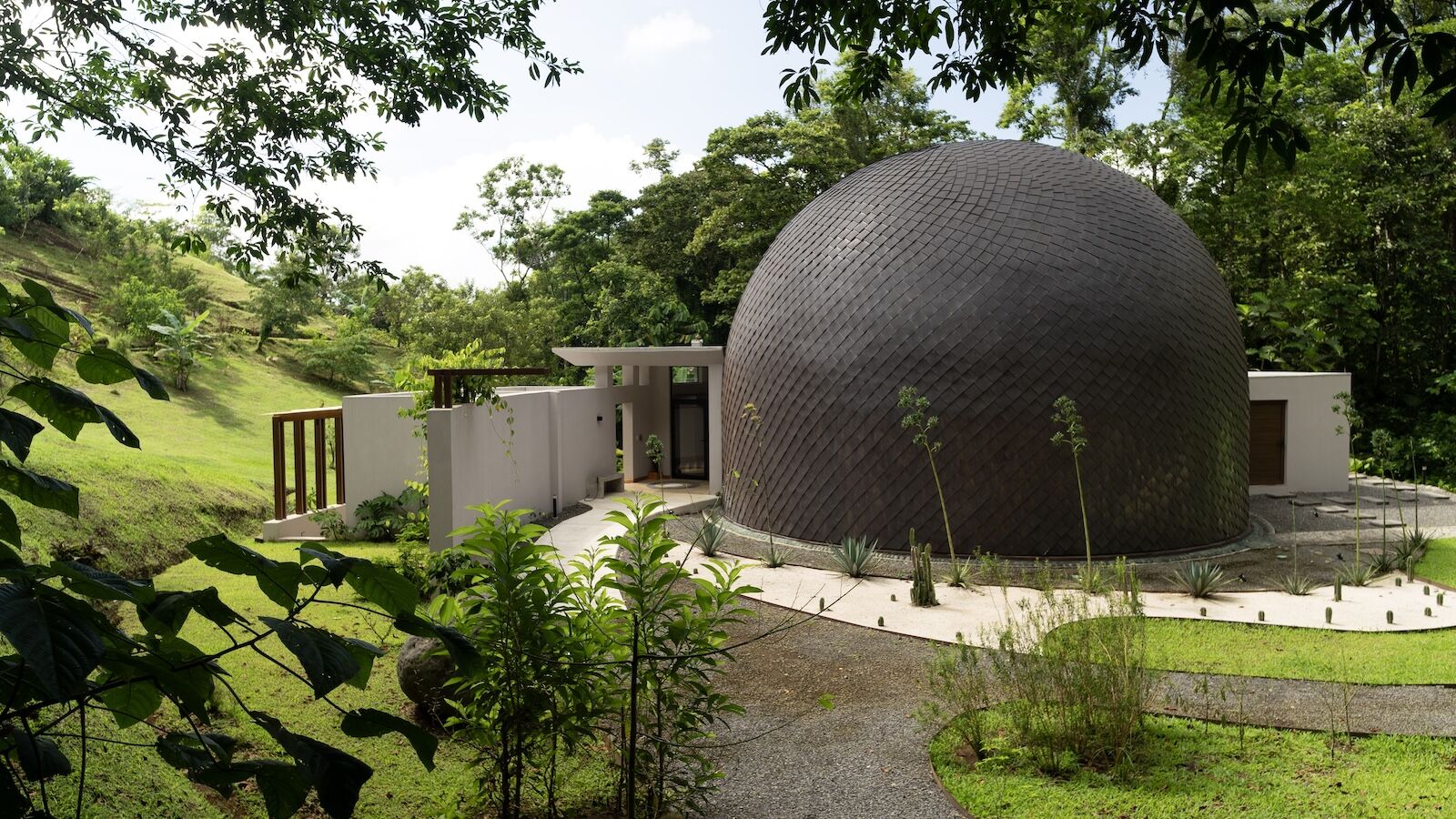
Everything beyond that doorway begins with the founder, Josh Stanley, one of the brothers behind the CBD company Charlotte’s Web, whom I interviewed in a studio booth attached to the Frequency Dome. Calm and charming, he carries an easy magnetism. He grew up poor in Oklahoma, in a devoutly Christian household where Sunday church was law. “My father was hyper-religious,” he told me. “I was dragged from church to church. I couldn’t miss a Sunday service. I was the first kid to run to the pulpit because this fear had been ingrained in me that I would burn in fire for all eternity. That’s no way for a kid to live.”

His uncle Larry, a pipe carrier for the Lakota, handed him World Scripture: A Comparative Anthology of Sacred Texts when Stanley was 14. He devoured it and wandered toward Eastern mysticism and other traditions. “In 2015,” Stanley recalled, “I had an indescribable event that changed my life forever.” He offers few details, and he speaks only for himself. He also believes that “telepathy is the next form of communication for humans.” At dinner one night, a guest joked that if Stanley ever started a cult, she’d be first in line. Several people agreed, and we all understood why.

All that curiosity gets a floor beneath it in the Dome. In the lobby, facilitators Ashley Marie and Dylan Baird introduced me to the Bio-Well scan. I rested my fingertips on a small camera that captures a faint glow from the skin, and software turned it into charts of stress, balance, and energy. My report came back in the optimal range, and I took the compliment. Bio-Well frames the glow as an energy field, an idea mainstream science does not recognize, and the report itself says it is no medical instrument. Later in the Dome, the yoga floor hummed, so the practice traveled through my bones and settled in my chest. Within a few hours I had been read by a machine and played like an instrument.

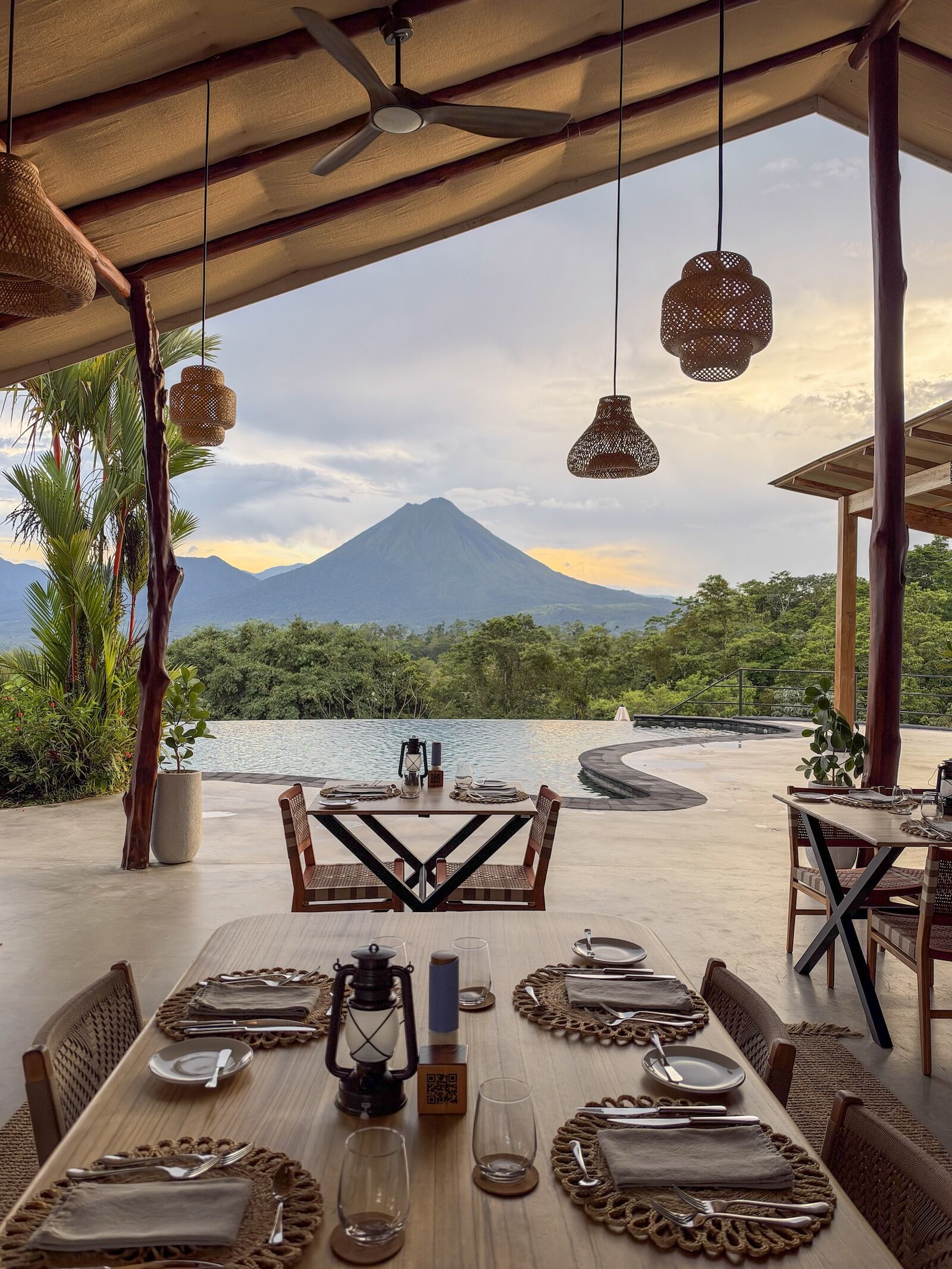
The next day, the earth took its own measurement. On October 9, 2026, a magnitude 7.7 earthquake struck Panama’s Azuero Peninsula, and the boards of my tent trembled beneath me. I assumed construction workers were busy somewhere on the property. An hour later, in the dining and lobby area, everyone was talking about it. Remote places carry their own trepidation, the quiet arithmetic of how far help might be, and I felt mine rise. So I did what the week was teaching me to do. I stopped, noticed my body, and lifted my eyes to the horizon. Arenal stood there in all its majesty, a single cloud hovering over its peak like a halo. The volcano, no stranger to upheaval, offered respite and ease, and something in my chest unclenched.

Photo: Lauren Diamont

Two days later, Josephine Clausen, a Costa Rican facilitator, sat with me for nearly two hours, moving between Spanish and English as the conversation asked. Her tool was Human Design, which she describes as a blend of astrology, the I Ching, Kabbalah, and the chakra system. I asked the skeptic’s question: does everyone born at the same moment and place share the same chart? They do, she said. A chart is a map, and a map is flat; the territory of a life belongs to the person walking it.

She had noticed me nodding and making small sounds as she talked, none of it routed through my head first. Those sounds, she said, were my gut speaking, a voice that answers yes or no and never explains itself. She sketched my profile as a volcano hike with three trails to the summit. A person like me tries all three and returns with a report: one muddy, one long and full of obstacles, one steep with the best views. Her homework was simple. Ask yourself a yes-or-no question and notice the first response in your body. If a “because” arrives, that is the mind talking.

Svetlana’s question circled back. Josephine’s words touched what I already knew about myself: I’m deeply inquisitive, and I take myself a little too seriously. I skipped an evening program to let that settle. Human Design is an esoteric system, and if you prefer evidence, treat the sessions as prompts for reflection.

Photo: Lauren Diamont

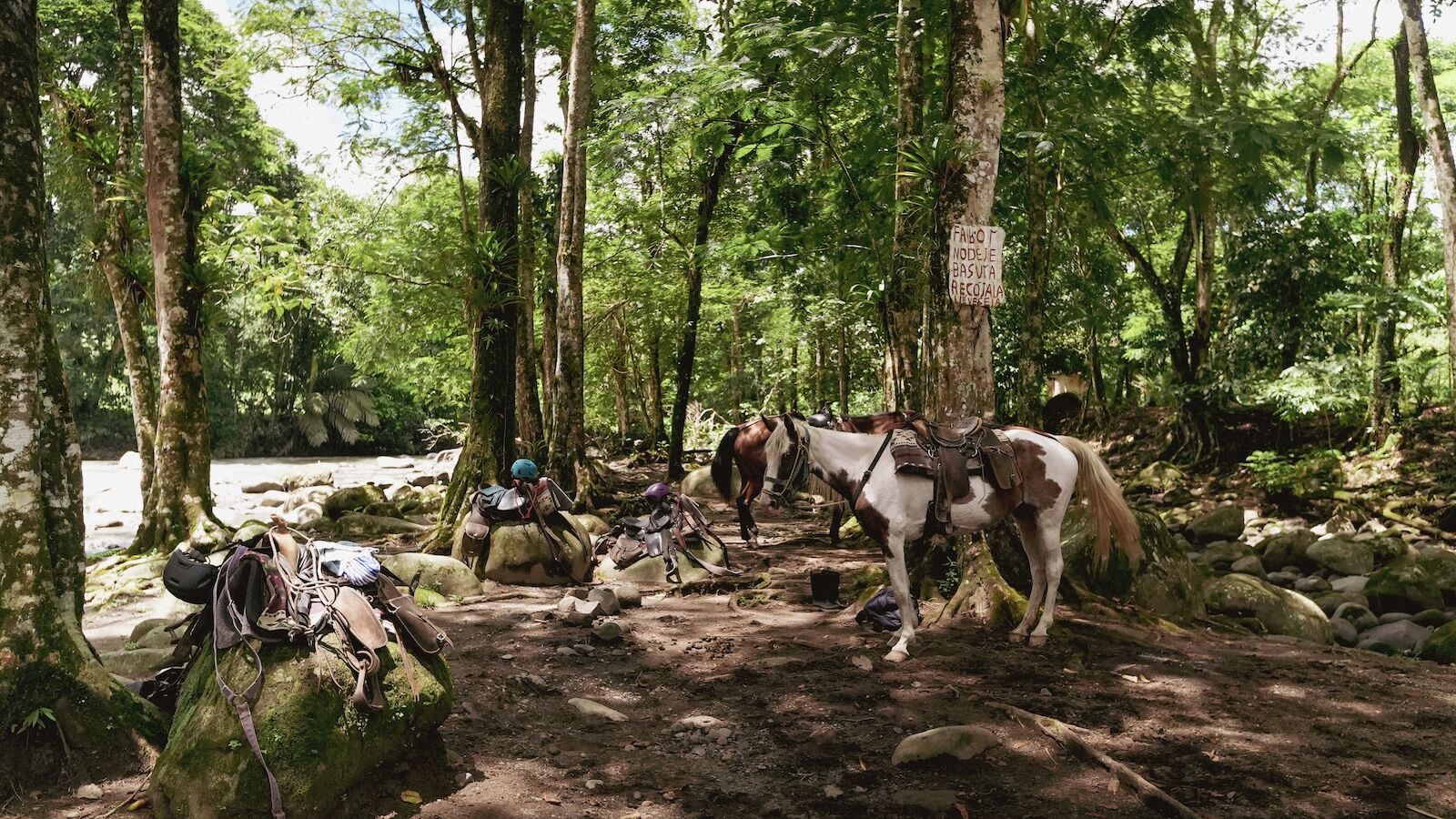
If Josephine taught me to listen to my gut, the horses showed me how loudly my body already spoke. Horse master Enrique Molina led our group and four horses into a sandy ring and matched each of us by temperament. Mine leaned its full weight against my side, and the exercise asked what I would do and what my body was saying without me. Horses respond to what we project, Molina said, whether hesitation, confidence, or fear. Something that Stanley said at the studio came rushing back to me. “It’s up to us how much we want to struggle. Our greatest struggle is not to struggle.”

My horse’s name was Negro. In Spanish, the word is simply a color. I am a Black man, standing in a sandy ring in Costa Rica with a horse named Negro leaning into my ribs. I asked whether the pairing was deliberate. Molina said the horses choose their riders. I’m still turning that answer over. The next day, came the sight I’ll keep longest: horses swimming in a river, powerful bodies yielding to the current, the line between human and wild suddenly thin.

Photo: Lauren Diamont

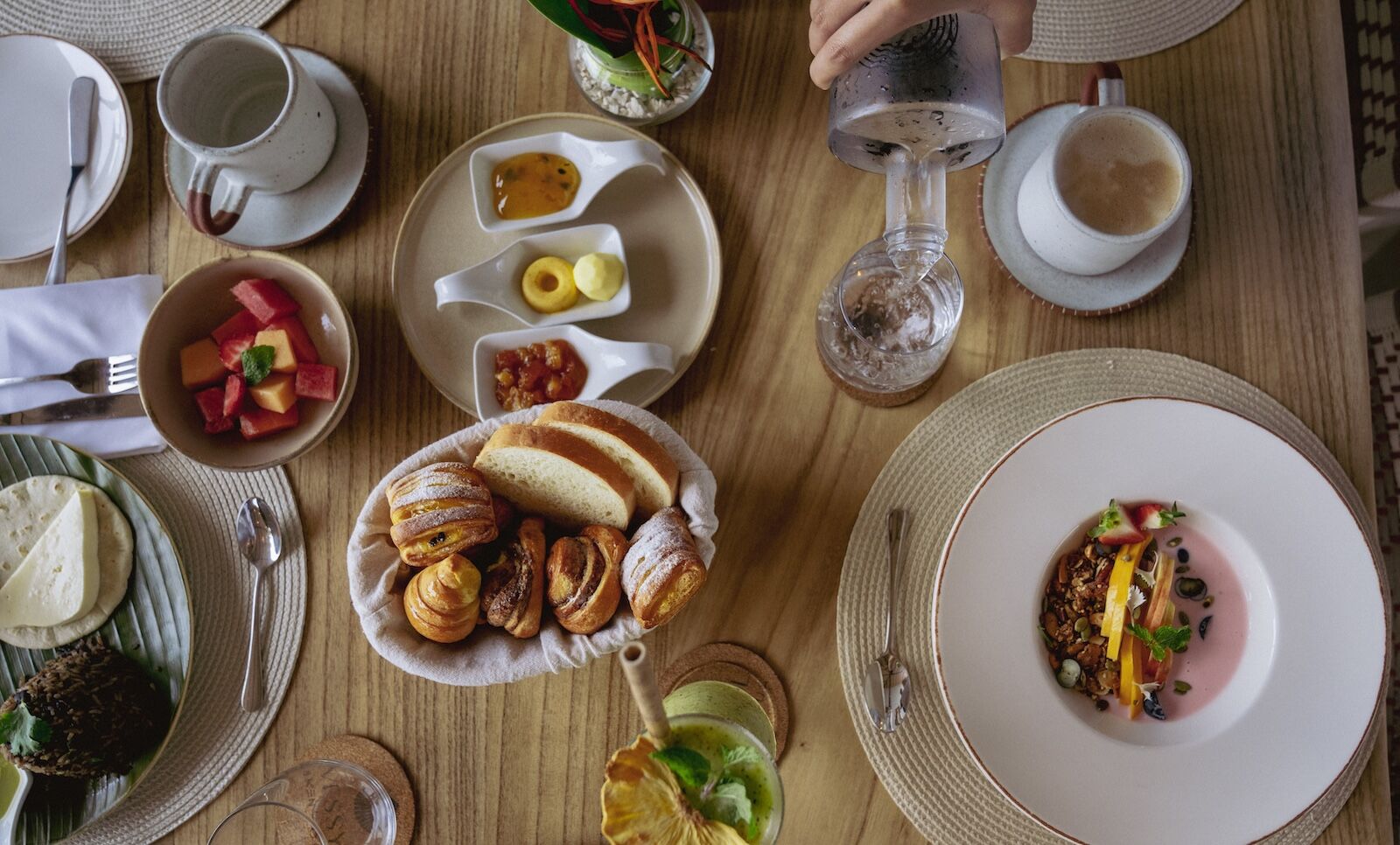
Even the kitchen made its case for listening to the body. I’ve followed a plant-based diet for 13 years and survived many sad side plates, and here the chefs built vegan dishes from the ground up. A smoked beet salad arrived bright and light, aromatic with herbs and avocado puree, delicate in a way I had never tasted. The seared Portobello was earthy and balanced with a subtle sweetness. Coconut sorbet closed the meal, and long communal tables let strangers trade the day’s stories.

Svetlana asked what I hoped to carry home. After days of listening, I can answer. I wanted hope, a fullness that rises from within, and the fire to finish a novel I began long ago. That fire is what I carried out of the jungle, steady as a pulse. I found myself wishing I’d stayed longer. That may be the most honest review I can offer.

Plan Your Stay

Photo: Lauren Diamont

Where: The Vessyl sits in Altos de Monterey, near La Fortuna in Costa Rica’s Arenal Volcano region. It opened in 2026 across 118 acres of rainforest, with 13 adults-only accommodations — tents, villas, suites, and a tree house — built around the sound installation the property calls the Frequency Dome.

Getting there: The drive from Guanacaste Airport in Liberia takes about two and a half to three hours. We rode with Relaxury RLX Costa Rica.

Rates: From $350 per person, per night, with a three-night minimum.

What’s included: Stays include all meals.

Discover Matador

Save Bookmark

We use cookies for analytics tracking and advertising from our partners.

For more information read our privacy policy.