Photos: Mariah Harkey

Thai Well-Being 2 Ways: What Restorative Travel Looks Like in Bangkok Vs. Koh Samui

Thailand Bangkok Wellness
by Mariah Harkey Aug 18, 2026

“Oh, we’re on the wrong side of the road,” I blurted out as I hopped into our van after landing at Bangkok’s Suvarnabhumi International Airport.

“It’s not the wrong side,” said Lisa, the journalist I was traveling with. “It’s a different side.”

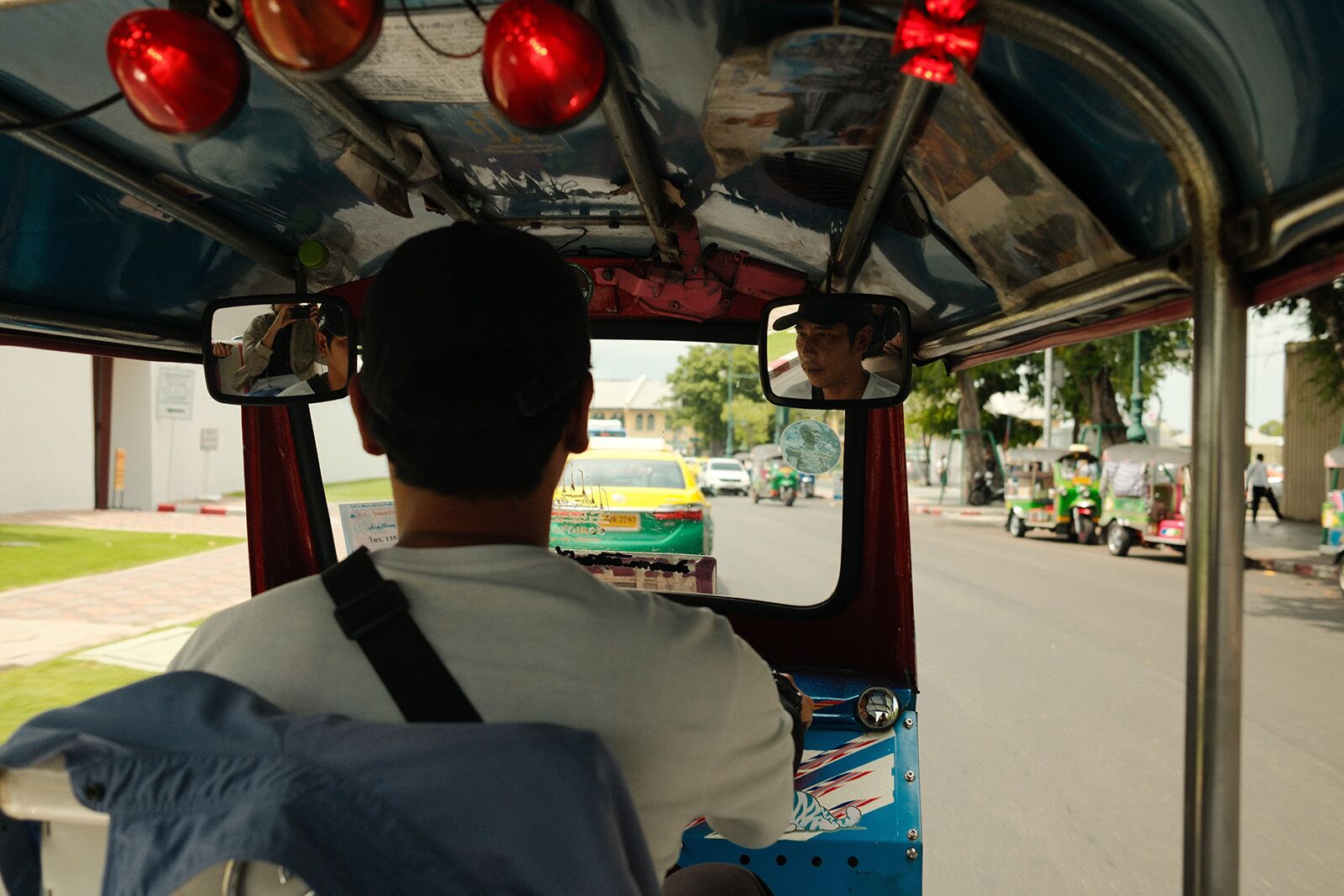
I’d traveled from Los Angeles to Thailand to experience wellness in two places: Koh Samui and Bangkok. Thailand’s second-largest island, Koh Samui, is home to both luxury spa resorts and holistic retreats where therapists are trained in traditions that trace back to the island’s Buddhist temples. Bangkok, on the other hand, is a tangle of skyscrapers that feels like a dozen downtown LAs stacked together, where motorbikes, tuk-tuks, and trains cut through muggy air.

If Koh Samui is a place where calm moments tend to find you, Bangkok is a place where you have to go looking for them. Neither is the right or wrong choice for a trip to Thailand centered around well-being. They’re just different.
Koh Samui

Kamalaya and Banyan Tree: Traditional and immersive wellness

wellness in thailand

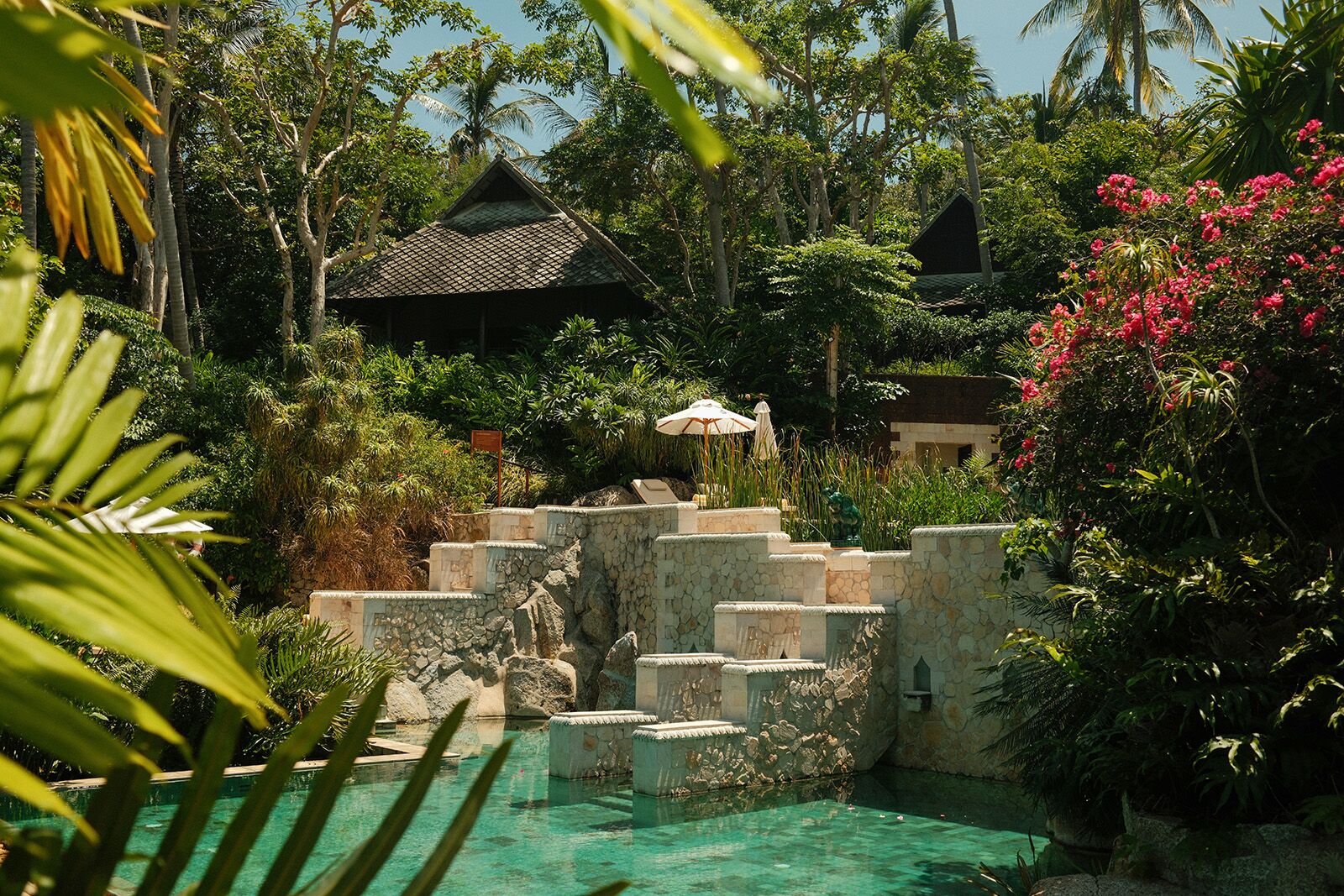
Kamalaya Wellness Sanctuary. Photo: Mariah Harkey

After landing in Bangkok, we caught a short connecting flight to Koh Samui and made our way to the Kamalaya Wellness Sanctuary, where we’d be spending the next few nights.

Kamalaya was founded in 2005 around a cave that Buddhist monks once used for meditation and where guests can now do the same. The folks there will tell you that it’s not a hotel, despite the fact that you can stay overnight. The property calls itself a wellness sanctuary and blends Eastern healing with Western medical research. Programs target both spiritual and physical goals, with focuses ranging from meditation and restoration to longevity and cognition. Guests can come to detox for a few days or stay for month-long guided plans.

As we were handed the keys to our rooms, the staff asked us to respect the no-phone policy in common areas. (Some rooms have small boxes where you can choose to lock your phone away.) On my first morning there, looking over a detox-inspired breakfast spread, I glanced around the room and saw something I’d only seen in movies: people fully present, enjoying their breakfasts outside, watching the waves, journaling.

wellness in thailand

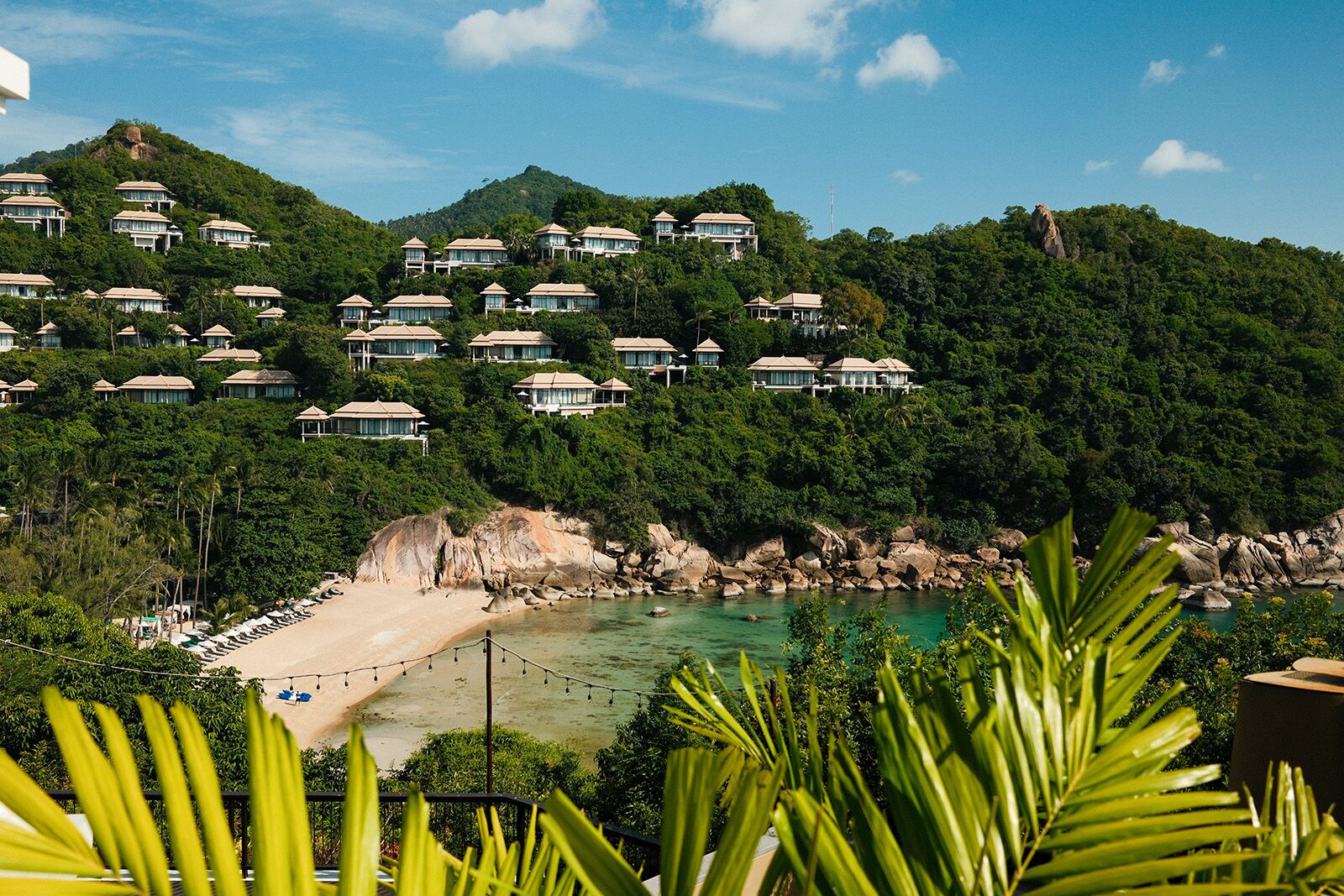
Banyan Tree Hotel. Photo: Mariah Harkey

Though I chose not to lock my phone away for the duration of my stay, in part because I was visiting the property with the intention of reporting on it, I made a point of leaving it behind at breakfast during my last morning at Kamalaya. It was a small action, but it had a big impact on how I experienced the space.

Afterward, Lisa and I had a private meditation session with one of Kamalaya’s spiritual teachers, Adi. It was just the three of us in a small room for 45 minutes, working through prompts, recognizing our emotions and accepting them without judgement. I’ve never felt such a deep connection within myself and to my surroundings during a meditation.

My wellness experience at Banyan Tree Samui took a different shape. Unlike Kamalaya, the island’s Banyan Tree is decidedly a hotel. It’s a luxury property where each villa has a private infinity pool and ocean views, and it’s one of the only properties on the island that has a private bay with a house reef where guests can snorkel. And yet, the spa still stood out.

I got the Thai Classic full body massage, starting with a consultation during which I was asked to identify a focus for my treatment: rest, groundedness, or connection. I chose the latter, and it ended up being one of the best massages I’ve ever had.

Ang Thong and beyond: Well-being beyond the spa

wellness in thailand

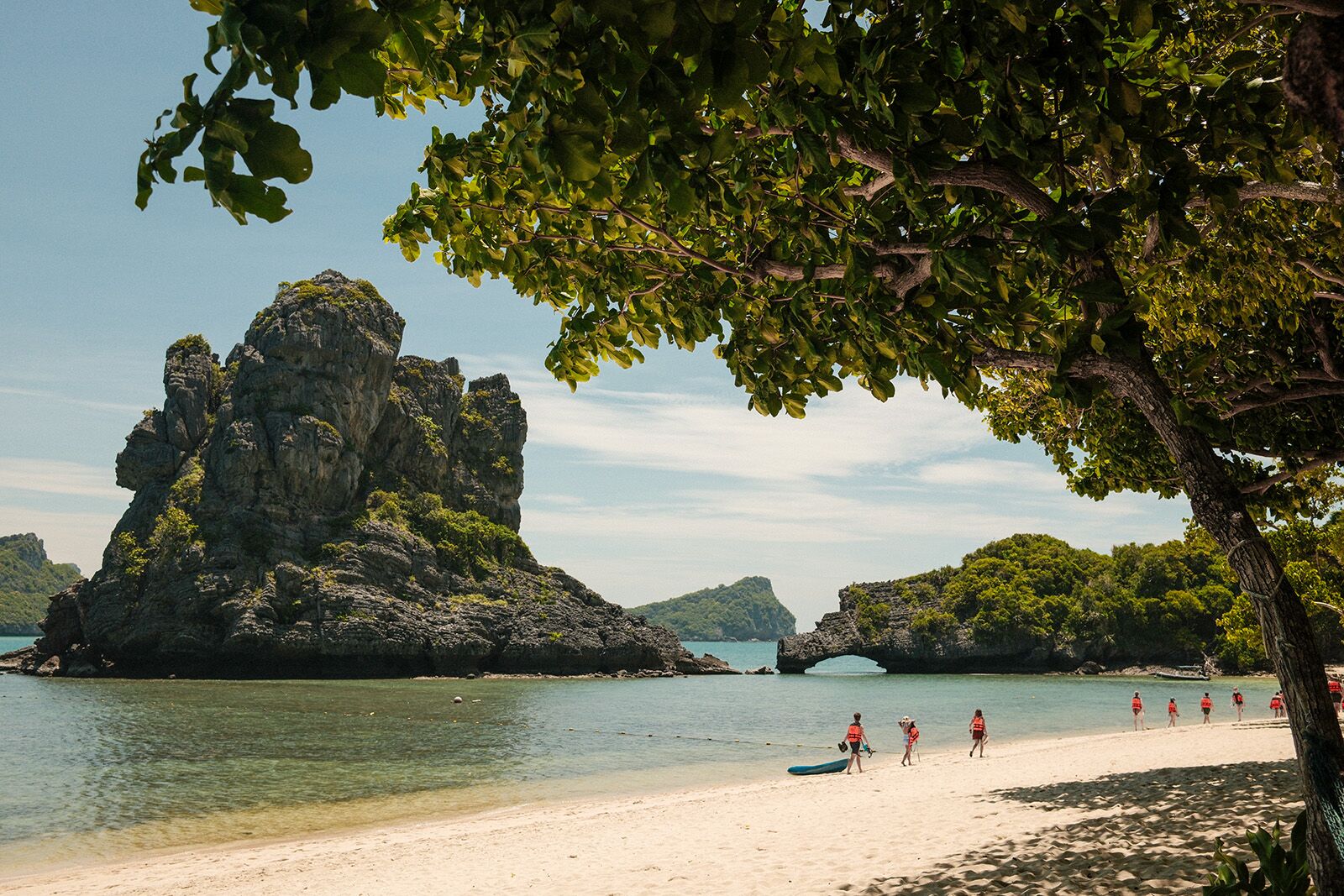
Koh Ang Thong. Photo: Mariah Harkey

Other excursions around Koh Samui promote a different kind of well-being: time in nature. One day, we took a trip to Mu Koh Ang Thong, a national marine park and 42-island archipelago. Overlooking the choppy waves from shore before we took off, I realized the boat ride out wasn’t going to be for the faint of heart. But if you can brace for some rough water, it’s a worthwhile day trip past limestone cliffs, private beaches, and some of the best overlooks I’ve seen anywhere.

We stopped on multiple islands to hike, kayak, lunch, and snorkel. One of my favorite stops was Ko Mae Ko, known for its emerald lake. Getting the best view meant climbing what felt like the steepest staircase I’d ever seen, up to an observation deck that made the effort worth it. If hiking isn’t your thing, you can rent kayaks at Sam Sao Island to paddle through the limestone caves instead (an activity that’s included in many tours there) or take the secret trail through the brush and up the small mountain that leads to another one of the archipelago’s best views.

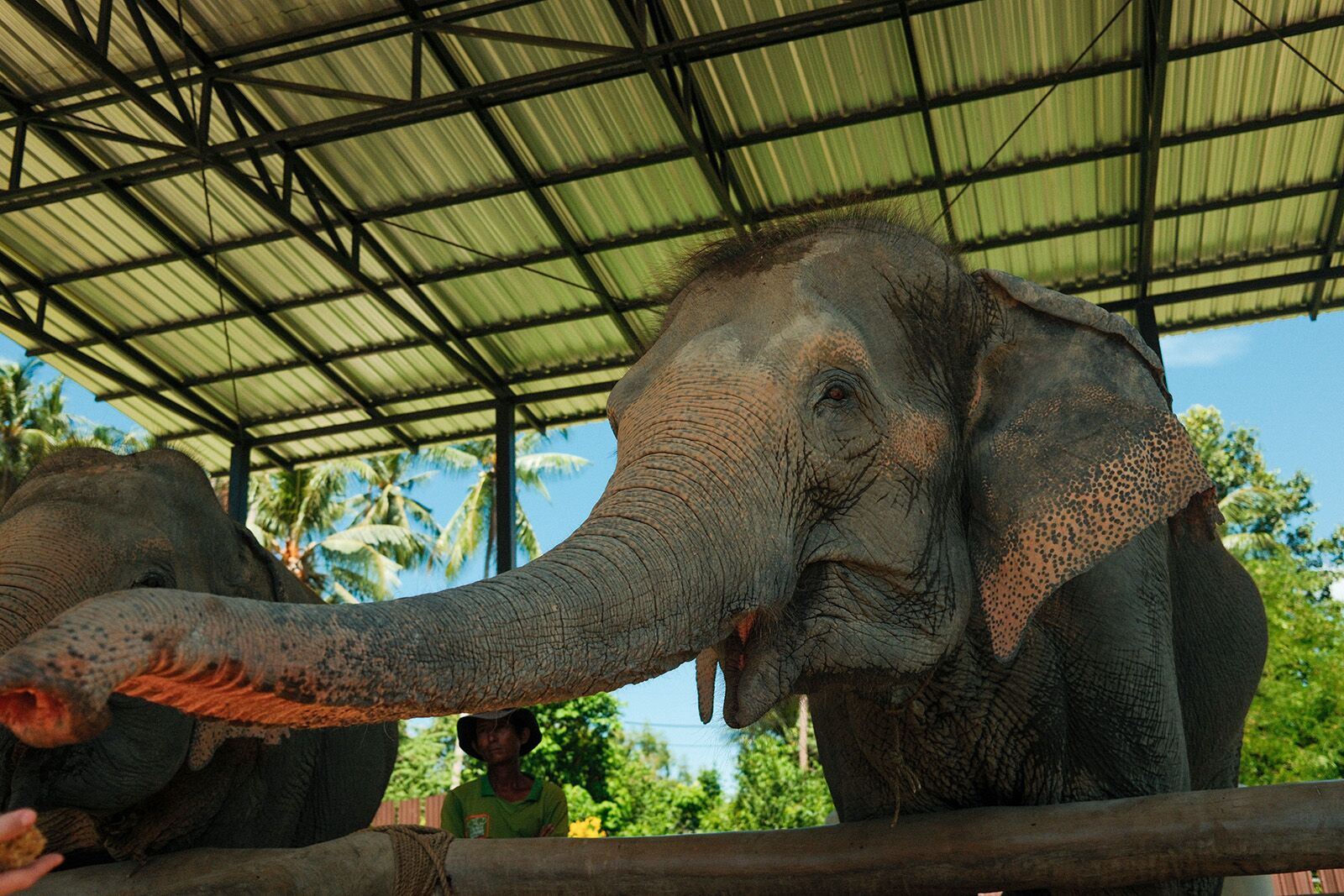
Back on dry land, the Elephant Jungle Sanctuary is a refuge for rescued elephants that promotes sustainable wildlife tourism through respectful visitor experiences. I arrived at the sanctuary a little skeptical and admittedly stayed a little skeptical throughout. I don’t think there’s a version of animal tourism that’s fully free of complication, but of the models I’ve seen, this felt like an honest one if it’s a dream of yours to see an elephant up close.

wellness in thailand

Elephant Jungle Sanctuary. Photo: Mariah Harkey

There’s no elephant riding or chained elephants; instead, visitors help prepare food for the animals, feed them, bathe them, inevitably watch them go straight back into the mud afterward, and take a few pictures along the way.

The sanctuary’s manager, who’s worked with these elephants for about a decade, told us that this is one of the organization’s four sanctuaries in Thailand, alongside locations in Chiang Mai, Phuket, and Pattaya. Together, they care for around 100 rescued elephants.

Though I remember the manager saying that most of this sanctuary’s elephants were rescued from logging operations, similar sanctuaries on Koh Samui typically cite a different story. When Thailand banned commercial logging in 1989, the industry collapsed, and tourism absorbed many of the displaced elephants in the form of riding, trekking, and performance camps. While I was unable to confirm if this sanctuary’s elephants came through that pipeline, it’s documented that organizations will buy elephants from the people running those operations in order to get them out. It’s a strange trade-off: money changing hands with the same people causing the elephants harm in exchange for getting an animal free of it.

The manager also told us Thailand has roughly 4,000 domesticated elephants today, and that the sanctuary’s priority now is preventing further breeding, since there’s nowhere for more elephants to go. That figure holds up against outside research. Various conservation groups tracking the industry put Thailand’s captive elephant population at around 3,700 to 4,000–5,000, depending on the source and year.

That same day we traveled into town and made a stop at Wat Phra Yai, or Big Buddha, one of the most famous religious sites on the island. I popped my shoes off and left them at the bottom of the stairs, the etiquette before entering religious sites in Thailand. The size of the statue is genuinely striking, and the top didn’t feel like a tourist stop so much as a local place of worship, with monks sitting quietly, journaling, reminiscent of the same stillness I’d found at Kamalaya.

Bangkok

Chinatown and the Sindhorn Kempinski: Commotion to calm

wellness in thailand

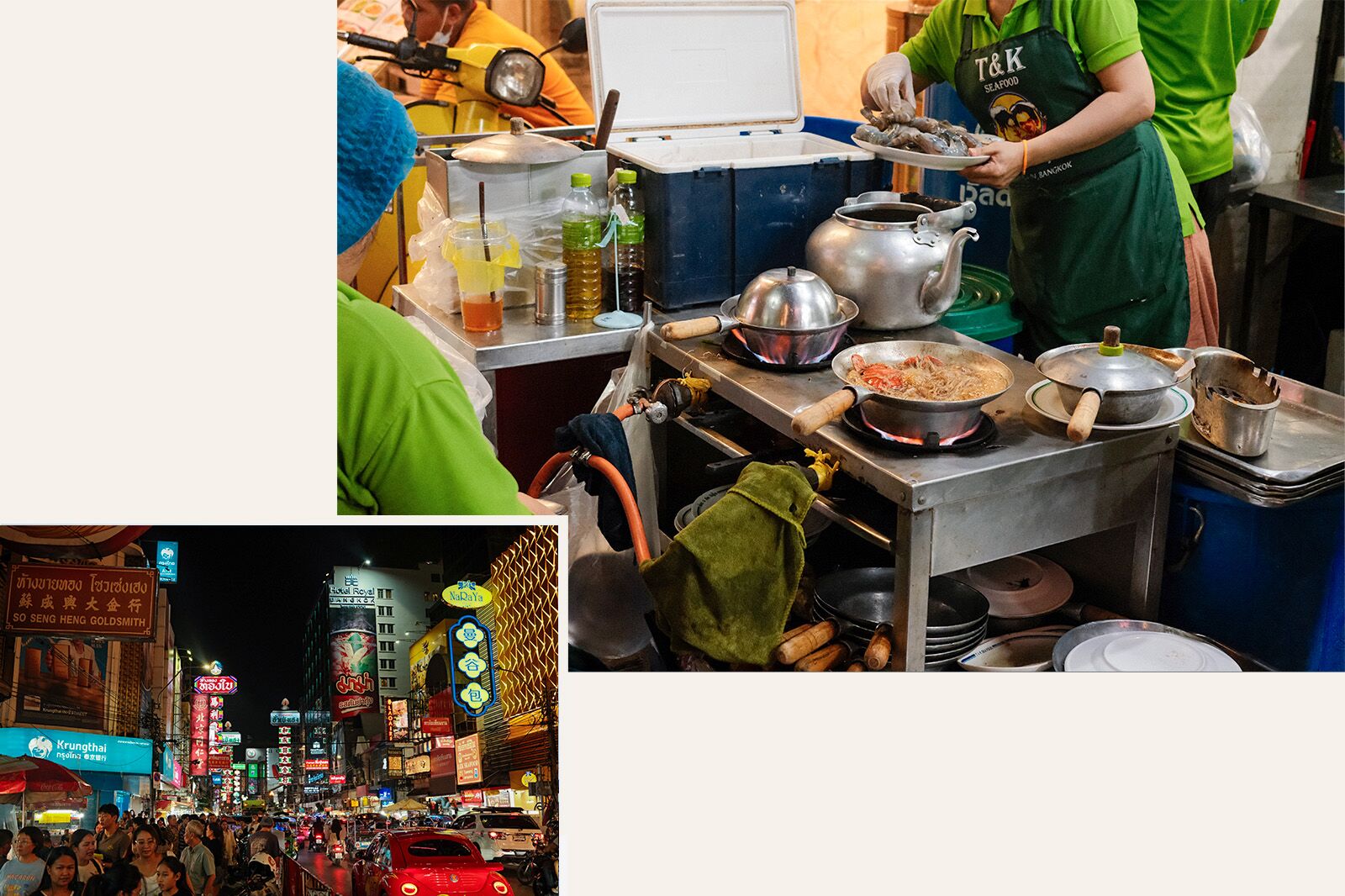
T&K Seafood and Bangkok Chinatown. Photos: Mariah Harkey

On the day we packed up from Koh Samui and headed for Bangkok, news of Typhoon Bavi broke, as if the change in weather was foreshadowing the location change.

After a morning meditation at Kamalaya, Bangkok’s contrast hit me that night in Chinatown. We walked what felt like miles of Yaowarat Road, packed with food stalls on every corner. Our guide, Suree, pointed us to T&K Seafood, and we pulled up tiny green plastic stools on the sidewalk for what felt like an Anthony Bourdain moment.

We sipped Chang beer with the staff cooking a few feet away, and plates of chayote leaves, fish cakes, crab curry, and fried sea bass arrived one after another. For dessert we worked through a handful of stalls: mango sticky rice, pa thong ko sangkaya (fried dough with sweet pandan custard), and bua loy nam khing, warm rice dumplings in ginger broth that somehow worked even in the heat.

Our itinerary had us booked into a couple of traditional wellness experiences, such as a spa afternoon and a sound-healing session, but neither ended up being experiences I’d recommend. It’s not that there isn’t a wellness industry in Bangkok. As Thailand’s gateway city, Bangkok anchors a national wellness market that hit $42.7 billion in 2024, according to the Global Wellness Institute, with spending at spas alone up more than 20 percent in a single year. That growth shows up in the city’s many spas, including those belonging to its luxury hotels, like the Sindhorn Kempinski Hotel Bangkok where we stayed.

A stone’s throw from tuk-tuks and traffic but with a garden and walking trails in back where you can find quiet amid the otherwise relentless city, our hotel was a good example of the kinds of spaces where we ended up finding more restorative moments than we did at the Bangkok spa we visited.

Poomjai Garden, Wat Pho, and beyond: Wellness hiding in plain sight

wellness in thailand

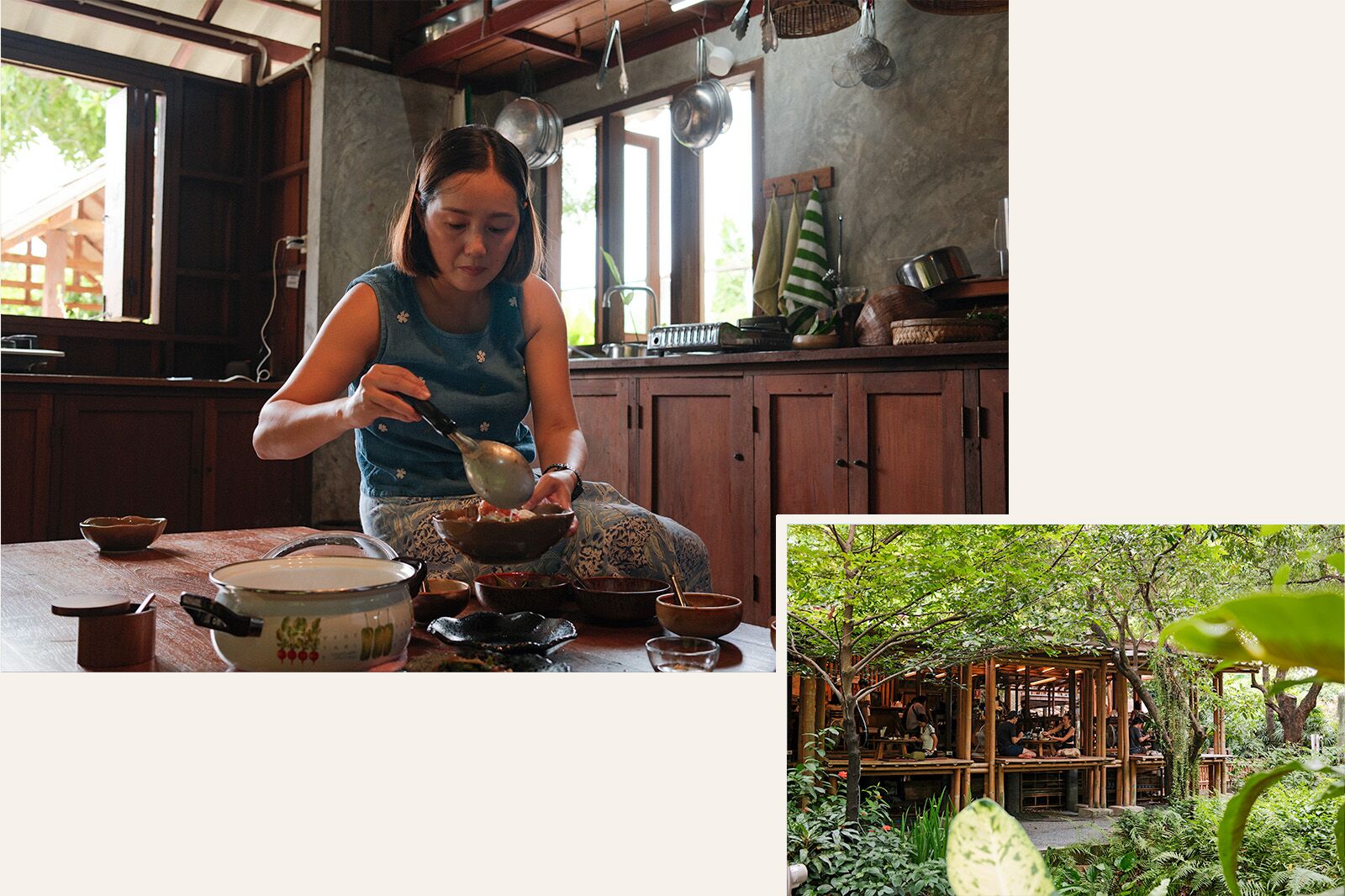
Poomjai Garden. Photos: Mariah Harkey

The clearest example of those spaces was Poomjai Garden, a multigenerational family property about 20 minutes outside the city center. The garden was once a lychee farm; when climate change killed the lychee trees, the family’s matriarch, Porntip Thiensup, spent years rebuilding it into what’s there now: a working permaculture garden full of Thai herbs and plants, with a small on-site cafe called Natura. We walked the garden with our host and picked vegetables to cook, making dishes over a stove inside what felt like someone’s home. Afterward, we sat for half an hour at the riverfront cafe, watching long-tail boats glide down the river.

Though busy, the city’s temples created their own version of respite. We visited the Grand Palace, Wat Phra Kaew, Wat Arun, and Wat Pho. The Grand Palace and Wat Phra Kaew both date to 1782, built the same year King Rama I made Bangkok the capital. Wat Pho is older. The temple structure has been standing since the 16th century. In the 1830s, King Rama III established it as Thailand’s first public center of learning, including the teaching of traditional Thai massage.
Thai temples are built tall to represent a bridge between the earthly and the heavenly. Dusit Central Park’s rooftop garden, Dusit Arun, echoed that idea, showcasing Bangkok’s skyline against a stretch of green.

We closed out our time in the city on the Saffron Cruise, Banyan Tree Bangkok’s river cruise down the Chao Phraya River. There’s something extremely special about seeing Bangkok at night, Wat Pho all lit up, paired with a four-course Thai dinner. It was a fitting way to end the trip: the same hotel brand that gave me one of the best massages of my life on Koh Samui also gave us calm in the chaos, the whole brilliant city seen from just far enough away to take it all in.

Getting to and around Thailand

wellness in thailand

Photo: Mariah Harkey

I flew EVA Air from LAX to BKK, connecting through Taipei, the airline’s hub. Premium economy made the long haul far more comfortable (and appropriately so for a trip centered around restorative travel). The complimentary amenities helped: a Hunter toiletry kit with a toothbrush, lip balm, hand lotion, sleep mask, and earplugs, plus real slippers and a proper blanket and pillow, not to mention enough legroom to actually stretch out. The vegetarian meal also held up better than I expected, too.

One detail worth noting: EVA Air’s premium economy is arranged as two seats on the outer rows and four across the middle, so if you’re not traveling as a group of four, book a window or aisle pair for more room to yourself and a more private feel.

From BKK, it’s about a 30- to 40-minute taxi into central Bangkok (or roughly 40 minutes on the Airport Rail Link if you’d rather skip traffic). Getting to Koh Samui from Bangkok is its own short hop: a little over an hour with dozens of daily departures.

Discover Matador

Save Bookmark

We use cookies for analytics tracking and advertising from our partners.

For more information read our privacy policy.