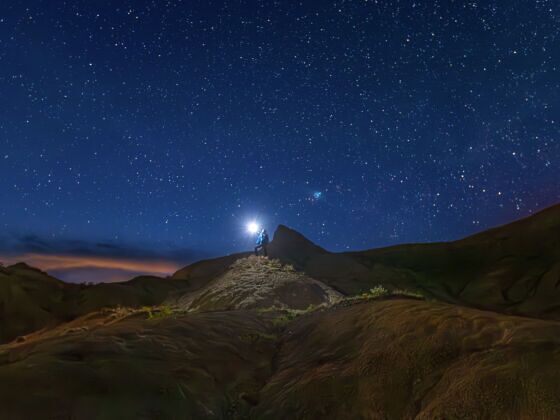

Have you ever heard pure silence? A symphony of quiet, unpolluted by any human-made sound? To stand under an inky black sky — shimmery with stars from horizon to horizon — and hear absolutely nothing but nature is more than a checkbox on a bucket list. It’s one of the most moving and memorable travel experiences you can have.
Saskatchewan is a province in central Canada whose position on the globe and sparse population make it one of the least noise-polluted places in North America. Correspondingly, it also has some of the least light-polluted areas on the continent. This creates a rare combination: big silence and even bigger skies — the perfect canvas for astrotourism. Southern Saskatchewan is home to two designated Dark Sky Preserves: Cypress Hills Interprovincial Park and Grasslands National Park. Both lavish visitors with 360 degrees of unobstructed views showcasing constellations, star clusters, meteor showers, moonless Milky Way arcs, and more. It’s stargazing you can’t get in many other places.
Samantha Lawler — a professor of astronomy at the University of Regina in Saskatchewan — says that when she moved to Saskatchewan, she really came to understand the power of the place. “The sky is so amazing here. You see stars all the way down to the horizon,” says Lawler. “Every time I travel, I am so grateful to come back here.”
You should go, too. Here’s where to find surreal stargazing and other celestial wonders in Saskatchewan.
CYPRESS HILLS:
AN INTRODUCTION TO THE STARS
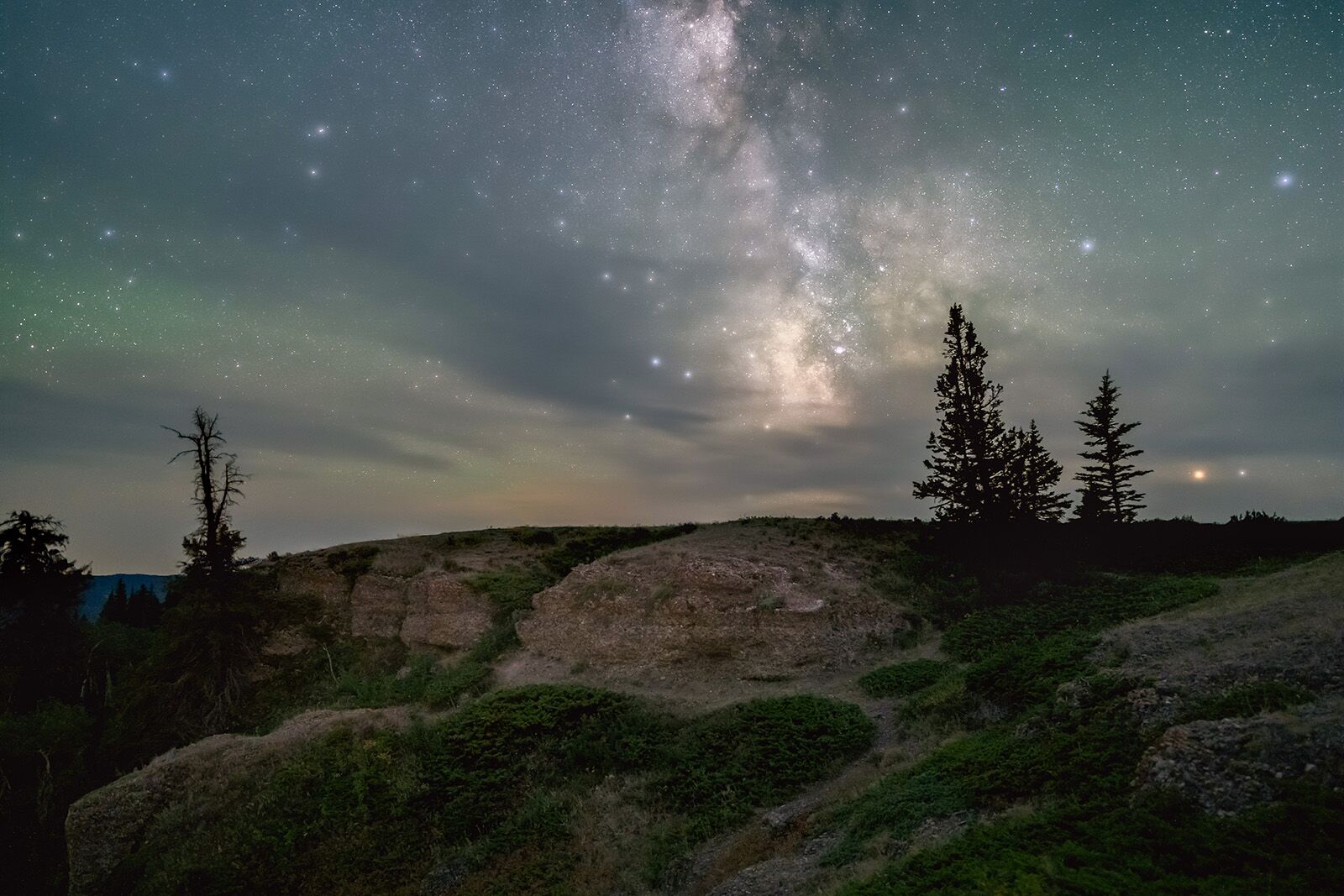
Photo: Jeanine Holowatuik / Tourism Saskatchewan
Cypress Hills Interprovincial Park sits at North America’s highest point between the Rocky Mountains and the Appalachians, making it a natural observatory. The park is divided into two districts: the Centre Block and the West Block. The Centre Block is more developed, home to campgrounds, amenities, and an actual observatory. This is the hub for the park’s astronomy programming, from public observing sessions to the annual Saskatchewan Summer Star Party run through the Astronomer-in-Residence program. The West Block delivers a more expansive feel, with fewer services, more backcountry trails, and some of the darkest skies in the park — a particular boon for long-exposure astrophotography.
May through early October is the ideal time to visit. You can stargaze year-round, but Saskatchewan winters bring limited services and temperatures that plunge into the double-digit negatives. Spring and early summer mean clear nights and blooming wildflowers, while late summer aligns with meteor-shower season and peak Milky Way visibility. For the best viewing, plan your night around a new moon (or within four days of one) to avoid moonlight washing out the sky. A star chart, binoculars, or telescope can all help, though even a free app like Dark Sky Map goes a long way. These tools can point you toward the darkest corners of the park and help you time sightings like the Perseids.
Once you arrive, pick a stargazing spot away from artificial light (clearings near the observatory or Meadows Campground are excellent options) and give your eyes time to adjust. Cover your flashlight with red cellophane, keep your phone dim or taped with red film, and try to stargaze close to your vehicle when exploring after dark. Areas such as the Two Trees Trail and Rock Creek Campground are car-accessible and offer stunning views — just be mindful of headlights (and, ideally, your phone) to preserve your night vision.
“Your eyes stay dark-adapted when you haven’t been looking at your phone, and you certainly don’t want the light to infringe on the experience of your fellow celestial tourists,” says Lawler. “Why do you need your phone on here, anyway?”
GRASSLANDS:
STARGAZING IN SILENCE
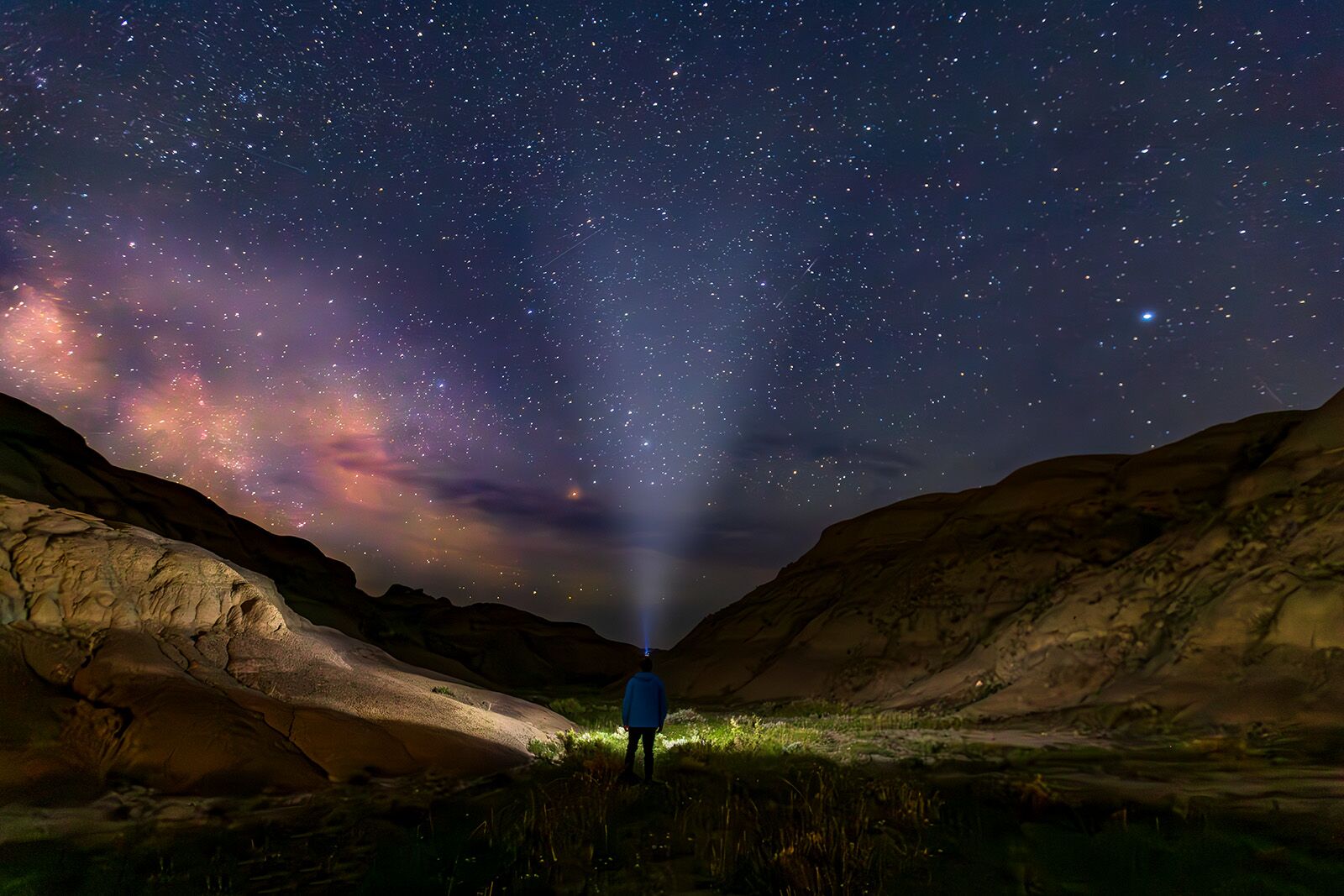
Photo: Benjamin Hutton Photography / Tourism Saskatchewan
Grasslands National Park is one of Canada’s premier stargazing destinations. In fact, the Canadian Space Agency named it the country’s “darkest Dark Sky Preserve.” The grasslands ecosystem is also one of the fastest-disappearing in the world, and Grasslands National Park is one of the only places where you can still experience true, uninterrupted quiet.
Located off the Trans-Canada Highway, Grasslands is about a three-hour drive from Regina, Saskatchewan’s capital, and about five hours from the border with Montana. The park spans more than 730 square kilometers (282 square miles) and is separated into two blocks: the East Block and the West Block, which are roughly two hours apart. (Yes, it’s that vast.) The scenic Gap Road connects them, offering its own stargazing pullouts and rolling badlands.
The East Block is home to some of Canada’s richest dinosaur fossil beds and surreal badlands. Key viewpoints like Eagle Butte Trail and the surrounding overlooks create incredible vantage points for spotting constellations and deep-sky objects such as the Andromeda Galaxy. The West Block, carved by the dramatic Frenchman River Valley, is where you’ll find the park’s resident bison herd roaming freely across the prairie, not to mention the darkest skies within the national park. Expect to see Saturn’s rings, Jupiter’s moons, and the Milky Way’s full summer arch. The West Block’s 70 Mile Butte Trail is one of the best stargazing viewpoints in the entire park.
Grasslands is equally mesmerizing during the day, starting with sunrises set to the sweet sounds of birdsong. One of Canada’s prairie provinces, Saskatchewan has a reputation for being as flat as a stick of chewing gum, but here, you’ll find rolling hills and otherworldly — almost lunar-looking — landscapes to hike. As the daylight fades, climb one of the park’s sandstone buttes at sunset to watch the sky flip from a golden hue to an ink-black dome of stars — a perfect prelude to a magical night of stargazing.
Parks Canada hosts the annual Beyond the Big Dipper star party at Grasslands, connecting amateur stargazers with astronomers for telescope tours and constellation walks. The event is typically scheduled around a new moon for the darkest conditions.
BEYOND THE PARKS:
CATCHING THE AURORA AND MORE
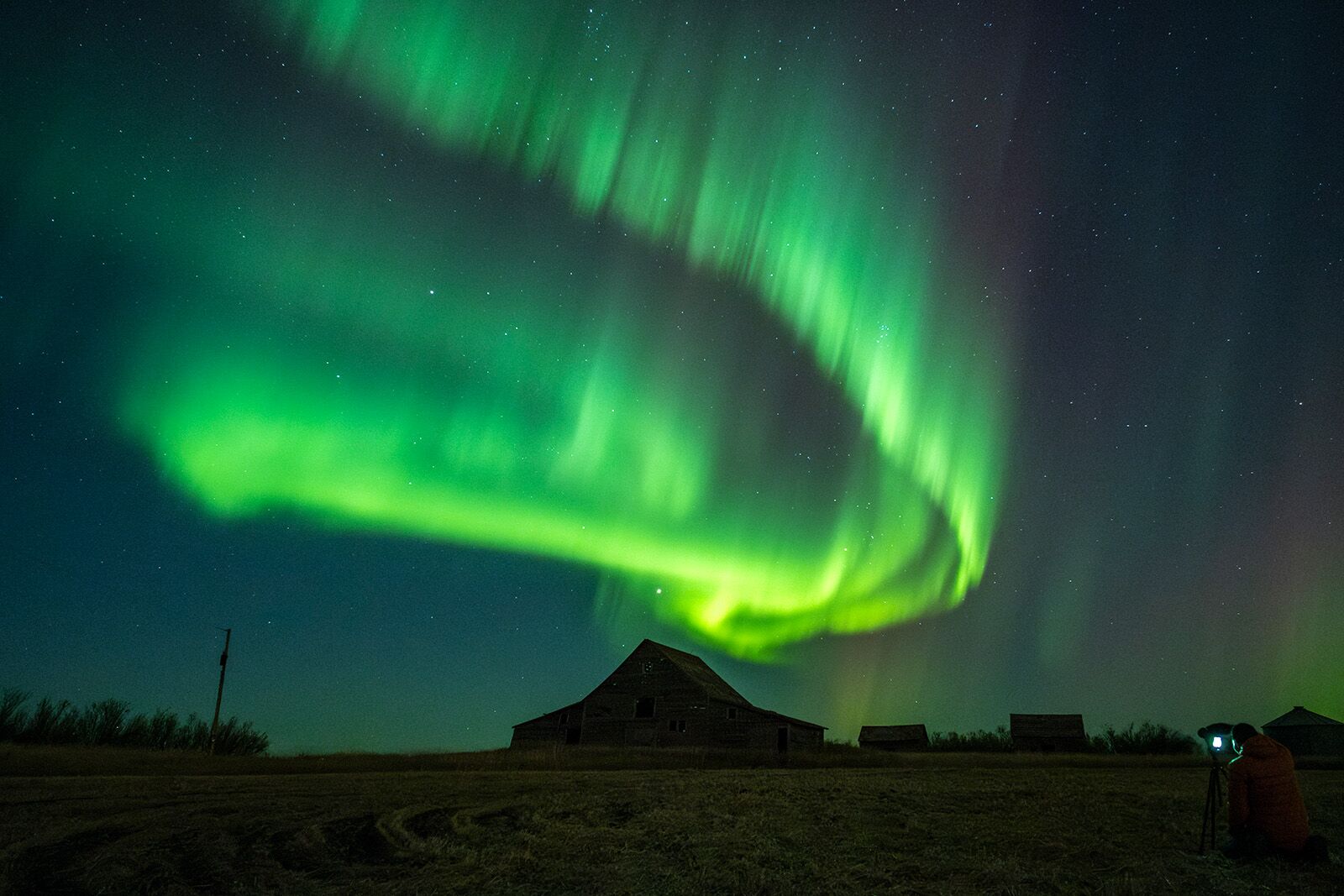
Photo: Tourism Saskatchewan
Beyond Cypress Hills and Grasslands, Saskatchewan’s low population density means there are many other dark-sky regions worth exploring. Take Great Sand Hills in the remote southwest and Porcupine Hills Provincial Park along the forested Manitoba border. Both deliver wide-open, low-light horizons that are excellent for Milky Way viewings. The southern badlands are known for similarly strong conditions with their near-total lack of artificial light, while the northern boreal forest offers crisp, dark nights perfect for deep-sky observation.
And then there’s the aurora.
Saskatchewan sits directly beneath the auroral oval, giving skywatchers a chance to see the northern lights year-round. (That said, the best times to spot them are from February to April and September to October, especially up north where they’re generally more likely to appear.) To maximize your odds of catching the aurora, head north, check local aurora forecasts and KP index predictions, choose cloud-free nights, and stay out past midnight. Use a tripod to capture the scene if you’re into astrophotography — long exposures really bring out the greens and purples.
Seeing the lights swirl through the sky is an unforgettable, almost mystical experience. You feel at once connected to a bigger picture and such a small part of it. But the majesty of these places comes with a commitment from travelers to protect them. When you visit, do your part to ensure the region’s natural landscapes are conserved by reducing or eliminating light pollution to protect the nocturnal environment. Both the wildlife and your fellow astrotourists will thank you — just as you’ll be grateful for the opportunity to experience something as pristine as stargazing in Saskatchewan. 